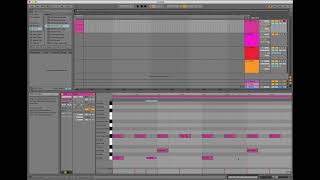
In this instructional video, J. Anthony Allen breaks down the essential elements of a basic hip‑hop drum beat. He emphasizes that hip‑hop rhythms are typically straight (no swing) and deliberately simple to stay out of the way of a rapper’s vocal flow. Using a 909 drum kit, Allen demonstrates the core pattern: snares on beats 2 and 4, kicks on beats 1 and 3, with optional extra kick hits on off‑beats. He adds a simple eighth‑note hi‑hat groove, then layers subtle percussive accents such as rim clicks, claps, and open hi‑hats to fill gaps without overcomplicating the rhythm. Throughout, he stresses that maintaining a straightforward, uncluttered drum foundation is the key to effective hip‑hop production.
Chapters
Okay, let's look at another genre here. And I think now we'll look at hip hop. Now this is one that I've been kind of avoiding because it can go hundreds of different ways. There's a lot of different ways a hip hop beat can go. So to extract it down to its basic elements is pretty tricky for me to do. However, I think I have figured it out. So the thing about most hip hop beats is that they're really straight. So no swing. No, nothing like that. No, nothing like that. That wasn't very good English. Nothing like that. And they're relatively simple. So we don't have like crazy hi hats going like we had in trap or anything like that. So we want to keep out of the way of the vocalist who's also doing really rhythmic style stuff. Right. So we don't want the beat to be too complicated or the drums, I should say, to be too complicated. So I'm going to kind of pick a random one, a random kind of a hip hop beat and we'll build that. So let's go to a 909 drum kit. Just because that. There's a lot of drum kits you could use. But this is a mighty fine one. So let's go back to our basic beat. So snares on two and four and our hi hat. Let's do eighth notes. Okay, so here's our basic beat. Okay, so now that's not a great hip hop beat. So let's craft this a little bit. We do want our kicks and snares right about where they are. However, we want to add a few more kicks. Let's put one here on the and of four. Let's put one here on THE and. And THE uh. Of four. Sorry, this was the uh. Of four, the last 16th note. Here's the last 16th note. And. And there's the and of three. Sorry, when I said and of four, I meant and er, uh, of one. Let me try that again. So we have kicks on one, the uh. Of one, three, the and. And the uh. Of three. And that'll do it. Let's add a little rim click right here. And here just for fun, we've got our snares on 2 and 4. And let's liven up our hi hat a little bit with this kind of a pattern. So with the pattern we've got da da da da da da da da da da da da da da da da da. That kind of a feel. So let's hear what we've got. Now. I think I might like that better? A little slower tempo. Let's add in a clap. Maybe. Let's add an open hi hat. Right, to fill in this hole. Okay, that's not bad. What we really care about is actually the basic beat. You know, if we go back to real the basics, that's our real lamp post. Here is the basic stuff. You know, we've got our kick and our snare kick on one and three and our snare on two and four. We can play around with more things around that. But hip hop is really based on having that snare on two and four and the kick on one and three. There's more we can do with it. But as long as we have that and then we subtly add some more things around here, like let's add another kick here and here, right? It's still going to feel pretty good, Right? So as long as we have kick and the snare going in the fashion of our basic beat, something in the hi hats, not too complicated, relatively simple, then we can play around with extra kick hits and that's pretty much it. There's not a lot else happening. Remember, we want the hip hop beat to be relatively simple. Stays out of the way of the rapper. Okay, so let's play with this a little more by looking at some examples.