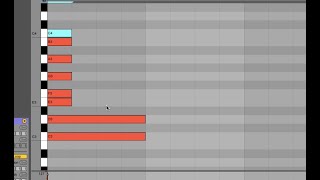
A second is a dissonant interval that inverts to a seventh, flipping between major and minor when moved an octave. Unlike perfect intervals, seconds can add color to chords but aren't needed for basic triads.
Chapters
All right, now let's talk about seconds. Like seconds as in the number 2, not seconds as in time. Seconds like that, right? 1, 2. That is the interval of a second or a two. These are not terribly useful to us because the interval of a two makes kind of a dissonance. A dissonance means an ugly sound like this. That's a dissonance, right? It's an ugly sound. The two is a relatively nice sound, but it's still a little bit crunchy and so. And crunchy means a little bit dissonant. So it doesn't fit into our first, third, fifth major chords as smoothly as the other ones. However, let's do the same trick, right? Let's invert it so I have a C to a D. That's the second in the key of C. What if I invert it by moving it an octave down? I have a huge interval. Now, and what is that interval? That's a seventh, because the seventh is the inversion of the second. Another way I could look at it is the interval from D up to C that is a seventh. Now, the thing that's different about the second as opposed to the fourth is that the second does have a major or minor possibilities. The second can be major or minor. In this case, this is a major second. The one I showed you earlier is a minor second. Now, how does the major and minor work? Remember, we don't really have major or minor on the 5th, because the 5th is perfect, right? That's one of those weird perfect intervals. The other perfect interval is the 4th. So a perfect 5th, inverted, becomes a perfect 4th. But a major 2nd, inverted, becomes a 7th. And a minor 2nd, inverted, becomes a seventh. And their quality flips when you invert them. So, for example, a major second, inverted. Boom, boom, boom. A minor seventh. Okay? So a major second, inverted becomes a minor seventh. A minor seventh, inverted, becomes a major seventh, right? So whenever you invert an interval, it always becomes the opposite quality. So if it's major, it becomes minor, and it also changes numbers. So let's look at that again. Let's look at. Let's look at a D up to. Now, let's look at C sharp up to C all the way up here. If we count out the half steps, that's going to be a major seventh. If we go to here, D up to C and we count out the half steps, that's going to be a major seventh. Now, I want to point out here that these intervals, the four, the two, the six, these you don't need to think about these all the time. There's a reason I saved these for the end. I don't want you to get confused, because when we're making chords, we're thinking about the first, the third, the fifth, sometimes the seventh. You can add a four to something, you can add a six to something, you can add a two to something, and it'll make a cool sound. But primarily, we're thinking about that first, third, fifth. When we build chords. I'm putting these in here, hopefully not to confuse you, but to get you thinking, to make you think. I didn't forget about them. Basically, they are intervals that exist. They are fun to play with. We can build chords that have them in it, but they're a little outside of the box, so keep that in mind as you experiment with them.