This content was created by J. Anthony Allen. This content was uploaded by J. Anthony Allen. This is a YouTube video titled "The invention of MIDI" (created 2025-09-26, last edited 2026-02-25) featuring J. Anthony Allen giving an explanatory talk on the history and basics of MIDI. He covers the origin of the MIDI 1.0 hardware standard (circa 1981–1983), the difficulty of updating it due to wide adoption, recent add-on developments (e.g., MPE/HD-type updates), the design goals (common language/syntax, enabling one performer to control many instruments, and portability), and clarifies that MIDI transmits control messages (not audio) over cables to tell synthesizers what notes and dynamics to play.
Chapters
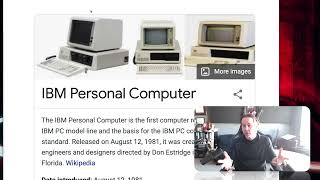
So by about 1983, most computers and synthesizers were supporting MIDI, meaning you could do things, you could connect them. Now, this led to one problem, and it's a problem we still have actually. And that problem is that so many different hardware manufacturers, computers and synthesis makers, so many of them adopted the MIDI standard, that the MIDI standard that was created back in 1981 was called MIDI version 1.0. That's what it was called, and it was a hardware specification. And so many people latched onto it that it was near impossible to update it later. And therefore, the version of MIDI that we are currently on now is Midi 1.0. Now, there have been some changes to it, especially in the last year or two. There's been some big developments with doing sort of a HD midi, we call it sometimes mpe, there's different things we call it. But there have been some updates to the way MIDI works, but they're really add ons, the main protocol as it was invented in 1981, still what we use. So MIDI is not real high tech. It's actually fairly low tech once you get to know what's inside of it, which we'll talk about soon. So when they came together to build it, what they wanted to do was achieve a few things with midi. They wanted a language and a syntax. Keyboards, drum machines and computers all being able to talk to each other, regardless of the platform, regardless of what kind of computer, what kind of synthesizer, all of these things should be able to talk to each other. They wanted a way to create music with fewer people involved, meaning allowing a few performers to play a whole band so multiple instruments could be played by one person. Kind of like how we saw Wendy Carlos play the whole orchestra parts. And the third thing was portability, reducing the amount of gear that was needed to make this kind of music. So what we got was a system where the computer controls the synthesizer, all the sound is in the synthesizer. And the computer sends relatively simple messages telling the synthesizer what to do. It says, play that note, play that note, play that note, and the synthesizer then plays the notes. The computer doesn't actually have any sounds in it and isn't capable of making any sounds at all, at least not through midi. So when you look at a MIDI cable, which we'll do shortly, know that there is no sound going through that cable. There is none, no sound. There is only control messages, only messages telling the other end of the cable what to do and how to do it. Play this note, play it that loud, Play this note, play it that loud. Because that's what MIDI is. It's just messages telling one thing what to do and how to do it.