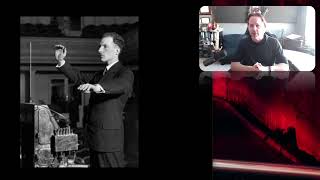
In this monologue, J. Anthony Allen chronicles the life and legacy of Leon Theremin, the inventor of the theremin—the first electronic musical instrument. He describes how the theremin quickly gained popularity in the 1920s and 1930s, spawning oversized, room‑sized versions that allowed dancers to generate sound with their movements. Allen highlights Clara Rockmore, the most celebrated theremin virtuoso, noting her close friendship (and rumored romance) with Theremin and her masterful classical performances. The narrative then shifts to the thirty‑year mystery surrounding Theremin’s disappearance after his early fame. Contrary to rumors of murder, Allen explains that Soviet agents kidnapped Theremin in the 1930s and kept him in a secret Russian laboratory for three decades, where he worked on undisclosed projects. Theremin was eventually released and returned to the United States around 1990, an event documented in the film Theremin: An Electronic Odyssey, which also shows his final meeting with Rockmore and his receipt of an honorary doctorate from Stanford. Finally, Allen connects Theremin’s influence to the next generation of electronic music pioneers, especially a young Bob Moog, who built his own theremins as a teenager and later created the iconic Moog synthesizer, cementing Theremin’s role as a catalyst for modern electronic instruments.
Chapters
Okay, so here we have Leon Theremin, the inventor of the theremin. So the theremin got quite popular, if you can imagine. And there were actually a whole bunch of different versions made of it and even made one catering to like dancers. So they were just really big ones, ones that were the size of a whole room. And dancers would choreograph themselves to dance within it and their dance would generate sound. Pretty crazy idea. There was even a virtuoso theremin player. There have since been a few virtuoso theremin players, but the best known is a woman named Clara Rothmore. Clara Rockmore. You can find videos of her playing. I think she died around 1990 or so. So there are videos of her performing. And, you know, she plays all kinds of classical music really beautifully. And she was friends with, with Leon Theremin when she was young. There's some sort of rumors about maybe they were involved. Whole other story. But speaking of who he was involved with, let me tell you really quickly that after he rose to fame for creating the theremin, he disappeared. And it was kind of just a big mystery for about 30 years where he went. Nobody knew. He just disappeared. Now, most people, I think, thought that perhaps he had been murdered because he did, I think, marry. I think he married a dancer, an African American dancer, which if you imagine 1930s, he was in New York, but still 1930s, there were people who had a problem with that. And so a lot of people thought he was murdered and thrown into the river or something. But we now know actually what happened to him. He was kidnapped by the Russian government and they brought him back to Russia because at the time Russia wanted their scientists back. And he was a well known scientist. He was A doctor, who's Dr. Leon Theremin. And they brought him back and they put him in a lab working on something, we still don't really know what. And he worked in this Lab for about 30 years until someone discovered him and he was, he was released in some way and then he was brought back to the US There's a fascinating movie about this called Theremin An Electronic Odyssey where they actually document bringing him back to the US Meeting up with Clara Rockmore one last time. This all happened probably around 1990. He got an honorary doctorate from State Stanford, and he was recognized for his great achievement to music, having developed the first electronic instrument. But it was, you know, 30 some years later because he had been essentially locked in a lab in Russia working on some secret project. So if this is interesting to you, highly encourage you to watch this movie and an electronic odyssey. It's a brilliant movie. It's fascinating, fascinating stuff. Theremin, both as a person and the instrument. Theremin ended up inspiring a whole generation of people to make other instruments. And one of those people was a very young guy at the time named Bob Moog. So Bob Moog was fascinated by the theremin. He built little theremins on his own in his garage when he was a kid. He figured out how to make them and he made some, and he kept developing that until he started building more complicated instruments. So next on our lineage of electronic instruments comes Bob Moog and the Moog synthesizer.