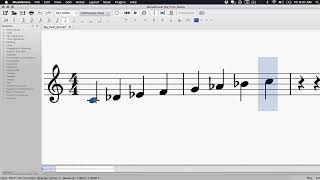
J. Anthony Allen explains the Phrygian mode, the third diatonic mode, which is a minor scale with a lowered second degree. The defining feature is a half-step between the tonic and second degree, the only mode so far that starts this way.
Chapters
Okay, up next, we're going to talk about Phrygian mode. Phrygian is the third mode in the sequence of modes, which means we can use our relative identification process to shift up to the third. Now, if we're in C major, that's going to produce an E Phrygian scale. So let's do it. So let's get rid of C. Let's get rid of D. So we're going to get rid of two notes. We're going to add two to the top. So we left off on C. So we're going to go D and E. And now we have an E Phrygian mode. Let's hear it. Cool. Right, so we just rotate to the third note and then use the same notes as before and we end up with an E Phrygian. So now let's look at the parallel identification just so that we can learn what's inside this thing. Why does it sound the way it does? First thing we need to do is decide if it's closer to A major or A minor. And this one, like the Dorian, is closer to A minor. So let's first get us to a minor scale. So we need to lower our third, sixth, and seventh. That gets us to a C minor scale. Okay, now what is the difference? What is the thing that defines the Phrygian scale? It is a minor scale with a flat two. So we're going to take the second scale degree of the mode down one half step. So now we have a minor scale, a C minor scale with the second note lowered just a little bit, which offsets, which changes our half steps and whole steps and turns it into a Phrygian scale. Let's hear it. Okay, so C Phrygian. Now remember this half step right here. And let's go back to the other way that we did it. Okay, so here we have the C major scale that's just rotated to produce an E Phrygian. And look at that. We have that half step right there. This is really the only scale or mode that we've looked at so far that has that in it. A half step right at the beginning. So we can kind of tell that it's going to be a Phrygian scale almost just from that. Now let's point out one more thing while we're here. I'm gonna do something weird here. So what, what we're seeing here now is a C major scale going all the way up to E, right? So it's going from C up to C and then it keeps on going up to E. So check this out. Here we have the Ionian scale. Now I'm going to draw a box around the Dorian scale. So here's a D Dorian scale. Now I'm going to draw a box around the E Phrygian scale. So you can kind of see how we're really just shifting up. And by shifting up, we're changing what is tonic in the scale and we're also changing, or in other words, the root of our scale. And that's also changing our alterations of half steps and whole steps, but by going up and down. Interesting, right? Okay, so that's the Phrygian mode. Let's go on and talk about the Lydian mode. Probably my favorite of all the modes because I'm a big enough nerd to have a favorite mode. But, you know, to be fair, I think my favorite mode depends on the day. But on a nice summer morning like today, it's a Lydian kind of morning. So it's my favorite mode today. Anyway, let's talk about Lydian in the next video.