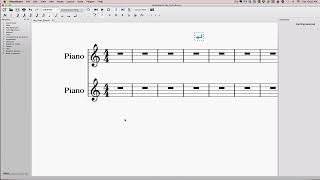
J. Anthony Allen explains that species counterpoint has four types with increasingly complex rules. First-species counterpoint, the most essential for composers, teaches voice leading by harmonizing a fixed melodic line called the cantus firmus. Allen demonstrates by writing a three-measure example, starting in unison and moving to different intervals.
Chapters
Okay, so the term species in this context just means a type of something. I think that's actually the technical definition of the word species. So when we say first species counterpoint, what we're talking about is the first type of counterpoint. There's second species counterpoint. The second type of counterpoint. Right. So the species word really just means the rules are slightly different for first species, then second species, then third species, then fourth. Fourth species. There are typically four different kinds of counterpoint, four different sets of rules. And from a very simplified perspective, it gets more complicated as you get into the higher intervals or into the higher species. So first species has certain rules that get more complicated in second species, those get more complicated in third species, those get more complicated in fourth species. So what we're going to look at primarily is first species counterpoint. Well, hopefully we'll dabble a little bit into second and third. But typically when we learn counterpoint, we focus a lot of time on first species counterpoint. And then we start going into the rules of second and third. So we'll see if we get there. In this class, I'll probably break out a whole separate class on second and third species counterpoint shortly. But for this section of the class, I really just want to get us going on first species counterpoint because that's, to me personally as a composer, kind of the most important, actually, because shows you, you know, voice leading, which we've just talked about things you can do with harmony and leaps and steps and all these other things that we're going to talk about shortly in really useful ways. So I like to not get too bogged down with all of the. The rules of this and that. But first species is a really great way to just kind of dive in. Okay. One other vocabulary word related to this is the cantus firmis. The cantus firmus, or sometimes we just call it cantus, is kind of like a. Let's just call it a teaching tool in counterpoint. What that's going to be is a line that you're not allowed to change. So in an example, I'm just going to write a line here. Okay, here's a three bar line. It's kind of weird, but that's okay. So if I was to give you this in some kind of assignment, this would be called the contus firmus or the cantus. Or sometimes you'll see it just written as cf, the letters C and F. That means your job is to harmonize this line without changing it and make a counterpoint to this line. So what you would do is you would take the second line and let's start it on a unison. So sidebar. One thing to point out here. This is not set up as a piano staff. Set this up as two treble clef staffs. Okay? So these are the same. These are both treble clef. Normally, you would see treble and then bass clef down here, but I've set this up as two treble clef staffs so that we can really just see what we're doing. Okay, so I'm going to start in unison. Now, what note am I going to do next? This is where counterpoint comes into play. I don't want to do a unison. That would be boring. I would probably go to a B, and I will explain why later. I'm just going to kind of eyeball this really fast here. Let's do that. It's kind of hard to do this on the fly without, like, thinking really hard. Okay, I broke a couple rules there, but I made a counterpoint to this first line, the cantus firmus. I added my own line that largely follows the rules of counterpoint that we're going to go over in just a minute. Let's hear what I did and see what it sounds like. Okay. They got a little funky at the end, and this wasn't very. This little cadence here wasn't very good, but that's okay. We're going to talk more about these things in a minute, and I'll talk about that word cadence that I just used shortly as well. Okay, next, let's move on to and talk about connecting melodic intervals, the kind of first step in learning counterpoint.