Breaking the Sea of Sameness: Building Community and Redefining Revenue Creation
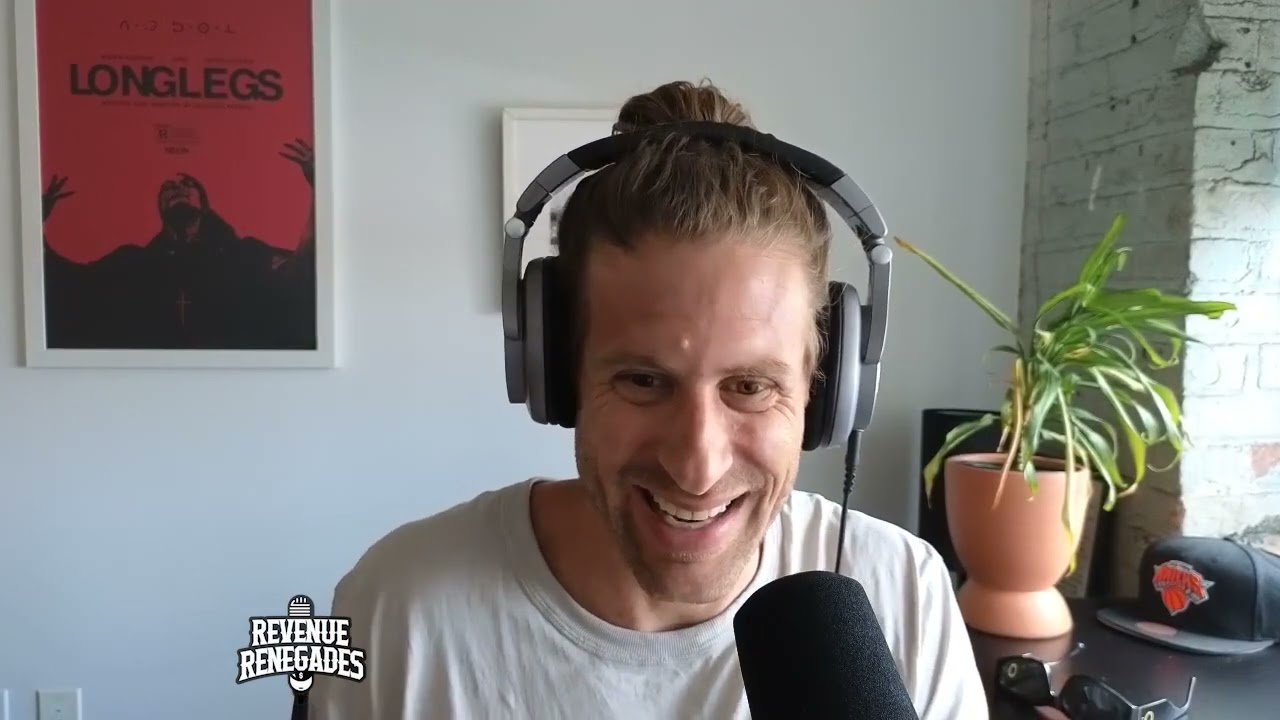
In this episode of Revenue Renegades, host Doug Campbelljohn sits down with Jared Robin, founder and CEO of Rev Genius, to discuss the origins, growth, and strategic vision of his community‑first revenue platform. Robin recounts how a COVID‑era LinkedIn DM group evolved into a 55,000‑member Slack community that bridges senior revenue leaders, founders, and GTM professionals. He explains the deliberate curation process, zero‑cost entry, and inclusive positioning that set Rev Genius apart from other paid or siloed groups. The conversation shifts to the emerging role of "revenue creators"—GTM professionals who blend ops, sales, and product thinking—and how AI is accelerating a "sea of sameness" in tactics, making traditional playbooks obsolete. Robin critiques the conventional go‑to‑market mindset, advocates for category design and market creation rather than competing in crowded spaces, and contrasts community versus audience dynamics. He shares examples from companies like Clay, Swan, and others, discussing how community‑driven advocacy can amplify growth. The interview also touches on the value of in‑person meetups for trust, the challenges of copycat duplication, and personal anecdotes about his creative pursuits, favorite media, and rapid‑fire product preferences. The episode concludes with ways for listeners to connect with Robin and join Rev Genius.
Chapters
Hello everyone, this is Doug Campbelljohn and welcome to this week's episode of Revenue Renegades. Uh, this week I am very pleased to welcome Jared Robin to the show, the CEO and founder of Rev Genius.
Oh, I'm so grateful to be here, Doug. This has been really, uh, and congratulations. We just spoke about, uh, coffee. I'm really impressed with what you're doing and excited for the future.
Thanks, man. I really appreciate it. Um, so, you know, as 2 co— as 2 founders sitting on a call, I always like to hear the founding story. What's the founding story of Rev Genius?
The founding story of Rev Genius was, you know, it's always a bit personal one as well as like what, what you see in the space. So from the personal side, actually it was COVID. I had no job. And I wanted to go above and beyond to get one. So I gathered tons of folks in a LinkedIn DM chat, and I met all the people in like the comments section of LinkedIn. They say, they say you should comment. They were right. Like, I built literal community from that. And from there was like, I got to go even harder because I want to be seen to get a job. During COVID Market was better than we thought it was, but like there was still not any net new jobs happening because we didn't know like what the future was. And the openings kind of dried up as well. So I'm like, I got, I want to be seen. And from there, added about 26 people and we got some signal that the LinkedIn chat kept breaking. I looked at the space. I'm like, do I have a community here? Do we need a community? I saw like four different communities. One was senior leadership that was paid. One was senior leadership not paid. One was a really good content site on sales, and another wasn't really fully sure. And I'm like, is it really not something for everyone? And like, is is is that interesting for like a CRO? Obviously, it's interesting for an IC to be in a room of a CRO, but was it Interesting to have like different spaces like together, together, but separated for both as well. And at the time it was because people that were senior revenue leaders didn't really know the new tactics. They weren't even on LinkedIn. They were saying no social selling yet. This ends up being like the top GTM channel in 2025 for a big chunk of teams, right? So like they actually did need to learn from the SDRs, so to speak, and the AEs and the people that were on LinkedIn. And it's funny how like from 2020 to 2022 to 2024, how the demographic of who's active on social, you know, got more mature even, or, you know, seasoned, I should say. And—
Yeah.
So putting them all in the same community, I thought would benefit both. And sure enough, it did. And, and plus, we didn't know the future and we're starting to gather it. And we didn't know like how things will be separated between departments in 2020. Like things were still siloed and then they became unsiloed. And now with AI, they're unsiloed to the point of, are there even, or there's the potential, I should say, to be unsiloed to the point of, is there just a revenue creator? That just kind of looks holistically over this whole thing. And, and, you know, as I say that, the early stage founder's like, that's me. That's all I'm doing. And they're thinking like, I don't want to do it, but I need somebody just like me to do it. And can they do it? And can they be like that hybrid of ops to sales and like impact revenue? And can they get agents to do the other stuff? And the answer is maybe. Maybe. And thinking in first principles systems helps you get there. So, um, as we've evolved, so that the founding story was, you know, from a personal standpoint, had nothing at the time and wanted to find like connection, um, wanted to actually use it to get a job. And, and our mutual friend Dale, uh, Zawinski, phenomenal revenue leader in his own right, was gonna be that outlet for me. He was supporting me and I couldn't bring myself to show up to the interview. I said, Dale, I gotta, Cancel the interview you're giving me. I got an opportunity with a great person and he liked me because he is great and he's awesome. And I'm like, I think I'm going to do this thing and went all in and had a couple recruiters along the way. When you have recruiters telling you, I don't think you should interview, you should just do this.
That's awesome.
It's a weird blessing because like your safety valve, assuming your recruiter's that, like literally doesn't want to put you in any games and it's like, let's go. And then, you know, how the space has evolved. Yeah, it's been, everything is a blessing if you're open to it.
Yeah. So let's talk about that because I mean, you know, the growth has been phenomenal. Like you're, you're at what, 55, about 55,000 members right now?
Yeah. We're just hitting our 5th year. Yeah.
So what is, what do you think is the reason for that?
The reason for this and like the way to differentiate today are like in the same family. And, um, I think it's because I built something different. Like even though there were other communities and this was that, and it appeared that like it had a different, um, you know, demographic that could come like, you know, more inclusive.
Uh-huh.
Um, $0. But like, it's also positioning it to be for everyone, which at the time as well, if folks couldn't get to those senior leadership positions because it was more difficult if you looked a certain way or a certain sex, like, they weren't able to get into certain spaces. So like, having that access was big. And then also, um, I layered in the trust hard in the sense that the first 500 members that came, like, I curated all of them, like I approved all of them. So even though like this was a place for everyone, it was a place for everyone, but, but some people not yet, if that made sense. And I think that built a connection with folks. And then when I, I manually reached out to X hundred a day, got 10% of them to say yes. And I truly think that they connected with that. I think like from like a tactical standpoint, but I did it with being different in hand, right? Like, why are you different than this community? I'm like, well, you know, one-liner, cool, sign me up. And I think that's it. And I think also just like learning marketing very fast. I'm like, if I'm an SDR with a $0 product, how many of them can I sell?
Yeah.
And I'm just like, boom.
Yeah. What was that pitch? So like, you know, you're sending out hundreds of these invitations a day. What's the hook that gets people to say yes?
Simplicity. And I want to give, uh, Christina Frinseth, our first head of growth, all the props in the world. Hey Doug, I've created an inclusive sales marketing RevOps Slack called Rev Genius. What's the best email to send an invite to?
Perfect. Oh my God.
You think I can't get 1 out of 10, Doug? Maybe 2.
And so that was all happening on LinkedIn, and then you were basically getting people to respond with their email address there.
Yeah. Uh-huh. And then I would add them and then, and then when they came in, um, when they first came in, I would send them a note like, of like, hey, are you in yet? Put in, hey, what's up in Slack? And like, and do both, which was insane. I've since stopped drinking, but I was, uh, as you can imagine, it was fun because, uh, and, and then I would target people that I'd seen on LinkedIn and stuff and like wanted to acquire because I think, thought it would make the community richer and it did. It did. And then learned along the way that sometimes the big names are the least active because they're in so many places and, you know, they don't get value the same way somebody else gets value. So how do we bring more of like that sweet spot of people that, that do get value in? Because then we could get value as well, right? Like with, with raising the quality of the community.
What's that sweet spot for you right now? Who's the— what's the ideal Rev Genius user look like?
Yeah, so, uh, director plus, but also founders, early-stage founders I love. And, um, all technology companies, all stages. But like, there's, there's, there's definitely, um, you know, I think the most active folks and it, um, are going to be like Series C or younger.
Okay.
I think, you know, I think The Salesforce reps and managers and directors just aren't on somebody else's Slack all day long. You know, in general, they might be members of the community, they might be the highest group, but it's hard. Yeah. And then now like builders build, or people that want to be builders, because this is the new like evolving mindset in AI. And we're calling GTM professionals revenue creators. Why are we doing that? Why this? creator thing? Is it content creator? It's, it's a great word, but like, but think, let's think about it today. And, and, and you'll see the evolution of how we're evolving and evolving our point of view, like to meet the new times with our members, to be different than the other communities because the other communities did become more inclusive. And that's effing amazing. That's cool. How are we different than like, sure, we have a $0 entry, that's cool. But like the differences were becoming more and more trivial, right? So like, how do we, how do we stay and like, and just like put our foot in the sand with how we're different? And the answer is right now everyone is the same.
Hmm.
More than ever. The tactics are the same. The playbooks are the same. People are building parity and product even very, very fast.
Yep.
Right? Like outta nowhere, OpenAI just drops call recorder outta nowhere. Like you didn't even know they were working on it. Is it better than what's out there or not? I'll tell you what, people got nervous. And if they put their time and energy into it, it would get better, probably be better because it's powered with the whole ecosystem. And You know, we're talking about more people launching CRMs like yourself than ever. And they're following other people's playbooks. And I read a post, the playbook from 2022 is dead. I'm like, the playbook from 2024 is dead. But even more than that, anybody's playbook is dead, right? 'Cause as soon as you share a prompt today that worked for me and somebody else uses it, it's dead. Or very, very soon to be there from like a tactical standpoint. So what this has created is like this idea of a sea of sameness out there. You're literally looking at LinkedIn posts, which performed the best? Clay tables, right? We've seen that prompt comment playbook, and this is great. And this, and don't get me wrong, people are hitting revenue numbers this way. I mean, at least the first revenue numbers along the way, but they're not differentiating themselves.
Yeah.
And it's only a matter of time before that tactic doesn't work as well. And these people are going to be following the tactic. So there's a couple of ways to look at that. Like you have like the idea of GTM Alpha, which I take to mean, and that's what Clay coined. And I think this is one way of doing it, out-tactic the tactical, be the first to everything. And I think that there's truth in that, but that's like, Jeez, man, imagine if you needed a different tactic at noon than you did at 9:00 AM. You couldn't even make it a day. Tell me that we're not going to get to that point. It might not be this year or next year, but like, that's the direction we're going, right? Signal-based. Signal-based was a strategic advantage 3 and a half months ago.
Right.
I'm not saying it's not today, but people are seeing the end. Um, that's one way. Or use your creativity And think first principles and build things your own way. And that's the revenue creator of tomorrow. Like, we're building a place for this person that's creative. Like, it's funny, you know, I won't call out who, but like, they're like, oh, can AI help with a better deck, a faster deck, creating a pitch deck after there? And I'm like, of course it can. And if it can't, it can soon. And he's like, let's do the perfect pitch deck. And I said, are we asking the right question? Is a pitch deck what you need to either speed up a deal or close a deal or get more pipeline? Is that what's needed? That's what we think is needed.
Right.
But is that what's needed? So, you know, all the companies building the, or the people building the pitch deck, 'cause that's, and then you have somebody else building, You know, just a landing page that just converts people, like whatever it does and gives unique experiences. So being creative requires going to first principles, tossing out everything we know. I'm used to sending a deck after a meeting became, I'm used to sending a one-pager after a meeting became, I'm sending a follow-up on the call because that's what I really want. Like why even send the, like why close for the next meeting on the email became— You know, something, something else that, that's a current evolution. Like we need to constantly be thinking this. And so the revenue creator is the people that are able to do that most now tend to be early stage people before they have all of the bloat, so to speak, and require that. And that could build stronger and smarter. So like, that's what we're building towards.
And that's our differentiator.
Like, we want to support that person. That's how we get involved with AI.
Got it. So what is, you know, and this, this maybe you answered some of this already, but like, you know, Rev Genius is kind of known for challenging a lot of these status quo kind of thinking and principles. You know, is there a one sacred cow in, you know, kind of SaaS or sales leadership that you think needs to be broken or at least questioned?
Yeah, I'm— well, there's a few, like following playbooks altogether. Also, like the idea, you want to talk about a sacred cow, like this is a hot take. GTM, or like the revenue org, is siloed from the rest of the org.
Mm-hmm.
Why? Like, that's big. And Also, um, the concept of go-to-market is myopic in the sense that you're going to a market that already exists, right? Like, let's look at the CRM example. Anybody who's going into CRM space knows that Salesforce, I believe, owns like in the 60s percent of the market. And, and that's actually not true.
They own, they own less than 25%.
Oh, they own less than 25%. Incredible.
They're the biggest by far and they own like 24%. And the next one, there's not another player that owns over 10%, like HubSpot, Oracle, SAP, they're all single digits.
Insane, right? Like this category is insane. So when you go in and there's a couple things, like you could go in and say, okay, 10% is our realistic max and that's going to the market and that's highly competitive. This is like the most competitive space. Or you could build like the autonomous CRM, right? Like, and do that little and create a new market, right? Even though it's, it's kind of doing the same purpose. Like you could either try to make a better milk or just say, I got oat milk because, and, you know, regular milk has these disadvantages. This is the problem. This is that company called Salesforce again. did that with regular software years ago, right?
Yep.
You probably recognize the No Software founders.
Oh yeah.
And the irony is you and your frenemies are going to together do that same thing. Well, one of you might lead it, but like the idea of creating the market and then going to market, I think is something that not a lot of people in the sameness world Realize. They just want to find the best. Oh, I'm sorry to anybody who's prompting right now. You're an AI LinkedIn content creator, give me a good hook. But yeah, you got it.
Yeah. So where do you think this all— I mean, you've talked a little bit about this. It's interesting. I had the CEO of Swan, I don't know if you know them, on the show recently.
I love Amos. Yeah.
Yeah, Amos is great. And This whole notion of like, and we'll see how far it scales, but like right now in theory, it's 3 of those guys. One is like, I build the product. One is I market and sell the product. And one is I write systems to help the 2 of you be more productive, right? It's a very interesting org structure for thinking about this simplification in some ways. And I do think that just in the nature of that, it's not like product is just in a silo. They're obviously having those customer conversations as well. And, you know, Amos is often, you know, involved in like product direction as well. So those things bleed, but that like simplification of that, you know, or the desilification of all this stuff seems like a very interesting direction. What are your thoughts on that?
Yeah, I mean, Amos, I don't know if you read his newsletter last week. He is the revenue creator of Swan. I think the level of efficiency and like how he's helping others with that and how his product could help others with that, but that's not like the core thing. It's just like a beautiful example of where I think the future's going. And I love that he calls out bloated companies and looks at the metric, you know, revenue per full-time employee versus just like that unicorn. I think it's smart and I think it aligns everything. Like if you have the metric aligned with with that. And I think, I think he's doing a wonderful job. He's going to hit all of those numbers by hook or by crook, but realistically by efficiency. And I think the cool thing about it is that constraint on people pushes you to be even more creative.
Yeah, absolutely.
I think, I think that's even cooler than like the dollar-to-employee rate is the, is the creativity that needs to come out. that does that. I think that's fascinating and it's going to change the space.
I think it's true in any medium. Like, I think, you know, you talk to artists, whether they're painters or musicians, or, you know, I've seen this on the product side as well. You know, if you've got everything is open to you and you've just got a blank canvas, it's sometimes, you know, harder to go create than if saying like, you've got 2 days and $50 to go do it, go, right? Or be creative that way. I mean, you know, Thinking way back to, you know, before the iPhone, when it was supposedly the Palm Pilot and, you know, those things, the reason that those companies succeeded was they were running out of money and they're like, well, we better just ship the, you know, like, what's the minimum we can possibly ship? And that turned out to be such a great design constraint to keeping things super simple and not bloated. And I think that's the same for a lot of these things. I think restraining the people, restraining the dollars, like maximizes the creativity.
Yeah. And we're watching it in the AI world and it's super rad.
Yeah. So like, is there an, is there a go-to-market best practice that you see people using today that you just think is going to be obsolete in the next couple of years?
I think, you know, I take it for granted that I see companies operating at the best because I could probably say like, Sending emails through your main domain is going to be obsolete.
Right.
There's people doing it well. It's hard to say. I think everything will have a level of working well. I hope to think that the strategy put on top will be stronger, thinking about how companies truly are different and thinking about the language that they use to frame that enemy, that on-prem software or gas-powered cars or cell phones. I, you know, every conversation I've had, not every, a couple, I'm like, as soon as Steve Jobs took out the first smartphone, cell phones went extinct. And it's kind of true, right? I think when you have that up at the top and like the idea of, you know, creating markets isn't for everybody, But it's a great exercise in thinking. I think like when more folks are thinking about thinking and all of that, and then they trickle in the tactics with this unique point of view, because you could do outbound and say you're a CRM with AI to all of HubSpot's clients, right? Or you could say, evangelize the problem in the same messaging and probably have A higher conversion rate, whatever that looks like, probably higher. I think it's about being smart and not falling into that sameness. So will anything be obsolete? All bets are off. Things are going to get creative. They're going to get wacky. Things from long ago might come back, right? Like in-person cold calls, dare I say. I don't know if that's going to come back, but— In tech, but in other industries, that's what I used to do door-to-door.
Well, I have to say, I think that I've seen the rise of these kind of small gatherings, like lots of dinners, lots of those kind of things, and that person-to-person contact is still the highest ROI stuff that we do. And I think that people are craving that, I think, more in a world where so much stuff is digitized.
I think, and I use the word trust, anything that develops trust, seeing somebody face-to-face, having lunch with them, even stopping in their office. We won't call it a cold call, but I was in the area, Doug, like, what's up? You'd probably do a double take, like, what?
How do you think about that in the context of Rev Genius? Because obviously you've got this community of 55,000 people, you know, are you facilitating face-to-face meetups?
So we're creating a space for folks to meet up with others, you know, in the sense of like share like what's going on in person or online. From us throwing the actual events, we're not heavy into that.
Mm-hmm.
Just from an operations standpoint, like being able to handle, but like from our members meeting other members in person, Absolutely happens all the time.
Got it. Okay. And then, you know, you mentioned earlier, like it's becoming so much easier to duplicate stuff. So you get all these copycats that are happening much quicker. Yeah. So how do you stand out? Right. What's, what's the, what's the secret of being, being different? And I guess like, have you seen good examples?
Yeah.
Right. Have you seen good examples of this kind of creativity or, you know, uniqueness that you said where I'm not just saying, you know, comment in my LinkedIn post to get a copy of my guide or things like that? Yeah.
So anybody who's really creating categories and doing it right is doing that. So like, I know you just gave a LinkedIn example, but everything from Vitaminwater to Liquid Death to Patagonia building sustainable fashion to Apple with iPhone to Netflix, To all that, I think I'm trying to think of like early stage examples, 'cause I think what I've seen that kind of makes me giggle is a lot of messaging of brands who I thought previously were like doing well with that. And I think they are, I think they're absolutely crushing it, but like abandoning the different and adding like, we do this with AI agents.
Mm-hmm.
We do this with AI agents instead of talk. I don't know if you've seen that. Like there's this trend that just happened in the last month where everybody Everybody's like, oh, we're marketing for AI. I'm like, right there, you've seen it, right? Like, like there's this, this thing. And I'm like, oh my God, they're literally just doing the cool thing. There's like no other reason. And I've seen it like from people that were calling what they were doing something, whether they were right or not, and they were going for it. And then they're just like, oh, marketing with AI agents. I'm like, wow, that is becoming same. Isn't that crazy? So like, that's kind of the opposite of what you're saying, but I just saw that. And, um, you know, one of our mutual friends, Attention, uh, at our roundtable, they were calling it super agents. They're figuring out what that differentiator is. I get really excited about them because they're not there like the great go-to-market organization. Lots of love and respect. I worked with Matthias against the news. Like, we have a history, uh, like a really warm, uh, history. But, um, I'm like, oh my God, they're like on the verge of like— they're dancing around. I don't know if you feel it, right? Like dancing around like the damning of the Gongs of the world and, and Seismic and stuff. And, and I kind of know inherently like, like what they should be doing. The world kind of knows that they're interesting and cool and like better. They're better. But they're, they're dancing around the wording with, you know, being different and naming, framing, and claiming that villain. And it's going to be fun because they're going to, they're going to get it soon fully. And, and I think as much as they're taking off, they're going to just go to the moon. Have you felt that? Like, like they're a really good company. They're, I'm like, oh, I see it, I feel it. But I'm just waiting for them to consistently evangelize that message because then that's going to be fun. They're really close.
Yeah, I think so much of this stuff too, people who are outside kind of doing the startups themselves don't realize how long this stuff kind of wanders in the woods as well. I mean, like Clay, I was just talking to one of our investors who was very familiar with the Clay story. was basically wandering in the woods for years, right? Trying to figure it out. And then when it hits, it just like, and that whole notion of, I mean, you mentioned a lot of these great examples like Apple and Liquid Death and Tesla, et cetera, but are all like, it starts obviously with a strong product. You've gotta have something that people are like, okay, this is actually, I resonate with this. It's something that I enjoy the experience of using.
Yeah.
But then it is really about like, how do you kind of zag when everybody else is zigging, right? How do you figure that one out?
I want to give all the props in the world to Varun. I was in a dormant Clay Slack in 2020 when their original co-founders created a really cool product that was missing getting to market. And Varun came in and he Is a G. So like mad props for doing that gap. And that was 2020. And like somewhere between then and now they went out, we were throwing like LinkedIn outbound 2.0, like LinkedIn Lives together. And it was fun watching them do fast feedback loops and like figure it out and then grow quite fast. So they've done a good job. Yeah.
And they just, they kind of harness community to me, at least from my perspective, in kind of a way in that they kind of created these champions, these vocal folks who are just kind of, I'm a Clay advisor, I'm a Clay expert, these agencies and all these folks that just amplified the message on their behalf. So it wasn't just them shouting into a megaphone, it was thousands of others doing it for them.
And I want to point out, and this is, I think this is great. Like, there's, there's 2 things, audience and community, that sometimes people conflate. And Clay did build a great audience, community. Everybody in Clay's community was in Clay's product, right? Like sharing Clay tables. Well, you know, we were talking about that, like, Awesome ones that they made, evangelizing it because it was new, different than anything that they had and helped their business. A lot of these people, these GTM engineers run outbound agencies, right? Like that, that now Clay allowed them to be better at doing outbound and get more business opportunities. So that nuance HubSpot was really good at, and I think Salesforce to another extent, but HubSpot's really good at like their evangelist programs, like all HubSpot agencies that are helping people do HubSpot. So there's a lot, you know, shout out to, you know, the OG there. Like there's some similarities there. I also think that the difficulty with Clay's activation, like there is like sometimes a difficulty to get to start. is a hidden opportunity that they exposed in a positive way with needing an agency network to help that like the CRM companies kind of need that too. And that becomes part of your community. So like that's big. And then from an audience building perspective, part of this ecosystem, they were able to call Clay Creators. And I did a newsletter article a while ago 'cause I think that they've done it magnificently. They've they've executed it as well as could be expected. It's been great. Or they had people with like audiences built in, like do social posts on Clay's behalf. So there is an audience building component. And I think your audience you want to sell to, your community you want to upsell to, sure. But like your number one goal with, is to drive value to your community. Help your community use your product better.
Yep.
I think that's so like audience is people outside your product, community, people inside your product. It's the simplest way I could think about it from like a SaaS perspective. Like there's too much nuance and overlap. You do that. Do they need to be paying or whatever? If they're in your product, you could put them in your community whether they pay or not, because like they're in. Beehive's community is great as well. And beehives community, they help you build better newsletters, right? So what, what happens, and, and you could tie in like a referral program with that. So like the partners, like now you have like that growth loop going and Clay does that as well. For sure they do. And they do really well with that. So, and then audience is something that, you know, you could tie with demand generation a bit more and feel safe. Like you don't want to demand gen your community, like that's trust. They're users. Like you wanna have Clay Club where you help them, right? You wanna have, you know, the Clay event for them and you wanna have like things where they could, you wanna build a landing page for the experts, right? Like you want to drive value. The audience, you wanna get to be users. So, and That's probably social media. That's probably a podcast that you might own like this. That's probably, and who you hope to bring in, that's probably like a newsletter, but that's not your Slack group of just Clay users. And I think that's the nuance.
Very well put. So I know we're coming up on time. I want to kind of go into the speed round, so to speak, at the end.
Let's do it.
Shifting gears to you a bit, what's, uh, what's one thing people would be surprised to know about you?
Uh, I wear all my nieces' bracelets on my arm.
Oh, that's so cool.
Um, but—
oh, listen, surprise.
She is, um, they— my, my niece is, uh, 5 and 3. But one thing, surprise, uh, I've won Best International Fashion Film Awards in Copenhagen, and I've been in 10 cities worldwide. And if I did something not in SaaS or like traditional business, like B2B or B2C, I guess B2C could go either way. I would probably like make movies or something or figure out like my way into that space because I'm really intrigued with it from a creativity standpoint.
Very cool. So this may just be the same answer, but like, what do you like to do for fun outside work?
Tons of horror movies, and, and I've been taking in a lot of content. I blame COVID for that. Like, it really, it really made it easy. And, uh, A24 and Neon are my favorite movie studios. I just saw the movie Eddington. Phenomenal.
Okay.
Out of control. Joaquin Phoenix is in there, um, and, and Pedro Pascal. And, um, I do that. I, I'm Walk 10,000 steps 7 days a week and, and, and gym 5 days a week. So like, that's, that's all early. And, um, and that really sets my mind and my day right. And then I have a dog and a wonderful partner.
That all helps, man. I saw the dog in the lap. What's the dog's name?
Stevie Nicks.
You might— what is the— they're bringing out the film that was made or the album that was made before with Buckingham, I think.
Oh, really?
That's awesome.
Yeah. So if and when we get a new dog, it's not if, it's when. Like, do we want to double up or do we want to wait until she's on her last legs? No pun intended. Strongly leaning towards Johnny Cash. Cash for short is the name.
That would be good. I like it. I like it. All right, let's shift to product, like outside of, you know, sales tech, like what's a personal product you'd love to use and why?
Oh man, this is, okay, rapid fire is Spotify and Audible because, and Spotify in particular, because I ingest a lot of like indie stuff, like From music to media. And, um, and, and it's constantly updated. It's probably the worst thing in the world for, for me in a variety of ways. But, um, it's now my source to get knowledge, to get smarter, to learn. And, and I'm taking in a lot of comedy through it, which is something I never ever did. But now I'm listening to Listen to like Shane Gillis and stuff. It's crazy.
Have you seen the, uh, the Spotify documentary? I think it's on Hulu. It's like a multi-part series on the kind of creation of Spotify.
No.
Great watch. We'll try to, I'll try to find it.
I'll check it out. One, one interesting thing, I believe, and I need to verify this, but Apple iTunes was, was set to, um, win. They, they named and framed the category of streaming music. But unfortunately Spotify won it. They took it and it was because of Steve Jobs' passing right in that time period, I believe. And so they got category complacent. They didn't—
Well, I also think, so I actually, this is a much longer story, but I actually talked to Steve right before iTunes came out and his whole model was not about the streaming stuff, right? Because that was days of Napster. His feeling like model was Amazon. Like people are used to physically buying CDs. And so if you could let them effectively physically buy digital copies of tracks, that's the model as opposed to an all-you-can-consume thing. And I think again, there's a more direct linkage and one could argue a better economic model in buying individual songs and buying tracks the way iTunes originally did it.
Totally.
But Spotify gained their clock with a much better user experience.
And, you know, it brings the point that, and I'm sure you're familiar with Chris Lockhead and like Play Bigger and category design. Like I just see you finishing some of my sentences here or feel that like you're holding it in. If you're not, my anecdotes are too on the nose for someone that gets it. The business leg of the stool, right? Like, So to speak, is instead of per song, streaming service. And I wonder, oh man, there's so many other aspects because obviously we love it, but like getting through the musicians snapping it, there's so many angles to that to unpack of how difficult that was to make it work. And I think, I think something interesting going into the AI world today, like bringing that in, like What's the new business model? Like, sure, we have usage, we have outcome, but what if— so there's outcome in terms of actions or something, right? Like, but are we going to think through how we could do outcome and result to revenue? And the early answer is no, absolutely not, or it's too difficult, or this or that, until somebody does it. Right, Doug? Like, then, like, who knows? Like, it's all, but we have to be thinking that. And I thought that 12, 15 years ago when we built a business model, I was like founding go-to-market at a company that held ourselves accountable, e-commerce technology, real-time holdout group, predictive analytics, 8% of revenue uptick, held accountable by third-party analytics. And Wow. That was, uh, I remember when we sent one of Home Shopping Network's smaller companies, just $100 million a year in revenue, an $80 grand bill for the month and then pushing back. Like, we're like, we, we helped, we gave you $1 million in new business. That, that brought up a whole other conversation. But like, um, man, it's hard to get that off the ground. Uh, We came with near-death experiences, but some of the takeaways from that that might creep in, the CSMs were product people because they wanted to optimize and hack the results so that we can make money, so that they can make money, so that we made money. Win-win.
Yeah.
I think that persona Is like the new revenue creator as well. And I think there's some aspects of that, but anyway, thank you for taking that. I think there's some interesting things with the business models that we're going to see.
For sure. So, and then just finally, how can our listeners kind of stay in touch with you and help you out in the Rev Genius journey?
Come to LinkedIn, linkedin.com/in/jaredrobin. Send me a note there. I'll respond. Join Rev Genius, revgenius.com. Just click the sign up button and it's free. Awesome.
Jared, always a pleasure. Really appreciate you taking the time to chat with us today.
Thanks so much, Doug. Really appreciate what you're building.
Thank you, man.


