Bridging the Gap Between SEO + Design/Development
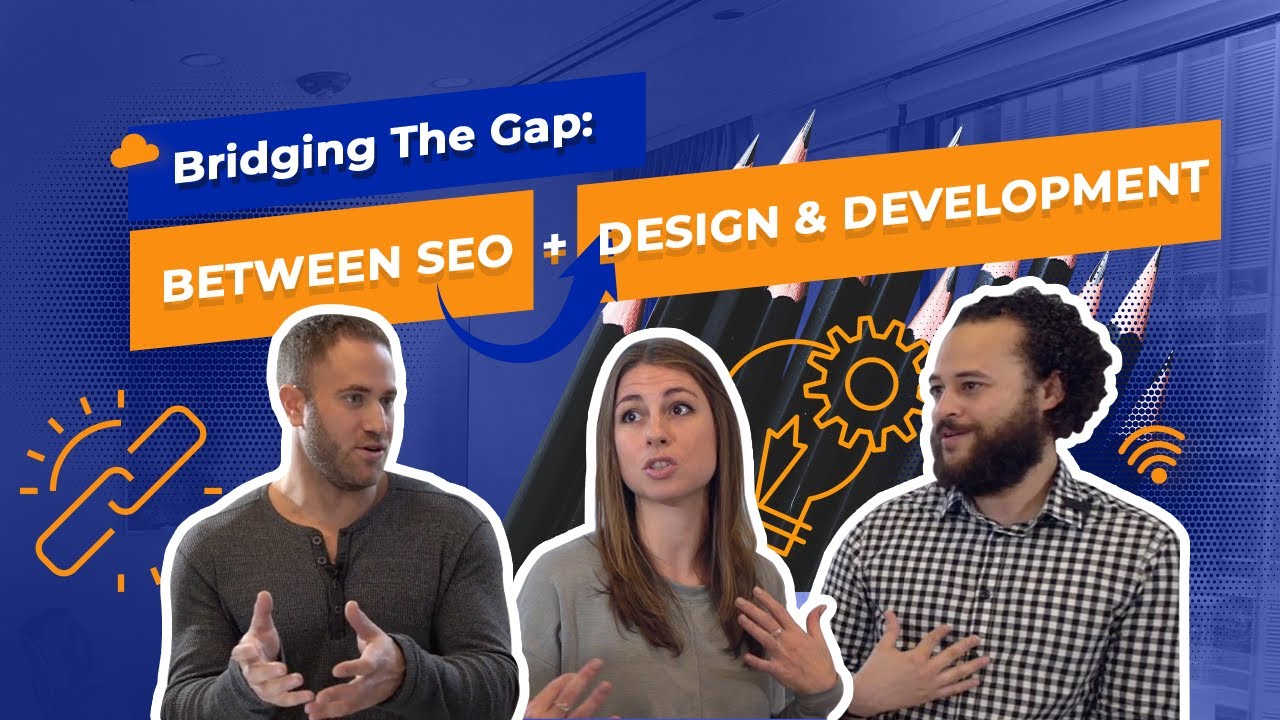
Christine Corforo and Wes Turner from Barrel explain how their agency keeps SEO, design, and development aligned during website redesigns. They involve SEO from the start of information architecture, use daily check-ins and shared onboarding, and build technical considerations like crawlability and performance into the development pipeline rather than adding them later.
Chapters
Hey again, Jason here from Break the Web, and today we're going to talk about one specific aspect of marketing that Break the Web really doesn't have a heavy hand on. That is web design, web development, especially as it correlates to a website or a brand's rebrand or web development. Of course, we brought in the experts, Christine Corforo, the Design Director from Barrel, and Wes Turner, the Director of Technology at Barrel. Thank you guys for joining us.
Thank you.
Thanks for having us.
Yeah.
So we worked together, Break the Web and Barrel, many times over the last few years. We've had a lot of joint clients and a lot of joint partnerships, especially with redesigns, redevelopments. And I'm very happy to say that we've worked tremendously well together, and I don't think that happens too often in the marketing world. There's a lot of egos out there with specific agencies. I tend to see it personally more with freelancers where sometimes people in different departments don't want to step on toes. They may want to guide the client in a specific frame or expectation so that they're the best at what they do and no one else is not as good. Have you guys experienced a little bit of that? Definitely.
Yeah. So, I mean, I think one nuance to our agency is we do both design and development, but sometimes we do just design, sometimes we just do development, and it's in those cases where we work with another agency or an outside party, and they're not used to our process, and we're not used to theirs, so there's a lot of friction. In those cases. So yeah, I can remember a couple of times where we were working with a design agency and they had great designs and things looked great, but when it comes to then translating that for the web, specifically for web development, a lot of issues typically come up and it's just kind of like this back and forth and things get territorial.
Yeah, we always try to say, at least from an SEO standpoint, that SEO comes second to design. UI/UX experience and all that, just because if we're bringing traffic and that traffic has a really crappy experience or they don't convert, whatever that conversion goal might be, then it was all useless. With that, of course, design, you have your specific goals. Development and technology, you have your own specific goals.
Right.
How do you guys kind of align those goals or first create those goals and then help the client understand the outcome?
I think that at least for design and development, we're a team. We've always been a team. I like to think of ourselves as one unit before we go to the client. So there's never an instance where there should be any fragmentation when we get to the client. We really should be marching forward, whether that's having daily check-ins with each other, making sure that the designers are always syncing up with the developers. But whenever we come to the client, we should really be a united front.
So how do you approach that with kind of that goal creation? For the specific client?
Yeah, so I think just lots of meetings as a team and talking, making sure that everyone from the junior level to the senior level feels heard and feels really comfortable being able to speak, and just constantly having alignment. So whether that's team alignment, whether first the design and developer, then with the greater team, the accounts team, then with the client, and just making sure that at every single step of the process there's always alignment.
It's a lot of planning too. So we'll do a lot of activities where, you know, we'll whiteboard, you know, things and have giant Post-it notes to make sure we're on the same page when it comes to just, you know, the client's business, what they do, what their current products are. So just getting that context and then aligning on that with the team and then really understanding why are they working with us, like what's our engagement about. That's super important. And so we do that as a team.
Yep.
And we talk it through, and we have the account people there. We have all the sales and business people who brought in the business. And they help us kind of get that context. We're all asking questions. We're all trying to figure out, well, all right, so if we do this, then how does that affect this? And design, dev, design, dev. You're introducing this, but that's going to blow out the scope. Is that in scope? So that's the big question always. Absolutely.
And I'm sure during the onboarding phase you guys talk a lot with the client, try to understand their position in the market, kind of their audience behaviors, what issues their audience might be having, and what's solved by, of course, getting in touch with that customer. What is that like?
Yeah, definitely take a deep dive into onboarding. So starting with the background, like, where do you guys come from? What's your business context? Moving into the project goals, the technical approach, We use this framework called Agency Agile, which we've been trained on as a team, and it's a really great way to all get on the same page and then make sure that we're on the same page with the client. So immersing ourselves in their product and their experience is really integral for us understanding who they're serving and what's good about their products.
So one of the questions we get asked all the time is kind of where SEO can fit in or kind of squeeze their way into a huge rebrand project. That typically consists of new technology from a platform standpoint with the website itself, new design, user experience. We always, of course, try to make sure that, again, with SEO being the goal, that the information architecture and the sitemap and the way everything's kind of interlinking falls along with the SEO goals. And of course, you guys have your goals, especially if we're 2 different agencies. It could be challenging.
Definitely.
Where would be the right time, given that, for example, we want to give advisement on information architecture, Sitemap, maybe hub pages and all that. In your process, when would be the right time for us to kind of squeeze in?
Same time Sid.
At the beginning.
Yeah, up front, right at the beginning.
Yeah, you should be on the team too. So it shouldn't be like you're coming in to consult. You should feel like you're a team member. So at every step when we do a presentation, we want to be floating that stuff by you. Maybe you can't make the meeting. That's okay. You should be able to get your eyes on it and see it. Admittedly, we're not an SEO agency. We're a design agency. So just making sure that everyone is really humble when working together, I think, is really integral.
Absolutely.
We try to, as early on in the process, give an idea on what we'd be looking for in terms of website structure from an SEO standpoint. But what happens if an ideal SEO structure, maybe a topic cluster or a page that's thematically relevant on a specific topic, and then they might have subpages. And that might go against either what you guys need to do from a user experience standpoint or even what the client wants. How would you guys handle that?
Yeah, there's some nuance there. I mean, when it comes to SEO, in terms of development, we do our best to make sure things are structured properly, make sure from a hierarchical standpoint the content, you know, can be expressed. But it really depends. If we don't have that upfront strategy, Then we're kind of just using our own best practices when it comes to SEO and implementing them both from a design and development perspective. But when we have that partner in the beginning and they can help us, we can work around that. And that's what we want. We want that partnership, like Christine was saying, to be able to get the best strategy for whatever content or client or brand we're working with.
Absolutely. And then, of course, a big aspect of what we do is the technical SEO, which is a lot of backend, sometimes frontend technology, whether it's CSS bloat potentially or accessibility, all these other random things that might happen within the backend. We typically like to see or have the ability to crawl a staging site just so we can kind of see what's going on behind the scenes, run our crawlers through everything. Does that typically fall in line with how you guys are projecting?
Definitely. I mean, Christine knows we do a lot with accessibility and she's very passionate about that. And I'm certainly passionate about the structure of things and the performance of things, which Google cares about. And hopefully a lot of other search engines care about that too. So we've done a lot as a team to improve those best practices. When it comes to staging, we usually always have staging. In many cases, we also have additional environments to accommodate for additional features or differences in content. Or maybe we're trying to test something out. from a performance perspective, and we just need that additional environment. So we definitely have the ability to have these different places for scans to be run, for users to test with screen readers, the whole nine.
What are kind of like expectations that you try to give to the client around launch time? Because they may think that, oh, we're going to launch, the site's just going to kick ass right off the bat, things are going to go amazingly well, and That was a great investment. We're all set. How do you guys handle those kind of expectation-setting aspects?
I think back to the other answer, just like making sure it's at the beginning. So in that first meeting, making sure that we understand why are they launching on a certain date. Is there a product coming out? Is there something happening that's in tandem to the launch? Then we can kind of build that empathy as to why does that launch matter so much. So if the client's really, really stressed out, We should also be cognizant of that because if anything maybe comes off as a little hasty in their responses, we know where they're coming from and really making sure that we're setting them up for success. And then to your question about post-launch, so just making sure that all the things related to analytics are set up so that we launch it, we can just see how it happens. So whether that is Hotjar or more of a visual analytics tool like that, whether that's Google Google Analytics, just making sure that all of our ducks are in a row upon launch time so that we can, in 3 months, revisit the site and make sure that what we did worked out.
One of the things that I've seen over the years working with you guys, we run typically quarterly technical SEO audits. With that and that ever-evolving aspect that we're always looking to make sure from the technical SEO side of things, make sure everything's good, do you guys typically continue to work with clients after on kind of maybe a small project thing. What would you recommend in that instance if we were to come back to a client and say, hey, we noticed that a weird code came up or something isn't linking properly, something that might have gotten missed from the SEO side of things? How would you guys handle that?
Expectation setting is important here. We do have a post-launch period where, you know, if any critical bugs come up or any issues with content, typos, things like that, we will fix it, jump in there and make those changes. But we do like to kind of continue to work with the client. And part of, you know, that sort of upfront discussion and expectation management is letting them know that we can continue to optimize. This idea of continuous improvement, being able to, you know, run those scans and say, well, we did great here. But this one we can improve. We can make this better, and here's how we're going to do it. So we have what we call Barrel Client Services. It's what we do from a design, development, and continuous optimization standpoint, even when it comes to marketing, being able to see how content is performing from an SEO standpoint, how the content is performing from social and search and all the other ways Even email is super important here. We talk about websites a lot.
Yeah, email.
But all of these other things like Facebook and Instagram and email, they're super important to the engagement of a website, of a brand. So we continue to optimize on all those fronts through VCS, which is a great way for us to not only build that relationship with the client, but also continue to just optimize and make sure things are You've touched on something that kind of reminded me of the conversion aspect and conversion rate optimization that I feel like tends to go unnoticed quite significantly in marketing.
People, again, have their website, they might have their SEO strategy, and they're bringing in traffic, all is great, but when you're not testing that conversion, if people are picking up the phone, buying a product, whatever it might be, is that something that you guys would focus on in VCS as well? The conversion rate optimization? Testing with Hotjar, as you mentioned?
We have a UX audit, which is one of the services that we provide. We basically will audit sometimes our own work, sometimes other people's work, and really benchmark it to best practices from Baymard Institute. They're one of the companies that kind of is the UX Bible, if you will. Just making sure that we're doing everything to best practice and then making sure that it all ladders up to the client's goals at the end of the day. It's a very humbling thing to do a UX audit on your own work, but it's also an incredible learning tool. So we really look forward to those opportunities where we can see how we did after launch and then report back to the client and workshop what are the ways to prioritize those initiatives that came out of that audit.
I actually learned a lot from this interview with technologies, with of course the way which I think we kind of have over the years been working together so that You guys can get what you need, we can get what we need, and play along together. So this was absolutely awesome. Where can people find you guys, learn more about Barrel?
Yeah, barrelandwy.com, and then also on our Instagram, you can find us there too. Same, uh, same Barrel and Wy.
And we're based here out in New York City, uh, in Chinatown, Little Italy.
We also have a Los Angeles office, small team out there too.
Just growing and growing. That's awesome. Congratulations on the success, the growth. Thank you guys for joining me. It was a real pleasure to have you.
Thanks for having us.
More from Jason

Stop Doing Everything Yourself To Scale Your Business #agencylife #founder #entrepreneur
When Content Marketing Isn't The Right Strategy #contentmarketing #contentstrategy #seo #agencylife
The Only Place a Founder's Brain Actually Shuts Off #agencylife #seo #entrepreneurship



AI Is Making Your Marketing Team Worse #seo #ai #aimarketing #criticalthinking
The Two Things I'd Tell My 2010 Self About Running an Agency #seo #agencylife #podcast

The One Thing You Can't Systematize in SEO #seo #seostrategy #criticalthinking #agencylife #podcast