Diminishing Recession Odds, Beds & Sheds
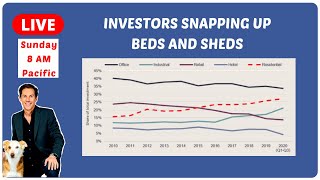
In this extensive YouTube broadcast, host Rick Sanchez interviews real‑estate investor Jason Hartman about the impact of the COVID‑19 pandemic and recent civil unrest on the U.S. housing market. Hartman explains that, contrary to expectations, home prices have risen overall because expensive, high‑density markets were already soft before the pandemic and a massive migration to suburban, low‑density areas has created tight inventory and strong demand. He warns that the end of mortgage forbearance programs adds uncertainty, but low‑priced, necessity‑oriented suburban homes remain a safe bet. The show then shifts to audience testimonials praising Hartman’s long‑standing real‑estate fundamentals, followed by a promotional segment for Hartman’s “Creating Wealth” program. Hartman launches into a political monologue denouncing social‑media censorship, media bias, and the erosion of free speech, and plays a clip of Florida Governor Ron DeSantis outlining anti‑riot legislation. He ties the legislation to the broader “America is flat” thesis: the pandemic and unrest are flattening knowledge and wealth distribution, moving ambitious, tech‑savvy people from expensive metros to suburbs, dispersing venture capital, and creating new opportunities for real‑estate investors. He reiterates his investment strategy of using long, low‑interest mortgages (the “cantillion effect”) to stay close to money, and predicts continued suburban price gains, rent increases, and a shift in where talent and capital reside. The broadcast ends with live audience interaction, questions about market trends, and further political commentary.
Chapters
Good morning, everybody.
Big story, right? The big takeaway, the COVID 19 pandemic and its subsequent impact on the global economy, followed by the racial mass that is now in places and will have an effect on housing. Now, you hear a lot about the stock market and how it's up or it's down because of all these developments that we've experienced. But the stock market, look, it affects about 10% of all Americans and less than 2% of all of the people on earth. But you know what does affect all people? Housing. Because one way or another, we all need a roof over our heads. So we thought this was the topic that we should drill down on. Joining us now, Jason Hartman, who knows housing, by the way, from the inside out. He's an extremely successful real estate investor who connects with thousands of people weekly on Jason Hartman.com where he shares some of his insight with others. And he's here to do it for us right now. All right, Jason, let's start with this first. Have these times that we've been going through with the economic situation, the pandemics, et cetera, et cetera, have they caused home prices to go down?
Well, Rick, thanks for having me back. It's counterintuitive, but the exact opposite has occurred. Now when we look at home prices and talk about this stuff, virtually all statistics any of us here are national statistics. And as you know, the housing market in the country, like as far as the United States, obviously there are so many markets, it's a huge country, about 400 local markets, if you will, that can really be divided into three categories, linear, cyclical and hybrid. So to answer your question, expensive housing markets were already suffering before the pandemic. There were already lots of stories about expensive properties in New York City, in Los Angeles, even in less expensive markets like Seattle, certainly San Francisco, South Florida, Miami area, Boston, Washington, D.C. to a lesser extent, because that's got the government that skews the stats. Those were already suffering before the pandemic. But interestingly now we are seeing this mass migration out of high density areas. And the housing market by and large is up. There's very little inventory and lots of demand.
So let's call it the burbs, for lack of a better term, as we've always referred to it here in America. If you live in the suburbs and you have a home and you're hunkering down in it, keep it, don't sell it, because the value you have in your home is pretty much the value you have right now as a person, right? I mean, Monetarily, of course.
Yeah.
You know, the suburbs, I think those homes are going to do very well through this, actually. I think if you own suburban properties now, keep them, because there is a tidal wave of people moving in your direction that want to be out of high density areas. They don't want to take mass transit, they don't want to get into elevators. And you know, if you live in a condo complex that is in a suburban style city that is four stories or less, you're probably okay. But if you live in anything that's considered mid rise, which is five stories and up, or high rise 12 stories and up, I would really be concerned about properties like that. And you know, we're already, maybe we're now already witnessing the second wave of infection. And you alluded to the racial strife and riots and you know, that's just one more reason not to live in cities.
Let me ask you a question though, because everything that you're saying, although conflictive with what we would think is going on, may make some sense if you consider that there's a lot of money out there. I mean, the government's been pouring money. One of the things it's done is something called forbearance, which I learned from you originally, by the way, which is where they will tell you you don't have to pay your mortgage for the next three months, six months, some even a year. Okay, so let's suppose that's the reason that everything is still stable and nothing has imploded or exploded. But what happens when that forbearance program ends? When the government stops the gravy train, so to speak? Is that when we'll see the problem?
Yeah, very good question. And the real answer is none of us know. None of us know because the economy has a lot of challenges ahead. I mean, we still have massive unemployment. You know, to use a phrase we've all become familiar with relating to the virus. The curve has flattened in terms of unemployment.
Right.
But still, things are, things are pretty sketchy out there. And these forbearance programs, you know, it's still unclear, Rick, as to whether or not that's a layaway program, if there might be some forgiveness, if it will just be tacked on to the back of a loan or what the workout is going to be at the end of these forbearance periods that are three, six or 12 months. And you know, this is what the government does, they always distort every market because men with aid and bailouts and stimulus and it just distorts things and it makes it hard for any of us to know what's really going on. So to some degree, it's definitely a guess, but I would say for sure, low priced housing, necessity oriented housing in suburban markets where people can socially distance, where they feel safe, where they're not in cities that are having riots and civil unrest, and they're not taking elevators in mass transit where they might catch a virus. Those are a pretty safe bet because the other thing that's happened during this whole thing is everybody's really realized that the home is the center of the universe. And since so many people are working at home now, they actually need a larger home, they need more space. So instead of living in that four thousand dollar a month six hundred square foot condo or apartment in New York City, for fifteen hundred dollars, they can get a twelve to fifteen hundred square foot suburban house with a yard and a two car garage in a nice community. And, and they're already working at home. So what's the difference if it's, you know, if it's 10 miles away or 100 miles away or a thousand miles away, it's all the same.
You tell us so. Well, wow. Jason Hartman, a guy who's made millions and millions of dollars in real estate, and he started as a kid investing in real estate and we're just so glad to be able to have him on to take us through these explanations because they do make sense. We'll follow to see and hopefully we'll be able to have a conversation again. Thanks so much, Jason. Always appreciate it, my friend.
Thanks, Rick.
Well, for Gina and I, my wife Gina and, and I, it's been a really game changer for us in our financial lives. We've been doing this for, since early 2016 and I've been listening to podcasts since probably February, March 2016. And the thing that remains constant throughout all these podcasts, it's not just the great variety and the content is meaningful. It's that the fundamentals from real estate investing from 15, 20 years ago, when Jason first started this, the fundamentals haven't changed really that much. They're very, very solid. Which means you could be successful in the 80s, 90s and 2000s with those great fundamentals. Real estate investing, the 10 commandments, that all those, all the great topics Jason talks about and how to, how to read a pro forma on those things, how to analyze a deal, all that stuff, it's, it's constant. And if you follow that philosophy and then really buy into it, there's nothing you can't accomplish in that and my wife and I moved pretty fast in 2006 and we had the same properties that we bought through and then and we still have those cash flowing properties today. They're making even more sense because, because some of them have appreciated quite a bit. Just got fortunate there. But the information is great, the support Sarah and the team is wonderful. There's obviously speed bumps and there's big bumps sometimes and Sarah's been a magnificent help on some of those things. But looking at the big picture, I think Jason always encourages us to look at the big picture because I wanted to panic sell in one of our markets once and Jason just kind of got me level set and had me look at the big picture and long term and I, I'm definitely feeling better about that. But anyway, it's been a great experience. I really encourage everyone to, to participate who can, who wants to succeed in real estate in investment properties. But it's, I really, I'm looking forward to a long lasting relationship and my wife and I really loved it and you guys are great and looking forward to the next event. The Meet the Masters was fabulous and we'll see you on the next turn.
What's nice about Jason Hartman's opportunity is that it's very well laid out. It's easy to understand it's not just about the investment in real estate. It talks about the economy and how that's going to affect, you know, future purchases. So it's just nice to get an overall picture as opposed to just, you know, a realtor or broker who's saying here this is what we have to.
Offer and just get a lot of.
Just general information on how the market's doing and also more strategies in terms of how you what makes sense to.
Invest in real estate.
We've been doing it for 15 years. So my name is Ross, I'm from Columbus, Ohio. I actually met Jason at another conference nearly two years ago. Just year came to the point where I thought, you know what, I need to start looking back into that real estate thing. I got a little bit extra cash and I need to figure out what to do with it and delved real hard into the podcast. I probably listened, I don't know, the last like 200 podcasts or something. Part of the things that I thought I found the most interesting were regarding the series LLC and how that was handled. Also getting my first properties here soon, dealing with the transfer of a property into an LLC and how to handle that properly. It seems so far that it's really worth it. A little bit of a flight, but I'd say it's still worth it, especially with all the education stuff here. I'm looking forward to going to the Venture alliance after this as well. Getting some of that really close one on one time, talking to the people that are doing this, being successful at it. You know, there's no downside to me right now, so I say totally do it.
Welcome to the Creating wealth show with Jason Hartman. You're about to learn a new slant on investing some exciting techniques and fresh new approaches to the world's most historically proven asset class that will enable you to create more wealth and freedom than you ever thought possible. Jason is a genuine self made multi millionaire who's actually been there and done it. He's a successful investor, lender, developer and entrepreneur whose own properties in 11 states, had hundreds of tenants and been involved in thousands of real estate transactions. This program will help you follow in Jason's footsteps on the road to your financial Independence Day. You really can do it. And now here's your host, Jason Hartman with the complete solution for real estate investors.
Hey, good morning everybody. Thank you for joining me and all of you jumping on here so quick today. Usually, usually I have that little intro to sort of have a buffer between, between the time, you know, where people are sort of joining, getting their notifications and coming on. And so we, we put that out there. But you guys were right on the spot this morning. So welcome. Hey, comment below and let me know where you are located, where you're located. Some of you have done that already. So welcome to David and Kevin. And you know, some of you don't use your name on your handle. So I can't call you out and say hello. SCSU 300 from Seattle via Minneapolis. But Stephen is here, David is here, Kevin is here. Bear. Beardsome biker. Beardson biker. Okay. Carrie from Phoenix, good morning. Gosh, so there's so many of you here, I can't even. Montana Casey is here. Hey, that's a cool name. Is that your real name, Montana? That is a cool name. So there you go. Okay, let's see here. Well, Ron, Fernando, Ian Sapon, Nathan. Oh my gosh, there's a bunch of you here already. So anyway, thanks for joining us. Stephen, another Stephen. There's, there's a few Stevens on here, Steve's and there's a Steve too as well. So welcome to everybody. So I want to say welcome to 1984. Yeah, 1984, the Orwellian nightmare in which we are actually living. We are living in a Time where language is being revised right before our eyes, where new meanings are being given to old, familiar words that we thought meant one thing, now they mean another thing. And. And yes. So new meanings are being given to everything, and censorship is rampant. It is everywhere. It is absolutely everywhere. I mean, this is nuts. You know, I was watching, watching a news commentator recently who, who said it. Well, he was saying that the Biden transition team, assuming Biden is actually elected, assuming he actually wins a fair, honest election. You know, I think the jury is definitely out on that, even though the news media decided to call the election. And it's interesting because I was just forwarding a video on Fakebook this morning, and I was forwarding it to a group that I run on Fake Book. And when I forwarded the video, that was nothing more than commentary about the media's influence on the election. That's was strictly opinion, just commentary about it. Not. Not saying this or that, not even saying there was voter fraud or not. Just commentary about the media's role in choosing the president. That's it. And when I tried to forward it, Fakebook stopped me and they said, are you sure you want to forward this? It contains false information. And then, you know, on those notifications you get, right, they. They talk about these independent fact checkers. Well, I'd like to know who these people are. Are they like the Star Chamber Committee? You know, who. Who are they? What are their credentials? What are their names? What are their political beliefs? You know, I mean, this is absolute insanity that we are living in. We are really living in a time of complete insanity. I mean, it is un freaking believable. It is unbelievable. And did you, did you go to the Joe Biden page on Facebook and go to the Donald Trump page on Facebook? Trump's title was downgraded by Facebook. He's no longer the President of the United States of America. According to Fakebook, he's a political candidate. Facebook changed the title of the President of the United States at least until, what, January 21st, right? I mean, the nerve. You just can't make this stuff up. It's like so egregious. It's absolutely insane. And yesterday there was a Trump rally. Note that Trump is still actually the President, at least for a few months or a couple of months. And there was a Trump rally. And guess what the disgusting, shameful activists at Airbnb did. They started canceling reservations around the rally for people who were attending the rally. Yeah, can you believe that? The, the, the tolerant people are the most intolerant people of all. So now that's one of the words that has a new definition, tolerance. Right? What does that even mean anymore? Certainly it doesn't mean anything in the cancel culture, right. If you want to, if you have the. A different belief than the, you know, students at a university and you're invited to go give a speech on that campus, they will burn things down, they will destroy property, they will hold riots, and they will spew their disgusting hatred. The tolerant people. Right? Yeah. That's why words are getting totally new meanings. Right. It's absolutely insanity. So, yeah, we'll talk about economics and investing, but I, I just, I don't know, it's like, how can you not talk about this stuff? Our freedom is just like, evaporating. You know, this week I witnessed so many people on Fakebook, on Twitter posting, you know, connect with me on Parlor, connect with me on me. We two other social networks watch my channel on rumble, a YouTube alternative. Right? I mean, you know, look, at least it's out in the open now, right? We. There is no doubt that the, the powers that be, the tech monopoly is, you know, it's no, it's. There's no doubting what they believe anymore. There's no doubt their extreme censorship, you know, I wonder, I wonder if they'll cancel this broadcast, right? Because they just don't like what you say, right? It's. It's absolutely incredible. So post your questions and comments below. Tell us where you're located, and as you see at the bottom of the screen, if you text us, you can come on the show. Do you agree with me? Do you disagree with me? Do you think I'm brilliant or do you think I'm an idiot? Come on the show and tell me. You know, we actually encourage free speech over here. You know, as long as you've got, like, you know, if you're going to be rational, okay, if you've got Trump derangement syndrome, don't bother, okay? Because, you know, you just can't have a rational conversation. So anyway, that's it. So at the bottom, you see, text JH live to 949-288-2940. It'll send you a link. You can join me right on the show right here. Come on, ask your questions, debate the issues, whatever it is you got. Questions about economics, about real estate investing, about the Biden tax plan, whatever it is, you know, who knows, right? But I must tell you, there are two books that, you know, when I went to high school, I used to see people carrying these books around with him and reading them. They were assigned as part of English class in high school. Now I am sure that is, that cannot be true anymore because there's no way that the brainwashed people we have today could think what they think. Totally lacking critical thinking skills. I mean, absolutely amazing. If they read these books, these simple, easy books to read, right? 1984 by George Orwell. And I think that was written in 1949, if I'm not mistaken. And then Fahrenheit 451 by Ray Bradbury. And these are just classics that must be read and understood. So 1984 is this Orwellian dystopia where, you know, you're told what to think, words are given new meanings. It's just absolute insanity, right? And Fahrenheit 451, well, at 451 degrees, that's the temperature at which books burn. And so, you know, the socialist Nazis, right, they burned books and now we have the equivalent, the tech companies and the news media burning books. Essentially that's the same thing. You know, they're burning posts. They ghost post people. You know, people post things and, and you know, if you say something that's really controversial, it might stay up there, it might not be taken down, but nobody will see it because you'll be ghost posted or sandboxed where like four people will see it. And you wonder why you only got 4 likes on this really brilliant thing that you posted, right? This really important thing to society that was posted in like three people saw it, you know, and you don't know, you don't know how many people saw it because it's all behind this opaque wall, this, this secret wall of the secret algorithm that determines what you can say, who hears you and listen, this would be totally fine with me. These are private companies. I mean, they're publicly traded companies, but they're, they're not the government, right? That would be totally acceptable to me if there was actually competition. If these companies didn't have 2 billion users and a annual revenue equivalent to the GDP of like, you know, the top 100 or equivalent or above the top 100 or the bottom 130 countries on planet earth. They have, you know, Facebook has a GDP bigger than Chile, the country of Chile, okay? Facebook's annual revenue is more than that entire country's gdp. I mean, this is not a, this is not a free market, folks. There's no free market here at all. This is cronyism. It's capitalism. And if the new administration comes in, if they win the election or if they finagle their way in one way or another, we basically have a corporate takeover. Guess who's going to be on the cabinet of Joe Biden's administration? A big exec with Airbnb. Yeah. So what do you think that legislation is going to be? Do you think it's going to be favorable to Airbnb? You know, these companies, they're so insane. They're. It's. Unbelievable. Will Airbnb ever make a profit? Will Uber ever make a profit? I mean, do these companies have a path to profitability or is the whole business a business of just raising money? I mean, is that a business? I don't know. You know, it's interesting. What do you think? Post a comment below. Come on the show. Just simply text us and come on the show. And we'd love to hear from you. But I must give hats off to this new set of laws, one of which I'm very familiar with, because I am actually pursuing a case based on it right now against a competitor who tried to ruin my life and kind of succeeded. And I'll comment on that after I play the video. But listen to this. Listen to this press conference with Governor DeSantis of Florida. Florida, my governor, who I really haven't even followed much, but after watching this video, I fell in love with him. He's my new man crush. Because this is brilliant and it's what every law abiding citizen wants and deserves. And this is good stuff. So check this out. I'm gonna play this little clip for you.
And so I'm proud today to be able to announce what will be a focal point of the next legislative session, a legislative proposal which we're calling the Combating Violence, Disorder and Looting and Law Enforcement Protection Act. That will probably be the boldest and most comprehensive piece of legislation to address these issues anywhere in the country. And there's a number of things that we'll be doing. You know, we are going to impose criminal penalties for violent or dispute disorderly assemblies, and that'll be a third degree felony. We will also.
Right here is why everybody needs to move to Florida. Look at how well this state is run, at least in this regard. I mean, this is amazing. Check out how, how they cobbled together this series of things to allow people to have their First Amendment rights. Absolutely. But also to allow good law abiding citizens to live their life. Keep listening. This is pretty darn brilliant.
Require a felony if you incapacitate any of the roadways. We see people take over interstates. That is absolutely Hazardous. It's not fair to motorists who may get caught up in that. And so that will be unacceptable. Also, we have a prohibition on destroying or toppling any type of public property, including monuments. That's not the way to go about it, and we'll hold you accountable. Also have a prohibition on harassing innocent people in public accommodations. You see these videos of these innocent people eating dinner and you have these crazed lunatics just screaming at them and intimidating them on a public accommodation. You're not going to do that here in the state of Florida. And we're also going to use RICO liability to anyone who organizes or funds a violent or disorderly assembly.
Brilliant. Oh, my gosh, Rick. Oh, wow. I mean, I mean, wow. This is just brilliant. So listen to what he just said there, right? So, number one, Maxine Waters, the disgusting Maxine Waters, that whack job from California, politician, right? From my home state, she espouses violence. She's the one who during the Rodney King riots said no justice as, as the city was burning, okay? And then more recently, you probably saw the clips. I mean, of course they're censored from the leftist media mostly, where she was telling people at a gathering to commit violent acts, to harass people, to harass people in public, to not let them peaceably go to the coffee shop or have dinner or live their lives in peace, right? She was recommending total harassment of these people. Right? So that's one thing won't be allowed in Florida. Right? Wonderful news. That's wonderful. But listen to the next thing he said, right? He talked about rico. So RICO is the, the set of laws that came about, I believe, in the 70s, in order to finally, you know, break the back of the Mafia. Because this was the racketeering issue. And, and basically what it says is that, look, you know, there's a difference between committing a crime and committing a crime in an organized fashion, okay? Where there is a organization to help perpetrate the crime, right? You know, you know, someone can go out and, you know, rob a liquor store, right? That's one thing. But then it's a different thing if someone sets up a business to go rob people, right? And that's basically what George Soros and Antifa have done, right? They have, they have created essentially an enterprise, a business, right, that is organized in order to create disorder and to destroy property and to destroy people's lives. So they're going to use RICO against these, these perpetrators. And I think this is just absolutely brilliant.
And if you look at some of the people who've been involved in this violence. These are people that will come from all across the world, across the country. If there's any type of issue that all of a sudden show up in all these places, we're going to figure out who's organizing and who's funding that and hold them accountable. But what you have to have is clear and predictable penalties.
I look at what could you imagine if Al Capone, the mobster, right. You know, he. He was organized, right? So. So that's how they created the RICO stuff is. Is to stop this organized, you know, destruction and evil and criminal activity. And so. So that. That's what they're doing here saying, you know, if you go and fly people or bus people from around the country in an organized fashion to come and destroy property and fl. Florida and to destroy lives in Florida, they're going to prosecute you under rico, under racketeering, because you've created an enterprise to destroy people's property and destroy their lives. Wow. I mean, hats off to DeSantis. What an awesome job. I mean, this is. You know, can you imagine if this was done in Seattle or Portland or LA or Philadelphia, you know, or. Or Missouri where, you know, they've let these. These thugs just destroy people's lives? It's absolutely unbelievable.
That's not going to happen here in Florida. If you are involved in a violent or disorderly assembly. Assembly, and you harm somebody, if you throw a brick and hit a police officer, you're going to jail. And there's going to be a mandatory minimum jail sentence of at least six months for anyone who strikes a police officer, either with. With any weapon or projectile. And we're also not going to simply let people back out onto the street. So if you are in custody for one of these offenses relating to a violent or disorderly assembly, you're not getting bail before your first appearance. And then there's a rebuttable presumption against bail after that. We also have offense enhancements. And so if you do throw.
So what's happening is these. These are rioters. These are not protesters, folks. These are rioters. They are destroying people's property and destroying their lives. What they do is they look at it as a badge of honor. You know, they go, they participate in the riot. They think they've got some great cause that they're, you know, standing up for, right? As if this is some actual cause. And they don't even know what the cause is most of the time because they're stupid. But so what they do is they, they get arrested and then they're out the next day and they're back, you know, destroying downtown Portland again. It, or downtown Philadelphia just all over again. So what they're going to do is they're going to make it so they have to stay in jail until their first appearance. You know, people have constitutional rights, of course, and you know, the Constitution's a great thing, let's not violate it. But this is a good, you know, this is a good compromise, right? If, if they did this in these other cities, you wouldn't have this lawlessness. New York City, another great example. Okay, anyway, enough of that. I think you get the idea. Let's move on here. Let's talk about some real estate stuff. So as we, as we look at the lawlessness, right? Look at this, okay? This is, this just, this just shows you. It's, it's like you can just see what's happening now. It's not perfectly consistent, right? But here, you know, of course back in February, I was predicting the mass migration to the suburbs and you know, it's, it's certainly underway. I mean, there's just no question about that now. Everybody sees it and it's, it's happening rapidly and it continues to grow and grow. So here are the biggest gainers and the biggest losers, okay? And you know, they're not necessarily all for the same reason, of course, but we know what the big override theme is now. And it's, it's just absolutely amazing. My home city, Los Angeles, California, that's where I grew up in the social socialist republic of California in Los Angeles. So look at the number of people LA has lost and look at the gainers. Mostly nice suburban markets, really all nice suburban markets right now. A few suburban markets actually lost some population like Fort Myers, right? Houston. I'm kind of surprised about that. And I don't know why exactly. I mean nobody knows exactly why because they don't. You know, when, when I've moved in different places around the country, no one called me and took a survey and asked me why I moved, right? So you, you really don't know. But, but it, but it's just interesting, but pretty much perfect, you know, 99 perfect movement out of cities into suburbs. And I think that trend is going to continue, continue, continue. Now another thing that I predicted in my, uh, suburban tsunami discussion, right? And uh, these six mega trends that are, that are just changing everything due to Covid and then secondarily due to civil unrest and these crazy riots. So the sixth one was multi generational living. And boy, if that prediction isn't coming true, just like I said it would in February. Back in February, right? Remember you saw Cuomo and de Blasio, the idiots in New York, right? You saw them put COVID patients into assisted living facilities in nursing homes, right? And then the death rate just skyrocketed. It was absolutely horrific. So now, just as I thought you would have this situation where people are afraid to go into group living facilities, okay? And so you have these, what's called accessorily accessory dwelling units, okay? ADUs accessory dwelling units. You're going to hear more about that as time goes on and basically. And you have some properties that already have this, right? They have a casita or a guest house or a pool house or they do a new one, an accessory dwelling unit like this, okay? And this is to have a sort of a mother in law's quarters on the property, right? And so these, these nice homes, a lot of people are adding these into their backyard. And, and so they're, they're. Instead of sending grandma out to live in a assisted living facility, they want them to stay at home with family. Or maybe grandma wants that. Hopefully they both do. Right? And so, so that's the situation which by the way, you notice how like advantageous the advantages women have here, right? Because the reference is always mother in law's quarters or grandma. It's never grandpa or father in law's quarters because father in law or grandpa, they're dead, okay? Women live longer, okay? So women have like, you know, three quarters of the wealth of the country because all the men are dead, okay? So in the last part of life, right? So what, do they live like eight years longer on average or something like that? Maybe seven, eight years longer. And so, so there you have it. And this is going to be a lot more popular. And this is popular around the world, okay. It's just not popular in the U.S. right. Also, the remote work trend, the home office trend, right. You know, this is from one of the newsletters I subscribed to. I think it's from Morning Brew. Yeah, Morning Brew, that's. That says it right there, Morning Brew, right. But look at this. This year's social distancing mandates have made employees much more familiar with each other's living rooms, Right? Because everybody's doing a zoom meeting from their house, okay? And you know, people want like professional style home offices and they want two of them or three of them or four of them, you know, one for each adult and then workspace for the kids. Professional Space. And now, you know, one of our investment counselors just told me that the kids are coming back home, okay? And it's, you know, the school closing up again for another month. And so, so here we go again. So this just increases the size of the home people need, and it just bodes well for suburban living more and more so. And, you know, I just want you to think about how significant this trend is, right? It's much more significant than the idea of, okay, someone lives in New York City or they live in Boston or they live in maybe Washington, D.C. or they live in Los Angeles or Seattle or, you know, Portland or San Diego or San Francisco. Right? Or Chicago, one of these places, right? And they live in the core, right, the high density part of those places. So when they leave that city, right, you'd think, okay, well, big deal, Jason. Say a million people leave all of these places and then they move to, they scatter to all these different suburbs. And you think like, okay, once those million people move, then the big real estate trend is over. And, you know, they'll run up the prices a bit. They'll run up the rents a bit, by the way. Rents. If you're not raising your rents, you need to be raising your rents because rents are going up, up, up, up. Okay, here, wait, let me get the right sound effects. Ching ching. Yeah, ka ching. That's the. It's not ching ching. It's ka ching, ka ching. So, yeah, they are seeing rents increase dramatically. And one of my friends told me that he is seeing $200 per month rent increases on, you know, houses that he was renting for 750 are now 950. Houses he was renting for a thousand are now $1200. Okay? So the rent increases are becoming very, very significant. And so, you know, raise your rents. But, okay, let's just take the value of the home. For example, if someone lives in la, my home city, where I grew up as a kid lived in Los Angeles, and so say they have a, an inexpensive house in LA, a cheap house, it's $600,000. And they sell that house and then they move to one of these suburban markets where you can buy an equivalent house for 250, you know, or maybe even 200,000, right? Maybe 300,000, whatever it is, right? Look at all that buying power they have kind of left over now, right? They have a ton of buying power left over because they didn't spend that extra $350,000. So now what do they do? They look around and they say, wow. Houses are so cheap here. Maybe we ought to buy a couple rental properties. And so they buy, you know, two $175,000 rental properties or maybe buy three $125,000 rental properties or what? You know, whatever the math is, right? And so they spend that extra $350,000, or they buy a big, gorgeous, palatial mansion for themselves for the same price. And a lot of times they're moving to a state with no income tax. So look at all that extra spending power they have. And now look at what happens when they buy any service or any good in that area, right? Say they go to a restaurant and, you know, suddenly the cost of going out to dinner is much lower than it always has been, Right? In the city. It was much more expensive there. And so all of this extra spending power is available to them. Now, granted, if they took the deal that Stripe, the merchant processing company offered, that we talked about on the podcast before, and Stripe said, okay, we'll pay you, what was it, $20,000 to move out of San Francisco or LA or New York or. Right. You know, that's what Stripe was offering. We reported on that a few. A few weeks ago on the podcast. And they take that deal. But part of the deal is that over the next couple of years, they have to agree to take some pay cuts. But still their standard of living is so much higher, even after the pay cuts, right? And their lifestyle is so much better. So here's the thing, folks, I want to tell you about a big deal. This is a big deal. So maybe you read the book or heard of the book by. Who is it Richard Friedman, I think, or. Yeah, something like that, anyway. And he's, you know, he's had his share of criticism, for sure. You know, he's a. He's a leftist. Okay, But. But whatever, right? And the book had an interesting premise to it, and it was a very famous book several years ago. Here's the title. You ready for this? I'm sure you've heard of this book. The World is Flat. The World is Flat. Well, let me tell you something that's going on, okay? This is a new part of my thinking, a new part of my theory that I have not shared with you. I have been thinking about this for maybe two months, but I haven't talked about it really. You know, I've talked about what leads to it, but not the result of it. And I'm going to talk about the result of it now. So in the era of riots, civil unrest, and Covid, we've heard the phrase flattening the curve, right? We probably never used that phrase before many months ago when we started to hear that as it related to the virus. But guess what? Combine that idea of flattening the curve with the idea that the world is flat and I want to say a new thing. I want to say that America is flat. America is flat or it's flattening. Here's what I mean by that. So you take these people that used to live in all these expensive cities, they tend to be ambitious people and educated people usually. That was kind of one of the prerequisites to be able to live in these expensive places and have a decent lifestyle there. You had to be educated and you had to be ambitious. And, you know, that's why like one of my, my friends, Sandeep, he told me, I remember we were sitting over coffee one time and Sandeep says to me, he says, he says, jason, one of the reasons I love living in New York City, this was a few years ago, before any of this craziness, he says, is that because almost everybody I meet and connect with in New York City is smart and ambitious. And I'm like, I can understand that because that's kind of a prerequisite, right? It's kind of a Darwin, Darwinian idea that, you know, in order to live in an expensive place like this, I, you know, someone has to be smart and they got to be ambitious, okay? Or they're just not going to make it there. Now certainly, you know, in these big cities you have, you know, low paid people that live in really horrible conditions. But I don't know why they live there. They should move because if they move to the burbs, they could live much better. But whatever, you know, to each his own. So, so that's. Now what happens when all those people, well, it's already happening. But what will be the ultimate effect, the knock on effect as those people leave? They, they filter out of these expensive places and they just sort of filter in, you know, like water, when you, you know, you spill the water and it just kind of flows in every direction, right? But it always flows to the lowest point, the lowest price point in our idea. You know, this is what I call the water theory. And I, I've been talking about this for 16 years. Not a new idea at all. And that was just the idea that when real estate got too expensive in one market, it would flow to another, less expensive market because water flows to the lowest point, right? Obviously. So what happens is all these smart People filter out of these places. Right? So say, for example, you have these different tech hubs. You have Silicon Valley, and you can have Silicon Alley in New York, while New York to Boston is Silicon Alley, I think. Right. And then you have, you know, the Silicon Triangle, which I think is like Raleigh Durham or something. I can't remember all these things. But, you know, they're all like, you know, making up their own names. Silicon this, Silicon that. Right. You know, trying to be tech hubs. And so what happens is all these people leave those expensive places. Places. And they move to these less expensive places. Now, I want you to compare this to another idea, okay? So look at the way computers used to be and the way technology used to be. Technology. In the old days, the idea was you had a mainframe computer. Now, this was before my time. I mean, I, I guess I was alive during this, but I certainly wasn't conscious of it. So you had a mainframe computer. And so you had this big computer that took up a whole room or maybe a whole football field for all I know. You know, big giant computer, you know, where you have those, those tapes moving, those big reel to reel tapes moving back and forth to access the data and all that stuff. Right. You've seen this in old movies and old TV shows. So you had a mainframe computer, and the mainframe computer had dummy terminals, meaning that none of the computer processing was happening at the level of the dummy terminal. It was happening at the mainframe, in the computer room. Right. Can you imagine thinking like that nowadays? That you'd have a computer room in your office? Right. There's no computer room. Why, why is there no computer room? Because the PC, the personal computer, flattened the hierarchy, okay? It flattened it and it put the computing power on everybody's desk. So now the. The lowest paid person at that office, as long as they had a computer on their desk, they had the processing power right there at their desk. So the secretary, the receptionist had the processing power right there at their desk. No longer was the information all in the hands of only the. The small number of people in the company that accessed and ran the mainframe computer. So if you look at that as a metaphor for what's happening now with the America is flat idea. And by the way, this is also true to a lesser degree in other countries around the world. But it's more true in America. We. Why is it more true in the United States? It's true in the United States because the United States really is the pioneer and still the world leader in this idea. Suburbia. Okay? It's like, I want to play that Rush song Subdivisions right now, which, by the way, Rush is the most talented band in world history. And it was so sad to see Neil Peart pass away earlier this year because he was a musical genius. I mean, if you ever want to read incredible poetry, just read the lyrics to Rush songs. They're brilliant and they're. And, and by the way, Neil Peart, the drummer for Rush, who was the lyricist who wrote all the music, he's the one who got me interested in Ayn Rand and, and all of her incredible work. You know, the author Ayn Rand, and you know, their album 2112 is really a parallel to her book Anthem. Okay? And they even have a song called Anthem, and it's just incredibly brilliant stuff. I mean, it's really, really brilliant. But anyway, they have this song called Subdivisions, Subdivisions. In the high school halls and the shopping malls Conform or be cast out in the basement bars in the backs of cars Be cool or be cast out Any escape would help to soothe the unattractive truth but the suburbs have no charms to soothe the restless dreams of youth, right? And that song was all about how the suburbs are boring and they're just, you know, monotonous and all the young people wanted to go to the city. And that was true when that song was written. They're the young people now, Gen Generation Z. They're the ones moving, you know, I guess we'll still talk about the home office idea, but if you look at it like the computer network, now that you've got the computer, the computing power at the desktop, right? Or better than that, you got it in your pocket, okay? The computing power is in your pocket or on your wrist, okay? Literally. It's an amazing time to be alive, folks. It's an amazing time to be alive. Notwithstanding our disgusting media and social media companies and all of that stuff. Shame on them. But after that, you know, it's still an amazing time to be alive. And shame on the rioters and the, the, the people fomenting violence. Shame on all of them. But after you get past all that, it's an amazing time to be alive. And. Yeah, anyway, I won't keep going into that. But, but so you've got this flattening of knowledge and what's the old saying? Knowledge is power. So guess what? Instead of your neighbor in the suburbs being a, you know, a typical suburbanite, as they used to be, right now your neighbor might be some high powered Silicon Valley executive or some super brilliant coder or Programmer and, you know, they could be living next door to you in, you know, in Ocala, Florida or Jacksonville, Florida, or whatever. Right. Or Atlanta, Georgia. Right. And so no longer do we see this concentration of knowledge and concentration of power, because knowledge is powerful. If you look at the way venture capital is distributed around the country, it's basically not distributed around the country so far. It's so much of it is concentrated in Silicon Valley because venture capitalists invest in these silly things. Many times these companies that have no path to profit and they just want to get in and then sell out. And, you know, these companies are just basically run on this whole idea of basically it applies to real estate. It's analogous to real estate, the fool theory that basically says, no matter what I pay, no matter how high the price I pay, some greater fool will come after me and pay more. And that is a very dangerous theory in investing. It's been very dangerous for a lot of people who called themselves real estate investors over the years, over the decades. But it's also very dangerous if you're a stock investor or a venture capitalist or you're investing in private equity deals or whatever. Right. So the point being that I think, and here's my big prediction for this macro idea I'm sharing with you about America is flat or it's flattening, is that we will start to see venture capital dispersed more evenly around the country. We will start to see knowledge and connections and networks of people dispersed more evenly around the country. And it will not be so concentrated in Silicon Alley or Silicon Valley or, you know, the Tech Triangle or any of these places. It's all just going to be dispersed all around. Okay. And I think this is really, really good news. It's one of the really good effects that is coming out of the COVID crisis and the riots. And so that will lead to more liberty for more people. And that's a great thing. So that's my prediction. What do you think about it? Let me read some of your comments. I've been on a real monologue here. And by the way, anybody want to come on. Just text JH Live. JH Live to 9492-8829-4094-9288-2940. That's the number at the bottom of the screen scrolling across there. Let's see what you have to say. Bullet coin. What is bullet coin? Is that like a bitcoin takeoff? Okay, I'm noticing that a slowdown in. In ute in Utah slow down on renting. Well, I Don't know. Where in Utah? Where are you talking about? I mean, Salt Lake City's had a pretty big run up. This is Ron saying this, so. Yeah, down 70 on rental inquiries. That's really interesting. I'm. I'm surprised. I'd love to hear more about that. But, Ron, the question is, what city? You can't say Utah. It's too, Too big of a place. A state is too big of a market. Let's talk about cities. So let us know. Okay, so what do we have here? Yep. George Orwell was one of the smartest people to ever walk the earth. Yeah, Bill, He. He sure did predict it, right? He. He really did. It's. It's. It's amazing. It's amazing. Sunil says Biden won. Stop being so salty. Let's make money now. Hey, listen, if Biden won, that's fine with. Well, I mean, listen, I didn't vote for Biden. I'll put it that way. But if Biden won fair and square, I'll be happy to accept that. Hey, I didn't like Obama, but I made a lot of money under Obama, okay? I'm okay with it because I got a strategy that'll work for any, any dictator. Comrade socialist. It's okay with me. It's okay with me. Remember, Obama and Biden are more inflationary than Trump, okay? So that's all right. And if we do have a Biden administration, if he wins the election fair and square and, you know, without the media winning it for him, then. And I guess that's already done, so that's irrelevant. But, you know, fine. We'll be talking about investment strategies, but I can't talk about them yet because I don't know who the winner is. Okay? Fact checkers and websites like Snopes. Oh, Snopes is a scam, by the way, folks. Yeah, Snopes is funded by Soros. And there's been all kinds of stuff about Snopes. So do not rely on. Snopes are just out there to calm people. Catching on to the truth. Yeah, you're right. You're absolutely right. You know, Beardson biker knows. Okay, yeah, Snopes is a scam. Okay, so war is peace, freedom is slavery. Tolerance is hatred. Yes, that's the new meaning. That's the new Orwellian language. Montana. Absolutely. By the way, I'm still curious, is. Is your real name Montana? That's such a cool name. Okay, so Ida says it's a scary time. Doesn't matter who you voted for. Every single American should be really worried about the censorsh and attack. Yeah, you are absolutely right. Thank you for saying that. You are absolutely right. We should all be worried no matter what side of the political aisle you are on. Okay, what's up? Good stuff. Thank you. And by the way, I'm skipping a lot of these that are just saying hello because I'm trying to just get to some sort of content comments if you will. The real downturn hasn't even started. Kevin, I know you are a bear and you were saying that last week when you were on and you know, we'll see. I don't know. I don't know. Yes, I do agree with you on this though, by the way. This is. Kevin is right on this, folks. Okay? There is a wave of cmbs. That's commercial mortgage backed securities for commercial properties. Incoming. You are absolutely right. I have been saying that for months and that is going to be ugly. Ugly, ugly, ugly. It's going to be bad. But people still need a place to live and there's a shortage of housing and interest rates are super low. And real estate's actually cheaper on a principal and interest cost per month than it was in 1976. It's cheaper than it was in 1984, and it's cheaper than it was in 2006, adjusted for inflation and price and interest rate. So, you know, Kevin, I don't think that's gonna change the housing game. Okay? Yep, I know there's a lot of derivatives connected to that. There's no question about it. And the derivatives market is a scary, weird thing. But I will say when it comes to derivatives, I'm gonna go back to what I talked about. Oh, gosh, this must have been 10 years ago. I did a podcast about, about this on the Creating wealth show. You know, I like to call derivatives the thing about the thing, okay, because people get lost in whatever a derivative is. A derivative is just a thing about another thing. That's all it is. Right? And so it's like one financial instrument connected to another financial instrument and it might be connected to another and another and another. And there's like this cascade, this waterfall. But remember, on both sides of a derivative transaction, you have counterparties. And so yes, one counterparty will lose, but another one will win. So I'm not so sure that is really that big a deal. I know there are like gazillions of dollars in derivatives out there, but, you know, the derivatives market could collapse, but it doesn't mean that actual money disappears. And let me remind you of Something. Okay, this is what I said, right? When the Great Recession started, you know, I said, I said to people, I said, I want you to think about this, okay? The day before the Great Recession began, right? And you know, it's debatable when it began. A lot of people think it began when Lehman Brothers failed, but I really think it was a two stage process. The first stage was the mortgage meltdown, okay? A lot of people like to blame it on real estate, but that's not really true. You should be blaming it on Wall street because they're the ones who were the real culprits. You saw the movie the Big short, I'm sure, etc. Etc. But here's what happened, okay? So you have the mortgage meltdown. You had a bunch of these toxic mortgages that went bad, okay? And so there was a foreclosure crisis. But then, but then what you had after that is the second wave is you had a situation where we found out that Wall street was pulling all their shenanigans. So they were repackaging these toxic mortgages into pools. They were pooling that money and selling them off as securities. And when that happened, the securities started to default or decline in value. And you saw this huge, you know, you heard the word tranches, right? These tranches of securities just go bad, bad, bad, one after another. And sometimes they sold the same mortgage over and over and over again. In fact, I even read articles saying that they sold the same loans sometimes 33 times. So in other words, this whole thing was a house of cards, a game of smoke and mirrors, whatever you want to call it. And when, you know, or a game of dominoes, right? So when the first domino, you know, was pushed over, then the next one was pushed and the next one and the next one. So it's this chain reaction, right? And so that's. That's what happened. But here's the thing, okay? Whenever you have a crisis like that, wealth is always reallocated. But guess what? If you looked around the world and you got away from thinking about the Wall street economy and you started thinking about the Main street economy, in other words, the difference between the financialized economy, the game of smoke and mirrors, and the real economy, guess what you'd notice? So you look around the world the day before the Great Recession, and then you hear about the Great Recession and you go, oh my God, the world's collapsing. The economy's collapsing. And then you look around the world again and guess what? You notice that both times before and after, when you looked around the world, you'll notice there was the same amount of real estate, the same amount of gold, the same amount of oil, the same amount of every resource. It was all the same. So did the real world actually change? No, it didn't. It was the same. There were the same number of houses, the same number of commercial properties, the same number of apartments, the same number of cars, the same number of everything, right? The same amount of gold, the same amount of silver, the same amount of platinum, palladium, uridium, uranium, you know, whatever, right? Copper doesn't matter, right? Same amount of lumber, same amount of soybeans, same amount of pork bellies, you know, any commodity you can think of, the number did not change, okay, With a great recession. But what did change is the winners and losers. Because the economy is so highly financialized, meaning that so many things, so many derivatives are created out of real things, right? That it really reallocates assets very quickly. And guess who always wins? Wall Street. The crooks on Wall street always win because they take advantage of the cantillion effect because they are close to the money. The cantillion effect. We've talked about it on the podcast many times. Richard Cantilla, an economist, I'm now calling him my second favorite economist, okay? Because he basically postulated this idea that whenever there is a money printing event, a stimulus event, any event that where, where things would change a lot, the people and institutions who would benefit the most were the ones who are closest to the money. And guess who's closest to the money in our world? Government people are politicians, Wall street and the banksters, okay? And guess how you can play this game without being one of those people? You can play it by simply owning a lot of income property with big long mortgages on them, because the mortgage is like your sort of like your VIP ticket to be close to the money, just like these insiders are, right? And it, it basically lets you play their game. It allows you to align your interest with their interest because you take advantage of what I've taught for 16, 17 years now, which is inflation induced debt destruction. And you can only do that with that big, long mortgage, okay? That big, long, artificially cheap mortgage that gives you that cantillion effect access that allows you to be close to the money, as Cantillan postulated, and that's why it's named the cantillion effect. Okay? So go to Jason hartman.com, look for my podcast on that topic if you want to know more and I'll tell you more about it. So Looking at the screen here, housing prices rising everywhere in the US it's just blanket all across, all across these markets. That's how incredible it is. Now granted it does say everywhere, but you know, we have to put an asterisk by that. They should have an asterisk by that title because in the core, core of cities they are not rising. High rise condo prices in these urban cores are suffering, no question about it. Okay. But by and large they are buoyed by, you know, by, by the overall marketplace. So pretty amazing. It really is. It really is. It says this broad based rally for single family homes marked the first time since 1980 that every metro area tracked by NAR. NAR is the national association of Realtors. Posted an annual price increase in the same quarter. NAR said back then the association tracked 19 metro areas. Okay. And Lawrence Yoon, the chief economist for nar, he's been on my podcast before and you know, so he's talking about this stuff, but it's pretty, pretty amazing. Okay, let me go on to some more of your questions here. Democrats are still salty about the 2000. Yes, they sure are salty. They're going to be salty again in 2024. Yes, they probably will. Okay. So yeah, yeah, you know, Kevin, I mean, I agree that commercial mortgage backed securities are a disaster. There's no question about it. And both sides do suck. Yes, that's true. We get, we get, we, we get the choice of the lesser of two evils. That's all we ever get. Not billions and derivatives. Yes, I know it's one and a half quadrillion. I know it's measured in quadrillions. I don't know if it's 1.5, but. Okay, I'll take your word for it. It's a lot, no matter what, in aggregate, but not default. Yes, I agree. Okay, so you're in Laguna Hills, the Socialist Republic Republic of California. Can't wait till we move to Florida. Yes. Come join us in Florida where they'll defend businesses from looters and thugs and, and that would be a great thing. And plus Florida is open for business. You know, it's open here. You can go out, you can go to restaurants, you can do anything here. Yeah. Now, now, now. Sleepy Joe Biden will probably make a national quarantine law or something like that. So we'll see what happens. Let's hope that doesn't happen. Okay. Stock market is dumping ground for unicorn companies. Yeah, it is dumping ground. I agree with you. It's just a way they can dump their stock and Basically extract the money from middle class investors because they always move the money from the middle class to the rich. It always goes that way. Right. And so that's what Wall street does. That's a great mechanism for it. Absolutely. What do you think about Trump's chances of getting election into the House of Representatives for a contingent election? I don't know, Rob. Boy. Well, are you saying Trump would run? I don't think Trump would run. I think he'll just run in, in 2024. And that would be interesting to see a president. Has a president ever done that? Like, taken four years off and come back for four more years? And, you know, he'd probably hold a lot of rallies in the meantime if he's not reelected. So I don't know. We'll see. We'll see. But I don't know about the constitutional law and that. I just, you know, you have to ask a constitutional scholar, and I am definitely not. That won't be nice for the stock market. I'm not sure what you're referring to. Good morning, Sarah. How are you? And, okay, Trump is done. Kevin says he's just a whiny baby now.
He's.
Yeah, I don't think so. You know, it took. It took Al Gore 37 days to deliver his concession. So, you know, Trump's got time. I don't think he needs to concede. I think he should wait. I think he should wait to find out what happens with the litigation and the investigations into voter fraud because, I don't know, it's a pretty uphill battle at this point because, you know, he's got a. He's got to pick up a lot of electoral votes to get over that 270 mark. And a lot have to be taken away from Biden. So we'll see how big the fraud is. But, you know, we'll see. I don't know. I don't know. Okay. Move on from political stuff. I don't know, Kevin, you're pretty political yourself. You're the one making comments about it. Desantis is doing a great job. I think DeSantis should run for president later on. So we'll see. Okay, Kevin, enough of the Trump hating, okay? We've, we've heard it. I get it, I get it. I'm beginning to worry that you might have a little Trump Derangement syndrome there. It's a virus, it's going around, and there's no vaccine. You know what the vaccine for it is? The vaccine for Trump Derangement syndrome is capitalism Real capitalism, not cronyism, not fascism. The Biden administration is going to be fascist, fascist, fascist. That's, that's what I predict. That's how it's looking. Cronyism, fascism. And yes, I'm not afraid to tell the truth. Well, hey, there's a lot of truth I didn't say too. That I'd like to say, but. But thank you for the vote of confidence. Okay. What do you think of central Florida market? Still a good time to bird. Yeah. You know, we've got. Go to Jason hartman.com and click on the properties page. We got, you know, we've got good properties all around Florida and many different markets. So not just central, but there's a lot of, lot of good choices in Florida right now. Okay. As an escapee from the San Francisco Bay area, I'm grateful. Okay. For governor, like a Santa. So, Ian, I gotta ask you that question, right? Does, does the flattening of America that I just talked about, does that apply to you? Right. Are you one of these highly educated, super ambitious, smart people that was, you know, living the expensive lifestyle in the San Francisco Bay area and now you've moved to Florida. So you represent. Exactly. Maybe. Maybe you do. I don't know what I was just referring to when I talked about the flattening of America. Remember, it's like the mainframe down to the personal computer on the desktop. So when the processing power gets in the hands of everybody on the desktop, it's much more democratic. Right. And that is going to change the flow of venture capital and it's going to increase the intelligence and the ambition of people in a lot of these other areas around the country that, you know, it's going to make it more like what my friend Sandeep said as he described people in New York City. And I agree with him. You know, that is true. Because you got it. It's Darwinian. You know, you got to really be good to be on your game in one of those really expensive places. Now that's all changed. But a couple years ago when he said that to me, it was definitely true. Okay. So, yeah, so congratulations on your escaping. That's great. And I don't know Grady Judd, but. Okay, sounds good read for Homeland Security. That'd be good. But I don't think we're gonna get that with Biden. So hopefully we won't have Biden, but we might. No, no, no, no, no, no. Okay. Yeah. And I'm not sure what that refers to. Blm. Hey, you know, there's a lot to be said about that statement about that BLM might be a domestic terror organization. I mean, look, I don't know, you know, it's, it's complicated, right? I mean, they are a legitimate organization and certainly it's hard to argue with the name of the organization. Black Lives Matter. Of course. Of course. Black Lives Matter. But, you know, there are elements of that organization which definitely feel terroristic. I agree. Oh, yes, we'll talk about real estate. Listen, we talk about real estate on the podcast all week long, Kevin. And yes, I was going to talk, by the way, I got to talk about. Okay, I'm going to get some slides here and talk about some of this real estate stuff. Okay? So look, hey, you got real estate on your slide now. Okay, There you go. Real estate. All right, so let's talk about more real estate. The most common question I get asked, right, is about asset protection. So I'm going to put the banner up for the asset protection webinar. So there it is. And check that out. Okay, so you know, do you need a corporation, an llc, a trust, or an flp, A family, limited partnership. All of these vehicles can be very helpful in your estate planning and asset protection planning. Very helpful to you. Check out our free webinar on that. We have had rave reviews on that webinar. So just check that out. Jason hartman.com protect okay, so there's more real estate stuff now. Diminishing odds of recession. This comes from the Wall Street Journal and this is something they always do. They always are forecasting this. Economies are economists, I should say, are always talking about what are the chances of a recession coming in the future. Well, obviously we're in a recession now. Now, it hasn't been officially declared yet that I know of. There's like this, it's really weird. Okay, There is a committee, and I can remember the name of this committee that has to declare the recession, right? That's how. How you really know for a recession. But look, let's just use common sense. Good old common sense. What's the derivative? Derivative is the thing about the thing. Common sense, right? You know, let's just use this like common sense types of, you know, references, right? We are in a recession, folks. It's obvious. All you have to have is two consecutive quarters of declining gdp. Okay? No one could argue that we're not in a recession, okay? But it is uneven, right? So I don't know, will we be declared officially in a recession? I'm not sure. Have we been declared officially in a recession? I don't know, okay. But the forecasters say that the chances of us being in a recession down the road, Tom, are declining dramatically. So if you look back to, you know, this is 2012 is the reference point. 2015, 2020. Okay. And then a forecast here, right? So here they thought, okay, there's more chance we're going to be in a recession. And here they thought there's less chance, you know, blah, blah, blah. And here they thought the market was getting pretty bubbly. But then we got the Trump bump. Okay, Kevin, I know you don't like Trump, but there's your Trump bump, right? And so Trump, you know, as if you're, if you're an Austrian school person and you believe in the business cycle, right. At the time Trump took office, I mean, you know, we were totally slated for a recession because, I mean, it was time to have a recession. Right? Because that's just the business cycle. That's the way it's worked in the past. And it was definitely time to have a recession. But he kept us out of a recession until Covid came along. So there you go. So there's the chart and I thought that was pretty interesting. It says forecasters expect the U.S. economic recovery to remain on track following the presidential election with a potential coronavirus vaccine and a new fiscal stimulus package in sight, a Wall Street Journal survey shows. Okay. Also I was going to talk about this. The. This is great news, folks. More great news. Now, this is an economic stimulus right here. You know, I talked about the idea that people move from these expensive markets to these inexpensive suburban markets and they have all this extra money and, you know, they move from their $600,000 house or maybe their $1 million house, and then they get an equivalent or better House for $300,000 in the suburban market. And they have all this extra money, all this extra spending power, right? And all this extra equity may be out of the other house that they sold and, or maybe they just have much cheaper. So that is stimulative to the economy. It's like a stimulus. And that money is invested or spent into the economy. And that's great news. But guess what, there's another one coming. It doesn't have to be a government program. Okay? And it is this one, right? Is the Wall Street Journal in their the Future of Everything had this article. Is this the end of colleges, of college as we know it? For millions of American Americans, getting a four year degree no longer makes sense. Here's what could replace it. Folks, this is great news, great news right here. Why Is this great news? Because if people, instead of wasting four, five or six years to get that four year degree and going into debt by 80,000 or 200,000 or $300,000, right? What if they went to work right away and started producing value in the economy? And what if they didn't spend that money on the government student debt enslavement complex and it didn't go to a bunch of tenured professors that worked only 12 hours a week and didn't produce much value in the economy. I don't have anything against professors as long as they're teaching STEM sciences, actual useful things in the economy, right? Rather than these crazy liberal arts degrees that, you know, no one's hiring for. Okay? So instead of doing that, that capital and that human, not only the capital money, that's one form of the capital, but also the human capital, their time, right, Gets reallocated to something more productive. That's just better for the economy, it's better for the real estate market, it's better for everybody, right? Look, I have said this before, but if you have college age kids or kids that are promote approaching college age, let's just get out the calculator here, okay? So here is our calculator and let's take four years, okay? So we take 52 weeks a year and we multiply that times four. That gives us 208 weeks, okay? And now what if instead of sending your kid to college and let's say they took summers off, right? So let's say they didn't have 208 weeks, let's say they only had 160 weeks. So 160 weeks is maybe the time you would spend getting a four year degree if you did it in four years. Okay? Plus you might spend 80 to $200,000, right? What if instead of doing that, you got to be an activist parent and you decided, you know what, I'm going to tell my kid to go to community college, city college for two years just like yours truly did. And they're going to, they're going to keep studying. But you know, community college, they can do that. They'll stay right here locally probably. And so no big housing cost. And then they will do internships. And in 160 weeks, how many four week internships you can do, could you do? Okay, so let's divide that by four. That's 40 internships. What if you could get, you could tell 40 employers in 40 businesses. 10 times four is 40, right? 40 internships. You could say, hey, my kid will work for you for free for a month and you do that 40 times and they still take summer off and they can go to Europe and you know, if Europe's open for business. Right, or whatever. Right, right. And, and if your kid worked 40 internships that were one month each, do you think they would learn a lot more than, you know, having some government employee, AKA professor who doesn't live in the real world, who is completely insulated from the real world and you know, has all these crazy wacky lefty theories and you know, is brainwashing your kid. Do you think they learn a lot more doing 40401 month internships where they work for free and 40 different businesses? Imagine the contacts they would make. Imagine that once they, you know, had a few of those internships and got better at it and got, you know, more professional after the first three or four of them. Right. And they learn to show up on time and you know, be a good employee or a good intern and you know, imagine the connections they would make. Imagine the co workers that said, you know, hey, you know, I got a startup idea for startup business. You know, maybe we should do this together. You know, after, after we're done with this internship, let's work in the garage. And you know, just like Apple and Microsoft started and Hewlett Packard started and so many other companies, let's, let's work on this new startup business idea. Right? Or imagine the number of businesses, the number of employers that might want to hire your kid and they might have a whole career path, they might have multiple offers. I mean, heck, they did 40 internships. 4, 0, 40 internships in the time it would take to go to college. And guess What? You saved 80 to $200,000. What could you do with that money? Well, with $80,000, you could buy them three rental properties by going to Jason hartman.com, clicking on the properties page and picking out three rental properties there you could buy them three rental properties. Hey, buy them for yourself. Don't give them to the kid. Or maybe tell the kid, you know what? If you will agree to run these rental properties and manage them, imagine what they would learn doing that. They would learn how to correct collect rent, how to deal with people, how to keep the books, how to pay the mortgage, how to manage the property manager. All with our help, by the way, Shameless self promotion. Yes, with our help. And we will make some money off that. Yes, Shameless plug. And you could buy them three rental properties with approximately $80,000 subject to qualifying, of course. And with $200,000. You buy them eight. Eight, eight rental properties. Eight, you know, maybe six to eight rental properties with $200,000. Wow. That would be pretty phenomenal. They'd get all the work experience, they'd make all the connections of the other co workers and employees, plus the employers that would potentially hire them. They would have properties, they would have assets, they would have a huge network of people. A lot better than a college network would ever be. Right? And plus they can still go to community college for two years for almost no money. This sounds like a great idea folks. Go get your kid 40 internships. You don't have to set them up all at once. Set up one at a time, okay? And just say, hey, look, my kid will be your slave. My kid will work for free for you for a month. Do you have anything they can do? And, and your kid just needs to be really helpful and open minded and learn a lot. And that's going to be so much more valuable than a college degree ever would be. Ever, ever. And it's going to put so much more value, so much more money into the economy that it's super stimulus package for the economy. Right? Okay. So. So Montana says politics is driving the market right now. Yeah, it is. So hey, politics are important folks, okay? This is an important thing big time. Yes it is. Socialism drives market, not politics. Well, you know, you know, in a bad way. Socialism drives the market. Use RICO statutes on antifa. I absolutely agree. And you could use them on George Soros and BLM if it's appropriate too. Okay? We live in a banana republic where there are, there's no consequences for the political class. Sadly. Ron, you are absolutely right. And folks, a banana republic is what we live in. And the biggest banana republics are places like my home state of California. That is a huge banana republic. Probably the biggest banana republic in the United States. And if you don't know what a banana.










