How To Stop Government Theft - Death of Bretton Woods
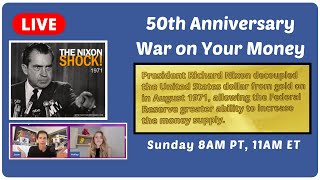
In this live‑stream segment, host Jason Hartman (Speaker A) and co‑host Ashley walk the audience through a detailed example of "inflation‑induced debt destruction," showing how borrowing in dollars before inflation erodes the currency’s value can effectively pay the borrower to take on debt. Using a 1972 mortgage case study, they illustrate how a $101 monthly payment in nominal terms becomes worth only about $24 in real terms by 2001, turning the loan into a profit. They liken the concept to Wimpy’s line from the Popeye cartoon, emphasizing the time‑value of money. The discussion expands to real‑estate investment tactics, contrasting "linear" markets (steady, modest growth) with "cyclical" markets (high volatility), citing personal examples of property flips, 1031 exchanges, and a First American study comparing Flint, Michigan to Orange County, California. They critique government‑driven inflation, the manipulation of CPI, and the artificial suppression of mortgage rates, arguing that low rates are unsustainable and will eventually rise to protect savers and maintain Fed tools. Throughout, they field live chat questions, reference community comments, and promote upcoming events: the Empowered Investor Live conference in Orlando, a free mini‑book on pandemic investing, and the high‑end Collective Mastermind group with Ken McElroy and George Gammon. The segment ends with a trivia question about the quote "An investment in knowledge pays the best interest," answered as Ben Franklin, and a call to action for viewers to like, share, and protect their wealth against perceived elite manipulation.
Chapters
Yeah. Hey, everybody. Hello. Hello. Hello, Ashley. How are you doing?
Good morning.
I'm well.
How are you?
Well, good. It's good to have you. So today we are going to talk about the anniversary of us leaving the gold standard, the final. The final end to what is known as the Bretton woods system. Well, I don't know that it hasn't completely ended, but the big thing about it ended. And that was back in 1971, five decades ago, we went off the gold standard. And you know about this because. I've talked about it. You've seen me presenting stuff about this. I remember when we were in Miami, I shared the speech from our former president, Richard Nixon, as he said they would temporarily, in quotes, suspend the convertibility of the dollar to gold temporarily, five decades ago. And so it's really important to talk about this stuff today and what it means to people. You know, everybody listening might be thinking, well, so what? Well, it's not so what? Folks, this is a big, big deal. And I want to start by saying I am not a gold bug. There are. There are people out there who are just completely enamored with gold. They think it is the end all, be all. I think it's highly overrated. Highly overrated. And I. I put a gold pillowcase on my headrest. Do you see that? Yeah.
Where I wore this just.
Just for this today. Yeah. And. But. But gold is. It's a measuring stick, right? It's. It's just a reference point, one of many. And, of course, we've talked before, Ashley, about the Hartman Comparison Index. And that is basically an index based on measuring sticks based on different commodities and their relationship to the dollar and their relationship to the other commodity, the one both of us are in. Homes. Real estate. You know, real estate, of course, has two main, main components, the land and the improvement. But we won't go down that rabbit hole today. We're just going to call it homes, housing, real estate, whatever. And it's. It's something that has universal needs. So it's pretty important stuff. But, yeah, that's what I want to talk about today. How do you. How do you feel about that one, Ashley?
I'm very interested to learn more about it because, honestly, I don't think they teach this in school. I don't remember anything about this. I should have learned this in high school. This is very important. We even had economics class my senior year. But I honestly cannot remember anything about this. But can you take us back all the way to Bretton Woods? What was this? Why did it Come about. Can you start at the beginning?
Basically, it started in 1944 as the Allied powers saw that they were going to win World War II. You know, the U.S. of course, was the first to develop the bomb. And that's what really turned the trick, obviously, because Japan was not going to quit. Japan back then, under Hirohito was a very imperialistic country, and they wanted to take over the world. And there's a lot of talk and a lot of conspiracy theories, by the way, I want to tell you, a lot of conspiracy theories are conspiracy facts. People. They are not theories. They are facts. Okay. Yeah. I just. I am so fed up with the way people are marginalized by saying they're conspiracy theorists. Well, you know what? Everybody in. In. In 1776 on the land that is now called the United States would have been called a conspiracy theorist because the US Was a conspiracy against England. Okay. That's how the country started. Thank God. Yeah. Right. And. And. And that's what the shot heard around the world was. And the revolution. And, and, and that was the. The greatest hope humankind has ever known for liberty and freedom.
And shouldn't we be proud of them?
Absolutely. Thank God for those conspiracy people. You know, George Washington and the rest. Right, yeah, yeah.
They'll be singing God Save the Queen.
Yeah, exactly. We would be saying that. But. But, but, you know, it's interesting how things work out. You know, you let time go by and it heals all wounds. As I like to say, Time heals all wounds. And obviously, the US And England are our allies. Right. Or Britain. But. So 1944, there was this meeting, and it was a meeting with. I don't know. I can't remember. I think There were like 700 people in attendance at this meeting. And it was in a remote resort location called Bretton Woods, New Hampshire. Now, I have not been to Bretton Woods, New Hampshire, but I really want to go and maybe have one of our mastermind meetings there sometime or something. I did take my mastermind group to Jekyll Island, Georgia, which is gorgeous, by the way, and that's where they formed the Federal Reserve. Another conspiracy, which is a conspiracy fact, but that's a different story. The Federal Reserve. And we can talk about that another day. But in. Let's go back to 1944. So basically what they agreed on is that they agreed that the US having not been destroyed in World War II, was, you know, without argument, the leading industrial power in the world. And it had the most stable money and it had the largest gold reserves. So the US was in a pretty great position in 1944. You know, we got a pretty good piece of real estate here where none of our neighbors are likely to attack us. You know, Mexico couldn't get their act together. And in Canada, well, you know, they've got an army with a. It's not very large. So we say that. And Mexico is pretty much a disaster, right? So the US has this great piece of real estate that's protected by oceans, and so it wasn't destroyed in the war. And it, you know, during World War II, it. It turned all of its manufacturing might into military production. And so there were massive shortages of everything from steel to rubber and everything. And, you know, you know, it's an interesting story, by the way. Here's a tangent alert. Tangent alert. Watch the interesting story about how television was invented. And sadly, the guy who invented television, he was a farmer and he was looking at the crops one day. This is such an interesting story, looking at the rows of crops and thinking that wouldn't that be a good way to arrange pixels on a screen to create a video image? And this kid, I can't even remember his name. History forgot about the poor kid. He invented television. And Unfortunately, World War II happened and all of America's industrial capacity was converted to the war machine. And the women worked in the factories while the men went off to die. And that was a very sad thing, obviously. And television got kicked to the side. And then When World War II ended and manufacturing was converted back to consumer production, RCA basically stole the idea for the television. And it's super sad story because the true inventor of television was sadly never recognized.
How it always goes, though.
Yeah, yeah, that's, that's the way it happens. And also, never enriched by it. RCA basically stole the idea and had the manufacturing. And so there you go. But anyway, back to Bretton Woods. Get off the tangent now. Right, so 1944, they met and they had this big meeting and they decided that the US Dollar would become the world's reserve currency and the dollar would be convertible to gold. Gold was considered money for pretty much 5,000 years. The first gold coin was created about 2,600 years earlier. But even before there were gold coins, gold was considered money, even way back to ancient Egypt and maybe before that. So gold is a good measuring stick for value because the supply of gold only increases at about 2% per year. And if we look at the Fed's inflation target, which is really interesting, our central bank, the Federal Reserve, their inflation target is 2%. And of course it's debatable as to how you should, what the target for inflation should be. I don't think there should be any inflation necessarily, but hey, that's just my opinion. If there's an argument to have inflation meaning devaluation of currency like the dollar, the euro, the yen, the peso, whatever, then it should be at the rate not to exceed population growth or economic growth or a blend of the two. But of course that's never happened, sadly. And what that really means, Ashley, is that all of us have been made poorer because of inflation. But there's a way you can game the system, a way that you can trick the system, that you can align your interest today you can learn about this and we're going to teach you about it today. Align your interest with these great powers, central banks, governments, what's left of Bretton woods, etc. And I'm going to share that with you today. So you're going to learn how to get rich by gaming the system on this live stream today. Okay, so, good stuff. Hey, do we have some questions coming in or anything you want to.
We do. We have some great, great comments actually. Harry Hunter commented, Mexico doesn't need an army to invade the United States. They, they just walk across the border and we get them to the destination of their choice.
Yeah, well, that is sadly true, Harry, and you're right. You know, it really goes to show you the immigration that has happened in Europe, Australia and in the US from our friends south of the border, that you can literally win a war through birth rate and you can lose a country by lack of birthright. And that's what is happening to the western countries all over the world and to Japan and to Russia. They simply aren't having children. And these countries, many will cease to exist. But when you look at what's happened with immigration in Europe from the Middle east, and I largely think that whole Syria crisis, etc was created, they, they knew that would happen. They did it on purpose. They, you know, the Obama administration turned Syria into an absolute mess and, and they created the immigration crisis that they knew would follow. And it's, it's basically a takeover. And, and, and the Western people, the sort of original Europeans, they don't have any kids, they don't reproduce. So, you know, and neither do what we'll call the European Americans. Right. They don't reproduce. Right. They have no children, yours truly included. Okay. And so this is, this is the way you win a war, through birthright. In fact, you know, it's been likened to this that the immigration policy of the US Is basically the idea that if you go away and someone breaks into your house, they get to keep the house, yet you have to pay the mortgage for the next 30 years. And that's kind of what's happened, you know, because the immigrants, even though they do contribute to the country in certain ways, they can't afford to pay the mortgage. Right. And that's largely because these, the, the manipulation of the currency has been, it's just run amok. And we're going to talk about that today, especially since 1971, but even before that, back to the founding of the Federal Reserve over 100 years ago. And some people have become very enriched and most people have become impoverished through it. Okay, so that's a good comment. Keep them coming, folks. And please tell us where you're located. And Ashley, they need to do something, right?
They need to hit the like button and subscribe, if they haven't already, but I'm sure they have.
And not only that, turn on notifications. Turn on those notifications. So when I do my impromptu live things, which sometimes aren't scheduled, you get notified right away when we post new stuff or go live impromptu. All right, what else you got, Ashley?
So, well, going back, so between Bretton woods Agreement and 1971, what happened? What was going on there?
Yeah, so this system from 1944 to 1971 was very strong. It was very much in place. Gold was very stable because it was pegged to the dollar. So those two were, were, they were attached, if you will. They were linked together. But then after 1971, it all changed. So let me share a couple of visuals here, and let's do this. If you've got any other comments or questions, Ashley, you want to share before that.
Definitely. So we have some. I really enjoy hearing from your international audience as well, Fernando Salgado. Colombia has a great workforce of young people, too. The government is so corrupt. Or too bad. The government is so corrupt.
Yeah, right.
Colombia is a beautiful country with a, you know, with a lot of history, with a lot of turbulence and a lot of very important figures and people. But, yeah, that's, that's, that's too bad.
I, you know, I couldn't believe it when I visited Medellin or Medellin, as they say, just over a year ago, how beautiful it was. What a great, great city. I was, I was just so impressed. But, yes, they've had massive inflation there. And, you know, this is really, the US really has the, the benefit with this whole inflation issue because with the reserve currency you can, you have a lot of advantages, just tons of advantages being the reserve currency of the world. So yeah, it's true. So today we, we are going to learn how to short the dollar. You can make a lot of money shorting folks, and this is a way that you can short the dollar. You know, I gave a speech last week at one of my mastermind group's board of advisors when I was in Sarasota and I talked all about shorting the dollar and I talked about my own portfolio and how I'm pretty much long on everything. Meaning when you're long you expect the price to increase and when you're short you expect the price to decline or the value to decline. And you know, I'm long real estate, I'm long stocks, I'm long Bitcoin. I'm long on everything except the dollar. I am shorting the dollar, not with any complex financial instrument, but I'm just shorting it by having mortgages on my properties. And that's what we're going to talk about today. And I think you're really going to like this. So stay, stay tuned in. Grab that extra cup of coffee if you need to because you're going to learn a lot with this today. So shorting the dollar. Okay, let's, let's watch some TV together. Ashley. This is a little watch party. So this is Richard Nixon's speech. To put it all in context, 50 years ago, five decades ago, this is what he said. I'm not going to play the whole thing but and then I've got a couple other things I'd like to watch with people that I think will really give them a good understanding of why this is so important. Then we're going to go into how can we all profit? How do we all profit from it? Okay, so Ashley, let me know if the sound comes through, okay? I hope it does. I'm never sure with the sound on these things.
The third indispensable element in building the new prosperity is closely related to creating new jobs and holding inflation. We must protect the position of the American dollar as a pillar of monetary stability around the world. In the past seven years, there's been an average of one international monetary crisis every year. Now who gains from these crises? Not the working man, not the investor, not the real producers of wealth. The gainers are the international money speculators. Because they thrive on crises, they help to create them. In recent weeks, the speculators have been waging an all out war on the American dollar. The Strength of a nation's currency is based on the strength of that nation's economy. And the American economy is by far the strongest in the world. Accordingly, I have directed the Secretary of the treasury to take the action necessary to defend the dollar against the speculators. I have directed Secretary Connally to suspend temporarily the convertibility of the dollar into gold or other reserve assets, except in amounts and conditions determined to be in the interest of monetary stability and in the best interest of the United States.
So you heard that he said he directed connally to temporarily, 50 years ago, to temporarily suspend the convertibility, meaning before this speech, which by the way, this was on a Sunday night when nobody was paying attention. Do you remember how Obamacare was passed on a Sunday night? I think it was about 11pm or midnight Eastern time and about 2am in California where I lived at the time. Just unbelievable. So they do this stuff, you know, to avoid the news cycle, right? These are things that they don't want people paying too much attention to. And so this, this was a very history making speech. And after this there was fallout galore. And you know, if you're interested in economics, like I've said before, study the 1970s. It wasn't too long ago and it's a fascinating time in history because Nixon Institute, he had to institute. Well, I don't know if he had to, but he did. He instituted price controls. There were three hour lines of cars, hundreds of cars long at gas stations to get gasoline. They imposed rationing of gasoline where you couldn't get gas on odd or even days depending on your license numbers on your car. Was it an odd or even plate number and that dictated when you could buy gas. There were just all kinds of crazy things. The price of gold went through the roof in the 1970s. It was absolutely crazy. So this is a super important time because after this, yes, we had inflationary spats before, but after this, all bets were off. All linkage to anything of real value and all tethers on government spending were gone. They were just totally gone forever. And this was a world changing time 50 years ago. So it's just very, very important that people understand it. Okay, so let's.
The third indispensable element in inflation.
Let's move on here. Okay, so the third indispensable element. And bill, now I don't know why that doesn't work. Okay, so the gold standard. This is interesting. American dollars are worth 80% less than when Nixon took the US currency off the gold standard in 1971. Gold has increased in value over 3000% since then. Okay, so 80 less.
We are on a race to the bottom.
Thank you, Ashley. That's exactly. Yeah. So think about that. If you worked hard all your life and saved your money, as you should, then that should be rewarded. You know, you, you, you made decisions to delay gratification. You didn't buy that new car. You didn't buy all those stylish new clothes. You didn't go out to all those great restaurants. You didn't go on all those great vacations. You saved money. You did the right thing. Right? The thing that is, is the thing that should be rewarded. Okay? The value of your savings has been completely debased by 80%. If you had a million dollars in the bank, you only have 200,000. It's just unbelievable what's happened. It's been a complete sham and scam.
And so if your money isn't holding value over time, you really, you can only engage in short term thinking. You really can't engage in the long term.
You know, when we visited that art museum here in, in Palm beach area, remember, and we were listening to the book, the Bitcoin Standard, and that was such a, that's such a great book. And I interviewed Seifudine Amos, the author, on my show, so you can look for that YouTube video and that podcast on the Creating wealth show. But he, he really made the case for what's called low time preference and high time preference. And he talked about modern art. And both you and I actually like art. Right? And tell them about the story. When we visited that museum.
Oh, well, we, we participated one of exhibitions which was a pile of candy dumped in the corner, and you were allowed to take one. And that supply would be continuously augmented so that the exhibition would never end. And sounds like our money supply is going to keep going, you know? Keep going.
Well, that's an interesting parallel that you made. We didn't make that one before when we talked about it, but the, the concept of modern art in general, right. It's just, it's just, it just doesn't have, by and large. I mean, there are exceptions, of course, but I'm, I'm just making a generalization. It doesn't have the quality of the real art of the past. Okay. You know, it's, it's just splashing crap on a canvas or duct tape, a banana to a board, and it sells for $120,000. And what Ashley's talking about. And Ashley, I don't have that picture handy, but I have a Picture of you picking up the green hard candy, you know, from this art exhibit. This is called art. It's a joke, right? It's, it's just a joke. And this is a, this is a reflection, seifudine Amos believes of a high time preference society, meaning that when the value of your money is constantly under attack, all the people, you, everybody else in society tends to think in a high time preference way where when you get your money, you spend it instead of saving it and building for the future. When it comes to art. And he makes the case great in the book, we're not doing it justice now that real art took just a massive amount of time and effort versus the kind of, you know, that you see today. Right? Taping a banana to a board is not art. Okay? This is, this. It's, it's like jokes on the person who bought it, right? It's, it's just.
We can find someone who would disagree with that.
Yeah, of course. Yeah. And if you disagree, I doubt anybody that stupid is listening or watching. But if you disagree, hey, make a comment. You know, would you buy the banana taped to the board for $120,000? And by the way, this actually sold at Art Basel in Miami. So not far from, not far from here. Okay? So that's the gold standard. So going back to our watch party. Well, today we're going to talk about my, my, my trademark idea, inflation induced debt destruction. So, so we're going to teach you how you can benefit from this. And this is not the same way I've taught it before. It's going to be a little different approach today. So I think you'll like it. But let's. This is, this is a video from One Minute Economics. Great, great YouTube channel. And it's just a super fast explanation of Bretton woods and the system. So I want to just watch this one together.
After World War II, it was clear the world needed a new financial system. The gold standard was considered too rigid. But at the same time, economists were worried that countries would devalue their currency to boost exports. For this reason, 44 countries sent delegates to a conference held in Bretton Woods, New Hampshire. As of 1 July 1944, the U.S. which held two thirds of the world's gold reserves after the war, was obviously the most influential player. And ultimately all currencies ended up linked to the dollar and the dollar was linked to gold. One important concern arose, though. If a country goes through an economic crisis, how can it get out of it without devaluing its currency?
Now, they don't really explain that, but I think what they're largely referring to is if a country goes into a crisis caused by natural disaster or recession or depression, you know, they, in the past, well, they still do it, of course, but they would, they would be forced to devalue their currency. And what that would do is it would cause intern, you know, currency traders to suck up that currency because they would think it was cheap and it would also increase their exports. So if you're making widgets in a country and your currency is devalued, all your widgets become cheaper compared to other currencies on international markets. And we've all had this happen. I mean, Ashley, you've been to so many places and, and I have, too. You know, isn't it nice to go to a foreign country when you're earning money or saving money or have your money, you're denominated. Your wealth is denominated in dollars. And then you go shopping there and everything seems so cheap. Right. Have you experienced that?
Oh, all the time. And you feel so powerful walking around with dollars. And everybody wants them. They want them because they, they're much more valuable than their own local currencies. And although nowadays everybody knows what, what things are worth in the United States, so you get those price, you know, you get those prices. But absolutely. And, and it's funny, all the places I've been, almost, almost all of them will accept a dollar. You know, a taxi driver or an artisan selling their, their crafts. Everybody will take a dollar. You know, they're, they're happy to have it.
The dollar is the reserve currency of the world. It is the most popular currency in the world. And you know what? Even though it's declining in value, I don't think that reserve currency status is going away anytime soon. There are a lot of people predicting that it will.
But, But I think 100 year mark, isn't it around of reserve status?
Right, right. Yeah, and I don't think they will. I don't think the people predicting the demise of the dollar are looking at it in as many ways as they should. And I've talked about that in depth on the podcast, so I won't go into it now.
What does your audience think? Write in the comments. What do you think?
Yeah, what do you think? Do you think the reserve currency status of the dollar is going away? Tell us what you think. And, oh, Nasir has says this comment. It's, it's abstract. Art should have intrinsic value for it to be valuable. Yeah, well, I think I'm agreeing with you. Then, yes, it should have intrinsic value, and it doesn't necessarily. So interesting. Okay, let's. Let's get back to this video because I want to keep the train of thought. We've only got another, you know, 60 seconds here or so to address this issue.
Two institutions were created. One, the International Monetary Fund, which was supposed to lend money to countries that are in trouble and cannot attract financing from other sources. Two, the International bank for Reconstruction and Development, which is now called the World bank and was supposed to help less developed countries grow. Unfortunately, as good as it may have sounded on paper, the Bretton woods system didn't survive because the United States kept running deficits to fund various projects, and therefore, the amount of dollars in existence kept increasing while the gold reserves of the US Kept shrinking as more countries demanded gold in exchange for their dollars as such. On the.
Okay, so that's an important point. So what was happening before 1971, and this is what made Nixon nervous, President Nixon at the time, is that, you know, these other countries around the world saw the US Spending. And this, by the way, if you want to lay the blame for this, it's on that awful president we had in the 60s, LBJ, Lyndon Baines Johnson, who probably was part of the conspiracy to kill Kennedy so he could take office. Okay, but don't go there. Another conspiracy theory. You know, I got. Ashley. I got so interested in that subject that after watching the. The movie JFK by Oliver Stone, and by the way, I interviewed Oliver Stone's son, who's also filmmaker, on my podcast on the Creating wealth show. Fascinating interview. After watching that, I actually flew to Dallas because I just had to study it. I got so fascinated with that topic.
Wow.
Yeah. And. And I went up to the sixth floor of that building where Oswald was. There's a museum up there now. And you can stand at the window, next to the window where he was. They have the other part, that part with that actual window enclosed in plexiglass. And let me tell you something, I shoot guns. And that is a really tough shot. Okay. If he was on the sixth floor up there. But then I went to what's called the grassy knoll, and that shot was a cinch. You know, it's almost the level of the car. It's. I don't know, maybe 30ft from the car. That would have been a very easy shot to stand there. So, yeah, there's. There's way more to it. But anyway, what was I saying? So, LB, what's that? JOHNSON yeah, so Lyndon Johnson in the 60s, you know, he, he wasn't, he was an idiot and he announced this whole Great Society idea, right? And this was just the massive expansion of the welfare state, which proved to be terrible for people. And of course we have it with us today. And we have this system that basically encourages people to be less than they can be and doesn't reward people who are exerting themselves and making effort. It's a very sad state of affairs. It's bad for humanity. But that spending scared other countries. And as the US kept spending and spending and spending, other countries around the world were saying, gosh, with all this spending, the value of our holdings in dollars is going to decline, so we want to convert our dollars to gold. So they were rushing over to what has been called the gold window, okay, and converting their dollars to gold and saying, hey, look, we want gold because gold is stable. You know, it's, it only increases in supply by about 2% per year. But dollars, you're just running a printing press. And so, you know, remember, two primary value drivers for anything in the world, okay? Whether it be currency, whether it be a commodity, whether it be a loved one, okay? A significant other, your children, anybody, right? Two primary value drivers, utility and scarcity. Right, Utility and scarcity. Those are the things that create value for anything. Not just money, not just commodities, but also people. Okay, look, you know, why is your significant other have super high value to you? Because there's only one of them, okay? And they are scarce. And utility, well, I won't go into that. Debatable at times, depending, right? But, but that's, those are the value drivers. And so these countries thought, you know, we got to convert our, our dollars to gold. And there was a rush and so Nixon got very worried and said, look, we got to stop this. We're going to. All our gold is going to be drained out as people convert their dollars. So that's, that's what happened.
So here we go with 15 August 1971. Nixon officially announced that dollars would no longer be convertible to gold, thereby putting the final nail in the coffin of the Bretton woods system.
So that was the 15th of August 1971, folks. Okay, so there you go. All right, let's go to the next.
After World War II.
Hang on. Okay, so by the way, we talk about this stuff in our collective mastermind group. This is the mastermind group that I started with Ken McElroy and George Gammon, and it's a, a really high end mastermind group called the Collective, and it's all about connection, capital and community. If you're looking to do business with high level people, accredited investors, you're looking to raise capital, you're looking for high level connections. That's what the group is about. And you can check that out atthe Collective Mastermind dot com. I'll put that at the bottom of the screen right now. We've got our Pandemic Investing free report at the bottom of the screen, so be sure you get that. But the Collective Mastermind is. I'll put that up in a moment. So I just wanted to mention that. And so the next one is a really short video, which is a different angle on the Bretton woods system. But, Ashley, maybe it's a good time to take some comments and questions.
Yes, I do. I want to. There's a comment by Kure C. He, he writes, after Nixon did that, the stock market exploded. And that was my other question. What was the immediate reaction? Yeah, after, after Nixon announced it. I mean, you know, was it, you know, first of all, on a Sunday night, late Sunday night during Bonanza. That's, that's no coincidence.
And Ashley, whoa, whoa, whoa, whoa, whoa, whoa, whoa, whoa. Timeout. Bonanza, the TV show, You even know that that show existed? You are not old enough.
My father made me watch that growing up. So I've seen it a few times, but I'm, I'm. Yeah, it's.
Did it run Sunday night? I.
No, I, it was just reruns. I have no idea what, what, when it was on, but I'm aware.
Yeah. Ladies and gentlemen, Ashley is an old soul.
Yeah.
Young, young person, but an old soul. Good stuff. So, yeah. So, you know, Corre, you bring up a really good point. See, the question is, compared to what did, when, when this, when the value of stocks change either up or down, we are only measuring them usually in one thing. Dollars. Right. This is what my index, the Hartman Comparison Index is about. So when, when you say, for example, let's take the example of something going up, real estate prices going up, stock prices going up, you know, the cost of groceries going up, the question is not did they go up. The question is did the cost of that item or the value of that item go up or did the value of what you're comparing it against go down? So was the dollar debased? Did it go down in value? And that's why you think stocks are more expensive or real estate's more expensive or groceries are more expensive or tuition or medical care or whatever. Right. It's about Comparison, that's what it's all about. And Ashley, you know all too well what the Hartman comparison index is about, so. Yeah.
Yeah, thank you Khoraci for that comment. Yeah, and that was my question too. What was the immediate reaction did because nowadays as well with our information network, I think if something big hits the news, you know about it within an hour.
Right.
We are so connected to every form of news constantly through our phones and computers and everything. So I feel like the average person will know very quickly when something else happens, something of this magnitude.
Yes, the markets are more. Whether they be currency markets, stock markets, whatever they are, they are more perfect than they've ever been. And what do I mean by perfect? Okay, what I mean by perfect is that since communication technology is so good, those markets adjust extremely fast nowadays. And when a market is very perfect, like stocks, like currency markets, etc. The opportunity declines because the more aware person, the more educated person doesn't have as much opportunity to make more money in more perfect markets. The more imperfect markets are where opportunities are and I would argue that that's what's so great about income, property, about real estate, is that that market is less perfect than stocks, bonds, precious metals, currencies, whatever. Any other financial market is very perfect. And you want the less perfect market because through your creativity and education and ambition, you can make more money for yourself. And that's why I love real estate. I love income properties. So yeah, good stuff. Oh, here's a comment I like, Ashley.
Go to the one right after that.
Thank you. Is it as flattering? I don't know if I want it. Either way, we gotta leave with this one. Thank you Nasir, Appreciate it. Okay, this one.
Yes. So the lesson is the more money is printed, the more asset inflation is happening. But what happens when the printing of money slows? Do we see a crash in prices?
That's a good question. And corre, prices are sticky. They are very sticky, especially in the less perfect markets, by the way, to dovetail on what I was just saying because once a price of anything goes to a certain point, the whole marketplace psychologically adjusts to that. Right? We all think, Ashley. Well, okay, houses are now $350,000. Gold is $1800. The S P is X, you know, the Dow is this. The dollar value is that prices have a stickiness. That is certainly psychological. But as the money supply contracts and it hardly ever does. Okay, but if and when it does, then you do tend to see prices affected for sure. But they rarely ever go back to their prior lows it's always when you're looking at a chart of almost anything, right, you'll see it goes up and then there might be a retrenchment, and then it, but it won't be as low as the prior low point, and then up again and then a retrenchment. And, you know, that happens with, with anything pretty much. But prices are sticky at, at their prior valuation. There's no question about it.
Okay, question from, from me, actually, going back to lbj, I don't see your.
Question in the thread here.
Could we compare the, the, this Great Society intention to the, the, the Great Reset that we've been talked about, told about? Why, why, if, if we have to preface something with great, isn't that a bit suspicious?
Everybody give Ashley a hand on that one. That's, that's good.
You have to tell me that it's great, then I.
That's a good point. That's a really good point she's making. So, yeah, the Great Reset is definitely different than the Great Society. That's more a concept of. Well, we don't exactly know what it is, but the infamous line from the power monger tyrant Klaus Schwab, who runs the World Economic Forum, is, you will own nothing and you will be happy. And, you know, I read one of his books, which was so boring, I couldn't believe it. I mean, it was just like, you know, I kept reading and I'm like, what is the point? He just doesn't have a point, it seems like. But, you know, he's referring to the sharing economy and the idea of the, the ownership society being bad. And why, why do tyrants think that's bad? Because private property rights mean that people own the right to their time, labor and intellect. And when you dispose of private property rights, when you attack private property rights, you essentially are stealing people's life. Their whole life force is made up of what their energy, their ambition, their creativity, and their, their work. Right. Whatever product we all produce at our work, the Great Reset idea says we don't have a right to that. And how do we produce work? Our time. Well, our time is our life. Okay? If we're, they're essentially stealing our life, that's what these, these dictators and tyrants do to people. So it's very, very scary stuff. And no, I don't think the Great Reset is too great. So. Yeah, and I don't think the Great Society was too great either. So. Yeah, you know, all of these programs tend to enrich the, the powerful and the elite. Class and impoverish everybody else. So let's do one more watch party here on Bretton woods and then I got, I got no more videos for you today. Okay? So here we go.
Hi, I'm Bill Reinsch. I've been working in international trade for over 35 years, which makes me really old and I'm a trade guy. Today you're getting a little history lesson. We're going to talk about the Bretton woods system. So the year is 1944. The end of World War II was in sight. The allies, realizing that they were going to win, wanted to get together and talk about creating a world where war and depression could never happen again. They met In Bretton Woods, N.H. there they spent a month negotiating. There were 730 people or delegates from 44 different countries, all our allies. And essentially what they did was create a three legged stool, a tripod of institutions to guide the post war world. This is how that three legged stool works. Today. The first leg is the International Monetary Fund or imf. The IMF works with countries that are having problems with money, problems with debt and paying back the money that they borrowed. And the IMF gives them advice on how to change their internal policies and structures in order to fix the problems that they've got. The second leg is the World bank. Back in 1944 when the delegates met at Bretton woods, they realized that poverty is a big motivating force when it comes to conflict and violence. And they decided that if they could help countries grow and create jobs, there would be a better chance of peace. So the World bank is primarily a lending institution with a goal of ending extreme poverty. And it lends money to poor countries for economic development. The third leg of the stool as it stands today is the World Trade.
Organization, or W, by the way, really interesting documentary I watched years ago is called Life and Debt. Life and Debt and it talks about the, the, the organizations that he's talking about, the IMF and, and the World bank and talks about how these, these groups basically impoverish poor countries. Because what they do is they. Now listen, I'm sure there's two sides to this story, right? But they basically accuse them of essentially predatory lending where they will lend, they will come into these countries like Jamaica, which is what life and debt is about, a very poor country. And they'll come in and say, hey look, you know, let borrow some money from us so we can help you with infrastructure projects. And what they did is they, they, they loaned Jamaica money and started to do these projects. You Know, roads, sewers, whatever, and you know, sewage treatment plants, whatever, you know, business areas. And they basically said to Jamaica, look, if you want this loan, you need to devalue your currency so it'll make your exports more attractive to international buyers, to other countries. Right. So, you know, remember how Trump accused China of devaluing its currency, of manipulating its currency down? He's right. They, they, they do that. There's no question. And they do that to make their exports more attractive so their stuff looks cheaper. Right. They're a currency manipulator. And so they, they basically force Jamaica to do this. And in so doing it impoverishes all the people in Jamaica because the value of their currency is now lower. So, you know, the day before that they, they go to the grocery store and they get, you know, one bag of groceries for X amount of currency. And then the next day they go and they only get half a bag of groceries for the same amount of currency. Right. But then on the international market, whatever's produced in Jamaica looks cheaper. Cheaper. So more people buy it. Right. And their exports increase. And it basically turns these countries into sweatshops. And they're basically sweatshops for global buyers, mostly in the United States because the US is, is the wealthiest large country and has the biggest economy. So it's, it's pretty interesting when you see this stuff. This did not work out well. Okay. And certainly post 1971, it sounds like.
The old bait and switch technique.
Yep. Good way to put it. Ashley, for sure to.
The WTO promotes global trade and free trade, and it also functions as a courtroom for member countries to resolve trade trade disputes with one another. Basically, the WTO upholds the rules of international trade. Thanks for watching. Stay tuned for more trade guys videos.
Okay, so that's that one. So we've got no more stuff to watch. But I do want to talk to everybody about inflation induced debt destruction. So let's, let's jump to some questions though, before we do that.
Yes, let's. So we have a interesting discussion going on right now about developing countries, mostly of cyclical real estate markets. This is where the real value is, says Nasir. But our other audience members are asking, where are these countries?
Well, yeah, so see, here's the thing, Nasir, you're right that there could be some good upside potential in some of these developing markets around the world. How, however, compared to the U.S. the U.S. has a very special type of real estate market because of the government sponsored entities that provide incredibly good financing. Rule of law, MLS system, transparency I mean, there are just so many benefits to the US Real estate market. Tons of foreign direct investment. You know, I wonder, I've got to research this, but on a per capita basis, I wonder if the US has more FDI foreign direct investment than any other country in the world. And I don't know about that. I don't know the answer to that. Maybe someone does know or knows the place to look it up and can post that in the comments. But you know, the US has always been considered the Brinks truck of the world, right? The Brinks truck is the armored truck because the rule of law is so good in the US and it's such a safe place for money. And that's why foreign money just comes here like crazy. In fact, what's interesting and what a lot of U. S. Citizens don't realize, you know, we all hear, we Americans all hear about tax havens and the places the wealthy hide their money, right? You know, what are they? Well, they're the Cayman Islands, the Bahamas, you know, Nevis, Saint Kitts, Jersey which is a, a territory of, of Britain. What else? The Cook Islands. Right? And everybody sets up these entities. Singapore to maybe a lesser extent, Switzerland. Of course the Swiss banks aren't what they used to be, but in the old days they, they were the place people kept all their money. And, and we, we, we all hear about these tax havens, right? And literally, by the way, if you travel to these places a lot, your chances of an IRS audit increase. Yeah, I'm not kidding. The IRS watches this stuff. If you wire money to these places, your chance of an audit increases dramatically. So here's the thing though. We all hear about those tax havens, right? And for big companies, the tax havens in, you know, the Netherlands and Ireland, right? These are big tax havens. And in the big tech companies are basically screwing all of us by using something called the double Irish twist. Okay? Just look it up, you can learn more about it. And they're not paying American taxes, which is, you know, absolutely disgusting because they're getting most of their money. They're raising money in the American market. Market. We know that their headquarters are in America. We know that Apple has that giant five billion dollar campus, that spaceship in Silicon Valley, right? But you know, they evade taxes. It's absolutely disgusting. These people should be indicted. They should go to jail. You know, Tim, Tim Cook. Go, go for it. We, you know, you, what you're doing is crooked. It's unbelievable. Even though it's legal, doesn't mean it's not Crooked. All right. When I say crooked, I mean from just a logical standpoint. Right? What? You know, it's, it's awful what they're doing. They're not paying their share, but we all think of these tax havens. Right. But to the rest of the world, do you know what their big safe haven tax haven is? It's the United States. It's right here. So to a wealthy person in China or Russia or Brazil or India, where do they want to put all their money? In the U.S. okay. The U.S. is a very attractive environment for them, although Americans don't think of it that way.
Right. So how long do you think that will last? Do you think that could change?
Well, of course everything can change. And I don't know how long it'll last because I don't, like most Americans, I don't think of it that way. I don't think of the US as being a haven. I look around the world and I interview people on my show and you know, they, they talk about these havens mostly for the Americans. Right. And the, the, the United States is the only country on earth that taxes you on all worldwide income.
Yes.
Americans have that problem. So if you really want to save on taxes, you either have to move to Puerto Rico because that's a special zone for Americans. And I tell you, I've been there many times and many of my friends have done it. And I don't want to live in Puerto Rico. Okay? It's just not worth it. I'll pay taxes.
But they've got great beaches there. Oh, it's a great time.
Come on. It's a third world place. I don't like it. And so either that or you just relinquish your American citizens citizenship, which would be a pretty big step. So I wouldn't recommend it. I like the good old US of A. And the way you save on taxes is, look, you invest in real estate, you can do more creative things than that. But income, property is the most tax favored asset class in America. So thanks for that, Nasir. And I think from just a money perspective, yeah, you have a good point. But there are so many other factors. Rule of law, MLS system, access to data, a transparent closing process, and not the least of which the government sponsored entities for the financing. Okay, what else?
So quick crypto. Wall street is buying houses now as well, so the prices aren't going to crash very hard. So 1152. Wall street is buying houses now as well, so the prices aren't going to crash very hard.
Yeah, you know That's a quick crypto. And by the way, here's a bitcoin for you. And, and, and here why I have my bitcoin out is I have my Zimbabwe dollars. Always good prop to talk about the.
Debasement of currency is that, is your bitcoin right there. Is that made of solid gold?
No, it's, it's, it's the funny thing, Ashley, about this, I remember I was at dinner with George and Ken and another friend of mine, Cam. We were at dinner one night and I gave everybody a bitcoin. And of course, the funny thing is that this is real because it's, it's matter. Right. But it's also fake. That's the funny thing about it. You know, real bitcoin is fake. The digital bitcoin that's not real is real. Yeah, yeah, try that one out. So, yeah, so. So this is a good point that quick crypto brings up is that, you know, now you have aligned your interest with these very powerful forces, the big Wall street banksters and the crooks on Wall street, because they don't want to see prices of real estate go down. And they have all these lobbyists to make sure that the game continues. And now they're in with you. And they own tens of thousands. Well, altogether they own hundreds of thousands, maybe over a million probably now, depending on what you consider institutional investors of homes. And with, with all these companies owning lots of homes, I think that does give us a safety net. So that's a very good point. Yeah.
Now, what about companies, BlackRock, Blackstone, one of their top advisors is our vice president.
Yeah. You know, blackrock and Blackstone are big players in the real estate game now, and that also makes me feel more secure. Now, long term, though, okay, Two, two things on this, Ashley, glad you brought that up. Two things. Number one thing is, yes, they own a lot of single family homes, but compared to what? Compared to the overall market of number one, single family homes, and then number two single family homes owned by investors for investment. They are still a drop in the bucket, these institutional players. Okay. Whether they be, you know, Invitation Homes, American Homes for Rent, or, or the companies that own those brands, the big institutions, BlackRock, Blackstone, et cetera, et cetera. You know, these companies are still a very small player in the overall marketplace, but they are getting bigger. And that makes me feel very good about being a single family home real estate investor because I want to align my interests with very powerful forces with lots of capital, lots of money, lots of influence, and ride on their Coattails. So that's fine with me. Okay. But, but in the end game, maybe 20 years from now, for example, we'll have to see how it plays out and how much they end up owning because they will not only push prices higher, but they'll push rents higher because they are really good at raising rents, whereas typical mom and pop investors are not good at raising rents. You got to raise your rents every year, folks. Absolutely. You, you must do that. And this is another reason you should get your property manager out of the way because your property manager is probably not good at raising rents like you will be if you self manage. And we teach people how to self manage from a distance, properties they've never seen and tenants they've never met. You can do it. And that's what we do on the podcast with my Empowered Investor inner circle. And we'll be talking about that a lot at our upcoming conference in Orlando, Empowered Investor Live. And I'll, I'll put that up on the screen here in a moment. But, but yeah, so I, I think the institutional investors are going to be really good for us initially long term. You know, I don't know yet. We'll, we'll see how that plays out.
Hello, Gray Fox. But he says but Wall street or she. But Wall street owning homes. They will leverage again.
Boom.
History repeats.
What number is gray fox?
1201.
Okay, there you go. Yeah, we'll leverage again. Boom. History repeats. Not sure what you mean by that, but you know, they obviously leverage. They can borrow money cheaper than we can borrow that money. And yeah, so I mean, look, they're going to protect themselves and they have the connections, the power of the lobbyists. So it's okay with me to just be riding along in that same asset class, is therein? Okay. But, but like anything, like in the stock market, look, they are going to have better information than we'll have and they are going to be the inside insider traders. They're the insiders. Right. So they're always going to have some advantages. Yeah, I agree.
Mark Tar. Jim Richards says that the merger of Fed Reserve and the treasury is mmt, where debt doesn't matter. How long can this last in your opinion?
Yeah. First of all, I think you meant to say Jim Rickards and he's, he's, although he said Richards has been on my show before. He's a super interesting guy. So far his predictions haven't been so great. But he's really smart, really interesting and he's written some great books and he did a great interview on The Creating wealth podcast. So check that out. My interview of him. I think you'll like it. So the merger of the Federal Reserve and the treasury is mmt, modern monetary theory. Now, MMT has gotten a lot of press lately. It is a fantasy, if you ask me. It has a couple good points to it, but overall, it's a fantasy. MMT cannot possibly work because basically what it says is that the government can just keep spending, and it can keep spending because it taxes. And all of its taxes have to be paid for in its own currency. Right? And so in paying taxes in its own currency, they are basically creating in this circular motion, a machine, kind of like a perpetual motion machine that cannot exist and so far cannot work. But humanity's been fascinated with the idea of a perpetual motion machine for a long time now. And they. They basically solve the problem of their rampant spending by taxing and. And that creates value to their own currency because people have to pay the taxes in that currency. And by being a global lender, when the US Lends money to other countries, it requires those countries to pay that debt back in dollars, just like we have to pay taxes in dollars. So by doing that, it actually strengthens the dollar, puts a floor under the dollar and gives it stability because all those debts and all those taxes have to be repaid in dollars. But folks, even though that concept is true, it's still a fantasy. The reason it's a fantasy is because the spending is so much higher than those tax and debt obligations. So the equation just doesn't work. It's not a perpetual motion machine. MMT is a fantasy. Okay? It just. It's just not going to work.
Not the good kind.
Yeah, yeah. Not. Not the good kind of fantasy. Obvious. Behave. Okay. All right. So anything else, Ashley, or do you want me to. Yeah, let's.
Let's go to some slides and see some of the questions on the slides. But.
Slides. I don't have questions on slides today.
Oh, I do, I do.
Well, then let me see. Can you share your screen?
I cannot.
Okay. Did you share that presentation with me?
Yes, it's on the. Yes. The usual.
The usual. Okay, I'll have to find that. Okay, so let me. Let me teach for a few minutes. Let me teach a little bit of this because I want to make sure we get to this anyway. And it may preclude us doing some of the slide questions that we have. But here's the deal, folks. This is how to short the dollar. This is inflation induced debt destruction. Now, I'm giving this example a New way today. I've done it before and maybe you've seen it, maybe you haven't, but it's going to be a little different take on it today. So let's go back to 1972, one year after Nixon took us off the gold standard and the median price house. Just follow my mouse there. Do you see my mouse on the screen? There it is. Was just over $18,000. And if you got a mortgage, and your mortgage payment on this house was about $101, you got a mortgage 20% down would be $14,600. Basically, right? At 80% loan to value the mortgage. Interest rates back then for 30 years were 7.37%. Got a 30 year mortgage. Okay. And let's assume that your tax rate was 33%. Right? Okay, that's, that's a good question. So how can we short the dollar? How can we get paid to borrow money? Now don't panic on this sheet. I'm just going to focus in on a few numbers here. This is what happened to the tens of millions of people who took advantage of inflation induced debt destruction. Maybe around the world it's hundreds of millions or even billions of people. I don't know. Nobody knows the real number. But let's just go along year by year. Each row represents one year. And in one year we're going to go through what happened then. We're not going to use all of these numbers just in the interest of time, but in 1972, a dollar was worth a dollar. The official rate of inflation was 3.2% back then. And why do I say official rate? Because it's manipulated. Inflation is made to look lower than it really is because the powers that be want us to believe inflation is lower. Because the government subsidies, the welfare and the government salaries for all those government employees are indexed to inflation. That's one reason they want to artificially make inflation seem low. But also they, they basically are in a position where they, they don't want we the people to believe inflation is high because they want us to be happy so we don't get out our pitchforks and riot in the streets. Right? So that, that's basically what happened 1972. A dollar's worth a dollar. Remember that mortgage payment is $101 per month. Okay. And don't worry about all these other things on this chart. So now let's go to 2001. Let's go three decades later when this hypothetical, not hypothetical, but very real person, because there's tens of millions of these People is now paying off that mortgage. They're making the last payment on that mortgage. Now A dollar, the 1972 dollar, is only worth 24 cents. The average inflation rate over all these years has been 5.1%, the official number. And the dollar is now worth 24 cents. So remember, we thought we were paying $101 per month on that mortgage, and that's still what the chance check says every month. But the value of that money has been debased by inflation. We came off the gold standard. Bretton woods mostly ended, and we have the dollar now being only worth 24 cents. So that 101 dollars a month in mortgage payment is only 24 real dollars in real terms. Right. That's the value of it. So that's inflation induced debt destruction, meaning that we borrow in today's dollars, but we pay them back in tomorrow's cheaper dollars. So through inflation, we become much, much richer. And this is the business plan of the US Government and the US Central bank, the Federal Reserve and other governments and central banks around the world. It's their business plan, too. But the US Has a very unique situation because it is the reserve currency and the largest economy, and not to mention the largest military by a huge margin. So it's not going to give up the benefits of reserve currency status anytime soon. So again, we borrow in today's dollars. We get the dollars today, and with the time value of money inflation debasing and devaluing money, we pay it back in tomorrow's cheaper dollars. This is a wonderful thing, Ashley. Isn't this a wonderful thing?
This is a wonderful thing.
You know, why doesn't everyone do it? Yeah. Well, a lot of people listening and watching probably are doing it.
Yes.
I want to tell you, Ashley, where I originally learned this. And since you watched reruns as a kid, I want to see if you know this one. Did you ever watch the cartoon Popeye?
Yes, I did.
Popeye the Sailor Man, Right. Okay. So Popeye ate his spinach and became super strong when he ate his spinach, right? Well, Popeye had a good friend. He had olive oil. That was his girl. Okay? But he had another friend, his sort of fat, dopey friend named Wimpy. And Wimpy had a famous line, and Wimpy taught me all about inflation at a very young age. Here's what Wimpy said. Wimpy said, I'll gladly pay you Tuesday for a hamburger today. Okay. That was what Wimpy said, I'll gladly pay you Tuesday for a hamburger today. See Wimpy understood the time value of money because what he would say is, I want the benefit of the hamburger today, but I'm going to pay for it later in devalued dollars. Okay? And that's a great thing to get all the benefits of something today and pay for it later when the dollar is worth less money. Because we're going to be earning more dollars in at least in nominal terms. In name only. Right, in name. But we're going to be paying back in lower real dollar value, in this example, $0.24 on the dollar. Or that mortgage payment that you think is $101 you're writing the check for is really only worth $24. So what happens at the end of this? What happens? Well, here's the summary of it. Remember this person borrowed $14,614 in nominal dollars because there was a 7.3% interest rate. They repaid over $36,000, in other words, what they wrote the check for. But the real value of those dollars after inflation was debased to 16,393. Right. So that means their effective interest rate was really only 1.06%. But it's better than that because after taxes, remember that interest on the mortgage is tax deductible and that's at a tax bracket of 33%. Their effective borrowing rate was negative. 1.16% negative. They literally got paid to borrow money. Plus, Ashley, they got to live in a house for free. Great deal. Great deal, right? Awesome, awesome deal. That is inflation induced debt destruction. It is a phenomenal, phenomenal thing. And that is how you short the dollar. That is the way to short the dollar. So, questions or, or thoughts? That's the way to align our interest with the most powerful entities the human race has ever known, governments and central banks. And they want this, they want more inflation. Why? Because they get to pay their debts back in cheaper dollars. It's a great business plan. So they're going to do whatever they can, anything in their power to create as much inflation as possible and at the same time understate inflation or lie about inflation through their official index, the Consumer Price Index, the cpi, the government lying.
What do you mean?
Oh yeah.
Great comment from Rap Life Media. Brutus was the irs.
Yeah, that's a good one. That's a good one. I love it. That is a good comment. Hey, Ashley, for me to find that slide presentation, I think it's just called Live Stream, right?
Yes, yes, it's called Live Stream slides.
Let me grab that While you're looking at some of those questions.
Sure, sure. And then we have a really interesting comment from Todd. Todd Dubberly, 1207. With the Blackrock's big shot types in real estate, Biden's threat to eliminate 1031 exchanges seems to be a hollow threat.
Yeah, you know, that's a really good point. It would be very hard for them to eliminate that when the powers that be are lobbying them and paying them off and. Yeah, I, I think that's a really good point. And that's why we should. Once again, we're finding a way to align our interest with these very powerful entities. Okay, well what's going on here? Why, why isn't that screen showing the way it should be? Well, I don't know.
We have someone watching from Caracas, Venezuela.
Douglas, don't. Hey folks, by the way, don't you love the way Ashley says it properly? You know, she speaks basically four languages, this kid.
One other language besides English, fluently.
And I dabble when you speak fluently and that's Italian. But you also speak other ones.
I love Spanish. Yes.
Yeah. Okay, so there you go. Empowered Investor Live. Get your early bird ticket discounts right now and come and join us in Orlando, Florida. Make a vacation out of it. We got a beautiful resort hotel and a super low room rate of only 169 per night. And that is in mid September. It's Friday, Saturday and Sunday, September 10th, 11th and 12th. And that is Empowered Investor Live, our first live conference in almost two years. And come and join us, we really want to see there. Orlando is a great destination because not only can you make a vacation out of it, all of the theme parks, Disney World, Epcot Center, Universal Studios, they're all open and great. But also it's really easy to get flights to Orlando. Tons of direct flights, low cost flights, really just a very easy trip. And God knows I'm sure you all want to get out of the house nowadays, right? Yeah.
And you should definitely go because somebody important once said, and this is going to be my trivia question for the day, somebody important once said, an investment in knowledge pays the best interest. Who said that? Put it in the comments. Do you know who said that? Jason?
You know, I did know, but now I don't, I don't remember. Yeah, I remember. I remember that quote. Yeah, yeah.
Is the best interest.
Yeah. So Ashley's trivia question. Investment in knowledge pays the best interest. Who said it? Right?
Who said it?
Yeah. Now you could cheat and look it up, but. But that wouldn't be the, the real thing to do.
Would you rather be right or would you rather be learning?
Exactly, exactly. Okay, Ashley, so I'm looking for your questions and I don't know which way. Well, here, oh hey, I got to put this on the screen because of what we're talking about today. So here we go. Yeah, that's perfect. Yeah, perfect.
Yeah, incredible. You know what else was? What? What else happened this week in history in 1969? Woodstock. This is the Woodstock.
Yeah, boy.
Yeah.
I, I, I, I love that. You know, watching those old documentaries about Woodstock and just boy, I tell you that. You know, my mom often says this and I agree with it too. I was born too late. I, I really just, I, I love history. I'm a huge student of history. I would love to be able to go back and live during some of those times and just experience them and see how they were, you know, fascinating stuff.
That was the super spreader event if ever there was one.
Yeah, yeah, yeah. Well it spread a lot of ideas. You know, it spread a lot of ideas. No question about it. It spread a revolution. Ashley, I'm not sure where your questions are in here.
Go backwards. Slide nine. Yeah, there we go. Yeah. John Smith from Captain John Smith. I need this linear market question answered. How can I buy a property in a linear market at 2.8 2.85% today and 15 years from now when it needs a roof refi into a 5% loan? A market where I buy at 100k and goes up to 150k provides refi opportunity. A rate moving down provides opportunity, but a rate moving up in a market with little upside doesn't make sense in the long game. I am not capable of moving forward till I can get this answered.
Oh wow. Okay. So John, John, that is not okay. Let me just give you a couple of my own examples. I've been selling some of my properties on 1031 tax deferred exchanges and buying other properties, right? And I'll give you an example. I just did a new roof on a property I just sold. It's in Florida, this was in Pensacola, Florida area. And I bought this property for gosh. What did I buy it for? Maybe a hundred and twenty thousand dollars or something like that. And I bought it about 15 years ago and I was really bothered that they told me I should replace the roof, which I did end up doing. But I argued about it for a few months because there was a big, a big hail storm and you know, it sustained some damage. But guess what? My insurance company Paid for most of the roof. I did expect the roof to last 20, 25 years. It didn't. But the insurance company paid for, I believe about, I'm gonna say about eighty five hundred dollars of that roof. And, and this property just closed two weeks ago. I just sold it, okay? And I paid about 13,000 for the roof. And I sold that property for $265,000, more than double. It's in a linear market, so. What are you talking about? I mean, you know, that's, that's a personal example. And I've got many examples like that. Although I didn't have to replace roofs on them. But, but many examples. I, I mean, properties that, like I've got a property now in Texas that I've got on the market for $400,000. I paid 156 for that property about 15 years ago. Okay? So these properties do appreciate. In fact, the. And, you know, I gotta find this chart because I have not presented this chart in a long time. But I have talked about it and I need to find the actual chart. A study by First Americans Economist. First American is the big title company you may have heard of. And they have a big research department. They put out some really good research and they compared linear markets to cyclical markets. And on this chart that, I apologize, I do not have handy, it compared, get this. Flint, Michigan, a crappy linear market that I would not recommend investing in, by the way. And don't drink the water. That, that's a bad joke. Tasteless joke. Okay. Sorry. Yeah, you know, yeah. You know, there, there are books called truly tasteless jokes. I bet they're. Those don't sell anymore because they're not politically correct anyway. So compares that to where I'm from, Orange County, California, a beautiful place, very high end place, super expensive place. Okay. Orange County, California, cyclical market, right? It compares these two over the course of, I think 16 years. And believe it or not, you would have been better off investing in Flint, the linear market, than Orange County. Like no one can believe that, right? And here's why. Because this, the linear market, although it chugs along and has minor ups and downs, if you're looking at the graph, the cyclical market has big highs and highs and lows, big ups and downs, and you give a lot of your profits back in the cyclical market. Now listen, of course, if you could time it just right, which nobody can, but if you could time it just right and you'd buy at the low and sell at the high of the cyclical market, you're going to make more money there, no question. But your cash flow is going to be so bad that your property, your investment is not going to be sustainable. You would have to have huge cash reserves or put way too much money down on that property to make it work. So you're just better off in the linear markets. I mean, that's just the time frame.
On that comparison between Flint.
I don't have the chart handy right now, but it was like a 16 or an 18 year comparison, which is long enough to get a decent sample. You know, if it were five or six years, I would say no way, I wouldn't believe it. Because they could cherry pick the time frame. Right? That was a long enough time frame to where you'd get a decent sample. So anyway, yeah, you're, you're better off in, in those linear markets. They will just perform better. And what, what people never really evaluate properly is the cash flow. The cyclical market, Orange county in that example, is never ever going to have good cash flow. It's always going to be underwater, which makes it highly risky and hard to sustain through bad times.
Okay, so, yeah, so the next question also pertains to that Buck bureau, right. He wrote on one of your YouTube, recent YouTube videos. How can any local housing market be linear when housing markets as a whole are cyclical? This doesn't make sense, by the way. Lumber did go back down.
Yes, yes it did. It didn't go back down to where it was pre pandemic though. Lumber is still very expensive. But of course the media love to hype up the lumber crash. Oh my God, the big crash. But it's still like double the price it was pre pandemic. Okay, so, so there you go. And I, I intentionally threw that L in there. Okay, so, so how can any local housing market be linear? Well, I mean, compared to what? I guess, you know. You know, you'd have to say everything is cyclical then. Sure. I mean, there are cycles in every market, in every asset class, in every commodity. Gold has cycles, diamonds have cycles, stocks, real estate, everything. Of course. But when we talk about linear versus cyclical real estate markets, we're comparing those overpriced markets like the west coast of the U.S. the expensive Northeast, South Florida where I live to stayed, and stable markets like Indianapolis or Memphis or many of these Florida markets that are now becoming cyclical or hybrid. At least you know, they'll go through phases where they're more cyclical than others. But overall, comparing the two, the chart looks very different. If you take Los Angeles and compare it to Indianapolis linear versus cyclical. So comparing them to each other is how we say they're linear and not cyclical. Not by comparing them to, you know, something that is just super, super stable, which really nothing is. Everything's cyclical to some extent. Hope that makes sense.
Yeah. One more question. Go to the next slide. Great. Justin says. Hey, Jason, I love the show and I've been to some of your live events in the past. You often say mortgage rates must go up. Can you expand on this, please? Why can't they be kept artificially low for another 10 or 50 years? Couldn't you argue that since the 1938 when Fannie Mae was created, mortgages have been government subsidized? Subsidized or manipulated in some capacity. What is to stop the market manipulation in the coming years?
That is a great question, Justin. Thank you for asking that question. It's really good. I've pondered it myself many, many times. And when I talk about mortgage rates, I'm just talking about all rates. Okay? All rates. So mortgage rates are not directly controlled by the Fed, but they are certainly influenced by Fed policy. And you know, my statement is somewhat general. I'll admit that the, the rates we have now are artificial and there are, there are many, many complex issues here that we do not have time to discuss. But just in a nutshell, with, with artificially low rates in order to make the market healthy again. And it is not healthy now, you gotta slice and dice that comment. That doesn't mean that we as investors shouldn't take advantage of it and exploit it like crazy. Okay? Even though these rates are fake, they're artificial and they're unhealthy and I, I even say that they are toxic to the economy. It's very bad. It doesn't mean we shouldn't take advantage of it and stock up on as many of those, as many of those cheap mortgages as possible. How long can they manipulate them? The answer is I don't know and nobody knows. I have predicted higher mortgage rates for a long time and I've been wrong. I have admitted that my interest rate predictions have been pretty bad. Now granted, if we lived in a logical world where market forces chose the interest rates, I would have been right. Absolutely. But again, it is a highly manipulated world with a lot of distortions. And I just think that they are going to be forced to raise these rates because they've got to give some of the money back to savers and it's going to be very inflationary and we're seeing inflation rear its ugly head very significantly. So to cool the economy down and reduce inflation, they'll have to raise rates to help savers. Older people are a huge part of the voting block. They will have to raise rates. And to be able to sell our Treasuries on the international market, they will have to raise rates. So there are many reasons. Well, and let me give you one more big one to metaphorically reload the gun, okay? And what I mean there, and I've said it many times before, is look, look at the Fed has tools, right, to help the economy in difficult times. One of those tools is money supply and interest rates. And they've basically shot all the bullets. If it's a six shooter, a revolver, right? They've used all the bullets to give us these low rates. They've got to reload because when the next crisis comes along, and maybe we are on the doorstep of the next crisis, how can they lower interest rates and help fix the crisis if they're already low? Right. They can't do it. They need to pump up the rates again so they'll have something to give back to help the economy in times of the next crisis. So these rates cannot continue. Now, how long? I don't know. You know, you say who? You know, why can't they, why can't they be kept artificially low for another 10 or 50 years? Look, I don't know. I mean, I just don't think they can. I think they really need to raise rates and they say that they're going to do that in the next year and a half or so. We'll see. We'll see.
We are just going to have to wait and see. But in the meantime, you should attend Jason's Empowered Investor Conference in Orlando because an investment in knowledge pays the best interest. Said bye. We had some answers in the comments. We had Warren Buffett. No. Ben Franklin. Yes, that is the correct answer.
That sounds like Ben Franklin. Absolutely. That's very good. Good stuff, Good stuff. So, okay, so a couple things for homework here, folks, before we go. Go to pandemicinvesting.com right now in pandemicinvesting.com and get your free mini book. It's. It takes the principles I have taught over many years, but applies them to the crazy world in which we live now. Pandemicinvesting.com it's completely free, no strings attached. So take advantage of that. Also, a couple of you asked about the collective and so I'm going to put that up here. This is our high end mastermind where you can apply atthe collective mastermind.com and we have an event coming up in beautiful Scottsdale, Arizona in November that'll be our first event. This is the Mastermind group with Ken McElroy and George Gammon. The three of us started it together. So that's kind of a really cool thing. Check that out. And although I don't have it to put on the screen real handily, our live event, Empowered Investor. That's where you get tickets for the Orlando conference, Empowered Investor Live. And you just go to empowered investor.com to get tickets for that. Ashley, shall we wrap it up or is there anything else?
Let's wrap it up. Thank you so much, everyone for joining us. Thanks for the great questions as usual.
Thank you. And please hit the like button before you go. Share this with your friends and family and help other people become empowered investors. That is our goal, to empower you to win the game of these highly manipulated times in which we are in elitist powers who are trying to steal your savings, your wealth, your assets. It is a time where you've really got to protect yourself. And that's what we're here to help you with. So until next time, thank you so much for joining us. And Ashley, thank you for helping me teach people about Bretton woods today and the gold standard and all of that good stuff. The 50 year anniversary of this temporary, temporary program. Temporarily for half a century. So there you go. All right, everybody, thanks again for joining us. See you next time. Bye bye. Whoops. Oh, that's the money one. I want to do the applause. Let's get that one. There we go.
We like the money sound.
Bye bye. You've been to so many places and, and I have too. You know, isn't it nice to go to a foreign country when you're earning money or saving money?










