Joe Dispenza: Breaking the Habit of Being Yourself: How to Lose Your Mind and Create a New One
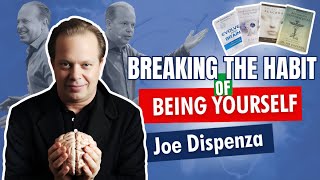
In this interview, host Jason Hartman talks with Dr. Joe Dispenza, a bestselling author and researcher, about the science and practice of self‑healing. Dispenza explains how the placebo effect works at a physiological level—how a belief in a treatment triggers the autonomic nervous system to produce the same neurochemicals a real drug would. He argues that this process can be taught by pairing clear intention with elevated emotions such as gratitude, joy, or optimism, and that measurable changes in brain activity, heart‑rate variability, and epigenetic markers have been observed in participants. The conversation moves through the anatomy of the nervous system, the body’s “internal pharmacy,” and examples of people who have reversed serious illnesses (cancer, MS, lupus, diabetes, rare genetic disorders) through these techniques. Dispenza stresses a pragmatic approach: he does not advocate abandoning conventional medicine but recommends adding meditation‑based mental rehearsal to support physical and chemical treatments. He discusses research on telomere lengthening (Dean Ornish study) showing 10‑25 % increases in six weeks, suggesting a potential extension of biological lifespan. The interview then delves into his book Breaking the Habit of Being Yourself, describing how 95 % of our personality is a hard‑wired program formed by repeated thoughts, emotions, and behaviors, and how neuroplasticity and epigenetics allow us to “un‑wire” these habits through conscious awareness, mental rehearsal, and new emotional states. The session ends with practical advice to experiment, integrate knowledge, and master the skill of self‑directed healing.
Chapters
It's my pleasure to welcome Dr. Joe Dispenza. He is a New York Times best selling author, researcher and lecturer. He's author of the number one best selling books, Breaking the Habit of Being how to Lose youe Mind and Create a New One. And you are the placebo Making youg Mind Matter. Joe, welcome. How are you?
Very good, Jason. I'm very happy to be with you.
It's good to have you on. And you're coming to us from Washington state somewhere, right?
Seattle, possibly right outside of Olympia?
Yes, outside of Olympia, Washington. Good. So tell us about you are the placebo first, if you would. I've long been fascinated by psychosomatic medicine and how much impact our mind has on our overall well being or maybe on illness as well.
Sure. I was also very, very interested in the idea. And the question I had was how is it that you can give someone a sugar pill, saline injection or perform some false surgery or treatment and a certain percentage of those people will accept, believe and surrender to the thought that they're getting the real verifiable substance or treatment and they begin to program their autonomic nervous system to make the exact pharmacy of chemicals that matches the very chemical or treatment they think they're taking. So the question is, is the inert substance doing the healing? Whereas the body's innate capacity to heal even greater? So then as an example, 81% of people that are in a placebo based depression study, 81% of those people who take the placebo get the same results as people who take the antidepressants. What that means then is they're making their own pharmacy of antidepressants that literally changed how their brain works. So my question was, if you understand the science of how the placebo works, is it possible then that you could teach it? In other words, do you need that pill? Because that pill represents a possibility in the quantum field. It represents a future reality. And that person then, when they take that pill based on conditioning, begins to think about the idea of them getting better. The moment they think about that idea and emotionally embrace the concept with an elevated emotion of gratitude or inspiration or joy or optimism or excitement. Since thoughts are the language of the brain and feelings are the language of the body, how they think and how they feel in that moment puts them in a new state of being. And they begin to then change their biology from living in the past neurochemically to living in the future. And so in certain instances, like in depression studies, people have to take the placebo for six to eight weeks, because it consistently reminds them that future. And that's what begins to program the genes to begin to change. So the question is then, if you teach people then that they can marry a clear intention with an elevated emotion, the combination of those two things does the exact same thing as the placebo. And you can begin to teach people to no longer put their faith or their power in something outside of them, but then to put their belief, faith and power within them and, and teach them the skill on how to do it. And so we began to measure quantitatively with functional brain scans and HRV monitors, heart rate monitors and epigenetic changes in urine and saliva and even in some instances, blood, that people really could change in a very short amount of time. If they begin to apply these principles, it's no longer just a subjective experience that the person is having, but they're having a real, real change objectively in their biology.
That's amazing. So tell the listeners, what do you mean when you say autonomic nervous system? Is that the nervous system in general or a certain part of it?
Okay, so you have your central nervous system that's made up of your brain and your spinal cord. Your central nervous system controls and coordinates all other systems. A branch of the central nervous system below the thinking brain, that walnut shaped, corrugated, folded structure is called your neocortex. That's the seat of your conscious mind. We're interacting by using our neocortex. Below the cortical regions below the conscious mind is a subconscious system called the limbic brain or the chemical brain, or the emotional brain, the brain stem and the cerebellum, those are subconscious systems then, that regulate and normalize homeostasis and temperature and blood sugar levels and body temperature and all those things, hormonal secretions, our feelings, everything that we feel has some effect on the autonomic nervous system. So then that autonomic nervous system, another way to explain it is the automatic nervous system. So it turns out that that nervous system is very programmable. Because here's an example. You can begin to think about a past bitter memory that's tattooed in the recesses of your gray matter. And like magic, it comes to life. And in that moment, it's real. And, and that autonomic nervous system begins to make the exact same chemicals as if you were in that past experience. You could begin to forecast some future worst case scenario that doesn't even exist. And you can begin to emotionally embrace it with such anxiety, such fear and.
Such shows up, doesn't it?
And it begins to Produce the same chemicals and your body is the unconscious mind. In fact, it does not know the difference, Jason, between the actual experience in your life that creates the emotion and the emotion that you're fabricating by thought alone. To the body, it's exactly the same. So instead of bringing up emotions that keep us depressed or, you know, in the past, or forecasting emotions that have to do with some future anxieties, can you teach the person then to bring up elevated emotions like gratitude, that secrete different chemicals that begin to enhance and begin to stimulate autonomic functions that have to do with immune regulation and have to do with body homeostasis? And if you can do that consistently, can you begin to measure the effects? And so it requires then changing your internal state. And the autonomic nervous system is the nervous system that does the job for us. We don't do the healing. It's the autonomic nervous system that says, hey, I've been keeping your heart beating and digesting your food and organizing all these functions and filtering blood out of your kidneys. Just get out of the way. Just give me the signal. Plant the seed here and let me do what I do best. Just don't return back to the old state of being.
Okay, so when we talk about the internal pharmacy, the idea that the body can produce all of these painkillers, you know, endorphins, etc. Right. Is it limited, or can it produce any drug for any ailment? I mean, can the body cure itself of anything? I mean, how. How far reaching is this?
Well, that's a very important question, because when we set out doing this research, my team and I really didn't expect to see some of the results that we have actually recorded. We have had people heal themselves of cancer, of ms, of lupus, chronic pain conditions, of thyroid conditions, of diabetes, and even rare genetic disorders that medical science said were there are no solutions for. You're going to have to live this way for the rest of your life. So we have been pleasantly surprised to see that we've actually exceeded what we thought was possible, because in placebo studies, as you know, it works really good for pain, it works really good for depression. That works good for inflammation. You know, those are the main things you see the nice changes with, with asthma. But when you start measuring significant changes like this, there must be some chemical signal that's actually activating some genetic expression that's causing the body to make a new host of proteins that actually work for the body instead of against the body. So it's the right chemical signal that begins to unlock our genetic potential.
Okay, so what's the answer to that question? Can we do anything, do you think? Then it sounds like you do, right?
I wouldn't say that. I don't want this to sound like.
I mean, maybe we can't heal a broken arm. Maybe we can even do that. You know, who knows how powerful this is? But go ahead.
I hesitate to answer the question because I don't want this to sound like a panacea. But what I will say is that theoretically we can step further into that unknown area where conventional medicine has just resigned to giving a person just a death sentence or saying, this is the way it is.
So here's the thing, though. You know, like, say, for example, one has cancer, and decisions need to be made as to what to do. Of course you believe in psychosomatic medicine. You know, the person has read your books and followed your research. They went way back to Norman Cousins and Anatomy of an Illness. Maybe the sort of the book that maybe started this whole concept, or at least a popular one from many years ago, and they believe in it. But should they not do chemotherapy and just think healing thoughts? I mean, how far do you take it? You know what I mean? You know, in other words, what if it doesn't work?
It's a very practical question. And by the way, I'm a pragmatist. I do believe that philosophical and theoretical concepts need to be applied. They need to be initiated. We work with a whole range of people at different levels, and we never tell them to not treat conventionally or unconventionally. If they feel like they need to do something to sustain normal chemical balance in their body by using drugs or doing certain therapies, we by all means support that. But the key element is if you have three types of stress, physical, chemical, and emotional, then you have three types of balance. Physical, chemical, and emotional. And so one of the things that people have the most difficulty with is psychological and emotional stress, because all stresses end up typically as psychological and emotional stresses. And it turns out that 75 to 90% and every person that walks into a healthcare facility in the Western world walks in there because of a psychological stress disorder. So we help people get their emotional and internal states more regulated and more in balance. But we'll tell them to do all the things that physically help them, all the things that chemically help them. And some people do more, some people do less. But here's the key. What you need is you need feedback. In other words, a person says, I've been diagnosed with this condition and we say, okay, well, well, great, keep doing the conventional stuff, but add these things in there. Because this isn't just about thinking positively. We use the concept of meditation and changing internal states independent of the external environment that begins to produce the greatest change. Try it for three months, and at the end of three months, let's measure. And if your measurements are improving, let's keep going. If your measurements are staying the same and the feedback isn't enough, let's add something or take something away. If, if your measurements are getting worse, it's time to get more aggressive and begin to attack it from a different level. And so we're practical in the way we do this. We're not telling people to just go become puritans and just say, I can heal by thought alone. Although we've seen that happen as well. So we can't limit that experience because one really profound moment for a person, big shift that person has in their mind and body, is enough sometimes to really see permanent changes.
How about in the area of longevity and life extension? Can one literally extend their life through their thoughts?
I would say the answer probably is yes, but it requires a little more than that. There was a great study done by Dean Ornish, which I really love, UCLA researcher, and he took a group of men that had a propensity or a higher risk for prostatic cancer, measured their genetic expression, and then he taught these men simply to begin to make different choices about their health, to begin to meditate, to do yoga, and to begin to look at emotions that they've been suppressing and begin to express them. Now, when he measured the genetic expression, he also measured the length of these little things like shoelaces that are at the end of our DNA called telomeres. And every time a cell divides, that shoelace or that telomere tends to shorten. And a cell has about 50 revolutions before it stops dividing. And then after that, those telomeres continuously get shorter and shorter. And you can determine a person's life biologically by the length of their telomeres.
Just explain that if you would for a moment, because we've had a lot of different guests on the show that talk about telomere length and so forth. And I was actually taking the TA65 supplement. I took one bottle, then it was gone and didn't get more. It's kind of interesting because I had one longevity doctor on who said he was the biological age of a 25 year old and he was 60 something. And I said, well, you don't look, 25, does that mean you're going to live another 73 years or whatever the appropriate lifespan is? What does it really mean? I'm not sure that really is that meaningful or is it. You said biological age. You used an interesting phrase to describe that and maybe you can define that. I mean, what is the actual result of, of, you know, if your telomeres are longer, what's going to happen?
Okay, well, let me finish this study and then I'll answer.
Okay, thank you.
So what Ornish found out in a very short amount of time that these men down regulated over 400 genes that had to do with the expression of prostatic cancer. They downregulated them, they turned them down, and they upregulated between 20 and 40 genes that had to do with the promotion of health and the promotion of change in their body. The average length of telomeres on these men had lengthened in about a six week period of time by 10% in some men, up to 25%. So what it means theoretically, Jason, is that they extended their life, which was the original question, by 10% or by 25%. Now, quality of life is a whole other thing because people can have an extended life and be living with a potentially difficult condition, but their life will be actually longer. And what's happening right now in the western world is that the body's lifespan has increased on the average of 10 years. And the problem now is that the body is actually outliving the brain. And that's why we're seeing so much cognitive decline and age related cognitive decline and Alzheimer's, because in fact, the body's actually living longer than the brain. It's outliving the brain. So theoretically then a person can, when the telomeres lengthen, they can add 10% of their life back, they can add 25% of their life back. And it represents a standard of measurement that says that they have extended their lifespan to some degree.
Very interesting, very interesting. Okay, so we talked about these different elements of the placebo effect and you started off by saying you were really fascinated by teaching it. Can you teach people to do this? And did you just want to drill down on that maybe just a little more for a moment? I definitely want to ask you about your other book as well.
Sure. The answer to the question is you can absolutely teach it. And as I said a few minutes ago, that it's a skill and it doesn't mean that every person that is sick is going to get well immediately. But we have people at different stages of disease and different stages of abilities and skill sets. And some people, it took certain people two to three years to be able to turn that disease around. But to them, it was worth it because they were able to every single day, overcome another part of themselves. So we have gone to great measures to teach people through the model of meditation. In meditation, what you're doing is you're beginning to change your brainwave patterns so that you move from your conscious mind and you begin to fall back into the autonomic nervous system in the subconscious mind. When you do that properly, you can literally begin to reprogram who we are. And so it's a skill, though, because if you're anxious, if you're worried, if you have traumas from the past, it takes a little bit of time to overcome certain aspects that have been branded neurologically or emotionally within us. So we teach people how to unmemorize certain states that keep them anchored to the past. And then we teach them then how to change their biology to begin to live more congruent with some future dream or ideal. So we teach it pretty regularly. We just got back from Germany. We had 550 people out of an event. It was an advanced workshop, and people came on the stage and talked about how they heal themselves at different health conditions. And it's just. The stories are just amazing. So, as I said, I am more surprised, I think, than anybody, when people stand up and say what's happened for them. So I think there's a great innate ability for us to heal ourselves. And just like an infection that spreads amongst the community that creates a disease, I think that wellness is as infectious as disease. If we. If we're able to sustain the states.
That'S a fantastic idea. It really is. So your other book has a really intriguing title, Breaking the Habit of Being Yourself. And one of the things I've been thinking about lately is this concept of how. Of course, this doesn't apply to me, just my friends. I'm joking about that, but I noticed that some of my friends are. As the years go on, they're. They're becoming so stuck in their ways and. And they're becoming too much like themselves is kind of the way I want to say that. And it's interesting that we live in this world where so much is customized towards us. When we surf around the Internet, all of that advertising is targeted just at us individually. And so it reinforces our way of being us, you know, our belief systems. And now all the stuff that's fed to us is customized for Us, our music recommendations on Pandora or Spotify or whatever and so forth. What did you mean by that, that interesting title of your book?
Well, the Science shows that 95% of who you are by the time you're 35 years old is a set of memorized behaviors, unconscious habits, emotional reactions, beliefs, perceptions, and attitudes that function just like a subconscious computer program. In other words, if you keep doing something over and over again, keep thinking something over and over again, keep reacting the same way over and over again, your body has done it so many times that it knows how to do it better than your conscious mind. That's where 95% of who we are exists. As an example. Well, you'd have to be over 35 for this. But if you couldn't consciously remember a phone number, you picked up the phone, you looked at the keypad, and your fingers dialed the number. Well, how did that happen? You practiced it so many times that your body knew how to do it better than your brain or your conscious mind. That's where 95% of us exist. So we think 60 to 70,000 thoughts in one day. 90% of those thoughts are the same thoughts as the day before. So the same thoughts always lead to the same choices. The same choices lead to the same behaviors. The same behaviors create the same experiences, and the same experiences produce the same emotions. And. And those very same emotions drive our very same thoughts. And our biology, our neurocircuitry, our neurotransmitters, our neurohormones, our chemical states, and even our genetic expression are equal to how we think, how we act, and how we feel, and how we think, how we act and how we feel is called our personality. And our personality literally creates our personal reality. So there's a principle in neuroscience that says nerve cells that fire together wire together. You keep thinking the same thoughts every single day, you keep making the same choices, you keep demonstrating the same behaviors. You are going to fire and wire the same circuits in your brain into very hardwired patterns.
That's called a habit, and that's why habits are hard to break. And maybe you can't teach an old dog new tricks. Or can you?
Well, the answer is yes, because once you understand how to do that, how to change and understand the science behind neuroplasticity and epigenetics, and you begin to embrace new experiences that begin to stamp new networks of neurons into new patterns. And then those experiences create new emotions, and those emotions begin to signal new genes by the repetition of that process. Over time, we have seen people Literally break many aspects of themselves. So the greatest habit we have to break literally is the habit of being ourselves. So you're right. A lot of your friends have become more like themselves because they have been doing the same things, thinking the same thoughts, living by the same feelings. And now they're headed, for the most part, to a very specific genetic destiny.
A genetic destiny? What do you mean by that? I mean, we actually change our genes, right? That's epigenetics.
Sure. Genes. They're like on and off lights. They're Christmas tree lights. They're turning on and off all the time. But let's say you're thinking the same thoughts that produce the same chemicals that make the same feelings. The moment you feel those feelings, you begin to think more thoughts equal to those feelings. The moment you think more thoughts equal to those feelings, you make the same chemicals that feel the same way. So you think an insecure thought, you feel insecure. The moment you feel insecure, you think more insecure thoughts. It's the redundancy of this feedback loop between the brain and the body that keeps the body literally living in the past. Since feelings and emotions are the record of past experiences, if we keep thinking the same feelings, thoughts that produce the same feelings, the body, as the unconscious mind, is believing it's in the Same past experience 24 hours a day, seven days a week, 365 days a year. And it's those chemical substrates that begin to program the gene into a certain destiny.
Okay, so if we keep engaging in the behavior, we just wire it harder, Right?
Exactly. The principle is solid, and it's across the board.
Yeah. But we can unwire this, and we've got to wrap up here, but did you want to say anything more about how one does that?
Sure. I mean, it's really simple. Nerve cells that no longer fire together, no longer wire together. The universal law. You don't use it, you lose it. So if 95% of who you are by the time you're 35 years old is a computer program, an automatic program, then the first step in change is becoming conscious of your unconscious thoughts, becoming aware of your automatic behaviors and habits, looking at the emotions that you've memorized that keep you anchored to the past and decide if those emotions belong in your future. So I think most people try to create a new personal reality as the same personality, and it doesn't work. We literally have to become someone else.
Can we replace the habit, you know, replace that with something else, that wiring. Because we're always going to remember it I mean, you know, people that are 100 years old remember how they were when they were 7, right. You know, it's not like we can forget things.
Exactly. What happens, though, is that we begin to replace what thoughts they do on a fire and wire in their brain to begin to mentally rehearse new behaviors they want to demonstrate and begin to teach their body emotionally what that future experience that they want to have will feel like emotionally ahead of the actual event. Now the brain and body are no longer living in the past.
It's just like visualizing a goal. That's essentially what this is, right?
It's exactly what it is. We use the concept called mental rehearsal, and that's how you change.
Fascinating. Give out your website, Joe.
My website is drjodispenza.com.
Fantastic. And of course, the books are available on Amazon and all the usual places.
Yes, sir.
Okay, great. And thank you so much for joining us. Very enlightening conversation. Any closing thought, just quickly.
Well, I think the biggest thing is this is a time in history where it's not enough to know. This is a time in history to know how. So try it out. Take philosophical information, initiate it until you begin to master it and know the truth for yourself.
Excellent. Dr. Joe Dispenza, thanks for joining us.
Thank you, Jason.










