The V-Shaped Recovery in Real Estate and Home Prices - Live Stream Replay
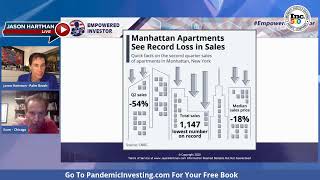
In this live‑stream, host Jason Hartman and guest Evan discuss the post‑pandemic U.S. real‑estate landscape, focusing on why the market is experiencing a V‑shaped recovery and what trends will shape the next years. Hartman outlines three fundamental market typologies – linear, cyclical and hybrid – and argues that the most profitable investments are income‑producing (cash‑flow) properties, not speculative price‑appreciation plays. The conversation covers the massive migration from high‑density, high‑cost urban cores to suburban, business‑friendly markets, the role of Federal Reserve rate cuts and stimulus in inflating home values, and the impact of for‑bearance, inventory, and demographic shifts (millennials, Gen Z) on supply and demand. Listeners ask practical questions about VA loans, inventory outlook, rent pressures, and the durability of the recovery. Hartman repeatedly stresses that “all real estate is local,” warns against trying to time the market, and critiques both academic indices (Case‑Shiller) and “smart‑money” narratives. The tone is conversational, occasionally combative, and largely optimistic about income‑property investing despite macro‑economic headwinds.
Chapters
Joining us now is a guy who knows real estate from the bottom up. Investor made millions of dollars understanding market trends. I want to tackle two things with you, Jason. First is is there a looming crisis? Number two, what will be the big trend that comes out of this? Rick, great question. It's good to be here. The question when it comes to real estate is what type of real estate and where. There are three basic types of real estate markets in the entire world. Linear, cyclical and hybrid markets. The cyclical markets, meaning the expensive markets around the country, South Florida, the west coast of the United States, the expensive northeastern markets, they are in for trouble, especially if they are high density markets.
This is my first conference. I've always appreciated Jason's perspective on real estate and economics. Kind of here in the micro to macro perspectives really kind of helps, helps in the, the comfort of, you know, choosing to invest and where to allocate your your money. So and just better decision making.
So.
Always appreciated it. So now I decided to come down and check out some properties and listen to the speakers and just learn as much as I can. So here I am. It's been great learning so much. A lot of different perspectives, different people, different ideas and just, you know, got the lights going off in the head and I'm excited to start growing, applying and just keep taking action and using what I get from here and just keep going with it.
Hi, it's Jason Hartman and we are continuing our discussion today on the 10 Commandments of Successful Investing. Let's talk about number five. Do any of you like to gamble? Yeah, maybe you do. Maybe you go to places like Lost Wages, Nevada, right? A terrible place that just steals those money, right? And maybe you do that for entertainment and hopefully you limit yourself and you limit your budget when you gamble, right? But investing is not about gambling. Investing is the legitimate price process of creating value over time. Now I have a very simple way for you to know if you are an investor or if you are a gambler or speculator, right? Very simple way. It is this simple. If you want to know if you are an investor and you want to know if you have an investment that you are considering, there's only one question you need to answer. You ready? Does it produce income? Does it produce income? If it does not produce income, it is not an investment. It is simply a speculation. It is simply a gamble, right? There are many investors, well, I should say people who call themselves investors bust their hearts. And I used to be one of these, right? But I got a little older, I got a little More conservative. And I thought, you know, it's kind of hard to earn your money. I don't want to lose it anymore. Right. So I want to be an investor, not a speculator, not a gambler. I like to invest for yield, for cash flow, for roi, return on investment as you go along. See the problem with investing for capital appreciation. You know the old mantra of the non dividend paying stock investor, the precious metals investor, the cryptocurrency investor, or the investor, well, they call themselves an investor in real estate in a cyclical market, which we will talk about that in the future. The three different types of real estate markets, that type of investor or really speculator is doing the buy low, sell high business plan. Right? The buy low, sell hot. The problem is I have never in all my years in the business, and I've been doing this a long time, since I was 19 years old. In my first year of college, I got into real estate. I always wanted to be a real estate investor since I was 16 years old. And in all that time, I have never met anybody who can accurately predict the cycles in the real estate market. Yes, I've met quite a few gurus who claim to be good at this. And they will be. They'll be good for a while. Okay. And then they'll be wrong. They'll be good until they're wrong. Right? Well, that's right. They're good until they're wrong. Hello, everybody. Little impromptu meeting tonight. A little impromptu lives live stream. Here we go. Take one. Evan, how are you?
I'm doing great, Jason. Any chance to talk with you and be with you is wonderful.
Well, hey, it's, it's great to have you on. So give us your take on the marketplace. You've been talking to investors and hearing what they're saying and you know, just share that a little bit. I want to get through a couple of things I didn't finish yesterday when we did our, our normally scheduled live stream. And of course that, that wasn't with you, but I appreciate you joining tonight. And you know, I want to go over a couple of these things from yesterday, but just give us your general take.
Well, Jason, you know that I'm a pretty positive person overall. And so I don't want this to seem like overly positive, but it is incredible right now. It is, really. You've talked about how there's different types of recovery. You talked about the reverse square root and the V and the K. I think in the real estate market it's been a V, but it's Gone past the V. It's like higher now.
Yeah.
There is more excitement and energy and price depreciation than before the pandemic. Home is the center of the universe, as you put it a long time ago. And we are just seeing more and more evidence of that. And I've got investors who are just eager to close. And there's, I mean, there's not bidding wars for our kind of properties, but there's like interest wars. You know, there's. People just want to get the inventory we have while it's there. It's incredible.
We, we do have some bidding wars. Don't be so sure about that. We, we have a few, but you're, you're absolutely right. Yeah, it's, it's absolutely crazy right now. And who would have thought this, you know, four or five months ago in the, the midst of. Everybody thought the world was coming to an end. Who would have thought we would be in such an incredible, incredibly, incredibly hot market? Well, that's what happens when you create $5 trillion out of thin air. Thank you, Uncle Jerome Powell, our rich uncle, Chairman of the Federal Reserve.
Jason, I've been meaning to ask you this for a long time. Do you think that this increase in price is driven more by the supply of money or the lack of supply of homes? This is, I mean, of course they're both, but what do you think is the more predominant factor?
You know, that's a, that's a good question. And it's, it's hard to say because the housing shortage has been with us for many, many years. It's not a new thing. And, you know, it depends where. Right. It's always a geographical question, because as the old saying goes, as I always say, all real estate is local, all real estate is local. And that's certainly true. So if we were busy trying to get people to invest in New York City, we would be eating our hat right now. Right. Things are really bad there and getting worse. And so this acceleration of the move to more business friendly, low crime, landlord friendly environments is only, only accelerating. And this has definitely accelerated that too. But, you know, to answer your question, it's interesting because we can't really evaluate it very well in terms of the overall supply of money and all the stimulus and so forth. But it's sort of easy to evaluate it to some extent based on interest rates. So, you know, if you look at a 1% decline in mortgage rates, that's equivalent to approximately a 10% increase in value. Or, you know, if interest rates rise 1%, then values have to decline 10% to be even and have that mortgage payment be about the same. So really you could say that our rich uncle Jerome Powell has certainly pushed up the value of, of properties pretty darn quickly with these, these rate reductions. But there's a lot of other stimulus and there's a lot of other behind the scenes stuff that goes on besides the outward manifestation of, of interest rates that we're all seeing and we're all noticing that. So that's true. But then when you, you take into account the mass migration to the suburbs and you look at, and by the way, I've got some slides to show and some charts on New York. So you know, we might as well actually get into that just right now. Let me, let me just get back to the screen here and let's take a look at this. So this is U Haul, the U Haul website. And U Haul, of course is a moving company. And you know, it's a do it yourself moving company, but a moving company nonetheless. And they publish a lot of interesting news releases and statistics and so forth on, on the market. Well, not on the market directly, but on the moving market. And you can tell the migration trends from looking at U Haul and some moving industry trade associations and things like that. But take a look at this. I just did this yesterday and I went to u haul.com really easy to do, and I just said, okay, what if I wanted to rent a 26 foot truck, that's their largest truck, by the way, a 26 foot truck. And I wanted to leave where I live and I wanted to leave Palm Beach, Florida and I wanted to go to New York City, okay, so if I wanted to. What's that?
They would say, are you crazy?
Well, yes, I would be crazy to do that. Absolutely. But if I wanted to do that, basically I could rent this truck one way for $2,300. Okay? A1 way truck rental, leaving it in New York. But if I wanted to go the opposite direction, just change it around and I wanted to go to New York. From New York to Palm beach, the same exact truck is $3,400. So it's more than a third more to leave it in Florida than it is to leave it in New York. In fact, they are literally paying people to bring their trucks back to the areas that people are leaving, like New York. Now New York isn't the only one. Certainly Los Angeles. Now Los Angeles is a big sprawling metro. I grew up in la, as many of you know, but in many areas of Los Angeles, people are Fleeing Seattle, Portland, same thing. I mean, you know, I interviewed a guest today who wrote a book called the Shame of the Cities and that'll be on the podcast soon. And he just talks about how these ridiculous left wing governments have just destroyed American cities. Now, as I've long said for, you know, maybe 15 years on the podcast, the poster child for big, intrusive, pathetic left wing government is Detroit. That is the, the poster child. It's the best example that you can probably find certainly in the United States, if not, you know, one of the best in the entire world for the way they destroy a city. But, you know, think about it. I've often said, I that, you know, it's so sad. I've never seen a state like California try so hard to commit suicide. And you know, today I had kind of a realization in interviewing that guest as he talked all about this flight from the cities, right, and flight from all of these left controlled areas. And you know, I thought about it. I thought if I was like the disgusting governor of California, Gavin Nuisance, or the disgusting mayor of New York or Los Angeles.
Isn'T Newsom, Isn't Newsome Nancy Pelosi's nephew?
Yeah, I think they are. I think they're. It's no surprise there. No surprise at all. But, but if I was one of those, Evan, think about it. If I want to gain power, it's good to drive all the businesses out because those are the people that are opposing what I want to do, right? So they want to drive these businesses out. They want to drive the productive class out, the working class.
But there's a limit. There's a limit though. Somebody's got to pay the bills. You know, it's like I remember the cigarette companies after the major lawsuits were settled, they wanted to raise the prices and raise taxes, but not so much that people would stop buying because they need the revenue. So they need some businesses to stay.
Of course. You know, how do you boil a frog? You know, it's the old how to boil a frog, right? You put him in some nice warm water, he feels like he's in a jacuzzi. You turn it up slowly and, and, but if it was hot right away, the frog would just jump out of the water, right? So, so that's definitely true. But it is absolutely amazing, this mass migration that's occurring. So to answer your question, I don't exactly know, you know, what is the more powerful force? Is it the lack of supply for properties? Is it the, you know, is it, is it the money creation or Is it the mass migration to the suburbs? Right. To these suburban markets that are mostly the more business friendly markets, leaving the business, unfriendly markets. But this is interesting to check this out. I think I did show this slide yesterday and I just touched on it before we left. But look at home builder confidence. They are, I mean the, the home building industry right now is absolutely en fuego. It's on fire. And home builder conference confidence is really the highest it's been in 22 years. 22 years. It's just unbelievable. So there is a, you know, it's.
Not just, I was thinking, you know, we're getting towards the end of the summer and one of the things that I did last summer with one of my kids is we went to New York and saw a play. She's really into theater. And I'm thinking like we would have gone again this past summer. Nobody's traveling there anymore. There's no entertainment industry. There's no, I mean, New York thrives on tourism. I mean, it's not just the people leaving and the lack of office jobs. It's all of those tourists who would come and spend money there. I mean, it's really, this is deep, deep pain.
It is deep and it's going to be a generational shift. In my opinion. This is not coming back anytime soon. And if you think about it, what is the whole point of living in a city, right? It's the action, it's the social life. You can go out at any time at three in the morning and you can get great Chinese food, you know, or whatever, right? It's, it's the high paying jobs, it's the Broadway shows, it's all of that stuff. It's the restaurants and the nightclubs and all of that, you know, all of that fun stuff, but that's all shut down. And folks, it is not coming back quickly, okay? The, you know, think about it. The, the protest, not the protesters. The pathetic rioters, not the protesters. These are not protesters. These are, these are anarchist rioter idiots, okay? They have destroyed these cities. Do you think these retailers with all their broken storefronts and broken windows and vandalism and theft, do you think they're going to reopen, their insurance is going to skyrocket? I mean, even if, you know, who knows if they'll even be able to get insurance and they're not going to open if they can't get insurance, okay? So they've driven these businesses out and yes, some of them will reopen, sure. But by and large it's going to be a small number compared to what we, what we see now. So, yeah, it's, it's, it's pretty tragic. It really is. So take a look at this one. Heaven. Now you've got kids. And this is interesting. I mean, you haven't seen this chart before and I have not talked about it on the podcast, but wow. You know, they call the millennials the boomerang generation. And we don't know yet if that now the millennials are called Gen Y. I'm a Gen Xer. And you know, the Gen Y, the millennial generation, you know, they just, they go away to college, then they come back home and live with their folks, right?
I'm going to charge. They have cost me so much money already. If they come back to live with me, they're paying rent. There's no question about it.
A couple of your kids might be watching this right now. But, but here's the thing. We don't know what Gen Z will be like. Gen Z is just coming up now. They haven't made their mark on the economy yet. We don't know enough about them yet. But take a look at this chart, okay? It, it shows that during the Great Recession, okay, which is here or this is the Great Depression, sorry, Great Depression. And here's the Great Recession or financial crisis or gfc. Global financial crisis is called by many names. Okay? You see the numbers, right? You see 43%, okay? Majority of us young adults now live with their parents. Percentage of 18 to 29 year olds in the United States living with a parent, okay, here it's 43% there. It went up to 48, okay, during the World War II era, right? But then the soldiers came back, the baby boomers, they started moving out. That was the big building boom in the, in the late 40s and 50s, right? And that's when you saw the rise of suburbia and you saw the, the preamble for America's love affair with the automobile, right? And, and so then the, everybody moved out and only 29%, that was the lowest 29% of kids this age were living at home with their folks, right? But then the number gradually started increasing. The 70s were not very good economically. That was the, the stagflation era. Jimmy Carter, who was a terrible president, he was the, he's a good man, by the way. I think Jimmy Carter actually is a good person, but he was not a good leader. Okay? But he was, he was not a good president. But, you know, they coined the misery index, really was very much Tied to Jimmy Carter's name. Right. Because that was the stagflationary era when we had high unemployment and inflation at the same time. And by the way, I think that is coming again. Stagflation, usually when you have high inflation, you have a. That as a result of a booming economy. So you have low unemployment. And usually when you have high unemployment, prices will go down because there's less demand. But stagflation is a. Is an economic anomaly. It's kind of rare. And I think we're coming that into that again. We had it in the 70s and it was not as impressive.
How does income property perform during stagflation?
Well, pretty well. Income property performs pretty well during most cycles. Really, even during a deflationary, it's not great. But, you know, compared to what? Is always the question. Right? Compared to what? So in a stagflationary environment, you know, a lot of your tenants might lose their jobs and they'll be on unemployment and people will move out and then you'll catch other people who used to be homeowners who had to give their homes up either by sale or short sale or foreclosure. Cycling back into the rental market, you'll catch people falling down the socioeconomic ladder and you can provide rental housing to them. So not bad. And the prices go up. Okay. Because you have inflation, a. It's a stagflation. Okay. And then we had the roaring 80s. The 80s were a really good decade once it kind of got underway. That was the Reagan era. And I think that was really the last, the last sort of really good decade before, you know, the culture war really went downhill. And, you know, sadly, I think, you know, it's an amazing time to be alive. As I always say. Technology is amazing nowadays. There's a lot of good stuff coming, but culturally, the world's kind of a disaster, or at least the U.S. i mean, just look around, folks. You know, we got, you know, a lot of really nutty things going on. You know, it's. I mean, I mean, Portland, Oregon looks like a war zone. It's absolutely insane. This is nuts. What's happening anyway? And, and it's the largest joint Joe Biden campaign rally in history. So that's what this is, basically. And then, you know, the 2000s, we had the dot com bubble. We had nine, 11, of course, and. And then, you know, we got into the Great Recession and here we are. So now we got 52%. More than half of these young adults are living at home with their parents.
That is Just, you know, it's funny. I can see why not. I was talking with a mom today whose daughter is going back to school, and the mom is paying for her to go back to school, but in exchange, the daughter is staying and living with the mom and not going and getting a place with her girlfriends downtown. So actually, the parents kind of incentivize, so it's kind of interesting. What's the cause of this? Is it just because, you know, parents have big houses, these McMansions, and they have enough room versus, you know, people staying in school, that many of them.
Have big mansions, but. Yeah, true. Yeah. You know, it's multifaceted, like everything. Right?
Yeah, yeah, yeah.
Okay. Hey, Evan, you want to get. Let's get a few questions here, so. Whoa.
We got a lot coming in.
Yeah, we do. What does this mean? Jason Hartman, the goat. I don't get it. What does that mean?
Goat great of goat is greatest of all time. Go.
Oh, well, thank you.
Yeah, like Michael Jordan is the goat of basketball. You are the goat of real estate.
You know, I'm so unhip. I don't know any of this stuff. Okay, Timo, I'll take it.
Thank you.
All right, so. Whoa. This is Shelby from New York, says hello. Hi, Shelby. I hope you're not in New York City. And if you are, are you moving, or are you just getting a bigger place for yourself because the prices have gone down so much? Oh, gosh, let us know. Shelby, comment again. And by the way, post your comments and your questions down below, and we'll get to them. Okay. Metal bum says nice. And I bet that means you are pretty precious. Metal bum. Do you think so, Robert Hernandez, do you think inflation will affect the economy soon? And what's your opinion on investing in. I think you meant to say real estate there? Well, I think it's fantastic. I mean, it depends where you got to do it, right? You got to do the right kind of real estate. Of course. But, you know, I think it's. It's incredible. I mean, Evan, look at how busy you are. Clients are buying up everything they can get. Right?
Yeah, it's a great time. And I think the first part about inflation. Yes. I mean, we thought inflation would affect the economy for a while, and there probably has been inflation, as Jason has taught. There was just so much deflation that the inflation that we experienced wasn't as evident. But I just saw a statistic that July numbers. The inflation rate was much higher than they expected. So I think, how can we not with all the money printing and what's, you know, having, having real estate where you have this fixed 30 year debt that you can get while your prices are going up. As Jason said, you get paid to borrow. You don't even have to have tenants in your house. Of course we make, you know, you do get tenants, but it's a phenomenal investment.
It's inflation induced debt destruction. IIDD Good stuff, good stuff. So, and Evan, you know, we talked about on the podcast recently about how grocery prices hit a 50 year high five decade high in grocery prices. So yeah, folks, there's a lot of inflation around us. You just have to look and see it, you know, and, and I just, you know, I want to mention a.
Pound of beef, grass fed. I like grass fed beef. I saw the price $12. I almost, you know, didn't put it in my cart. But I didn't have an alternative. I wanted it. 12 bucks for a pound of grass fed beef.
Well, you know, by the way, that's a good example. Right? So, you know, one of the ways they manipulate the inflation index, of course is with what something called substitution. So the three ways they do it is weighting, substitution and hedonic indexing. Okay. That's how they understate inflation and to us basically in the consumer price index or even the core rate or core inflation as they say. And they'll say, okay, well if the price of beef goes up, everybody will just switch to chicken. But you know, maybe you don't like chicken, right? So you know, it, it's subs. They, they can do this. They substitute in that basket of goods, but inflation is all around us. And I want you all to realize I've talked about this many times on the podcast, but you know, you, maybe you didn't all hear it right. Is that one of the things you've really got to consider when it comes to inflation is this, okay? And this is not indexed. It is the, the concept that you are doing, and we are all doing so much more is do it yourself. Nowadays, you know, you go to a restaurant and you know, the hip new cool kind of restaurant is where you go, you wait in line and you place your order versus someone coming to the table and waiting on you. And a host is seating you, okay? And then you take a number and these are hip, cool restaurants. This is not fast food I'm talking about. These are expensive restaurants with good.
I never know what these places do.
You tip 20%. We'll get to. Hang on, we'll get to that. Okay, that's a good point. So, so you stand in line, you place your order, you, you get your number, you bring your number over to the table, they give you a cup, you go get your drink out of the machine. It's just like a fast food restaurant, but it's not okay and the prices are high. You go sit down and then they do bring your food to you usually. Sometimes they actually just call you when you go up and get it. But they, you usually your food to you, and that's it. So why is it that you should pay like regular restaurant prices and what do you tip, you know, for that, right? Suddenly now, because all these restaurants don't pay their workers enough money, they don't pay them a living wage anymore, right? Like they used to in the old days. You know, you're expected to tip, to tip the chef, right? Nobody ever thought of tipping the chef years ago, right? But now you're expected to tip the chef when you go get coffee at the coffee shop. You're expected to tip, right? Like, it's just a totally. This is a, this is inflation. And nobody is counting this type of inflation, okay?
The other kind you've taught us about is inflation doesn't take into account progress. The hedonics. Like, for example, tomorrow a new Apple watch is supposed to come out and it's probably going to be way more advanced and it's going to cost the same as the first one. And you could say, oh, that proves that there's, you know, no inflation. Well, really, aren't we entitled to some progress? You know, why aren't we entitled that over the last five years the watch should get better, right?
Yeah, sure. Yeah, of course, of course. Yeah. But before we get to the hedonics thing, I just want to talk a little more about the do it yourself thing. Think about all the stuff you do yourself now. There's all these do it yourself car washes. Certainly we all pump our own gas now. Even billionaires pump their own gas nowadays. I mean, there's no self, there's no full service gas anymore. When I was a kid, it was full service. You know, can I check your oil? Can I put fluid in your, you know, window washers, check your tire pressure, you know, they wash the windows when you pull up at the gas station. Can you imagine having that happen nowadays? Nobody can even remember that basically. And, and everything you do when you buy an airline ticket, you know, you, you book a cruise, whatever, all this stuff that, you know, we used to do, we'll do it again soon, I'm sure. You know, you're all doing that yourself. It's all self service, yet you're paying the same price or I mean more, you know, index for inflation. Right. So you're doing a lot of stuff yourself and not getting a discount for diy. We're doing all this stuff ourselves nowadays. Right. So interesting point. But yes, as Evan talked about, hidonk indexing is another one, so we won't go into that too much. But inflation is already here, folks. It's already here. Okay. Robert said, in real estate, gold or gold shares as investment in the current situation. I get what you're getting at, Robert. You know, income, property income, producing real estate. Gold does not produce income if it. Remember like I showed in the video when we started to qualify as an investment, the definition of an investment and how, you know, if something is an investment or it's not, does it produce income? If it doesn't produce income, it's not an investment, it's a gamble. And you can make money gambling, speculating.
But commandment number five, it has to pay you from day one, so you're not going to make you. You did a podcast once where you talked about how someone selling gold called you and you said, okay, I'm going to buy from you. Fine, but let me ask you, are you going to pay me a dividend? Can I give you 20% of the, of the value up front and then the bank, you'll give me the other. Yeah, I remember this podcast. And he's like, no, no. You're like, well, you know, I can get all that with real estate. So, you know, it doesn't. Sure, it can be a good investment, but it's not nearly as good as what we have.
It's not investment though. It's a speculation, it's a gamble. If you invest in or if you gamble or speculate on cryptocurrencies, precious metals, raw land, you know, vacant land doesn't produce income. That's a speculation. You know, art on the wall, speculation. I don't get any income from that painting. Okay. You know, it looks good, so it's psychic income, I guess. You know, so if it doesn't pay you, if it doesn't give you income, it's not an investment. Investments produce income. So just remember that rule, Robert. And I'm not saying don't ever speculate. Okay? You can. People make money speculating sometimes for sure. But it's got to produce income to be an investment. Okay. All right. Eric says basically, is there a high chance of increased inventory? I think what you're meaning there, Eric, is will housing inventory increase? It could happen. You know, it could, it could happen. I mean, I think, I think there will be a loosening up a little bit in the inventory coming up here. You know, after, you know, everybody says, well what happens when the stimulus goes away? Well, here's what happens folks, the likely, the like. I'm going to make a prediction, Evan, I think you're going to agree with this prediction. So what happens when all the stimulus goes away? Now don't, you know, don't take this in too small of a time frame, okay? Like yeah, it might go away for a month or you know, two weeks or two months, right? But here's what happens after the stimulus goes away. There's another stimulus, okay? That's what happens next. We're getting your hat on it folks. Nobody in power wants to have it be bad on their watch, okay? And certainly not before an election, and certainly not right after an election when you just took office. If you're the new guy who's half asleep, that would be Joe Biden, total frickin idiot. I can't imagine anybody could actually vote for Joe Biden. I mean that's just, I'm not even being partisan. He's just not ready. I mean he's just not qualified. He didn't want to run four years ago because he was too old and now he's four years older, I tell you. Okay, so Digital Life says Mr. Hartman, you speculate our real estate will drop 20 to 50% spring of 2001 recital? Oh no, I don't think that at all. Evan, what do you think of that comment?
No, I mean there are always fear mongers out there. There's always people, but I, I, there's just not. People need a place to live and there's not enough supply. So simply the laws of supply and demand mean that real estate's going to continue to stay high, you know, unless our population, you know, drops. But that's a long term effect. There's really absolutely no reason. I mean you can always see a little bit of a drop just for economic cycles, but not 20 to 50%. Plus as you point pointed out on the show a few times, people have more equity in their homes now than way more than they had in 2008. So the kind of crisis, even if there's a recession, people are not going to have the number of foreclosures that there were 12 years ago.
Like Evan says, folks, equity means they have skin in the game. They have something they don't want to lose. So people are not going to walk. And these loans, these real estate loans have been pretty darn conservative, okay? So this is not going to be like was in the Great Recession. Okay. This is a different story this time around. Now, you know, be careful, you know how people generalize. It's really dangerous, these kind of generalizations. Okay. You know, real estate, what does that mean where, you know, we're in a country with 400 markets. This is a giant diverse country in New York City. Yeah, that kind of drop, it's already underway in, you know, downtown la, downtown, even San Diego, Seattle, San Francisco, Portland, disasters, okay? These are, these are places beset by civil unrest, high crime, lawlessness. I mean, absolute hypocrisy from these governments. It's ridiculous. Those places could definitely experience the kind of drop you're talking about. But a nice suburban neighborhood in Indianapolis or in, in the outskirts of Atlanta or in some of our Florida markets or in Little Rock, no way. That's, that's where everybody wants to live right now because they feel safe. Okay? Yes. Builders now build to rent. Yeah, you're absolutely right about that. Absolutely right. Evan, just interrupt me if you want to make any comments or answer any questions here.
The other thing, the only other, I, I don't think that that prices will drop, but even if they did, that doesn't really affect our investors because we're investing for income, so who cares? You know, you're still going to get rent. In fact, the rent may go up as you've talked about that. You know, if, if there's a recession and people can't get mortgages, people more, you have more renters and they're just the, the supply is low. So you could actually protect, perhaps raise rents. Depends on how much government assistance there is and where you are. But it wouldn't even affect our investors that much.
Those things, as you correctly pointed out, they're non correlating indicators. So when prices go down, when housing prices go down, it's the result of a crisis, okay. And when that happens, it pushes more people into the renter pool, so that actually puts upward pressure on rents. And the kind of properties that we recommend to our investors are these conservative, inexpensive, bread and butter necessity type of housing. Okay. And this stuff always does well. So yeah, new houses in Seattle. Well, I doubt you're talking about downtown. Okay. I don't know. You talking about Chaz? Yeah, yeah, they changed the name of it. Right. Like a month ago. So, yeah, it's got a new name, but whatever. Yeah, certainly There are outlying and suburban safe markets in all these cities. Like, you know, la, where I grew up, is a sprawling, you know, mega city. Right. So you know la, where all real estate is local. It's local in la. Okay. It's very different. So these are, you have to generalize to some extent just for efficiency sake. Right, okay. Sold my 10 year house in Seattle, full asking price in 36 hours. Cash. Yeah. Good for you. Good for you. It's good that you sold. No rent control for my kids. Carl's saying he's going to charge his. I think that was your comment about charging.
Absolutely, I agree 100%.
Yeah. Okay. Kevin says, and let me, by the way, let me change the screen here. Okay. Kevin says, when do you think markets will correct. In cyclical markets, do you find it odd that it's the amateurs buying and not the smart money? Well, in cyclical markets that are suburban, I think those are actually in decent shape, you know, because people still have money. There's a lot of people with a lot of money out there. For example, you know, where I used to live in Irvine or Newport Beach. Okay. Southern California markets, you know. Yeah. You know, there's a lot of population there, but those are still suburban markets. They're very safe. You know, they always win like the safest city award. And you know, those are highly educated people there. You know, those are, those are nice places and those will probably do well. They'll probably benefit from people leaving la. Okay. So, you know, because it's much safer. Okay, Kevin. Okay. That's the question we just answered. Right.
The other thing I always, like you teach Jason is like, if by smart money, you know, he's thinking like commercial real estate and like the, you know, triple net, as you said, maybe that's a lot of rich people investing in that. But the returns are not nearly as good as the returns in single family homes. So while maybe that smart money. Smart money might just be a little bit more, you know, stodgy and conservative, or not even conservative, just, you know, not unimaginative. So, you know, I would not always trust the smart money.
That's a good point. You know, folks remember something very intelligent, very highly educated people make giant mistakes all the time. I'll just draw your attention to a fund years ago called Long Term Capital Management, okay. And ltcm, Long Term Capital Management said they had figured it out, right? They had the formula, all the quants, and this is a question from Quantalytics. So that's perfect. Okay. All the quants that work there the brilliant people that had these algorithms figured that figured out the market. They just thought they could never lose. Well, guess what? They completely folded, went under. Okay. Lots of so called smart money makes huge mistakes constantly. Okay, so, all right, Quincy from North Carolina, what are your thoughts on VA loans to buy property owner occupation and rent at a later date? Yeah, I think that's great. Hey, if you're a vet, first off, thanks for your service and definitely use your VA loan to buy a good sensible property that you can turn into a rental maybe in a year or so. So remember, your intent has to be to live in it, though. And you know, your intent, you know, can change later. But don't get yourself in trouble with committing mortgage fraud because if you say you're gonna occupy, you better occupy. Okay? They do check on that kind of stuff, so. So be careful with that. But yeah, I think that's great. Turn it into a rental later. Yeah, awesome. That's a house hack. All right. And Kevin says by smart money, I mean hedge funds.
Well.
I just explained that. Yes, lots of hedge fund guys are a lot dumber than they look or sound. Okay?
So they're good at gathering money. They're good at gathering money and making money for themselves. I don't know about. For their investors.
Right. Yeah. Okay, here's Kevin again. 350 to 380% of the returns in real estate over the last 40 years is solely attributable to falling interest rates. I think you mean will those increases, what will those increases look like going forward in a depression economic event? Well, well, I don't understand the question. Are you talking about appreciation or those interest rates? I mean, think about it. If you get a mortgage today, you don't have to make the last payment on that mortgage until 2050. Think about that. Just let that sink in for a second. Do you know how much the world will change by 2050? Do you know how many bouts of inflation we'll have between then and now? I mean, that's incredible that you could lock in a mortgage at these incredibly low rates and not make the last payment until 2050. Okay. Ray Kurzweil predicts, and who knows if you'll be right, that we will achieve singularity in 2030, in 10 years. Okay? They say we're going to Mars in four years. Okay. Think of how much will change. How many, how many asteroids will we have mined by 2050? And all of the mineral riches and precious metals riches on these asteroids will come back to Earth. What will the moon base look like by 2050. You know, it's just unbelievable. I think, I think you're in a phenomenal position. And remember, we're not investing for appreciation. We're not speculators. We invest for income. And that mortgage is a big part of the asset. Go ahead.
The other thing is 350 out of 380. A lot of these studies that talk about the rate of real estate appreciation, like Robert Shiller did one where he said basically real estate only appreciates 1 percentage point over the rate of inflation. But as you pointed out on a show, that doesn't take into account leverage. That's only assuming you pay cash for it. One of the great leverage magnifies returns by five times, essentially 20% down.
So we always.
That's one of the great. That's why you don't like the cap rate, because it doesn't take into account leverage. So you know these studies, you always have to look at them with a grain of salt.
Yeah. Okay, so what Evan's talking about is of course Robert Schiller, the Nobel laureate, you know, he makes really idiotic statements sometimes. And in his, in his second, he wrote two books with, with the title Irrational Exuberance. In the second one that I read back in maybe, I don't know, 2004, something like that, you know, he talked all about real estate and you know, this, that and the other thing. And he and Jim Cramer, they completely lie by omission. And I know they're smart enough to know better than this lie they tell. Okay, and here's the lie, okay? They, they basically say, you know, they, they compare the appreciation, real estate, the appreciation rate of residential real estate to the S P500. And that's a completely false comparison. It's, it's absolutely stupid and pathetic. And you know, someone should call these guys to task for it. Well, I guess I'm doing that right now. You know, someone sue them for.
Head to head debate. That would be awesome.
And listen, I don't hate everything Robert Schiller does. I think he's done a brilliant thing too. But, but this is absolutely stupid. It's a complete lie. It's a lie by omission. And the lie is that you can compare those two things. That's crazy. You know, if you get 6% appreciation in real estate and then he'll say, well, the S p will do 8%. Yeah, but you didn't pay cash for the real estate. And guess what? The real estate is tax advantage. The S P is tax punished. The S P fund, okay, you don't get any income. Well, you might, you know, if you get dividend paying stocks.
Right?
But it's just, it's not even a comparison. It's so stupid. It's, it's absolutely ridiculous. Let me use it with a 10% down because it's easier to really, really see. So 6% appreciation on a piece of property at 10% down is 60% when it's leveraged. The S&P 500 index fund will be 8%. No leverage, no tax benefits. Okay? Income property is the most tax favored asset class in America. These are ridiculous statements. Jim Cramer made the same comparison and I played it on the podcast and it's just unbelievable.
There's another economist. There's another economist. I don't know if you've ever had him on the show, but I really love him. His podcast is kind of boring, but it's really educational. Tyler Cowan, and he has an article, and I've shared it with a couple clients, about how real estate, he actually takes into account leverage and he shows what a better investment it has been. But then he also goes, he talks about the risk adjusted return that he said, actually real estate's not only been more profitable, but way less risk because of the volatility. This is a great, it's so comprehensive and I think it's, it's just more accurate, that's all.
Listen, everybody watching and listening to this right now knows lots of people who created a lot of wealth with income property. Yet I bet you don't know anybody who did that in the stock market who's not an insider, okay? I don't want to hear the story of some insider, okay? I don't want to hear the story of someone who, you know, works at Merrill lynch or is an investment banker, works for Goldman Sachs, okay? Or any of this. And by the way, that was not. I did not mispronounce that. I meant Goldman sucks, okay? I make a lot of enemies, don't I? Nobody likes me for this reason, you know, but, but you know, lots of people that did it in real estate, Income properties, the most historically proven asset class in the entire world. And it's the most tax favored asset class in America. All right? So, okay, here we go. So, Kevin, 8% of mortgages are currently delinquent. The same percentage that started the housing crash. When people have to pay their, when will people, when people have to pay their mortgage again, do they rush to sell? Maybe. So what? I mean, these people have to go somewhere, Kevin. What are they going to do? They're going to go into foreclosure or they're going to sell their properties. They're going to do a short sale, a loan mod, whatever. They have a lot of equity. We already know that. You know, in the aggregate. They do. There's a lot of equity. These loans in the aggregate are underwritten very well. Okay. This is not 2008. I'm not saying prices won't drop. I'm saying it doesn't really matter because these people have to go somewhere. They got to go rent a house. It's going to push rental rates up if they're not homeowners. Okay. It's. It's one or the other. It's the three dimensions of real estate, so. Good question. Yeah. So what happens when they rush to sell? I'd like it. I. We need some more inventory. Okay. Precious metals. Not a gamble or speculation when you're storing purchasing power. Okay. That's kind of fair, you know, in the sense that it's insurance. Fair enough. I mean, listen, you know, 5,000 years ago, you could buy a toga and a pair of sandals with one ounce of gold. Today you can buy a pair of shoes and a man's suit for one ounce of gold. Okay. You know, it holds its value. Right. I get the idea. It's a good measuring stick. You know, Listen, I own some precious metals, too. Okay. It's okay. I'm just saying it's not really an investment. Insurance is not an investment, and neither is your gold. It's a speculation. And I get it that it's not as speculative when it's insured. So have a little bit of your money in that. I get the arguments. I've heard them all. I've argued them all, actually. Okay. So I don't know what this means. It's a typo. Okay. So Californians are socialist. Socialist distancing. I love it. That's good. That's a good one.
I like that.
There's socialist. Socialist distancing at the Mata. And they will support the. The real estate market in Vegas. Yeah, but Vegas has got its own set of problems with the casinos and social distancing. And that economy is very much built. Can I just ask you remember I lived in Las Vegas for a year and a half? Yeah.
So, Jason, I have to run. I have to run in one minute because I have to talk all. But I just want to ask you one question. This is something that some people have been asking me. If this recession continues and there's an increase in unemployment, do we have to worry about renters you know, how. How are. How are we going to get. You know, still have tenants who can pay. You know, they've had the stimulus, they've had enhanced unemployment. What if that. What if just the recession continues? How do we prepare for that?
Yeah, my answer is it could be bumpy. Have adequate cash reserves, but, you know, I think there's going to be a big expansion of the Section 8 Housing Assistance Program. This. We are becoming a country of big government nanny state that's. You know, some would argue we're already there. It's only going to get worse. And you know what, Evan? We promised this would be a short one. And I got to get going, too. I just want to grab a couple more of these questions because I really appreciate people jumping in here. Are you going to stay a few more minutes or you got to go right this.
You know, I'll stay. I think the.
It won't be long. Listen, I. I promised myself this would be a short one tonight. It was just to sort of make up for last yesterday's because we didn't get to go through some of these slides. Okay, so we got the. I love the socialist distancing. That's great. Thank you. So Kevin said you guys are ignoring. There's no supply base solely in forbearance. Okay, so what are. What's he saying? Okay, so if they're in forbearance, they don't go on the market, so that supply doesn't materialize. Fine. Then prices will keep going up. What? What? So maybe either there's more supply or there's less supply. And more supply means prices drop. Less supply and more supply comes from somewhere, and that means rents have upward pressure. Go ahead, Evan, your thoughts?
Maybe he's saying that there will be supply. It's just the supply is being delayed by forbearance. And that may be true that maybe when forbearance.
I agree.
First of all, forbearance could keep going. Depends on the election. Forbearance could keep going. And secondly, we don't know how forbearance is going to pan out. You know, banks could want to hold on. You know, people have more equity. You know, we don't know that there's going to be a huge increase in supply. People are speculating that, but nobody knew how fast real estate values were going to go up during the pandemic. We can't time. Market timing is for fools. As you've said many times, we don't time the market. And so if there's a greater wonderful We'll. We'll be the first to try to go get some, but we just can't count on it.
Yeah. The point is just buy good properties that make sense and hold on to them. Nobody can successfully time the market. But look at this chart I showed yesterday. The employment picture is improving. And we know this is very uneven. It's the case shaped recovery that Evan alluded to earlier. But yeah, it's, you know, the employment picture really is improving, you know, pretty significantly. And I get that it's uneven. Okay. I totally get it, folks. I totally get it. Okay, so let's go. Good point on forbearance. Okay. Kevin again says, I worked at New Century Mortgage in the Great Recession. The loans differ very little. That's interesting that you worked at New Century. You must be in Orange County. Are you in Southern California? You must be there. But that must be an interesting. But these loans are not the kind of liars loans we had back then, Kevin. So I don't know. I'm not quite sure exactly what you're saying. Oh, here's what you're saying. It's in the next comment. So 0 or 3% down. Yeah. That's a small number overall. In the aggregate, though, forget about how much they put down. Just look at how much equity they have nowadays. Okay. The equity ratio in the aggregate is in the aggregate, meaning the whole country. It's pretty big. People have a lot of equity in their homes. Okay. And Mark says, nice seeing this live chat. Hey, Mark, thanks for joining us. And let me get this screen changed back so we can see these questions a little better in Evan's face. Case shiller exceeds 200 in many cyclical markets. They won the Nobel Prize showing these. Anyways, these always return to 100. Why do you think this is false? I don't think it's false. I think the Case Shiller is a index because it. It isn't our index. It's 20 markets. Okay. And I'm talking about the main Case Shiller. I know they created another index, but the one that's most widely quoted is 20 markets. And 75% of those markets. 15 of the 20 are markets we would not recommend. They are cyclical markets. So. And will you acknowledge that? Okay, so, yeah, I agree. Those cyclical markets are going to decline. That was happening before COVID 1984. Okay. I love saying Covid 1984. I love pointing that out. Okay. Everybody thinks. Jason, why are you calling it Covid 1984 in honor of George Orwell? Because we are here. So Yeah, I agree with you, Kevin. Cyclic markets are going to decline. They were already declining before the pandemic.
You also like Republic of California. We should have a drinking game for sure.
Every time jason says socialist. Covid 1984 drink. Yeah.










