Design Lecture Series - Jason Yuan
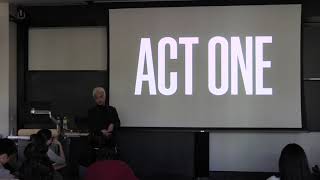
Jason Yuan talks about designing as performance, from early theater influences through motion work for Blackpink and Chanel to speculative projects like Mercury, a reimagined OS. He reflects on spectacle, representation, and how to cast yourself in a creative career.
Questions this video answers
January 19, 2023
"I Got Rejected by Apple Music."
2014
2020
Mercury (a reimagined operating system / intent-first UI)
Chapters
Hi, my name is. My name is Jason Yuan. This is my.
I had someone draw a symbol for me. I said I wanted the Chinese Yuan sign, but like satanic and demonic and like from like Cyberpunk 2077. So this is now a prayer circle. This is my name.
And now that I'm looking at it, it's kind of weird and lonely on the slide. So why don't I talk about some of the roles I've played in my lifetime instead?
Like many of you, I played the role of designer in Air Quotes. And that's how some of you may kind of know my work. Most of my work is sort of this type of kinetic animated typography. I do work for type foundries like Kim Type Foundry, and a lot of this is obviously generated. I'm not working with like real physical materials here.
I also work with musicians. This one was for Jackson Wang in collaboration with Joe Press. I think he was part of the K Pop Got seven.
Am I wrong? Okay, I'm so sorry. If there's any Jackson Wang stand here, don't cancel me on Twitter. Also worked on this piece for FK Twits in the Weekend in collaboration with my friend Riley and Amber Grace Johnson, who is the director of this film. I specifically work on the typography motion. I did not do the Beautiful Mask you see. So just wanted to be clear of my contribution.
Work with blackpink.
Okay, we'll talk about that later.
Also the this is for Harley Davidson Livewire. So like companies musicians recently worked with in as a menu with Chanel on the Cocoonige collection last year featuring Ms. Jenny Kim of Blackpink, obviously. But you know, some of you might have used this calendar app called Cron. And I worked on the entire identity system and the logo and iconography and things like that. So as a designer, like many of you, I've stuck my hands in many pots of Honk. Now I'm also an inventor of sorts, which sounds like a super arrogant word, but it is what it is. I worked on obviously MercuryOS, which is a project where this was kind of like my thesis where I was reimagining the operating system. I co founded MakeSpace with some collaborators in 2020, which if you guys know about Figma, imagine MakeSpace is sort of like Safari and Telepresence, FaceTime Zoom on the same shared canvas.
Also some fun projects with collaborators Omar Rizwan and Jeff Dooley. This one's called Hijack youk Feed. We basically hack Twitter such that instead of showing you ads, it's Showing you to do list items. So you're scrolling through Twitter, you're like, oh, my God, I need to order more cat food. And then you can complete it and move on with your life.
Recently also worked on Freeze Frame with Tyler Anger and Simone Kaliski, Basically bringing together this idea of window and state management and screenshots. So command shift two. Boom. And you can pull up a previous session by looking at a timeline. So I'm kind of, like, all over the place. I have all these random labels. But above all, I think I. I'm here today as a performer. And I'm realizing just now if I say I'm a designer, inventor, performer, it's giving, like, it's giving, like, Karen energy. You know, it's like, I'm on Twitter and, like, you know, like.
It'S basically the same thing as those moms that go, mom, loving wife, follower of Christ.
I just wanted to be clear. Like, I know this is kind of ridiculous, which is why, for all intents and purposes, I'm a performer. That is who I am. Any design or art or invention work I do is in service of performance. And, you know, when I was younger, I was a theater kid, and this was me and acapella, and.
I look like discount Guy Fieri in all the photos. But I was like a really. I was. I was a theater kid. I was a theater kid. You know, this was high school. And now that we're talking about theater, Carnegie Mellon has one of the best acting programs in the entire world. It was like my dream school. I applied in 2014.
I flew all the way to New York to audition for the drama department. And the lady who runs acting, Barbara, looks at me, like, up and down, like that scene in Devil Wears Prada. And she's like, have you heard of Vassar? You should go to Vassar.
So I didn't get in here, obviously. Unfortunate. But I did end up going to Northwestern University, also for theater. And while I'm here, I would like to sort of point out that Northwestern university is ranked 12 bucks higher.
I just wanted to, you know, this is just facts. I don't make a rule stop off the mysterious place. I'm here now, so I have so much respect for this institution. So many of my best friends were here or are currently going here, and I'm really excited to be sharing my story as a performer who also happens to design, invent, and make art. So are you guys ready? Cool. We're going to need more audience engagement here. Okay. So, like a true theater kid, I split My story into a few different acts. Let's start beginning with act one. So I wasn't a very good actor at school, which meant I ended up taking classes like stage design. And this was one of the models I made for Shakespeare's the Tempest, set in sort of like a Japanese environment. This was freshman year, and while I was studying stage design, I came across the work of Ex Devlin. And some of you might have heard of her. She's in this Netflix documentary called Abstract, and she is a legendary stage designer and installation artist. She's worked with so many musicians and. And theater troupes. She's worked on the Lady Gaga Monster ball tour in 2010 with Ye on Yeezus and a bunch of other tours. Beyonce Formation Tour. This is a sketch that she did. Lord Senna, Coachella, and, you know, Othello. I should know this, but, you know, this was at the, I believe, somewhere in New York. Can't remember. But S. Devlin has this way of capturing the psychic energy, the feeling of a stage. Because when I first started doing stage design, I was thinking like, oh, like period piece. The instructions say, put a couch here and a lamp here. And it was about decoration. But Esteflin, she really wraps the story and narrative into the stage itself, and she builds a world that the actors live on, essentially. And, you know, she has this quote, which I love. She says about Othello, this is not about castles and ships. It's about the storms that rage inside three people in the drawing room. And she's really designing the psychological space of the play. And so as I was studying stage design, I was really inspired by her methodology and philosophy. And I was in Northwestern, and they had a lot of plays all the time. So I started making posters.
And a lot of my posters are, from early on, have kind of a theatrical style, ignoring the horrible typesetting. And my style sort of got more and more graphic and abstract is going on. But I always try to sort of be inspired by or try to capture the psychic essence of the storyline. For example, a Streetcar Named Desire by Tennessee Williams.
You. But I'm.
See the screen.
Oh, that's way better.
Oh, my God. When I was in design school, I was like. I made this comment. I was like, oh, my God. This poster printed on matte paper looks a little lighter than glossy paper. And my professor turns to me and says, yeah, it's called contrast.
So that was unfortunate. Anyway, Tennessee Williams, Streetcar Named Desire. Many of you probably read this or read the spark notes of this for A.P. witt or something. It's about, you know, at its core it's about. It's not just about, you know, it's about a man named Stanley and a woman named Blanche, but it's really about, you know, femininity and this artful sensitivity and sort of.
Dreams and fantasy versus concrete masculine physical strength. And so I try to capture this feeling of like, I guess, like, you know, there is a layer of desire and lust. Right? It's sort of like that scene in Titanic when it's like a steamy carriage and it's like a hand on the, you know. But I worked with a director and we sort of used a tiger to symbolize step, masculine strength and sort of preying on this moth drawn to a frame that is orange. So that's one of my favorite, I think, pieces from back when I was in theater school. And over time I taught myself more design. I began to sort of branch out of making posters that look really dark and experimenting with color and form. And to this day, this idea of creating a world and expressing the emotions in the design is still really important to me.
A few years ago, I worked with Interschool Records to create this ad for Blackpink when they were coming out with Lovesick Girls. I'll play it for you very briefly.
So there's no sound, which means, oh.
Okay, it's a bot string. Loves to Girls on itunes. But so essentially they were just like, you have 10 second loop maker, whatever you want. And Loves to Girls is this song about, you know, being lovesick, a little bit heartbroken. And the music video is like Rose driving away in a car and crying and. Or maybe that was a different video anyway. But I was like, what do I do on Lovesick? What is Lovesick? What is like heartbreak feel like? And how does that work with this idea of unity? Because these four girls are together, lovesick together. And I'm thinking like, I just broke up with my partner. I'm driving real fast and these street lamps are going by me like. Like I can't really see it, but they're making these shapes. And so that's why in this piece, I sort of kind of had this idea of these street lamps filling up this little heart. And it's sort of cast on this typography. Like it's almost like a cityscape. Like the city is reflected.
The lights on the street. It really felt like I was making another set model, like I was back in school. And so this was a really special project for me to work on because it really felt like.
A full circle moment. I suppose, of course, Inez of Anu then sort of saw this, and they're legendary directors, and they've worked with Chanel for ages. They're working all sorts of music videos. And Chanel had this. They had this sort of collection called Coco Nature, which is their ready to wear collection inspired by winter sports like skiing and snowboarding. And so they were like, can you make an animation for the logo? And can you do, like, a crystal ball with a Chanel logo and snow is filling up inside? And I just kind of thought, like, well, if it's winter sports, why would the snow be kind of just floating around? Like, can we capture the essence of speed and excitement in the type and the form itself? So I pitched this treatment. This is a style frame, so it's static, where we create the Chanel wordmark out of snow and we literally just blow wind on it such that it's almost like you have the energy of the movement reflected in the physics of the type itself. And if you look closer at the garment itself, they have the typography printed on the garment that kind of resembles, like little ski trails intersecting.
We didn't end up going in this direction because it felt a little too overtly wintery. So this is what we ended up with. It's kind of like a little mixture, and we used some of the colors on the garments instead.
But I just really wanted to show.
There'S so many different ways to interpret and express, like, the world that you're building. And also, you know, when I was working with Harley Davidson on Livewire, it's their electric vehicle, electric room motorcycle.
And they were like, can you create a boot up animation when you turn on your vehicle? So I was thinking, like, what is this? Well, this logo looks like it's motion. So, like, what does driving vroom, vroom, really fast feel like? Because I've never been on a motorcycle. And if you ride a motorcycle and it's not muffled and you just make noise for no reason, it's like electric chair. So I don't have much personal experience, but I was like, what if it's like you're going through a tunnel and then the tunnel is actually the logo? But then I felt like this didn't really work with the shape of the logo itself, because the logo seems. Seems to be moving on the X and Y axis, but this was on the Z axis. So then we were like, okay, what about having it sort of coalesce together? And that seemed a bit closer, but it still is too much. It's like Dog biting its tail in front of me. I don't like it. So we sort of ended up like this feeling like you're standing on a sidewalk and Angela Jolie goes like in front of you, stops by winks and then like drives off. That's the logo. So it's meant to feel. It's almost like you are Spectra in the audience and something is happening on stage. And so I guess the takeaway for act one is sort of like inspired by S. Devlin. I really think design is about world building. It's about figuring out the physics of the world, the characters that live inside, the motivations of these characters, how it feels to live in this world. Is it heavy? Is it dense? Is it bright? Is it optimistic? And then capturing that in whether it's typography or a product or UI or whatever, I think is at the crux of what we do.
Brief intermission as I drink water.
Alrighty. So I was really bad at acting, right? And this was me with my acting class. And I kind of kept taking acting because I felt like it was a really good thing to just learn as like a life skill.
And my time learning acting in Northwestern was some of the most transformative times in my life. And we were a true ensemble. We got together, we made art, we cried together, we woke up at 8am to talk about past trauma. It was real intense and deeply philosophical discussions online too. Like this. Just like I can't even. And our professor, David Catlin, I mean he. I sort of just wanted to call him out because he said such a huge impact on my life. And he would always say, you know, acting is not about playing pretend, it's about truth. And to be honest up until then, or. And I know many people here might also feel this way, when you think acting, you're like, oh, it's like fake. It's like you're doing a fake thing. You're pretending to be something else. But.
If you think about it, acting is really about relating to universal human truths and expressing it to people in the form of a story. So take this character, Hamlet, which I'm sure sounds quite familiar. There's so many different versions of Hamlet played by so many different actors and actresses and non binary word for actors. And I played Hamlet a bit in college too. And I'm not a 30 year old European man in 1602 whose uncle murdered my dad. My uncle and my dad are on very good terms, you know, and if I were to go on stage and pretend that I'm from Denmark, it would just it would not work and it would frankly be a little bit insulting.
But I can relate to several universal truths that Hamlet experiences, right? I can relate to feelings of loss, of grief, of betrayal, of not knowing who to trust, of looking at yourself in the mirror and wishing you weren't there, of deep self loathing. I can relate personally to all of these emotions. And I can channel that in my acting such that when I play Hamlet.
And when I say, you know, oh, that is tutu, solid flesh with thought, you know, like.
I completely butcher that line. But it comes across more honest because I'm being honest about my experiences. I'm not thinking like, oh, my uncle killed my dad. It's like, oh, I'm thinking about different things. So acting really, to me is about embodied emotion. And I like to take this idea and put it into my work, especially for emotion work.
So, for example, I worked with Clint Type Foundry on. He was creating this typeface called neochman Sans. And these are some of his sketches. And neochem Sans looks like this. It's what we would call reverse, sort of.
The weights are reversed. It's a little bit reverse stressed, I think is the term. Correct me if I'm wrong, if there are any type experts here, and usually in a T.
The hat.
This part would not be heavier than the stem, you know, but this typeface. And Chris, the designer behind Klim Typefoundry, says it's meant to feel perverse, right? It's meant to feel like it's weird. Like this type doesn't make sense. There's an uneasy mix of heavy horizontals and diagonals, and these typefaces feel fragile and delicate. And I want you to go and make a series that feels perverse, grotesque and gross. And at first I wasn't really, like, thinking as an actor. I was just like, thinking as like a 20 year old. Like, LOL. 69 is so gross. Ha ha. Let's write 69 and have it be made of hair. Ooh. So edgy.
Doesn't really work. It's like, it kind of looks fluffy and, like, looks like a pet. Not really gross.
So I kind of went back to the drawing board and I kind of did a little bit method acting where this actually happened to me, where I went to my friend Vivian's house and she had a Brita filter that was growing moat on it and the water was green and it was deeply disgusting because I was like, why is her Matcha in the Brita filter? She's like, this is water.
And I felt visceral. Disgust because I had just consumed, you know, like, not Matcha.
And, you know, if you ever seen the way mold grows my piece again, it's, like, really gross. Right, Sorry, I should have added continent.
So I was like, actually, that's really gross. Let's grow typography using, like, a mode growth algorithm, whatever. So I started from scratch and I made this M. And the idea was to have it sort of spindle out of nowhere and then, like, splash towards you like someone who just washed their hands and went like this.
And like, this wasn't like. This isn't, like, the most disgusting thing out there, but it felt like it sort of unlocked a world that we could then begin to live in. Right. And after that, the idea just kept coming. I was like, oh, for the A. Let's make it go through puberty. Let's give it pubes. And then let's have these pubes slowly flake off and you have the little goosebumps on the skin. Let's have this person not exfoliate. Let's have tentacle porn. Let's have things coming out of.
Little crevices everywhere. And let's give. Let's give this thing puberty again and give it acne. Give it really bad cystic acne. If you need Accutane. It's getting so much acne and it starts popping, and the puss is popping out, and it's super gross, but also kind of, you know, I guess some people are into that.
And it's so gross that I'm beginning to think about vomiting. When I think of vomiting, I think of my stomach. When I think of my stomach, I think of tapeworms kind of like, just writhing in there. And these things all kind of feel gross. And I was, like, on a roll, and. And then I was, like, out of ideas. This is very normal. Every small, creative person has felt this way. I'm sure many of you feel this way now. And so I went to look for inspiration. I went to watch horror films because I wanted to. And I thought, I think this was the grudge. And there's the scene where the ghost climbs out of slimy things and out of a will. And I was like, that could be gross, intellectually. This is foreshadowing, by the way, because what happened was I created this, and it wasn't gross. It kind of felt like extraterrestrial, like, ethereal, but it definitely wasn't gross. It just didn't feel right.
So then I'm like, okay, let's try a different metaphor. Let's Try chicken skin. Chicken skin is gross. I don't like eating raw chicken skin. Let's just have this. This raw chicken, sort of just like do this. And like, I guess that's kind of gross if salmonella's, you know, public health concern. But it's not quite. It doesn't have the factor, you know, you don't really feel it. So then I watched another horror film called the Exorcist. And there's so many scenes where sort of there's a lot of like, body horror, like bones creaking in different directions. And like, this is when I have to wake up and realize I have to go to work.
And I'm like, let's. I got it. Let's give the chicken skin an exorcism. And so I filmed myself getting exorcised and I basically just did this to the. It's sort of like, you know, praying to God and then it gets crucified at the end. It's actually a really nice blue. And all of this was, you know, simulated physics, like flag dynamics or clock Dynamics in cinema 4D just used very creatively. And we felt like, yeah, this is kind of gross. And it really came from a place of acting and embodying this. Like, what is going to make you physically go like, oh my God, you know? And the funny thing is someone messaged me on Instagram after we posted this and they were like, where did you film this? As if I like puppeted the thing. Anyway, so really into skincare was into pore strips. Let's like do a pore strip thing on this letter. And also like, you know when your nail starts to split and you rip? Yeah, kind of gross. Now an outtake. So we're moving on to O. And I was thinking like, O orgasm. Hahaha. So gross. Let's create a vaginal shape and let's have it just do this.
Very gross. Kind of. The mixture didn't work at all with the typography because the type is full to feel fragile. I forgot I'd forgotten about the assignment. I went too far in the other direction. This feels fat. This feels thick with two Cs. Okay. It's not fragile. So we just ended up doing like sort of a bacterial growth instead. And that was the series.
This sort of mindset of embodying an emotion. Also, you know, I did this for a separate film I made for Inner Scope and Blackpink for Pretty Savage, which I'll play here.
So at the end, when the savage kind of bites down on the it's sort of. I was like, what is savage? What is a slave? It's like, savage. We're staying savage. We're like, you know, and, like, that's what I try to capture sort of like metaphorically with this piece. So, you know, all of these pieces come from my internal truth, who I find gross or savage or whatever. And I think as designers, we should be trying to think about, you know, the same way actors look at universal truths of emotion. We should be leaning into the universal truth of, like, what does love feel like? What does loneliness or grief or gross or savage or slave? What does a slave feel like? You know, and to a certain extent, that can be universal, but, you know, not all truths are universal, right? And this is kind of where I get a little bit preachy about inclusion and representation in, like, I can't go on stage. And if there was ever a play about George Floyd, the murder of George Floyd, I cannot be the person who plays George Floyd. I do not understand what it feels I can empathize with, but I am not black. I cannot possibly understand and embody what it feels like to be under attack in America as a black person. And in this case, it has to be a black actor or actress playing that role of George Floyd. And it is their truth and their story, and we are here to listen in the same way. In design, I'm probably not the best person to design something for blind people. I know you think about user research and things like that, but truthfully speaking, this is why we need people of different abilities and races and backgrounds and religions in the room, because they can then apply their truths and their perspectives in design in a way that we can't possibly all fit into one person. So that's my little.
Twitter thread there. Okay, act three starts getting interesting, right? I'm at Northwestern. I'm doing all this, like, you know, student work for these little. For these plays and these student groups. And Northwestern doesn't really have a design program. They have design classes, but there's no design majors. So I was just teaching myself. And that was my junior year, and I was getting a little anxious. I was like, I need a job. And Apple came to campus to recruit for pr, and I harassed the recruiter into talking to me for design. And I, you know, went through a few rounds of interviews for Apple Music, and I was really excited because I had all these ideas of how Apple Music could. You know, at the time, I thought it would be better. And they ended up turning me down with the phrase, we would like for you to continue your formal training, which to me, if you had said literally anything else, I would have been slightly okay. But at the moment I was like, what? Formal training? Where the fuck am I going to find formal training? Can I swear, you know, it's fine where I'm not in a design school, I don't have resources, I'm. What do I do?
So at the time, I'd already been thinking about Apple Music for so long and I had these ideas. I ended up just. I was like, you know what? I'm just going to put them down in an article somewhere and publish it so I can move on with my life.
And I published this article called I Got Rejected by Apple Music. So I redesigned it and it completely changed my life. It just blew up all over the Internet. I went to sleep after publishing it. I woke up and I had 96 missed calls. It was on Reddit, it was on 9to5Mac, Mac rumors and these news sites and these people were calling me. And finally, for the first time, I had an audience who were open to my non traditional background, who wanted to hear me out, who were open to giving me an opportunity to design. And from this experience, it's not really about the idea itself, I guess, but I think what was most important is I learned that Spectacle is so powerful because by creating this piece and putting it online publicly, it drew people to the piece. People got on a little boat and floated towards me because they saw something shiny and they wanted to come towards it. And it was almost like uploading. It's almost like I was auditioning myself. You know how actors send audition reels to different directors? It was like that, but on an Internet scale. And so to this day, I still believe that Spectacle is really powerful. And a lot of peers in design sort of like to say, like, oh, that's just marketing. It's just personal branding. It's about the work. And I'm like, no, nobody cares until you give them a reason to care. Don't underestimate the value of spectacle. Second thing is that everyone loves an underdog. And this is because we read all these stories and people love identifying with underdogs. People love this narrative of this person fighting against an incumbent. People identify with the theme of the underdog. That's why we hear people quote here's the crazy ones or think different. That's why those campaigns worked, because it speaks to the underdog. Everyone wants to feel like an underdog. Everyone wants to root for an underdog. And I knew that and I kind of Used it to my advantage because in that moment I did feel like I was an underdog and it worked. So the storytelling technique there really transformed my career. And yes, I did eventually end up interning at Apple, but.
The important thing is sort of like the effects of that show basically that I put on is the reason why I'm standing here today. And I will never sort of underestimate that. So around the time I was at Apple, I began thinking a lot about this idea of ergonomics.
What makes something feel good or easy to use. And I was entering my last year at risd, so I was thinking of like, okay, computers. I have hunch, I have this hunch that computers aren't super, super ergonomic, but I can't quite place it. I don't know what it is, but I want to figure it out. So I started doing all these sketches of hardware, like, you know, like a ring that's like a click wheel. You just kind of like fidget with a ring like this and you do stuff. I drew different ideas for like, interfaces inspired by gaming. And I just like randomly made drawings because I was just thinking about, like, you know, what if we could resize an app tile to something larger?
Which is kind of foreshadowy. But anyway, you know, like, just what does ergonomics mean, right? And then over time, it evolved into something like that looks a little bit like a flow or a timeline. And this is when I realized that the problem wasn't necessarily the hardware by itself per se that wasn't feeling super ergonomic. It was that the mental ergonomics of our computers and systems.
The mental structures, the architectures, the world that we live in on our devices aren't that ergonomic at all. And at this time, I was also diagnosed with adhd, which means suddenly my entire life was explained, right? Like, I have horrible executive function, terrible memory. I forget things like all the time, such as, I just forgot that I just told you have bad memory. I. And I can't be productive unless I'm in flow state. And what flow state means is sort of, you know, my skill level is matching the anticipated challenge of the, of the task. And a lot of things on a computer, like naming your files, finding that essay you wrote last week, replying to the email sent from the irs, and it's just so boring. It's like low skill tasks. Like, oh my God, like, why, like, why is this my desk? But why is this my desktop? And what does he throw asl mean? I just noticed anyway, my desktop Looks like this. You know, why is this. Why do I live in this world? Who is this for? Right? I have an intent. Why do I have all this shit in front of me? I have all these files, I have all these fucking apps. I just want to do the thing I want to do. And sometimes, you know, I set out and I'm like, super jolly, and suddenly I get a freaking notification and I completely forget what I'm about to do, and I circle back two days later. Why is this happening? Why am I living like this? I'm getting really passionate about this.
And then I started looking into human computer interaction, hci. And I was like, hold on. The desktop metaphor was invented in 1973. That's not that long ago. I'm pretty sure Madonna was alive back then, too. Yeah, like, it's not that long ago, right? But this was built and designed by, like, a small group of engineering folks, and it wasn't necessarily built for people like me, who especially struggle with executive function. It just wasn't. It's not my truth. Maybe it's their truth, but it's not mine. And this world doesn't feel economic. And so I was like, how do we bring humans closer to the intense, you know? And nowadays we have technologies like Dall? E. You write anything and it generates a picture. So my project, basically retroactively, I can use this now as a metaphor to explain what if, like, Dall? E was an operating system. You write or you talk about any intent you have, and it just generates the UI that you need.
So I made this little demo, I think, in December, and the idea was I have this inbox flow and it captures all of my emails, but also my direct messages for DMs. Because when I want to clear my inbox, it's not just about the email app. It's not just about my Twitter DMs, it's all communications. And I was imagining this almost command line esque NLP interface that allowed me to just do anything to the GUI elements.
And looking at this sort of interface here, it begins to feel kind of familiar to some of the stuff that we see coming out of the AI world now, where it really is all about. Back then I called it Search. But if I were to go back and redo it, I think it would just be like, declare or tell us what you want or something like that. Right?
And it's really like, language is such a powerful tool because we already practice language. We don't have to. You know, it's not like code where every Day. You have to keep practicing code to be fluent at code. You use language in real life, in human society, therefore, why can't that be our way of communicating with computers?
And I was showing this demo to lots of people and a lot of the feedback I was getting sounded like this, word for word, why are you thinking about operating systems? Leave that to the 45 year old creative director. And I just felt like that was bullshit. But I kind of internalized a little bit of it and it would affect me later. But at the time I was like, yeah, fuck that shit. Like you crusty old groomer. Like, shut up. But in that moment, I realized I was feeling a bit alone. I can't. This question is bigger than myself. I can't just do this myself. I need help, right? So I came to Carnegie Mellon and visited my friend Marissa. And I look like back here in this one as well.
I think this was like near industrial robotics lab, whatever. And we just stayed up, we just sketched concepts, we just, you know, we thought about piles, you know, object, object oriented operating system. The same way that I have piles of, you know, like papers, mail at home. Can I just put all my UI into a pile? Can I sort of have the horizontal flow of different UI and use language to declare the next step? And we just drew all of these UIs and all of these ideas. And Marissa actually helped me sketch this mental model of what eventually became Mercury, which is any task you do, sort of, you keep doing it until you want to pivot and then you keep doing that pivot, and then you pivot again. It sort of looks like a little ladder. And that was like a big moment for me, like finally figuring out what this potential specular world might feel like.
But I needed help sort of realizing it. So then I went to my friend Dennis. This is us. Recently, we met for the first time after four years in Paris. Dennis is fantastic. He's currently a design engineer at Snapchat, I think. And I was sort of explaining Mercury and we were brainstorming in this tool called Figma. And we were just chatting in this tool.
I think I was pretty depressed back then. And at some point I started zooming out on our conversation because we had made this artifact. And I was like, huh.
It kind of looks like a ladder, doesn't it? Like, sorry, steps. Right? It kind of looks. Why does this look so familiar? Why does this look like that drawing that I had just made with Marissa? Is this actually. Maybe this is it. Maybe, maybe.
Maybe the model is just go as deep into the Flow as you want until you want to pivot. And we'll just keep supporting however deep you want to go and pivot again. Maybe that is the model, because that's how we already have our conversations. We're already using Mercury os, but in Figma anyway. So then I'm like, okay, I'm super excited. I'm like, I have momentum. How do I use all this energy? And then my mentor at the time, Jody Bill, who, who she also teaches at risd, sometimes we were brainstorming and she wrote something down that I'll never forget. She says, you have to make them feel what you're feeling. You have to make them feel that this new world can feel different. And that's when I realized that.
The task wasn't to design the perfect end to end system. It was to tell a compelling spectacle of a story.
I also discovered this book by Jeff Raskin, which I encourage anyone interested in HCI to read. And Raskin helped invent Macintosh, and he describes like what he believes to be a humane interface in this book. And when I was reading through it, so many parts stood out as sort of just ways that certain, like certain things I was thinking were just phrased by Jeff in such an eloquent way. And it truly just like it felt like I had all these guardian angels in the world that were coming to sort of help me express the story. So.
I ended up writing a story about it and putting on medium and because medium is my thing, I guess. And it wasn't like a dry, like this is how it works. It was like I tried to make it a little more poetic and a little more artful and sort of sound like a true story that you know of someone with neurodivergent differences trying to solve and create a world for themselves.
And so, you know, if you haven't seen Mercury, the general idea is the computing experience starts with a prompt. What do you want to do? If you don't know, you just scroll up and you see like a history of different intents you've had previously. If you do know what you want to do, you can say, I want to review inbox, or you can tap on review inbox and it takes you to a screen of all your inbox items, whether it's mail or DMs or whatever, anything that is inbox related. However, if you need to do something related to your inbox, you can sort of move horizontally. So my friend asked if I'm free for coffee. I don't want to open my Calendar app or Check my reminders. I want to stay in my review inbox flow that I'm in. I just want to make a little detour. So I can just press this plus button, and then it can sort of predict for me what I might want when I can just ask it. And I can make as many detours as I want, but when I'm ready, I can just scroll up and move on. I'm staying in the review inbox flow, but I'm allowed to make as many detours as I want. I can be as ADHD or as distractible as I want. And the system is supporting me because the system is designed for me. It's a world that I live in. If my friends and I are talking about finding housing, noun to mew which protein don't. You can just highlight Mountain View. And since it's AI wavy hand, wavy AI. You just boom. Airbnb pops out. And so my process for Mercury has been a series of asking, why? And that's what S. Devlin does for shows, too. On a more meta scale. She's like, why is this show created? What is it really about? Why does it need to happen? Why did it need to be written? Who needs to see it, and why? So, for me, I'm solving a personal problem. Who am I publishing this for? I published it for sort of everyone who finds that computers just don't seem to feel right, but then they feel gaslit because their kids go up to them and go, like, mom, you're just, like, dumb. You don't know how to use folders. And I did this so that we could all start questioning, like, why is it that a handful of people in California, Redmond, whatever, gets to decide how our world works virtually? We live in these worlds defined by these tiny, tiny handful of people. Is that right? Is that how the world should work? Why can't we imagine our own futures? You know, and I know tech can be a little bit stuffy and full of people who are super technical. So I sort of deliberately made the art direction kind of out there. I deliberately started sort of my storytelling with another article called the Desktop Metaphor Must Die. I don't actually think we need to kill it. I think it wouldn't be the most humane thing to do. But it was a very dramatic statement that caused a spectacle and sort of made an impact. And for me, that was what I wanted to achieve. At the risk of sounding, I guess, arrogant or hubristic or hyperbolic, I think what I really wanted to achieve was for people to care about this problem. And thankfully, lots of people did. And so after Mercury, I learned that there's so much power in the ensemble. I talked about my acting class. We were all there for each other. I sort of found my own people, Carnegie Mellon and my professors and my mentors on the Internet. And they helped me shape sort of this narrative, make sense of my thoughts. And it was really like an ensemble collaborative piece, because without them, I would just be spinning down the stairs by myself, and I would be alone. There's no power in doing just a monologue, right? And again, design is a performative act. You can create impact by shipping something and putting into people's hands. But there's another type of impact you can create through speculative work, through performative work, that if the world is heading in this direction and you see a future over there, your job as a designer is to run all the way over here and say, look at me. Look at this thing. Isn't this great? I have free air conditioning here. Come on. And then everyone who's over here might be like, huh, that guy looks super annoying. Let's see what he's about. And maybe they will pivot one or two degrees this way, and maybe then you can start shaping the path that people will take. Maybe people won't go over here at all. Maybe people don't want re air conditioning. But it's kind of just like this is how you can also have impact on the world through a spectacle. And maybe slowly but surely, one day, we will meander to the destination of the future, Utopia, whatever it is that we imagine. So in this metaphor, the story is a destination. And to quote a friend of mine, Eugene Angelo, he says images are like boats. As designers, as creatives, your superpower is to create images and films and. Or to write and sort of use that to your advantage. If someone has, you know, there's people with Aphantasia, which they can't imagine things, and you have to show it to them, right? It's a real thing, but it's sort of like not everyone's going to imagine the same thing as in your head, but you can bring them there through your skill set as image makers, as mythology makers. And I think that's really powerful.
So our story is kind of reaching a sort of a little bit of a climax moment. And this is kind of like where fatal character flaws and stuff start getting exposed. And this session, this final arc of my story, starts with 300 lines of code.
So I mentioned Jeff Raskin, who wrote the Humane Interface. His son Aza noticed my work on Mercury and was like, hey, I'm in San Francisco, why don't you come visit and we can hang out? And I was like, I was like, oh my God, I felt like I was beating bts, you know, he runs with Tristan Harris, the co founded center for Human Human Technology. And if you've ever seen the film Social Dilemma, they help produce that. So Aza is like a veteran industry and he's like, he tells me, years and years ago there was a rift in Silicon Valley where we could have gone one way to sort of empower people's creativity or go the other way and start extracting people for resources and attention. And we pivot it that way, but he remains hopeful that we can pivot back. So we became friends and we were hanging out. March 2020 happens. Covid hits. We started hanging out on Zoom and aza. You know, I was pretty down at the time and Aza's like, hey, I'm working on this thing, why don't you check it out? It's a. I wrote 300 lines on top of 300 lines of code on top of figma. And now you can use Figma as a web browser. You can literally make a frame and title that frame whatever website you want. And now you can browse the web and it's shared. And that was, blew my mind. I was going insane. I was like, oh my God, like, do you not realize what you've made? You've made a new operating system. This is a new. This is a. Anyway.
So this is an actual artifact of me experiencing this for the first time. Suddenly I had so many ideas. I'm like, oh my God, like, what if we could have, if websites were like objects? Then we can have a invisibility cloaks. I can put an invisibility cloak over this website I'm looking at so you can't tell how perverted my mind is or whatever. And oh my God, if it's physics, then maybe we have a little box that you can't go inside. And I'm looking at the website and why not put our faces in here? Why are we on Zoom? Why can't we dock your face? Why can't we just do this? Why can't I move my mouse and do this?
Why can't I play in this world? Why can't I exist? Where's my avatar? Where's my MMO moment?
So, you know, I came up with this idea of face docking where your face is following your cursor, but you can draw any shape and you can put your face in that shape. What this means obviously is then you can have slightly interesting meetings where have different, my God, my hair looks horrible. Have different shapes of sort of like meet with your friend. But if you then start taking a step back, you're like, hey, websites work on this platform. We can literally have an auditorium with a live keynote and a big speaker and just people sitting like this. We can kind of mimic the stagecraft of the real world in this virtual world. Not saying that this is a good solution, but it was very compelling to demo. And this project just started accelerating. Lots of people started becoming interested in it and collaborators became sort of drawn to it and started flooding in. And we had ideas of like, you know, spatial audio, audio scales depending on distance. And if we want to have a private conversation, we'd make a rectangle, name it room. And now we're in a room and audio is stuck in that room. And this was like that big mind blown moment happened to everyone we showed this to. And it was the coolest. It was not most amazing feeling ever. It felt like everything was going to change and we were so excited about it.
There's another thing which if you hold down command and click, you can leave a face stamp, a face sticker, which I like playing this game called Overwatch. In Overwatch you can press T and you can leave like a little spray somewhere. I sometimes do that and then I die and my team flames me. But I'm like, it'd be super fun to just like leave little artifacts for yourself all over your shared space for the future. And it's just fun, you know, it's really fun. It's playful, it's visionable. This world feels lived in, you know, and we did live in it. We had our internal meetings in this world. We literally dragged in a PNG of an actual sofa and we just sat on it, you know.
We started our team meetings by literally face stamping where our mood was on this cat meeting. You know.
Like this was one of the only surviving screenshots I can find. Sort of. It really begins to feel like a lived in world that we could share in. It felt like.
For the first time what I'm doing here now, spending time with you guys, I'm not just sitting in an empty cubicle and talking to you like I am in zoom. We are sharing an experience together. And it felt like Macy's was the way to do that. And like this was really. We just looked like we were having so much fun. We just couldn't help but smile and.
We even used this little hacky tool of ours to try to name.
Our project our product. And you can see like a lot of this is like Figma tools, but the space, unlike a generic Figma screen, it feels like someone messed this room up and left. I'm getting kind of emotional looking at it. And so to us, it wasn't just a fun new way to hang out. It was, you know, it was something new. It was post Covid, it was post desktop metaphor, post Internet, post single player, post tech, post Xerox parc, post Mozilla, post capitalism multiplayer first clean slate operating system. We were so excited and we launched it and this was the opening video.
And we were just like, this is going to change the world. And it.
Well.
You know.
I'm also sighing because Kino is refusing to do what I want it to do. But another part of me is sighing because things don't turn out the way we want it to. And makespace now as makespace, it doesn't exist anymore. And a lot of that, you know.
I take responsibility for a lot of that. But part of it was like I was talking about earlier with the Streetcar Named Desire, this idea of reality will eventually triumph over fantasy.
And.
We had all these high hopes about MakeSpace. We thought it was going to be a not for profit. It was not going to be a traditional capitalist funded company. It would be like a Xerox parc. It would be all creative. It would be a completely flat structure. We could all create, we could all participate in this new world. This narrative wasn't just about this new product. It wasn't like Mercury, oh, here's a new operating system. The narrative that we were actually trying to tell was a creation of a post capitalist system that eventually, I think, we didn't end up actualizing. And.
As cool and as life changing as spectacles can be, sometimes a spectacle is just a show. And shows are ephemeral.
And more importantly, I take responsibility because I lost sight of my own narrative. I mentioned earlier, my entire career, people have been telling me, like, stop breathing so big. Like, think smaller. Like, don't think about operating systems. Or, you know, you're so junior, you're so junior, whatever, whatever. And I would say, yeah, yeah, yeah, fuck you. But over time, it adds up. It's like it builds up in your system. And I had by that time internalized this narrative that people were projecting onto me from their experience. And I felt like, yeah, I guess I am inexperienced and junior, and I don't think I should be leading the product. You Guys like, I don't think I can be CEO. Why don't someone else be CEO? Why don't I just sit and wait for things to happen? What do you need help with? I'll assist you. And I just kind of made myself smaller and smaller and smaller. But what the product and the team needed was, was a leader. And.
I wasn't one. I wasn't a great leader.
And you know, looking back at my entire career, narratives and stories aren't just about.
Pulling gravity and getting other people to look at you. It's actually a way of self actualization. When I was making the Clementide Foundry series, the way this happened was Chris, he found one of my Instagram posts and followed me and I DMed him, hey, let's collaborate. And he's like, okay, I have this idea for this series, can you make it? I have like two months of experience in Cinema 40 and I was like, I don't know what the fuck I'm doing. And I was like, yeah, I can do it. I'm a really good motion designer. And I painted this narrative in my mind. I'm like, I'm a good motion designer and I just learned the tool and every letter I made, I learned a new part of Cinema 4D, a new simulation engine, a new product line, whatever. And I sort of played the role that I cast myself in. Does that make sense? Like no one had to. Like I sort of gave myself permission to just be a really great motion designer. With Apple Music. Apple didn't cast me in the role of design intern. So I was like, I want to cast myself in role of design intern. I'm just going to do the thing that I want to do anyway. And eventually it ended up happening. With Mercury, no one was asking like random 21 year old to reimagined operating systems, but I was like, I want to play that role. I want to do this, I'm just going to do it, fuck it. And that's kind of like, you know, it ended up happening for me in a way. And with MakeSpace we had all these dreams and I had dreams too, but I think I was too afraid to self actualize and to really go for it. And to me that will always be something I look back and regret. And.
Now it's hot sprout and it's run by someone far more competent than me at the time, Wei Wei. And it's completely different and it sort of lost sprout into a new thing. So something, something, circle of life I guess. And as for me, if Someone were to ask me, what are you doing right now? Where are you in your life or career? I would show them this picture. If any of you are familiar with Naruto, there's a time skip between Naruto in the first series when he's 12 and Naruto Hashikuda when he's 14. And then there's more time skips. I would say I'm somewhere here. I have, you know, I was lost for a while and I'm now starting to have a new sort of, I guess, role I want myself to play. And I'm going to get there. But right now I'm still in the middle of my time skip, so. So by the time I come back, I'll be way cooler. So, yeah, as I wrap everything up, I kind of just want to.
Sort of impress upon all of you that you have the power to cast yourself in any role that you want. If you think you want to do something, there's no need to wait for permission for someone else to cast you. You can just kind of do it and you can do as many of it as you want. Because life is like theater in that it's ephemeral. One day all of us will just be cosmic dust. And Angela Jolie has played so many roles. Meryl Streep has played so many roles, not one single role defines them. And same for you. Maybe one day you wake up and decide that you don't want to be on Broadway anymore and that you wanted to go work on operating systems like a certain dummy. But maybe one day you'll realize you want something else. I mean, I actually really want to be a stand up comedian. I think I would be a really good stand up comedian. I can totally see myself in snl and I'm kind of trying to actualize that right now. Otherwise, why do you think I came here?
So thank you very much for being part of my journey with me.
It.
More from Jason

Jason Yuan - Going beyond craft to design AI products with soul (Dive Club Ep. 74)