10 Things Top CROs Wish They Knew Early in Our Careers with CRO Justworks
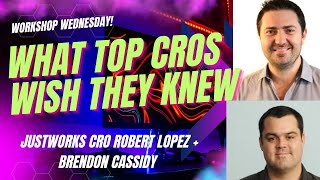
Robert Lopez, Justworks CRO, and Brendan Cassidy share ten lessons from their sales leadership careers. They cover recruiting before you need it, calculating true customer acquisition cost with cohort analysis, investing in RevOps early, and shifting AEs toward self-sourced deals instead of relying on SDR volume.
Chapters
Yeah, I'm just going to do just a little bit of context on Robert Lopez, who's obviously CEO for Justworks. I've known Robert, I think we met at like SaaStr like 10 years ago at a SaaStr event.
A while ago.
Someone told me that, but I've known of him for a long time. I followed the space in the category and seeing sort of Justworks and Zenefits and others and watching sort of Justworks emerge as a category winner there. But, you know, there aren't a lot of sales leaders that can take a company from like inception to, you know, $300-400 million in revenue. Right. And sort of survive all those phases of growth. And so I've been a huge fan of Robert's for a long time. And, you know, in my opinion, you know, the two best go-to-market sales leaders on the Eastern Seaboard, in my opinion, are Robert and a guy named Marc Jacobs. I always have to mention Marc. I don't think they mind. Being grouped together, but they're the two best. So if you're a company that's, you know, $0 to $100 million in revenue and in software SaaS, they're the two people I would call. I mean, obviously Robert's got an IPO, imminent IPO at some level for Justworks coming and probably not a super gettable guy. But yeah, he's one of the best.
Yeah.
So excited to have him. On Saastr, a part of Saastr. I've been on some stuff before, so yeah, excited to welcome him in.
Yeah, I second that on Mark. Great, great guy. I've known him for a very, very long time. Yeah.
Yeah. So I already did the bio on me, so we can just go.
So we just jump in here then. Yeah.
Yeah.
All right. So the way we're going to play this is we have 10 things, kind of things that we wish we knew then that we know now. And I'm gonna hit on the first 5 and then Brennan's gonna hit on the second 5 and then we're just gonna kind of play off one another and leave some time obviously at the end to go for it. So first up, a lot of people seen Glen Gary Glen Ross, everyone talks about ABC, always be closing, and that's important. But I would argue in many ways, especially at a growth company, it's like this always be recruiting aspect. I can't tell you, you know, from like the early days, you have no brand, nobody knows you, you're just basically just sheer hustle with an idea and you gotta figure out what are the hacks to kind of get people interested. And so like one of the things we did early on, and this is like seed stage, nobody knew us, was that we just got like a LinkedIn account. You only get so many LinkedIn messages and so we would run out of them pretty fast. And so we would just view like thousands of profiles of people that we thought were great and then whoever like viewed us back, was like a signal. And then we would just try to like focus and use our precious credits with very— we didn't have a lot of money back then and try to do that. And, you know, there's a few other things just that, like I've thought about over the years, which is like, you know, just keep a spreadsheet, right? Like keep a spreadsheet, try to commit and hold yourself accountable of having like one conversation a week because the best people out there aren't currently looking. But it's— you got to play the long game and you really, really got to focus on You know, having those like introductory conversations and like recruiting is recruiting for a reason. Um, and you really have to find the best people and bring them in and you can't just like, hopefully they'll apply. And I think that actually holds true even more importantly, like now when you're a big company, because, you know, we have this like huge recruiting team and people will like reach out to candidates, but the power it holds when like a founder, a CEO, COO, or CRO like reaches out directly to a candidate. Just holds so much more weight. And, and I think that like to this day, like I try to, when we're, when we have roles that we really want to hire, I'll just try to do it myself to the extent possible from a time perspective and just commit some time there and play the long game on some of these candidates.
Yeah, I'm gonna, I'll weigh in. I'm obviously a big believer in this. I've talked about, I've talked about some of these concepts to the point where, you know, everyone's heard it before, but yeah, like it starts now. Right, as a VP of sales. And it's— you can't just recruit for— you can't start recruiting to solve the job opening that just opened. It's a multi-year concept, right? And you want to put yourself in a position where two jobs, you know, the relationships you're building today will pay off, you know, 3, 5, 10 years later. And when you start viewing it that way, and I know Robert's team has this incredible team, loyal team, right? People that, you know, that, you know, obviously if he ever were to do something beyond Justworks, gosh forbid, I'm sure he never will. But, you know, he probably knows who he'd hire, right? It's not, you know, he knows the first 5 people he'd hire. And so, you know, for myself, that's, it's sort of the same thing, right? You always, if you're a VP of sales and, you know, you go to a startup or a growth company, you should have a good idea about who the people that you want to hire before you actually take the job. And if you don't, then you, you probably did something wrong. So yeah.
Yeah. And it's even the people that leave your company, right? And like trying to stay in touch with those because like great people will leave, right? They're ambitious, they want to do things, but like staying in touch because you never know where that path is going to lead. All right. So moving on to number 2, this is like one that is really like, you know, early on we talked about like at seed stage, nobody knows you, but once you can get the marketing engine up and running, Like it is like inbound can be like a drug, right? And you like do a big campaign and you have all this inbound and maybe you have like 5, 6 reps and like they don't even have time to like get on all the calls. But eventually it just dries up, right? And at some point it'll always dry up and there's like seasonality in these things and it's like so important early on to have like a diversified demand gen strategy. And so what I mean by that is like you have your traditional marketing, right? Right? And you have your traditional outbound, but like thinking of it like more holistically where what are the other like channels that you can generate? And so like investing in some type of a channel strategy and like every business has something. So maybe there's like affiliate partners or maybe there's like a brokerage network or maybe, you know, there are other types of business brokers or it obviously depends on your industry, but like having like an additional demand channel strategy outside of your traditional, just like inbound marketing and like sales generated opportunities is like so critical because at one point, like one of these channels is gonna like fall off and the ability to kind of balance the different players off one another, these different channels off one another is gonna like be the critical key inflection point of whether or not you hit the goal that quarter or that year. And so like, this is just one I see so many companies like fail to acknowledge. And the challenge with channel is it takes a really long time to pay off. And so it's like a multi-year investment, but it's just something that's like tough to see the return early on.
Yeah, you got to do it all right. You got to have to, like, if you actually want to have a chance, right, you're going to have to sort of marketing and sort of organic growth, outbound partnerships, referrals, everything, right? You got to do it all because you're not going to get where you want to go on the backs of sort of a single-threaded go-to-market strategy or top of the funnel strategy. So the people that figure that out, ideally out of the gates, but quick, it's, it makes a material difference in what type of outcome you're looking at.
Yeah, and trying to ensure it's well balanced.
Even more so today where you have so, you know, all the different methods and the ways that you can sort of connect with people or touch people, marketing, sales related, are so they've been mass replicated on such an epic scale that finding new ways to get engagement is, you know, that's really, that's like the magic now, in my opinion. Yeah.
Yeah. And the SEM, SEO game is like become so expensive to make it unless you have a really high value product and you can spend the amount of money for this.
I've seen unicorns get massive valuations on the backs of like sort of early marketing traction, right? Marketing-led growth traction where you're like, hey, is that how Field Test is? Is that going to hold up? And then it just absolutely hits a wall, right? And then they've raised this massive valuation based on the expectation that will continue or even increase. And it's, it can lead to a very bad situation for a founder. Yeah.
And making sure it's well balanced, right? So you don't have like 9, like 80, 555, it's, it's 5. It's like, you know, you want it as well balanced as possible. Well, I mean, kind of what Brendan was talking to right there, like really brings to the second point or the third point, which is like payback, right? Like payback is king, queen. Like it is so, and it's, it's like pretty simple when you think about it. It's like, all right, you know, if somebody's paying you $100 a month a seat, right? That's $1,200 a year in revenue. Like how much are you spending And like, but it's not just how much are you spending on the sales cost, like how much are you spending on the all-in cost? And like so many companies, like, just don't calculate the all-in cost. They're just looking like, okay, I'm paying my rep X and like, here are my Y marketing dollars. But like, there are these other extraneous costs that are around customer acquisition. And so once you get beyond that, like first million, couple million in revenue, like you need to figure out like what is the true payback. And it's tough early on because you don't know what is your lifetime value. And so I think that like we, like just for me personally, like going into that, if you have a high lifetime value, like our customers, like our churn is very low, retention's extremely high, like you can spend a lot, but you can be willing to live with a much longer payback. But if you don't know that early on, right? So you have to make these certain bets and like thinking about it on a cohort basis for these customers is so crucial. And I think just like going back in time, like really being able to understand and like predict to the extent possible, like what are those churn metrics and those like different buckets on cohorts? Because like it can allow you to spend, like you can maybe spend, have an 18-month payback, you may even have a 24-month payback, right? If your customers are gonna stay with you for 6, 7, 8 years.
Yeah, yeah, it's, go-to-market is expensive. And you know, obviously, you know, every company would love to have sort of marketing-led organic growth early, but increasingly that's not the case, right? Where companies are increasingly forced to go outbound, right? To try to manufacture demand. And if somebody told me, I'm not sure how accurate it is, but it seems accurate that, you know, on average, like with an outbound SDR, it's like basically like $1,000, you know, somewhere between $1,000 and $2,000 cost per sort of qualified meeting. And, you know, yeah, that's tough. Most people don't understand how expensive going outbound is. It's expensive. You have to do it, obviously, right? But there's, you know, there's a lot of context and details that go into that. Most founders don't understand that. Yeah.
Yeah. And then there's these extraneous costs that aren't included in CAC, right? Which is like turnover and churn and training and like all of these things that don't kind of show up in the numbers. But, you know, a rep that leaves, you got to train a new person, they got to ramp up for the next 3 to 6 months. So it's just like a really tough element to quantify. And a lot of people just miss that. So moving on to, to 4. So like this operational infrastructure is so crucial. Like I had the pleasure of like running sales ops at a previous company. And so for me, like I hired my first 3 reps and like the 4th hire I made was a, was a sales ops person. And it sounds like very early, but if you like, these things are very, these outcomes are very binary. And if you like really want to think about it over the long run, like do not be cheap. And I think going back, I'm like, oh my goodness, it's going to cost me like that $100 a month for the Sales Nav license and it costs like $150 a month for Salesforce. And you think about these costs and like, oh my God, what am I going to do? But like the outcomes are so binary. And so when you think about building an operational infrastructure like this is, is this is the thing that's going to help you scale or not, right? Like this is what is going to like lead to those outcomes and like having someone there to like really invest in it. I think a lot of founders are like, well, wait a minute, I just got to hire salespeople. And then what is this, you know, revenue operations and sales ops? Infrastructure and it's just like having the visibility and the data and the analytics to be able to— it's like flying a plane blindly. Like it's just so critical. And I think that a lot of folks, or they might hire a sales ops person, but like not do predictive analytics or not think about like statistically significant data. And it's just like something that so many companies miss. And I think there's almost like you can't do it too early. Is kind of the way I think about it.
I would be interested to know what, what do you value most in sort of like a RevOps leader, right? So I always, I remember when we got acquired by Adobe, basically they said you can find a RevOps person sort of already an Adobe employee, right? But I was really looking for someone to like kind of challenge me, right? Challenge your assumptions, you know, like you want that You know, you don't just want somebody that's going to like crunch numbers and analyze data, right? But actually somebody that will challenge your conclusions and push you on some level. That's hard to find, by the way.
Yeah.
Yeah. I think that like the— some of the best folks are people who maybe sat in the seat and they were a rep, right? But they have an analytical mind and like maybe they, you know, studied economics or math or something like that and they found—
That's a great suggestion, by the way. Like that's because I think finding great rev-op Firing a RevOps person is— you can find that, but finding somebody that, you know, that has that viewpoint where they've, you know, where you can sort of mesh the analytics or the data with, you know, the reality of having lived it, right, and owned a number and understanding the stress and all the stuff that's associated with it. I actually think that's— I've not heard anybody say that before, but that's actually great advice.
Yeah. The amount of credibility that they get on the floor immediately. Um, now it's not like it's, you know, you're not going to find— they're not like all over the place, right? But there are some of these folks that are just super analytically minded and they like the process piece and they just gravitate towards like the operation, like the sales flow and like the funnel and like Salesforce stages and their forecast. And so I think that just like that credibility and the ability to like sit in those shoes and like understand what they're going through, because salespeople got to deal with this plethora amount of sales tools today and it's like pretty overwhelming. And so like having the ability to like empathize and like have that credibility can go a really, really long way.
Yeah.
So I have one more here and then we're going to punch it over to Brent. This is like a little bit controversial. And I think that like if there are like investors on the call, maybe they won't like this, but so be it, you know. So I think that these like long-term incentives— so obviously a lot of companies will issue equity and there's a vest on it. And so When early on we were thinking about like our business and, you know, how do we think about like, it takes a lot longer for our, at our company, for example, for a rep to ramp. And so if you're in like a more enterprise motion or a very complex sales process and it takes a little bit longer to ramp and, you know, when you have somebody who's been with a company 2, 3, 4 years, they generally continue to get better and they generally continue to kind of like generate more money now. Maybe their quota doesn't go up at the same slope, but we kind of reverted to like, what are you thinking about building this book of business? And what I mean by that is that like, you know, net of churn, net of expansion. So if you close like half a million dollars in a year, after that first year, maybe it's $600,000, maybe it's $700,000. And every year as you build on that book of business, net of churn, net of expansion, like that becomes very valuable to the company. And so we implemented these mechanisms where as a rep, you can, after certain tenure thresholds, you can start making a percentage on your book, net of expansion, net of churn. And so it aligns incentives such that like if you sign a company and they churn after 2 years, that hits against you. Now, double fold, if you sign a company and they double in revenue after 3 years, that benefits you. Now you continue, you have to continue to hit your quota, there's a minimum threshold for that payment to kick in. But what it's done for us is aligned incentives to bring on like good business, that stays with us, that grows. And at the same time, it's enabled reps to basically like generate a lot more income up and above their OTE, assuming they continue to perform. Now, if a rep misses their quota for a quarter, like that can be very painful because they're walking, they're missing out on a huge, like a very big paycheck. But what it does do is it's like, you know, especially a few years ago when people were throwing crazy OTs out there, Like, it's, it's a way to really incentivize rep retention and incentivize long-term business value creation.
Yeah, completely agree.
So Brendan, we'll kick it over to you.
All right.
Yeah, you know, a lot of our, you know, there's pretty consistent themes, in my opinion, with the best sales leaders I've known, right, is that they see a lot of things pretty similarly. You know, I mean, I think being a VP of sales or a sales leader in a startup or growth company, it's hard, right? And a lot of times you are working for founders, you know, founders, maybe that's their first time ever doing it. And so there's always, there's this, there's this gap between sort of aspiration and like what's possible, right? And so, you know, some people are so, oh, well, like you can't blame the VP of sales because they didn't have X, Y, Z, etc., etc. But In my experience in a startup, like, can't— you can't say can't, right? Nobody wants to hear can't. And if can't is in your vocabulary, then on some level it's a tough gig, right? And it's not for everyone. But like, you have to replace can't with solutions, right? So if there's, if there's a something that's in a hill that seems impossible to climb or an impossible task or whatever it is, you have to come up with solutions. And in some cases that will help. Lead a founder or CEO to, you know, maybe a more reasonable conclusion, but come with solutions, right? Solutions to problems, I think, is, is in a startup is imperative. And when you're a VP of sales and you're saying, I can't do that because it's just, you know, I don't have a lot of sympathy, right? For, for more reasons why you'll see in a later slide. But there's, you know, like, Yeah, that's generally my worldview there is come with solutions, not can't. Yeah.
One way I think about this is like you're going to run into a brick wall. And so the question is like, can you— are you going to hit the wall and complain about it or are you going to like figure out a way around it? Are you going to go over it? Are you going to—
Yeah. And you can't just be a yes, right? If you're just— if you can't just say yes to everything, right? Because you will get walked into you know, an impossible situation on some level. But yeah, you have to be able to stand, you know, stand your ground on the important things, but do it in a way that has optionality and solutions. Yeah, go ahead.
Right. It's like the, it's like the rep-driven, it's like the fictitious rep-driven financial model that a first-time CFO like builds. And it's like, oh, if you hire 50 reps, like you're going to be, you're going to be good. And that's where you need to push back. Right. And it's like, how do you build like a bottoms-up driven model? But how do you build a demand-driven model? Right. And how do you like build those two independently, meet in the middle and like then you basically can like stress test it.
Yeah. All right. Yeah. So be friendly, but you're not friends with your team. So and again, there's, there's all sorts of context to that. But, you know, a guy I know is the CEO for a company called ZipRecruiter. This guy, Kevin Gaither, who I respect, was talking about this the other day. But the bottom line is You know, you can be a player coach and you can be a, you know, someone that your team respects and maybe loves, but you have to be able to push them, right? You have to be able to hold them accountable. And sometimes that there are uncomfortable conversations to be had there. And sort of once you're over this line of, you know, this is an employee versus a friend, it's tough to come back. So I think that was a learning early in my career. I felt I was a great sort of coach and leader, right? But like, I was unwilling to push my team very early in my career and call them out, right? And make them uncomfortable. And that was, you know, that was a learning that is critical, I think, to actually being a leader.
Yeah. Yeah. And it's like the best people are the ones that like crave that, right? They crave like the rough, like hard feedback, but like no one else will.
Maybe they don't crave it, but they step up the most.
That's fair. That's fair. Right. Right. They may not, they may not like it, but in retrospect, they'll, they'll, they like really appreciate it. Yeah.
Yeah. All right. Yeah, I think this is a learning rate where I think early in your, you know, when you're, when you're early in your career as a sales leader, you hire, you know, on some level maybe it's unconscious, but you hire people that are good, but maybe like you want to be the smartest person in the room, right? And maybe you want to be the most talented person in the room. And I think, you know, the further you get along, you want to hire people that are ideally even better than you or have more potential than you and more upside from you. And you want, you want people that, you want people that want to be, you know, VPs of sales and CROs and have that ambition. And some people shy away from that because they think it'll sort of drive, have them sort of unfocus off of like, well, I don't want somebody dreaming about being a VP of sales when they're an account executive today. But in my experience, people with that kind of ambition, very rarely are they unwilling to put the work in if you hire the right people. And so that sort of became, you know, certainly at Talkdesk, the goal was like, hey, everyone we hire, you know, you want them to have— it may not be a VP of sales, it may be something else, but you want them to have something bigger or something, you know, aspirational, some goal out there, you know, that they want to strive for. That's not just, you know, they don't want to be an account executive for 35 years, right? I think that's a reasonable expectation. And so that's good. You want, you want to hire those and also people, by the way, that will push you and challenge you and call you out. I want to have those people in the room. The best people that ever worked for me were people that were willing to challenge me and challenge my assumptions and beliefs. I like that. Yeah. All right.
It looks like Robert might be frozen. Frozen.
Am I frozen?
No, you're good.
Oh, good.
Am I frozen? No, no, I think Robert might be frozen for a second, so let's just give him one more moment. There we go. It looks like he will be rejoining, but I also have your slides, so I can pull them up as well. Always got to have a backup plan. Tip 11.
All right, slide 4 or slide 9, I guess, on the bottom.
Yeah, absolutely.
Okay, uh, one more.
Yeah, there we go.
So, you know, I think this goes without saying, talent over resume, right? Like resumes, you know, resumes are liars in a lot of ways. And, you know, it doesn't tell the story of like, hey, where is this person in their career right now? And, you know, there, there's a lot of different scenarios in which somebody can be successful. There's a lot of people that walk into incredible scenarios, right? Or they walk into a company where they have, you know, this brand or this recognition sort of behind them, right, at their, at their, at their back. And so like, You know, in the context of like a startup, like the scenario is who's going to come in here and be able to sell something, a product that no one's ever heard of, maybe for a problem that nobody acknowledged exists. We have no brand recognition and, you know, hey, knock yourself out, right? Sort of scenario. And that's, that's a really hard thing to do. It takes a certain type of person that, you know, is almost like looking for conflict or looking for, looking for debate. And it's really, really hard to find it. And oftentimes hiring the resume and saying, oh, this guy was at Salesforce or this one, this person was at Oracle or whatever it is. Well, that's, that's great. But like, okay, you know, the question is what next after that? Because, you know, trust me, you're not going to get on a call and say you're from Salesforce here. You're going to get on a call. They've never heard of you. They probably don't want to talk to you. What then? And so, yeah, talent over resume. It's, and it's hard. It is hard, you know, the hiring salespeople in a startup is brutally difficult with extraordinarily high turnover rates for VPs of sales as well. I think it's, you know, I think there's some statistic that like 90+% of first VPs of sales hired at a startup turnover inside of 12 months or less than 12 months. So it's, you know, it's a risk.
Plenty of risk. One thing I hate about Zoom is what just happened to me. So, so we go—
maybe now that Zoom is a work from home, work in the office company, right? We'll get some of these fixed.
I did just want to jump in on this because there was this like story that's so on point here. Like, I interviewed this, this one guy and he actually still works with us today. He was a stockbroker. And he was literally hawking stock, like literally selling stocks. No, like not salary, commission only. And like the drive to the previous point Brennan was making and the ambition that you saw, like he could just, like he couldn't even sit in his chair, right? And he just like wanted to win and he wanted to learn and he just like wanted to. And so it's like, do you have the raw talent and do you like want, do you have that drive? And it's like, we can craft and like train the software piece of it. So Sometimes when I see companies like, oh, we need software experience, it's like, you don't need software experience. You need somebody that like has the ambition and the drive and the will and like you can train. It's your responsibility as a VP of sales to train that, right? Yeah.
On, on, on some level, right? You'd rather get somebody with the talent and the raw sort of characteristics over maybe somebody that comes in with bad habits, right? Right. Because people that come in with bad habits, they're hard to break, right? They're hard to re-coach or retrain, whereas somebody that has the raw talent and you can sort of coach them up and teach them in your way or in the way that works for your company, you know, I think that, you know, is going to work out more times than not. I mean, obviously finding people that have the raw talent is not that easy, but—
Right. And the infamous, like, where are my inbound leads, right? It's like, well, a lot of startups don't have them, so.
There's none. All right.
5.
Yeah. Do your due diligence. This is simple. Most people don't do it. You know, 90 out of 100 startups are not going to make it. That's a fact. It might be more than that. That's actually might be an optimistic number. They're not going to make it. It's a high-risk environment, you know, and by not making it, it means like, you know, there's some sort of outcome in which, you know, the chairs and the computers are rolled out of the building and into a moving truck, right? Nobody made any money, et cetera, et cetera, et cetera. So, you know, this is why when people are like, oh, I took this job and like, yeah, this founder is impossible. I can't deal with this person, right? His expectations aren't reasonable. And I'm like, yeah, you know, you didn't do your due, you know, if you had done some due diligence, right, on this, particular person. Some cases you can't do it, by the way, but like, you do your due diligence to find out who is this person, right? Like, what, you know, where are they coming from? What is it like, you know, what is it like to work for this person? What is the experience others have had? Diligence on the company, right? And so like, people, you know, I think people have this sort of overwhelming optimism, right? If you talk to 100 startups, you think 50 have a chance. And if you say that 90 in 10 have a chance, well, does that change your perspective now? Right. That like maybe like if I know Robert Lopez or Marc Jacobs or Kevin Gaither or Sam Blond or Brendan Cassidy, right. These people are in my orbit. Get 3 opinions on that company because I can guarantee you, if you're talking to smart people, not everyone's going to be like, oh, no brainer, do it right. You're going to get a nuanced analysis of it. And by the way, if you haven't done that, then you are setting yourself up to fail.
Yeah.
This point almost makes me sad sometimes because it's like I've seen—
Yeah, well, Robert's default position is no. So every company within 1,000 square miles of him has probably made some sort of inquiry to him. And like, yeah.
I've just seen like people, whatever, leave our company or other people I know like join another company and they just like, I'm just like, just ask a question, right? Like even people that I like admire and respect that work for me over the years and like, I try to have open relationship, but it's like sometimes people throw a carrot out there and like, oh, we're gonna pay you X and you get there. And then sure enough, 12 months later I get a call and they're like, yeah, you know, you were like, you're right. It's like, look, if you, if you're gonna leave, that's fine. Let's have a conversation. I'll try to help find you the right gig and let's put a transition plan in place and, and what have you. But I think that like these, the world is pretty small. And, you know, like the— and there are so many like easy signs, like, all right, you know, what are the investors like? Who are the— you can get in touch with like who are the investors that passed on the deal, right? And like, what did they say? But, but it is— it can be tough, but it is so important. Or you could just like cold email. If it's an AE role, it's cold email a rep or cold email somebody else at the company. If you're looking for a VP job and like, what do the reps think? Is it, is it real? Is it not real?
Or just say how many, you know, good question is like, you know, which is just an early sign of traction is like how many leads do you have a month inbound leads, right? That's a great question. I guarantee you Robert, if he's gonna look at something, he's gonna ask that question, right? And if the answer is zero, there may, you know, Robert may continue talking to that person, but he's probably not coming. And so yeah, like I think, you know, how many leads do you have a month? Oh really? 100?
Great.
Can you forward something? You know, tell the CEO, hey, can you forward some to me as they come in? Or however they're coming in, there's some sort of, you know, you know, web lead to web, web to lead, you know, sort of thing internally, some email, probably notification. Yeah, send some to me. Right. And by the way, if you're a CEO trying to recruit someone like Robert, that's a great way to sort of gain, you know, familiarity and comfort and trust is just by sharing— share some of the good things happening in the company because Right now it's just you saying it about how incredible the opportunity is or the space is or whatever else it is. But prove it, right? Show them, you know, hey, like, look, we got— here's a great lead.
We just came in, you know, Justworks came in as a lead, you know, which, you know, and another thing that's like, it's always like, hey, a company is doing whatever, 20, and they want to finish the year at 30. But it's like, well, what did they start the year at last year and what do they want to finish the year? Like, what was the plan last year and like, where did you get at it? Because a lot of people just focus moving forward. Not what the last couple of years look like. And did they hit it? Did they not?
Yeah, the most in-demand people, VPs of sales and CROs, are tremendously risk-averse. Most people don't understand this, right? They're not going to put their— lean their chin out for you, most likely. And so they're going to do their due diligence, really starting at no, right? So they're doing due diligence, being like, Could I do enough due diligence to create an overwhelming case for yes? Which, you know, there's a— most CEOs start out with this sort of fantastical vision of their VP, who their VP of sales is. I've talked about this a number of times, but like, oh, like, you know, here's my top 10 list and like, I'll tell them and say, I can probably help set up a conversation with some of these people, but they're not coming, right? So where's the second list? Where's the list of the people that you might, you know, that actually might be able to come in here and be successful that you might be able to hire? So Because, yeah, the best people are going to do a ton of due diligence. A lot of times we'll do it with each other. Right, Robert, that will bounce something off Marc Jacobs. Marc Jacobs to me, Sam, you know, it's a small community, right? We all— a lot of us know each other and respect each other because we know how hard this is. Yeah. So that's it. That's, that's my fifth. So moving on.
So I think we got questions now, right?
Yes. So we are going to stop screen sharing and move on to some questions from the audience if, Wen, you want to kick us off.
Sure.
Thanks, Caitlin. And thank you, Robert and Brandon, for sharing the great insights. So I have 3 questions, actually. The first one is, Robert, when it comes to the journey, the whole journey of Justworks, how How did the go-to-market strategy evolve since when the company was like, you know, 0 to 10 customers and then 10 to 100, 100 to 1,000, and 1,000 above? And how did you know it's time to make changes?
That might be an hour-long podcast in itself. I'll see if Robert can distill this down into a couple minutes.
40 seconds. I mean, like the big thing for us was that like, trying to stay focused like early. I think a lot of companies it's like, and quite frankly, this, this is probably like on a V2 of this, like now that I'm talking about it, it was like, what do I wish I knew? It's like you see so much opportunity and like that company could be a customer, that company. But like the country we live in, like depending on where you're focused, let's say you're focused on the US market to start, it is such a massive market, but it's like where do you have product market fit? Like think about the customer adoption curve, like Where are your innovators? Like, who is going to be that ICP initially? And just go really deep, right? Because there are these referral loops, right? Once you get a couple logos, like there are these referral loops, it's like, oh, like early for us, like Trello was a customer and Casper was a customer. And so I get on the phone and people's like, oh, have you heard of like Trello or Casper? And we were like in New York tech and you know the answer is going to be yes, right? So there you have your proof point, right? And so once we actually like were able to build up that, then we're like, all right, what's the next geo that's going to focus that we're going to focus on? Let's go deep in that geo. Now we have nuances in our business where like geo and health insurance is very relevant. Every business has their own thing, but like that, just like really like focusing early. And once we were getting a certain amount of reps at quota, then we would like double down there and then we would start looking at geo and we would have these like markets that once they became profitable, then we would go to our next market. Right. And so we would look at a market by market profitability level and that's how we would double down and then we would just build on that as we grew.
Yeah. And once you get Trello and then you get the next, you know, the next player sort of behind Trello, right? It becomes this sort of like almost like vir— sort of viral sort of customer loop, right? Where everybody, you know, everybody somewhat similar to them, you know, it becomes a huge selling asset for them because you—
yeah, Michael Pryor was like, we like joked that he was on staff and he was like, yeah, I've done so many referral calls for you guys. Like, can he like hook me up with something, right? Like, you know, just like, you know, like those things.
I think that Salesforce, the Trello, the Trello and those others, you could probably hear them referenced about 100 times a day, maybe more. Yeah.
Thank you guys. It's just, it sounds like really the landmark logos first, make sure they're successful and happy and then just expand to the logical.
Yeah, but I think it's like specifically logos that your ICP knows and respects, right? Because like, oh, if they're using, if they're using this product, then like, oh, it's, it's pretty good. There's like those proof points where it's not just some company that nobody knows in like the space you're going after.
Nice.
Cool.
So thank you guys. And the second question I have is, as a sales leader, how do you tell if there is sufficient product market fit for you to thrive in early days? Uh, you guys talk about doing the diligence, but in the early days, I saw Robert, you joined Justworks, uh, Justworks like a year after the founding. How do you know like this is going to work out?
Like, how do you tell? I definitely didn't. I think we had like 6, 8 months of cash left, but I was just like, well, if it doesn't work out, what's the worst that could happen, right? I'll go get another job. Um, I think for me, I actually did a really big diligence process. So like, my, uh, a family member has a small business, so I went through the demo process with ADP, with the TriNet, with the Paychex, and it was so god-awful. Like, I remember one company sent me a PDF to fill out to like get a quote. It was, and they wouldn't even send me a Word doc. And I was like, all right, you don't even need to build a, you don't even need to build a good product. You just have to be a little bit better than this. And like, I'm confident that I can execute it. And so that was really where I was at. I think it was probably like, you know, maybe a little bit of dumb luck there, but that, that, that's the—
looks like Robert froze again.
He was making a great point though.
Yes.
Oh man, Zoom every time. When did you have any other questions?
I'll let other folks ask questions. I've already taken up quite a bit of the time, so thank you, Caitlin. Thank you.
No worries. We love it.
Good questions.
Ryan, we are going to move on to you if you would like to ask your questions, and then Rahul, I see you in the queue too.
Hi. Yeah, thanks for today. I actually got a lot out of this, so I appreciate it. I'm still learning SaaS sales on a daily basis. We, after like 2 years, 3 SDRs and pretty much my life savings, it was clear to me that I had no business building a sales team from scratch. I've always been the lone wolf sales guy in my market that would build cold markets into like $30 million books, but I was literally selling nuts and bolts. So I've never sold software. And thanks to a product pivot in December, we found our true market fit with our clients and have been fairly successful this year on bringing on large enterprise contracts. And then thanks to SaaStr, I've learned enough to sell our own product myself. But I've got the director of sales role that's ready to be a VP that I'm gonna I'm targeting him for March. So I'm doing the courting. He's at a big enterprise company calling on the Oracles, but we work together at an incubator and he built a sales team from scratch and he knows SaaS sales. So I've got that stuff figured out. But Jason's always VP of sales, VP of marketing. I learned everything about marketing from Neil Patel. I learned everything about SaaS sales from SaaS, but I don't know what to do outside of that courting relationship. So I've got that VP of sales potential, but I don't even really know what a CRO or CMO— I don't know who's next. Like, who else should I be courting? I don't have my 5 people. That's the short question. How do I plan for those 5 people?
5 people. I'll answer considering Robert's somewhere else. But yeah, are there 5 like salespeople, like just generally roles generally like beyond sales or—
No, you mentioned earlier that if Robert were to ever leave his current role, that he has 5 people that he knows he would bring on immediately when he starts.
You have a like a director of sales, somebody that— I thought you said you were courting somebody.
I'm courting. Yes, I'm courting that VP of sales role, but I don't know who else I should be dating. On the other sides of that CRO, CMO, that mix of what else do I need next is where I'm missing a gap.
I would say most companies would probably hire like a marketing leader, right? Like, you know, before sales leader. I mean, obviously in a startup, being able to hire a marketing leader that's, that is an expert in driving sort of like top of the funnel, right? Because As you know, right, any sort of organic traction and growth is it just relieves a lot of the, you know, the stress and the pain, right, from having to go 100%, 100% outbound is really, really hard, right? Nothing harder, right? Where you're having to tell people, hey, please talk to us, right? Please, we got something to say, right? That's just a hard life to live. So if you can find a marketing leader, VP of Marketing, CMO, that, that is great at sort of demand gen marketing, which by the way, I can give you about 1,000 other companies, right, that are looking for the same thing. It's hard to find, right? If you can find that, then, then that's a great hire. If you're— but I would not hire a VP of marketing if they can't do that at your stage, right? They have to be highly competent, in my opinion, in demand gen and top of the funnel because, you know, you've We've read Jason's content. He's got this, like, you know, if your VP of marketing, if all your VP of marketing does is get blue pens or something, right? He has, so it's one of the best articles he's ever put up. And like, that's like, that's this sort of like no inside baseball known thing in the startup community, right? Is you're gonna hire a marketing leader and they can't help you in the top of the funnel, then like, my God, they better be great at some other stuff. Yeah.
I mean, The other thing is that like, I don't know exactly your business particularly, but if you do have a lower end segment to like invest in like a product, like a self-service motion earlier on that can like try to help that on-ramp. And so like, you know, I've been leading our initiative there for a while and like those things also pay— take a really long time to play off. But if you can focus your sales organization a little bit further upmarket and then try to have some type of on-ramp, like, like very lightweight, low cost just to get them in the ecosystem, get them familiar with your type, the types of products that you use. That could be like, like more of like a product growth leader to like pair because everyone talks about product-led growth, sales-led growth. Like I believe like you got to have a marriage between the two. Like very few products can exceptionally execute like PLG well. But like if you have the two that are married, like because some buyers, like they kind of want to talk to somebody, some people, some buyers don't want to talk to anybody. And so you got to have the marriage like, like a really great marriage between the two to successfully execute. Like along that value chain.
And then you talked about hiring this, you're courting this head of sales candidate. I'm assuming you don't want to say their name here. So, but this person is this, you know, who are they going to bring with them? Right.
Which, you know, I wrote down his 5. That's a question that I'm going to ask is who would you, who do you bring on board with you?
Now it's, it's an opportunity for him or her, whoever it is. Right. They get a chance. I'm assuming they're probably not A lot, you know, they haven't been a VP of sales for 10 years. Maybe this is their first time. They get to build the team right with the people that they want. And that's a great opportunity for them to really, you know, have a chance to do it with your support. You're the founder, I'm assuming.
Yes.
And if you have the right person, you know, it can be an incredible thing, assuming you're sure. So that's all great.
I appreciate it. We were fortunate. We were industry experts in mechanical design, from phones to tractors to iPhones. So what y'all call the linoleum, we speak those people's language. And so we had to learn how to sell the CTO. That's what Saster taught us. We already knew how to sell the client. The people using our products love it. We just didn't know how to convince the VP of Finance to purchase it. And that's where we've kind of grown. But now we're getting marketing opportunities through PR and we're trying to capitalize on that. But, but getting some sort of funnel introduction path of bringing in potential clients into a world that they can trial, learn, experience courses, that's the gap that I'm currently trying to fill. So you guys were spot on. Thank you very much.
Yeah, great. Okay, our next question. Rahul.
Hi guys, thank you to have me here. Um, I'm, I'm Rahul. I'm the director of customer success at Recruit CRM. So I had a question around RevOps. Uh, basically I've set up basic, uh, infrastructure or the basic report or dashboards there. Although I'm struggling to find out like what are the real statistics that we need to look at in order to understand the journey of the customer, the cost of acquisition and things like that. So would you have any suggestions for me how I can initiate building up that kind of a, maybe a team of RevOps? I think Robert, you mentioned that.
I mean, yeah, I think that, I mean, one of the things that I think a lot of companies fail at is that like they have their, like they build their stages and their stages are kind of like rep dependent. So it's like, oh, like a rep says, oh, I'm interested, the next stage. It's like, I'm a big believer, they need to be like, very binary. And so like what quantifying aspect does the comp— like does the company need to do something? Do they need to fill something out? Do they need to submit something? Do they actually have to have an action where it's not rep dependent? And so maybe they have to like, you know, fill out a document or whatever it is. And so like making sure the stages are very quantifiable and measurable and then ensuring that like velocity and throughput is measured. Like a lot of companies don't, it's like they're all about generating pipeline, generating pipeline, generating pipeline. But it's like, what is the velocity of that pipeline? That's harder to measure, right? And what is the age of that pipeline? And what are this— how— what's the throughput? Like, are— is the velocity moving through across the year in the way it should? And trying to kind of like layer on like certain like type of predictive analytics around it once you have enough data and like statistical modeling in order to do so. Um, but I think that like first and foremost, it's like, what is the tooling that you— if you're just using Salesforce today, Like there are like, you know, different types of, like the scale of your business. But I think it's just like at a high level, it's like nail the stages, like ensure you have the backup data to prove it and then you can start layering on more like sophisticated tooling to understand like what the velocity looks like.
Right.
Yeah, I think we're using HubSpot at the moment, although me personally, our department uses Castify. As a CS platform. So I'm kind of trying to build some different dashboards for that in a different tool that could actually help them understand how much cost of acquisition do we have for a customer and basically what kind of incentive plan should we go for, go in order to make sure that, you know, we are retaining those customers and things like that. Again, something to be fair for our sales reps as well as CS reps. So I'm just trying to figure that out. I had one more question around Again, our CS team, I know they're not exactly salespeople, although I want them to target more on expanding their businesses around different affiliates. Let's say if you have a recruiting agency who's a customer, but they would have some affiliates in different countries. So should they reach out to those affiliates, or should we have salespeople jump in and help the CS— CSMs to reach out to those people?
What do you mean by affiliates? Sorry.
So let's say we have a company who's based in the US. They have some affiliates or partners, let's say in India or in Spain somewhere.
Yeah.
So, right.
So again, yeah, I mean, I think that if you're having your, your CSM should be focused on like just making sure the customer is like the most incredibly happy. It almost sounds like this is like a channel, like I was talking a little bit earlier about channel strategy. Like, it sounds like that might be an opportunity if you think that, like, you know, because different partners are motivated by different things. Some partners, like, want a rev share. Some partners just want to make their clients look good and offering them a great tool, and there's some type of referral moment there. But, like, I think for customer success, like, they just need to be exclusively focused on, like, how, like, you know, on referral loops, right? How can they be generating referrals? How can they just make sure upon renewal, like, that your product is the best thing like out there and they're willing to like scream it from the rooftops and like measuring things like customer effort score, um, CSAT, um, NPS, like just maniacally, like very, very— we measure, we have like a quality team in our CS organization that like measures the quality of customer interactions because at scale it's very hard to do. Um, and so like those are the things and like, and you can measure like the success there about like our companies referring and how is that working out, but it sounds like you might need that might be like a, like a role specifically focusing on like an affiliate channel.
For how big you guys are. So like how many employees versus like, you know, how much capital and all that kind of stuff. And hiring a partner person is like with that, I'm assuming you have a VP of sales, but all usually would sort of roll up to a VP of sales. But sometimes what they own sort of sits in this, you know, between the raindrops, so to speak. And so, but like, I definitely think leaning into the partner a partner sort of specific role earlier is like sort of a reality now. It's a smart thing to do. Because, you know, everyone's looking for, you know, a way to diversify, like I think Robert talked about, or diversify your top of the funnel and demand gen strategy. That's a real channel.
Brendan, Robert, I know we're at time. Can we sneak in one more question?
Course we can.
Okay. In today's more efficient world, do reps need to close more to make their OTEs? If so, how have you helped folks adjust? I'm not sure many have fully.
Yeah.
Well, well, I think that we're not finding that they need to like close more. What we're finding, it takes more activities to like more outbound activity to generate the same amount of pipeline. Right. So like, that's like statistically, like we've like looked across the funnel and like that, at least on the outbound, on the outbound flow. And so like, I think that they don't need to say close more, they need to kind of, you know, work harder basically to generate it. And so we've been trying to like, you know, ensure that we have a balanced demand gen strategy. And so we've been investing a little bit more on our partner channel to kind of help alleviate some of that there. And so we've like created certain incentives in certain sub-partner channels to try to create more demand to kind buffer some of that because we don't want to like make sure the reps are like too overworked. You know, sales development like has become quite a commodity. Like we actually use— I'm a big believer in it, but it's like everybody's like, it's just spray and pray type of situation right now. And so like there's a lot of noise. And so we kind of use sales development almost as like a way for us to create opportunity for the company and pipeline, but also create opportunity for the reps and future account executives. Like, so we view that as a farm system for Justworks. That's almost like first and foremost. And it also generates a lot of business. But I think you need to like get creative around different types of strategies right now, because it just— the fact of the matter is, it's just taking a lot more work to generate the same amount. We've actually seen close rates go up a little bit actually, lately, after like a slow Q1. But it's just taking a little bit longer. Sales cycles have extended a little bit.
Yeah, I'd say there's a very sort of dynamic conversation happening with VPs of sales right now, right? Where, you know, sort of the traditional of like you're at your SDR team owns all of it, right? Sort of, you know, where your SDR owns this massive, you know, sort of whatever you want to call it, qualified leads, meetings, number, whatever it is. And you're, you're salespeople are just sort of waiting for their calendars to be filled up. And I think it's, you know, sort of a concept. There's a guy named Scott Lee who I'm friends with. Who everyone's probably heard of before. He's a very active LinkedIn content producer, but it's called the Full Stack AE, right, where your account executives are going to have to own some of the burden to drive the top of the funnel. Because, you know, and like in actually attacking the top of the funnel more strategically than just let's send 150,000 cadences or, you know, cold calls and all that. Like there's, there's a lot of value to be had by doing that. And there's, it's very topical right now and relevant and the best VPs of sales are having this conversation now every day and you better be.
Yeah.
Yeah.
I mean, since day one for us, we've focused there. Like I'm a big believer that, you know, AEs need to be like hunters first and they're, they're managed to generating a certain amount of self-sourced opportunities. This goes like years back because like you never know when some of those channels are going to dry up. And so like you want to be able to like control your destiny.
You don't want them doing it the same way you're, you're—
Oh, fully not. Yeah. No, we focus big on referral. Like that's, so one of like a small hack we did early on, which was really successful, was like we basically said after an AE closes a deal, we set up some nurture campaigns to the AE saying, hey, your customer signed on 60 days ago, 120 days ago, as like a reminder for them to check back in with their customer. Hey, is it like what? I thought what I said it was going to be, how are you enjoying the product? Just as like an easy way for them to follow up. And at that point, if they were having a good experience, it was a great opportunity to like ask for a referral. And it lets the— it's hard for an AE to organize that. And so we just tried to like give them like an almost an internal cadence, like as a way for them to like get a reminder to basically build that book of business over time and generate referrals. Because, you know, referrals for us close at 50-60%. Close rate, which is a lot. I mean, I'd rather like, you know, have 2 opportunities, right? And like to get there rather than 4 to 5. And so we tried to just like embed that and like the cultural, like systematize that in the system.
Yeah. Referrals are a great thing to embed into your go-to-market recruiting, everything that you're doing. People don't do it enough, to be frank. And it's a force multiplier. You know, things that come through people you know or vouch for people you know, whether it's hiring or selling or whatever it is, it's really not. It's, it's lower hanging fruit than, you know, let's go cold call 1000 founders or VPs of sales or whatever it is. Like they're not picking the phone up. And there's, there definitely are people out there that are still living in that world of like, yeah, like, you know, I roll my sleeves up. I got my coffee cup like it's Glen Gary Glen Ross, and then, you know, I'm gonna bang out, you know, 500 cold calls today. But, you know, you know, and God bless the people that can make a living off that, but it's not enough, right?
Yeah, yeah. Well, everyone has to hop off of this call and go, uh, get some referrals. So with that, thank you so much, Brendan and Robert. That was an awesome session. So much positive feedback in the chat. We really appreciate your time and your 10 tips. Next week, we have Raising Capital in 2023: What It Takes to Raise in the Current Market and the Data to Prove It. So we will see you all next week, and thank you again, Brendan and Robert.
Thanks, everybody.
More from Jason

Why Your Next Hire Should Report to an AI, Tragedy Apps, and Too Many AI SDRs? | The Agents #004

Our Agents Drove Our Salesforce Bill Up 80%, Marketo Hates Agents, and We Stealth-Churned Off Notion




Managing 20+ AI Agents: Lazy Agents, Our $500K AI Bill, Stealth Churn & the Death of 60% Solutions




