5 Tips to Reduce the Enterprise Sales Cycle with TripActions Liquid GM Michael Sindicich
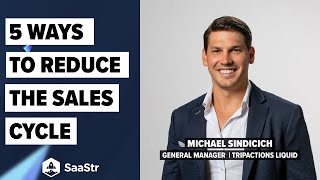
Michael Sindicich, GM of TripActions Liquid, shares five ways to shorten enterprise sales cycles: build a sales engine with aligned compensation, stop founder bottlenecks by getting certifications ready, pick your go-to-market lane, get higher in the buying org, and use executive connections. TripActions grew 80% revenue with 35% fewer salespeople during the pandemic.
Questions this video answers
We adjusted the compensation model to focus on consumption‑based metrics, added virtual happy hours, employee resource groups, and DEI initiatives to keep morale high and retain top talent despite reduced travel demand.
Corporate travel spend is growing about 10% week‑over‑week, bookings have risen 45% in the past four weeks, and there’s strong demand for hybrid‑work off‑site travel as teams reconvene quarterly or annually.
We rely on direct sales outreach, virtual conferences (e.g., CFO‑focused FinTech Forward), and limited direct‑mail due to remote work; virtual events have been a major lead source.
Marketing creates CFO‑centric content such as white papers and virtual events, aligns messaging with strategic financial priorities, and helps build confidence for senior buyers.
C‑level inboxes are crowded, so we need multi‑level touchpoints, thought‑leadership placements (Financial Times, Wall Street Journal), and tailored content to cut through the noise.
Chapters
and participation. Like I said, we have 35 minutes, and these sessions are being recorded and will be available post-event. So I will drop a link in the chat to our SAS or YouTube. Make sure you're subscribed so you can view the recording afterwards. Michael, back to you. Thanks so much for joining. Take it away.
Great. Thank you very much. And you got my last name correct during the introduction, which is rare. So major kudos for you. Uh, my name is Michael Szyndyčić. I'm the general manager of TripActions Liquid, which is our new fintech expense management and payment solution at TripActions, more broadly known for corporate travel management. Um, today I'm going to be walking through 5 tips to reduce the enterprise sales cycle. And, uh, just for some context, I was the crazy person that actually joined TripActions 5 years ago as the first sales hire at the company when we were less than 10 employees. And then helped scale the team through commercial mid-market and recently was the VP of Enterprise Sales before moving over to build our new product offering. And to talk about TripAction, so we were founded in 2015. We've got just over 1,200 employees now, finishing out our first major acquisition. We've got 5,000 customers and growing very rapidly. And our customers range from some of the world's biggest Fortune 500 global enterprises all the way to the, to the smallest, most innovative SMBs across the world. We've been lucky enough to raise about $800 million in venture capital from some of the world's best VCs. And recently we've achieved a $5 billion private valuation from our recent round. So today I'll be walking through a few steps. We've definitely made some mistakes at TripActions and learned a lot, and we've done, you know, a few things pretty, pretty well and correct as well. But what I'll say is, you know, this last year was a very interesting time to sell a travel solution while nobody's traveling and everyone's kind of on lockdown. But leveraging some of these steps and these learnings, we were actually able to grow our book of business by over 80%, and we far surpassed our performance from 2019 with 35% less sellers in 2020 and the headwinds of the pandemic, resulting in us coming out of this thing pretty strong. So what we'll talk through is actually creating the sales engine. How do you create the engine? What are some things you need to stop doing around selling like a startup? Picking your lane, getting higher within the organization, and then of course leveraging executives. So we'll start with the first one. And I think the first major callout is around creating the sales engine. And it starts with aligning compensation. So one thing that we've learned is enterprise sales reps are expensive and worth every dollar that you pay for them. The high-performing enterprise reps oftentimes will close 3, 4, 5x the amount of a traditional enterprise rep that, that may be not as high-performing, and they expect to have aggressive comp plans with really high accelerators. Another thing that's not necessarily around reducing your time to close, but also reducing your time to revenue. As a travel company, we make a significant portion of revenue once the adoption happens and once the product is used. And so we've always aligned our comp model to actually having reps be paid off of the success and adoption of the account, which reduces our time to revenue because the rep is very focused on the account getting implemented, adopting. And I think it's been a big contributor to our really low churn rate at TripActions. The next one is something called PG. And, you know, this got introduced with Carlos de la Torre, our new CRO who came from MongoDB. He was the CRO there. And traditionally we had a model where we had a lot of SDRs and marketing drumming up a bunch of leads, and our sales executives, our account executives, were tasked with joining meetings and closing deals. And I think that works well, especially when you have, you know, you're single-threaded on smaller deals and you can close a deal quickly and you've got a big marketing engine that's driving a lot of leads. But PG, or pipeline generation, really serves as the fuel to the engine for the sales rep. And especially when it gets to the enterprise, our reps have gotten really good and methodical around PGing, building their own pipeline along with being supported from the SDRs. And when you're selling an enterprise sale, you've got to be super multi-threaded, selling to multiple different people, building champions within an org. And so our reps are PGing into the accounts that they're working on selling. Uh, we even have a whole day dedicated to it called PG Tuesday. Don't talk to a salesperson on Tuesdays, they're PGing. And you know, as we're all remote, they're or even getting on calls together and doing group PGs, kind of cycling through cold calls together as a team. And it's been really, really beneficial for building enough fuel for our pipeline, especially when you're a company that has a greenfield. You might be a younger company that wants to go and take all the competition, and that works really well for building the pipeline. The other big part of the sales engine is sales enablement. And over the years, we've learned this. When we were younger, what we would do is we thought, okay, we can just hire a bunch more reps and we'll keep replicating and get the same productivity as we did with our early reps. And that's certainly not the case. I've seen a lot of companies that will hire reps and say, okay, go and, go and follow along with the sales rep or listen to Gong or Chorus calls and you'll pick it up. It does not work like that. And that will not scale, especially if you're hiring a lot of reps quickly in different regions. You've got to be methodical and build out a very serious sales enablement team with onboarding playbooks, with boot camps, and of course, with continuing education as your product evolves. Number 2 is actually to stop selling like a startup. So when you go and sell to the enterprise, they're going to expect things like different compliances. We've got GDPR, we've got PCI, we've got SOC 1 Type 2, SOC 2 Type 1 and 2, and all of these different things can drastically slow down your sales process if you don't have them all buttoned up and nice and easy, easily accessible to the sales rep so that at the end of the deal, they've done all the work, the company loves the product, and they don't get slowed down by some of the things like legal and security. And that's been a big investment that we've made and I've seen companies make in order to streamline the enterprise sales process. I've also seen it completely slow down deals and even lose deals when you're not ready. And a company might say that we love your product, but you're just not ready for us. That's selling like a startup and you want to avoid that as much as you can. The other piece too is oftentimes when you're a startup or trying to go upmarket, you oftentimes involve the founders or the CEO, and that can totally slow your, your deal down. And you need to make sure that you're building a sales team that's credible and leadership there that can get deals done without involving the founder in every single deal process. Obviously early days, you're going to need to do that, but you want to scale that over time and not have that become a bottleneck. But in the end, we'll talk about where you can and when you should be leveraging your executives. Step 3 is around picking your lane. So there's different types of models for sell— for selling and different types of companies or products that can be bought in a certain way. There's what we call top-down, which you can see Oracle NetSuite, TripActions, Workday. We all have a model where we'll go to a CFO or the finance office, we'll sell our product, and then they'll launch it and implement it wall-to-wall. The other type of sales model is a land and expand or a bottoms up, where you might have, you know, a Slack, a Zoom, a MongoDB, a Dropbox, where you might insert yourself into a certain organization or a few people with the org and then spend time building champions and widening that across the board. And I think it's extremely important to understand what's the best way to sell your product. And again, it can vary from commercial to mid-market to enterprise. Segments, but it's important to understand that and then align the entire company, including marketing around that. When TripActions first launched, we had, you know, a sexy brand and it was easy to use and travelers love it. And we expected travelers to go and advocate up to their leaders and say, we want to use TripActions, but it doesn't work like that with our sale. And we had to align everything around the top-down sale, including our marketing came much more around visibility, around cost savings, around reporting and control for the CFO's office. And that helped us to really accelerate our sales process versus trying to go after the wrong type of sales model and then it slowing it down in the future. Step number 4 is around getting higher within the organization. So part of what we just talked about around aligning marketing onto the narrative that will work with a C-level, we've also been expanding our product suite. So in the beginning, I mentioned TripActions Liquid. That is our expense and payments and corporate card spend management system, if you will. And so adding that suite into our travel product already now allows us to have a much more seamless message for the CFO, and it gets us higher within deals. And we've seen that there's a 40% faster sales cycle when we have a C-level or a VP involved, or even if they get involved at first and send us to procurement, travel manager, AP manager, The deal cycle is significantly sped up and our chance of getting that first meeting is drastically improved when it comes from a leader. We also saw with our expanded offering, our sales cycle dropped from 40 days to 28 days in the commercial segment by having this comprehensive offering. And we expect the same thing to happen as we go upmarket as well. And lastly, leveraging executives. So I talked about not having a bottleneck and involving your C-level or, or your founder in every single deal. But we found that a big shift toward enterprise sales has occurred at TripActions. And we do things like every single e-staff meeting that we have every 2 weeks or every week, we'll talk through the enterprise pipeline. We'll talk through how do we get this deal done? Who do we know here? Even at our board meetings, we'll talk through the pipeline and see who our board's connected to at the enterprise's board. And it really can sometimes take a village, but once you have those high-level connections, it speeds up the deal drastically. And we've seen a 30% increase in win rate when we're connected through the board or through the C-levels to C-levels. One of my favorite examples I can share is TripActions is extremely focused on our DEI initiatives, and we've hired someone named Shaka. And one of our Fortune 500 enterprises that we were selling saw that and mentioned, hey, it would be awesome to connect with them. We connected our two DEI leaders, and that ultimately created really strong champions and a bond. And, you know, we started talking about how we can work together in the future. And it ended up also resulting in a deal. They're leveraging us for travel management. So that's a unique way, but oftentimes what we see is it is important when the time is right to be able to involve and leverage your executives in your toolbox when you're selling to the enterprise. So hopefully those 5 tips were really helpful. As I said, you know, we've learned a lot at TripActions over the last 5 years, sold to a lot of companies and scaled our offering and our go-to-market. But with that, I wanted to open it up to questions, and I see a few chats coming in, so I'll try to read those, or if you want to come off mute, feel free to go ahead and ask a question. Let's see.
Thank you, Michael. If you want to unshare your screen so we can see you a little bigger.
Perfect.
We have a couple questions coming through if you want to start with those.
Great. Let's see. I'm in San Francisco to answer your question. But let's see, how did you get your team so motivated and encouraged last year during a turbulent time? Well, I think that that's a really important point. And it's a discussion that we had at the board level. And I think it was Ben Horowitz, who was the first one to say, you need to take care of your sales team right now. Especially as I mentioned, TripActions has a comp model that's based off consumption. And obviously, people weren't traveling as much this last year. And that was the first thing that we we did is we looked at our comp model for the sales team and we adjusted it to make sure that we're not losing good people, right? It's always important to keep your top talent and have those success stories. So we altered the way that we paid our reps and we altered the goals that we had for the year. Um, obviously we've seen a huge improvement in our productivity levels throughout the year. We took some time to build and to scale up on the enterprise side. Um, and so I think comp was a pretty big part of it. We've also done, as I mentioned with DEI, we've also done a lot of employee resource groups. We've done a lot of virtual happy hours. We've done a lot of things to kind of bring the teams together and stay connected. I think, you know, we were in Silicon Valley here, our headquarters, and as a travel company, it was hard to watch the other tech companies all being very, very successful. And we were, you know, and are a hot tech company, but we happen to be in the travel space. So we had to spend a lot of time focused on that and making sure that, we're continuing to see a lot of wins. When it comes to the next question, what are we seeing for travel trends in 2021? We believe that it's obviously very important for sales reps and marketing to get out onto the road to close the deals. I just don't think that you close, you know, million-dollar deals and you don't want to without traveling there and you don't want your competition to be meeting someone in person with you not there. Obviously, once it's safe and everyone's deemed able to travel. We are seeing travel come back very aggressively. So I think we're seeing a 10% week-over-week increase since the beginning of the year in travel spend. So our customers are traveling. We had the other Monday, I remember counting, we had 700 unique customers actually book travel with us. So more people are getting back on the road and getting out there in front of customers and teams. And we see that there's a lot of appetite for group travel or offsites. So what we're seeing is there's going to be a new type of traveler where you might have a hybrid work environment, but teams are actually bringing all their teams together once a quarter, once every 6 months, once a year. And you're going to start to have new types of employees that may have never traveled or submitted expenses start to submit those expenses and start traveling to meet their teams for offsites. So we're excited for the future. We definitely see a very aggressive rebound in travel, and we saw some unique trends on expense management throughout the pandemic where policies were changing to allow from work-from-home, you know, stipends and things like that. Let's see, there's a question here. What are the most effective B2B channels you've utilized? Maybe I can get some clarification there. We, we have a direct sales channel or team, so we actually don't leverage partners as much. We're focused on direct sellers, so our SDRs and our AEs are PGing into various accounts. We obviously could not do much direct mail campaigns, so a lot of times we were having people, you know, if they want to win something or if they want to— if we wanted to send a handwritten note or postcard or something like that to the office, we didn't have their addresses. So we've done a lot of virtual events, and, and that has been really helpful. We've had conferences with our CFO speaking, with Shaka speaking, and we just are doing one with Steve Young as well, our FinTech Forward conference. And those types of virtual conferences are bringing a lot of leads in for us where direct mail campaigns have not been as successful because people are at home and not in the office. So we don't obviously have everybody's address. Let's see. What is the role of marketing when selling top-down to executives at enterprise? What is the best content format and channel to engage with senior executives? So what, what we found successful at TripActions is marketing really understands our buyers. We have an amazing product marketing team, and what they do is they'll sit with our buyers that we've sold to. They'll understand how they were drawn in and then they will develop content that resonates with their peers. And so white papers have been really successful. We've seen really successful again on the, on the virtual events when we're talking about topics that are strategic to a CFO, because that's the audience that we sell to. We've definitely been talking a lot about budgeting and planning finances moving forward post-2020. And we really just see them as When it gets that far and you're within the funnel, it's important to have marketing really help drive the narrative through and give the buyer, the ultimate C-level, the confidence that what you're selling is somebody who aligns with exactly what their strategic vision is moving forward. So that's kind of how we've been leveraging marketing, especially when we're in a sales cycle. Pre-sales cycle, it's all about demand gen and pipeline generation. Okay. What are the hurdles or challenges you faced when targeting more C-level employees? Excellent to see how much it accelerates the deal cycle, but curious to know timelines for prospecting and if that process was significantly slower. Uh, that's a great question. So I don't have the exact numbers. I know our sales ops and our analytics team have done a lot of research into this. And part of what I was talking about earlier is what we see is a C-level will oftentimes forward the email or forward the message onto somebody. And even that is significantly better than us targeting somebody lower down in the beginning. So, you know, we're targeting from all angles. We're not, we're not ignoring the ultimate end user, but what we're doing is we're doing significantly more focus and effort into that C-level. We haven't, as far as hurdles, right, they're obviously getting much more emails, they're getting much more outreach, they're probably getting a lot more cold calls. And so what we've been doing again around the virtual events, around the white papers, around being present in things like Financial Times or Wall Street Journal and things like that, that they're actually reading has been beneficial for us. But I would say, you know, of course they're probably getting prospected to more from everybody. And so, you know, but even if you can capture their attention and they'll send your email to the ultimate user of the product, it's still much more helpful. But we're still targeting both, of course.
Okay, do you have a question? No, sorry. That's okay. Just making sure. You got tons of more questions coming through, so keep continuing to ask questions.
Yeah, this is a good one. Are there ways to reduce the POC/pilot stage of a sales process? So we struggled with this in the beginning. When we were figuring our stuff out. So when we were first selling, especially as a small startup, everybody asked for a POC or a pilot. And, you know, we did a few, we had to in order to get our first deals. We would launch our travel solution to a few people or for a team, and then they would use it and things like that. We eventually, probably a year after starting the company, came and said, we don't do pilots, we don't do POCs. That's not something that we participate in. And if you want to use our solution, we've got case studies, we've got references you can talk to. We're happy to come to your room, to your office. And we said, we called it a conference room pilot. So we would actually have, you know, the C-level in there, we would be in there and we would have the admins or travelers, you know, come in and touch and feel and play with the product while we were there watching them. But we made a hard stand not to do POCs once we had traction, because what we realized is that POCs oftentimes were not well-defined, uh, the metrics for success. They're definitely subjective, and, and some people can have strong influence. If you're launching a travel product to, you know, 20 people and 10 people sign up, 5 people create a profile, and 2 people make a booking, and 1 person, you know, doesn't like the hotel they ended up staying at, it could ruin the whole thing. And, and so, um, we actually made the stance to, to completely remove POCs, especially because We're a top-down sale, so having, you know, multiple people like that use the product was, was not in our best interest and/or in the customer's best interest. And so being able to build that validation and also, you know, be accommodating to test and be there with them while they're checking out the product to make sure we're getting the best prices, we're getting all the inventory, that, that's what we found very successful. Okay, how can C-suite executives remove themselves from the sales cycle without being too far out of reach? How can founders encourage and empower their sales team to lead the function? Um, you know, I think this one is, is, uh, is about, you know, understanding if you have the right sales leadership in place, right? Um, if you're very serious about going into selling to the enterprise, it's going to take a high-powered executive to go and lead that team. And I think that's one of the first ways to understand how you can remove yourself. If you have to, if you're a founder and your team's growing, right, and you've sold already a bunch of companies and you find yourself being pulled into every single deal to close a deal, that's just evidence that your sales team isn't scaled. So it's about training, enabling that team, making sure you have the right leadership in place, and then being used when it makes sense or when you're going to the next bigger deal or the next bigger deal or one that's very difficult. But I've, you know, one of our competitors early on at TripActions, part of their sales process we learned was actually to schedule a call with the CEO and founder with the company that they were selling. And that company is not in business anymore. And part of what I think the reason why is that that team just never scaled. The founder cannot be the single salesperson for the company. Is there merit in investing resources to scale inbound when selling to C-level and senior executives, or are there outbound typically is the best way to scale? So it's a matter of understanding how your, your, your customers buy. And if you have a product that you're selling it to commercial or mid-market, what we found is in those segments we don't need to travel as much. So we've scaled our inside sales team What, what we also found though is the enterprises, if they're holding an RFP and having a presentation and every single one of your competition is going there to show up in person and to sell the deal, that's clear evidence that you need to also be out there traveling. And then in our mid-market segment, we've, we've learned when it makes sense to go and travel there and to, to do the presentation and close the deal. And we allow our mid-market teams to travel. When you're having inside sales in the beginning, We were selling all of our commercial segments, that's, we'll call it 50 to 500 or so employees. We found that we don't need to travel as much, but as we've scaled and built more offices around the US, we've got New York, we've got San Francisco, Palo Alto, Austin, and Dallas. And so if there are deals that are close to those hubs, our sales team is more than welcome to do that. But, you know, it's a matter of how your buyers actually buy the product and if your competition's getting out there in front of them. Then it's crucial to be there. And we believe in the face-to-face connection at TripActions. So, you know, I'm always a big fan of traveling to meet prospects. Okay. Um, does TripActions leverage automation or related tools to help streamline the sales process and enterprise sales cycle? If so, any tools that you'd recommend? Great question. Um, we, I've been amazed at how sales tools have evolved, um, over the years and, and You know, you see companies revolutionizing industries because of new sales tools. So, you know, early days at TripActions, um, there was competitors like Amex Travel or BCD or Carlson Wagonlit. It was remarkably easy for us to call a travel manager and they would pick up the phone because they weren't used to the competition cold calling and, and, uh, using these automation tools. So we use tools. Um, I, I'm a big fan of Outreach, of Salesloft, of Obviously, we use Zoom internally. We use Slack, and it's been interesting to create actually Slack groups with some of our enterprises to have, even during the sales cycle, just to have faster communication and keep things online. You can create separate Slack channels with, with people outside of your organization. LeadIQ is another one that we use pretty religiously to, to be able to pull emails from LinkedIn pretty quickly and get them into our, into our Salesloft. What else? We used to— or we use Sendoso for sending direct mail and tchotchkes and things like that to people's offices. I think that's a good portion of our stack. And then we use Salesforce internally for our CRM. Oh, and we use Chorus as well. But I'm a big fan of both Chorus and Gong. I think it's an amazing tool to be able to capture notes notes, next steps, and also for training and scaling. While you shouldn't have your, your teams just listen to Chorus or Gong calls to ramp up, I think it is really valuable to be able to capture those. Okay, are there any tips for sales or pre-sales to keep C-level prospect engaged between appointment setting and actual demo meeting, assuming the demo meeting could be a couple weeks away? That's a great question. What we found is we typically will align at the various levels. So you might have a C-level with a sales executive, maybe it's the CRO, maybe it's a VP or director, then you might have the sales manager with, let's call it, you know, a director of procurement. And then you might have the champion and the sales rep that are working well together. And we found that those touchpoints are crucial. So the salesperson's job is to basically map every interaction and when they want it to be. And then the salesperson needs to be the quarterback to say, okay, CRO, please set up a meeting here, you know, to talk about this, or please invite this person to dinner at this date and do that. And then, you know, sales manager, please send this article that we just launched to the procurement person, because that's going to resonate when we had this on the deal. And by the way, I'm talking to this champion and I'm trying to build champions in this department and that department, that department. So we found that building those connections, uh, at those various levels keeps them engaged. And it really is the sales account executive's job to be the quarterback and coordinate all of these different touch points throughout the sales process. Okay. I'm curious, now that things are starting to come back, have you adjusted your sales team's incentives again? Uh, we have. We, we have done some major shifts at TripActions. Um, Before, we were, we were more so selling a product where we were generating all the revenue off of usage. Launching Liquid, our expense management platform and corporate card and payments, we've now made it so that every commercial seller is selling both a travel and expense platform together. We've changed our model, so we're charging much more ACV upfront, especially with the introduction of all of our new products and offerings and the tools that we've been building throughout the last year and even since inception at TripActions. And we obviously are still focused on the post-sale type revenue through usage as well. So we've changed our quotas multiple times. Our sales teams have been amazing, you know, to be able to take all the different things we're throwing at them and adapt and apply it. And yeah, we've started to change it as things come back as well. So, you know, kudos to our sales team that's been super flexible. It takes some warriors, obviously, to sell travel during 2020, and, you know, they've done a great job. It's pretty incredible to watch. Okay, would you have specific different recommendations to sell a product to data or development teams up to CIOs? That's a good question. I've never sold to a CIO segment, I guess I'd need to understand a little bit more whether— the first question I'd have is, are you top-down or bottoms-up? A lot of the IT or products that I've seen for data, they're also on the go sell to a certain segment, get a few users, and try to expand the use case. Very opposite to what TripActions is doing. So if you've got a product that goes to the C-level, and then that C-level will go and launch it to the entire team, and that's what we're using, Then I would say the same types of rules that we've been talking about today totally apply. Do you have any advice around implementing or investing in sales enablement? How have you prioritized sales enablement and how has it been valuable? That's a good question. You know, I think that when we were scaling TripActions, you know, as I mentioned during the talk, we thought it was Okay, just hire more bodies. And then those bodies will go and work with the early salespeople that have all of the institutional knowledge and they'll go shadow a bunch of calls and they'll figure it out. Um, far, far, far from the truth. And, and, you know, you don't have the time to have those new salespeople go through the entire journey of those salespeople that were there since the beginning to learn the industry, to learn the ins and outs, to learn the language of how to speak to your buyers. That will take forever and it won't scale. And, and, you know, it's just often not possible because you're not going to have the same experiences of building that early product with the team. And so we've grown our sales enablement team very aggressively. We've got multiple, multiple heads in that org and they're in various regions. We've got somebody in, in Europe, we've got somebody in APAC, we've got teams across the US in the various offices. And it's really been about documenting playbooks We brought in a company, by the way, called Force Management, and those guys have been incredible for us to actually build our sales playbook and to be able to define what our differentiators are, how we differentiate from the competition, what the before state is when you're using the competition versus what the after state is when you use TripActions, and what the metrics should be that should drive your success. So if you haven't brought in a specific company or consultancy to think through your entire playbook and you can do so, I definitely would. And talking about, you know, our sales stack, force management has been a really, really big part of that. Great.
That's the last question you got there, Mike. I don't know if you answered this one or not. I came through quickly, so apologies if I missed it, but also great to kind of summarize and recap in our last minute. Obviously, as we all hope, or some of us, probably most of us are still sitting at home, but things are starting to reopen and the light's at the end of the tunnel. What are you seeing for travel trends in 2021? Can you kind of wrap us up, give us something hopeful that we can look forward to and just kind of give us a little bit insight into the future?
Yeah, yeah, no, I mentioned it quickly, but we see a a really aggressive bounce back in, in corporate travel. Obviously personal travel is coming back aggressively too. There's a lot of pent-up demand. But what we're seeing is travel's returning. Our numbers are growing by 10% week over week since the beginning of the year. And so we see more people traveling, more companies starting to start traveling, and then people within companies that have been traveling are traveling more times than they were before. So we see travel to come back pretty aggressively. We see that there's a big appetite for bringing teams together for offsites. So when you have that hybrid environment, we think that there's going to be a lot more newer travelers. Maybe the engineer that wasn't typically traveling is now coming once a quarter, once a month, once a, you know, once a year to meet their team. So exciting stuff. We've built tons of, tons of integrations so you can load your vaccines. We've got, you know, the passport stuff, and we have a lot of tools for our travel managers to be able to understand R factor, to limit routes to certain areas. And yeah, 45% increase in travel bookings in the past 4 weeks. So very, very aggressive bounce back, which is awesome. I hope everyone's excited to get back out and travel and meet their prospects.
We certainly are. So thank you so much. Last question that just came through, and we've got time to answer it if you do. Can you please repeat the name of the consultancy firm you mentioned?
Yeah, it's Force Management. Feel free to reach out to me. It's michael@tripactions.com if you've got any other questions, by the way. And Puneet, I can, I can send over the name to you as well.
Really appreciate it, Michael. Thank you so much for your time. Hope you all enjoyed the session. There are more sessions going on, so head to sasterenterprise.com to view the agenda and join your next one. Thanks so much.
Great, thank you.
More from Jason

Why Your Next Hire Should Report to an AI, Tragedy Apps, and Too Many AI SDRs? | The Agents #004

Our Agents Drove Our Salesforce Bill Up 80%, Marketo Hates Agents, and We Stealth-Churned Off Notion




Managing 20+ AI Agents: Lazy Agents, Our $500K AI Bill, Stealth Churn & the Death of 60% Solutions




