7-1/2 Hard Lessons Learned from My Second SaaS Unicorn
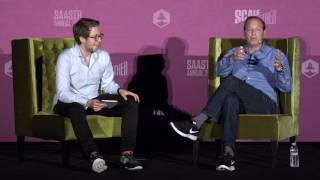
David Steinberg, CEO of Zeta Global, scaled the company into the fifth-largest marketing cloud by pivoting based on customer demand and building a sales organization around a nine-month payback horizon. He emphasizes machine learning's role in the next decade of marketing and shares how he delegates P&L responsibility to empower leaders across a 1,400-person operation.
Chapters
Good afternoon, or good morning still, everyone. My name is David Apple. I'm the head of software and SaaS vertical at Intact. Intact helps companies know their key metrics by automating core financial processes so you can dominate your market. This is our second session of the day here on the tactical stage. I'm excited for what this session is. It's a great topic: 7.5 Lessons I've Learned in Building My Second Unicorn. Great panel. Harry Stebbings is going to be moderating. For those of you who don't know Harry, Harry's in charge of the 20 Minute VC podcast, over 130,000 subscribers. So for those of you who are part of it, fantastic. Those of you who aren't, allow me to personally recommend it. Harry's going to be interviewing David Steinberg. David's the CEO of Zetta Interactive. I'm going to leave them to share the story about why this company is so fantastic. But as we were talking and prepping a little bit before the session, there's something we wanted each of you to walk away with, which is how to think about solving big problems, how to build the culture to solve big problems, and then how do you exude the confidence in your customers that you can solve those big problems. So with that, I'm gonna let them tell their stories. Harry.
And David. Thanks, David. Good thing it's so bright up here.
I know, right? So David, I want to start today with a bit about you and a bit of context. So now running Zeta Global, CEO, tell me the backstory and why you're sitting in this chair and I have the pleasure of interviewing you.
Well, that's a question my kids ask me all the time. Why do people even care what you have to say? So Zeta Global is now the 5th largest marketing cloud in the world. As my partner John Scully says, we're the largest big data and analytics company that nobody's ever heard of.
Mm-hmm. So absolutely. I, I wanna start though, Sté, with, with something we hear a lot about, and it's the importance of vision. Often we're told, you know, you must have the overarching vision that stays with the company always. What's your thoughts on vision and the importance of having it from the very start and, and immovable vision that doesn't change?
Well, I laugh that all vision for founders who become very successful becomes the vision they started with, even though it generally wasn't, right? It's, for us, we didn't start off with this vision to build a customer lifecycle marketing platform. We really started off with the vision to make data actionable. How do we take clients' data and convert it into either customer acquisition, retention, or monetization? But if you look at companies like Uber, which started out owning cars before they became a platform company, or Netflix, which started out shipping DVDs, the vision today, of course, was always to be a platform or be a VOD, but those early pitches probably didn't read like that.
How have you seen your vision change, then, when you look at kind of the early days compared to now, the fifth largest, as you said?
Well, a lot of the vision for us has changed around necessity. You know, we— I joke that great companies have to pivot very, very frequently, and no matter how big you are, you have to continue to pivot and pivot regularly. Our vision has really changed, A, because it's what our clients want to buy versus what we thought they wanted to buy initially, and, and B, technology, right? If you look at Moore's Law, you look at moving to the cloud, you look at, you you know, cost of storage. More data will be created in the next day than was created in the 100 years leading up to this year. So it's unbelievable that a lot of that data has always been created, but it was cost prohibitive to store it, and it would take you forever from a processing power perspective to process it. You know, usually at this time I'll hold up my iPhone and say there's more processing power in the iPhone than was in every machine used to send man to the moon. In 1969 combined, including the ship and the center in Houston. So it's— that's really driving the data and analytics space.
You said, you said about pivot there, it's often something that I hear in interviews with VCs with portfolio companies. I'm intrigued, what— how do you define pivot? Is it a kind of small little, uh, transition away from the core, or is it a monumental transition?
Well, the, the pivot changes depending on your size. The bigger you are, generally, the smaller your pivot. But there's still pivots. I mean, for us, 7 years ago, we had started out— we just turned 10 years old, so I jokingly say we're a 10-year-old overnight success. But literally 7 years ago, we were an education marketing company primarily focused on the for-profit education space. Little bit of regulatory reform came into that space, and we pivoted pretty hard. To become a SaaS-based data and analytics platform. That was a necessity. If we didn't do that, we would have gone out of business. As you've looked at other pivots we've done, where we've added kind of from customer acquisition, we've added CRM and integrated the two into one solution, that was a pivot. And they get— they keep going.
I'm intrigued then, with kind of experiencing both pivots, what do you think it takes to really navigate a pivot successfully and really do that onboarding well?
Well, it doesn't take as much when you're really screwed, right? If you're, if you're really in bad shape and you've got to pivot, you kind of go for it. It's, it's a very low opportunity cost transaction. But, but really you have to be flexible. And one of the things I think, to be a good founder and be a good CEO, you have to have a level of grit and tenacity to keep things going, but you also have to be flexible enough to know when something's not working. And it's almost like a little bit of an art form. I, I certainly was not good at it. Early in my career. This is my 5th company. I sold 3, took one public, then founded this. And, uh, you know, it took me until this organization to get to the level of flexibility that I have.
How do you look to balance that grit and tenacity with then potential stubbornness? Is it kind of the role of board members? Is it looking at ARR going, well, it's going down and we're a SaaS business?
Well, I mean, I think that, I think that it, as I said, it's more of an art than a science, Harry. It's very hard to define it. There are great stories about founders who have totally gone against their board and won, but there are more stories about guys who have respected their board, put people there that they trust and respect, who have sat down with them and helped them. You know, I used to be the youngest guy in the room. Now often I'm the oldest. So I do a little bit of my own kind of self-realization and kind of what's working and what's not working. We have a mantra, for example. We're very big on investment into salespeople, very big. We've always invested very heavily in that at Zeta, and not as heavily in marketing. We haven't built a big household brand versus our size. But when I look at a salesperson, we have a longer sales cycle than most products, but I build a P&L on every salesperson, and we have a red, green, or orange. And if somebody's in the green, they keep going. If they're in the orange, we gotta sit down with them. And if they're red, we fire them. Right? And it's kind of a 6 to 9 month period that we want to fail very fast with salespeople.
And so how do you benchmark them then? What does that kind of process look like that defines red, green?
So we, we have kind of, you know, the first 3 months is pipeline-based. The next 3 months is kind of converting from RFP into getting into the final stages of a process. Going into the next 3 months, if they haven't closed at least 3 transactions and are breaking themselves even, on their income, they go right to red.
So for you, payback time is 9 months?
Pretty much. I mean, we'll be flexible around that if we have somebody we think is a rock star that could go longer, but generally we're very, very disciplined about it. And it's funny because we sit down with salespeople, and I don't do a lot of that myself anymore, but I know the team doesn't, and we effectively will pay them whatever they want. I mean, say, "This is what I need to make." Okay, but here's the deal. You've got to be able to break yourself even in this period of time, or, you know, we're going to fire you.
Can I ask, you've run 5 companies now and scaled sales teams immensely successfully. What does building that internal sales structure look like then for you when you compare it among the 5 that you've done?
Well, it's, it's been different, right? Because the first 3 companies were kind of mobile distribution platforms. Then the next company was an online e-commerce platform to activate and sell wireless phones. and then this was more of an enterprise sale. So this was a bit of a pivot for me to go from kind of what was a business-to-consumer platform companies to what was really an enterprise platform company. So, you know, we learned a lot along the way about the difference between what people say and what they do. And it's something that I think even as a founder we tend not to focus on as much as we should, because we give— I give, I shouldn't say we, but most of the founders I know give people so much of the benefit of the doubt. And I've become much more disciplined about that and formulaic about how we build these teams, how we pay them, how they can make money. I mean, we have tons of salespeople who make 7 figures a year, tons. And we love that because of the way we structure our comp plans. It means they're generating millions of dollars in profit for the organization.
And when they're getting to those 7 figures, it's often a question I get asked by SaaS founders in terms of, do we go for lots of logos and lots of clients, or do we go for the big Dropbox, Box, Marketos? What's your take on this and building that confidence?
So we've always been focused on working with customers that we think can really scale. We have 570 customers. The vast majority are in the Fortune 1000. Our whole pitch to a customer is, hey, if you do a $50,000 test on our platform for a month, if we can't cut your cost to create a customer by at least 25%, we will give you all of your money back. But we're doing that in a way that we're trying to work with companies and— you know, I'm not technically supposed to talk about brands. I mean, our website has all of them. But, you know, 10 of the top 40 advertisers in the world use our platform. These are household brands, household names. You know, one of our customers alone spends $4.3 billion a year globally on marketing. So when they start with us at $50,000, and we can really prove ourselves from a platform perspective. They're kind of coming in through our DMP at the top and using different product sourcing and then deployment. That's a customer in particular that went from $50,000 a month, you know, on a test in 2015, did $8 million in business with us in 2016, and will be well over $1 million a month in 2017.
So would you always advocate for a variable pricing mechanism whereby as your customers scale their business, your revenue scale to, or is there certain cases where it's not actually applicable?
Well, it depends on your product, right? I mean, we, we sell our product as a self-serve or a managed service. When somebody buys the product from us on a self-serve, they're effectively taking the platform and just running it. Uh, the vast majority of our clients use us more on a managed service basis. You know, we compete with a few small companies like IBM, Oracle, Salesforce, and Adobe. Uh, so But, but most of those guys don't really sell a managed service product at this point. We take a different tack. We come in and say we can do this for you, and then if you want to make it a self-service product later, you can bring it in-house. And we've even put our people in the offices of some of the largest companies in the world to help them with this stuff.
I'm really intrigued. You said obviously about your competitors and the ACVs that you are looking at, and, and when you're a small startup, how do you navigate those very large ACVs and large sales cycles with often the very short runway that you might have in terms of 12 to 18 months of funding. Is that a—
Well, it's tough. I mean, as we, we started out focused more on customer acquisition, which is we were tapping into the marketing dollars, not the CRM dollars, and that allowed us to scale the business pretty quickly. We then acquired, uh, you know, eBay's enterprise CRM business. We acquired, uh, Axiom's email services business. We've acquired a number of really high-end SaaS-based CRM assets, merged them into our marketing cloud, and then we were able to really scale that up from there.
I'm intrigued though also because you said obviously about IBM's and Salesforce's bigger brands potentially than ZetaGlobal right now. Just a little, just a little bit. But I, but I'm intrigued to hear then how you assess the importance of B2B branding and when you're selling to CIOs at huge companies. Is it really that fundamental to have a fantastic blog?
Well, I, you know, I— listen, we think both those companies are great companies, and we cooperate with them just like we compete with them all the time. You know, first of all, IBM has built their brand over 50 years. You know, pick a number, maybe it's a little longer. I think it started in '61. And Salesforce has been around substantially longer than us as well. And Mark has done an exceptional job building an amazing company with a great brand. We came at it another way. I want to remind you, we're only 9 years old, so we haven't been around as long as the other guys. We started off with a real focus on building product and getting it in front of the customer versus building brand. And I think that was a very purposeful decision. Although, you know, this week I was on the Today Show Monday morning, the Journal wrote an article on us Tuesday, Fortune published an article on Wednesday, and I'm here Thursday. So the PR guys are pushing the crap out of me to get out there and do this stuff. But the reality is that we definitely are a bigger organization than our brand is recognized.
If you were to have your time again, would you start the branding exercise earlier, potentially?
You know, hindsight is 20/20. Maybe, yeah, I would have started a little earlier on the brand. But I do think that entrepreneurs who go brand first and not really have the product to back it up— the landscape is littered with people who have done that.
Absolutely. I do also, before we go into a quickfire round, which is one of my favorites, want to discuss, as we said, 5 businesses. I want to discuss how you've seen the marketing landscape alter, especially now with the integration and role that data plays in marketing. So how have you seen that develop with your time spent in the space?
Well, my partner, John Sculley, who used to run Apple and was the CEO of Pepsi at one point, we do a great talk. We did it at Web Summit this year, kind of from the Pepsi challenge to big data. And it's kind of, you've gone from this Mad Men ecosystem to an ecosystem where you've got quant jockeys running billion-dollar marketing budgets. And you're just seeing the way people think about digital marketing versus analog. Changing. It's— I say this all the time, and I think it still surprises people. 70% of all marketing dollars globally this year are going to be spent in an analog fashion: TV, radio, print, direct mail, and outdoor advertising. It, it dumbfounds people. Now, the US is a little skewed more to digital, but I'm talking global dollars. We think over the next 10 years those numbers are going to juxtapose, right? You're going to go from 30/70 to 70/30. We truly believe, and, and it might sound contrite at this point, but we've been saying it for 2 years and have a ton of patents around it. We believe machine learning is going to be really the next big evolution in marketing and CRM. And we, you know, we have multiple patents around it. We've been really focused on it. You know, we have 700 full-time engineers working in the company alone, not including everybody else we partner with and other companies we've strategically worked with on that stuff.
How does the integration of machine learning into marketing routines then affect the role of CMOs, scaling, and earlier stage marketing teams?
Well, it's gonna, it's gonna push things further up the funnel, right? So whereas today everybody's trying to get to the bottom of the funnel as fast as they can, what we argue is you're getting to the bottom of the funnel, but you're doing it primarily on just simple behaviors, right? What the example we give is, we actually already have a platform that sorts through every mortgage application in the United States every day, cross-references it to make sure that they're not filling out a mortgage application in the same zip code in which they currently live. We then bounce it up against our database of 350 million active people, which then sorts to our— one of our clients' databases and it's highly probable that that person is going to be moving, obviously, and it puts it at a 78% likelihood that they're going to be changing alarm companies. So you wouldn't really think that somebody who's filling out a mortgage application would drive an alarm company decision, but it's, it's an example of what I call a disparate behavior leading to a very logical answer. Because when I tell you that, it sounds like, yeah, that makes sense, right? They're moving, they probably don't think to bring their alarm with them. We've now designed an entire package to help them bring that alarm with them to their new property, and we're reaching out to them before they've ever even contemplated what they want to do with an alarm. They're still thinking about curtains, right?
You've mentioned John Sculley a couple of times. Before, as I said, we dive into the quickfire, I do want to hear what's been the big learnings for you from working side by side with him and building Zeta Global, and the big takeaways.
So this is John and my third company together. He and I joked the other day that when he first met me, I was the young guy. Now I'm the old guy. But John's regressing. He keeps getting younger, and I'm getting older. So we're kind of catching up with each other. He is the most brilliant marketing person I have ever known. He is literally— the things that he understands just intuitively about marketing, about people, are just— they're things that I would have never come to the conclusion without him there behind me helping I do want to do the quickfire.
So we normally do this on the show, but considering this is in person, I get to do this in person. So team construction, what are the first 3 hires for you? 60 seconds.
For me, I— 60 seconds— hire people who are good at what you're not good at. I'm horrible at detail orientation and I'm very ADD, so I jump around a lot. So, you know, I invest very heavily early in great finance people and great operating people. And that might be counterintuitive, but that's where I invest early. I tend to get the sales stuff done myself early in the organization.
Do you think all founders should sell up to $1 million ARR, as Jason M. Lemkin always proclaims?
I think founders' jobs are to do nothing but sell. You're selling great human capital to join you. You're selling clients to buy your product and services. And then you're selling the marketplace on your brand. So, you know, you know, it's the ABCs— always be closing— but it's, you know, often you're selling different things.
Absolutely. What's the biggest challenge today, daily, with Zeta for you?
Well, we're 1,400 employees operating out of 26 offices on 4 continents with a big campus in Hyderabad, India. It's just keeping up with the time zones. I technically personally live between New York, D.C., Miami, and California and spend the average month cycling through all of those cities pretty regularly.
Sales cycles— you have incredible ACVs of, say, $500K plus, and sales cycles, according to my research, about 3.5 months. So what's the secret with such large ACVs and relatively short sales cycles?
Well, you know, let's be clear, the sales cycle on the acquisition component of our business, the ZX part, is really pretty fast, because you're doing a $50,000 test. If it works, they scale very quickly because you're showing a 25% lowering of cost to create a customer. If it doesn't work, you figure out why and you try to pivot that. On the CRM stuff, you know, we actually use the acquisition relationships to circumvent processes that they would normally go on going out to RFP. But when we go into a traditional RFP process, because, you know, Gartner puts us as one of the 10 best companies in the world for what we do. Forrester, Relevancy Group, Red Bull all put us kind of 1, 2, or 3 globally for our marketing automation platform. You know, it's a much longer cycle than 3 months. You're talking about almost a 9 to 12 month cycle on some of these big, you know, kind of CRM contracts.
You said before about building intrapreneurs, entrepreneurs within large organizations. What's the secret to doing that and creating that culture?
Well, first of all, it's gotta, it's gotta come from the top. You've got to really have the self-confidence as a founder to empower people to a level that you will actually be uncomfortable with, at least me, because I'm a control freak. So when I looked at that, it's kind of empowerment, and then it's how do you pay people. So we push P&L responsibility down in our organization as far as we possibly can. And when people feel like if they're gonna create a dollar in profit for the organization, if they're gonna make, you know, 5% of that, they're gonna be really motivated to drive not just revenue growth and not just kind of logo growth, but really drive profit growth.
What do you know now that you wish you'd known at the beginning?
Well, I wish I wasn't such a control freak when I started 24 years ago. I, I I have gotten into a number of, you know, juvenile battles with boards and other employees over the years because I knew I was right. And even though I was right, it wouldn't have mattered because these were small things, right? So it was like, you know, pick your battles. And I'm now kind of, let's test it, let's see if it works. And the great thing about kind of today's business ecosystem, You can test things that you couldn't test 20 years ago. When we set up our first website at Sterling Cellular, I think we spent $2 million to build a website. I mean, I'm not kidding. It was insane.
When was this?
This was 1997, 1998. And you were, you know, we were buying servers and, you know, rack systems, and we had, you know, a very early version of a credit card processing processing system. I mean, and nobody used it, right? I mean, it was just funny. But today you could set up that exact same site with Squarespace or, you know, GoDaddy and be in business in, you know, 2 or 3 days for $5,000.
And then final question, and it's what's the big prediction for the marketing landscape ahead with the role that data will play?
Machine learning. I mean, this is all going to be about machine learning, and a lot of people are talking about artificial intelligence and you've got kind of Google and Facebook and a couple of others really kind of talking— IBM, of course— talking about how they're out there. I still think we're in the very, very advanced machine learning age. We're not near AI yet. And it's still cost prohibitive for the average client to be utilizing a supercomputer to figure out how to lower their churn rate. But we're working with them on doing that, and I believe that us or somebody else who really really crack the code on machine learning around customer acquisition, customer retention, and customer monetization is going to be the future of our landscape.
Well, David, it's been such a pleasure getting the chance to interview you, so thank you so much.
Thanks, Harry, I appreciate your time.
More from Jason

Why Your Next Hire Should Report to an AI, Tragedy Apps, and Too Many AI SDRs? | The Agents #004

Our Agents Drove Our Salesforce Bill Up 80%, Marketo Hates Agents, and We Stealth-Churned Off Notion




Managing 20+ AI Agents: Lazy Agents, Our $500K AI Bill, Stealth Churn & the Death of 60% Solutions




