After Marketo: 10 Things I'm Doing Even Better The Second Time
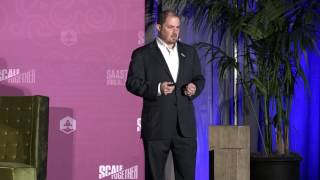
John Miller, co-founder of Marketo and CEO of Engagio, shares ten practices he's applying the second time around: building healthy culture, defining core values early, using OKRs, improving meetings, and maintaining discipline. He discusses targeting enterprise deals, strengthening sales, and navigating the pressures of being a second-time founder.
Chapters
Thank you for joining us for our second session of the day. My name is David Apple. I'm the head of the software and SaaS vertical at Intact, which is the world's largest independent pure cloud ERP firm. And we got a great session for this one. This one's all about after Marketo, what I would do the second time. This can be moderated by Doug Pepper. Doug is the managing director at Shasta Ventures, longtime VC, some great companies, just two of them include Optimizely and, uh, Flurry, which was acquired by Yahoo several years ago, and then John Miller, who is co-founder of Marketo, and this is his second firm, Engagio. As we were prepping, it reminded me of a story some of you guys might have heard. Sir Richard Branson wrote letters to himself, his 10-year-old self, his 20-year-old self, his 30-year-old self. What we get the benefit of is John essentially writing a letter to himself about what he would do 10 years ago that everybody in this room can apply to how you build a great business. Big fan of Engagio, a lot of Shasta Ventures companies on Intact, and with that I'm gonna introduce Doug, and he's gonna introduce John.
Appreciate it.
Appreciate it. Hey everybody, thanks for the intro, David. It's great to be here. As he said, my name's Doug Pepper. I am a managing director at Shasta Ventures. Uh, we are an early-stage venture capital firm. We look for category-creating companies, both in enterprise and consumer. Uh, it's a great honor to be on stage here with my friend John Miller. Uh, we actually go way back. We were in business school together in 1999. Uh, but I had the real pleasure of investing in John, uh, when he was the founding CMO of Marketo back in 2006, uh, with his partners Phil Fernandez and Dave Morandi. John won't brag about himself, but he is a very unique marketer. All at the same time, he is strategic, he's quantitative, and he's creative. And he really helped pioneer the use of content marketing in B2B marketing. But more than that, what I think is so special about John is that he doesn't just market a specific product or even a company. Uh, what John Jason M. Lemkin does is he focuses on defining and creating categories, and then building the leading company within that category. Obviously, at Marketo, he was very successful in doing that, building the company from the ground up, helping establish the marketing automation category. Ultimately, they took the company public in 2013, and then sold it last year for $1.8 billion. And now he's doing it again. He's doing it again with Engagio. In the account-based marketing space. He's helping to establish that category and then ultimately building a leading company there. But this time he's doing it as a second-time founder, and I just think it's an amazing opportunity for all of us to have him share with us what he's learned over those many years of success and how he's applying those learnings to doing things even better the second time around in Gageo. So John, this is really the John show. He's going to do a 20-minute presentation, as you'll see, and then we'll sit down and do about 10 minutes of sort of fireside chat Q&A. So, John, thanks for being here and take it away.
Thank you. Thank you for the kind words. Alright, so as you heard, I was one of the co-founders of Marketo. Apparently somebody told me the other day that I'll know I've actually made it with Engagio when I no longer need to be introduced as the co-founder of Marketo first. But I have been in marketing technology my whole career. I am a marketing technologist, but I'm more than that. I'm also a father. These are my two kids. The fun fact is that my son, who's obviously the older of the two here, he was actually born the exact same month that we incorporated Marketo, which has made it really easy for me to keep track all these years of how old Marketo is. They both turned 12 this month, in case you're, or 11 this month, in case you're following. Another fun fact is that I was actually born here in Ethiopia, or what's marked here as Eritrea. When people hear this fact that I was born in Ethiopia, I often get the exact same question, which is, "Hey John, why were you born in Ethiopia?" I always give the same answer, which is that I wanted to be close to my parents. That has nothing to do with marketing technology or SaaS or entrepreneurship. Of a little bit more relevance, and Doug alluded to this, is the fact that I studied physics for my undergraduate degree. I actually spent my summers doing fusion research at the Lawrence Livermore National Lab, got into MIT for a PhD program, uh, but I wanted to give this whole business world a try. Uh, I deferred, uh, MIT to go into management consulting and then very quickly into marketing technology from there. Uh, and I haven't looked back. 23 years later, but I don't regret the fact I studied physics. I think that quantitative analytical way of thinking has helped to guide my career both as a marketer and now as a CEO, and I think you'll see that through this presentation. So what I'm gonna cover is just briefly kind of the history of my story from Marketo now to Engagio, and then hopefully cover the key things you guys came here to see, which is the 10 things I'm doing differently. And then the— I'm excited, the best part's getting the conversation with Doug. So to set up, you know, what is this new thing that I'm doing? You know, at Marketo, we built a revenue engine where marketing was generating 80% of all the deals the sales team closed. Which was using content and inbound marketing techniques and then our own lead nurturing, lead scoring. And it was wildly efficient. And it drove a ton of growth. But what happened was around, about a year before the IPO, the CFO Fred Ball came to me and said, "Hey John, we wanna invest more to grow even faster. How much faster can we grow?" And he came to me in marketing because we were driving 80% of the pipeline. And the problem that I had, or we had, was it's not like I could just write more blog posts and suddenly generate more leads. I needed to find new ways to grow pipeline beyond this other thing that was working, but it was kind of hitting its maximum. And so we identified a list of target accounts that we really wanted to get into, and we started reaching out to them proactively. And I realized that there's two different styles of go-to-market here at play. What we had been doing at Marketo was fishing with nets. We didn't care which company responded, we just cared did we get enough? But this new thing we were doing is much more like fishing with spears. Where we were not waiting for them to swim into our net, we were reaching out to them proactively. And that was the genesis of the idea I had for Engagio. Marketo and the other marketing automation tools are great for fishing with nets. And I started Engagio to be the platform for fishing with spears. So after the IPO, Marketo, stopped kind of feeling like my company. You don't leave the company you founded when it's your own baby, right? But eventually it got big enough, it stopped feeling like it was mine. It started feeling just like it was a job. And then that kind of set in motion the desire for me to leave and then actually go pursue this new thing. So I left in February of 2015 and then formally started the company on Pi Day, March 14th, 2015. So we're only a little under 2 years old now at this point. But we've had an extraordinarily fast start. I'm very proud of— we've signed up over 100 customers and are currently at about $2.6 million of ARR, which is not a huge number compared to a lot of the other people on stage at this event. But for basically selling the product for one year, I'm very happy with that. And in order to achieve that success, we did a lot of the same things that we did at Marketo. I know this presentation is about 10 things I'm doing better, But the reality is Marketo was a success, and a lot of the core things are the same. I think perhaps the most important thing that we're doing the same is we identified a great market. Some people give me credit for creating marketing automation or creating this idea of account-based marketing. That's not true. What I did is I saw something that was existing, And then I helped to define it. And then I helped to amplify it. And in so doing, yeah, a lot of the credit does go to my companies. But the key in both cases when I sort of saw that there's a good opportunity for a company was a category that had existing buyers with existing competitors. But the competition wasn't so big and so strong that we couldn't come in and ultimately win by executing well. Those are the markets that I like because you don't have to do all the category creation. You can instead do this category definition and bring that to you. Great market, number 1. Number 2 is pretty obvious. You have to build a good product. Thank you to my co-founder Brian Babcock and the rest of the team for that. You have to have great sales and marketing execution. We are kind of, eating our own dog food, or as I like to say, drinking our own champagne, driving high-velocity sales deals, and growing the business. So great product, great market, great product, great execution. Those are givens. That fancy transition there is called the vortex for any PowerPoint nerds. So what are the things I'm doing differently? In a nutshell, at Marketo, we built a great product and ultimately led to a really good outcome. But I don't believe that we built a great company. And I think that's a really important distinction. So Patrick Lencioni, I'm a big fan of his writing and his work. He talks about companies that are smart and companies that are healthy. And I truly believe, now on my second time, that a healthy company with average smarts will beat a kind of an unhealthy company, or sorry, a super smart company with kind of only average health. Did I get that right? I got that right. So, number one thing I'm trying to do different here is really focus my time, my energy on building a healthy company. So, the first thing that I'm doing there, I mean, there's a bunch of things, is kind of core values. And it may sound like motherhood and apple pie to define your core values, but the reality is it matters. And at Marketo, we didn't define core values until we were about $20 million of ARR. And what that results is effectively we had, you have a culture, you have things that evolve, but it was actually kind of balkanized with different groups and different teams. Having different sets of values, and that ultimately made it hard to row in one direction as a coordinated team. And Marketo suffered, to be honest, I think, as we got bigger because of that, especially after the IPO. In some ways, it made it hard to retain people. Before the IPO, there's a lot of drive towards, oh, we have this goal, this kind of, everybody's excited for this particular moment in time. On the other side of it, if you don't have kind of strong values and that strong culture, it definitely made keeping people a little bit harder. So at Engagio, my co-founder and I defined our core values literally before we incorporated. Just in the very first stages when we were still talking about how we're gonna split up our founders' equity. As a sidebar, we have 3 couplets as you see here. For some reason, that's a hell of a lot easy to remember. Than just lists of 5 or 6 values. Second thing I'm really focusing on is, with my time, is teaching my team how to be a good team and how to work effectively. Again, relying on Patrick Lencioni here. At the core is just literally building the team trust, right? You need the trust. When that's there, then what you can have is you can actually start to have debate, and in some cases, healthy conflict. And if you don't have a team willing to call each other out and kind of push each other honestly and candidly, you're gonna be sub-optimizing. So trust, and then on top of that, the ability to have conflict. From there, you need to then have clarity and commitment. So once you've all decided what you're gonna do, you have to make sure it's super clear and everybody's aligned against that. And now you're all moving in the same direction. We've implemented an OKR process, which was, I think, a really key element for making sure that happens. You need to make sure that your team members can work on making each other accountable. So it's not just my job as the CEO to go to somebody and say, you're not doing well enough, or you made a commitment on that OKR and you're not achieving. The whole team calls everybody out on that. And then ultimately that works when people put the company's needs before their department's needs before their own personal needs. So really trying to push that into my team and hope that they push it down to their team. Now, once you have clarity about what you're trying to do, once you have your core values, you need to then make sure that gets pushed into every operational process. Whether that's hiring or onboarding or even how do you do raises? How do you promote people? All those processes need to reflect the way you've decided you want to run your business. I'll be honest, that was overwhelming to me when we were small. How am I going to put all these processes in place as a little startup with 100 other things on my mind? One of the smartest things I think I did in the history of Engagio is I pulled together what I called a culture day. We spent the morning talking about our core values and what stories share those values. What is our shared mission? What meaning do we get together from working here? Then what we did is we did a brainstorm around our ideas around all these topics. Then to actually put that into execution, every person had to sign up their name against one of these teams, and then we held those teams accountable for actually putting these processes in place. So as a fairly small company, we were able to build fairly mature processes around building a healthy company. Now the challenge I have is we've grown a lot since last July when we did that. We have new people, so we have to figure out a process in place for continuing to refresh that. We're gonna do it again on our second year birthday in March. The last thing I'm really thinking about in terms of healthy companies is fairly tactical, but how do you have a good meeting? I mean, I don't know about you guys, but whenever I've been in a job, Marketo even earlier, when I fantasize about quitting, it was almost always I was in some meeting where something is just boring. And there's a reason why so many people check their phones and bring their laptops to meetings. Most meetings suck. We work really hard at teaching our company how to have good meetings, and the number one thing that makes a meeting good is debate, right? When there's some conflict going, when people are like, "I don't agree with you, you're wrong on this," but still based upon that trust, that's when everybody puts their phones down, right, and starts paying attention 'cause this is exciting, this is good, and you want that debate and conflict going because you're gonna get a good decision on the other side. Alright, a couple other thoughts on the things I'm doing differently. First of all, fundraising strategy. In less than 18 months, I raised $32 million at Engageo, which is almost as much as Marketo raised in 4.5 years. You would think, "Wow, that's amazing that you raised all that money." The problem though is in order to not get diluted to hell, we raised that money at fairly high valuations, which is a nice thing you can do as a second-time founder. But that big money, eventually I'm going to need to raise money based on real metrics, not just based on the fact that I'm being a second-timer. And so I need to make sure that the money lasts just as long. I need to get just as far in terms of ARR and growth and other operational metrics on the same amount of dollars. So it's not like it's any better to have more money. It actually means you have to have that operational discipline in order to make sure you're still achieving the same, well, achieving the same milestones you need for the same amount of dollars. We've been pretty efficient. Actually, my first raise was $10 million. We're still spending that. We actually haven't even started to touch the second $22 million. And right now we have cash through the middle of 2019. So, you know, it's good to have lots of money, you know, but you still have to have the operational efficiency. The benefits to us of this strategy are less dilution, you know, less risk, right? The world could blow up. Who knows what's gonna happen? And so the fact that we do have a big bank account gives us strategic flexibility. And lastly, less distraction, right? I'm gonna be able to go for 2.5 years without thinking about fundraising. That's actually a really nice thing for driving the business. Another thing that sort of I have as a second-timer is a roadmap. Back in the days of Marketo, we didn't know how fast should we grow or how should the quota for a sales rep be or what the gross margin should look like. Fast forward to today, there's lots of great resources out there, SaaStr included, that tell us how we should grow. What should we do? And the ability to rely on that to drive our growth, like for example mapping to the Battery triple triple double double double, is a really important way for us to know that we're on track. Another thing I'm doing differently is in how I'm thinking about the market. This market map is something I put together to just sort of kind of really help to understand who all the players are in my category. With these different kind of subpieces to it. But the reality is in Marketo, it was a hypercompetitive world, right? It was ugly at Marketo with our competition, especially with Eloqua going kind of at it, if you will, both in the field, in marketing. I'm doing it very differently here. I mean, we are taking partnerships with almost every company on this map if possible, for the goal of building the category together, which has been great. It's why account-based everything has taken off so quickly, because you have companies collaborating around it. Frankly, it's just nicer. There's no reason to be nasty out there. A little tactically, and then we'll get to the discussion. I am focusing on bigger deals my second time. At Marketo, we started fairly SMB, small and medium-sized business. Small deals, $12K, and that's a tough business. You usually have one user, they leave, there's nobody left to use the product, they churn. They take just as long to get up and running, they have more questions, there's less expertise. And so we're really trying to focus higher. My goal is a $40K average contract value where we regularly are doing six-figure deals. We're getting up there, we're currently at $26K. ACV, and that's just a better, healthier place to be. Part of that is building our enterprise muscle earlier. We're not a full enterprise company right now, but I know we want to be there, and that's a hard muscle to build if you wait too late, so we're trying to build that as early as possible. Then lastly, as I said earlier, we are drinking our own champagne on driving outbound sales. Again, at Marketo, it was really hard when we tried to layer that on after 6 years of sales reps just kind of being fed inbound leads. And so trying to be balanced at the beginning with both marketing but also driving that outbound, I think important muscle to build and also to make sure that you don't create a culture where sales kind of forgets how to do that. So if you may notice, that was actually only 9 things we're doing differently. And so I think we'll hit the other number 10 and a few other points with the Q&A. That's great. Am I good?
That's wonderful. Thanks, John. Great insights. Yeah, that's great, John. What I want to focus on, some operational aspects, but I also want to get a little bit more personal with John and just hear a little bit more what it's like from a personal perspective as an executive being not only a second-time founder, but a first-time CEO. So first question, John, you know, obviously you've been very successful with Marketo. That was wonderful. And when you were building Marketo, you hadn't had that yet. And so now that you have that success under your belt, how are your goals different at Engagio? Are you operating differently, going for the bigger win, or taking more risk? How are you thinking about that?
Yeah, well, I mean, I don't think the most successful entrepreneurs are ever just financially driven. And I certainly haven't been. For me, most of my career has been, I think, driven by a vision that I have of kind of pursuing the one-to-one future. Just making marketing and sales more intelligent, more meaningful through data and analytics. And that was true of what I was trying to do with Marketo. It was true of what I was trying to do with Epiphany before that. and it's definitely true what I'm trying to do with Engageo. So that goal of just trying to— I want to build that product is really what drives me more than anything else. But there is obviously there's some personal stuff there too. I mean, I'd like to prove— I think I'm seen out there as a very good marketer. I want to prove that I'm actually a good CEO too. And that could be maybe Marketo was just a fluke, right? But I think obviously if you can do it 2 times, as a success, then that's a line as opposed to a data point. And in terms of the financial stuff, I mean, I don't want to sound snobby about it, but like, yeah, I mean, once you've had some success, a few million dollars doesn't make a difference. And so just as you can see in our fundraising strategy, I have priced ourselves out of any kind of quick flip. And so almost by definition, we're going for something big.
[Speaker:BRETT SLATKIN] And for you as second-time founder that's been very successful, is there any increase in pressure? Because you've been successful, are there higher expectations? Do people expect you to know everything? Does it feel ever like there's a greater weight on your shoulders?
[Speaker:JASON M. LEMKIN] Yeah. I mean, it's way better to be second time than not. I mean, let's just be kind of clear. It's great for fundraising. It's great for building our market presence and awareness. So I don't get a ton of pressure externally, but I do, I get a little bit from myself. And partly, there is that kind of, oh gosh, what if this thing doesn't work out? The fear of failure, particularly because now having, I mean, it's a drug, you get addicted to it. If this thing doesn't work out, and then I gotta just go become CMO at some company after this? That's gonna kind of suck. You know, so there is kind of that personal thing. I think the other thing that is different as CEO, you know, as opposed to not the CEO, is I have more doubt. You know, I mean, at Marketo, I mean, I had a lot of confidence and trust in Phil. He was an amazing CEO. And that trust in Phil, I could almost sort of like, felt like, okay, it's gonna be all right. Phil knows what he's doing and he'll guide us to success, which he did. Here at Engagio, it's me, right? And that doubt that you always hear CEOs have is there, of course. And because there is nowhere else for that to go. I will say, I think one of my strengths and weaknesses is that I am a pretty confident person. I've sort of always had that, a lot of self-confidence. It turns out, I think that's probably one of the most important things you need to have as a founding CEO because that doubt is so there all the time. If you're not confident, it's just gonna chew you apart.
[Speaker] Mm-hmm. So I think, I can't see anybody, but I suspect there's a lot, I was gonna ask for a show of hands, but I suspect there's a lot of, aspiring CEOs in the room who are not CEOs today, and that's where you were at Marketo. What advice would you give for people in the room that would like to be a CEO someday, they're not today, what should they be learning today in their current role to put themselves in a position to become a CEO? What do you wish you had even learned more of?
Well, you know, on the skill side, the two things you always hear is product skills and sales skills. And I think on the margin, as a founding CEO, the product skills are really important. I mean, just 'cause at the end of the day, if you're a technologist or if you're on the business side, you gotta be able to figure out a product that's gonna have product market fit. So anything you can do there I think is important. I didn't have any sales skills before doing this, or I had never done sales before. But I think as the CEO, you're just always going to be a good salesperson, even if you don't actually have any formal sales training. So I think that's one. I think number two is, everybody here is already doing this. Learn everything you can about SaaS companies. Kind of just those ratios and those metrics and how they work and how they grow. Well, assuming you wanna start a SaaS company, but I think learn that. And then the third, I think is the most important, is start thinking about your team now, long before you've ever started. You know, when I left Marketo, I didn't, I mean, I left on very friendly terms and I didn't go hire a whole bunch of people out of Marketo, but I did have my wishlist of the 4 people. I was like, oh, I would love to have those people come join EngageU at the right time. And over the last 2 years, I've managed to actually bring those 4 people over. And it's great because, you know, it's so hard. You know, building your team is probably one of the hardest things as an executive. And if you kind of can have those people identified and nurture those relationships along the way, it makes everything a lot easier.
So when he, he alluded to this with the picture of his kids, but when he founded Mercado and I invested, we didn't have kids yet, or we were just having kids. Now we've got kids and you've got 2 kids and obviously all the busy life that comes along with that. How are you managing work-life balance the second time around? Is it different?
[Speaker:JASON M. LEMKIN] One of my theories is always that people are going to work. People have a set point for how hard they work. And I do kind of have my envelope of how much I work and don't work. I think my co-founder at Engageo also has kids. And so we definitely, we don't have a culture of people working until 8 or 9 o'clock at night. But we have a work culture of when you're in the office, you work kind of intensely, which is kind of what you tend to see from people, parents, especially parents with young kids. I wish I had more time to work out. I'm trying, but that's not as much from being an entrepreneur, that's from being a parent. It's really hard to do both at the same time. And I do take PTO. I think that's the other thing that is probably more than else. When you have family, you go on trips with your, longer trips than I ever did kind of when I wasn't a parent. And I've had to sort of find ways to be able to actually take time out of the office and keep things going. And by the way, I think that's role modeling something nice for the company that I do want people to be able to, take breaks, and then come back.
Got it. Um, you mentioned fundraising, obviously very different strategy this time. Part of that's your success, part of that's the environment, I think. But you didn't talk about choosing investors, constructing a board. You've done that two different times now with some overlap, but some new investors. What, what advice would you give to folks in the room about constructing a board and an investor base?
Sure. [Speaker] Well, as you know, I wish we were able to work with you this time. And I'm glad you're a personal investor, but we haven't been able to make it work formally. I think the most important thing is trust. I mean, that's, again, mom and apple pie to say, but I had the luxury of being able to look at a lot of different firms, especially across my rounds. And inevitably what I chose each time was people people I know and trust, even if it's not the best terms, the best valuation. 'Cause the reality is these are the people besides my wife who are going to have the biggest impact on my happiness over the next few years. I really wanted to know I had people I trust. In terms of board composition, I'm not super like, oh, I need somebody exactly like this, but I tend to think about 4 roles of what I want from my board members. There's the strategist who's going to help really guide me on the big issues. And make me think about things that I'm not gonna think about. There's the operator, you know, who has been there, done it, knows, you know, okay, you should do this, you should do this, have you considered this? You know, kind of technical. There is the networker, right? The person who just knows everybody and can make introductions and, you know, get us into accounts and help me hire and all that kind of thing. And then there's, I guess what I would call the fundraising specialist, you know, someone who just knows knows the investment industry really well and can kind of guide on strategy, fundraising strategy and tactics and things like that. Obviously some investors like you can fill more one of those categories. But I do try to think about, all right, how do I get all those different pieces filled?
That's great. I think we're just about out of time. John, thank you.
Thank you.
Congratulations on everything you're doing. Good luck at Engagio. And round of applause for John.
Thank you, Doug.
More from Jason

Why Your Next Hire Should Report to an AI, Tragedy Apps, and Too Many AI SDRs? | The Agents #004

Our Agents Drove Our Salesforce Bill Up 80%, Marketo Hates Agents, and We Stealth-Churned Off Notion




Managing 20+ AI Agents: Lazy Agents, Our $500K AI Bill, Stealth Churn & the Death of 60% Solutions




