Brand Identity & Social Responsibility in the Wake of the Black Lives Matter Movement w/ David Scott
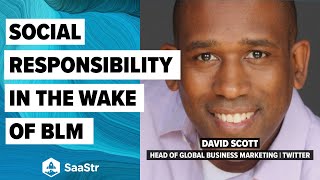
In this 30‑minute interactive roundtable, moderator Tammy introduces the session and hands it to Dave Scott, global marketing director at Twitter and author of The New Rules of Lead Generation. Scott frames the conversation around "crisis marketing"—how brands navigate social crises, using the 2020 George Floyd murder and the ensuing Black Lives Matter protests as a case study. He cites surveys (Washington Post/McKinsey: 75% of adults expect brands to act on racial injustice; CNN: 85% of Americans see systemic racism) to illustrate public pressure. Participants—including entrepreneurs, investors, and marketers—share personal experiences of how their companies responded (or didn’t) with public statements, boardroom debates, and commercial campaigns. The dialogue explores the tension between fiduciary duty to shareholders and the moral imperative to speak out, the risk of "brand‑washing" or "green‑washing," and the authenticity of brand actions. Specific ad examples are examined: Nike’s direct anti‑racism spot, Pepsi’s 2018 Kylie Jenner commercial, and a P&G campaign that evoked emotional storytelling. Attendees discuss generational consumer expectations, the role of leadership, and whether brand activism is driven by genuine purpose or commercial calculus. The session ends with mixed sentiments—hopeful about leadership stepping up, skeptical about execution, and cautious about the long‑term impact of brand activism.
Chapters
Alright, we'll give it a couple more minutes as folks are joining. Alright, I know we have an action-packed session today, so I'll keep admitting attendees into the Zoom session and we can go ahead and get started. First, what I'd like to do is go through some housekeeping items this afternoon. Alright, so again, this is a 30-minute session. You are in the right place. It is meant to be interactive. That means go ahead, turn your video on if you like, ask a question out loud. We want you to be able to have and engage in the conversation. Again, this is something that you can also drop a question into chat that we will be watching and moderating. So go ahead and do that. Also, say hello. Let us know where you're dialing in from today. We'd love to know what part of the world you are joining us as part of the SAS community. Again, also, these sessions are all recorded, and you will have access to the slides and the video after the event. Again, we also have a one-on-one networking that is a great opportunity for you to continue the conversation with attendees from the session today. So I'm going to drop that link in the chat for you. You can go ahead and access our networking platform there. It is free to use, and you can engage with everyone there. All right. I know we have a lot to get through today, and I am so excited about this really, really important conversation from Dave Scott. I'm going to hand it over to you, Dave, and let's get started.
All right, all right. Good day, everyone. It's nice to meet you all. My name is Dave Scott, and I am the author of a book called The New Rules of Lead Generation, which is translated in a couple languages. And I'm also the director of global marketing for a company, a little company you know of called Twitter. But, you know, here what I was really excited about is to really sort of talk about the concept of crisis marketing. You know, right now we've had the unfortunate situation of being in the middle of multiple crises in 2020. And, you know, what I know that we're starting to learn, and I think what you guys might be feeling, is that it's very difficult to extricate your company and your brand away from what's going on in the world. And so what I thought I'd do is I put together a roundtable to really talk about, you know, really from a clinical point of view, how do you deal with a marketing crisis, a social crisis with regards to your marketing, right? So, you know, how do you figure out how to navigate both? And so we're going to take this opportunity to talk about one particular crisis that happened in 2020, which is the George Floyd incident. Uh, and then have a dialogue about where, whether corporations should or should not be involved, um, in weighing in on that particular topic. So let's get started. Um, this is a statistic that I thought was very, very interesting. It came out of the Washington Post and it was a survey that was done between them and McKinsey and, uh, and, and, and what people believed. So three-quarters of all adults felt like brands had a role to play in responding to the issues of racial injustice and police brutality. Which is striking, because I, you know, you guys all remember the time of the, all of the sports professionals, and the sports professionals were all sort of saying, hey, I don't want to be a role model, even though kids were saying, you are my role model. But this is sort of interesting scenario where people are saying, listen, like, not only do I acknowledge that something might be going on regarding racial injustice, in fact, the CNN poll said that 85% of all United States citizens felt like there was an issue. But they're also sort of saying that brands should have a say and a role. Curious to get your thoughts. Can one or two of you say something about, or how do you react to this particular quote and study?
I can jump in. Hi, I'm Stefan, entrepreneur. So I think for me, this really came to a head when Coinbase came out with their little manifesto. And I think it forced a lot of people to really think about it in a really upfront kind of way, especially when you had a lot of the venture capital community, which was probably split, but a lot of really influential people saying, hey, this is great. And just from my perspective, it was incredibly disappointing, particularly in a stage where we are with capitalism, where companies really have more power than most governments. If we're going to advocate— if we're going to abdicate, abdicate social responsibility, then that's just going to cement the end of the system. So there is not an option to be apolitical. That's like saying I'm not racist, right? I think that's really— for me, that was the incredibly powerful realization from reading that book, How to Be an Antiracist, is like being neutral is being complicit. So that was, that was my take.
Great observation. Any other thoughts by anyone else? And so, by the way, I'll just take an opportunity to say that I don't have the right answer, but I love talking about it and going through this journey with you all. So let's go ahead and step— just really provide some context as to what we're going after here. So listen, beginning of the year, there was an unfortunate incident that happened which led to the death of George Floyd that sort of shocked the nation and polarized a lot of people and made— also made a lot of people really aware of some situations that we knew were going on but really didn't understand the full breadth of it. That led to a movement called Black Lives Matter, as well as protests that not only happened here in the United States, but around the world. And these protests, you know, what was amazing about it was that these protests were not just African Americans, but really everybody came out. In fact, in places like Portland, Oregon, 80% to 85% were white. And this caused companies to think about how racism did or did not exist within their corporations, how they felt about global race, systemic racism across the United States, and sort of trying to figure out where do they stand. What was very interesting, sort of, as a couple of you guys have probably noticed, it sparked this conversation. Oh, by the way, so 85% of Americans did believe at that point in time through the CNN poll that systemic racism existed, which is a huge, huge, huge jump from where we were before this, which meant that it just wasn't only a Black thing, but it was now a global thing. It was now across, across all races, which was a completely different and startling statistic that I think is important to bring out here. But what it also did is it forced a lot of companies to sort of speak up on it. And a lot of you have probably gone to the Ben Jerry's website, which is really a fascinating website. If you haven't had an opportunity, you should go. But, you know, companies like Coca-Cola and Apple and McDonald's, and also a lot of the tech community spoke up. Sports community spoke up, the financial services community spoke up, and then here we were in a situation where companies were saying something. And for the first time, they were saying something about something that may or may not necessarily have a direct relation to their business. Let me ask a question. Too bad we can't do a poll. We can't do a poll, can we, Tammy?
Uh, we can, um, not— it needs to be preloaded. Okay, but we could drop it in chat and we can monitor it in chat if you'd like.
Yeah, just through chat, I just want to ask everybody, did your company actually provide a statement of any kind or didn't it? And for those of you— so if one of you could just sort of let me know, for those of you who did say yes, they provided a statement, Tell me why. What was going on in the company that you felt it was necessary to do that? How did that come about? I'd love to hear your personal story.
Anyone?
I'll tell you how it came about at Twitter. Our boss, Jack, tweeted about it, and then we found out later, which is not unusual for Jack. Jack Dorsey or Twitter. But, you know, I know for a fact that a lot of convers— there's a lot of conversations in the boardroom thinking about whether or not we should do this or not. And I was surprised by how many companies did do it. What about, are there any companies that are on this call which did not provide a statement? And I'd love to hear why. Come on, guys, don't be shy. Sarah, Randall, Naomi, anyone?
Looks like in chat we have a couple of questions, a couple of, um, answers in there. Sarah, we did provide a statement. Zephryn, startup is pre-launch but did provide a personal statement.
Yeah, a lot of companies also provided personal statements. There was one company in particular where I know that they didn't provide a statement, but the CEO did, followed by this— followed by one of the board members, right? But, but everyone, I think, at least had a conversation in the boardroom as to whether or not it made sense, and then quite a few companies did interact on it. So, you know, the big question is, is not only how did your company respond, but what was the thought process going into that? And I encourage you to think about that just for a few minutes as you start to think about corporate responsibility in relation to all these things that are going on here. In fact, other companies went so far as to actually do commercials. So let— I'd like to highlight one particular commercial that was really popular. Which talked about this particular instance. Cue the sappy Sarah McLachlan music, of course. It's mandatory for these, by the way. How did you feel watching that commercial? Again, don't be shy.
John shares he's felt inspired.
Inspired. Interesting. Anyone else?
Responsible.
Responsible. So then, so then on the whole, what I'm hearing at least from the, the two people who did respond, that you felt like this was a positive move for Nike. Did anyone think it was not a positive move for Nike?
I, I think that there, especially the beginning of, in the early days of the wake of the George Floyd incident, um, there was debate I felt like I heard debate about people worried about backlash from the right or from people who felt that you shouldn't take a statement about it. So I imagine that there were some difficult boardroom conversations, particularly at public companies, about this. Because the fiduciary duty comes first, right? And it's easy to hide behind that. I think it— there was kind of a dam that broke, I think, at one point. Then at some point, and then it became, no, you know, we have to do this, everyone else is doing it. And the more people did it, became easier and easier to do it, right? So I don't know where this was in the timeline, um, but obviously it's late in the timeline overall because it's not like this is a new thing. Um, so, so I think that's a really interesting thing to watch because I've been on enough boards and been enough board meetings to know that, um, Despite the fact that we're all nominally adults, the behaviors of people on boards aren't that different from behaviors of anybody else. So it's very interesting to see people struggle with that. And I'm hopeful.
Yeah, yeah, we're all human, right? It's hard not to feel what was going on. But, um, uh, given that the primary mission— I think what you're saying, given the primary mission of a corporation is to to be responsible to the shareholders, fiduciary responsibility to the shareholders, does this cross the line, right? Hi, Randall, I think you have your hand up.
Yes, hi, Dave. I actually joined a couple of minutes late, so it's just orienting to this. I'm going to make two caveats, which is maybe a little different than some of the other members. I'm an investor, not like the operating company. But do invest in a lot of companies doing social purpose in general as part of what they do. And we explore various ways for that. I'm also in Canada, so there's less fear of the political polarization than what you're talking about in your own country. But I guess what I concern with these things, and I think it's the hardest for big brands rather than little ones, is there's this brandwashing, or for environmental, there's greenwashing. And so it has to be authentic. That I think is the biggest challenge. And when I hear Nike, I'm very skeptical. So when I hear a smaller company, I'm more willing to give them the benefit of the doubt. So that would be how I would react to that. And maybe I'm just too old and jaundiced about this, but I think it's a real issue.
Yeah, it's a good point, right? Nike's constituency is diverse. And could they not get away with making a statement or question. Now, I think largely we all believe that this, this was one that did a pretty good job. Let's talk about one that did not do a great job, and I'd love to get your thoughts about this one. If Kylie Jenner could, if Kylie Jenner could just offer everybody a Pepsi, I think the world would be all right, right? Now, just to let you know, this actually came out 2 years before George Floyd. This actually came out in 2018. And it experienced a tremendous amount of criticism. How do you guys feel, taking a look at this in relation to sort of Pepsi's brand, and also in relation to sort of the concept of a protest and bridging the gap between police and protesters? And by the way, these are the happiest protesters I've ever seen in my entire life. They were overjoyed to be walking down the street, apparently. Any thoughts? Yeah, I had a thought. I feel like it feels too polished and too much Hollywood glam to the issue. That's where my resistance comes in. Yeah.
They were trying to sell the product too. Like Nike wasn't— yeah, the branding was there, but like, I mean, it was literally like reminding me of those Coke commercials where, you know, kids are going to the beach and they're drinking a Coke. Like As soon as you tie it to a commercial message, you cross the line, in my opinion. Not to mention the fact that, like, there were 15 different themes and they don't really— you're probably going to pick any of the sub-themes and get a powerful message. But the commercial piece, I don't know.
Just, I'm wondering— hi, everyone, Andrea. I'm wondering if they were even attempting to make a social impact video with that. It almost seems a little bit more of a lifestyle video, um, you know, and, and there's a little bit of elements too of years ago, I'd like to give the world a Coke, right? And everybody's happy. Um, it doesn't seem like a social impact attempt here. It seems more of a lifestyle kind of a thing with the glam and the, you know, the sex, the sex, the sex interest and the glam and the earth, like an urban vibe. And it just Doesn't seem like they were going for social impact here.
Yeah, Andrea, that's a really interesting point because I really believe the millennials— and these are even younger than millennials. What are these guys called? Gen AAA, something like that. But younger than millennials. But they really identify with the concept of protest as a part of their personal brand and their personal belief system. So I'm wondering whether or not— Are they trying to put a message out there, or were they just sort of trying to tap into the zeitgeist of that community that they were trying to serve, right? Any other thoughts or opinions?
Mike, hi, this is Lorraine. My thought is that this is most probably a good example of poor execution. So the concept— this is how I— I'm not a marketer, by the way, but my— My idea is that they had a concept of maybe a call to action for people who typically are not impacted by lack of diversity and lack of action. Lack of diversity and lack of action. Oh, there's an echo. Um, diversity and lack of action. Uh, apologies. Uh, apologies. Is that echo? Is it just me? Is that echo? Is it just me?
It always happens, doesn't it? Right when you're ready to talk.
Yeah, I don't know why. Okay, I'll continue. If not, I'll just write it. But my idea is that they were— had the concept of privilege, and I was trying to demonstrate white privilege and people who typically will live their lives as others are walking by impacted by lack of access and diversity and and basic bullish behavior. And here the protesters are walking by, there's a woman there living her life, and then somehow the protesters got her attention, she stopped what she was doing and participated. So I think it's— I don't criticize the concept of what they were trying to do, I think it's just poor execution, and most probably a larger statement of— I don't know who was behind this, but most probably didn't have enough people of color to help with the execution. So I— that's how I interpret that.
Yeah, yeah, yeah, I think you're right. I think it probably was born of good intention, wasn't it? But perhaps the execution fell flat. Well, let's keep moving. There's one more I want to show you. Now, we saw the Nike one, which really just flat out says, stop being racist. And then we saw the Kylie Jenner one, which sort of flat out said, you know, kind of was in a subtle way trying to say, be part of the change. This is a very, very, very different take by P&G, and I want us to get your thoughts and opinions on it. All rise. It's hard enough for me not to watch that and get a tear in my eye. What did you guys think about that particular attempt at addressing this issue?
Brutal. It was brutal. It was really I think it sums up microaggression, maybe. I don't know, but I think that's something that I've struggled to understand at times, what exactly that meant. And I think this is the best example that I could show somebody who's not, you know, a minority, like, what that might feel like. So I think it's extremely effective.
Why would P&G run a commercial like this?
Aren't, aren't all the consumer brands trying to step up and make statements, or— right?
I mean, The question is why, though, right? Like, I believe, you know, a comment was made earlier that they don't have a fiduciary duty to do this, right? Why step up in this way?
I think leadership. I would like to think there's leadership there that realizes that one person has a huge impact, right? I'm going to be political. Look what one president just did to the entire planet and not less this country. One person has a massive impact, and people in leadership positions have disproportionate impacts. So hopefully this is an example of someone doing the right thing instead of doing the wrong thing.
Yeah. Anyone else?
I think it's, it's hard to discern what is, um, people, leadership feeling like they need to do the right thing and what is What are decisions based on savvy business ideas, right? So if the research shows that 75% of consumers care about where a brand takes a stand, and then these massive brands take stands, it's hard to know whether they're responding to what their consumers want for good business, or whether it's driven by, you know, the desire— altruism, or maybe it's both. Right, but they're pretty savvy marketers. They're pretty savvy executives at these companies. So if the research is showing that people care, then it's a way to get in line with that.
I plus one what Andrea said.
More from Jason

Why Your Next Hire Should Report to an AI, Tragedy Apps, and Too Many AI SDRs? | The Agents #004

Our Agents Drove Our Salesforce Bill Up 80%, Marketo Hates Agents, and We Stealth-Churned Off Notion




Managing 20+ AI Agents: Lazy Agents, Our $500K AI Bill, Stealth Churn & the Death of 60% Solutions




