Building a Real Unicorn: Tears, Sweat, and Teamwork with Meltwater & Creandum
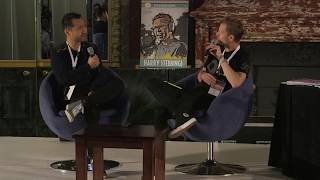
Jörn Liseggen built Meltwater to $320 million ARR and 1,800 employees without venture capital, starting with $15,000 in 2001. He shifted from product pitches to pain-point selling, engineered cash flow through upfront invoicing and 48-hour factoring, and grew by hiring graduates and promoting from within rather than importing senior managers.
Chapters
My name is Carl Fridtjofsson. I'm a partner with a Swedish venture fund called Creandum. We're early backers of companies like Spotify and iSettle and a bunch of others. Today I'm here with Jörn Liseggen from Meltwater. This is one of those companies that wish we had invested in, and we're going to talk a lot about that. So we're excited to be here. We're going to sit down. I hope you don't mind because we're, we're tired. So to kick things off, I'm devoting my career to invest in early-stage companies with the business model that a lot of companies need external financing to overcome the first cost hurdles in order to build a business of substantial revenue. And if we're really lucky in my profession, We invest tens and often hundreds and maybe even billions of dollars into a company, and they become worth more than $1 billion, and we call them unicorns. This mystical creature that is rare to be seen. So this topic up here is about unicorns, but I almost want to call this something else because this is not really a unicorn. This is another mystical creature, maybe Bigfoot or something like that. This is the story about Jørgen and Meltwater, where they really didn't raise any capital. So just give us a sense of where Meltwater is today, and then we'll go back into the history of how you came there.
Yeah, so we are ARR-wise, we are $320 million. We are headquartered in San Francisco. We have about 50 offices across the world. And—
How many employees?
Yeah, 1,800 employees.
And you didn't raise any venture capital into this business, right? So how did it really get started? When did you start the company?
Yeah, I've been at it for a while. So it was started in 2001, and we didn't know it was a SaaS business at the time, but it just seems logical that it was a software that was delivered through the browser. But so it was early days, and we started with $15,000. And the reason why it was $15,000, that's have what it takes to incorporate a company in Norway. So that was the basic logic.
And what was the original idea of Meltwater?
Yeah, so, um, the original idea was really try to solve the problem of there's so much information on the internet and it's very hard to keep track on that manually. So the idea was to create a software that did that for you. And the product vision at the time was that when executives come to work in the morning and have their normal cup of coffee By the time they finish with a cup of coffee, they have a good overview of the world, what happened in last 24 hours, about the competitors, clients, industry, brands, etc. So our slogan was informed decisions.
And this is pretty much what the company does today still.
Yeah, basically. It's— in the early days, we started out with online news and tracking company websites. If your competitors change their prices or issue the new press releases, you will be notified. Over the years, it's moved into social, and now we're also making a big push into patent filings, job postings, ad spend, basically trying to understand all the external signals to help you understand your competitive arena. For that reason also, we invested really, really heavily in data science. The company has, over the years, become much more of a data science company than it was in the early days.
And if you go back to those early days, did you, did you contemplate raising external financing, or how did you think about growing the business from day one?
So no, actually we felt pretty good about things. And, and the funny thing is that when the aspiration when we started was to create the world's, the world's smallest software company. We wanted to be 4 engineers, just create an amazing technology and sign up a couple of resellers and just sit back and, you know, watch how revenue was going through the roof. That was kind of the game plan.
Nice. It's nice.
Yeah, so the first year we poured our heart into building the product. I signed up 2 resellers in the Norwegian market because the company comes from Norway, and they presented the product to 1,500 companies, and that's a lot in Norway. But it was a kick in the teeth when we discovered that we got 499 nos and 1 maybe. And then maybe was more really a no, he didn't want to say no. So then we were really worried. I was like, are we completely wrong? Where are— this is not a market. But then looking at the data, we discovered that we focused too much on technology. There was definitely a problem there, but we have to approach it differently. So What I did was I brought in a couple of salespeople that I worked with before, and I told them, "You're not allowed to talk about the product until you understand and empathize with the pain points of the problem. At that point, you can talk about the product." And the funny thing is, without changing the product, without changing pricing, without changing anything but the way we sold it, it was like flipping a switch. So from absolutely no sales, when we sold it a different way, we just started to get real traction. And when we saw that it was something that we could get traction on, it was repeatable, then we were really trying to sit down, how can we optimize the business model so that this can really scale? And that's where we came up with a lot of hacks that enable us to do this. In a bootstrap fashion.
And maybe, maybe we can go into those hacks straight away because I think those are, those are really insightful. So I know you're a big fan of cash flow in general, right? And which is essentially important if you're bootstrapping your business. So what did you do in those early days to really fuel the growth of the company by using your own cash?
Yeah, it's all about cash. I don't think we really had so much good metrics but cash, but we were completely on top of cash all the time. But so the kind of things that we did in the early days, one thing that was really, really critical was that we started to model out how cash flow would look like with different invoicing models. So at the time, most subscription services was invoiced monthly and quarterly, and we just modeled that out and we just saw how it was just completely driving a massive need for funding. It was just, you know, for every time you hired a person, every client you got on board, it was just draining cash. So then you— then we realized if you were able to invoice upfront for a year, it was just a completely different picture. And then we discovered that, you know, the unit economics will be incredibly attractive. So the more people you hired, the more cash flow you generated, provided you were able to create enough sales per person. So, and once we realized that, we started to think with the model to see, is it possible? Are we really able to invoice upfront? So then we did a number of things. We just made sure that the price was reasonable, because at the end of the day, our cost was really how many touchpoints we had with a client before they converted to a sale. It's the overall cost of the product, gross margins, we had gross margins in the '90s at the time, so it was all about how many times you need to touch a client before they actually sign on. And with a lower price, you can invoice upfront and you can get a number of different buyers in the same company. Yeah, so that was one thing. So we had to invoice upfront, and we were initially— we got some pushbacks, but after a while we were able to do it. But we did also like all sorts of important things, and one really small detail that actually had a massive impact on our cash flow was actually the day we paid our salaries. So in Norway, you typically pay salaries on the 20th of a month, but the problem with that is that if you have monthly quotas, most of the sales happens in the last few days. I think actually most of the sales almost to these days is, you know, 40% in the last 2 days. And what that means is that the 20th of the month you are really low on cash flow. So we moved the day for paying salaries to the 6th in the next month. And also what we did We signed up with a factoring service, so whenever we had a contract that was signed, we could ship that over to the factoring company. And I think it was within 48 hours we would then get cash. You had to pay a little bit, but within 48 hours they were willing to upfront everything. And that was really, really important for the cash flow.
I mean, I think that's— I just want to pause there and make sure that everybody really captures this, because instead of selling 20-30% of your company to someone like myself, all you did was really tinker with, with the economics of your business, and you could fund this yourself, right? And that is actually fantastic. And it's not about product or technology and writing code, it's about understanding the business that you're in. I think that's very, very powerful.
Yeah, thank you. So maybe, maybe what I can say is that so one thing is the product and all that, but the pricing and the packaging and all of the business side of it is really, really crucial.
Yeah. So at a certain point of time, you realize that you're onto something with this, with this company, and you're starting to scale internationally and whatnot, and The bolder your ambition becomes, the higher, I guess, the pressure on your cash flow becomes. So did you ever throughout this journey start thinking more around our own external financing?
Yeah, at times, you know, we squeezed the lemon pretty hard. So we were growing so fast, you know, and every time you enter a new market, it's a pretty humbling experience. You know, it's almost like starting your company. From scratch. So we moved to Sweden, that was actually going really well. UK was really tough. Germany is actually the toughest market we ever entered, harder than Dubai and Tokyo and exotic places like that. So at times it was, you know, a strain on cash flow. So on a bad day you were thinking maybe I should just raise some capital. But I think I always was thinking about It's also really expensive to be impatient. So if you were a little more patient, we were thinking that at the end of the day, it would pay back.
Did VCs knock on your door? Did you have options to raise?
Yeah, we had lots of VCs. Yeah. Early days. I remember Insight Venture Capital reached out long before they were really so big. There was one associate there that found job posting us. So he responded to one of our job postings in Chicago, I think, and said, could somebody please forward this to the CEO, Meltwater? I tried to find him in Oslo, San Francisco, I can't get hold of him anywhere. And that was the first VC I actually spoke with. So I— and, you know, because I have a lot of salespeople out there trying to get the decision makers as well. And then he— the first thing he asked me was like, so what's happening? I know nothing about Meltwater, but I see job postings everywhere in Hong Kong, US, all over Europe. So we spoke with VCs, but we never ended up actually raising.
And at a certain point in time, you did take on debt instead of equity financing, if I'm correct. How did that come about?
Yeah, so part of that was we were looking to acquire some companies. Some additional cash. But actually, so when I say we haven't taken any capital at all, that's not true. So 12 years in, we took in a little bit of money because at the time we tried to take a publicly listed company private. And then we got the sponsor, and they said— and I was maybe a little naive— I said, yeah, we are happy to do it if we can invest a little bit in your company regardless of outcome. So then we let somebody in, but it was a small thing.
And last question on financing before we move into the other parts of the business, which are way more important probably. But would you have done anything different? Would Meltwater have grown faster if you'd partnered with someone like us earlier, or do you think you made the right choices?
I, I can categorically say that we could not have grown faster because the bottleneck for our growth was not capital. Because we were growing so fast, and the bottleneck for our growth was definitely management, our ability to attract, train, and develop managers at all levels in the organization. I mean, at times we were— I remember one summer we were shooting up new offices every third week, and the constraint was who do we have to actually run that office? And if you find somebody that I could actually send off, then the second question was, who do we have to replace that person? Because if somebody's good enough to be sent off to set up a new office, they will leave a big hole in the organization where they come from.
And I think that's a good segue to the next topic here, which is really the people behind the success. Obviously you're a big contributor to it, but you also have a good group of people around you. And I'm fortunate enough to know a couple of your people from the management team, and what's fascinating with them is that they've devoted kind of their entire career to Meltwater, right? They've been with you since they graduated from school, and they're now 15, 20 years into their careers, and they still work side by side with you, and they have very senior executive positions within the organization. So talk to us a little bit about your thoughts on leadership development and building that organization in the early days until now.
Yeah, so it was very clear for us that our biggest growth constraints was our ability to develop leaders. And I also think that in order for a company to be sustainable and grow long-term, it's incredibly important to develop leaders from within. And in the early days, we actually tried to hire external managers. So for example, in the Nordics, we did well. But when we went to enter the UK, we were thinking, okay, we need, you know, UK, we haven't done so much business before. Here we need somebody with a proven track record that actually knows what they're doing. We hired a very senior manager from, from UK. We brought him to Oslo, trained him there for 3 months, and sent him back. But it really didn't work. And then we're really worried, maybe what we do in Scandinavia doesn't export easily to other markets. But then we decided maybe we should try what we did in Sweden. And in Sweden, basically we hired graduates straight out of school and train them and then send them off with adult supervision. So then we tried that in London. We hired 5 university graduates, trained them for 3 months, sent them back to London, and it went through the roof. Within 9 months, we had an organization of 22 people in London. They were signing up clients across the board. But maybe most importantly, that office developed leaders that we later sent to Dubai, to South Africa, to Hong Kong, to Australia, and even to the US. And that's where we basically figure out the model with which we developed and scaled the business, is that we need to find the right people straight out of college or very limited work experience and then train them as hard as we can so that we— everyone are aligned. And so all our offices across the world has been set up by people that have been trained internally. My executives has been in the company 13, 14, 15 years, as you say. Under them, the layer of management has been 12 to 15, 8 to 10, and so on. So it's very, very deep roots. So all business leaders within Meltwater has been developed from within.
So the lesson learned here is that you don't necessarily believe that senior external hires is a shortcut to to scaling your organization necessarily?
So I don't think it's a binary, right? I don't necessarily think it's binary. But for us, we discovered we were better at training young people and bring them into the leadership roles than to hire external seniors. But I also think that the challenge with hiring external seniors is that every senior has their specific worldview on how things should be done. And that can, of course, add to the overall ideas and so on. But from a culture perspective, it's very, very hard to create a consistent culture across the organization and over time. So when I say my executive team is only internally developed, that's only on the business side. So my CFO is externally hired, my VP of engineering is external hire because those skills are very hard skills that really needs to be harnessed over many years' experience. But it's very clear to me that you need to work a lot harder on those departments because you have people from outside. And I think a company that relies too much on external hires up through the— in the development of the company, I think they lose a lot on the institutional knowledge, culture, and ownership. And the people sitting there and not being promoted to these roles, that's really demotivating. And I think our policy on promoting internally has been serving us really well. In Meltaway now we have close to 100 people that have been in the company 10 years or more. And most of those are millennials.
And are there any tangible tips or recommendations that you can provide to the audience regarding how do you hire people that have the leadership potential or how do you nurture that leadership potential to come out within the organization?
Yeah, so we are very, very rigorous when it comes to recruitment. So we spend enormous amount of time on recruitment, and it doesn't matter, and even for entry-level sales. So people that start in Mailchimp at entry-level sales, we hire for future leadership roles. Nobody starts at entry-level sales in Mailchimp without we believing that they have that potential. And I think if you think about leadership development, recruitment, and culture, in many ways these are very intertwined. So when I think of those things, it's really very linked to what kind of culture you want to have as an organization. So a lot of leadership development and mentorship that we have done, I myself and my executives now, happens in the recruitment process. So we— and when you go through a recruitment process, you clearly have to articulate or make decisions of what are the people we want on board, what are the people we don't want on board. So a lot of calls. So not only are we hiring based on capabilities and so on, but a big part of it is their personal traits, personal standards. And drive. There are lots of these very intangibles that you're looking for that really is washed out during your recruitment process. There's also really important building blocks for your culture in your organization.
So culture is another big topic. I think that— I mean, I'm personally a big believer that if you, if you have a well-defined culture and it really works, it's, it's a very unique competitive advantage as an organization. But it also, when you talk about it, it often also becomes very soft and vague. So what's your view on culture in order to like, how do you really enforce it? What tools are there out there to really build culture?
So first of all I'll say is that it took a little time for me to fully understand the importance of culture. So Mailflow is my fourth startup and I guess over the years I realized the more you work in building teams, organization, and companies, the more humble you become for the importance of culture. And the reason why culture is important is that culture can— well, first of all, any team, any organization, any company has a culture, intentionally or not. And culture can have a positive impact if people can feel valued, people can feel appreciated, people feel they learn from others. It can be a very positive spiral. But culture can also be a negative spiral. People feel like they are not listened to, the work that they're doing doesn't contribute, doesn't go anywhere. So whether the culture is a positive spiral or negative spiral has a massive impact on the productivity on your company. And we have a shortcut for culture that basically says culture is what you do, what you say, and how you treat people. And the execution of that and implementation of that is very, very linked to some of the things we already talked about. What are the people you hire? Do you hire people that are very individualistic, have ego, sharp elbows? Or do you hire people that are collaborative in nature, that thrives working in teams? So who you bring on board in a company in the first place Who you promote as leaders is massively important for culture because every leader puts their fingerprint on their team, their organization, or the company. And also who you fire and demote is very, very important signals.
So two things I know within the Meltwater world that kind of, I guess, embodies your culture is is the Ghana School Initiative and EDAF. Can you talk us through those two, which are opposite ends of, I guess, what you can do as a group of individuals?
Yeah, so I can start with EDAF first. So EDAF is a cost item in every office's P&L. That stands for entertainment, dinner, and fun. So we spent very little on marketing. So my joke is that I spent all my marketing budget on dinner, food, and alcohol for people to hang out, you know? And actually related to culture, a big part of culture is shared experiences, that you do something together. So of course you can do a lot of things together at work, right? But if you in social settings have fun, do things. In the early days, we had two parties every year, a summer party where the whole company was attending, and the kickoff that was in January where we reviewed last year's result and looked at the result next year. And so kickoff, we've been to all over the world, Jamaica, Monte Carlo, Thailand, Morocco, and then everyone in the company goes. And everyone is under one roof, and that's a massively important shared experience. Yeah, so that's EDAF. And I think that has been really important in building culture and building teams. We also have something maybe that's a little unusual, but we have a school in Ghana. So if you think about it, as an entrepreneur, and Meltware is my fourth startup, to be an entrepreneur is in many ways kind of a very selfish endeavor. Or at least it becomes a selfish endeavor. Because in order to succeed, you need to be so doggedly tunnel vision on what you do. You're obsessive. You're obsessed about your client meeting next morning, and every next meeting is so important. So you become, at least I become, I was like shit at showing up at friends' birthday or things that I was like, yeah, they have another birthday next year. I can go then instead because next day I need to prepare for this big meeting. So you always have these things that are so important that fundamentally maybe is less important in the long run. So for that reason, when I started Mailchimp, I just thought to myself that if you work so hard and you pour your heart into what you do, I just want to make sure that it was impactful and, yeah, it was more than just building a company and so on. So for that reason, I decided to set up a school for software entrepreneurs in Africa. And I know myself, in order to hold myself accountable, I decided to announce this at the kickoff to everyone in the company. So January 2007, I announced to everyone in the company that a year from now, we're going to set up a school for software entrepreneurs in Africa. And the idea was really that all the expertise and that we developed in the company, nurturing talent, developing leaders, and all that was— is really very applicable in a number of different contexts. So we were thinking, if you can do that in Africa to help nurture talent there for them to become self-entrepreneurs, we created something impactful. So we now been in February 2008, we started the school. You cut the ribbon. The first African startup that went to TechCrunch Disrupt came from our program. The first startup that went into 500 Startups came to our program. We have graduates that went into YC, Techstars, other incubators and accelerators across the world. We have a couple exits. Our companies start to acquire other companies. 6 months ago, we acquired a rocket internet company in Africa. That was out-executed by our local graduates with much less cash and much less resources. So a lot of exciting stuff.
So last question, what's, what's next for Meltwater? A company of like $300 to $400 million ARR is definitely at the scale of where it could be a listed public company in the multi-billion dollar valuation. So what's next for you guys?
Yeah, no, we are very excited about our next phase where we are moving beyond news and social. A lot of people ask if you're going to list as a company, and I actually did run a listed company back in the days. So I can say I cherish every day that Mailflow is a private company. But at some point, you know, we will see what happens.
Continue to enjoy the journey, and thanks for sharing.
Thank you.
More from Jason

Why Your Next Hire Should Report to an AI, Tragedy Apps, and Too Many AI SDRs? | The Agents #004

Our Agents Drove Our Salesforce Bill Up 80%, Marketo Hates Agents, and We Stealth-Churned Off Notion




Managing 20+ AI Agents: Lazy Agents, Our $500K AI Bill, Stealth Churn & the Death of 60% Solutions




