Building a Second Unicorn: A Deep Dive with Harness and AppDynamics Founder Jyoti Bansal
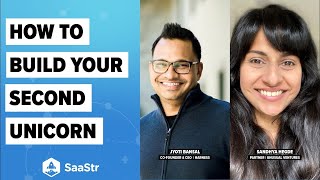
Jyoti Bansal, who sold AppDynamics and went on to found Harness and Traceable, talks about what got easier the second time around and what stayed hard. Fundraising and board management became smoother, but finding product-market fit and recruiting top talent remained just as difficult. He describes Harness' hybrid go-to-market model that blends developer adoption with enterprise sales, and shares a five-point playbook for first-time founders.
Chapters
But it's really my privilege to introduce to all of you someone who needs no introduction, which is Jyoti Bansal. He's had an incredible journey in enterprise software, being the founder of not one, but three amazing enterprise software companies. AppDynamics, which I'm sure all of you have heard of, and it's a category leader in application performance monitoring. Harness, which is a new emerging disruptor in the CI/CD space, and Traceable, which is a new challenger company in application and API security. So, you know, there's a good reason why we teasingly call him the Elon Musk of enterprise software. And last but not the least, he's also the co-founder of Unusual Ventures, where I'm super honored to be a partner and get to collaborate with Jyoti. So I'm really, really excited to be here together, and hopefully, you know, we'll be able to have a conversation that's very helpful to everybody in this audience. We'll be going through some questions, but then we'll, you know, also have time for Q&A. And I'm going to keep a track of for, you know, who— I'm going to track who asks the best question or can make Jyoti laugh. That can be our bar. All right, so with that, here's— this was kind of the biggest question I asked Jyoti the first time that I met him, which is, you know, if you go back to 2017, you know, AppDynamics was acquired by Cisco. Jyoti finally has free time and a young family and, you know, is a billionaire, amazing, amazing success. Jyoti, what motivated you to think about starting another company and being the founder again?
Yeah, it's a good question and when AppDynamics was acquired in 2017 and it was a big acquisition and everything, so the first instinct I had which made sense was that I should— now I don't need any more money, I have more money than I could ever spend in my life, I've achieved a good amount of success, it's so I should retire and enjoy what I do, right? So, and so I went on a retirement for about, you know, 6 to 8 months. And we, you know, we had a list of things on our checklist of we wanted to do, like, you know, safari in Africa, we wanted to go and trek in Bhutan, we wanted to see Machu Picchu, see fjords in Norway, and all like, this was a list of things that, like, you know, when I was running AppDynamics, I could never get to because I didn't have time to do any of that, right? So we went and do— we went to do all of those, but in about 6 to 7 months we were done, you know, it's like, you know, my wife and I, and we're like, what now? It's— I can't be doing this all my life, like, and I started to look at like, you know, like what, you know, at some point in life you think of, you know, if you don't have to worry about money, you don't have to worry about your career success, whatever it is, right? You should be doing what you enjoy. So I looked at, okay, what do I enjoy? And I realized that I really enjoyed the journey of building a startup. So, you know, I'm at the core of it, I'm a product guy and I love building great products. But then, you know, you can't build just great products, you have to combine them with building great teams and then that builds a great business, right? I enjoyed that, you know, the hustle of it, the competitive element of it, the building the team, the competing in the market, all sorts of things that come with the startup. And I was like, okay, that's what I enjoyed, why shouldn't I do it again? Like, you know, who cares what the outcome or anything could be, but that's what I enjoyed, I will do it again. The second part is the problem itself, like what Harness does and what Traceable does, right, because that's also important. Like, I didn't seek out to— I want to start a second company, so now let me go and hunt for problem ideas or, you know, ideas. These were problems I was very passionate and excited about even when I was at AppDynamics. So like the— what Harness does about, like, you know, I always thought it was kind of horrible that they're only like maybe 10 companies in the world who are very good in software delivery, where like, you know, CI/CD, software delivery, they're shipping code very fast. And these are like your Googles and Facebooks and Amazons and Netflix. And they had this massive advantage over everyone else in the world who was all struggling with DevOps, CI/CD, software delivery. And said, someone got to solve that. Like, so I wanted to solve that even before, you know, AppDynamics was acquired by Cisco. So to me, that was a problem that was exciting as well. So it was that, that helped. Same applies to my latest company, Traceable. You know, how we should think about securing every line of code in the world. You know, we all look at like, you know, all the world runs on code, so the code has to be now, has to be secure. That's also a problem I wanted to actually solve and I was passionate about even when I was at AppDynamics, you know, 3, 4 years ago now. So these are, it's the combination of like, this is what I enjoy to do, I would want to do it. Retirement is not really that fun after a while. And, you know, these are problems that, you know, excites me to solve. And, you know, that's the genesis of it. Same thing applies applies to Unusual Ventures as well. Like Unusual also stemmed from a problem I wanted to really solve, you know, which is like how do we rethink early-stage investing and, you know, how do we make it more, you know, really useful for founders, you know, and then we do that and I experienced that and I wanted to solve it. So it's like, you know, if you want to solve a problem that becomes, you know, why not do it, right?
Right, right. It's, you know, the authenticity that you can't stop thinking about the problem, like you're not starting something just to start something, it's because you can't stop thinking about this even while you are in Machu Picchu, right? And I think so many of us don't appreciate that enough when you're thinking about what really motivates you. I guess here's a really important question. Did any of it get easier the second time around? One really hopes that some things got a lot easier. What would you say when you started working on Harness? What felt easy this time?
I think some things do get easier, you know, I think the most important is fundraising and dealing with investors. You know, when I started AppDynamics, this was when I was sort of an engineer turned first-time entrepreneur, first-time CEO. I'd never even managed a single person in my life before that, you know, I was in my late 20s and I had this idea for, you know, what to do in AppDynamics and Raising capital was quite hard for me at that time and I pitched about 20 VCs who rejected me before I got any funding for AppDynamics. The harness doing it the second time was exactly the opposite of it, like VCs didn't even know what we were doing because we were in stealth and there were at least 20 people who were willing to give us like offers and term sheets and VCs just knocking on the door for money. And you know, I bootstrapped the company initially. We didn't even need any capital, but there was still like, you know, the fundraising part of it was so, you know, so different. It was kind of almost funny to watch. Like, you know, and you know, I live in San Francisco. When I was doing AppDynamics fundraising, you know, almost all VCs used to be in Sand Hill Road, Menlo Park, and every day I would use to drive down and meet VCs and pitch to partnerships and all. You know, for Harness, like the firm we went with, you know, the entire partnership came to our small WeWork office in San Francisco to kind of pitch to us and, you know, take their money. So it's like that dynamic changes. The second part that also becomes much easier, that kind of goes into that, you just— the second time you get a bit of luxury to work with the investors and board members that you know, you know, you know, are the right kind of partners. And that completely changes how you you know, work with your investors and board. Now to me, one of the, you know, I would say things from AppDynamics was that we had— I spent a lot of time managing our board and investors, like maybe about 20-30% of my time would go in there. We had, you know, all sorts of investors who needed just a lot of management. Doing it second time at Harness, it's much easier. I spend maybe 1-2% of my time managing investors and the board. A part of it is also like, you know, it's just a bit of a psychology in the investor world. Like, you know, when I was first-time CEO, people were like, his first time CEO, and people would doubt and question all the things all the time. You know, you have an exit and the next day, you know, you start a company, you're a second time CEO now. And just psychologically now everyone thinks you're an expert on everything because now you're a second time CEO. So even though you are really the same person, but just like, you know, so that does make things a bit easier on that front. I would say, yeah, that's the, you know, the fundraising becomes easier, managing the board gets easier. I think the other thing that does get easier is you know what to expect. You can see around the corners better because you've gone through the journey like I could see 6 months ahead, a year ahead based on the prior experience of building it the first time at AppDynamics. And AppDynamics everything was new like I didn't know what will happen a year later, what will happen 2 years later and things don't exactly happen the same way at Harness now but still there's a lot of similarity. You know, like once you're gonna hit, you know, your 100 customers, these are kind of the challenges that will start to happen. You know, you know, like, you know, once you start getting like, you know, expand your sales force internationally, these are the challenges that will start to happen. So you could be prepared for those. You know, you know, also know like, you know, these are the things that will happen when like, you know, when you go from one product to a second product, these are the things you have to do on the how you structure your engineering. These are the things you need to do when you like, you know, structure your sales organization, how do you launch a product. Some of the things that like, you know, I didn't know what to expect first time, second time I know much better what to expect. So that makes it much easier, you know, to plan around and execute on a bunch of these things.
Right. Well, what was an example of something that like was a surprise for you when you were first building AppDynamics? Like where you were like, oh shit, I didn't see this coming at all. Or maybe, you know, I had vaguely heard about it but didn't realize that it would be such a big deal and, you know, wish I knew this 6 months ago.
Yeah, like, you know, when I was first doing AppDynamics, almost everything was a surprise to me because I didn't know anything. Like, you know, even like simple things like, okay, how do you even interview a sales rep? You So those kinds of things were all you learned through it, right? So those almost everything was a surprise.
At Harness, like, you know, I do think like some things, you know, you know, like these skills you have learned, like, you know, you know, like, you know, some of these things are not as surprises. When I was building AppDynamics, to me, like, you know, how to handle sales was definitely, I'd never thought it would be that hard or that complicated, right? Figure it out what to do. Scaling the teams and how do you like build the right culture. I was, I never thought of that like at AppDynamics until we kind of starting to have to deal with it, right. But at Harness, I know like, you have to be much more proactive about building the right culture very early on. So those kinds of things, you are not surprised anymore. Like I know these I have to do because that's the otherwise you can't really grow.
Makes sense. Alright, so to recap a little bit, you said that things that got easier, fundraising, you can get VCs to pitch you on why you should accept their term sheet and offer. Sounds great. Everyone should just skip to being a second-time founder and just skip the first time a bit. Managing your board, making sure you work with people that you trust. And understand and don't need managing and knowing what to expect. I think those are really solid challenges that if they're easier, like feels like as a founder, like your life is in a much better place. But what about like core company strategy? Like for example, you brought up that, hey, when you're a second-time founder, people don't question your decisions as much. Because you have done this before, like even if you are the same person, you're thinking like the same way about your company strategy, people kind of trust you that you know it. Is that part easier or, you know, like what is it that is equally hard, I guess?
You know, what is equally hard is executing, you know, executing on a few things like, you know, and finding product-market fit, for example. Like, you know, when I was doing AppDynamics, you know, initially I had assumptions on this is how our product should be, this is what the market needs to be. And it turned out that half of those assumptions are wrong and we had to do multiple pivots in the first 18 months of AppDynamics, right? Then you have to iterate and pivot and find the right product-market fit. And most startups have to go through that. So when I—
at Harness, I thought like, you know, okay, I'm doing it a second time.
I don't— maybe I'll get all my assumptions right the first time, but that's really not the case. Finding that product-market fit fit is still the same iterative process. Like, you know, we had to pivot at Harness as well. We have to do like, you know, some of the assumptions were wrong and you have to pivot and correct course and, you know, iterate through it and go through almost exactly the same journey that we went at AppDynamics, right? So it's just like, how do we hone into the right product-market fit? And it was equally hard. It's a hard problem to solve. It was a hard problem to solve at AppDynamics, it was a hard problem to solve at Harness. And, you know, that was one. Second is the— I would say equally hard is recruiting, and that was a little bit of a surprise to me actually, because I thought like at AppDynamics, you know, we spend a lot of time recruiting, and I strongly believe that to build a great company, you have to hire a lot of good people, and kind of as founders, you have to spend a lot of time personally trying to recruit, right? So in AppDynamics, we hire a lot of really great people, and, you know, a lot of those people like became like, you know, people who started as engineers become VPs and People started as sales reps and sales directors, they became like, you know, head of sales and all, like, you know, people grew with the company for those, you know, 5 years, 8 years, 10 years even, right? So I thought initially, like, you know, I could just go and bring all those people who I knew who like really rock stars and kind of grew with AppDynamics and I don't need to spend time on recruiting. But that turned out that's not the case because, you know, most of those people, you know, it's great that they have been now, you know, significantly, you know, grown in their careers and where they are in their journeys in work, right? So for them to come into a very early startup, you know, many times doesn't make sense. Like, you know, how would— why would you come to a very early startup? You know, it's just— it doesn't— it's not the right fit. So, you know, it took me some time to realize that I need to actually go through the same cycle again, that find these really talented newcomers, you know, very similar to what we did on AppDynamics and kind of groom them and have them grow with the company. And then they become the next generation of those rock stars, you know, the way we had them at AppDynamics. I couldn't just bring all of the same people and, you know, I have to go through the same journey again. So that was, you know, I think it's equally hard in the sense that I had to put equal amount of effort, you know, that we did in AppDynamics at Harness as well.
Right. I'm curious, I'll interrupt you a little bit because, you know, how do you think about identifying that like next, you know, rising star, right? Like if you can't just like maybe, you know, your old team wants to spend more time in much Pichu, then you did. Now you need to like find like that person but 10 years ago. Do you have like, you know, because I know you have such cool frameworks for all decision-making, like how do you think about like, yes, this person is like a founder-level hire and I'm catching, you know, her or him early?
I think the framework that I like to use is like, you know, someone who is You know, first of all, high intellect. You know, they have to be— high intellect is important. Second is they are very curious. They're curious and they want to learn and they are fast learners and they're curious about learning more and more. And third, they're ambitious, that they want to do that. Like they have the desire to, you know, to grow, the desire to, you know, do bigger things. Like, you know, if you want to have like, you know, a person who's— let's say you're hiring as a sales rep, that they are like, you know, they are high intellect, you know, they are curious and fast learner, but they're ambitious that they want to become a VP of Sales at some point, you know. So now, you know, like, you know, they have all the right ingredients at least, right? So, you know, could they be coached and mentored and kind of they could get there over time?
You know, they can.
So that's how I would identify things, but it also goes through a process after that. Like, not everyone makes it. Like, you can't— not, you know, it's like if you hire 5 of those people, you think, okay, these are high potential, not all 5 are going to get there, like, you know, so, but so it almost also goes through a sort of a meritocracy process after that, like, you know, the best people get promoted to the next level and the next level and the next level. So you go through that cycle, you know, so, you know, we did that very well at AppDynamics and I, you know, I initially thought I can short circuit that at Harness, you know, it's actually a great cycle because it allows so many people to grow. With the company and so that's— you have to do that again.
Right, right. And you talked about how you had to learn a lot about sales with AppDynamics. So how did that go with Harness and Traceable? Like any shortcuts to hiring good salespeople and hitting your quota every year or every quarter?
You know, well, there are two parts of sales. In the initial years there's a lot of hustle, And there is always a bit of hustle goes in sales, but the initial years is there's much more hustle than you would imagine, right? And actually I initially thought when like doing it second time that we don't need to hustle as much, you know, but like when it was like the early days of AppDynamics, like every deal doesn't matter, it was like $1,000, $2,000, $5,000, like, you know, whatever it takes, you know, will, you know, if I have to be involved, I will be on the front line trying to close the deal, win the deal, everything, right? But as the company got mature at AppDynamics, you have a sales machine, like, you know, you have an entire machine that, you know, you actually don't want it to be hustle-oriented. You want it to be more systematic because the hustle doesn't scale at some point, right? So, you know, so I got very used to that machine, right? You know, so when I started Harness initially, I thought, okay, we, you know, we probably don't need the hustle because machine is great. Like, you know, but you realize in the first couple of years, the machine, you know, doesn't really work. You got to still hustle a lot. And you know, and that part, you know, you can't really avoid it. Like, you know, so I, at Harness, like, and it's really the same kind of things I, you know, we had to go through as well. Like, you know, if it's a, doesn't matter if it's like, you know, to find, to win how small a customer is, you know, how small a deal is, you have to do everything to win. You have to, you know, prospect, you know, your way in, you have to like, you know, beat competitors. All of that sales hustle you still require, like, you know, you really can't, like, you know, whatever it takes to, help your sales teams and your sales reps to like just get one small competitive advantage to win. It becomes really, really important in the first couple of years. So that still remains the same. I think when it comes to— if you want a repeatable sales motion where like you never miss a quarter, that happens only when you build a repeatable sales machine. And every startup has to kind of evolve into that. Like, you know, you start with the hustle-oriented sales to like, you know, a little bit of hustle and a little bit of machine. To like almost complete machine-oriented model at some point, right? Where like, you know, everything is predictable, repeatable, all of that. And you go through that cycle. You know, I have a little bit of an advantage doing it the second time now at Harness and, you know, and Traceable that, you know, like that is coming, like, you know, that we have to go towards it. At AppDynamics, I didn't know it initially. I was like, you know, this hustle thing is working so well. Why do we even need to think about building a machine until I start running into problems with it, right? So at Harness, like, you know, we can start building them, you know, which we have done like building up very predictable kind of sales machine a bit earlier than most startups would do. Right.
Yeah, and you know, unusual, like we definitely find that just building the sales machine and getting the senior sales leader hire right is just so challenging for founders, especially doing it the first time. And that's why we've built so much support for them, like where we can like help them pick that right person. And I remember, I think this was like maybe 2018, I remember reading this amazing article that you had published about what you learned from AppDynamics about hiring sales leaders, especially at that pivot point of like going from having a sales leader who manages to deals to having a sales leader who manages to sales capacity and like running a machine that's capacity-based and the leader who thinks about capacity as opposed to a leader who thinks about individual deals. Those. And, you know, it really felt like very, very good, hard-won wisdom that you can— and the funny thing is you can't really hire the capacity leader early, right? Because that's not the person you need early. Like, you actually do need the person who can get in there to close individual deals. So yeah, I think that was like just an amazing way to synthesize what you probably learned over years of hiring at App and very useful for founders.
Yeah, I think it's, you know, some of the things that you have to do in the very early stage, like, you know, getting from that idea to the first million dollars of revenue, those things, you know, I think it doesn't matter how much experience you have, they remain equally hard and you just have to do them, like, you know, manage the sales deals and recruit the initial team and go and get the right messaging. And as you know, Sandhya, at Unusual, that's a key part of our focus on how do we help founders in a very systematic way, just help, not just giving them advice, but can we just go in the trenches and be the extended sales force and be the extended recruiting force and be the extended marketing arm to do that. That's really hard to do. I think at some point when you start hiring the right, you know, that you can you attract the right leaders in your company as VPs, things get easier. Like, you know, so that's always the— but the initial challenges and, you know, you have to go through, there's no shortcut to it.
Makes sense. All right. So to quickly recap some of the things that, you know, you said unfortunately continue to stay hard, finding product-market fit, recruiting really, really good Rising star talent, because the team from your first run might not be the right fit to join you on day zero again. And the sales hustle, right? Can never stop hustling, really need to be super, super hands on deck in the early phase of building your company, which resonates a lot. And so we've talked a little bit about what got easier, what got hard. What about surprises? Like what was some, what would, what would you say was, you know, maybe like month 2 of Harness, what was for you like, oh, I was really not expecting this, what just happened?
Uh, yeah. You know, there are always some surprises, like, you know, I think most of the surprises to me were more at a personal level. Like, uh, I think the number one is like, you know, when I was last at AppDynamics, you know, you're about 1,000+ employees, you have, you know, a few hundred million dollars of revenue, and you start operating at a much higher level, right? You know, you're not into the day-to-day details, you are much more at a strategic level, right? So, you know, you're operating at that 100 feet, 2,000 feet kind of level. And when you start a company like Harness, the first few, you know, say the first few months, you have to go down to that, you know, 1 feet level and, you know, and start operating at that again, right? And that's a little bit of a, you know, I kind of knew that that's what you have to do, but still it was a surprise to me, like, you know, that adapting to it and adjusting to it, you know, it takes some time. Like you have to deal with like really small things on like, you know, do you have, you know, you're hiring an engineer, you know, to start tomorrow and do we have the, you know, a desk for them?
Right.
You know, it's something like that. You will have to like operate like, you know, because there is really no one else. You have to take care of things and, you know, kind of the job that happens in early stage, you know, where as founder you wear every hat, you do everything that whatever needs to be taken. Like, you know, you have to be the plumber for that day, you know, because office is flooding, you got to still do it. Right. And that's, that's still a bit of an adjustment. That was a little bit of a surprise to me. That, you know, you got to operate down at the, you know, at the one-foot level. I would say the second surprise is also a bit of a sort of a personal adjustment, which is the realization that there is really no shortcut. Like, you know, if you have to go through a journey, like, you know, like a startup journey, like in the, say, the B2B kind of space, right? You know, you start with an idea, it takes like, you know, somewhere in the 12 to 18 months to find your initial product market fit, you know, your initial set of customers, and then you start building a sales team and then you go and, you know, you go to $1 million of ARR and $10 million of ARR and $25 million of ARR and $50 million and $100 million. But those are all— you have to just go through it and there will be challenges and, you know, hiccups and, you know, big obstacles sometimes through all of those, right? There is no shortcut. And, you know, mentally, you know, I had to prepare myself. I had to ask myself, actually, especially in the first 6 months or year, you know, that am I pushing the org to go too fast because I wanted to get like, you know, because I was running a much bigger company before, right? So almost like you think of, you want to get there as soon as you can, but there are, there is no shortcut to get there. You have to go through the journey and, you know, even if we go there very fast and Harness, I would say, is on track to be among the fastest companies to reach many of those kind of revenue milestones even in the SaaS kind of world. But still, still you can't go any faster, right? So you, you know, so I had to like stop myself on like, I can't keep pushing my team to go any faster. It's like, there's, we can't, this is no shortcut. You have to go through all of the grind, right? And that's like, you know, it was a bit of a surprise that I need to go through that kind of a personal mental adjustment around that.
Makes sense. And do you, do you remember there, like, were there like clear mistakes that you had made at AppDynamics that you're like, yes, definitely not doing that again, I'm going to do things differently here that worked out well with Harness? Other than the whole investor management thing.
Well, investor management I would think is probably the biggest one, like it was a— it could become a drag otherwise, so definitely that's a mistake I wanted to avoid, like how we have the right how we pick the right investors and how we manage them. So I'm pretty happy with that. But I think if you look back at most companies, like if I look back at AppDynamics, you know, successful outcome, everything, the mistakes mostly come down to two categories, right. You know, either you make some kind of strategy mistakes of like, you know, you didn't go into a use case or a product area or some adjacent market or something fast enough and you let some competitors go there faster. Or you kind of didn't change or pivot, you know, some product strategy somewhere soon enough or something, right? That's like the more of the, you know, and a lot of them fall into the product strategy, go-to-market strategy, kind of you made some wrong decisions or you didn't correct your decision fast enough. The second category of mistakes almost always come into people, right? You know, that you didn't hire the right person or you kind of like, you know, didn't change a person soon enough or you kind of like, you know, so it's, when I look back at AppDynamics, like, you know, The mistakes come down into two buckets, like, you know, it's the— so, you know, at Harness, obviously, like, you know, I try to avoid those mistakes, you know, you still cannot get everything 100% right, like, you know, it's just impossible, like, you know, but it's— but we try, you know, I look at like, can we reduce the mistakes and can we reduce the time to correct mistakes, right? So it really comes down to those two things, right? So like, you know, we are just, you know, a little bit more conscious about keep studying where the market is evolving so that we are not like— and that means like a few things we missed out like when we— like say how fast everything moved to mobile apps for example. So the mobile APM, we were at least a year behind in market at AppDynamics because we were just not paying attention enough to it. And then we had to catch up and like build a good mobile APM for mobile apps a year later. At Harness, we try to avoid those mistakes by like, you know, having much more dedicated focus on, you know, what are the things where the market is going? Are we constantly listening from our customers? Are we, you know, and are we constantly also listening to like, what are the other trends going? So we can avoid some of those kind of mistakes. People, the same thing, like, you know, it allows us to, you know, do slightly better, but you know, in reality, it's impossible to not make mistakes. Like, you know, you have to move really slow. You know, if you're startups, you're moving fast and, you know, sometimes you just have to decide and, you know, and keep going, right, and you correct from later if something goes wrong. So I only look at like, you know, can I reduce the rate of mistakes, then we'll be fine.
Right, yeah, I think one thing that really stood out to me in what you said is this idea of like when you're heads down building your company sometimes you forget to look at what's happening outside the building. You're so focused on like what's going on inside the building in your little world that you don't even realize that there is a bigger opportunity or like a market shift happening outside that world that you would actually be perfectly positioned for. So it's important to make sure there are people who can nudge you when they see that happening and people who can make sure that you don't miss it. So really, really good advice. Well, so you said that Harness is growing really fast. You guys recently got valued at $1.7 billion, officially becoming a unicorn. How does it feel? Is there, you know, is the sense of achievement the same for you and the team? How does it feel the second time around?
It's a good question. I think, you know, when AppDynamics achieved the billion-dollar unicorn mark, this was 2014-15, around that time, so 6-7 years ago. It felt like, you know, being a unicorn was like sort of the pinnacle of success for a B2B kind of startup, you know, and so we have achieved a big part of our journey when we became unicorn. That's what it feels like, you know, that we have achieved a big— we have done a big part of our journey. Now, 7 years later, the world has shifted in very good ways, as in the sense that the opportunity and the market need for like, you know, products in the, say, called the developer tools, DevOps ecosystem to like, you know, most of the business applications, SaaS, has become much bigger. So the addressable market is significantly bigger than what it used to be. You know, so, you know, getting to say $100 million ARR and like, you know, you become a unicorn, that was like, you know, that was a big deal. Now I think the market opportunities are bigger. So like, you know, when we at Harness, when we hit a billion-dollar valuation as a unicorn, it feels like the journey is just starting. So it's still doesn't feel like we have accomplished a big part of our journey. Which was kind of a bit different at the time of the pandemic. So that is a difference. So, you know, there's a— and obviously, you know, to our team, you know, to everyone's credit, it is still very hard to build a, you know, a billion-dollar unicorn company. But I think at unicorn these days compared to 7 years ago, you know, you have so much more potential to, you know, to do. And so that's a little bit of the, you know, in some sense is a great part that there's a lot more opportunity.
The bad part is it comes with that expectation.
Like, you know, I call it like, you know, the decacorn is the new unicorn now. Like, you know, what, right now billion dollar was a special part and now it's like, you know, you know, it's, you gotta be $10 billion to be really special as a company these days.
Yeah. Like getting that top percentile given, you know, I think the market has accelerated so much in its growth. Yeah, it's funny. I think one of the things that drives a lot of us as founders and folks in the software industry is we always want to be at the top of the game. And this is the new top of the game. So it's a great question to ask yourself, which is what level are you operating at and what is it that you're going to celebrate? Great. All right, well, so shifting focus a little bit, I wanted to talk a little bit more about Harness. And one thing that actually stood out to me is that if I think about these two companies, there are a lot of fundamental differences in how they are positioned. Like AppDynamics was an early entrant in the application performance monitoring space, and you guys built an amazing enterprise top-down sales engine. I still hear people who talk about like that 5-minute demo that you could like walk into the company and do. And I remember telling someone, oh, like, yeah, which product marketer came up with this? And they would say, yeah, his name was Jyoti Bansal. So kudos to that. But then Harness feels like it's in a different environment, like you're disrupting a very big existing existing category as opposed to like being the early like category definer, you're a disruptor and the go-to-market motion might also be different. So would love to hear more about that, like how would you contrast like the positioning and go-to-market strategy for these two?
Yeah, the one similarity is that both AppDynamics and Harness are in the broader developer tools, DevOps ecosystem kind of space. But the big difference is, number one, as you outlined, is at AppDynamics, we were really defining the market. AppDynamics and a few companies of what application performance monitoring APM market would be. It was still very early and being defined. And Harness, people are doing CI/CD today. People are doing DevOps today. And so we are going and going to the market and creating something that is like significantly disruptive and much better way of doing it. The interesting thing is like, you know, our competition about 90% of the time is people building it themselves, right? So we are, you know, so it's because they were not really good products to do this. So most of the time people are doing it like, you know, using some solutions and then kind of doing it on top of it themselves, putting a lot of work and effort. So we have to design our product like, you know, the bar becomes much higher when you are going into a new market. You know, even your V1 bar doesn't have to be that high because, you know, something is better than nothing. But when you're going in an existing market where most people have a way to solve the problem already in some ways, either homegrown or commercial or whatever it is, right? Your bar for your V1 is that you have to be at least 5x, 10x better than the existing approaches. So that becomes your first major difference compared to, you know, than just look at the product strategy and what the product market fit would be because it's a much different bar to start just as a starting point. The second thing is the go-to-market model, you know, it is significantly different in AppDynamics versus Harness for two reasons. One is I think over the last 7-8 years, especially in the developer tools kind of space, much more power and influence have shifted to the practitioner, to the developer level. Like in AppDynamics, you know, we were very well known as a very very, you know, really, really world-class top-down enterprise sales motion, right? But so what we would do there is we would go to the, you know, the senior-level execs, you know, VPs and C-levels, and we'll make the case on, you know, we had a process called, you know, business value assessment. Like, you know, what is the— how do you do things today? You know, what could be the new way of doing things with AppDynamics? And what is the business value you get? And we'll convince them and they will do a trial and proof of concept, and then you go and sell to them. That doesn't work anymore because if you just go to someone who's a decision maker and unless you have got buy-in and already ground-up adoption from developers and the practitioners, no decision maker wants to give a tool or a product to their teams to go and use it.
Like, you know, everyone—
so because they are all scared, like, would they get adoption, would it work or not, right? So you almost have to create this new go-to-market model, you know, that, you know, what I call the You know, sometimes we call it the pincer strategy or like, you know, the, you know, sometimes we call it the sandwich model that you go from the bottom and you go from the top, that you have to go from the bottom to the practitioner themselves so that there's a very easy freemium trial experience, open source, the kind of models that you can go to them and these people are using your product and happy and, you know, and you still have to build the sort of the decision maker down the top-down sales motion. So that you can monetize it and still create the business value framework. And, but you already have a lot of the risk removed around adoption because your users and developers are already using it. So it's definitely a different kind of go-to-market strategy than what we did at AppDynamics. You know, it's— and to do that, we also look at like, you know, we have to make sure that we are not focused completely on large enterprise, that we have a very healthy mix of SMB, mid-market, and large enterprise. So we are The SMB mid-market keeps you honest in terms of like, you know, how easy and simple your product would be, like, you know, how fast of a sales process you can do. Can you go to the developers and practitioners themselves? So at Harness, we do it differently that, you know, we look at like, you know, 40% of our business comes from SMB mid-market and 60% comes from large enterprise. You know, at AppDynamics, it was 95% coming from large enterprise and, you know, very small part will come from SMB mid-market. So we deliberately change the go-to-market strategy so we can kind of address how the buying patterns today in the world of developer tools and DevOps are.
Right. That makes a lot of sense. Is it— so given those differences, like what were some of the implications in terms of like, you know, when you were hiring the team, did you look for a different type of profile for your product team, for your sales team, maybe marketing? Like, What were the implications on hiring given that the market dynamics and the go-to-market strategy was a little different?
I think it's a good question. The hiring becomes, you know, you have to hire the right people who have that mindset. Like, you know, so we at Harness, we don't want to hire people who only knew or cared about top-down enterprise sales. We also wanted to bring a healthy mix of people who understood the sort of the bottom-up, you know, community-driven, you know, sales and marketing as well. Right. And then you try to bring a healthy mix of that. Same thing from a product design perspective, right? You know, and from a product design, you, you know, you want to make sure that you have people who understand the, like, you know, the product-led motion and, you know, you can design the product, you know, around that. In addition to, like, you know, people who understand, like, you know, what do large enterprises need to succeed, right? So we look at, like, you know, and sometimes you may not find the same person who understands both, like, you know, but you have to hire the people who at least have the so you can complete the set of experiences in your team.
Right. I'll actually take a question from our audience which is very, very apt right now which is how do you— what are like the signals or signs that tell you okay, you're ready to go from hustling for every deal to like having to build sales machinery. Like what is that tipping point, what do you look for and you say okay, we're ready to get started on the machine.
Well, I think the biggest is like where you are in terms of your revenue is, you know, I think getting to the first million of revenue, I would say is about 80% hustle and maybe 20% machine and process in there. Getting from, you know, let's say a million to $10 million of revenue will be about maybe, you know, 60% hustle and 40% machine. When you start getting from $10 million to $25 million of revenue, of ARR, let's say, then it starts to shift. Like, you know, it starts shifting from like, you know, it's 70% machine and 30% hustle. And when you start getting from like $25 million plus, it becomes 90% machine, right? So there is almost like a, like the scale that comes with it, like, you know, that because initially you don't even, you can't make a machine out of something until you don't even know what to, what the formula is. Initially you are in the process to find the formula. The $0 to $1 million, you're still finding the product-market fit formula. You don't even know how to articulate your product, the value prop of your product, or what the use cases your product solves. You're experimenting and finding. So you can't make a machine out of something that you're constantly experimenting. In the $1 to $10 million phase, you're also experimenting your sales market strategy, your go-to-market strategy. I call it like, you know, so your $0 to $1 million is a product-market fit phase, and, you know, $1 to $10 million is product-market sales fit phase. Like, how do you sell it? Like, you know, and you're still trying to figure out enterprise, SMB, you know, bottom-up, top-down, SMB, all sorts of things you're figuring out, right? So in that one also, you want to start building a machine but not too much because you're still experimenting. But after $10 million, you start switching gears to like, let's— now you know most of things, you start building machine. After $25 million, you should—
because you need to press the gas at that point and kind of grow fast, right?
So you really want to make it much and much more and more repeatable and And during all of those phases, you know, if you don't have the right people who can transition from that, you know, 90% hustle to 90% machine, then you may have to change people as well, right? You know, during the process.
Awesome. So that was, you know, a lot of really, really good advice for our founders. I think a lot of it applicable even to first-time founders. But, you know, one of the questions that maybe we can wrap up with is thinking back to your first-time founder days, like what would be advice that you give them, you know, people who are just starting out on the journey, who are just like thinking about starting or have just started building something, what would be your advice to a younger version of yourself?
I think that the number one advice I give to everyone is like, you know, don't get frustrated, startups are hard. And there is no straight smooth line, like, you know, when people look at like, you know, successful startups and they sometimes think, you know, these guys had it so smooth, like, you know, why am I struggling with this or why am I having this thing? And I tell them like, everyone has their struggles, like, you know, I'm now a 2x unicorn founder, but I have struggled and, you know, all their challenges at every step and you just have to go through it and don't get frustrated about that. That's the normal part of building a startup. So that's as a first-time entrepreneur founder, that's like, you know, don't get frustrated. The second thing advice I would give to folks is like, you know, try to keep things simple. You know, don't overcomplicate it. Like, you know, I call it like, you know, my 5-point simple formula of building a company. And my 5-point simple formula starts with like, you know, make sure your addressable market is large because— or you're making it larger constantly. Because if you are operating in a small addressable market, It doesn't matter how hard you work and whatever you do, you're kind of constrained by it. So an addressable market, sometimes people think that they can't control it. I strongly believe that you define your addressable market by expanding the use cases that you can address, etc. So you have to constantly work on making sure your addressable market is getting bigger and bigger and bigger and bigger. So that's one part of the first part of the formula. Second is, I, you know, my formula would be like build a good product. Like, you know, if you build the product that is in the top 3, you know, ideally top 1, top 2, top 3, like in your space, whatever problem you're solving, everything becomes so much easier. So like if you put a lot of energy and focus in doing that. Third to me is sales, sales, sales. Like, you know, don't ignore sales and don't underestimate sales and build the sales, you know, from the hustle to the sales machine and like invest time and energy in learning about sales and getting good at it and working and helping your sales teams, etc. Founders and entrepreneurs, I was a product founder entrepreneur, first time I was doing it, I was, you know, initially I wasn't like, you know, why should I care about sales? And that's, you know, but it took me some time to learn it. But that's, to me, it's like an important part of the formula. As a company, you have to become very good at it. Fourth is customers, customers, customers, like just take care of your customers, you know, and not just lip service to it. Like, you know, every customer matters, you know, you do whatever it takes to make your customers happy and successful. And you make them happy and successful and find a way to do that. And fifth part of my formula is culture, like don't underestimate the importance of culture. You've got to build the right culture, you would have to be deliberate about it as a founder and you have to make sure you're setting the right tone for the culture. If you screw up the culture eventually everything will fall apart. So I look at like my simple things, I only look at these 5 things, like are these 5 things happening and you know, when I run Harness or I run Traceable, like, are we on track on these 5 things? And if it's just a simple framework and I don't need to worry about much more, and then kind of things start to happen.
Awesome. Well, thank you so much everyone for joining us, and thank you so much, Jyoti, for your time. So it's a really amazing session, so many pearls of wisdom. Sometimes you make it sound so easy, you know, like 5-point framework for building a company, but Each of those 5 points, there's so much thought and learning behind it. And I think that's the fact that you are able to simplify it and articulate it like that for us is super helpful. I know a lot of this content will be available on YouTube. And we are all on Twitter if you guys want to ask us more questions. Like, happy to keep going later, but for now, This will be the end of our session. So thank you everyone for joining us.
Thank you everyone.
Thank you everyone. Bye-bye.
More from Jason

Why Your Next Hire Should Report to an AI, Tragedy Apps, and Too Many AI SDRs? | The Agents #004

Our Agents Drove Our Salesforce Bill Up 80%, Marketo Hates Agents, and We Stealth-Churned Off Notion




Managing 20+ AI Agents: Lazy Agents, Our $500K AI Bill, Stealth Churn & the Death of 60% Solutions




