Building Consumer Grade Enterprise Products | SaaStr Software Community
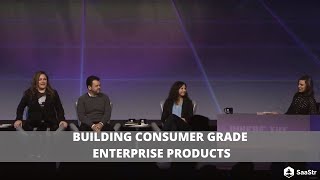
In a SaaStr Software Community panel moderated by Sierra Peter, senior leaders from Box, Google Maps, and Crunchbase discuss what it means to build consumer‑grade products for enterprise customers. The conversation defines consumer‑grade as a user‑centric focus that delivers a seamless, mobile‑first experience without sacrificing security, and contrasts this with the traditional buyer‑centric, feature‑checklist mindset. Panelists share real‑world challenges and solutions: using consumer‑style onboarding, A/B testing, and growth experiments in B2B contexts; balancing the needs of administrators versus end‑users; leveraging both quantitative usage data and qualitative user research to drive product decisions; and aligning product, marketing, and growth teams. They explore pricing and business‑model choices—when to adopt freemium or bottom‑up approaches versus enterprise‑first models—based on scale, user base, and renewal considerations. Practical advice includes low‑cost tactics like monitoring social media, calling users directly, and prioritizing ruthlessly. The discussion emphasizes that consumerization is a lever for higher activation, retention, and renewal, but must be applied with an understanding of security, compliance, and the dual‑persona nature of enterprise software.
Chapters
Please welcome Envision Studio VP of Product Sierra Peter, Box Product Management Senior Director Bella Stepanova, Google Maps Design Director Craig Villamor, and Crunchbase Head of Marketing and Growth Shani Benzur.
[SPEAKING RUSSIAN] Hey guys.
Very excited to talk to you today about building consumer-grade products for the enterprise. We'll do a quick round of intros. So Bella is Senior Director of Product at Box. She founded Box's growth team as well as the product operations team. And before Box, she ran product and engineering teams building large-scale financial platforms for Accenture clients. Craig is— Craig's designed and led teams at enterprise and consumer companies, including Salesforce, eBay, and Google. As the chief design architect at Salesforce, he led the Lightning Experience, which was a redesign of all the company's core products. And he currently leads UX design for Google Maps. And, uh, Shanee is the head of marketing at Crunch— uh, marketing and growth at Crunchbase, leading, uh, innovative companies to connect with the people behind them and pursue new opportunities. Um, prior to that, she has 13 years of B2B and B2C experience in Silicon Valley, um, and has, uh, led marketing teams at, uh, Dropbox, Salesforce, and NVIDIA. Thank you guys for being here. So it's interesting because we are at a SaaS conference. So we're talking a lot about enterprise products, but our panel is on consumer. So this is something that we hear a lot. People say, oh, you got to be consumer-like in your product. So what does that mean to you guys? Maybe I'll start with you, Bella. What does consumer mean within the enterprise?
Yeah, absolutely.
So for me as a product manager, it means really thinking about the end user, really thinking about the user persona as opposed to thinking about the buyer and sort of the checklist of features that you have, which is also absolutely necessary, but thinking about the value that you bring to the end user, the experience that you deliver. And those experiences have a very different baseline in a consumer space. We need to think about how do users use your product every day at work. They should be able to use it on a mobile device or any other device versus desktop. They shouldn't have to worry about VPN. They should trust the security that the product has without sacrificing the user experience. So really thinking through the value that you deliver and how's your product a smart product that really helps users get their work done versus getting on their way.
Cool.
Craig?
Yeah, I would say consumerization of enterprise is sort of a shortcut way of saying build interfaces that don't suck. I think that there's a lot of hidden history in enterprise software with UIs that people don't exactly enjoy using. And so the way that I've seen it referenced is really kind of the shorthand of like, hey, Facebook is doing something interesting over there. Why can't we do that here in the enterprise space? And sort of what's stopping us from that? And so I think fundamentally it's about, if you look to the consumer software space, you really can't succeed unless you have a great experience. And so that acts as a form of, of inspiration. I think the other thing that's really important about the consumer approach is a really intensive focus on the user themselves. And one of the challenges with enterprise software is there's a lot of face time, and there's a lot of time spent on the customer, typically a little less spent with the users. And so I think that's also the aspirational aspect of consumer.
Cool.
Chenille? Plus one to what they said. And the only thing I would add is that I also think about consumer as the way somebody purchases your product. So if I as an individual can go buy your product, then I am a consumer, even if your product is maybe a quote-unquote enterprise. Whereas some other products, someone else buys on my behalf and then tells me I need to use it. And in terms of consumerization, I want that person to choose products that will be easy for me to use and make me actually want to use it versus being shelfware.
So Bella, you mentioned things like VPN and security and mobile. Are those requirements to being a consumer-like product?
To me, I think they are. I think you have to think about, depending on the use case that you're trying to solve, you have to think about what the experience is like. And just Greg said, hey, the experience cannot suck, right? And it's not just about what the interface looks like. It's how to actually use that product. If something is happening, my other coworkers are doing, am I notified about that? Can I go home and complete my work in a secure way that B2B requires, but in a very streamlined and easy way from a user point of view? So I think that is absolutely a requirement. Otherwise, it breaks the user experience.
What's, um, so thinking about Thinking about kind of like the incentivization for companies to build consumer products, like, so we've talked about what consumer-driven products are. Why, why is this important to companies? Like, why should enterprise companies be thinking about this?
Uh, in terms of building, building software that's, that's consumer-like? Um, I think the, the most straightforward answer is renewals, right? So if you have a SaaS business, your, your survival depends on renewals. and creating a good experience is really crucial to that, right? So if someone buys your software and then they find that most of the licenses that they bought are not being utilized, or that the teams are not happy with that, then you're going to suffer in terms of renewal. Um, you know, a lot of the— and I think a lot of the challenges end up being that as you get really close to the customer problems and really understanding your customer's business, you can feel very confident in the path that you're taking, but it's really easy to sort of ignore the person who's actually going to be using the software directly. And while you can sort of succeed in the short term, in the long term, that's going to come back to bite you in the form of less renewal.
I 100% agree with that. I think also when it comes to renewal or when it comes to IT leaders looking at their budget, the easiest thing to do is cut the product that's not being used. And we actually see customers ask us a lot around, hey, what is my active usage look like? And that matters now in a B2B just as much in the B2C, because if the active usage is not there, you're the easiest product to get rid of from your architecture. It's not used, it's not needed, that means it doesn't bring any value. So I think value being kind of more equated to active use is very much of a trend today.
Yeah, I think What I saw— so from the Dropbox perspective, what you see from a consumerization of an enterprise product is you have that expand and then land. So everybody loved using Dropbox, and then they brought it into their office, and then it was super easy to tell the IT person, hey, 9 out of 10 of us are using this, why don't you just buy it? And then you could actually have admin controls. So it made a lot of sense in that, in that world. And then on the Crunchbase side of things, we have— we see like salespeople are using Crunchbase Pro, our, our individual product. And part of the time the salespeople don't want other people know they're using it because it's a way that they could get a leg up on the other salespeople on the team. The other part of the time they're more collaborative and they want their sales ops person to bring in the more enterprise product so that everybody on the team can be benefiting from it. So it's, it's part of that, right? So I want people to use it. People want to use it cuz it makes them better at their job. And I just don't know if I've ever met somebody who was like, you know what I love? This super complex tool that I have at work that I could never use in my personal life. And I just wish I had more of that.
Yeah, for sure.
So you guys are all innovators in, in very unique ways in this area. So Bella, you founded the growth team. I was at Box with you when, when you were going through that. Craig, as when you were the chief design dude at Salesforce, you were leading Salesforce One and pulling together like all of these different teams. And, and Shani, you know, you've been at Dropbox and other companies that are, you know, kind of growing in these areas. I'd love to hear from each of you. What challenges did you face in sort of like pioneering, you know, these pioneering these areas? Did you, um, you know, did you have trouble getting funding? Did you guys, you know, how did these things become important at these companies? Um, let's start with Shanique.
So I think using— so I've worked at NVIDIA, which sold through the channel, and Dropbox, which was self-serve and direct sales, and now Crunchbase, which is both as well. And I think for a lot of people, their fear about consumerizing is whether or not the customers will trust them enough to to buy it. And that was really the big concern at Dropbox was, yeah, sure, we have a lot of individuals who are using Dropbox, but is their CIO going to trust us enough to bring us in? And what we saw was the CIO wants to bring in whatever the heck is going to actually get used. So that was an easy sell there. And on the CrunchBase side, it's more about how do we build the thing that solves the problem that people need? And how do we build it in a way that they are gonna wanna do it? And if we build it super complicated, they're not going to do it, and then it doesn't matter how great the feature set is. So really the consumerization came down to, are we actually solving the problem better, and are we making it super easy for someone to buy it and renew it? Great.
Yeah, so I think, let's see, if I look at Salesforce One was a project that started, I guess it was around 2008-ish, I think. Somewhere around the time that the iPad came out. And it's kind of a cliché story in that, hey, we need to know what Salesforce looks like on the phone. And that was really what that project was about. How do we get the functionality of Salesforce out there in the field and on the phone? But there was sort of a bit of an ulterior motive there too, which is that that would represent the most modern experience that Salesforce provided, which would then create sort of demand for, demand for a better experience in the core product, which really represented the Lightning Experience effort. And so I think it was, you know, the big challenges there were initially like, where do we start? Salesforce is this gigantic product that has really, really deep functionality. Do we have a place where we can start? And the thing that was great about the phone was that afforded us the ability to say there are 100 things we're not going to do, and here are 10 things that we are going to do. And so we broke it down into a very basic set of functionality and then used that momentum to sort of bring us towards really our core product, which was the desktop product. So I think it was, it was a matter of really needing to build momentum through smaller proof points and then creating that demand that would then carry the organization through to say this is really important. And really coming down to our customers saying, I love the experience on the phone, why isn't the desktop more like the phone? And then letting that sort of carry it through.
We had a really fun journey, uh, with building the growth team at Box. I think our journey started by asking the question of how does our product grow? And it's very clear in the B2B business from a sales point of view how it grows, but if you look at it from a user and a product point of view, asking that question might not be so trivial, especially in a B2B space. So having a look at, hey, if our user activity is at point X, will it— how will it get to 10x? How will it get to 20x? Does it matter? Where do we want to be? Where will it be if we don't do anything additional on a product side and only focus on how we do sales and the way we deliver products today? So really looking into where we are today, what is the baseline, what does growth mean means for us, looking at what is our use cases. Is it daily use case, weekly use case, or monthly use case? And that's kind of where our conversation started, to really understand like, hey, where are we going to be 2 years from now if we go on the same trajectory that we do? And do we want to be there or not? And of course, like any other company in Silicon Valley, as soon as you see the numbers, your first question is how I'm going to 10x those numbers. And so we started having a conversation around could we use some of the consumer best practices in order to drive that number and drive the stickiness of the product, which means driving user retention. The first struggle that we had was, can we even do A/B testing in a B2B space? I've talked to a lot of other people who have, and it has very different rules and some is a little bit more of an uncharted territory, I would say. Can we email our users? What's our policy around email notifications? Are these our users as such, or is it customer users and only IT should be able to talk to them. If you run an A/B test, do you tell IT users about that, or do you not? Does it actually compromise the A/B test? So going through the journey of figuring all of those things out iteratively, talking to our customers about it, and how are we going to think about it was one challenge. And of course, the other challenge whenever you start any new team is you have very few resources, and you have to go really fast to prove your wins and that you could do the wins. And that whatever we use from a consumer best practices from product development can actually move the metric in a B2B space. And so how do you find those quick wins and thinking through where can we start? Maybe I'll give one example of where we started, which works really well as well if you talk to growth teams on a consumer side as well. Your login experiences and your onboarding experiences. If you have a look at the retention curve for Hey, where do I lose my users in their journey? You will find that for most products, including B2B products— assuming it's the same in your environment as well— you lose your users in the first couple of weeks. And so how do you really drive that onboarding experience? How do you bring them to the aha moment? And how do you get users to experience that value was a really interesting challenge. And I think there's a lot of similarities in B2B with the consumer space in that.
So we have a lot of founders and CEOs in the audience. Does anyone have any insight? Like, what can people— what can people take? Like, if someone says, you know what, I want to get more consumer sensibility, is there like a first hire or a first initiative that people can think about? How does someone— how does someone even start with consumers?
[Speaker:JASON M. LEMKIN] I think there are a lot of really easy things you can do. If you already have a product, you can see if people are talking about you on social media. You don't always have to spend thousands of dollars on user research. You can. That's good too. But Twitter is pretty much free. And people are really honest with their opinions, especially their constructive criticism. So it's a great place to start. And you don't necessarily need somebody who's a marketer or social media expert. You can just run that search. Search right now. And I think a lot of times when you're early on in the company, you, you try to think like, haters gonna hate. But sometimes haters want to help, and there's value in looking at that constructive criticism and taking, you know, a real look back inside at the product to say whether or not they're right. I think the, the other thing is you can just get on the phone with customers. I mean, we do that all the time where we will just randomly select people based off of behaviors that they've had in product and give them a call. Like, why did people drop out of our free trial? Let's call them and ask them. And 9 times out of 10, they're super eager because they're just honored to be asked. People are happy to share their opinion. So it doesn't have to be complex. It doesn't have to be heavy. And yes, it's not statistically significant to do an interview with 20 people, but it does give you a good sense of where to start.
I think actually it's a really good point about just engaging with the customers that you have. Um, and I can remember working for a startup, and our customer support rep was probably one of our most valuable sources for information about the challenges with the product. And, uh, he had a definite knack for sort of turning those negative situations around to positive, because as you point out, people want to be listened to, and they want to help. They've invested in the product, and they want it to be better. Whether they've put that money down or whether their employers put that money down, they have to spend a lot of time with it, right? So they're very eager to do so. I think the other thing too is to take, you know, find your champions in terms of either the customers that you're selling to or the employees inside of that organization and leverage those folks to find other folks inside of the organization that you can, you know, talk to or you can observe using the product. I would say the biggest piece of advice I have is that you should know the users as well as you know the customers. And if that's your focus, then you'll be in a much, much better spot in terms of addressing the needs of your customers and your users.
I 100% agree with that. I think the key thing is really to understand where is that perceived value that users are getting, and what is that friction that makes them drop out of the experience. Actually, one of the first things we did, kind of similar to maybe Twitter idea, is Sending out a survey to new users, so specifically taking a segment of users who experience the product for the first time. What is the perceived value? Do they like the product for X or Y? And then where do they really think the differentiator is for which makes them continue to stay with the product? Or also, what is the different frictions? And sometimes depending on a product they've used in the past, or they're actually experiencing their customer with the other products they use, at the same time for work could also impact that. And I think calling up the customers and asking them, hey, can I do a group study with a few of your customers, with a few of your users, or even observing the users. And if you explain why, usually customers always say yes because ultimately you're trying to drive more value for them.
Yeah, one thing to add on top of that is when you're only looking at the data, you can have one story, but then when you lay on top of that what the customers saying you can get a completely different story. So within our product, there was this one paywall that pretty much was a section of a profile was grayed out with a lock. And so we were like, we were seeing that a lot of upsells were coming from that lock. So we're like, well, the lock is the thing, and then that means what's behind the lock is why people want to pay us money. And what we found out was no, there was just a big chunk of the page that was grayed out, and so they were gonna click on whatever was there. They had no idea what was on the other side of it, and We were just inferring that like what people want is charts because charts are what are grayed out. And the reality is they were just like, ooh, a mystery, what's behind this lock? I want to see.
That is so true. The first time we built the first onboarding experience, it was very similar. We actually looked at a bunch of quantitative data which will tell you what's happening. And what we saw is it was a heavy correlation with like if users do these 3 actions, kind of very similar to chart, if they share, if they upload a file, then they will be magically retained. And so we tried to do that. We gamified it. It was beautiful design, looked very consumer-like. And guess what? Just telling people, do these 3 actions, didn't really do anything. And when we did the qualitative research on that, what we've heard from users is like, hey, I understand how to upload a file. I just don't know what kind of content to even start with. And so what we built for quite a few weeks, instead we built something very scrappy for one week that just told you to start with this particular use case. And that moved the metrics right away. So it's really fascinating to see that, and I think you need to really look at both your quantitative data and instrument the product, as well as the qualitative data to really understand why the behavior is the way it is.
Yeah, I think it's— qualitative data is typically pretty dramatically undervalued, and I think the magic of qualitative data— sorry, qualitative data in combination with quantitative data is that you just get so much more— there's so much signal in it, right? And I've seen just observation of 1 or 2 people basically shortcut conversations by like weeks or sometimes months, right? And so I think it's super important to kind of think of this again as an investment in terms of renewals, right? How do I get— what is the shortest path for me to understand how to get to deep user value? And some of that is going to not be from just looking at the metrics, but it's going to be about actually observing 2 or 3 or 4 folks as they use your product.
Yeah, and speaking of renewals, we sometimes even share that data because you get really useful data, and we share them with the technology leaders in that company. They'll be like, oh my god, we're loving this, that you're very transparent about what you're doing, you're involving us, so you're also making champions along the way, which is super helpful.
So one thing that Craig, you mentioned a little bit about earlier is prioritization, you know, getting laser-focused on like the 2 or 3 actions you need to take. So just to get kind of going into the age-old question, how do you balance the end-user consumer priorities with the admin priorities? And you're thinking about a renewal, you got your sales team that's like, hey, you know, our $3 million ARR customer, you know, wants feature A, B, and C. It's just going to add a bunch of bells and whistles. And then you're advocating for this kind of consumer-grade experience. Does anyone have any stories you'd like to share about that?
Someone else. Yeah? Hi. So let me think about that. It's always tough. There's a huge sort of balancing act between what the company wants, what the administrator wants. What the business wants, or the developer wants, and what the end user wants. And those things are all in conflict with each other a lot, right? Sometimes they're not. I think some of the things that tend to work well there in terms of, you know, my experience at Salesforce, one of them is that we developed really deep relationships with our MVPs and our administrators, and helped them understand what their user needs were. And so it's almost like there's kind of a back and forth education there. Because we know that if they're able to create an installation that is successful with their users, they're going to stick with us. I think the other is, you know, just making sure that you— making sure that you get really close to exactly what that user need is by whatever means you can. As I said before, sort of through— whether that's through customer service or whether that's through your MVPs, but getting down to the sort of the brass tacks of where the value is.
There's probably like a Maslow's hierarchy of needs, right? Like if security is at risk, number one. If that's for the admins, great. If it's for the end users, great, let's do that. I think the, I almost think about the admins and the end users on the same level, they just have different needs, and so it's kind of like you're creating a product that has two customers within the same company. And sometimes it's the same thing, but if you, if you have an admin that's controlling other users but isn't doing the action that the users are doing, then it's just a matter of what, what do those admins have to have in order to be successful? And you'll never have everything for all of them, I'm assuming. Maybe you have figured out how to have everything for all of them.
Good for you.
Or you get some of the stuff that helps them just thrive, and then maybe the other group only gets stuff that they survive, but you kind of keep teetering back and forth. Right? You give one here, it should not be at the cost of the end user. You give something to end user, it should not be at the cost of the admin. But either way, you know, in a startup world, you're just trying to get your MVP out there and make sure that the customers can basically do what they need to, and then you start optimizing after that. If you do have a customer that has mega bucks, okay, throw them a couple custom features. But ideally, you're also looking at what the long tail of your portfolio is and thinking about, can any of these features also benefit my other customers.
Yeah, I would add to that probably also when you're building for the admin and the features that you're building, make sure you don't compromise the user experience along the way. So especially when it comes to security, really think about both personas. So it's not necessarily that you're always building for one persona or the other. I think in whatever you're building and whatever your company priorities are at a time, really make sure that when you're building security for security, when you're building the admin features, that you're keeping the end user in mind and you're not sacrificing their experience. Because ultimately, if you sacrifice the experience, they won't use the product anymore, no matter how secure it is. So thinking of both personas at all times is really important.
So, uh, Bella, you're primarily a product person. Shani, you're primarily a marketing person. You guys either now or at one point have had growth in your job titles. So we'd love to hear your perspective on in this world, where does product end and marketing begin, or where does marketing begin and product begin? How have you guys kind of navigated that relationship with companies?
I think this is a spicy question.
Yeah, got to get some— got to get one spicy question.
This is spicy and I'm going to I'm gonna take not an easy way out, but maybe like the more marketing-y, messaging-y way out. I think there's like a triangulation. I think there are 3 magnetic ends that you're trying to find a happy medium between. One part is what does your customer want? And then that really comes from your customer-facing teams, which are likely gonna be customer support and marketing. They're either researching your customers or talking directly to your customers. So they have one really important important data point. Then you have what your vision for what the future could look like from a product perspective, and that's typically coming from the product team or a specific executive who's thinking like, this isn't what the world looks like today, but it should tomorrow. And then there's the team on the engineering, the product, and the design side that can actually tell you, here's what we're capable of doing with the people and the tools that we have available to us. And you try to find your way between all three of those to come up with what a roadmap look like, where you're combining, hey, here's what our customers want and need and who they are. Here's what we're capable of building, and here's where we want to go. And you, you kind of find your way between all three of those. And if you lost one of them, like if product was only product and vision, you might end up in the, in the world where you're like, we built this thing that we think is so awesome, and then this group over here is like, cool, are you gonna pay for it? Because none of our people are gonna pay for it. Like similarly, if you only If you only build what customers need, what you will likely end up having is a solution that's only relevant for today, and tomorrow will be outdated or somebody will already beat you. So you really do need to have all three.
I actually agree with that. I think actually the key to success is not to say this is your world, this is my world, but partner together to bring that value to the users. When we were building the Growth Team at Box, the first thing we did, which was different I guess from a consumer a little bit, in a sense that we built, we took somebody from customer success and actually gave a person a seat at the table together with the product team, and we work together to bring things to the market. So for example, A/B testing, we've talked about earlier in the B2B space. How do we do it? How do we make sure customers are comfortable with it? What are the different parameters? And there is no way that in the B2B space that the product manager can do that on their own. So actually, I think the key is to say growth is one thing for the company, and how do we partner together to deliver that? Versus just to say, this is your swim lane, this is my swim lane, don't come into my world. I don't think that will be a recipe for success.
Yeah, one thing to add on that. So what we're figuring out right now at Crunchbase is which surfaces should marketing be coming up with growth experiments for, and which surfaces should the product team be coming up with growth experiments. And really at this point, we're like, whatever. If you have a growth experiment, put it on the board and we'll prioritize it based off of potential impact, and then we'll tile it in. So there we're starting to see some obvious things like, okay, maybe our homepage is marketing-owned, but even the homepage for a product like Crunchbase where you're doing your search in the, in the product, it's like, well, is product— is the homepage product or is it marketing? I'm not sure. So we just kind of said blur it out until we can't blur it out anymore.
Yeah, and I think the question is how do we get the most growth for the company? And then whichever team is set up for success, and it might be different in different companies, whichever team is set up for success and has the tools, let's partner together and bring more stuff together to the users and bring more value rather than sort of find that very clear organizational line.
So let's not leave out our sales folks. So let's talk pricing and business model for a minute. A lot of companies when they start, they go, should I do like freemium? Should I do like prosumer, consumer, full enterprise model. How do you know— what are some of the signals that would let you know whether you start with a consumer model and kind of do that bottoms-up business, like bottoms-up pricing, versus, you know, starting with enterprise and having a consumer, you know, aspect of the product?
I'm gonna let My product and marketing people answer that.
It's a scale question. If you have a lot of individuals who can buy and use your product, then a self-serve or a B2C play probably makes sense, and a freemium play will really open up the top of your funnel. If your product is more account-based, like you— there are only certain companies that this this could really work for, then maybe freemium— building the infrastructure around a freemium model isn't necessary. And really what you need are rockstar salespeople who can help those specific companies understand how this product can help them. So it's kind of like a question of, is your product suited for the masses, or is your product only relevant for a select number of companies?
I think it also depends maybe the user base that you're serving, from what type of companies and what type of profile, because I think if you're serving really large enterprises It might be unlikely there in specific verticals like government or financial services that they would allow the freemium to be used in their enterprise. So you might likely have to build trials or allow them to use a product for a while. So I think that layer is also quite interesting. But also like from a B2B pricing point of view, you see another trend today where people are charging for the more horizontal use cases, the more for the masses, where people are starting to use— charge based on on usage rather than just a license. And I think that's very interesting in a lot of the emerging products because then it actually puts that prioritization question upside down a little bit. Because if your pricing is based on usage, then it's really, really, really important to look at the user. So you actually, by DNA, creating a very different product and a different type of company.
Kind of building on that question, is there ever a time where it is appropriate to use consumer patterns in the enterprise?
Yeah, I'd say, you know, the, the design process is pretty generally applicable across enterprise and consumer, but there are specific things that are focus of consumer that may not be appropriate for enterprise. You know, if you think about a lot of the goal of consumer software is to make to simplify the interface and to reduce friction. And there certainly are use cases where friction, a little bit of friction is probably not a bad thing when there, when lots of money or lives might be at stake. And so I think that's where, that's where you kind of really need to take a step back and say, how far do we want to go? I think the other thing is that it can be easy to get into a trap of like, hey, more people coming in and clicking on stuff inside of our app is better, right? This is what we want. We want to drive lots of engagement. But that may not be good for the business. That may not be good for the individual. You know, you probably don't want to create someone who's addicted to your enterprise. I don't know if anybody's created an addictive enterprise app yet. I'm guessing probably not. Slack is maybe the closest. But that's not necessarily a great place to be either, right? So it's about what's the value that you're delivering to the business and to the individual, and so some of those metrics need to be taken with a little bit of a grain of salt as well.
Actually, we have a great example at Box of that addiction sort of, and how do you think about that. At last BoxWorks, we announced that we built what we call Feed. Sierra is pretty familiar with that, and that's basically a way for us to say, hey, you don't have to go into each folder to figure out what your coworker has updated. All the work that's happening, we'll surface it to you using machine learning, and So it will be the best of what you need to know, and we can kind of predict that. The goal is not for you every time you're on a subway or in a car to like list through, and maybe on the red light, list through and look what, what's happening in the world. The goal is for you to be up to date with your work. So if there are no further updates, we shouldn't artificially keep doing that, right? So the goal is not to get you addicted to the software, but actually make you more effective and make the software smart from that point of view.
Yeah, it makes me think of like when you're on YouTube or Netflix and there's the auto-roll, which is like, hey, you finished that document, would you like to read this one? Here it goes. Which might be a little bit much.
Absolutely, and there are many other practices I think that way too, from a notifications point of view. If you look at the consumer companies, they will kind of straddle that needle around how much can we notify you, how much can we push, how much can we email you. In some companies, you just simply cannot email your customers directly to end users. There's phishing. There's so many different considerations. They might have certain policies. So if you're leading them, deep linking them somewhere in a product, that might not be OK either. You have to think about how often you have to release to the customers. Because in, let's say, pharmaceuticals, you will have sandboxes where they have to make sure they validate the software in order to push it to the users. Because there's all kinds of compliance and policies involved with that. And very similar for A/B testing. So I think when you're in a B2B world, you kind of have to— take the consumer best practices and put a spin on it, like a B2B spin, to really make sure that you're thinking about the regulations, the custom policies that they might have, and what actually brings more value to your users and more value to your customers versus just doing it for the sake of sort of best practices of consumer.
Cool.
Um, so, uh, final question for you guys. What is one What's one thing that everybody in this room can do after they leave here to, you know, can be very small, very granular, but to, you know, to tell if their product is moving that direction? And I'll give an example. Craig, when we worked at Salesforce, I was in like a divi— I was like a head of design for a division at Salesforce and you were the gatekeeper. And I had some, you know, I was trying to get some, all these actions into the app. For my own agenda. And Craig, you're like, you can only have 3 actions on this page. And so you've got to pick— or on this view. So you've got to pick which one. Are there any just things that might be very obvious to you, but what's a recommendation just to improve the experience for anyone in this room that you guys have?
Well, I feel kind of bad that I was a gatekeeper. I didn't mean to do that. No, I think there's a couple things. One of them is, you know, I think something that Salesforce is incredibly good at is they ruthlessly prioritize. And I think you can extend that beyond just like, hey, which features are we going to build, down to exactly what options are we going to expose to a user. What are the most important things? And so I think it's kind of related to what you were just referencing, which is be ruthless about your prioritization. And we'd always do these kind of bubble sorts. Of which is more important, this or this, this or this, this or this, and kind of go through that exercise, which was incredibly valuable. The other one— and I'll sound a little bit like a broken record— which is if you can figure out a way to get yourself and your product teams in front of users to watch them use your product, that is probably the number one thing you can do to make your product better.
I would ask people who didn't buy you why they chose your competitor. And that might give you some signal on whether it's a feature issue or a purchase flow issue or a consideration issue. And I think in the question of whether to consumerize or not to consumerize, it would be important not to just get caught up in how maybe sexy it seems and really understand, is this the reason why people are not handing over their credit card or opening up a PO, or is it something else? Because if your issue is acquisition of new users, that's the thing you need to figure out. If your issue is that people are not renewing after year 1 or month 1, then I would want to know why are they not doing that and see if consumerization is the answer to that. You don't need to spend time on something that's a nice-to-have. You should only spend time on something that is the game changer for you.
Yeah, I would echo that, and I love data, so I might be slightly biased on on that one, but I think I would even take it a step before that. Understand what your issue is. Is it the acquisition of the users? Is it retention of the users? And I think try to get those on a quantitative, if you do have the infrastructure for that, but at least from a qualitative point of view. Yes, why does the user churn? So maybe they, from a buyer point of view, maybe they bought a different product. But also from a user point of view, maybe they bought your product, but why did they stop using your product? Or why didn't they engage with your product to begin with? And on the flip side, what is that value of the users that they perceived? What is that aha moment for which they're like, yes, this product really does help me? And understanding those two, I think, are very key to going anywhere further from a growth point of view.
Shanee, Greg, Bella, thank you so much for sharing your insight on the topic.
Thank you, Sarah.
Thanks for having us.
More from Jason

Why Your Next Hire Should Report to an AI, Tragedy Apps, and Too Many AI SDRs? | The Agents #004

Our Agents Drove Our Salesforce Bill Up 80%, Marketo Hates Agents, and We Stealth-Churned Off Notion




Managing 20+ AI Agents: Lazy Agents, Our $500K AI Bill, Stealth Churn & the Death of 60% Solutions




