Building Great SaaS Companies Everywhere with SaaStr and Point Nine Capital
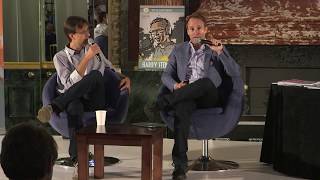
Jason Lemkin and Christoph Janz compare SaaS growth benchmarks across company stages: 100% YoY growth at $1M ARR is solid, but Okta and Shopify hit 60-75% at hundreds of millions. They debate whether Bay Area location still matters, concluding capital isn't the draw anymore, but talent, customers, and peer ecosystem are. Enterprise SaaS needs San Francisco; SMB models can scale anywhere.
Chapters
Christoph and I will sit down for a minute. I just wanted to chat about a couple things. But, you know, we probably met— this is— so Bessemer, if you haven't seen this, go to Bessemer Venture Partners website. They have something called the Cloud Index, and they look at where all the public cloud companies have gone. And I think this starts around 2013, and cloud stocks and SaaS stocks started to do well. And then in February 2016, there is that, that drop. You remember that?
I do.
It seemed like the world was over.
That was the day of the SaaStr Conference.
It was, it was. Every VC said the unicorns were dead, the world was over, right?
If it was because of you, or I don't know.
So, but literally in February 26th, 2016, people thought SaaS was, was, is gonna be tough. And that lasted almost 3 weeks, that downturn, didn't it? Something like that? And then what happened since then?
Well, first of all, like in so many pitch decks that we're getting, there's no description of what line means what, but I'll guess.
That's all right. It works well for YC.
It doesn't matter.
Exactly.
But it goes up and to the right, so it must be good. I am assuming that the blue one is the cloud index and below is NASDAQ.
That's just my fault for making the slides. Yeah, the top is SaaS companies.
And then it's NASDAQ.
NASDAQ.
Dow, whatever. Dow Jones or something.
Yeah, the top one's the cloud.
Yeah, I mean, I think it—
so what is that, 550% growth in the last 5 years?
Yeah, I think that is remarkable. And I think it's even like, even if you look at the multiples, yes, it doesn't look quite like that, but it doesn't look quite like this, but it's also clear that it's a pretty much never-seen-before all-time high.
So let me ask you a question. We had the speaker dinner last night, and one speaker who will remain nameless— it's all off the record— Uh, but, but I suspect he may bring it up again. He said he thought the markets were overvalued from a, from a public company. What do you think? Is it overvalued? And where are we? Should people prepare for a huge crash next week? Is, uh, are the good days going to be over soon?
Super hard to predict. I don't even dare to come up with a prediction. I think it's clearly, um, highly valued in comparison to the past.
Yes.
Is it going to be expensive compared to the future? Hard to say. I mean, history probably tells us that there is going to be a reversion to the mean unless the world has somehow changed. The world has probably changed to a certain extent, but at the same time, like, this, this time everything is different is also what people use to justify every bubble.
I think so. I'll tell you the funny— just because it's all just between us here in the room— when my last company was acquired by Adobe in 2011, I was there through 2012, and Adobe's stock has since gone from I think 28 to almost 300. So it was really great, great idea for me to leave. But what was interesting, Adobe's been one of the most successful cloud stocks. I can tell you in 2011, 2012, no one there had any idea. Nobody knew. So, and I think what we didn't, and then I realized why didn't we know? Why didn't we know? And I think what we didn't realize, which we'll chat about in a couple slides, is just how forceful it would be when businesses went to We can call it the cloud now, when they went to SaaS. And we all knew 4 or 5 years ago we were in the second inning, but we didn't know what second inning meant, and we didn't know how big these innings were. And I think we didn't realize that these markets for these products would grow 100 or even 1,000x, right? That's what's changing. And I don't know that that trend has— I don't know that we're even that far into that trend.
I mean, I'm obviously super bullish about the future of SaaS for all kinds of reasons. I think just, I mean, I'm not that interested in like the stock prices, so I have no idea if they will go up or down. Maybe they will. I think they can correct by 30 or 50% anytime, right? It's like, it's a random walk down, maybe not, maybe not Sand Hill Road but Wall Street. And so, but I think that's also not what we really care about. Like, we really care much more about like the really long-term potential to build great SaaS businesses. And I think if you talk about it, we'll probably agree that, um, that is far from over.
It is far from— this next slide, I think I just had a couple I put together, but this was a good one, uh, uh, that Ari had the other day. Uh, there's 25 SaaS companies that are public— that are not just that are public, that are up 40% this year. So when we did that SaaStr annual in 20 The first one was in 2015. Aaron Levie came. He was the warm-up speaker. It was one week after Box had IPO'd, the roadshow. He was exhausted. I asked him in that, you can see it on YouTube, what does Wall Street think of SaaS? How many folks get it? He's like, well, they're learning. Like, a few folks are getting there. Right? That was the first IPO. Now we've had a dozen IPO's this year. The ones that IPO'd since, all the ones that were worth a billion, they're all worth $4 billion. All the New Relics and the Boxes that were billion-dollar companies. What's Zendesk? $4 billion, right? 6. 6. It was 4. HubSpot was like almost 5 the last time I looked. And in a way, you blink an eye and that $1 billion— Zendesk seemed crazy to a billion. Now it's 6, right? I'm sure you've held on to all your shares, so you've benefited from the subsequent appreciation. But, you know, total— what's that?
Total?
Total. Do you have any idea how many IPOs can we get out? How many can everyone here IPO? Do you think we can have 100 or 200 SaaS companies IPO?
I mean, it depends on the timescale, I would say, right? I mean, I don't—
everyone here is committed for 10 to 20 years, so that's okay.
I mean, I think would be statistically quite unlikely that all of you in the room will eventually have a billion-dollar IPO. So sorry, but I think some, some will. And yeah, like, how many more billion-dollar SaaS unicorns can we have? I think depends on many factors, like depends on like what— where do the tens if not hundreds of billions of market cap that are currently still captured in SAP and Oracle, IBM, like what is going to happen to them? Will, will some startups be able to disrupt these markets, or will this— where will this on-premise software spend move? Because I think it can't stay there forever.
It's true, it is true. Yeah, it's pretty crazy.
And then I think just to add to that, you have the existing software spend, which I think will eventually move over to the cloud. And maybe while doing so, maybe some of that will be compressed. But at the same time, with things like automation and AI, I think the market will also expand because software will just do more things which today are done by humans. So the, the value creation done by software will, will increase.
I think I, I, I, I, I leave the quantitative math to folks like you and Tomas Tungus, but my gut is there's another 100 SaaS IPOs to come. We'll hear from Meltwater after this, we'll hear from Datadog today, we'll hear from folks that what— that can IPO whenever they want, uh, and there's got to be 100 of them. There's got to be 100 companies. We may be at 14 today that can IPO when they want, whether they'll be worth 400 million or 4 billion or 40 billion. But Adyen, Adyen, how do we pronounce it? Yeah, Adyen, Adyen, that IPO'd $20 billion market cap.
Adyen, yes.
Yeah, $20 billion, right? Yeah, yeah, yeah, pretty great. So one question on this, and then let's talk just for a couple minutes because we could do it forever about coming to San Francisco in 2018. But a quick question, the, the, the, we saw the market's crazy. We saw that Zendesk, which was a billion a couple years ago, is $6 billion. All the, all of them But my view is that the bar has also gone up. This is, this is a bit of a— as the cloud has grown and look at these, Okta, which had a crazy IPO. I think they're worth $6 billion today too, but at $83 million in revenue. So I'm getting already tired. What's that? Almost $400 million run rate, but they're growing 60% a year. Shopify, which is worth like $14, $15 billion, which is crazy, but they're growing 75%. And even good old Atlassian, and we all use Atlassian, and they're at a billion dollar run rate growing 40%. So let me ask you a mean question. If I'm a SaaS founder at $1 million ARR growing 100% year over year, which is probably where I was at $1 million, is that good enough today? Can I— does this raise the bar on me? What— what— how fast do I have to be growing if I want to be the next Okta or Shopify?
I think that's good enough, although it's not quite on the famous like triple, twice, double, three times.
Do I have to be on the triple, quadruple, double to the triple, triple, double, double? What do you think?
I think for Some investors you, you have to, those that are really just using a framework like this. But I think if you're at a million ARR and you're doubling and it's a good team and a great opportunity, then I think you'll be able to raise a Series A round. Be able to raise, I think so.
So don't let these numbers— and they intimidate me. Don't let them intimidate you, these growth rates.
Totally. I mean, and it's— I mean, growth rates tend to go down over time. So where do you have to start?
What about Shopify?
If you want to end with 75% year-over-year while you're at hundreds of millions? So yeah, I mean, I think there is a select small number of SaaS companies that are just growing through the roof. And I think we're seeing like winner-takes-it-all dynamics, which we've seen in consumer internet 20 years ago with Amazon and eBay. And I think we're seeing some of this now with SaaS, that you just have a small number of winners that are pretty much unstoppable, and they just get outsized rewards and returns, and everybody knows them, and they get all the mindshare and word of mouth and so on. And that is maybe unfortunately what all VCs, at least later-stage VCs, are focused on. And you can't blame them because that's how their model works. But all the SaaS companies that are just a little bit below that but are still viable businesses growing fast, maybe not more than 100%, but still like 80% and, and can be very profitable businesses. Um, currently I think for them it's somewhat hard to raise because like for— yeah, yeah, but maybe that will change with different types of the private equity or different kind of asset classes because I think there will be like— let's put it that way, I think if you're saying that there will be $100 billion SaaS companies, for each one of them there will probably be 10 or 20 or more viable businesses that will be— will make tens of millions of revenues and, and millions in profits. So I know, I think it's good to have these incredible success stories as an aspirational goal, but it's, it's not like if you're not part of this cohort, like, the world is over.
Well, here's the funny paradox, and then I want to make sure we have time to do the next two, but Tomas Tunges did a meetup at our office like you did with Mathilde, and and he presented some data, and bless him for assembling the data because I just don't have time. But interesting, his point with the data was his view is that SaaS companies after $10 million ARR as a cohort, the good ones that are venture-backed, are actually growing more slowly than a few years ago because of competition in particular. Like, there's so many vendors, and yet, so on the one hand, there are forces that may pull your growth down. On the other hand, if you have these network effects around brand, especially brand, you can grow faster than ever. So I think it's tough as a founder because I think you have to drag the team to success up the hill. So you have to realize that there's going to be challenging quarters or years. And I think quietly as a CEO, quietly, and you can't stress your team out, you have to ask, should we be doing better? And maybe 5 years ago you didn't know. Like you didn't— should I— Box had an IPO, it worked. You didn't know, should I? The numbers were— but now you have to quietly say, look, am I doing 100% as good as I can? And that's maybe for most of us, that's pretty good. Or can I torture my team without killing them so that— because maybe there's more revenue than I think there is in 2018 than there was in 2012. That's my gut. I think there's more revenue that you can get. It's just harder than ever to get it, but there's more there, right?
And I mean, I think you actually tweeted about this tonight. Some— I don't know if you had any sleep.
Couple hours.
Yeah, but I think, I think, yeah, I think I saw a tweet from you. It's like the how fast you have to grow also depends on your competition, right?
It does.
If, if there are others who you think are outgrowing you, that's something obviously you should try to avoid. But if that's not the case, then maybe you shouldn't burn that extra whatever millions just to get the, the last couple of percent of growth, which obviously are the most expensive ones.
They are. Yeah, I remember when Tiago from TalkDesk did an event at our co-selling space, that was the first company, they went from 1 to 15 in 15 months. So that was the first company I was involved with that grew at that 1 to 15 in 15 months rate. But I'd forgotten for 2 years they had zero in revenue. I never would have survived for 2. So if you can keep making it happen and competition doesn't kill you, what matters is getting to that inflection point. So we will run out of time. I want to make sure because we got a little bit of a late start, but I want to chat about this one slide with you for a minute. And I got this a little bit wrong, so I apologize. I'll get this on the blog post and fix these columns. But I was trying to— how important is moving to the Bay Area in 2018? And you've been a strong proponent of it. I've worked with probably over 20 SaaS companies, many of whom are here today, that moved to the Bay Area at least in part. But I got a little burned out on the Bay Area this year myself. With churn and inflation. I got this chart a little bit wrong, but the turnover rate for employees and the cost of an employee is more than 2x in San Francisco than Paris. That's crazy, right? And rents are insane. Like, office rent, your employees in San Francisco are gonna live 4 to an apartment where maybe they'd have a nice, maybe even a house in other places. And people quit jobs more quickly in the Bay Area than ever. Like, they quit. If you can, if you can get someone to stay a year these days, a lay employee, sometimes you're lucky because they're going to go from Pipedrive to Stripe to whatever. And you just don't see the turnover here. And, and then the last interesting thing is I think there are finally more veterans here in Europe. But then let's talk about the tradeoffs. And at the dinner last night, we were talking with Zora and Anaplan, and both, both those you can, you can hear from Mark and Maria today, they're both saying their last— because they're veterans from SaaS— their last teams 3 or 4 years ago, their European teams were okay, but now they're great. There's veterans, right? But yet the Bay Area is better than ever, isn't it, by the same token?
I mean, I agree with all of the downsides that you have in the Bay Area, but I think there are probably like 20 reasons that make your life hard in the Bay Area, and there are also 20 reasons that make your life very hard in, in Europe. And it's also, it's a bit of a like the grass is greener on the other side thing, I think, because everybody complains about, uh, the, the issues where they are.
I think that is a very fair point.
Yeah, I think at the end of the day, I think there are unique advantages that you have in San Francisco that you just, at least for now, do not have here. At the same time, there are unique advantages that you have in a place like Paris or Berlin or Krakow or Barcelona or many European cities. And like my favorite model, and I know it comes with a big tax in terms of basically CEOs spending lots of time on planes, but my, one of my favorite models, maybe the favorite model, is really to combine both. Like Algolia, for example, which, which you know very well, they got to a certain stage build a fantastic culture and a magnet for engineering talent here where they can get the best engineers from Paris and beyond and, and keep them. And then they have like moved to San Francisco. One of the founders, which is ideal for this, so one, one founder stays here, takes care of the, the team here, and the, the other founder goes to San Francisco and builds the commercial team there. I think maybe that is even a better model compared to a native San Francisco startup. It would be like the first time in history that a European company actually has an advantage over a company out of San Francisco.
But two quick things on this chart, and then let's break so we can try and stay on track. But Barry approves, there's still many more veterans. If you need a VP of Sales, VP of Marketing, VP of Customer Success, The Boxes, the Twilios, the Zendesk, the New Relics, the AppDynamics. They're, they're spitting out veterans left and right, right? Because so many of these 100 companies that have gotten to the next level, they're changing over their management teams every couple of years, and that's creating hundreds of, of directors and VPs for you to hire. So I still think huge veteran, veterans. Capital is a weird one. How much better? Just quickly, because we're out of time. When we started working together, probably access to capital for startups was still 5 to 10x in the US over Europe? What's the gap today? Um, is it 2x? Is it 1.1x?
I, I can't really quantify it, but I know that access to capital is no longer a reason to move to the US. The capital is—
you said Mikkel from Zendesk, well, that was, that was a generation ago. He said you had to move for capital. Yeah, that's a big change, right?
Definitely not. And, um, both because there are more European funds, but also because funds from the US have become much more open to investing in Europe. So you don't have to move for the capital. Maybe it will help, but it's— that's not the reason for moving. I think talent and access to partners, customers, being close to the market, that, that is, that is the reason. Yeah.
And then the last one, partners and customers are still strong, but I think this last one we were talking about before is the peers.
Being—
it's, it's so great being here in Paris, and there's so many more great SaaS companies here. There's amazing ones here today. But that both peer pressure and access to peers you get being in San Francisco and walking down the street. I was walking down 4 times since we moved to our new house. I've bumped into Owen McCabe from Intercom. I mean, he's just there, right? I'm one block from the Algoli team. The people I bump into on the street and the peer pressure I feel even myself to do well is that combination I think drives you to excellence. That sometimes if you're, if you're the biggest fish in your pond, it's harder to get that same drive and that same access to people, isn't it?
Yeah, I agree. Like, I mean, maybe sometimes you can also go mad if you live in this echo chamber, right?
I am—
I'm going to have to leave it maybe to like get to like a different part of reality again. Again, I think it's, it's not, it's not binary, but I completely agree that the access to people who have done it before and have seen greatness, like have seen companies like Dropbox that went from zero to a billion in, in 10 years, or consumer companies like Pinterest and Airbnb and, and, and Snap and so on. Like, there aren't that many, if any, companies in, in Europe that have gone that path and are spitting out as many talent. So I think the ability to learn from these people, maybe hire some of them, um, that, that is really still what's, what makes the Bay Area unique.
All right, last one because we're out of time, and then we'll— then I definitely want to get the Meltwater story kicked off. But my My sort of— I'm trying to synthesize my learnings from the last 6 years. I think for Europe to US, and then just challenge me to tell you what you think. I think if you're going enterprise and you can, come to San Francisco. Don't go to New York. New York's— I love it, but come to San Francisco. There are so— if you need to hire someone that knows how to close $100K deals, million-dollar deals, $50K deals even, not only that you can hire a VP, but he or she can bring a team with them. They can go out and find you 10 or 20 enterprise reps. You have a huge weapon being in San Francisco. And if you're doing enterprise, more of the big deals, if you're in tech, are gonna be in— tech is still centered around there. But if you're SMB, if you're growth hacking, if you're doing processing lots of inexpensive inbound leads, $100 deals, $1,000 deals, I think the benefits are real, but maybe they're smaller. Maybe you can do an SMB, you can build a billion-dollar SaaS SMB company from anywhere today. That, that's my thinking. I think the advantages are fewer but still there. Any quick thoughts on SME versus enterprise on that?
I agree in the sense that the VP of Sales is like one reason for going to the Bay Area, which if you're an SMB maybe, maybe not quite as important. I think it's not the only like trigger that might want to lead you to go to the US. I think another one is like VP of marketing or great product management, or maybe in some cases even, even tech. So I think it depends on what exactly you're, you're doing and what the key talent is that you need for that company. Yeah, so let's say for a developer tool, for example, and maybe you don't need the VP of sales, but you still want to like eventually be in the tech community. But I think with Pipedrive, which you're an investor in, is a as far as I can tell from the outside, an incredible success story where most of the team I think is still in Tallinn, right? And they have people in New York, but they— and they are selling mostly to SMBs. So there is not only one playbook.
There isn't only one playbook. All right, Christoph, thanks for this.
More from Jason

Why Your Next Hire Should Report to an AI, Tragedy Apps, and Too Many AI SDRs? | The Agents #004

Our Agents Drove Our Salesforce Bill Up 80%, Marketo Hates Agents, and We Stealth-Churned Off Notion




Managing 20+ AI Agents: Lazy Agents, Our $500K AI Bill, Stealth Churn & the Death of 60% Solutions




