Building Out Your Marketing Function to Fuel Growth with ServiceMax CMO, Stacey Epstein
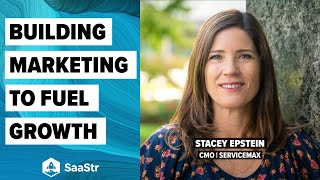
Stacey Epstein, who scaled SuccessFactors from $10M to $200M ARR, walks through building a marketing team from scratch. Hire a product marketer first to nail positioning, not a demand-gen person. For senior leaders, cultural fit and willingness to work closely with the CEO matter more than pedigree.
Chapters
Alright, while everyone is joining, please know that you can join our one-on-one networking as well. The message is in the chat. So you are able to join that as well, continue the conversation from today's session as well. Looks like we have several joining at once. Getting everyone settled and then we'll get started, Stacy.
All right, great. I'm ready.
All right, if you want to introduce yourselves, drop where you're dialing in or where you're calling in from today in the chat. Would love to see where you are. I know, I think it's about 4 AM in Australia. We've had a few fans join from there, so would love to hear where you are dialing in from as well. Introduce yourself, say hi. All right, I think we're ready to get started. Again, thank you so much for joining SAS to Scale today. These are the roundtable sessions today. Tomorrow we will have full breakouts and keynote sessions as well. Thank you so much for joining us. We are going to go through some housekeeping items right now. All right. You're all here. You have video if you choose to be on video. And you are able to unmute yourselves as well to ask questions. It is intended to be an interactive session. So if you have questions for Stacy, go ahead and, you know, say hello. Let us know what that is or drop it in chat if you like. We encourage you to do so. And again, you're welcome to create a an interactive environment. Again, sessions will be recorded and they will be shared after the fact. This is live streaming right now on our YouTube channel and across social media. So you will have access to these after the fact. Again, register and join us for one-on-one networking to connect with others that are in the session today. I've just dropped the link into chat and you can access it from there. It is free and you can connect with everyone that is joining. Das ist geschenkt. This week. All right. I am going to hand it over to Stacey to get kicked off today. Looking forward to an incredible session. Thank you, Stacey.
Thanks, Tammy. Great to be here. Welcome, everyone. Great to see all these names coming on, and I was having a little fun in the chat seeing where everyone's coming from. I'm coming to you from Lafayette, California, which is out in the East Bay of the Bay Area. It's going to be 74 today. Which should be nice. I wish we could get a little rain. Uh, so I am currently the Chief Marketing and Customer Experience Officer for ServiceMax. I've had a lot of experience in enterprise software. Um, scale is— has been a big part of my journey. Uh, my first big scale role was at SuccessFactors where I was the first marketer when the company was doing about $10 million in ARR, and led the marketing function globally at SuccessFactors. And hopefully you all know what SuccessFactors is, one of the very first successful enterprise cloud companies. Was there for about 6 years, scaling from $10 million to— through the IPO and upwards of $200 million. From there, I left and joined ServiceMax even earlier. We were less than $1 million in ARR. And we had about 14 employees when I joined. So those of you that are in very early-stage companies, I can relate, I've been there. Was there for about 6 years, triple-digit growth every year, lots of scale, and then went to do my own thing, founded a company called Zinc where I was the CEO. Obviously very, very, very early, like infancy. Led Zinc for a couple of years and then in a, strange twist of fate in my life, Zink was acquired by ServiceMax. So now I'm back at ServiceMax, um, you know, still helping Zink be successful in our industry but also helping to drive growth at ServiceMax. So that's my background. Again, you know, I've sat in the CEO role but also have spent a lot of time focused on the marketing function. So I have just 3 slides today. I'm gonna try my best to spend as little time on slides as possible and save time for discussion. I would love to hear from all of you, answer questions, but also just have us all share our experience. And let's go to the slide. Okay, so for me, as I think about scaling the marketing function, I think one of the most— you know, people think of marketing as this very outward-facing role, and it is, but I think when you're thinking about building out your marketing function for the first time, or beginning to— maybe you have a small marketing team and you want to figure out how to expand it, I think the most important thing to do is to look inward. Look at what do you need. Where are you as a company in your trajectory? If there are those of you that are in companies where you really, you'd love to think that you have product-market fit, but if you're honest with yourself, you're really not there. And maybe what you really need is you need more inbound information that a marketing team can help generate to help you make decisions to get there. And so from that perspective, a really smart first hire would be someone who's analytical, someone who's strategic. Maybe you really need to think through your pricing model. Maybe your positioning needs to be tweaked a little bit. Maybe you need to really go understand the market and what the market needs just a little bit better so that you can hit that product-market fit. The last thing you want to do is be spending a ton of money trying to generate demand when you don't even actually have product-market fit. So that that, that ability to assess where you are and to be really honest with where you are, um, that should influence who that first really hinges toward, a product marketing type of role. If you think you have product market fit, if you are, are closing deals, if your sales team is saying this is great but I need more leads, or I need the market to understand who we are, like the customers and the prospects like the product, it's resonating, but we need more awareness, we need more branding, we need, need more top-of-funnel leads, demand gen, then you, I think you can start to think of building out that corporate marketing function, that demand generation function, especially in the early days, looking at agencies or even part-time workers to fill each of those functions. I think can be really valuable. Now, at this stage, you're going to still need product marketing because you're going to need that content. You know, we always need the analytical, strategic, the positioning, the content. But I think pouring money on demand gen before you have product-market fit just doesn't make sense. And then final point on looking inward, as you're starting to hire leadership in the marketing function, you have to remember these, you know, your early leaders are going to help set the culture. If you are a CEO, It's not just you. It— that leadership team is really, really valuable. So, you can't just be thinking about, are they going to help me do what I need to do from a marketing perspective? I think thinking of, you know, whether you're scaling 0 to 10, 10 to 50, 10 to 50 to 100, that the leadership of your hires are going to impact your company culture. And so, you got to think about What do you need there? You know, maybe you need a dynamic charismatic leader that is going to go make presentations, or maybe you need someone who really can bring alignment to your sales and marketing function or your marketing and product functions. So thinking through what you need from a leadership perspective, I think, is something that, that people don't think about as they're making those hires, and it's really important. Um, okay, so let's stick with that theme, building out marketing leadership. I talk a lot to CEOs and founders and presidents that are, you know, maybe they have 5 or 10 people, maybe they have a director or even a senior director, and they're gonna make that first CMO or, you know, SVP of marketing. And they just— a lot of company leaders and founders marketing is just not their background. And so they need advice and opinion on what, how to hire there. So first of all, again, what do you need? You know, go back to slide 1. Are you a great spokesperson, visionary, marketer? A company like Salesforce, I mean, I would argue that Marc Benioff is and has always been the CMO of Salesforce. And his marketing function has always been just delivering out on his vision. Is that you, or do you, you know, are you more of a quiet leader and you need, you need that dynamic presence in the market? What do you need from leadership? I mean, we talked all about that. You know, where do you source a VP of marketing? You know, it's interesting, you, you all may know this, there's so many opportunities in the market today. There's a lot of people looking for heads of marketing. I get literally 2 or 3 emails a day. I always think it's really interesting when the company itself reaches out to me. I mean, I get a million recruiters, but the fact that someone went through LinkedIn, you know, maybe found someone that also knows me, maybe networked around, that I think goes a long way in me feeling like, wow, they've really understood me and they they think I might be a fit, I might be more responsive. But certainly LinkedIn, there's a slew of recruiters that focus on marketing. And, you know, honestly, I think stepping up and paying a recruiter is not a bad idea. This is a very, very hot market. And frankly, it's a supply and demand issue. There's a lot of companies that need great marketing talent. And there's I mean, it's— there's a lot of not that great marketers, sadly. Um, so, so finding those— that, that right fit for your company, I do think paying to have the help of a, of a good recruiter that has good marketing, um, experience— check their references, look at what other roles they've placed— is, is, uh, important. What to pay, um, this is another area where a recruiter can really help you. It changes very frequently. I think, you know, marketers tend to not have a compensation plan like sales, and so they expect to get a little bit more equity. But again, I think understanding that through, through a recruiter or through peers is, is an important thing to do. I've seen a few companies go hoping that they're going to pay not as much as maybe they need to, and that good talent is hard to come by. So I think be ready to pay a marketer. They can change the trajectory of your company. So you got to really understand what the market is paying right now. CMOs and VPs of marketing are demanding a nice compensation package. I mean, I think it goes without saying, check references, but check backdoor references. It's so easy with LinkedIn to understand somebody who has worked with that person. It's really important. And then obviously build a relationship of trust. So qualities to consider, you guys have probably already read this, this, like how much— in the early days, in the building days, in the scaling days, we need people that will roll up their sleeves, they will understand the product, they will, you know, be able to get inside the workings of the company and create and help drive a vision and, um, and really take this company to the next level. That you need that when you're scaling. You cannot bring in a big company CMO that wants to just sit back in their office and manage people. You have to have somebody that says, you know, I'm, I'm going to make this company a part of who I am. I'm going to partner with the CEO, with the founders, with product, and help create this vision. And, and if they can embody it, that's how you get successful with an early marketing leader. It can't just be someone that's going to come in with a typical playbook and apply old rules to a new problem. You need them to come in and really embody it. And that's— those are the kinds of questions I think you need to ask references. Yeah. Okay, so this is another— I think someone needs to mute. Thank you. Another topic I talk about a lot with CEOs and founders, which is what is your role as a company leader in helping drive success for marketing? There are a lot of CEOs and founders who admittedly say, look, I'm not a marketer, I didn't come from that, I don't really understand it, I don't even really know if— how to measure ROI. And that's all fine. You know, I, I learned as a CEO you can't be the expert in every single function that you run, um, and, and really you should hire to your weakness. So make— if you are not skilled at marketing, make sure you really hire a, a very talented and senior marketing professional. But, but in my experience, having been both a CMO and a CEO, I think that push to throw out the playbook— again, there are obviously tried and true things that we all need to be doing. And so I'm not saying throw out experience. I'm not saying throw out expertise. I'm not saying throw out the tactics that we know can work, but pushing to be creative, to think different, to not just do it the way it's always done. That's how you come up with the game-changing strategies. And so when you're working with a marketing team and they come to you with a campaign idea or, you know, the strategy for the next 6 or 12 months, I, I really think having an eye toward Okay, but what is that one thing that we're doing different that's really going to take this to the next level? I mean, we— I— that was definitely my experience with Lars Dahlgaard, who was the CEO at SuccessFactors. It was, you know, it was exhausting as a marketing professional, but, um, over time I learned that I needed to think creatively before I even showed up because he was going to always push for what's new, what's different, how's this going to catapult us ahead. And it really changed the way I think And I feel like I bring creativity and that seeking for that game-changing idea. I bring that with me now as a habit because I just, I got so tired of the, oh, but that's how everybody does a user conference. What are we going to do different? And it's like, oh, you know, you get tired, but then you just start doing it naturally. So push. And it goes with that seeking of opportunity. If, if, if nobody else is doing that really cool idea, you have a chance to leverage and take it ahead. If everybody's over here doing that same exact user conference format, I think you don't get the chance to get ahead. Great example, I am really fascinated by what Salesforce is doing with Dreamforce this year. They're not, they didn't do the typical, like, let's just make it virtual. They're really trying to do a lot of creative stuff. Even SaaStr, these little bite-sized 20 minutes hop on, you know, hone in on what you care about. Like, that's how you make it a game-changing strategy and you infuse it into everything your company does. Then final things are— and then we can get into conversation— is just making sure that you're participating as a company leader, making sure you're participating in the marketing's work and vision. And no, it doesn't mean, you know, reading every single email campaign, because trust me, nobody on the marketing team wants the CEO to do that. I like to say it's below your pay grade. But from a big picture, what is the vision? Who are we? Sorry, if we can mute, please. Thank you. Who are we? What do we want to be? Um, your marketing team needs to know that, feel that, understand that, and, and that's the only way you can have genuine marketing. If I'm a marketer and I'm in a silo and I'm saying, hey, this should be our tagline and this is what we should say we are to the market, and yet really what we are is being built over here through the CEO and the product team, that it's not authentic, it's not genuine, it's not going to resonate. And the only way that works is if the CEO or the company leadership, product leadership, spends time with marketing and everybody's together on what is the vision for who we are. And then let the marketing team figure out how to turn that into a tagline, a campaign, a strategy. But you gotta participate. You can't just say, oh, I'm, you know, that's a marketing thing, I'm over here driving the next product. The next product is what the marketing team needs to deliver that vision. And that, you know, kind of a subset of that is whether or not you are, who is the spokesperson? Who is communicating that vision? Usually as you get bigger, it's more than one person. Making sure that everybody's on board with that vision and that you have your spokespeople ready to communicate it consistently. And then everything else falls out from that. That's when the marketing team can go to work and, you know, build the message maps and the positioning frameworks and the strategies to take that vision to market. That's when I think you can pull back a little bit and let the marketing team do your work. So I hope it goes without saying that building and scaling a great marketing team can make or break the company trajectory. I mean, I will readily admit that I think the most important function in an organization, frankly, is sales. If sales isn't closing deals, then no part of the company is successful. We should all consider ourselves— we should all consider sales our customer. But sales has a really hard time being successful if the marketing team isn't really delivering on their goals. And so really taking the time, if you don't understand it already, understanding those key foundations and helping build the team is just super important as you grow your companies. Okay, so top takeaways. I mean, you know, figure out who you are, what you need, be very clear on that. Make sure you get the right people on board. And it is hard right now. There's a lot of companies competing for the top talent. So you might have to work a little harder to get it. And then do your part to figure out how you need to be involved and infuse the team with your ideas and vision, but also when you need to step back and just let them execute on the details. So with that, I think we have a few more minutes. I would love to have some interaction. I haven't looked at the chat at all. So Tammy, I know I said I would, but— we haven't— yeah.
We have a question here and it says, can you mention an example of a case, founder-led business, where you would hire a marketer before you hire your first AE, your first account executive?
Absolutely. I do think it's if you haven't hit product market fit. And I've worked at companies where we thought and hoped and prayed that we were at product market fit, but we really weren't. And you'll know because, gosh, selling is so hard. Even as a founder trying to sell, you know, oftentimes the founder's the first AE, right? It's really hard if you don't have great positioning, if you haven't really captured what's going to compel the buyer to buy. That's— it's really hard to sell. And so if you think you're there, I absolutely think hiring a great product marketer who can both work on the positioning, understand what is going to be compelling, maybe even influence the product roadmap to get to product-market fit. I absolutely think that a marketer can be, can only lay the groundwork for an AE to come in and be successful. Awesome.
And another question we have here from Henrik is, can you share your thoughts in ACB versus demand gen for $50K ACV?
I mean, that's maybe worth a little bit— like, I would, I would want to ask a few more questions here. Here are the questions. I mean, for me, the biggest question is who's the target market? If you have a— and I'll give you two different examples. At SuccessFactors, we were selling to HR, at least in the early days. And it didn't matter how big the company was or how small. If you had employees and you cared about measuring their performance, you were in our ICP. And that meant that we could go very broad with our marketing. And we, we really didn't get to account-based marketing until we developed a big enterprise strategy and dedicated enterprise AEs. Now at ServiceMax, not true. Like, small companies aren't a good fit for us. There are only certain industries that have field service organizations. And the, the, the TAM is— the TAM of companies that we can sell to is actually rather finite. Um, I mean, it's thousands of companies, not hundreds, but it, it lends itself much more to an account-based selling strategy. I mean, $50K ACV is kind of borderline for selling to SMB. Um, but again, to me, it's less about how big is the ASP and it's more about is it a very vertical target market? Is the universe of who you can sell to smaller? Is it huge? If it's huge, I say go demand gen. If it's smaller, I'd say go account-based marketing.
Also—
Thanks.
Sorry, go ahead. We have a really, really million-dollar question here. Who owns the number? Is it sales, marketing, or both?
Oh, sorry. I was reading a different— Oh, okay. Sorry. I was reading the longer question from Calvin, which we can get to. Both. Everyone on the leadership team, but for sure sales and marketing. I mean, my bonus as a CMO is no different than the CRO's bonus. And I met— I mean, my entire team is focused on helping the company hit its number. Now, of course, we have pipeline goals, we have conversion rate goals, or, you know, stage progression goals. That are also part of our individual goals. But I think marketing absolutely should own the number just as much as sales does. And I just read Calvin's question, so you don't need to read it. Congratulations. I've been in that role as first marketer. Now, I was, I was brought in as a leader, so I had a lot more experience maybe than you do. You know, it's hard to say. I think you should— if you are ambitious and you are smart, you can go really far for the company. I would say continue to do everything you possibly can. Obviously you're trying to learn, you're on this webinar, you're spending time educating yourself, and that's great. I think go, go, go. The company will will know when it's time to bring out, bring on a marketing leader, and hopefully you can play a role in, in who, who is hired. But, um, I think for right now you should consider yourself the marketing leader, and you should do everything you possibly can to make that company successful. There's— that is like never going to hold you back, um, and, and it can take you far. You can really catapult your career by by showing how much you're capable of as a relatively junior person. You will eventually probably have a marketing leader, but you want that marketing leader to come in the door with everyone saying, "Wow, Calvin's amazing. We gotta make sure Calvin continues to do all that's being done." I think we have like 4 more minutes. Any other questions? You're welcome. Good luck. I don't know if I missed any other higher up in the chat. Looks like everyone's coming in from lots of different places. I, I see the iPhone question. I'm not sure I understand it. For a founder-led startup, sales process to professionalize and go to market? Hire a CMO? I'm not sure I understand that question. What would be your first—
That question came in as a secondary question that we asked right at the beginning.
Sorry, got it.
We do have a question from Adam and Sally right at the bottom of chat as well.
All right, let's round this out. Okay, product and marketing, super important. I think people just think of, oh, we got to align sales and marketing, but product and marketing, I think it's really important. I'll give you— I will give you a specific example. Marketing tends to spend a lot of time in the market, right? We're not only— as we're developing what we say to the market, that is often shaped by what we hear from the market. And oftentimes we find ourselves in situations where we're learning where the market's headed and what the market wants. It is our responsibility to take that back to product. Now, product is, I'm sure, spending their time in the market too, but we may hear things differently. I mean, I can give an example right now of like COVID hit. We sell solutions to field workers and, you know, we were immediately running roundtables for our customers on what are you guys doing in the time of COVID and letting peers interact. Every call, my next conversation was our head of product. This is what they need. This is what they want. Can we roll out a free version of our Zinc product because they need it? You know, we should add these features that make remote service more— we were collaborating very, very frequently based on how COVID changed what the market needed and wanted, and, and I was just in a position of hearing all that. And then obviously you got to collaborate on whatever they build, you then take and push out. And so really understanding it, really taking what is often very technical and dry and putting it into fantastic positioning that resonates. So it works both ways. I can answer Sally's question in 30 seconds, and then I know we need to go. It totally depends. Who would your first 3 marketing hires be? It really depends on a lot of things. Again, it goes back to my first slide. You got to look inward. What do you need? Do you need company leadership? Do you need analysis and pricing and positioning? Do you just need leads? Are there things that you could get from a contractor or an agency? So again, like, I don't— I wouldn't apply a playbook here. I would say it just depends on what you need.
All right. Well, thank you so much, Stacey, for addressing those questions. We have reached the top of the hour and I'm going to stop this again. Go ahead and dive into Brella if you'd like to continue the conversation.
More from Jason

Why Your Next Hire Should Report to an AI, Tragedy Apps, and Too Many AI SDRs? | The Agents #004

Our Agents Drove Our Salesforce Bill Up 80%, Marketo Hates Agents, and We Stealth-Churned Off Notion




Managing 20+ AI Agents: Lazy Agents, Our $500K AI Bill, Stealth Churn & the Death of 60% Solutions




