Career Advice from Top Female Leaders in SaaS with MongoDB, SiriusDecisions, Engagio and InsideView
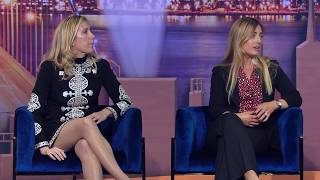
In this panel discussion moderated by Megan Heuer, three senior women marketers—Heidi Bullock (Engagio), Megan Eisenberg (MongoDB), and Tracy Eyler (InsideView)—share personal career stories, pivotal moments, and practical guidance for women in SaaS. The conversation begins with light‑hearted introductions and anecdotes about early‑career embarrassments (wardrobe malfunctions, contract mishaps) that illustrate resilience. The panel then moves to actionable advice for early‑career professionals: be proactive, take risks, focus on results over optics, and develop a problem‑solving mindset. They discuss high‑impact skills such as strategic thinking, data‑driven decision‑making, cross‑functional collaboration, and the ability to ask the right questions. Mentorship, sponsorship, and structured career‑development plans (monthly check‑ins, OKRs with development goals) are highlighted as cultural levers that help women grow. The speakers emphasize the importance of networking (both formal mentor programs and informal “old‑girl” networks), sharing the spotlight, and deliberately exposing junior team members to senior‑level opportunities. Advice for breaking into the C‑suite includes mastering one’s domain, building a strong network, aligning with business‑critical initiatives, and being visible through cross‑functional projects. The discussion ends with reflections on the worst advice received (being told to tone down personality or “diamond down”) and the best advice (partner closely with sales, think big‑picture, be authentic, and bring enthusiasm). Throughout, the tone is conversational, candid, and supportive, with a mix of humor and earnest encouragement.
Chapters
Please welcome our panel: Heidi Bullock, CMO at Engagio, Megan Eisenberg, CMO at MongoDB, Tracy Eyler, CMO at InsideView, and moderator Megan Heuer, VP of Research at Sirius Decisions.
Alright, well, good afternoon everyone, and now for the 6 o'clock news.
It'll be snowing in New York, where I'm headed back this evening.
In case anyone here cares, because it's so beautiful. I really wish I could stay. So with that, though, I don't think you all came to hear the weather report. In fact, what I'm hoping you're very much looking forward to hearing is some amazing advice from our esteemed panel, who I have to say, I think might know a thing or two about what it takes to succeed in SaaS. And in particular, what are the things that make that different if you're a woman? So we've got some interesting questions teed up for you today, and I'm very much looking forward to hearing what our panelists have to say. I have to say I have not heard their answers, so I don't know what they're gonna say. There's gonna be some surprises here. All right. Um, so with that, I would like to go ahead and do some brief introductions, and then I'm gonna have each of my esteemed panelists introduce themselves a bit. Um, but let me begin with, first of all, Heidi Bullock, who is the chief marketing officer at Engagio. And Engagio is a company that helps B2B marketers land and expand target accounts at scale by helping them to create and measure engagement in one tool. Heidi, tell us a little bit about yourself as a person, as a professional. Sure. What would you like to share with the audience?
I think what I'd like to share is just that I'm in marketing now. It's not where I started. I started my career as a molecular biologist. I worked in the lab for quite a long time. I got involved in marketing because I had good communication skills. And I guess the message I'd just like to leave everyone with today is that you don't necessarily have to start your career in one place. It can evolve, and it's pretty natural. Uh, the other thing I'd like people to know is that, uh, I have twins, and I'm here today, and I survived that. [LAUGHTER] [APPLAUSE] [Speaker:JULIE PIRIANO] Sure.
I'll applaud that one, especially as the mom of an only child. Um, so next up is Megan Eisenberg. So another Megan on the panel, although we do spell it differently for, for, you know, professional purposes. Um, but Megan is the chief marketing officer at MongoDB, and MongoDB is the leading modern general-purpose database platform that is designed to unleash the power of software and data for developers and the applications they build. Megan, I think you've got a story to share with us.
Sure. I've been with MongoDB about 3 years. Um, I, I also love to advise tech companies. I'm a huge fan of French Bulldogs, so if anyone has seen the Yappy Lounge, you should go check out some puppies to adopt, and we're excited to be sponsoring that.
Excellent. That's so cool. Every conference needs a puppy lounge. And last but not least, my fellow lady in red is Tracy Eyler, and she's the Chief Marketing Officer at InsideView. And they help sales and marketing people drive revenue by analyzing their total addressable market and helping them to select the right companies to target and engage in a relevant way. Tracy, give us a little bit of history on you.
My first paying job at the age of 16 was an SDR, and many of you are building SDR teams, so I have some stories to tell about that one. Uh, all of us had the generic name of Chris Kelly. Which was gender-neutral and we were replaceable, right? Because we came in and out over the summer and so on. So that has left me with always have an anonymous person in your marketing stack that you can assign to emails because they never quit. And then the other thing I would say is I'm super passionate about sales and marketing alignment. I have been super involved with sales teams in every company I've ever worked for, and my advice is get in their brain. I had the opportunity to write a book about that called Align to To Achieve that Wiley published a little over a year ago. If anyone's interested in a copy, I'd be happy to give you one. I have boxes in my garage. And I have survived teenagerism at least halfway through. I have a 16-year-old boy, and boy, do they do some dumb things sometimes. But that's me.
That's your next book.
Right.
That's my next book, yeah. You can see why I'm very excited to have this panel with me today. And as the announcer said, my name's Megan Huer, and I'm I'm head of the research organization at Serious Decisions, which is a research and advisory company that helps B2B companies grow faster and more predictably, um, and helps their sales, marketing, and product teams do that. And, um, I am also a mom of a brand new 13-year-old.
I'm sure—
not sure how I feel about that. Um, and I, like Tracy, had an unusual first job, and actually I feel quite at home behind the desk here because that first job was I was a receptionist in a dentist office when I was 14. And if you can ask people for money after they've had a root canal, you can pretty much do anything. Anyhow, well, I want to lead things off with a nice way to get to know our panelists, and also to share with all of you that one of the biggest pieces of advice I think all of us agreed we could share is that really crazy rotten things will probably happen to you at some point in your career, and you will survive. And to prove that point, what I'd like to do is ask each each of our panelists to share something just silly or crazy or really not so good that happened to you early in your career that you never thought you'd get past, but you did. Tracy, I'm going to let you start.
Yeah, I'll go.
So I was a newly named VP. I think I was like 28 or 29. And this was in the days when we still shipped software in boxes with manuals and other stuff. And I was working for an international software company. We decided to consolidate all our spend into one vendor. They happened to to be in the East Bay. And my job was to go for the final meeting and look at the final contract and kind of sign off. And it was like my first big, I guess, executive moment. And it was raining and I was late and I was rushing to this meeting. And I show up at the meeting and I'm like 10 minutes late. The room is full of all of these people who worked at the warehouse that happened to be men that could have been my dad. They all were like 56 years old in the hard hats and stuff. And I was there with a couple of my coworkers and I had on a top that was like a wrap top. Top, not unlike the dress I have on right now, and I'm just going to stand up to demonstrate what happened. So I walk in the room, I'm taking off my raincoat, and my top had come completely undone, and I didn't know it. So I'm taking off the coat, and my coworker Chris is like, Tracy! And I look down, and, you know, I'm in my glory, and these men around the table that I'm supposed to be negotiating with were just, oh God, they were so mortified. I couldn't think of anything to say except, Well, you'll never forget me. Turn around and, you know, buttoned up and renegotiated the contract.
True story.
But humor goes a long way would be my lesson.
Absolutely. Can't beat that one.
All right. And Megan, I think you have something you wanted to tell us about in terms of something that happened to you early in your career. Yeah.
You know, I think— I think more of the net of it is when people have asked me to do things that are not me or outside of my comfort zone, it's always probably a bad idea. And so when I stay within my comfort zone, you know, I tend to come back to doing me. Yeah.
Yeah, absolutely.
My story is a little similar to Tracy's. I was at my first board meeting and feeling pretty good. You know, I'd prepared, had everything ready, standing up about to present and, you know, went through everything, looked at my data, everything's good. Then went to the bathroom at the end of the board meeting and realized my pants were down. The zipper was 100% down. I'm in black pants and the unfortunate part was I had like bright underwear on. So I'm sure that was like super not great. And similar to Tracy, I just was like, you gotta just laugh at it. What are you gonna do at that point? But yeah, I, I definitely look for that now.
Look for malfunctions.
Well, and you know, I kind of look at this as, if you think about it, all of us have had something happen that is like our worst nightmare. It's like one of those things that you have bad dreams about in the night, like you think you're gonna show up with bright underwear on in the middle of a meeting. It happens.
Yeah, and it happens.
It actually happens. And you know what? You still have a job, don't you? And in fact, probably a better one even, right? Probably, yeah. So I think for me, what I take away from this and the sort of, experiences that I got myself all worked up over is, first of all, worry about the right things, right? Not the wardrobe malfunctions, not, you know, the things where you're given sort of a piece of advice that's really not meaningful. Worry about the right things. Worry about performance. Worry about competence. Worry about results. Don't worry about your wardrobe. Of course, if you have really, really bad taste, well, that's a different problem. So next one, and I'm going to invite Heidi, you to start with this one, is what's some advice that you'd offer to women who are earlier in their career careers, you know, what are the things that you can begin to do that help you really stand out?
Yeah, I think from what I've seen, and I, I've had a pretty nice-sized team when I was at Marketo, and one of the things that I observed with some younger folks on the team, and I'm, I'm gonna actually say men or women, it doesn't really matter, and something that I feel like I tried to do, I don't know that I was as successful as some people at this, but they actually could anticipate. That's one thing that I would really advise people. They could see when I was busy or had a big project, and instead of waiting to be asked to do something, they were like, "Hey, how can I help you out? I get I'm busy. I have a lot that I'm doing, but I'm here to help you and can take on some additional work." And I felt like that proactive behavior, it just really, really stands out. And again, that's for a male or a female. It doesn't really matter. I think the other thing too is being willing to take risks. That's something I did, and I can tell you there are plenty of times that I felt really out of my comfort zone or I was, you know, asked to do things that I might not have been really comfortable, and my thinking was, you know, it's PR, it's not the ER. I'm not gonna die doing this. It's like no one's getting hurt. What's the worst that can happen? So I just encourage everybody in here to like delight the people you work for. They need help. They might not be good at asking for help. Many of us don't because we're just busy. And two, you know, get out of your comfort zone. Do something completely different, and it doesn't feel good, but that's when you grow.
Yeah, absolutely. Megan, anything you want to add to that?
Yeah, I think be the best at whatever you're doing. Be the best at it. If you're babysitting kids, don't turn the TV on and eat the Cheerios. Like, play with the kids. Do something with them. Teach them something. Keep the house clean. When you get that first job and you're, you know, you're organizing something or you're building something or working with a team, be the best at it and take pride in your work. And also, I think what's important when I look at people that are growing in their career, not only do they do the best job that they can do, and they take everything seriously, is that they work not in a way— you will see the people that are around you that are just crazy working all hours. I'm so busy. I'm so busy. I'm working myself sick. You all have them that you work with them. Crazy long hours, they tell you how much they've worked. But those are not the people that are going to get promoted because they can't— they don't have the capacity to take on anymore. They don't— they haven't figured out how to prioritize. They haven't figured out what's important. And so I think when I look at promoting people and giving them something, I need to be able to give them more responsibility. So I need to know that they can prioritize and they can take on more. So my second piece of advice would be Find a way to add value, but don't come across as too crazy.
Yeah, absolutely. Sometimes being too busy isn't a badge of honor. No, you know, it can be, it can be a badge of disorganization, right? There's a fine line, I think. Tracy, your thoughts on this one? Advice for early in a career?
Yeah, I have two. I agree with Heidi, be a problem solver. I know for me, I grew up as a problem solver. My mom was an ER nurse, so someone was always bleeding. I was I was the oldest of 7, so there's always some chaos going on. Be a problem solver and figure out where you can add value to just make things better around you, whatever that might be. And then the other thing, it's really tiny and small, but, you know, the bigger our teams get, the more people I think are often reticent to speak up. Be an icebreaker, even if it's to just make one comment or one question to get things rolling, especially when you're in a brainstorm or something else, be that icebreaker. It makes other people comfortable. So figure out how to make people around you more comfortable, and then everyone relaxes, and then you get your best work. It's unusual in our business because we are so going for performance all the time, but if laughter really makes a big difference in lightening the load, and then all of a sudden some amazing comment will come out of somebody because they've relaxed and, you know, they can move forward.
Yeah, and I'll share too, you know, from my experience, something kind of on the other end of that is I've found that early in my own career, and I've seen this for other women as well, if you can take a job where your performance is judged fairly objectively, you take sort of any opportunity for bias out of that equation. So for example, early in my career, I was a consultant at Gartner for a number of years, and consultants are judged quite literally, it's time is money. How many hours are you billing? And if you can keep yourself at the top of that list of billable hours, right, there is no one who's going to argue with the contribution that you're making to the business. If you have a sales target and you can make that number, no one is going to argue about whether or not you're good at your job. They may argue about the way you get to the number, but they won't argue that you're doing something good. So I think that, but looking for opportunities that allow you to be measured against a standard that has clear impact on the business is a really good way, I think, to get started and not feel like you've gotta wonder whether or not you're gonna get anywhere.
Yep.
What are some skills you've felt have been really valuable to you? And I'll start with you, Heidi. What do you have?
Yeah, I think that's, for me, the way I'd answer that is I think about my early career in science was a real big one because I think that I approach things in a pretty methodical manner, and I really think about the end result first. I always kind of talk to my team about that too. It's like, write the press release. What are we trying to achieve before we think about the whole path to get there? It's like you're doing an event. Well, what's your endgame? What are you trying to get to? You have a product release, you're developing a product. Like ideally in a perfect world, that product would have these things. So now work back and what would you, you know, what would that path look like? I often find people don't start with the goal. I see this definitely a lot in marketing, and there's like a long path of getting there. And I think another kind of skill that I like are really kind of when people speak their mind. Nothing bothers me more than when I'm in a room and I feel like, oh, somebody might have a different opinion, and they're like, no, this is great, the plan's perfect. And I always push people. I'm like, really? Do we really feel this is perfect? I wanna hear from folks. I want folks with a voice, and I might not always agree, But I always admire people that, you know, have an educated kind of comment and share it. So I would say those two things.
Yeah.
And I have more, but we'll leave it at that.
There's lots of skills. Well, and I think one of the things I heard in what you just said, too, is being comfortable with hearing feedback you don't like.
Yes. I think that's a big one. And it's something that's really hard for a lot of us is getting feedback not always when it's like, hey, you're amazing. That was a great presentation. You know, great. Marketing launch, I mean, when you have people tell you, you know, I don't like how you did that, that's tough, but I think again that's where we grow and get better. So again, like kind of one of those take-homes, if you can encourage feedback from people, it's a little off topic, but find some people that you trust and believe in in your organization and ask them what they think. You know, how do you come across? How do you present yourself? And you can get a lot from that. It's not always everything you want to hear, but that's how you get better.
Yeah, well, and the earlier you find out some things you might want to adjust. Right.
Or you can decide not to do it too. Yeah.
Or to say, I don't agree. So Tracy, what are some skills you believe are really valuable to acquire early in your career? What are some things that would really, that have helped you?
Yeah, this is one that took me a while to learn. And in fact, I think he's in the audience, who taught, the guy who taught me how to do this, Dave Kellogg, CEO of Host Analytics. He's speaking tomorrow morning. How do you red team or see the other point of view, or argue against yourself. That whole mindset was something that was pretty hard for me to grasp and get my brain around, because I always had so much conviction about what it is that I thought was right. It was really hard for me to then put that away and then bat the other side. But I think when you bat the other side and you come up with what's going to go wrong, how come that won't be a credible statement, and so on, you just polish it up. So much better, right? And then also when you are red teaming, I think you can bring out maybe some of the reticence of other folks who are like, oh, I'm kind of worried about that thing, but I don't wanna say so 'cause she has so much conviction and I'm kind of afraid of her, so I'm not gonna say it. Like, you know that's going on in the room, but if you literally say, look, we're gonna do a red team exercise, and if you guys don't know what that phrase is, look it up on Wikipedia, Secret Service came up with it. It's a great, it's a great skill.
Yeah, absolutely. Totally agree. Megan, thoughts for us?
Yeah, so I think being a self-learner. When I'm talking or interviewing with people, I want to uncover the fact that they've taught themselves, they're curious, whether they're learning a new technology, they're reading self-development. I think that's important because we are always learning and building on what we've learned over the years. So I'm certainly drawn to that. I think the other one is folks that can collaborate and influence others that don't report to them. Because I find it becomes more and more and, you know, it's always important, but even more so, uh, to run a business is to be able to collaborate and work with others and, uh, influence them, uh, when they don't report to you.
Yeah, absolutely. Well, and especially earlier in your career, I think that's a great point, right?
Yeah.
You can demonstrate incredible leadership skills without having a title that suggests you need them at that point. I think you can stand out for that. Really, really important point.
That's how you get the title, right? It's like when people can see that you're demonstrating that, that's the great thing to do.
Absolutely. Well, and Heidi, I'm gonna switch gears a little bit, and you shared with me some really neat information about the work that you're doing and the way that you're kind of helping your own team, men and women, develop the kinds of skills that they need. And one of the questions we wanted to talk about today was, What are some of the characteristics of cultures that help women and really any leader sort of develop the skills that they need? And I really appreciated the approach that you talked about, so I'd love for you to share a little bit about how you guys do that.
[Speaker:JASON M. LEMKIN] Sure. Yeah, I think for me, I feel that many of us probably have teams that have kind of different skill sets. You might have some folks that are really early in their career, some people that are more senior. But I always feel like people can always get better. All of us can get better. Anyone who's got it all perfected. And so something that we do on my team is we have a check-in that we do every month. So we have one-on-ones, that's pretty normal. A lot of us do that. But every month we have one where we actually go through a career development plan. And for some people it's, it's really simple. It's like, oh, you know, I really wanna get to this next stage in my career. But I notice for more of the senior folks, they might feel like, well, I'm a VP, I'm good. Like I'm done. And I always feel like there's always something that we can do. And so somebody, on my team really, I noticed, kind of had an interest in public speaking, but hadn't done a lot of it. And so we worked on that and I said, you know, look, like I do quite a bit of it. I'm, you know, happy to take a break and knock it on a flight. And so one of the things I said, let's do it. Let's mix it up a little and get you out there and give you that experience. And so I think having that regular cadence where you're checking in with people, even folks on your team that might be senior, and feel like I'm good. Like all of us have something that we can get better at. And I think encouraging that makes people feel excited about their job. Otherwise it does feel like a job and you wanna feel like you're growing. But having a process in place to do that, I think is really important.
Yeah, I think that's a key point is it's sort of baked into your, you know, sort of operating model, right?
Right.
To say, not that this is, gee, if you've got a leader who happens to remember to focus on developing their people and not just it can't be on a whim.
You have to have a plan around it.
Yeah. Really critical. Well, and what are some things, Megan and Tracy, that you guys have done to help to share the spotlight with people on your team to kind of encourage them to develop?
So for my team specifically, we do a system of OKRs, and I ask that each member has at least one development OKR during the year where they they go to a conference to learn, or they sign up for a class, depending, maybe they're in creative, they're taking some sort of digital creative course, but that they continue to do something that further develops them, that self-learning, and that they take initiative and own that. So I think that's a big part of it. And then at MongoDB, we also have a women's group, but a mentor program. So making sure that, women and men, whoever, you know, wants to have a mentor is matched up so they can learn and observe. I think when I look back at my career, there was always a woman at some level in the organization that I watched and looked to and was like, how did she get there? What did she do? And it started out right out of college. The VP of manufacturing IT, Rebecca Jacoby, led our organization. and I just remember thinking, you know, what did she do to get there, and just observing her. So making sure there's role models.
Yeah, you know, you just reminded me, I worked for a heavy industrial— actually, they sold industrial gas, which actually ends up being a bit of a punchline sometimes when you explain that you sell industrial gas, but it's actually a Fortune 250 company and an amazing place to work, and I remember there was a woman there who was a chemical engineer, PhD, which at this time was not, you know, a typical kind of person to have in an organization, who ran a huge chunk of the business, an incredibly intense, you know, making sure that supplies were getting to chemical refineries all along the Gulf Coast, and she was also a mother of 4. And I remember really looking up to her, and she didn't necessarily have to mentor specifically, but she made a point of kind of involving me in discussions and and sharing with me things she was working on. And then even just something as simple as sending me her daughter's old Christmas dresses when my baby was born, which, you know, it's a way of saying, "Hey, I believe in you." And I think that sort of that kind of activity really is meaningful, I think, for women to encourage other women.
Yeah, definitely.
But you just reminded me about that.
Thank you. Meg, I have one I was just thinking of to add, which is I have been trying out the— what I call the pilot copilot model. So in the example that you gave, Heidi, you had somebody who was pretty sick, a senior who wanted to do more. You know, we all have on our teams people who are really just starting out in their careers and they're trying to figure out how to work on their brand presence and, oh my God, someday I'll be on that stage. Well, why not bring them along, right? And I'm thinking of one particular, I had, was doing a talk on sales enablement and, you know, I did about, you know, the first 40% of it and then my colleague Jo came up and she did the rest because actually she did the work on the project Anyway, right? Like she deserved the credit in the first place. And we worked together on the presentation, but then, you know, I was really there to kind of buttress her and it just was such a boost of confidence for her. And now she's been kind of, you know, she's now a go-to on that subject and so on. And all I did was just give her a little boost. You know, I don't think she would've been asked on her own, but the fact that I, you know, copiloted her in worked out really well.
Yeah. I, I like that point. I just wanna add to that. I think that's really important to do in meetings too, uh, for, you know, the senior folks in in the room, pull in some of the people on your team and say, hey, you know, we're going to go into this board meeting. I want to have you present this piece. Or I think just giving people that exposure is really, really important. And it's something I try to do. I probably, I probably should do it more, but I feel like when I've done that, it's really helped people because it, again, it gives— they're the ones often that did the work anyway, and it gives them that chance to kind of try it on and get that experience. And it's really important to do that.
Yeah, absolutely. Well, and you anticipate my next question, which is, you know, so we've talked a little bit about the skills that you want to acquire earlier in your career and some of the behaviors that are going to help you get to knock on the door of the C-suite. I'm not speaking well today. And all three of you have managed to break through that barrier and join the C-suite. What advice do you have for people who are kind of on that train? And maybe Heidi, you want to continue your thought there?
Yeah, I think the first thing I would I would say is just making sure, I think this was already said, that you're doing your job very, very well. But I think what I often see and I hear from a lot of people, and again, men or women, they're doing really well and they're like, I just can't seem to get to that next level. And you often hear people say, you know, you do a great job, but you're just not strategic. And I think it means just if you kind of like tease that apart, it's making sure you're working on the right things and driving what's critical for the business. Often, I think the kind of the crappy part about it is often senior people won't tell you always what that is. It's great if you have OKRs or there's something that makes it clear, but even within that, I think that there's some initiatives that might be more important to the business than others. I think it's getting really good at asking the right questions, finding out where you can help people, and really making sure they're successful. That's one. I mean, it's a bit obvious, but two, I think it's also aligning yourself with people that actually really want to help you. I think something that I've really seen is I've been fortunate enough to work with people. For me, it's been male leaders that have just been incredible. They've been very supportive and wanting me to be successful. And I feel like that I want to give that same experience back. But I think that there's times I've worked with people that were honestly kind of crappy.
And then you know what you do?
You make a call. And if you can see it's not going to work, you're maybe this amazing seed, but you need to be somewhere tropical, not a desert, move. I think that's okay, and I think realizing that early is not a bad thing, 'cause not everyone is willing to help or be supportive.
Absolutely, I think that's really important. And Tracy, what's your advice for women who wanna break through and get into the C-suite?
I think this is advice that's true for really anybody, which is the bigger we get in our organizations, and it always seems to be, once you get to be about 100 people, things start falling apart. And what I mean by that is the, the, the departments of excellence might be doing a great job, but cross-functionally you're a mess. You start finding all these things where the ball is dropped between, you know, the development team and the sales team, or the sales team and the customer success team, and the trainers don't know what the CSMs are doing and so on. So the more cross-collaborative that you can learn to be and lean in and take those projects that are, that really are about that, like an example, that my team took on, and a woman on my team was the lead of it, was, hey, let's map our customer journey. We're a 10-year-old company. We've got tons and tons and tons of customers. It's about time to redo our journey map. And what does that look like? And we found all kinds of things that were just downright broken, like bad handoffs and weird experiences here and there. Like nothing that was gonna put about— put us outta business, but made us probably 25% better. And that cross-collaboration is super visible. It's visible up to the board level, and it helps you get your tentacles into every part of the organization and is really a path to being more strategic. I hate that phrase too, God, that drives me nuts when people say that.
Just amazing.
But you do have to tease it apart and what that means, and I think cross-collaboration's one of them.
Yeah, that's really good advice because I think people who are willing to step in and take on hard problems end up standing out, and that's really key. If you don't stand out, you're not gonna be be the next one in line for the big job. But you also have to be willing to put yourself on the line and show those results. So it's a double-edged sword there, really. Megan, your thoughts?
Yeah, so I think at the C-level, one, it's a command of your domain, your domain expertise. And then it's really your network a lot of times. And you don't always have all the answers, but the ability to go talk to someone, reach out to a colleague, ask for advice, I think, as you you mature in your career, you build your network and you build those experiences and pattern recognition. And the faster that you can, you know, you start to make decisions a lot faster. And so as you can accumulate and do that and learn, I think that's part of becoming a C-level exec.
Yeah, absolutely.
If I may jump in, you just said something about use your network, and that is, I know what you mean by that because I mean, we are in a network, right? And we are in a network with a bunch of other people. I like to call I call it the old girl network, just as a joke, right? But my old girl network isn't just women, and there's a lot of guys in it too. But there's nothing like being able to call outside, you know, 3 other CMOs to say, okay, I'm having this problem, we're having this issue with whatever the case may be. Have you run into that before? Yes, I have. Okay. And not have to wait for the SaaStr conference every year to talk to other people like you, right? Use those connections. And in my mind, always give when you get. Get. That's a very important thing, because if all you are is, is an asker and you just call people when you have a problem, you're going to get super annoying. So think about how you can give at the same time, and then, you know, that'll pay dividends.
Absolutely. I think that's really important, right? There's, there's so many different ways that you can contribute to networks as well as benefit from them, and I think sometimes it's easy to lose sight of that. Um, you know, and I'll say too, one of the things that I've noticed, um, for our executive team is you need to be in command of your facts. You need to have the data on your side. You need to have the full story, and you need to have done your homework and go in prepared. You may use a tenth of all the information that you've gathered, but if you don't do your homework, it's your own darn fault if it doesn't go well. And I've found that definitely having, you know, your facts in order and doing your homework is really, really critical. So with that, I'm going to kind of wrap things up out with a question that ended up being a little bit controversial, I have to share with you, with my esteemed panel here. And that is, what is the worst advice you've ever received? What was just flat out bad, and thank heaven you didn't listen? No, and, and, or perhaps you did and learned the hard way. And, and Tracy was the first one to raise her hand and say, me, me, I want to answer that one. So I just, I got to hear.
Well, I've gotten this advice Twice, so I don't know what's up with that, but the first time in my 20s, I was told that I smiled too much and I laughed too much. And I took the advice, 'cause I was like, I don't know, I was like 24, 25, and I thought, okay, well maybe I'm not appearing serious enough, but I just couldn't help it, so I just went back to my old ways. But then fast forward like 15 years later, I had a boss who told me to diamond down. I don't mean dumb it down, I mean diamond down, as in, sparkly diamond earrings that I bought for myself when I got divorced, and I wear them with pride. I wear them with pride, and I'm not gonna diamond down. But to me, the message underneath that, when I look back at what those messages were, were, was, you know, we don't know what to do with you, you're kind of a peacock, like, you got to tone it down a little, lady. And I can't do anything but be me, right? And I think that every time, I think you You said this, both of you said this. Any time where I've tried to do something that wasn't me, it was just a disaster. So, you know, if you don't like the red dress and you don't like the laughing, then we don't have to be friends. It's okay.
Yeah, and I will, before I put Heidi on the spot for this one, I'll share, you know, years ago there was a book called Nice Girls Don't Get the Corner Office.
I so read that book.
Okay, so I like to think of myself as a nice girl. It's kind of my thing. Like, I'm just, I'm not like a mean person. I'm just, it doesn't work for me, back to the be yourself. So I'm reading, I'm like, oh dear, I'm really in trouble then. So I'm reading this book, and like thing number 1 is don't feed people. Don't bring cookies. Don't bring candy. What's my hobby?
Baking.
What do I do all the time? Bring food. What have I had on my desk since I was 24 years old? A giant jar of jelly beans. But I have to personally say that I have that giant jar of jelly beans to thank when I worked in a building that was a whole little rabbit warren of tiny offices. And unless you had a reason for someone to come see you, no one would talk to you if you were new. Unless you had jelly beans, I turned out. So I have to say, I ignored the advice about not feeding people, for which my team is still thankful, I believe. And also, the jelly bean jar lives on and has started many an excellent and often very funny conversation.
So ignore that one.
Heidi, what's your worst advice?
I feel like I've received so much bad advice. It was hard to pick one. I think I'll share two. One was, I actually was in college, and I remember going to, you know, you go to see your counselor, and I was pre-med at the time, and the advice given to me was I'd be better off marrying a doctor than becoming one, which it's like I almost couldn't process it at the time. I'm like, "Gosh, it's not like this is like 1960. It's just, and we're in California. What's up with that?" So that was a little discouraging, but I bring it up just because it was so early on, and I think that things like that can be formative. And again, like, I just think you have to laugh at people. Everyone's got an opinion, and we all know You know what those are like, right? So it's like, it's important to be able to take in input, but also filter it out. The same thing happens when you're pregnant. You get a lot of comments like, "Oh, whatever." And then I'd say that—
They're never coming back. We'll never see you again.
I'd say that, you know, the second piece of bad advice I received was a little bit similar to Tracy's. It's like, I actually am an incredibly funny person. It's kind of my thing, too. Like, I make myself laugh frequently. I don't know that everybody else always thinks I'm that funny, but— Somebody was like, you know, you should probably be a little more serious. And I was like, why? Life is so short. Again, like, what we're doing is not rocket science. I can have fun during my job. And if you don't, like, what a bummer. Like, what an unfortunate existence. So I just kind of ignored it. But it kind of hit me as like, wow, that's the core of who I am, and that's a shame. And again, I would just say, like, if people don't like who you are, then too bad.
We don't have to—
You don't have to be with them.
That's gonna be my new line. You don't have to be friends. Okay, now I'm gonna close things up with the flip side of this, which is what's some of the best advice you've ever received? And I'm gonna have Megan start with that one.
All right, so a couple things come to mind over the years. One was, we both know Mr. Dan Drucker gave me advice early on when I was in product marketing to partner very closely with your sales organization and your leadership team, that a lot of your success and go-to-market and execution will be if you're aligned and partnering together versus, um, pointing fingers. So I really took that to heart over the years, making sure that there was a strong partnership, that we built, um, models together, that we had constant communication, um, and that we were very transparent in the results. And I think that served me, uh, really well. With that advice.
Absolutely. Tracy or Heidi, I'll let you decide who wants to go first.
Sure. I think some of the best advice— I completely agree with that, by the way. I think it's really kind of understanding what the larger business objective is. So getting out of— I mean, all of us in our day jobs have— you're worried about your website traffic or your CAC or whatever it may be, the thing that you're maniacally focused on. But I think taking a step back step up and realizing the bigger picture. And I think the best advice given to me was not always thinking about your immediate group and your immediate— like, if I'm the marketing team, just our objectives. Think about the entire business objectives and how you can help other people be successful. And I think if you can do that, it's just—
you'll win.
And it's partnering. It's just making sure that, you know, you're communicating regularly. And again, really kind of thinking about not just was this one event or this one this one initiative successful, but did we hit the goal that we were all trying to really achieve? That was good advice. And oh, I have one other one.
Oh, please.
This is actually a real tactical thing, and I notice a lot of people do this, is really saying, you know, we were able to do something. It's not the, oh, I achieved this, or I did this. And I think especially if you're looking to be in a more senior role, I think not taking credit, but saying, you know, as a team, As a team, we were able to do this amazing thing, and right, like rising, or kind of raising people up is a good thing. So just your language and choice of words that you use is important.
Absolutely. It's not just about you. I think the mark of a leader is that it's not just about you.
My favorite one is get close to sales, no question, and crash their meetings if they don't invite you. Just go sit in the back and listen, and eventually you'll earn their trust. But even in addition to that is talk to the customer your customer and, you know, why are they buying and what are their problems. And I know that anytime, you know, I'm sitting in a room with a bunch of other colleagues and we're trying to figure out a problem, it's like, well, what do the customers say? What do the customers want? And half the time we've got good information, the other half the time it's like, well, you know, not really sure. Let's go call 10 customers and find out what they say. And that's always safe ground. And I think when you're trying to speak with authority, if you've got customer data with you, whether it's anecdotal data, whether it's data from a survey, that will really carry a lot of weight. And then also opinion leaders matter, true, you know, Serious Decisions, Forrester, others like that. You know, what are those folks saying? What is Meg here saying about ABM and so on makes a lot of difference in bringing authority. So I would say those things.
Yeah, absolutely. Well, and I think, you know, some of the best advice I've heard is, is it's old, but it's true. Be passionate. You know, don't be afraid of your enthusiasm about something. Don't be afraid to show that you really do care. And in fact, I— earlier today we were at a luncheon, and Tracy and I were there, and one of the neat things is one of the people there said, "I saw you speak at this event," and this event was like 8 years ago, and I'll never forget it because I was nervous. Obviously, it was kind of a big speaking engagement, and I still do get nervous when I do that. But, you know, it was one of those situations where I was so excited about what I had to share that I thought I got off the stage and it was a total disaster. This woman remembered it 8 years later, and I remember being told after that event that I got the highest score. And I thought, "You've got to be kidding me." And then I thought, "You know what? I—" It was honestly just enthusiasm and passion for the topic. And don't be afraid of that, you know. Don't be afraid to just love what you do and show it. You know, there's nothing wrong with that. And of course, the absolute best advice I've ever received, hands down, Dr. Seuss. The man knows what he's talking about. And that is, "You have brains in your head. You have feet in your shoes. You can take them in any direction you choose." Incredibly empowering. A little scary, but the best advice ever. Anyway, thank you so much to all of you.
Thanks, Meg. For sharing your lives with us.
Thank you.
More from Jason

Why Your Next Hire Should Report to an AI, Tragedy Apps, and Too Many AI SDRs? | The Agents #004

Our Agents Drove Our Salesforce Bill Up 80%, Marketo Hates Agents, and We Stealth-Churned Off Notion




Managing 20+ AI Agents: Lazy Agents, Our $500K AI Bill, Stealth Churn & the Death of 60% Solutions




