Emerging Insurance Disruptors: Are they Really SaaS? with Notion Capital and YuLife
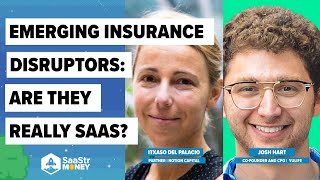
Notion Capital and YuLife founder Josh Itchazo debate whether modern insurance-tech startups are really SaaS businesses. YuLife just raised $70 million Series B. InsurTech and SaaS share cloud platforms and recurring revenue, but insurance has thinner margins (10-25% vs 90%+), slower buyers, and regulatory constraints that block SaaS pricing models.
Chapters
few housekeeping notes. We encourage you to keep your cameras on and audio muted. If you would like to submit a comment, response, or question to the speakers, you can use the Zoom chat box in the bottom toolbar of your screen. If you'd like to speak directly with the speakers, please make sure your camera is on. When appropriate, you can unmute yourself or use the raise hand function and we'll call on you. These sessions will be recorded and available post-event. Join me in welcoming Chaso and Josh. It's also— Josh, take it away.
Hey, Brian, uh, thank you so much. It's great to be, uh, with all of you today. Um, Josh and I, we are based in London, and I, uh, I know all of you are all over the world, uh, so good morning, good afternoon, evening, wherever you are. Um, thank you, Brian, for, for the intro. So my name is Itchazo. As Brian said, I'm a partner at Notion Capital, which is a venture capital firm Based in London, we invest in SaaS companies across Europe, and we have around 70 companies in the portfolio, which are all of them in the SaaS space. Today I am here with Josh, who is the founder and CPO, CTO of Ulife, which is one of my investments, one of our portfolio companies. Hi, Josh. How are you? How are you doing today? Big news, right?
Yeah, I'm having a cracking day. Really, I'm enjoying getting lots of love from a lot of people you meet on the way, and you get a lot of messages of enthusiasm for the news today. So really, really grateful to the universe today. And of course you, RMS.
Of course. Great.
But everyone is wondering, so what are the news today? What is going on?
Oh yeah, so today we announced our $70 million raise. It's our Series B, and yeah, and we are just to fuel our growth and bring Ulife Global. Really just excited to get cracking. So it's fantastic. Next sprint.
I'm a happy investor in the Series A, obviously, and I know that things are going really, really well, but that is exactly what we are going to be talking about, those emerging insurance disruptors that, as we know, in recent years, we have been or we have seen many of those emerge. And maybe, Brian, you can move forward to the next slide. I know you are managing the slide deck. The next one. This is the housekeeping notes. Yeah, and the next one. Exactly. And here we have some examples of the insurance companies that we've seen emerged lately. So we can see, for example, companies like obviously YouLife that— just the founder, which is a life insurance company, which is building a gamified solution application for employees to encourage them to be healthier and happier, right? Or companies like Sego, which is providing flexible insurance for food delivery drivers, Couriers, all those people who bring our food deliveries to our doors with their bikes or their, their small cycles, and they can buy flexibly the insurance, right? Or companies like FloodFlash, which is providing flood insurance for small businesses, most small businesses that today are not covered at all by big insurance providers, right? Or companies like Stable, which provides insurance for agricultural products. So basically selling to farmers and their products, right? So all of those are kind of new emerging health insurance— sorry, health insurance providers. Not all of them are health. Some of them, in fact, Alan, as you see there, is one of the health insurance provider, but focusing on the consumer and the user. And so many of those have raised large rounds, right? We just mentioned Ulife announcing today a $70 million round. We know that Alan, in fact, in— back in April raised $220 million, and Seagull recently in March to this year raised $150 million. So all of those are insurance providers that, uh, have— are providing insurance to businesses, so they are B2B, and they raise money from investors like me in some cases. Which are SaaS investors. So Joss and I wanted to discuss how do we think about those new insurance providers? Can we justify those as SaaS companies? What are the similarities and what are the differences? And we can discuss those with you, and it would be great to hear from you. So please use the chat, raise your hand, or just raise your voice, open your microphone, and ask us questions and ideas and share your ideas in the topic. So Brian, maybe you can go to the next slide and we can look at the similarities and differences. Joss, do you want to start yourself?
Yes. So Chassa and I were kind of having a chat about how can we front this session, what do we want to talk about. And we have quite a good working relationship. Chassa kind of sits on our board and we work together quite closely. So we just really started having an open conversation and we thought we might continue that conversation in front of you all. We wrote down some of our notes about the things we think are similar about InsurTech and SaaS. And then we also thought, well, what are the things that are different? And then just kind of let us all draw our own conclusions as to whether or not there are enough similarities to justify SaaS investors like Notion investing in companies like mine and some of the other companies you've heard about today. Obviously, there's a huge opportunity, and VCs first and foremost, are looking for opportunities in the market. And obviously, my strong belief is that insurance is where that opportunity is today. And it was going to be there for quite a while as an untapped market. So the first similarity, just to kind of kick it off, that we were talking about was, at its core, insurance is one of those amorphous things. It is a financial product. But in technology terms, it's a PDF that's very effectively stored in a transaction from a bank account. Which can be to some degree, or to most degree, automated. So what we often found, especially in the B2B space, ULIFE operates selling group life policies and income protection policies to companies. So we have all that kind of B2B employee management headache that so many SaaS companies have. And effectively, we have to build a platform that facilitates that and integrates into the kind of ERP systems. So effectively, the architecture and the build of an insurance company or insurance tech company today looks incredibly similar to a software as a service. Because effectively, we need to build a platform that automates much of what is being done manually and on spreadsheets in the traditional insurance world to create those efficiencies that all SaaS companies look and see opportunities to develop.
Perfect. So let's go to the second one. And as an investor, obviously, why do we love SaaS? We love SaaS because we have recurring revenues and those are very predictable, right? And so in the same way SaaS companies have this predictability, insurance companies to sell the premium ones, the premiums to the businesses, and those are very predictable. They are usually paying back in advance and for the year or even more than a year, and we can talk about that a little bit later. And they can be accounted in the same way as the SaaS businesses. So the predictable revenue is one of the similarities too.
Another thing that, I mean, for many of you, I guess, the SaaS businesses, probably a couple of insurer techs out there, but one of the things that I remember from my SaaS days is this kind of idea of channel selling. So what distribution partners can individuals find to like distribute their products more effectively? And in the insurance world, there are these things like, you know, in the software world, the system integrators. So you get people like Accenture and you get people like the, like digital, like people selling your service or Atos, or, you know, lots of businesses do it. In the insurance world, you get these kind of Aon, Willis Towers Watson, Mercer, these giant consultancies that much like IBM, where people would hire IBM to advise them on what technologies to build and buy. You actually get the exact same thing in the insurance sector where kind of CFOs are getting advice as to what group financial products to buy, what employee benefits, employee rewards to buy. So by working with those partners, they work as a— they double up effectively as a distribution channel. And one thing that's just quite interesting is that in the insurance sector, these distribution channels are actually still incredibly, you know, almost the main driver of growth in the industry still. Whereas I would say it's kind of diminishing more on the SaaS side where individuals are going online and everyone's getting kind of distribution from.com. So it's just interesting that both of these kind of business types have these kind of big channel sale partners. And we were just reflecting on kind of them and the take that they have, as well as the growth that they can facilitate.
Mm-hmm. Excellent. So, and one other similarity is related to the data-driven pricing. And I'm going to elaborate a little bit on that one, so we all understand what we mean with that. So in a SaaS company, you have what we usually call value-based pricing. For example, when we are charging for the amount of, for example, data, for the amount of transactions, API calls that they go through, through a particular application, right, or solution. In, in the insurance space, it is happening specifically with those emerging insurance players that they can gather data. In the case of ULIFE, for example, is using the application that they have, a mobile application that they give to employees to track what they do, how healthy they are, and they are able to provide pricing based on how healthy those employees are, right? So you are able to build that pricing based, let's say, on value. And we call it here data-driven price. But in reality, what we build, what we are showing is that depending on that data, you are creating a pricing element. And this the same way that we do in the SaaS, right? Depending on the amount of usage that you do of that application or that software or that solution, then you are pricing it in a different way. So there are similarities in the way we price it too. And I would say those were the main similarities that we found. We definitely found some differences too, right? Joss, do you want to start with those ones?
Yeah, I mean, it's funny, like, uh, when you're, when you're setting up a SaaS business, generally you might drive— I mean, the truth is you can drive a SaaS business to any economic buyer, but some of that, say, the fastest growing, most successful SaaS businesses that I experienced as a chief product and technology officer tend to be the product and technology SaaS products, right? So these are things that you can try before you buy, that you can start buying small and rapidly expand. Uh, ice cream van just outside. A, uh, there is There are also like the economic buyers tend to be quite tech-savvy buyers and are quite happily to kind of try and roll things out quite quickly. In comparison, when you deal with people like in the finance sector or in HR as your primary buyer, the way they buy isn't very digital. And as a result, there is like a— In some ways, it's easier in the insurance sector because there's an existing budget for insurance. You're going for an existing budget. So it's not like this is a net new service in the world and it needs to be validated as something that uniquely provides value to your company. You can kind of eat the lunch that's already there at the table. But at the same time, there is very traditional ways of buying these financial products. So you have to kind of go at a very different pace than you would be used to as a tech business. But when the key clicks, as with any revenue generation, it goes flying. But it is different and it is noticeably different.
Yeah, correct. And obviously the second difference is around the commoditization of the insurance space, right? As you know, so there are so many insurance providers that have not changed for many, many years and still we We keep buying those both, I mean, in a personal level, as well as in the businesses. We join a company, they give us an insurance provider, and those are so commoditized. While in the SaaS space, everyone is reinventing the wheel, is trying to reinvent the wheel and become much better and provide even a better product. And even though many of those are operating, or many of you might be operating in red oceans, very, very crowded markets, you are always trying to reinvent yourself. In insurance space, it has been such a long time for the— it has gone such a long time since those new emerging providers have come on that it is incredibly commoditized. So today is when that new, uh, way of insurance providers are coming, and it is changing a little bit. But definitely there is a, a side of commoditization already happened in the market that needs to change in order to— for those to, to be able to enter the market and to disrupt it.
I would definitely— I definitely double down on that kind of, you know, you know, dumb pipe model that we used to talk about, probably with like, uh When you talk about the mobile phone market, the banking market, the beginning of the fintech movement, insurance is that dumb pipe. And there's such high barriers to entry to start participating in the insurance sector. It's literally just sat there as a dumb pipe that's been commoditized for ages and nobody's done anything about it. And it seems ridiculous, but that was the market that I walked into 6 years ago. And our rapid growth only demonstrates the kind of total void that existed in the market. In terms of— another thing we discussed was the idea of premium versus seats. So like, I don't know if any of you do this, but like I've got a Zoom license, right? And I'm buying 100 seats. And then let's say someone leaves the business. Well, then that seat is just left unallocated. I'm still being charged for that seat. It just sits there. Same with Microsoft. You buy seats. You don't buy on— you don't pay on usage. You buy on this— you pay a monthly fee on all the seats that you own. Whether someone's in that seat or not is kind of irrelevant. Now we can argue day and night whether this is an appropriate way of charging, but this is the way it is currently working for a lot of the big SaaS businesses and services that we use as a company. In the insurance game, if there is nobody sitting in the chair— is, you know, when I first started, I used to try and make everything into a seat. But in the insurance game, if nobody's sitting in the chair, you can't charge premium because we're FCA regulated in a way that the insurance— the SaaS market often isn't. So we can't charge for something where we're not providing direct financial value to an individual that's clearly identifiable. So it's, it's, you don't end up having these kind of ghost SaaS products where people could have bought something and then you've got a lot of retention for a lot of time. You effectively have to be constantly either providing value and identifiable value to a specific individual. So I feel the fluctuation of companies growing and shrinking really directly because then that directly affects my, my revenue line. So through COVID, we were growing as a business, but some of our bigger enterprise customers were in fact shrinking. So it's just really interesting to watch how that might have happened in a SaaS world versus an insurance world.
Absolutely. That's really, really fascinating for sure. And I'm going to, again, take my investor hat and talk about margins. And everyone around the table will agree that, obviously, SaaS margins are much more appealing for investors specifically, and obviously for the business itself, right? We are talking about SaaS. We're talking about 90% of margin, even more, unless we have some specific circumstances. And obviously, when we are talking about insurance, and we are selling premiums, we have so many people in this value chain, right, from the reinsurers, reinsurers, the brokers, everyone is trying to get a cut there. And so it gets, it gets, the pie gets distributed through so many different people. And that probably takes you to a margin of around 10%, 25%. And that's obviously, it's variable, depends on if you have your own license, you are only distributing from somebody else, what are you really doing in the market, right? But getting your own licenses requires capital, requires time too. So many small companies cannot do that to start. Which forces them to start with a very small margin, and only when they have a critical mass of customers and reputation in the market to apply for those licenses becomes a little bit of a challenge, right? But I would say that, right?
Yeah, no, couldn't agree more. I'm just conscious that we've got a couple of minutes left. Maybe we want to maybe tackle some of the questions, and I think probably you're best place for one of the first questions. So, sure, let's go from Catlin. It seems that there are 500 insurance startups now. How many can you fund, Sachasa? How many in the market even?
So, um, definitely I, I see— so investors like the ones that just funded YouLife, uh, who are Target Global, um, they have 3 or 4 of them in their portfolio, um, in different areas, in different sectors. Some of the ones we mentioned today, another— a couple of other ones which are unicorns at the moment. So I do believe that there are many different lines of insurance that might— can be disrupted. And therefore, I think it's important to understand how do you enter that line of insurance, disrupt it, and win, right? Which one is the, the best one in each of the categories, let's say, but definitely they can be more than one. So it was a little bit challenging for me as a SaaS investor, I have to admit, to push the investment internally. But I think this is happening more and more. And I think those conversations also help many of the founders that might be in the audience identify the way they can pitch to investors too. But I do think SaaS investors are moving also to finance some of those. Yeah.
One thing, by the way, I'd add on that is to that question, because I think it's on everyone's mind at the moment, is that 46 out of the Fortune 500 are insurance companies. The scale of the cash being put in and pumped through the insurance sector is so enormous that it, you know, even if you go back 200 years or 100 years ago, it used to be the things the aristocracy put their money in for the yield that it would give for a lifetime. And it hasn't changed, you know, there's still an enormous market that is bigger than, you know, it's just totally untouched. Anyway, so for those wondering whether this market is going to keep growing, I think we've only seen the tip of an iceberg to date.
I think that's an incredible place to leave it off, Josh. And I think what a, what a button, if I, if I, if I could say so myself. So first and foremost, thank you, Achasso and Josh, for that wonderful session. Folks, we have a lot more great content coming to you today, so see you in the next sessions, everyone.
Thank you, everyone. Bye-bye.
More from Jason

Why Your Next Hire Should Report to an AI, Tragedy Apps, and Too Many AI SDRs? | The Agents #004

Our Agents Drove Our Salesforce Bill Up 80%, Marketo Hates Agents, and We Stealth-Churned Off Notion




Managing 20+ AI Agents: Lazy Agents, Our $500K AI Bill, Stealth Churn & the Death of 60% Solutions




