Fireside Chat with CEO and Founder of Front, Mathilde Collin
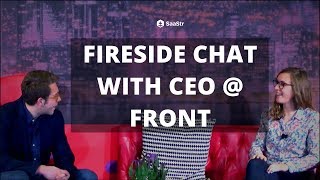
Mathilde Collin, founder and CEO of Front, discusses scaling from $1M to $10M ARR, her Series B fundraising with Sequoia, and how she evolved her expectations of investors at each stage. She emphasizes transparency with hard data, rotating coaches for CEO development, and the difficulty of finding new growth levers as the company matured.
Chapters
Ready to roll, Mathilde? We've actually done a podcast before, many, many months ago, about 18 months ago. So very excited to be back with Mathilde. Uh, thank you so much for joining me today.
Thank you for having me.
Now, I think for anyone that didn't listen to that first show, can we go back to the early days and how you really entered the world of SaaS and, and came to be founder of Front?
Sure. So I guess for me, starting a company was something that I wanted to do before even thinking about what I would do. Okay. And I think the naive reason was just because my parents didn't like their jobs. And so I was like, I really want to enjoy every day of my life, so I'll start a company and the only goal will be to enjoy going to work every day. And hopefully, other people that will join the company will enjoy that as well. So that's the true story about why I started at Mountain View.
Can I ask, what was the aha moment then for Front with any idea at your disposal? Why Front?
So the reason is because the first job that I took out of college was in a SaaS company, and it was building a contract management software. And that's when I realized that SaaS businesses were pretty cool because you could build in a few months a product that would really change how some people were working. And so in my mission of improving how people work, then SaaS was good. But I was not using contracts to get work done, I was using email. So I wanted to work on email because I was spending probably 6 or 7 hours per day in my inbox. And so I thought if I can make it better for me and other people, then the impact would be great.
Yeah, absolutely. And talking kind of great impact, you've enjoyed such a successful journey. You recently raised an incredible round from Sequoia. Congratulations for that.
Thank you.
I would love to start on that though. And I love the story myself. So tell me about the story and kind of how that deal came together and your experiences around it.
[Speaker:MARIE] Yeah, so the story was just before Thanksgiving, we decided that we would raise our Series B. And so I scheduled all the partners' meetings the week after. So 11 partner meetings in one week, which was pretty tiring, probably the most tiring week at Front ever. And Sequoia was one of the funds that we pitched. So I pitched every single VC, and I said that the deadline would be by the end of the week because we had a lot of interest. And so I knew that we would have at least one term sheet. So then once you have one, you can—
Co-ask the others.
Yeah. So then people heard that the round was pretty competitive, so then they were thinking about what could I do to make Mathilde happy and take our term sheet. So I love Legos, and so what Sequoia did is they built a Lego, a custom Lego with the Front logo and the Sequoia logo and then an Eiffel Tower because I'm French and the Golden Gate Bridge, and they brought it to the office. And then I was like, that's cool.
And that was it. Timesheet signed.
Yeah, then the truth is that's not why I chose them. But I chose them because Brian Schreier, who is joining our board, was He's one of the best people I had met.
Yeah, absolutely incredible. So if you do like an analysis then of the rounds you've raised, obviously that being Series B, a couple before that, how do the rounds compare when looking at them in terms of, you know, ease, conversation, and kind of your thoughts and self-analysis on that?
I mean, so the truth is, and I know we'll cover that after, I'm not someone that say that things are easy. In general, I say that things are hard. But for us, at least, we've been fortunate enough And every round has been super easy. So seed, Series A, and Series B, we raised pretty quickly. So if there is one thing that's not hard, and that's probably the only thing about building Front, for us it's been raising money.
OK, absolutely. So in terms of then within those subsequent rounds, how does what you want from those investors change with each round?
Yeah, so I guess it's a good question, because I have always been pretty clear about what I wanted at every round. For example, seed round, I didn't know what I was doing, and so I didn't want any VC. So it was more angel investors would invest because I didn't want to have any pressure from anyone. And so you know that if you raise a seed round and then you raise a Series A and the firm doesn't follow, then you're screwed. And so at that point, what I wanted was to be super independent because I didn't know what I was doing, so I didn't want anyone to tell tell me how I should do it. Then Series A was different. I started to realize that starting a company was really hard, even when the business was working. So I wanted someone that was very supportive. So that's how I chose, and kind and a cheerleader. And then I felt like, so it's my first company, there are lots of things that I don't know. And so I felt like in order to be a better CEO, I needed someone to challenge me. And so Brian is someone that is caring on one side, but also can push me and tell me what I'm not doing well. And so that's what I optimize for.
Speaking about kind of scaling rounds there, how do you think about scaling yourself as CEO? I've interviewed many CEOs and they say the most challenging part is scaling themselves as a leader. How do you think about that with the progression of Front through the stages?
Yeah, probably one of the most critical things that I need to do. So my job changes probably at least every 6 months, and every time I need to learn a new job, and every time I don't know if I'll be good at the next job, I feel like, one, having a coach is useful, and it can be a different coach every 6 months. Two, I think learning from other CEOs is super important, so being surrounded by people that will tell you what you should be looking for, what you should be learning, what you should be reading, what you should be doing, et cetera, has been useful. So these two things, and then just being always super receptive to feedback because there are so many things that you'll do well and won't do well. And you should always be aware. And these things evolve over time. So something where people have told you before, oh, you're great at doing that, then that's not necessarily a good thing 3 years after.
So coach, mentor, and then kind of fellow CEOs to give you that advice. A large amount of that and that experience is in the Valley. How important is it being in the Valley, do you think, today?
So truth is, I don't know because the only company I've started was here, and I was in France. I think that the good thing about being here is I feel like you're always one email away from anyone that you want to talk to. So you'll always find someone that will introduce you to someone that you want to chat with. So in that regard, I think it's the best. But the reason why I'm here and not in France was not really for that reason. It was just the energy and enthusiasm and positivity here was something that made me happy. And that's why I'm here.
So before we move off fundraising, you know, SaaS is filled with a lot of early-stage SaaS founders. What advice would you give, having been through the multiple successful rounds that you have, to those founders maybe looking to raise their rounds?
Yeah, so, I mean, one thing that I would say, at least that's something that worked for me, so then I don't know if it would work for other people, but one thing that I've done really well is I've built relationships with investors over time. So that when you're raising, you're just focusing on raising money and your actual business. And so what are your metrics? What are you raising the money for? And you don't spend time trying to learn about them, and they spend time trying to learn about you, because that takes time. And so that's the reason why every time we've been able to raise, I've said, okay, so this is this week or these 2 weeks, and I will set up these meetings, and the people will accept that you will give them this timeline because they know you. And so there is a huge part of their due diligence that has already been done. So that's what I would recommend. And then the other thing that I would say is one advice that— one thing I've realized is people will give you a lot of milestones that you need to hit in order to raise. So they will tell you, you raise a seed round when you hit that, and then Series A when you hit 1 million in ARR, whatever, and Series B when— but at the end of the day, I feel like the reason I've raised money anytime was because I woke up and I felt confident about the business. And I think it will be your biggest strength. Your biggest strength will not necessarily be the fact that you've reached 1 million in ARR. You could have reached 1 million in ARR and you don't feel great about the business, then you should not raise, because they will be able to see it.
Yeah.
So I feel like that's also something that I would— share.
No, absolutely. So it's easy to look at Frontline and see the rounds and the scaling and the success you've enjoyed, and as you said, kind of, it looks easy from the offset. How do you think then about kind of presenting that in the crushing world of Silicon Valley with it actually, as you said, behind the scenes being very challenging? What are your thoughts on that and having that transparency?
Yeah, so I think it's super important to be transparent about what it's really like to start a business because I feel like, at least for me, so I went to YC 3 or 4 years ago, 3 years ago. And I was seeing the CEO of Stripe and Airbnb and Dropbox and Facebook talking about building their company. And the thing that really helped me was to understand that for them it was still really hard, to the point that they were still wondering if they had a great business, whereas when you look at Stripe and Airbnb and Dropbox and Facebook, obviously they have a great business. And I think, so, it's super important to me to share that back and to say that even if some people will talk to me and say, "Oh, Front is crushing it because you've hired these people and you've raised that amount of money and you have these customers and blah, blah, blah." True, that's true, but it doesn't change anything about the fact that every day I wake up, I have so many things that I need to fix and I don't know how I'll get to the next level.
How transparent do you think founders and CEOs can really be today? In the very kind of echo chamber-like ecosystems that we have around the world. And when, you know, saying, "I can't believe my VP of Sales left," or, "I can't believe we didn't hit our revenue targets," could actually then permeate back to potential investors and, you know, cause that problem.
So here is how I think about transparency. So there are two things. One, I feel like being transparent where, like, you share actual things. So for example, metrics or any feedback from customers or anything. So you don't share how you feel, you just share like actual things. That has been super successful for us. So at Front, everyone knows everything about our runway, our NPS, our revenue, our churn, like everything. So I think you can do that, and I think like, for example, I shared our Series A deck, I will share our Series B deck, and I think that's fine. It's numbers. People can learn whatever they want from that. The thing that I think is dangerous is transparency is not about sharing everything that's on your mind and the way you feel. And that's true internally and externally. So for example, inside the company, I can't say, I'm freaking out about this competitor that just launched this product. Or like, oh my god, we've not hit our target. What are we going to do? I can't share that. Whatever I feel, it's not like being transparent for the sake of being transparent is not interesting.
Well, I think that slightly ruins my next question, which was going to be, what are the 1 or 2 things that keep you up at night? Does that fall within the spectrum of acceptable?
No, no, no.
That's not acceptable?
No, no, it's different. I don't know. So yeah, a lot of people ask me this question all the time. So the honest answer is me, and it's personal. I think the thing that keeps me up at night is, as the company is growing, people put so much expectations on Front and specifically on me. And so I keep hearing from a lot of different people, like, the reason we're betting on Front is because you're the CEO and you'll do great. And as rewarding as it sounds, it's super scary. Because you're like, I'd rather you tell me my business is amazing and the metrics are great and whether I'm here or not. Like it will go well. Yeah. But that's not what they say, so I wake up pretty anxious every morning.
Well, then we can focus on the kind of core hard numbers there and kind of the scaling from 1 to 10 and move away from what keeps you up at night. So I'd love to first say, how long did it take to go from 1 to 10 million ARR for you?
How long?
Yeah, how long did it take?
2 years.
2 years. Okay, so starting on that, kind of what was the biggest challenge in getting from 1 to 10?
I feel like the biggest challenge is what has worked in the past won't work in the future. So you always, like, I never know how I'll get to the next milestone. And so you always need to change how you think about every single thing in your business. So I feel like that's the most challenging thing is there is no one recipe. And so you can read, you can listen to as many talks as possible, you can read as many books, like there is no magic recipe to get from 1 to 10, because I think it's like, it's your— even if 10 is big, it's like your first customers, and so you don't know what they want, you don't know how they want to hear about you, they don't— you don't know what keeps them happy versus makes them leave, etc. So I think the hard part is you can't read anything and you can't ask anyone. You have to figure it out yourself.
What about a board?
I don't think the board can help you figure that out.
Is that not the role of the board, who's done it before, seen it multiple times in most cases, and then provide that kind of—
I think you can— so, fair enough. You can, I think, read a ton and hear a ton about how other companies have done it. The thing is, it's very likely that that's not how you are going to do it. However, there are things that you will hear that will be interesting and that you should do as well. So that can be helpful. But at least, I mean, if we want to talk about boards in general, I'm happy to share what the board has been helpful with and not helpful with.
Yeah, I'd love to hear that.
So not helpful with, I feel like they are not helpful to tell you how you'll get to your next milestone. Like, they don't have any answers for you. And so one, uh, one story that I share sometimes was, so I went to YC So it's not a board, but at the end of the day, YC are investors. And so we're doing an email company, and one of the YC partners is the founder of Gmail. So how cool. I was like, great, I'll get so many answers from him. And so I was waiting for my first office hour with him, and I go to the office hour, and I'm telling him, so we have this product. We could go in direction A, B, and C. What do you think we should do? Critical to our business. And he was like, follow your growth. I was like, okay, cool, thank you. I don't think I needed the founder of Gmail to tell me that. And, and so I— but, but at the end of the day, he was right because he doesn't know anything about— like, he doesn't know as much as I do about our market, our customers, etc. And I think it's true as well for your board where they don't know as much as you do about everything. Yeah. And, and so I think they can't give you a lot of answers on your business specifically. But what they can help with is, for example, one of the things that they can help with that is incredibly successful is hiring. So you will succeed if you manage to bring great people, and you will not succeed if you don't. Investors are great because people look up to them, and they're great and smart. And so if they can interview a lot of people, or if they can refer to you people, then that's incredibly valuable. So Brian from Sequoia, who joined our board a month ago, like, I said, "Oh, we need a VP Sales," and he was like, "I will run the search for you." And then, so our new VP Sales is joining on Monday. And that's incredibly helpful, and I think that's as helpful as it can be, and far more helpful than him telling me, "In order to add $3 million next quarter, you need to do XYZ, because I think he doesn't know, and I don't know either.
Can I ask, how much of a challenge was scaling the team in the Bay with the kind of intense competition for talent that we have today, and maybe not the resources in the earlier front days of your big titans of tech?
Pretty tough. I mean, I think finding talent is hard. I think the choice that I've made is we've never lowered our bar. So we've operated with a super, super small team. Team compared to where our revenue were, because I was willing to either do the work myself or not do the work in exchange for having great people. So tough, but I think it should never be a reason to hire not A+ people.
Yeah, no, that makes sense. I'm intrigued, in the journey from $1 to $10 million ARR, is there anything that looking back now, having gone through that, you wish you'd done that would have made that process easier?
Good question. I don't know. I feel like when I think about it, there are just a few ways you can grow. Like, when you think about it, you can— so that's for a B2B business at least— you can generate more leads that will generate more customers. You can increase the number of customers that you have. You can take your existing customers and make them grow. You can go after bigger and bigger customers. Like, they're just— the list is probably like 7 things that can make your revenue grow. And not all of them can work, but you have to find at least one of them that works. So if everything is plateauing, then that's not good. So I feel like one thing that I should have looked at very early on is what are the trends that are going up? And what can I double down on, versus what I did was, let's just play on these 7 things, and let's try to learn and expand, plus also generate leads, but also find new markets, and also, et cetera. And I think it's not realistic to think that everything will go according to the plan, and so in the early days, you'd rather find what works well, and what you have internal resources for, and double down on that.
[Speaker:JASON M. LEMKIN] So you kind of A/B test multiple different things and then allocate resources.
[Speaker:CHARLOTTE BAILLY] Yeah, and also, mainly step back, which I think is something that people don't do a lot because they work so hard. Step back and look at your metrics. Like, for example, I had to wait till our Series B, I think, to look at our net retention. So our cohorts, how much they would increase. And then I asked, oh, is it good? And they were like, it's amazing. And I was like, oh, I didn't even know if it was OK, good, blah, blah. And I think you have a lot of benchmark about that. And then I was asking you about some other stuff, and they were like, oh, that's not as great. And so I think for me, it would have been a good learning to know, OK, we have really high retention, so our customers land and expand. So let's double down on that. Let's try to see what's a playbook that I could implement in order to make sure that when we have one team of one company using Front, then we can have 10 teams of this company using Front. So I think stepping back and looking at them and comparing to what's— there are a few things that will be unique about your business, and so you'd rather know why and what.
No, that makes sense. Can I ask one strange meta question that I got posed the other day by a founder? Do you ever step back and look at the journey and feel proud? And although you're not— it's by no means over, and there's an incredible journey to go, but do you ever step back and appreciate the progress that you've made and kind of enjoy the journey?
Uh, no, I don't do it.
That was a very easy answer. Yeah, I do want to finish on a quickfire round though, so it's 60 seconds per question. How does that sound?
Sounds great.
Okay, so management upgrades, the most important thing a CEO can do. Do you agree?
I agree. I mean, we, we talked about it. I think, um, I think it's the one person in the company where their job will change the and it's like if you don't change how you operate, what has worked in the past won't work in the future, so you have to.
What is the secret to scaling culture, especially when growing an international team now with Front in France?
What I found most successful was in order to have happy employees, they need to be engaged, and the best way to make them engaged is to be very transparent about everything in the company, because if they don't truly feel like they're part of the journey, then they won't be engaged.
Slack, Facebook's workplace messenger. Is email dead, really?
Of course not. I wouldn't be here otherwise.
And then I want to finish on kind of broadly, what do you know now that you wish you'd known day one when you started Front?
I think coming back to the fact that it's hard, I think it's funny because in the early days of the company, and even today, I was like, it can't be that hard. Like, there is necessarily something that's not going well with the business business. And I think if I had known that, like, it's hard for anyone, then you don't ask yourself this question and you just figure out a way to solve every single problem that you're having. So I wish I had known that.
Well, Jason M. Lemkin says that when you get to $8 to $10 million ARR, that's when it really starts to get fun. So I think now is the fun time.
Perfect.
But thank you so much for joining me today, Mathilde. Thank you. It was such a pleasure. Thank you.
More from Jason

Why Your Next Hire Should Report to an AI, Tragedy Apps, and Too Many AI SDRs? | The Agents #004

Our Agents Drove Our Salesforce Bill Up 80%, Marketo Hates Agents, and We Stealth-Churned Off Notion




Managing 20+ AI Agents: Lazy Agents, Our $500K AI Bill, Stealth Churn & the Death of 60% Solutions




