From Operator to Founder: What I'm Learning as a 1st Time Founder after 20+ Years of Operating Je…
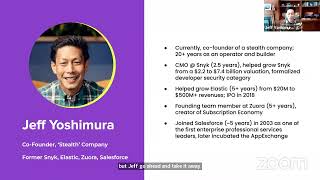
In a live Workshop Wednesday session hosted by SaaStr’s Caitlin, former Sync CMO and ex‑Elastic, Zorro, Salesforce executive Jeffrey Yoshimura shares the hard‑won lessons from his transition after 20+ years as an operator to becoming a first‑time founder. He walks through his day‑to‑day focus on building an MVP, the challenges of filtering AI‑driven market noise, and the importance of staying scrappy with capital. He contrasts the operator mindset of “how” (scaling, budget, KPIs) with the founder mindset of “why” (mission, product vision, culture). Key themes include capital efficiency and dilution avoidance, shifting from execution‑centric to purpose‑centric product thinking, deliberately shaping early‑stage culture, hiring the first ten elite employees with a focus on culture fit, autonomy, and growth potential, and operating without the heavy meeting cadence of larger companies. He outlines his framework for evaluating timing, pain, market, team, and network when deciding to launch, and shares practical tactics for acquiring the first customers through personal networks. The Q&A covers hiring criteria, equity for contractors, off‑site meeting formats, advice for bootstrap solo founders, and growth‑tool stack recommendations. Throughout, Jeff emphasizes consistency, milestone‑based fundraising (SAFE notes), and building a unified growth engine that ties product, engineering, GTM, and finance together.
Chapters
getting things adjusted. As a reminder, we encourage you to turn your video on so we can make this an interactive chat. But welcome everybody. Good morning or good evening depending on where you're joining us from. Thanks again for joining us and welcome to Workshop Wednesday. Quick announcement before we get started, just don't forget our next digital event, AI Day, is just around the corner. It's going to be in 2 weeks' time on Wednesday, the 27th of March. It will basically be an extended Workshop Wednesday. We've got multiple live virtual sessions for you to join. Featuring companies like PagerDuty, Shopify, Lightspeed, Contextual AI, IBM, Cisco, and more. So make sure you mark your calendars. I'm going to drop the link into the chat here, sasterai.com, where you can sign up and see the full agenda and updates. So as you know, we're back Workshop Wednesday, 10:00 AM Pacific every Wednesday. We're here week after week to share detailed, interactive, and hands-on topics and speakers. We bring the SaaS expert. You guys bring the questions. So please, would love to know, drop in the chat where you're joining us from. And also, is it anyone's first Workshop Wednesday? We'd love to hear. We are thrilled this week. We've got Jeffrey Yoshimura. He's the former CMO at Sync, and he was previously— has been with Elastic, Zorro, and Salesforce. Currently he's building a new company, and he's going to be covering a really great topic today: what he's been learning as he transitions from 20 years as an operator to a first-time founder. So get your questions ready for him. He'll walk through slides, and then we'll have plenty of time for Q&A. Plenty of time at the end to drop in and hopefully address all of your questions. As I mentioned, really encourage you to come video on so we can see you and make this as interactive as possible. I'll also be encouraging folks to ask their questions live. I'm happy to ask them. If not, so you can just drop them in the chat. Of course, we'd love to get started by throwing some questions at our speaker. So, Jeff, welcome. I'll give you a moment just to say hello, and then I'll get the introductory questions started for you.
Hi everyone, nice to see everyone. And Caitlin, I'm ready to go. So, uh, fire away.
Awesome, fire away. All right, here we go. A few warm-up questions so we can get to know you a little bit better. Um, tell us a little bit about your day-to-day role and what it currently looks like.
So the day-to-day role as a founder today, and, uh, we'll get into this as we kind of go through this topic of kind of this transition from being an operator to a founder, but really the day-to-day role, uh, you know, involves really a lot of work around the product. So kind of creating and building kind of the MVP of the product, doing a lot of research around kind of what is out there from existing kind of companies, but also there's a lot of kind of new upstarts, and then spending a lot of time validating those requirements with people within my network, but also design partners and future beta customers. And that really kind of is the day-to-day role that I currently exist. And it's been fun.
Love it. Excited to hear more. Next question. Last 12 months, what's the hardest thing you've worked on?
The— I think the hardest thing today is just filtering all the noise out there. There's just a ton of things that are out in this ecosystem. Everything is about this, this AI kind of craze or the rage. So it's really kind of digging in as deep as possible and just just trying to stay core to the kind of what you're building and then filtering out all that noise out there. Because if you are truly intent on solving a problem, you know, the noise is out there and it's always going to be there. But the most important thing is to focus and to have a belief in yourself and the founders and the team that you're working with.
Yep. Yep. Staying focused. I totally agree. And two more questions for you. What project are you working on today you're most excited about? We talked about this, obviously, this as a project problem probably is it, but anything more specific that you can share?
Yeah, I think, uh, I think the, the, this project of building a company, it's, it's real. Um, so it started with, uh, with an idea, uh, and then it, uh, kind of then, um, entered into this phase where, uh, you know, 3 of us got together to, to form a thesis around kind of what we were building and the problem that we were going and going to go attack. And then, um, you know, raising money from, from angels, um, and then kind of taking that first step of really saying, okay, there's people that believe in us and believe in the problem that we're solving, and then started to kind of take that and actually kind of, you know, build the product. And that's what is exciting is seeing kind of the progress that happens every single day from our engineers and our product UX person around just the foundation of taking what we had initially, which was an alpha, and now turning into a beta that hopefully we can put in the hands of, you know, many, many, many users in the near future. So that's what's super exciting and keeps it going every single day.
Keeps, yeah, keeps you showing up every day. All right. Favorite, current favorite SaaS tool or platform?
We live in Figma. I think we were talking about this before we jumped on this call. We just kind of live and breathe in this tool. Besides being a fantastic tool for, for designers, there's just a, a lot of good use cases. So as you, you do kind of product boards or ideation or kind of mapping out use cases, Figma has kind of been that, that tool that we spend probably the most time in. And there, there's a ton of tech obviously out there and, and in, in a different lifespan, I would, would probably talk about different tools as an operator that, that I found kind of useful as a day-to-day, but today it, it is Figma.
Great. All right, drop your questions in the chat for Jeff as we go along. As a reminder, we are recording this, so if you head to our YouTube page on the live tab, the recording will be available just after this, as well as his slides will be available on SlideShare. So I'll drop those links in so everyone has them handy. But Jeff, go ahead and take it away. Thanks again for joining us.
Alrighty, so, uh, I think I have a lot more experience, uh, as, as an operator, uh, that as a founder, uh, so you know, for this audience, I'm learning by the day, I'm learning by the week, I'm learning by the month, I'm learning by the hour. And I wanted to give kudos out to Jason and the entire SaaStr team and the community around, because what you all do is extremely helpful. It was helpful to me as an operator, kind of seeing kind of the lessons learned and how people apply, you know, critical thinking, but also practical kind of real application of strategies and tactics. And it's, it continues to be extremely useful as, as a founder. So kudos to, to you all for, for doing what you do. I love it. I live it. And I just wanted to kind of maybe put this, this slide up as a summary of the last 20 years. And despite a few successes, I can say that, that I've been lucky. There have been fail— failures. In fact, multiple failures. If you go back, pre-1999. There, there were failures back then. But most importantly, I wanted to say that I've learned from all the founders and all the people around me and founders within my network. And I hope to be able to give back to, to the community as I continue to build this new company. And I just want to really give a shout out to those all who have come before me, but also those who have helped me. So let's, let's kind of talk about the genesis and kind of how this came about. I don't post that much on LinkedIn. And it's— I wouldn't say I'm a prolific kind of poster, or social media person. I think as an operator, I just haven't had the time to do that. But over the holidays, I thought about a post as I was reflecting upon my first 6 months as a founder. And I created this post and I think it did pretty well. I don't know what LinkedIn considers kind of good or great or average, but this was the genesis of this talk today and feel free to go back to it. There's some helpful links. People commented and added other things to this post. So thank you all who contributed to this post and thank you for the opportunity to present today. You know, over the next 15 to 20 minutes, really what we— I want to go through are 5 things that I've learned over the past kind of 6 to 8 months. I'm going to try to give some concrete examples. But I want you all to think about things if you're a founder, or if you're an operator, think about those 5 to 10 things that you have thought about or experienced, because, you know, as these workshops are meant to be, it should be collaborative. It shouldn't just be kind of me presenting everything out there. So there are many things that I'm sure I can learn from, from you all. So the first thing that I wanted to kind of bring up was kind of this thing that I've experienced is really kind of capital. And you can think about this as an operator, as kind of fundraising and budget. And as an operator, I've been a part of hypergrowth companies where we've raised a lot of money from venture capital. And we've also allocated lots of budget in order to grow and sustain kind of growth above 100% in terms of ARR or revenue growth. And when you think about kind of, you know, all of that money that is being spent, you know, my job as an operator is to take this money and to add headcount, to add programs, and to apply this in order to kind of drive kind of that growth engine for the company. And that has always been my mindset is how do you do things in a capital efficient way. But there's always this need for more, because someone is always gonna say, hey, we have this new product that we're launching, we want to go enter this new vertical, we want to go into this new international market, or we need more pipeline. So really, this, this mindset as the operator has always been around how do you scale the business to sustain kind of hypergrowth. This has changed 1,000% as a founder. You know, less is better. You know, being scrappy. We haven't spent— we spent very little money in the last 6 to 8 months. And really, the focus here has been, okay, how do you do as much as possible without having to deploy the angel investment and capital that you've raised and preserve that money to build the product. But I think an important point as a founder that I share with my two co-founders is really kind of limiting kind of dilution. So as a founder pre-seed, kind of pre-institutional funding, our focus is to build a product first and to at least get a beta working that can be deployed. Prior to, to going out and raising kind of funds. And I think this is just generally kind of what's happening out there in the ecosystem. If you have the opportunity to go do that, that is the, the better approach than, you know, an idea and then raising money and then spending that money and then having to pivot. I can say that we, we've actually even not pivoted in terms of our vision, but pivoted on in terms of kind of the MVP features that we're building based on input from, from our design partners. And then lastly, just, just kind of this continued notion of being kind of scrappy. And I think as a founder, what we've also kind of embraced and thought about is, you know, how can we make this a great place to work for, for not just the founders, but for the employees and the future employees that we hire. So limiting dilution and making sure that everybody can participate and share in and hopefully creation of a valuable company over time is something that is an important kind of foundational value for us. Let's talk about kind of product here. As an operator, you know, you are given kind of a playbook. And whether you join at a Series B or C, or you're joining at a scale-up kind of pre-public, or even post-public, it's really about, you know, how do you scale kind of the operations of getting your product to market, getting it into the hands of as many customers as possible and making those customers successful. So it's really less about kind of the why and more about, okay, how do you do this? How do you, you know, go out and, and create as much demand for this product as possible? How do you go out and create an ecosystem around that to drive some sort of mechanics around scale? Now, as a founder, really, the thesis of this is started with, okay, what is the why? Why do we exist as a company? Why are we the best people, you know, at least in our mind, on the planet to go out and solve this problem? You know, what problem are we trying to solve? And, you know, really kind of just getting the mindset that, okay, who really cares about this? You know, we care about this, but how do we make other people care? And then kind of filtering down, okay, okay, here's what we need to build. Here's the early kind of beta design partners that we need to go out and talk with. And then this constant kind of pivot and this constant kind of adjustment and iteration. And that's really kind of been our mode of operation. Because you don't have this kind of scale that you have when you're, you know, in a company that has already reached kind of this product maturity or product market fit. So this has been my biggest kind of lesson as a founder is really kind of this whole mindset shift from really the how of how to just execute to the why. Let me briefly talk about culture. I've joined companies pretty early on, you know, first 10 employees, and I could feel that I was part of this kind of building up of the culture. But I think what I've realized is, is it is different. As an operator, you come into the company, and your job is to embrace that culture, your job is maybe set the tone and to help kind of, you know, build some of the building blocks of the culture. But, but your job is to live the culture, set an example and embrace it as you hire, as you scale the company. But as a founder, you know, your words that you put on, on a piece of paper matter. The words that you say in a Slack channel matter. Um, the, the type of conversations that you have with every single kind of, uh, person that you're trying to hire matters. And, and this really comes down to like, you know, defining that culture. Uh, and, and you probably don't even have it set in, in the very early days, but, you know, having alignment with your co-founders to, to really kind of define a culture that is unique, make sure that as founders, you kind of own and also live that culture, but build the flexibility in that, that some things may change. But I think it's important to kind of lock into some of those core kind of bedrocks of the culture that will persist as the company or as the team kind of goes through the ups and downs. Everything is not going to be kind of roses and chocolates as you build a company. Things are going to kind of go through kind of ebbs and flows. So that's what I'll talk about, culture. Hiring. I want to give kudos out because when I was thinking about this, as an operator, there are many people that help you hire. You have your finance partners that set your budget, that you work with to identify kind of the requisitions around the people that you look to hire, then you have your people partners and your recruiting partners. And you have this arsenal of people that really help you kind of, you know, hire those next 10 employees or those next 20 employees. And as an operator, you're really thinking about kind of the need to have— you're thinking about your kind of function in isolation. Of course, you care about the broad kind of function of the company around, okay, there's engineers or R&D, there's sales and marketing, there's finance and people, the people team. But you really think about, okay, within my function, who are the people I need in order to achieve the goals or the metrics that have been assigned to me and the team. So that's really kind of been kind of my mindset over the years is, okay, you know, you have to hire in advance, you have to constantly be kind of on the lookout for the right people, the right talent, the right folks to help scale the business. But as a founder, it's really different. It's really about, you know, the first 10 employees of the company and what makes kind of that really special around, okay, what are the must-haves? It's not just the nice-to-haves or the need-to-have, it is the must-haves. And I think most founders would agree that those first 10 hires are most likely outside of the founders going to be folks in product and engineering, because you have to build that product. So really, this has been, I think, a fantastic exercise of going through this with, with, with, you know, my co-founder and my CTO around, you know, identifying these kind of must-have kind of first 10 employees to bring into the company. Now let's kind of finish up with operating. As an operator, you are— I don't want to say the rat race, but sometimes it feels like a rat race of like, you have weekly KPIs, you have monthly reporting, then you have quarterly reporting, then you have offsites, then you have management meetings, you have functional team meetings. There's this operating kind of DNA within the company that is happening. And then a lot of the work is driven top-down, and I'll put myself in those shoes around— I am allocating work kind of top-down. Of course, you want to kind of facilitate and offer kind of people to provide input and advice and, and ideas kind of bottom-up. But at the end of the day, when you're operating at scale, everything is top-down, or a lot of it is top-down, because you're looking at data that say, okay, hey, we need more pipeline. Okay, great, we need to go figure out a plan to go build more pipeline. Or if you have a PLG model, user acquisition hasn't been as good as it has had been in the previous quarter. Okay, well, how do we, we go out and fix kind of, kind of that user acquisition part of the funnel? Or maybe it's a product launch, and you have, you know, information that you're going to launch a product or new product or feature in 3 months, and then you have to build a launch plan around that. So again, a lot of these things are being kind of, kind of topped out, and then you're facilitating that across your team. As a founder, you're not getting this work. It's really, you have to go find the work and your kind of early kind of team, it comes down to this being part of the founder kind of DNA of always being able to find work because your day is not gonna be completely filled with meetings left and right and top down like it is if you join a company at scale. It's really up to you to go find work and then, work in a way that you can facilitate with your first 10 employees, you know, the kind of collaboration that is required in order to, to really kind of build this kind of, kind of early culture of operating where, you know, you, you want to become an elite team. And elite team means that everyone who is your first 10 employees, they're operating at a level above kind of this median threshold. So if you can think about kind of your existence as an operator, you know, in tech, we probably hire people that are overachievers. So they're sitting here at this line, and this is the line of like, kind of the general kind of masses, you're already hiring here. But in this early founder team, you know, you want everybody to be at a line above that, because everybody needs to be elite, because you have limited resources, limited budget, limited time, you got to get a product out there. So this has really been kind of the biggest kind of change, I think, in terms of the operating mode is, yeah, you do have more time, but you have to go find work and you still got to operate above that threshold. So then if you are thinking about becoming a founder, I wanted to kind of highlight some things that at least I went through over the past kind of 6 months as I was deciding to join this movement here, I guess. Right timing, right pain, right market, right team, and then right network. So, you know, I've been operating for a long time. I probably could have become a founder, probably had an idea early on, but right timing is a lot. It's not just you personally, but it's the people around you, right? You know, we all have families and maybe children, and it has to be the right timing. Uh, and I think that that's important because when you're taking this dive into this world, uh, it's, it's a journey where you have to think about this over the next 10 years. It's not just something that's a short-term hit. So, uh, you know, it might not be the right timing. It wasn't the right timing for me, you know, 10 years ago. And then if you take back another 10 years before that, I wasn't experienced enough to go out and do this, or I didn't have the idea enough to, to really feel that I was the right person to go do this. Right pain, I think you have to be in the position where you can either see the pain or you have lived the pain. And it's a pain that you feel that you are the right person to go out and solve that pain. Right market, I love joining companies as an operator. I've joined companies in downturns. I like seeing the upswing in a downturn. I think some of the most innovative and disruptive ideas get started during a downturn, but also new technology change. Whether it was the, the change from kind of on-premise into SaaS or this movement around kind of big data and kind of traditional databases into kind of NoSQL, high-fidelity databases to kind of cybersecurity and now kind of this movement of kind of everything kind of being built through kind of generative AI and AI. I think it's, it's right market, right team. I think you have to, to really kind of right-size and make sure that you have people around you that, that are up for this journey and that Also people that have been through it before, and that was really important in at least my decisioning, was joining two people that I have, you know, huge respect for. They've done awesome things in their careers, and we just gelled really well together. And then finally, you know, right network. I think as you kind of live and work in this world is you build a network, and hopefully that network will help you evolve kind of your thinking, but also help you kind of get started and, and help you kind of do the things that are the right things to do in terms of learning from, from mistakes and experience that other people have had. So then I wanted to leave this one because this was something that we had some fun with the other day was we have a product UX person and like, we're working like crazy right now. And I'm the person on the right side. I'm doing a lot of talking and I'm out there, you know, networking and connecting with people. And it was like, I'm just blah, blah, blah. You know, our UX product person is, you know, coming out with amazing stuff on Figma and he's the one who shot something like this in a channel. And then, you know, one of our engineers chimed in and said, well, this is me right now. So I think it's important to have fun, right? And to make sure that, you know, we live in this virtual world, we live in this distributed world. We're not in the office every single day, like maybe things used to be, but to be able to have fun virtually. And then lastly, whether you are an operator, founder, I think it's all about kind of this one team concept. And as an operator, I've always embraced this concept of, of really being kind of one team, and being— having alignment. And really, that is really, really important to really kind of long-term success. Is this concept of one team. So I am now, I guess, open and ready for Q&A. So I will stop sharing and look forward to hearing from others what other tips you all have.
Perfect. Thanks so much, Jeff. Got some questions coming in. Keep them coming. Of course, I'll ask if you're comfortable coming off mute so you can ask the question yourselves. We also have some questions coming from some of our social channels because we are streaming this live. So questions coming in there. So just a first question coming in from Charanya. Sorry, I'm not sure if I'm saying that right. What has been your approach so far to get the first 10 customers?
It's simply network. It's using my network. I have a lunch meeting today where I'm sitting down with somebody who represents the ICP, and it really comes down to the leveraging network. And this is my personal network. So if you go out and raise money, then you're going to have a network that extends itself from either the angel investors or your venture capitalists. But at least my MO has been leverage the network that I've developed over the many, many years.
Another question. Giovanna, do you want to come off and ask your question?
Yes, sure. Thank you. So yes, my name is Giovanna. I'm a fractional CFO for B2B SaaS companies, and I have two customers that have the same problem. They are at $2 million annual recurring revenue, which indicates that they already have found product-market fit. However, with the limited resources that we have, there is always like the need to improve the product. Make it better and also scale sales. And the sales department always wants to add this, add the other to have the product, to make the sale. And the product team is just, doesn't have the bandwidth and the resources to improve it. How do you prioritize this? What do you do first?
Yeah, so we're not at that stage yet, but by experience, I can tell you that I've been in many of those conversations before. So I think it, it comes down to, to sticking with, if you have, if you're early, early stage, you have an MVP and you, you have to stick with that MVP and you have to go out and launch that MVP and then get feedback on that. And then based on that feedback, you're gonna collect that feedback from, from those customers that have now been, been utilizing your, your product or using your product. And then you will then prioritize those features and put it on a roadmap. Now, sales is always going to come down and say, okay, hey, I need— this customer will buy if you commit to feature A, B, and C. I think that that's— it can be a dangerous game, because unless they've already committed to kind of those dollars, and unless those features— there's two things. One, they should commit dollars to actually, you know, a A, help you build that product or build that feature, but B, it needs to be in line with the overall vision. If it's not in line with the vision and it takes you kind of off the skew, then that's really hard. And, you know, we dealt with a lot of that stuff even in the early days of Salesforce. I was not a product person and I was not a marketing person. I was a services person at, at Salesforce. And we used to get a lot of requests around, hey, can you build this integration for me? Can you build this custom workflow for, for, for, for me? And these were things that were off the roadmap. So we simply had to say no, that these were things that the product team and Salesforce was not going to build for the customer. So I think kind of prioritization, but also saying no and aligning that to the future kind of roadmap and vision that you all have is important.
Great. Thank you. Andrew, do you want to ask your question live? Happy to ask.
Yeah, absolutely. Hey Jeff, name's Andrew. Curious, as you, in your experience, as your company's growing, presumably the needs, the demands of today are not the same as when you started. So as you're adding that first core group of employees, how, how have they grown with you? Were you looking for people that are going to grow? Are you looking for people that are going to solve that immediate need?
Yeah, that, that's a great question. I think, I think it's gonna depend on, on, on the kind of company that you're building. As well as also on the, the kind of the, the, the dynamics around kind of the found founding team and the, the operating kind of DNA of the exec team. I personally have, have always liked kind of hiring people that I think can grow with the company over time and can, can really accelerate and take on more. So people that are very cross-functional in the very, very early days, so somebody that can actually, you know, you know, be best in class in one thing, but also contribute and help out in other things, because you're going to have to have people that do multiple roles. So hiring people like that early on, I think is really important. As you scale, you have to actually probably kind of then hopefully those people move into some leadership roles, but then, then you add people that are very specific and very deep in a specific kind of functional area. And that is how I would prioritize those hires. And those people, you want to say, okay, if you hire somebody at, say, $25 mil or $50 mil, you want to see and understand and feel that they have a path to get the company to $100 mil plus. So, you know, if you're growing at 100%, you know, that's only a couple of years where you see that growth opportunity for that employee.
Awesome. Thanks. Yeah, I love that idea of hiring best in class for one skill set. Reminds me of something I've heard previously. So thanks so much, Jeff. Also, if you do voice training, your voice is incredible. I feel like you could be a voice coach.
Maybe the next startup idea.
I'll train AI on my voice and everybody can utilize it.
He's just been talking all day. That's why, where he gets it from. Jeff, this is kind of a follow-up question or a similar question, so I just want to make it a follow-up. When you talked about the hiring criteria, right, you talked about has to be really elite and you can't really lower the bar and you can't really cut corners. You know, now as a founder versus an operator, can you just share a little bit more? Do you have a criteria or checklist, or what are some of your hiring tips to make sure that you keep that bar high? And how do you identify that in an interview process? What are some things that you found that you need to stick to now that you are a founder versus an operator?
Yeah. So I think, uh, as a founder, um, when you interview people at this early phase, uh, stage of the company, it, it's, it comes down to like, um, culture fit. Um, can you see this person and does this person see themselves as being kind of part of this company and, and just part of this kind of the DNA of, you know, being, being the first, first 10 employees and, and that's, uh, You know, are they— do they fit the mold of somebody who, you know, you know, you're gonna have to spend lots and lots of time with every single day, every single week. You're gonna have to get together with these people. So I think that culture fit is really important. And I think it's then also then understanding from that person whether they're up for that ride. So some people have already experienced that ride and they've had either successes or failures, but other people, this might be their first time. This is their first time jumping into, to, to an early-stage company. And maybe there are other considerations, because if you take a look at our company right now, we are angel-funded. We do not have an institutional kind of venture capital firm that has backed us yet. So it's not just that person. That person has a family, a significant other. There are other decisions that weigh into that equation around do they actually, you know, accept and feel that, that their either wife or husband or partner is actually a willing kind of advocate for them to be a part of this company. So I think that's the first thing. And I go back to kind of my first kind of start coming out of Salesforce is I joined Zora as, you know, employee number one. And the first thing I first conversation I had was— it's now my wife— was, you know, hey, I'm gonna follow Team Zoe out of Salesforce and be employee one. I'm probably not going to get any salary for at least the first couple of months of this journey. But hopefully this is going to pay off. And if I were to pick, you know, one or two or three people, he'd be one person that I would follow out of Salesforce. So I think it comes down to really kind of Understanding kind of those dynamics. And of course, then you have to assess skill set, function, role. Can they work autonomously? Can they take ownership of things? I think those, those things I think we all interview for, but I think it comes down to that right person, that persona fit, but also the surrounding kind of elements around them.
Do you have any unusual decisions you've made because you've learned from being an operator? Like, or mistakes that other founders have made that you thought, I'm going to do it differently? You know, you talk— maybe it's across hiring or culture, any decisions that you've made recently. Has there been something that has stood out to say, normally as an operator would have done this, but as a founder I'm going to do it this way? Can you just tell us a little bit more about that?
Let's see. I, I, I— well, I don't know if it's in my, my decisions, but I think we definitely have, have seen kind of how, how people work. Um, So one of the decisions that we made recently is we're a small team of 7 people. And, you know, as an operator, you get in this cadence of— and we're distributed, so you get this cadence of getting people together on a quarterly basis for an offsite. We had been doing this already as a founding team. And then when we had 1 or 2 employees, we had people come in and it was fantastic, right? We would get together and it was an amazing opportunity to to connect with other folks who we just hired. Most of these people came from our networks that we already knew, knew them already. But a decision that we recently made was, we are so darn busy right now, that we're still gonna get people together. But there's no agenda, it's gonna be work time. And the engineering function is they're going to be in a room and they're going to be working because because we can't afford to disrupt the product roadmap of what we have, you know, dates and deadlines ahead of us. So the value is going to be like, oh, we're going to get together for dinner and some fun stuff in the evening time. But during the daytime, we are working. And for me on the, on the go-to-market side, it's just going to be like a normal week. But I'm setting up meetings within that proximity of where we're going to be all together. But that was an interesting kind of decision, because usually you get together with people and say, Hey, we need, we need an agenda. And what's the day 1 agenda? What's the day 2 agenda? What's the day 3 agenda? And this is just like blanket, there's no agenda.
Yep. Yeah, that's great. And productive for sure. Laura, do you want to ask your question? This is an interesting one. We're kind of moving more into the financial sides of the—
Hey, you hear me?
Yeah. Hi, Laura.
Oh, now we can't hear you anymore. We lost you. Oh, you went on mute.
Yes. I think I hit the spacebar or something by accident. So my question was, I have a couple of part-time software engineers. I'm a software engineer. And switched to— I was a CTO at a startup and then a different startup, worked a couple of big places. But I'm trying to figure out sort of how to really engage the contractors more. I'd like them to become full-time employees when we get funding. We haven't gone for funding yet. We've really been fine-tuning the product with some money I have. And so they're hired as contractors part-time. And my question is, is there some way to compensate them with equity? Have you seen any models that work along those lines? And then I guess just thank you for the rest of the discussion. By the way, I do know what to do with that time where you're all together. I have run some workshops that actually really accelerate the company, if anybody's interested, but as an engineering lead.
I would love to hear that.
I solve big problems with the company. So, but happy to talk about that offline.
So, so on the question around like contractors and early employees and equity, is this at least we, we have decided to, for contractors, which you do have a few contractors, we do not give equity out to contractors unless they become full-time. So that's kind of kept things simple for, for us. And we're not out there right now at this phase of the company because we feel that we need to build the base first. So the base kind of platform, kind of core capabilities before we go out and kind of ship kind of responsibilities to like an agency. So we actually haven't dealt with that here. And I think at previous companies, even early on with contractors, I don't believe that we have given them— I've seen equity given out to contractors. Now for early employees, I think you should definitely think about, okay, what is the equity and compensation structure for your first 10 employees? And there's all the bans and information out there from all these kind of comp companies and comp surveys around the, the allocation that's required.
I'm all for getting them full-time and on it, on, on getting them launched as employees, but we're just not there yet.
So, um, yeah, I think that's tricky because, because then you don't know whether they're fully dedicated, where they're going to come on full-time. And, uh, I mean, if they're working 40 hours a week and that you intend to have them hired full-time eventually, then maybe you can, you know, give them equity once they join and maybe you could up the ante a little bit for the time they spent. But I think it's a tricky one to deal with. I think consistency is the most important thing that I think you have to be consistent with how you distribute equity and leveling and pay.
Yeah. Yeah, definitely, uh, been— it's been tricky sorting it out, um, especially— I mean, trying to stay, obviously stay compliant and, uh, recognize what people are putting in and, and then also wanting to, yeah, like extend that. Um, but, you know, I, I think going for some additional funding is— seems to be the answer. So that's really where we're at right now. But thank you.
Yeah.
And as far as the all-hands, I'd love to talk to you about that at some future point.
Yeah, I'd love to.
I'll send you my LinkedIn on that.
OK, Laura.
Yeah.
A few more questions from folks. So Ariel, do you want to come off and ask your question? Jeff kind of answered this a little bit, but not sure if you want him to dig a little bit deeper if you're on.
Yeah, sure. And I go by Ariel, by the way.
Sorry, Ariel.
It was nice to meet you. From your experience and your journey here, what specific factors or criteria helped you determine that right timing? Was it the idea itself, maybe getting that initial business plan, or a combination of business plan plus seed funding, team formation, the like? What were those factors? Yeah, this was, I think it's a super unique time. So one is OpenAI came out with their ChatGPT out in what, November timeframe. And then a few months after that, you started to kind of see this kind of sea of kind of innovation happening around kind of, I call it the rewrite of existing SaaS apps. And you can either say that you're gonna AI-ify your app or you can build something scratch as kind of, you know, native kind of, kind of from, from, from ground up or bottom up. And that was definitely one factor is, is like if I, if I remember my days over at Salesforce in the early, early days is, is there were on-prem companies and plenty of on-prem companies that say you don't need to build a kind of true multi-tenant SaaS application is, is you can just take our existing on-prem app and just host it. And hosted as, as like an application service provider. And then, you know, if you fast forward 5 to 7 years after that, every, every app company that was either funded or started, you know, was built kind of as a native kind of SaaS app, and you stopped hearing about kind of hybrid and this world of on-prem. So that experience also kind of shed some light around, I do think there's an opportunity. And if you look at the amount of apps that are out there that there is going to be consolidation. There is going to be companies that are going to really not exist because this new wave of applications and the new way to build a company is going to be much more efficient, much more scalable. The technology is changing at just such a rapid pace. And hopefully underneath this, there's this challenge that at least, at least, at least I have with my co-founders is can you build a company that is much more efficient in terms of not just the go-to-market aspect, but also the product dev aspect of building a company. So those things all put together around, okay, and then we had a problem that we want to solve, pain point. We had interest from kind of early kind of angel investors like, all right, I'm all in. Why not do this? It's gonna be fun and, you know, a little scary at times. But yeah, I had full support from at least the people very close to me that you should just go do this. So it sounds like a combination of things and that synergy at the same time. Awesome. Thank you.
Great. Well, and there's definitely people from your community or your network, Jeff, that are on here just saying great presentation. Love—
there are—
being a founder can be really lonely. So we're excited to be able to offer presentations like this in a community where everyone can come together and ask these types of questions. We've got one more question, it looks like. And then some folks are asking, we'd love you to tell us a little bit more about your new business. So last question you can leave us with, it's kind of this whole presentation, right? It's a question from LinkedIn. Do you have any advice for bootstrap solo founders who are transitioning from the operator mindset to the founder mindset? Again, you sort of walked us through your tips here. Maybe it's, do you have any advice for bootstrap-specific solo founders or just kind of a piece of advice you wanna leave us with? Could be something you touched on or something new.
Yeah, I mean, the way we bootstrap this is obviously we, the founders, have bootstrapped part of our investment into building the company. But we've also raised money on a SAFE note. And I hear a lot of folks kind of raising money on a SAFE note. And you can have SAFE notes with the caps, they have SAFE notes without a cap, and you can then convert that SAFE into kind of your first kind of formal price round. So we do intend on having a formal price round at some point in time to kind of set the price and to peg a price at a fair valuation. We're not looking for crazy kind of valuations that some companies go out and achieve, which I think is oftentimes not the right move. You have to be realistic. But the SAFE note, I think the important kind of advice around the SAFE note is to make sure that all investors are on the same terms and don't deviate on those terms because then all of a sudden then you get this cap table where you have someone here on this note and someone at this note and then people talk and people find out. So You know, be consistent again is something that I think is an important theme, and that is something that we've done. And then just be milestone-based, know that the amount of money that you raise will take you through this period of time, and then manage to that cash, and then manage kind of your burn and manage kind of, you know, that if you're gonna raise a round of funding, you can't wait till you're almost out of money to raise, kind of that funding round. So you have to kind of manage kind of this burn. So you have to build a timeline, a process, and then, you know, stick the company to the right milestone. So that's kind of the advice I leave folks with. In terms of the problem that I'm looking to solve here, it is a problem that as a chief marketing officer and as someone who has been very, very close to the sales organization, It's a problem that I have faced with around— if you think about kind of your engagement all the way through kind of how you buy and sell or how your sellers sell, there's a lot of things that are broken and there's a lot of tools out there that are trying to kind of wedge themselves into this space. But we think we have a new and a more innovative way to be able to solve this approach that, you know, at the end of the day, if you're a founder and you're building a company, whether you're in cybersecurity or dev tools or GTM tech, you got to go replace other tools. There's no CFO or no, no executive who's going to buy off on like, hey, we'll buy this new tech, but it's going to be add-on tech on top of everything else. You got to go, you got to know that you can actually really, really demonstrate value even early on. So More to come as we, we get our product out there later this year. But that's just a little inkling of what we're doing. And it comes right back to, you know, me being a buyer, me seeing the pain, people around me seeing that pain and, and really coming out and hopefully doing something special and meaningful for, for not just myself, but the industry as a whole.
Awesome. We'll be watching more for what's to come and all the best in the meantime. And thanks again for sharing Thanks for sharing your insights. Quick one from Laura. What's your growth tool stack? This is a fun one.
So growth tool stack. Oh, growth. Well, you, you'd have to have some sort of product analytics set up. So, you know, Appendo or Amplitude. I think you have to have all your data in one place. So if you can have all your data in, in a, some sort of, you know, kind of data warehouse, this could be, be, be Snowflake or Databricks. There, there's even new tools out there. I, I was talking to a founder a couple, couple weeks ago, and there's these new tools that actually obfuscate the need to actually even put all that data into Snowflake because it it gets quite expensive, especially at scale. But as an early stage, I think you're gonna need a place to put all that data. And then, then you're gonna, gonna, you're gonna need to be able to have the right kind of team around that to be able to take advantage of making sure that your, your growth engine actually, you know, drives the right behavior around user acquisition, the conversion of those active users kind of into either, you know, freemium users or paid kind of paid kind of customers. And then you need to be able to drive that retention engine around kind of those users. And it's really kind of an all hands on deck kind of effort. So you just can't think of growth as being a marketing problem. It involves working with your product team, your engineering team, and having a holistic view of the product itself. Because the best products that win the market really have this mindset of, you know, it's not just one function trying to build something. It's this unification across the GTM and R&D and even your finance partners that are looking at all the data underneath that around kind of, you know, how much does it cost to run this? You know, what are the metrics that, that, that you know, the tool is, is achieving, uh, or the product is achieving. So that's what I'll end with. Uh, it's a, that's a loaded question. That's probably a topic for, uh, Caitlin. There's many people out there that are very well versed about growth and, and product-led sales, product-led growth.
Yep. Another topic for another week. But thanks so much, Jeff. We really appreciate your insights. Thanks everyone for joining. Reminder to sign up for AI Day, which will be in 2 weeks. Um, slides and the recording will be available on our YouTube and SlideShare. And I hope everyone has a great rest of
More from Jason

Why Your Next Hire Should Report to an AI, Tragedy Apps, and Too Many AI SDRs? | The Agents #004

Our Agents Drove Our Salesforce Bill Up 80%, Marketo Hates Agents, and We Stealth-Churned Off Notion




Managing 20+ AI Agents: Lazy Agents, Our $500K AI Bill, Stealth Churn & the Death of 60% Solutions




