From Product Market Fit to Scale - Perspectives from Founder & Investor
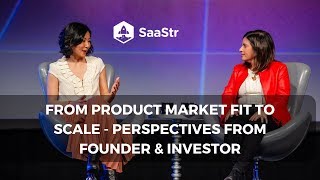
In this moderated conversation, Vista growth‑fund partner Renee Stewart and Zapproved founder‑CEO Monica Egan walk through the full lifecycle of building a SaaS business—from the early, recession‑era angel rounds in 2009‑2010, through the first institutional round in 2014, to the 2017 partnership with Vista Equity Partners. They compare venture capital, growth equity, and private‑equity financing, explaining how ARR thresholds, growth rates, and risk tolerance dictate the optimal capital source. Monica shares the quantitative metrics that impressed investors (ARR > $5 M, churn < 5 %, gross margins > 80 %), as well as qualitative factors such as product superiority and founder mindset. The dialogue then shifts to operational scaling: moving from founder‑driven sales to repeatable processes, building metric‑driven dashboards, and the cultural shift that occurs after crossing 100 employees. Both speakers discuss what founders should look for in an investor partner—track record, hands‑on support, and a collaborative board culture—and offer advice to early‑stage CEOs about mindset, avoiding self‑criticism, and leveraging networks. The session closes with reflections on common founder mistakes (delayed metric visibility, under‑estimating leadership needs) and a reaffirmation of Vista’s partnership model as a catalyst for sustainable, predictable growth.
Chapters
and CEO Monica Enad. Hi guys.
Hello. Thanks for sticking with us this afternoon.
I know, I know that we are, uh, what is between you guys and parties and happy hour, so we'll try our best to make this interesting and educational. Uh, I'm Rene Stewart, and I'm a partner at Vista, and I co-head the Endeavor Fund, and with me today is Monica Enad, founder and CEO of Zaprøvd. And we're here to share with you guys some perspectives on the journey, uh, that a company goes through from a fundraising standpoint as well as some of the operational challenges as a company hits product-market fit to all the way scaling the business. A little bit about myself, uh, I've been a software investor for pretty much my entire career, um, and I grew up in the heart of Silicon Valley. And so I've seen kind of the ups and downs and ebbs and flows of what this great, uh, what this great town has to offer over the last few decades. On Vista, we are the largest, most prolific software— enterprise software investor in the world with over $45 billion of cumulative capital raised. And most people know us for some of our largest deals like the Marketos and the Mindbodies of the world, but we actually invest all the way down to the growth stage. So I co-head Vista's growth fund, which is a $500 million fund that partners with founders and CEOs, uh, who are running $5 to $20 million ARR businesses. And we provide the capital, the support, the tools, the knowledge to really help them grow to $50 to $100 million in a sustainable and predictable way. So with that, um, I'll let Monica introduce herself and share a little bit about Zapróved.
Thank you so much, Renee. I'm so happy to be here. My name is Monica Egan, and I'm the founder and CEO of Zapproved. Zapproved works with corporate legal departments. We help them respond to litigation. In addition to being the CEO and founder of Zapproved, I have a few other activities. I am really lucky to be part of a high-growth startup on the board of Auth0. It's an identity as a service company. Um, actually in Bellevue. And, uh, I serve my local community in Portland, Oregon, by being the chair of the board of the Technology Association of Oregon.
So Monica, you know, you have obviously taken a company from figuring out product-market fit to now a company of scale. Can you walk us through a little bit of the fundraising journey from literally the first dollar that you raised to your most recent round?
Yeah, we founded the company in 2008, which many of you who were around then know was a, it was a pretty difficult time to start a company. In some ways, I think it made us a stronger company, but the fundraising in 2008, 2009 was pretty difficult. So we, we decided to pick one thing, have it be non-discretionary spend, and litigation is typically a counter-recessionary a counter-recessionary phenomenon. In that recession, it actually did go down, but we decided to be the best at one thing in that litigation space, and we were able to raise angel funds in 2009. We raised $1 million in 2009 and used that to get some early traction with customers. Kind of based on the first, say, 15, 20 customers, we were able to raise another angel round in 2010. That one was actually— the first angel round was tough, hard. I must have gotten rejected maybe 50 times, 100 times for every one small check that I got. Um, took a long time. Based on the success we had with the early traction, in 2010 raised $1.5 million, kind of more of a super angel round. Got more expertise around the table. Was able to get the founder of Battery Ventures, the, one of the first initial partners at Sequoia, um, Also Steve Singh, who at the time was the CEO of Concur, great SaaS company. He's the CEO of Docker now, was also one of these sort of super angels, did larger chunks in that second round. And then frankly, we, based on that, we started, we hit cash flow breakeven and we started growing organically and getting great traction with our customers and kind of cruised for a while just growing organically. In 2014, based on, you know, we were sitting at a trade show actually in New York that we go to every year and sitting with all of our customers back to back in meetings and realizing that something had changed in the environment. We were serving the legal teams who were frankly, they're late adopters. They were late to the cloud, late to software as a service, but they were starting to say, hey, we have cloud initiatives and we need to get more of our We need, we need to go with the— where the rest of the corporation is. And so based on that, sitting with kind of a couple hundred corporate customers, really high retention rates, good growth in our revenue, we decided to raise our first institutional round in 2014 and expand our product line. From 2014 to 2017, we actually spent time just getting traction, building out that product line and getting traction on the, on the expanded product line. And then in 2017, actually partnered with Vista Equity Partners based on the success to really kind of say, okay, we've really hit— we have a larger market, we have a larger product offering to, to hit, to give to our customers. Let's scale this thing.
These days there are just a plethora of options, financing options. There's Angel, um, seed, there's venture, there's even venture debt, there's growth equity, there's private equity, there's so many options. How, um, and you've kind of raised capital from a lot of those different choices. What was that journey like and how did it differ from, say, the venture to the, the private equity realm?
Yeah, um, I've been lucky to be part of some great companies that have done, uh, you know, venture You know, at Auth0 we have Bessemer, Trinity, Meritech, Sapphire. I was part of a company before Zaprude had Bessemer, Redpoint. So top-tier venture capitalists that I've really enjoyed working with and I had great respect for. But when it came to Zaprude, you know, I think it really depends on your business and your aspirations for the business. I started to realize, I think maybe because we started in a recession and every, I mean, Look, every founder knows that every first 20 customers are hard fought, hard got, lots of blood, sweat, and tears to get those 20 customers. But when, as the company grew and so many early customers had taken a risk on us, I kind of decided that I, I was not interested in a lower probability, higher return. I was interested in high probability of return and high probability of success. I personally am at a stage in my career, you know, where I'm not going to do 10 more startups. And even then, you know, I don't have a portfolio of, of, of company— of entities that I'm working on. I have just this one, and I really needed it to be successful. And that's why working with Vista, working with our other— K1 was our institutional partner— really was a good fit for us because of our market and because of how it grows and because of the probability of success.
Yeah. And I think, you know, one of the things that, you know, we see, and a lot of founders approach me and ask, how do I figure out what type of investor to take on?
Yeah.
I think some of that has to do with just your peer size. So usually the rule of thumb, and this is general, you know, I'm obviously being generic here, but usually kind of when you get to that first million of ARR, you're just raising angel and seed round. Once you cross that million-dollar threshold, that's where, you know, VC is really an option. And then it's when you hit $5, I found— I don't know if you saw this to be the case— but when you hit $5, that's when your options really open up. You can continue to raise more VC, you can raise growth equity, and then private equity like ourselves would be interested. And when you get to that stage and you're trying to figure out, you know, What, what do I do? What, you know, what are those options? Should I pursue? I think it really comes down to two big things. The first is the fundamental characteristics of your business. So if you are at $5 million of ARR and you are doubling, tripling, quadrupling in growth, I would argue that VC is probably your best path in terms of being able to provide you the capital and support that's well aligned with your goals. However, if you're growing respectably, but you're growing less than 100%, you're growing 50, 60, 70%, chances are growth equity and private equity is probably a better option. A lot of VCs won't even consider a business that's sub-100 million— or sorry, sub-100% in growth. You know, I think private equity is a better suited fit for that type of growth. The other thing to think about is really your risk tolerance profile as well as what your ultimate goals are. So if you want to become the next Facebook, Box, Slack, and you have those aspirations and you have a high appetite for risk, then venture is really the best path to support you to get to those aspirations. However, if those aren't your aspirations and you just— you've built a great business, you want to build a great sustainable business where you don't want to have to worry about running out of cash, you don't want to worry about, you know, having to fundraise every 12 to 18 months, then I think it's, you know, good to consider the private equity model because that business model seems to be a better, you know, better suited for the outcomes that you're trying to drive. Would you?
Yeah. And I think for me it was kind of a soul-searching journey because there is this allure of the home run and, You know, go big or go home. And I think after a little bit of experience with that and sort of all of the sacrifices that early employees, early customers make, you know, for me it was, I looked at the Midas list and you say, okay, when you look at kind of the top venture funds, it's really 1 or 2 companies that return the fund. and that's when it was like, okay, if you can be that one or two, that's great, but if you're really focused on absolutely succeeding and sustainable growth at a, you know, at a more reasonable pace to ensure absolute success for all those early stakeholders, then, you know, I think the model works really well.
Yeah, I think one of the other key differences between venture and private equity is the stake. So in the venture world, you are giving up 10 to 20% of your stake each time. In the private equity world, you're giving up potentially, you know, 51, 60, 70%. Now you're getting some liquidity, but you are, you know, giving up what is sometimes perceived as control. Monica, I know you went through that journey, and that was not an easy journey for you. How did you ultimately get comfortable with kind of quote-unquote giving up control?
Well, I think, you know, you've probably heard the story many times of when your colleague approached me the first time and I said, there is no way I will do a deal with, with Vista. I'm just not gonna do that. And I kind of held to that for a little while. And then after getting to know the Vista team, getting to know the model, first of all, like, I didn't understand that Vista is the most active— PitchBook says that Vista is the most active software. Investor. I didn't know 380 transactions and zero losses. And I just don't think I understood what the model was, and I had a lot of misconceptions, frankly, about being spreadsheet-oriented or thinking that you guys would know how to run my business better than I would. You know, kind of those things. And so after that journey of kind of learning more about Vista and learning what kind of track record Vista had, And realizing, you know, for me personally, I decided, look, I want to be the best software CEO that I can possibly be. And the best-run software businesses are in the Vista Equity portfolio. I mean, there's a track record of consistent best-run software businesses. And it's not just working with Vista. I love working with you guys, obviously, but, you know, we also get together as CEOs all across the portfolio. Just this last weekend, spent some time together as a retreat. And what I learned from that network and the sharing that goes on in that network, I think because of the dynamics of the investor base, it's pretty remarkable. So it took me a while, but I think I realized I'm gonna— look, control is kind of a fictional thing in some ways. As long as you're doing well, as long as your company's succeeding, you've got control. And control on paper is kind of, I don't know. So for me, it was, I want to figure out the best way to make the company as successful as possible, and decided that that was a really good option.
What are some of the things that you look for in a partner?
Yeah. You know, I kind of talked about my misconceptions about Vista. But I really wanted somebody who was gonna be able to be in the trenches. It's hard business. And I used to think that, oh, that early stage stuff was really hard, and that scaling stuff, I mean, come on, lots of people do it, it's gotta be easy. The truth is, it's hard at every stage. It never actually gets easier. And I wish someone would have told me that, although I probably wouldn't have listened. And I think having people that, you know, when you're in early stage, You're kind of a unique snowflake because you have your own product and you're trying to find product market fit and there's pricing and there's all kinds of competitive landscape dynamics that are unique to you. As you're trying to scale, a lot of the problems that software companies hit are not unique snowflake problems. They're really common. Like as I talked to the other CEOs, even at the Vista retreat this past weekend, we're hitting all the same problems. And how— what they're trying to solve is the same. So I think I look for a partner with track record and some expertise and some willingness to roll up— if you were wearing sleeves, I know you would roll them up with me. You have on many occasions and kind of be in the trenches and really kind of help me get through. And the transparency and the, you know, I don't even think our— our board meetings don't feel like board meetings to me at all. They actually feel like working sessions. Like where we actually just come in with the hardest issues and everybody sits around the table and kind of throws out, you know, and we kind of beat each other up and best idea wins. And everybody's bringing their, their different experiences. You know, that's what I love about the partnership.
Got it. Just switching gears a little bit, maybe talk a little bit about your business journey. What, what were some of the key milestones that you hit and some of the step function changes that you experienced as you were growing your business, whether it's hitting kind of number of employees or ARR?
Yeah, I think there are a number of them. And it's funny when you stop to look back on it. Like I said, as a founder, the first 20, 30, you know, we're kind of an enterprise sale, larger price points. So we're 20 or so customers or, you know, me on a plane every day calling everyone in my network trying to get whatever meeting I could. And I think realizing getting from there to repeatable, sustainable sales process where you have a sales team that's actually, you know, actually delivering and closing business without you for the most part was definitely a big change. And then kind of in the last, the scaling is learning the levers of the business, learning the leads, you know, learning all of the metrics around, okay, this is how much we need to put in to get this out and this is is the timeframe and kind of learning how to instrument the business was definitely a big change. You know, it changed for me from kind of looking at the business from more of a dashboard view of those metrics than really being in the trenches. That's a big change. That was definitely. I think the other thing is the number of employees. For me, once we hit over 100 employees, and I didn't interview every single one and I didn't know everybody very intimately and couldn't sit in a room with all employees all the time, you know, fairly smaller room, you know, the communication changes, the structures that you need to have changes. Those were the big things.
Got it. What about on the people side? In software businesses, we all know people are your greatest asset.
Yeah.
And we also know that without a really strong management team and leadership team, it's hard to scale a business. What were some of the lessons that you learned? What did you get right? And what were some of the things that you underestimated along the, along the way?
Yeah, lots of things I underestimated along the way. Um, in the early stages, you know, you need a team that really Jack of all trades, people who can wear multiple hats, you know, uh, really flexible. Kind of master of none, sort of really, really flexible in what they can target. And I think we did that right. And I also think because maybe when we started, we were really willing to listen to customers, willing to pivot, agile, willing to change, make, make whatever adjustments we needed to make to grow the business. And so I felt like our team was really good, low ego, collaborative, good perspectives and talents. As we scaled, I think I was slow to figure out when people were struggling and when people needed help and, you know, when we needed to make changes to create more, you know, a little more infrastructure. And the people that obviously, you know, we've all heard that the people that get you here are not the, you know, not necessarily the same skills. And for sometimes that can be the same person because they, they can change, but sometimes it's a different person that gets you to the next level. And that was, that was definitely a tough part of the journey for me.
Yeah, yeah. I think one of the other things that we've seen is just in hindsight, I think you always kind of, at least from our perspective, you always feel like you could have made a change sooner.
Oh yeah, well, because it's never the case that you make a change and you go, oh, you know, I could have waited 6 months to do that. You never do that. You wait until it's, you know, completely obvious.
Yeah. What about, you know, if we were to kind of, you know, if you, your younger self was really sitting in the audience today wanting to start and found a company, what advice would you give to your younger self?
Well, one thing I try to do is not look back and not really kind of live with any regrets, I guess. But, you know, I think there's this disease that entrepreneurs have or high achievers have where they're always kind of beating themselves up. And one of the things that's been happening to me recently, especially after this latest partnership and the kind of aggressive growth that we're targeting, and realizing that every time I come upon something that I need to change, you know, I spend about all this time kind of kicking myself for why I didn't know that before, like why I didn't realize that person was struggling, or why I didn't know I needed to make that change with our sales model or with our pricing or with our product. And now I've kind of realized instead of kicking myself for all the things I wish I had known earlier, instead I'm gonna view it as, hey, that's a really good month, quarter, year, because if I feel like that, then I've obviously learned a lot and grown a lot over that period of time. And, you know, that's all you can do to make your company better. So my advice to earlier stage founders would be just don't kick yourself so much. You know, we're all like, it's all a journey and you have to just kind of keep going, keep looking forward and keep being kind of grateful for what you, what you become and what you learn along the journey.
Yeah. Got it.
I was kind of curious, uh, in working with founders, what have you seen as the common mistakes?
I think the team one is a common one that we see is just recognizing that, you know, there are different leaders that can help you grow the business at different stages. But the other one that I've seen is really just around being vigilant around having visibility on the metrics of your business and the key the KPIs essentially. And I feel like it's, it's never too early to figure out the right metrics to track for your business because ultimately the financial results are always lagging indicators. They are never the leading indicators. And instead, you know, every business is a little bit different. There's probably overlap, but really take— taking the time to figure out what are the leading indicators, whether that's leads, whether that's your pipeline build, whether that is adoption, whether that's overall engagement, those are gonna really be the trails in the sand to help you figure out, is my business going and headed the right direction? And you can never do that early enough.
That's definitely something I've learned from you guys. I think maybe because we started in 2008 and we were kind of capital efficient and just trying to survive until the next day, we didn't lay a lot of that infrastructure, especially around the finance and HR functions operationally. We were really focused on sales and product and marketing and not that kind of underlying infrastructure. And I, you know, I think I've learned the hard way that I waited too long for that.
Yeah. When you were raising, say, your first institutional capital, What, what kind of metrics and what characteristics did you feel like investors dug into?
It was kind of a funny experience because in 2008, based on like trying to raise angel capital and it being so difficult and thinking, gosh, no one will, no one will ever really invest, I kind of had this mindset. And then fast forward 5 years and we've got hundreds of logos that, you know, the logos are some of the biggest companies in the world. We've got, you know, legal, like I said, they're, they're late adopters, not quick technology changers. So we actually have a really low churn rate, we have a high retention rate, and then growing pretty significantly and a bigger opportunity with a, with a segment of the business that hadn't been disrupted, segment of the corporation that really hadn't gone through the same disruption that others had. I felt like the belle of the ball when I went out for institutional funding. I was like, God, I'm like the prettiest girl here. Everybody wants to, you know, and it was really, you know, what I realized was why was that? Like it was all about kind of our, for us it was all about churn. We have a really low churn and then we have negative, you know, revenue churn, net churn or net, net negative revenue churn. So we're able to grow our customers' business in the revenue side more than we lose them. So that I think really changed the dynamics of the conversations that I was able to have with institutional. I know when you, when you guys are looking at companies, what are those— what are the main kind of thing characteristics of that you're looking for?
Yeah, because we are fundamentally a private equity business, we don't have the luxury of relying on that one or two successful investment that returns multiples of the fund. Instead, every one of our investments needs to be successful. I mean, we bat 1,000, and if we want to keep batting 1,000, that means we have to inherently invest in highly predictable businesses. Businesses. And so for us, what highly predictable means is, I'd say, some quantitative things. It's recurring revenue, and for us, best in class of recurring revenue is greater than 90%, and you guys were north of that. The, the second metric that I focus on is churn. So it's really gross retention rates, and I consider best in class enterprise SaaS gross retention rates to be greater than 95%. You guys were greater than 95%. And then the last metric really is around unit economics. I know a lot of people out there look at LTV/CAC ratios. That is an industry standard, great metric to look at. I think it's easy to play funny math sometimes with some of those numbers, and, and so I like to keep it simple. I focus on gross margins. Industry standard and best-in-class gross margins are over 80% for fully loaded. And, and when you have greater than 80% gross margins, that really allows you to, to create operating leverage as you scale larger and larger. And you guys were close to 90% gross margin. So those are kind of the 3 quantitative metrics that I focus on. Qualitatively, there's kind of 2 core ones. The first is, is really product superiority. At this stage, you know, you guys are disruptors. You're not incumbents, and the only way you can disrupt or create a new category is to have product superiority. And then the second just comes down to team and the leader. Ultimately, we like to partner and work with CEOs who are intellectually curious and who are life learners, so they kind of check their ego at the door and they're here to learn and grow alongside us. And then the other piece is really people who can lead through change. As a growth business, you are going to go through so much change— good change, bad change, all of that change— and it's gonna be very difficult to scale if you can't kind of lead a team and lead your entire company through the ups and downs of change.
And, you know, I think there is a kind of a misconception. You actually work with quite a few founders, don't you? I know that Many people ask me when we did the Vista transaction, I got asked all the time, like, are you, you're not still with the business, are you? You're not still operational? And I was like, heck yeah. Like, this journey's just beginning. What are you talking about? This is kind of the best is yet to come for Zaprud. And I, you know, I wanna be along for, I wanna be on this journey as long as I can and as long as I'm serving the company. Is that what you find in most of your companies?
Yeah, I would say we're here to back founders. We want to back passionate founders, and we want to provide them the support system, the tools. You know, a lot of the founders we're working with are first-time CEOs. Yeah. And for first-time CEOs, this is the first time they've been on that journey. And so my advice for first-time CEOs is really take advantage of your network. Don't be afraid to ask lots of questions. Ask your peers. Find advisors. Ultimately, you know, find a partner, whether that's a VC partner, growth equity partner, or private equity partner that can really support you in that growth.
All right. Well, it looks like DJ Lally is about to start the, the music.
I think it's time for you guys to party. Thank you so much for joining us.
Thank you.
More from Jason

Why Your Next Hire Should Report to an AI, Tragedy Apps, and Too Many AI SDRs? | The Agents #004

Our Agents Drove Our Salesforce Bill Up 80%, Marketo Hates Agents, and We Stealth-Churned Off Notion




Managing 20+ AI Agents: Lazy Agents, Our $500K AI Bill, Stealth Churn & the Death of 60% Solutions




