Fundraising and Working with Strategic VCs with HubSpot Ventures (Workshop Wednesday)
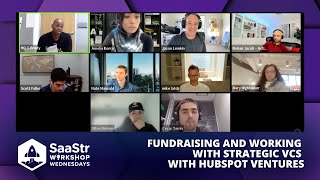
Brandon Greer from HubSpot Ventures explains how the company's corporate venture fund works: it invests in startups that integrate with HubSpot, partner with it, or could become acquisition targets. The goal is ecosystem stickiness, not just returns. Founders get access to HubSpot's reseller channel and co-marketing, but risk over-dependence on a single partner.
Chapters
Super exciting. Um, cool. Well, welcome everyone. We're so excited that you are back for Workshop Wednesdays. If you've missed any of these, we are here every Wednesday at 10 AM Pacific to share detailed, interactive, hands-on workshops with some of the very best SAS experts and speakers from our community. If you have not been to a Workshop Wednesday before, it is a little bit of a different format. So as you can see, some of us have our cameras on. It is meant to be interactive. We do have a formal presentation to start with and then we'll go into an interactive Q&A. So this will be a fun one. You'll have the opportunity to interact directly with the speaker and have any of your questions answered towards the end. So this week, very exciting. There are two workshops happening. So there's this one which a lot of us are on, and if you're missing the other one, don't worry. We're also recording them 'cause we did a bit of a choose your own adventure this week and you guys are here with HubSpot Ventures. We're so excited to be joined by Brandon Greer. He's been a past annual and SaaStr speaker and he's gonna be discussing fundraising from and working with strategic VCs. And again, we wanna keep these as interactive as possible so you can drop your questions in the chat. We'll call on you to ask them live. And we invite everyone to turn on their video if you are comfortable doing so. So Brandon, welcome. Thanks for doing this.
Thank you.
You're in the office.
I am. Yeah, exactly. It's almost countercultural. I am in the office. My team is like 80% Boston, so we sort of exploit the office as much as we can here in Cambridge. We're trying to keep the perks alive like we have, you know, while we can, but they're trying to bust out here.
Good. I like it. Well, we've got a few warm-up questions we always like to ask our investors and VCs who come on as like a little bit of a warm-up and for the audience to get to know you, for those who don't know you yet. So first question, what's maybe your favorite investment that you or HubSpot Ventures did in 2022?
Wow.
I know, hard.
Geez, we're pretty high velocity, I guess, relative to the sort of earliness of our fund. We've been doing investments off Housewives' balance sheet kind of ad hoc for 7, 8 years. I've been at Housewives for 4 and a half, and we've sort of picked up considerably. So we did 15 investments last year. You know, the sort of like, senior and white-hot space investment would clearly be like Jasper. You know, everyone is, you know, having dreams and nightmares about Jasper AI right now, right? That's kind of the sort of probably most famous one. I like some of the funkier ones, and we'll get into this because I think like, you know, strategic VC is not always like, you know, just seeking sexy names. A lot of times it's really like dealing with like white space gaps, you know, in your own kind of product offering and using sort of like interesting investments to fill that space. So, and we'll talk about this like in gory detail later, but there's a business I'm really into called Sales Impact Academy and think of it as sort of masterclass for go-to-market. And I love their value prop at the highest level because it's sort of like the idea of cohort-based learning for go-to-market professionals, CS, sales, marketers, etc. Et cetera. So I'm really excited about that one. We're in it with a number of other investors, Stage 2 Capital, which is founded by Mark Roberge, who's a former HubSpotter and friend of SaaSer. So excited about that one.
Yeah, he definitely is. I think Mark's one of our all-time, like, top annual speakers.
Yeah. Well, HubSpot loves SaaSer in general. Like, all the ones in current. Yeah.
Ah, awesome. Always, always good to hear. I know it's been a little bit crazy after the tail end of '22 coming into this year. But maybe what's one thing that surprised you the most about venture capital so far?
One thing that surprised me the most. I find myself, I guess, surprised a little bit about how aggressively kind of pulled back things are. I mean, I obviously sort of understand the math, I understand what's going on, You know, I also, some of the folks I admire most in the industry remain super opinionated and a lot of the really interesting deals continue to get done. And so, you know, we're trying to make sure we're not, you know, sort of joining groupthink on that front. I mean, obviously, you know, the market environment means, you know, changes and price changes and sort of, the rounds that get done, but try to remain sort of extra opinionated now more than ever.
Yeah, yeah, yeah. We could do a whole different Workshop Wednesday on that. Last question before we get to your formal presentation. Who is one of your favorite co-investors? You know, it sounds like Mark Roberge is a friend of HubSpot and the fund in itself, but any other faves you have top of mind?
I learn a lot from a woman named Victoria Trager at Felicis. We're co-investors with Victoria in a few deals. Recently we did, with the number of investors, I don't remember what's announced and what's not. We did a company called Maze, which is like a product research and feedback. Maze.design is their address. But I'm always learning a lot from that team and they're in sort of the opinionated camp high up there.
All right, well, good stuff. All right, we will let you take it away from here formally for the presentation. Again, folks, if you have any questions for Brandon, um, as he's going along, um, drop them in the chat and we will circle back with everyone for Q&A. So without further ado, Brandon, I'll let you take it away.
I'll do my best. Nice to meet everyone, um, and hopefully this isn't the first, uh, or only time, rather I should say. First, um, I'm Brandon Greer, uh, I run I've got responsibility to run Corp Dev broadly at HubSpot. My role sort of changed in the last couple of weeks. I'm sort of getting tongue twisted here, but my kind of principal role at HubSpot has been to run Ventures. You know, the more we sort of think about HubSpot's next phase, that sort of morphed into sort of a general sort of Corp Dev leadership role. But today I'm talking more from the perspective of Ventures, but I think it bleeds into kind of Corp Dev broadly. I'm more than happy to answer questions on both. Dimensions. Definitely appreciative of the broader SaaS community and Jason for having me on and look forward to sort of many of these to come. So I'll run through— it's 12 slides, but it's going to feel like 6. I'm just sort of going to blow through them really quickly. This is a little bit about me, my background before HubSpot. I was at OpenView. I was sort of trained in software investment at OpenView. That's kind of where I had sort of the the early years on how to diligence businesses. There I invested in Lupio, Calendly, and Appla Tools. Lupio is in the procurement space, RFP response. Most folks sort of use or know Calendly, and Appla Tools is the Israel-based monitoring business. I've been fortunate to make close to 40 investments at HubSpot. Here's sort of a representative sample of them. You know, we're not fighting for allocation sometimes in the same way that like, you know, insert institutional venture firm is. So we do get to get into some really interesting deals. And, you know, these are all partners from Avoma all the way down of HubSpot. And we'll talk about sort of like what that means, 'cause partnership kind of has, you know, a range of definitions. But that's a little about me. A little plug of our own fund. HubSpot's got, and fund is in air quotes, this is kind of an allocation for our balance sheet our CFO is okay with. You know, we'll kind of get to the mechanics of that later. Later too. We've got a CRM platform fund that is specifically focused on accelerating activity in HubSpot's ecosystem. And HubSpot's ecosystem is still, like, I'd say early. I mean, you know, I got to HubSpot and there were 150-ish companies that were building, you know, as ISVs, you know, app partners building on top of our APIs. That number is like well over 1,000 today, probably above 1,500. The growth has been extraordinary just in terms of the activity in the ecosystem, but where I see ventures in the CRM platform from broadly speaking as, you know, sort of arrows in our quiver as like a way to almost kind of affect the activity in our ecosystem by making these investments in sort of the highest value areas. And so that's the point of the fund. You know, you'll leave the session ideally with a little bit of knowledge behind— around, sorry, you know, why companies make these investments. I think most importantly for this group, managing sort of the upsides and also the risks, which can be material working with strategics. And then landing strategic funding, dealing with sort of the negotiation portion of it. That's kind of the boring stuff. And then of course, partnering for the long term. Obviously these investments tend to mean something now, but they can be a lot, a lot more later. And so we're gonna kind of go through the sort of sequence there. I mentioned this just before, but most folks know, like, you know, the classic, the classic sort of example of a venture fund is, you know, you've got this sort of base of LPs. With corporates, that's usually not the case. There are a few that sort of spin out in which, like, the mothership company is the anchor LP, in our case, it truly is an allocation from our balance sheet. And, you know, there are 4,000 arms of businesses and growing worldwide that, you know, make these sort of off-balance sheet investments. And so the idea of like corporate venture capital has always, has existed for a long time, but it has truly exploded in the last kind of half decade with several strategic arms existing. Now, these like range from, the Citi Ventures and the Bloombergs of the world, the Salesforces, which is sort of a north star in terms of like, you know, corporate SaaS investing, all the way to like venture-backed private companies. I think we're gonna see a lot less of this this year, but like, you know, this time last year there were some, you know, more than kind of well-padded private businesses who were actually considering launching their own funds as like private businesses. And, you know, again, not sure that that's gonna be the most responsible use of, kind of private balance sheet capital, you know, this year or even in this sort of near midterm, but we're seeing a lot of that popping up too. And by the way, I'm seeing a couple of questions. I'm guessing Amelia will get to those sort of toward the end, but appreciate those already. What's in it for us? You know, I mentioned this two slides back. You know, the big thing is like, it's ecosystem activity. And the reason we care about ecosystem activity is that ecosystem is really kind of a precursor to stickiness. And I'll kind of make the sort of leap here for you. So, you know, the average HubSpot customer has something like, you know, 6.5 to 7 apps installed. It's probably higher than that. That's probably an old steel kind of statistic. You call it 7 apps on top of their existing HubSpots, sort of integrated onto HubSpot or integrated within HubSpot. And, you know, obviously most software companies, when you think about sort of a bundled offering, or you think about, you know, a sort of a sticky solution, you think about not just what you're offering, but also what your partners are offering. And to the extent you can have a really rich ecosystem of companies that are, that are, you know, kind of betting on HubSpot and also allowing their product to speak to HubSpot and vice versa, that's an incredible kind of setup for, for long-term retention. Of course, there's sort of the same reason of benefiting financially from the upside of a fantastic investment, that is truly like secondary, maybe approaching tertiary in our kind of rationale for making these investments. Like I think, you know, we're always thinking, you know, if this were financial returns, our board would just say, you know, hand your money over to the Saster Fund or to, you know, Sequoia and call it a day. But, you know, we care about it. I think, You look at our team, we're a little biased toward sound investing that like, you know, kind of holds its own separate from the strategic rationale. Like you look at the logos and these are all kind of done alongside some great strategic VCs, but like the mandate from our board, the mandate from our CEO is not one of like, you know, you're turning a dollar into 3 or into $5. It really is like, you know, this is a business case for strategic investment. Of course, you know, HubSpot can't do it all. And so we've got gaps, um, and some of those gaps are easily filled with, uh, strategic partners who just build and don't want our money and don't want to touch HubSpot Ventures. It's all good and well, um, but there are some situations where, uh, the investment just allows us to align incentives. It allows us to kind of break a few rules on the back end where we can sort of expose an API or do something that just allows that company to go a lot faster, do a little bit of co-marketing. We don't really co-sell as a business, but, um, you know, there are a lot of, a lot of ways we can get sort of distribution to those businesses and also solve for like a pain point that our customers are experiencing that we're not building for. And I think like from a long-term kind of competitive perspective, um, it allows us to keep our, you know, finger on the pulse. I mean, you know, like there really is at this point no great excuse to become you know, a legacy kind of old-school dinosaur vendor, right? I mean, ideally, you know, you just get in front of that. And so I think, you know, Ventures is one way that we can sort of stay close to the startup market. And we've got a number of other kind of programs and ways we do that. House Rock for Startups is like a monster program that, you know, works with our sort of like entry kind of customers who are, you know, themselves startups at a very high discount rate. And that's a way to sort of have, of course, like a sort of ear to the ground on the startup community. But I think that Ventures also is a way to sort of really get engaged with those companies. And so HubSpot cares a lot about startups, and that's kind of been its shtick for a very long time. No credit to anyone sort of in my group. I mean, this was truly kind of the Brian Darmesh thesis, and it's been cool to be able to support it through Ventures. The who and the why of corporate VC, like the three kind of orange boxes here, these are the most common. Near-term existing partners, sometimes vendor partners. We had an investment coming up, Mux. Mux is API for video, video infrastructure business. John Dahl out of San Francisco. They're actually a pretty significant vendor for us. And so when we struck that agreement, Mux was like a smallish company. I mean, and to be able to power a pretty big piece of like HubSpot video product, our thought was, well, we need to have some idea of this business's profile because they're powering a pretty significant piece of the puzzle here. And then long-term future partners, which are really just kind of these folks that, I'd say like Netlify is a good example of investment we made that's sort of a long-term future partner. HubSpot has its own CMS, but our CMS very much targets marketers. Most of HubSpot's products are like on the opinionated, easy-to-use side. Like, that's kind of HubSpot's thing. Um, and I'm guessing, you know, a number of you may even use HubSpot, uh, you know, on the call. Um, you know, so of course, thank you. But, you know, you would see like in our products, separate from kind of, uh, you know, the sort of intense developer-focused stuff, they're really kind of easy-to-use products. And so when we think about kind of like the next 10 years, we expect, I'm sure, demands for more sensibilities, folks come up market. We expect sort of more sort of developer-centric tooling. Netlify is a good example of like getting ahead of that and making sure we're sort of locked and loaded with partners that can sort of service different kind of use cases. That's an idea there. You'll also see investments being made in like service providers, developers, like indie developers who like do like one-off apps or projects on top of HubSpot. And then, you know, alum funds are a thing too. Now the why of investing, like, you know, sometimes it's to get in front of like a different audience, sort of an international audience. You know, at this point, close to 50% of HubSpot's revenue is generated outside the United States, and so are out in North America. You know, you see things like the Trailblazer Funds from the Salesforce kind of portfolio that are literally focused on sort of geos. That's one way to sort of think about corporate VC for like a tactical reason. You know, it's helpful for strategic category prioritization. And then there's a brand benefit too. I mean, there's just like a straight up marketing and brand benefit of being out there and alongside, you know, some of the great names and, you know, the up-and-coming sort of software bucket. And then the big one is like foothold investments for future M&A. You know, I think you'll— we'll talk a little bit about this in the sort of next slides, but, you know, foothold investments for M&A where you have the check into the business, but you actually have like a right of notice on acquisitions. You know, we don't do, I mean, HubSpot doesn't do, we're kind of against like very like aggressive terms that sort of handicap the business, you know, when it comes to like M&A processes. But we are generally in like equal, to pole position, you know, as a future acquirer if we wanted to be. And so that is something that sort of accompanies the sort of M&A-focused investments. And that's something that, you know, I'll speak to because it has implications for you all as founders. So what's in it for startups? You know, there can sometimes be like the David-Goliath dynamic in startup selling. And I think, you know, to the extent you can get a HubSpot or Salesforce or an Okta and serve business with, you know, sort of the distribution gravitas to help get the name of your business out there a little bit more, whether it's through the HubSpot blog where we have like pretty, pretty incredible search authority and can like, you know, do some sort of a co-marketing thing with you, or it's like you're doing a co-selling arrangement with Okta as a vendor, whatever it may be, there's potentially enormous distribution upside in working with strategics. Now, I'll be honest, like, it just doesn't really play out well a lot of times. Like, there just are not a lot of, like, amazingly successful kind of co-selling or distribution examples driven by corporate VC. Where there is, like, a good amount of leverage is in the co-marketing piece as well as in the sort of, I don't know how you put it, like the sort of awareness or like, you know, kind of top of mind piece where like, you know, we get all the HubSpot Ventures portfolio companies in a demo day. It presents a sales team, our sales team is present to our partners. We have a massive and very kind of allegiant base of resellers who love HubSpot and like they drive about 40% of HubSpot's revenue, give or take. And, you know, getting all 40 companies in front of them as they think about kind of selling HubSpot plus other things, that's kind of an enormous advantage as well. So it's really kind of like the proximity to those folks. And then of course there's the proximity to the business like HubSpot or like Okta, or just to sort of stick with the examples, where if you sort of see them as being in your orbit of acquirers, you know, are well served to start that relationship early and sometimes freeing up a million bucks off your cap table, uh, to, to have that relationship be sort of cemented. That's a, that's a not half bad idea. Um, you know, the targeted expertise from category leaders, we're, we're, we're trying to be really good at this. Not everyone, uh, does it. Not everyone's good at it. Um, but, you know, we're forming a bit of like an expert network within HubSpot so that, you know, if you have a pricing and packaging question, you know, you can not have to hire someone, you know, for X number of tens of thousands of dollars. And like, you can actually just ask someone from our team, you know, HubSpot's got a bunch of folks who think about pricing day in and day out. And you're probably thinking about pricing day in and day out. It's like a pretty big, big topic, but it's just a very expensive thing to get, you know, expertise on. And then of course, sort of, as you think about sort of long-term competitive modes and sort of your overarching areas of focus, aligning with certain kind of strategic can be a good way to do that. So why now? And this is, you know, kind of the beginning of the wrap-up here from my end. You know, obviously capital is a little harder to earn and come by as we see speak, what we find ourselves doing, and I think a lot of my peers are decently kind of close to sort of my peers across SaaS running these funds, relatively speaking, we're not the sort of dilution people. We're going to end up kind of like tacking on $2, $3 billion. But I would say it depends on the fund. In our case, we don't have sort of key kind of ownership thresholds. And so the why now is, I'd say, probably gonna favor CVCs and potentially startups in that you could get, you know, a company like Ahusa onto your cap table. You could strike some amount of kind of some agreement around distribution, some agreement around co-marketing, what have you, and, you know, get a little extra runway. Maybe it's, you know, only another 2, 3 months, maybe it's 6 months, maybe it's another year of runway, but you're not sort of up against the kind of ownership thresholds and targets of a large institutional fund. And by the way, there's a benefit, right? Like that there's a true kind of distribution or brand alignment benefit. You know, I think it's an easy way to make noise without having to give up a ton of your company. We've done a few kind of convertible notes on top of past rounds, you know, just to sort of get into the businesses. We've opened up rounds, you know, tacked on an extra sort of $2 or $3 million. You know, HubSpot is gonna increasingly sort of be aggressive in how we think about these investments, but for the most part, like, you know, our main goal here is like partnership. So that's kind of the, this sort of piece on timing. Here are some risks and let's kind of talk through them. Number 1, like don't over-index to just HubSpot. You know, like that's not in HubSpot's long-term interests usually as an investor and it's probably not in yours, right? I think, you know, you wanna feel like some degree of agnosticism to like, platforms, because let's be honest, like, you know, you just don't— we, we're not even— we can't even share a roadmap. I mean, and so like, you know, to the extent like something comes up, you know, on the roadmap that starts to rub against what you're doing, we're good about it. And we tend to have a pretty democratic kind of vibe on the platform front, but not everyone's us. And it's not to be like arrogant about HubSpot, it's just like, that's kind of the truth. But you don't wanna feel like you're over-indexed. And usually it's not that hard to not over-index. Like, I mean, usually like, you know, getting something on the HubSpot API means you can probably get it on the, you know, you could get it on Salesforce. Like you could just kind of, you know, rinse and repeat usually without a ton of trouble, at least as it relates to getting the use case right. Signaling and brand association. So like the, I remember when I was at OpenView, like the, everyone was like, we don't like strategics because it creates signaling risk. And signaling risk means if you see that, like, I invested in, pick someone, Dylan's startup, and Dylan does a piece of TechCrunch and says how Spot's involved, that's gonna mean like Adobe won't be interested. And I think that's not true. I think it literally, like, I cannot think of a single example on the corp dev side where I'm just like, oh my God, I'm fearful of, Ultimately, it's gonna be to the startup's benefit to get more people involved than fewer. And so I would say, unless the signaling risk is because this person, this company literally has some ridiculous right of first refusal or some very kind of impairing terms, I would not worry about that a ton. But I did put it on here because I think that's something that you do wanna manage if you care about it and it's something that matters for your customers or they don't like that you're over-indexed one company or another, take on 2 or 3. You know, we do a lot of rounds like alongside other strategics. That happens all the time. And that segues nicely to sort of cap table investor rates. You have multiple investors that are not institutional and like the check sizes are relatively uniform. You're getting $3 million, $4 million, $5 million from like this, like same kind of peers in the industry. Like make sure their rights are generally like aligned. You don't wanna feel like you're, scrambling to get Okta one week's notice that you got an acquisition offer, HubSpot three days, and then Salesforce, you know, a business day. Like, you know, you wanna kind of keep things relatively uniform. So your lawyer will already be hounding everyone about this. So like, this isn't necessarily like something that you'll need to overly focus on, but like it will come up and it's something for you to be ahead of, I think. As you think about managing expectations with strategic investors. Let me just pause real quick and make sure I'm kind of covering the other risks. You know, I wrote this a bit ago. Yeah, I think the indexing piece is probably the big one. And that means not just like the sort of product indexing, it's also the marketing, it's also that. Now, you know, I think I saw a question from Jason M. Lemkin around like kind of like built-for-HubSpot apps that have like succeeded. That's a total strategy. And in that case, like you were making a very kind of clear derivative bet. We're obviously like super excited about those types of companies. I think like as you get older and bigger, you know, those companies are gonna necessarily sort of be talking to their investors about expanding their own TAM, expanding kind of the base of customers. And that'll necessarily mean kind of coming off of one platform. Now there have been some awesome, examples. We made our very first investment in an app studio focused on HubSpot that we're going to probably announce like next week or the one after. We're kind of getting it all together, but that's like, you know, the first of its kind in our ecosystem where we're sort of making that sort of an investment. We can talk through that a little bit more, but those are the risks. And this little last slide here, I think, you know, if you want to nail the relationship in the short and long term. One is like have a plan, like no kind of, you know, here's like the strawman integration plan with HubSpot, which means like we're going to be pushing like landing page data into the HubSpot CMS. That's like kind of the strawman, but maybe you're going to say like the huge amazing like plan would be to do this, and like you want to have both. And I think having both helps to convince HubSpot or Insert Strategic VC that you are thinking about sort of the long-term opportunity and here's where we could take this Here's how cool it could be. A lot of times those conversations end up being like, oh, maybe we should like acquire you instead of just like make the investment. So coming with like a real vision on like where this thing actually like goes is crucial. There really isn't a reason to like rush into a first close with strategics. Like they're not comprising the bulk of your round. You know, the money's gonna get wired from your institutional investor probably sooner anyway. You know, it's a really easy way to just sort of like tack on, you know, some extra kind of leverage at the end. But, you know, I don't think there's a huge rush on that front. A lot of folks, a lot of folks will use like a strategic investment almost as a carrot for investment from other, like, kind of institutional folks. And so I would say that's another kind of approach, like I'm sure, I think I have like 5 convertible notes in the wild right now, like each of which like I'm sure could go to institutional investors and say, hey, like how's thoughts on, like you should get on too. But like, you know, in general, like I think it's kind of, you know, prioritize and solve for what most matters to you. And then the last point here is like keep other strategics on equal footing. Like, you know, don't, don't— and I made this point earlier— but like, you know, don't kind of have a million different terms going around. You know, you have the hyper-aggressive checks like the Microsoft into OpenAI, where I'm sure there's like a myriad of, you know, exclusions and terms and yada yada. But like, for the most part, like, you know, these sorts of corporate investments, you're going to want to sort of keep relatively uniform in terms of like the rights just so you can manage them too. On that, this is a little boring, but I'll just say it, like, you know, public companies, when they invest, they have like certain things that like they need to do. Like we have to do like impairment assessments. So like make sure that our, like, you know, everything on our balance sheet is sort of being reflected appropriately. And so like right now we're in a process of doing an impairment assessment. That means that we're gonna need like information rights. And so like, you know, you won't really be able to like get a deal with us without, without that, right? There's certain things that are kind of like just super necessary. Now what's not required is a right of first refusal on an acquisition, which is a highly aggressive kind of term to like make sure that like one company gets, you know, the right to make an acquisition offer before everyone else. Um, so there's a spectrum of kind of, uh, of, of, uh, different terms there, but You know, sometimes they're kind of required, and I just want to sort of throw that out there. Information rights tend to be like the big one, but there can be some other ones too. That's, that's all for me. Thank you for being such a great audience, and I'm more than happy to spend some time on a few questions.
Cool. Thanks so much for that, Brandon. If you want to stop sharing your screen, actually, there are a few questions, and then that way we can see everyone. Perfect. Um, cool. I know you already touched a little bit on Jason's ecosystem question, but just gonna, um, have him come off mute if you want to. Jason, if you want to follow up with that, um, because some of the other questions kind of dovetail into it.
Well, boy, there's a lot of— hey, good to see you. There's a lot of interesting— I just think this question, I, I'm trying to learn, right? I think it could help a lot of people. Like, how, how does the HubSpot ecosystem work today? Like, how can I How much money can I make? Right? So I mean, HubSpot's doing coming up on $2 billion in revenue, right? I mean, I just wrote this post. I'm embarrassed to forget, right? So I think an interesting meta question is how or when, like if we, if we look in the future, can I make $100 million off HubSpot? Right? Because if we look at Salesforce, Shopify, you know, a few other, even ServiceNow, which we don't talk about enough, right? You can make $100 million there if you're a top 10 partner. Right. Obviously, if there's 1,000 folks, number 1,000 is not going to make $100 million. But I think founders and even I don't— learning about the math, right? How does it work? How does— how much— do you have any insights into how I can take advantage of this explosion in HubSpot as an ISV or a startup to make a lot of money? What's the secret? Secrets to success?
100%. Short answer to your question is I think so. I'm obviously very confident in the HubSpot ecosystem opportunity, but I do genuinely, I know that millions of dollars are out there to be made on top of the HubSpot opportunity. I also think it's genuinely like early days for this ecosystem. And so to be kind of a first, an early mover in the HubSpot ecosystem is like my best advice. That's kind of, I'd start there. Now, there are some really good ways to figure out the highest pain, like the highest paying pain points in our ecosystem today and our customer kind of base today. One of which is like getting close to resellers, like the agency partners who end up hearing, oh, uh, I don't know that I can do HubSpot. I think I need Salesforce because I need like this super custom thing, right? Or I need like this thing to talk to that thing. Getting a pulse from the folks who sell HubSpot, like external, like, you know, someone at the sales team probably isn't gonna be online with you, but you could get really chummy with like the agency folks, gotta come to Inbound for a, you know, a sort of a user kind of conference type thing. Inbound's our big conference every year, but coming to Inbound and just like listening to kind of what the customers want. I think those are where the dollars are. We have a couple companies that I'm gonna just like, you know, it's not my place to share their revenue, but like they are more than investible, like kind of venture-backable businesses, if not already venture-backed with, you know, like north of $100 million TAMs, right? Like, I mean, I think like, just like looking at sort of the trajectory and growth and even the penetration today versus what it could be. Remember, like, you're growing with the company too. So like, you know, when you say like getting to $100 million as we get to $10 billion, right? It's like, it's—
For sure.
Yeah, yeah. Riding that wave. But yeah, sure, I'll pause there.
I've just seen, I've seen more startups recently, not a deluge, but certainly more that are all in on HubSpot first, right? I'm building almost and I'm just trying to learn, right?
And I think that, I'm sure you think that's great too, right? Yeah.
And I'm just trying to learn when, where are we on that deluge, right? That tip of the spear of startups that can be HubSpot. Like I'm going, my product is, you know, a HubSpot extension, right? That's, I'm not, it's not part of what I do, right? It's not a piece of what I do, but it is, it is what I do. And there's certain math and other things that go into that, right?
I think that's right, Jason. I, you know, I, we just closed our first built-for-HubSpot deal. And I think it makes sense for HubSpot to be the first to do that, right? Like, you know, I think like, you know, we're putting our money where our mouth is, and I, I'm pretty confident, uh, in this business. We made our first investment in an app studio, you know, the canonical examples like Appfire, the Alaskan ecosystem, which is, you know, a venture-backed business. Actually, I think they have a growth check-in as well. Um, so I also I think there's a lot of money in that world too. It's not like a roll-up, it's just like a multi-app. It's like a multi-app type studio thing. Yeah, it is interesting.
And you hear a lot of— I don't want to monopolize the conversation, but the other interesting thing for folks, folks that don't study HubSpot don't realize that approaching half the revenue comes from the channel, comes from agencies, right?
That's right.
And are they bubbling up a lot of ideas to you? Do you hear from them the couple of things they really need to make HubSpot even better? Do you hear from them or is it more—
I mean, yeah, I always always think I'm in the wrong business and I should have— and like, that's kind of the, like, the agency, like the agency people, they're becoming app partners too. Like, I mean, we have a number of agencies and resellers who are like opening up tech arms or like spinning out like a separate tech practice to solve for what their customers want. That there's a lot of opportunity there.
Because they're going to go in and between their fees and other things, they're, their deal size is going to be 4 to 5x the HubSpot deal size. Right. And so there's an opportunity for them to bring in 2 or 3 other vendors to craft a solution for their customers. Right.
100%. Yeah. Yeah, exactly.
Okay. There is a follow-up question based on Jason's question. So, Paul, I don't know if you want to come on and ask your question.
Yeah, I put my camera on too.
Hi.
Thanks. That's fascinating. Really, really interesting. So, and I've seen somebody else has put in a question I think similar. So we're, we're kind of raising seed. So we're kind of revenue but not massive. And I guess what I'm just trying to get a sense of is, are these kind of strategic investment partnerships something we should be looking at once we hit a certain size. So you typically going, you know, if they're not relevant to 10% of our customer base, then it's not worth it. Or if they're not doing sort of $10 million already, then it's too early. Just trying to get a sense of that.
That's a, it's a good question. I probably ought to, should have included that. I mean, I think for both parties' purposes, you're gonna wanna know, you wanna have some product market fit overlap, like overlap in your product market. And you wanna be thinking about sort of segment overlap to make sure that like you're taking the money from the right strategic. And I think it takes a little bit of time to discern whether that's the case for HubSpot or Salesforce or, you know, insert large business. You know, again, like to Jason's and my sort of conversation earlier, like, there are a number of companies that are truly going all in on the platform, you know, that, that signals is pretty clear to me that like, you know, they should, they should sort of be a good candidate. Uh, but yeah, I— the average check— sorry, the average company that we invest in is, you know, we at least have about a million in revenue for us to sort of parse out how much of that is associated with HubSpot versus not. Yeah. Now I've done like We invested in a business called Crossbeam, and we actually use Crossbeam for like a corp dev use case. And I like to, for all our companies, I actually take their customer file and their prospect list, and I actually map it against ours to sort of ascertain overlap. And Crossbeam is a really cool, like almost like data escrow product that allows you to sort of like, surface overlap between two partner populations. We use it for corp dev. We've actually used it for our acquisition of The Hustle, which was an interesting kind of use case of it, just to sort of see how many of their subscribers were like prospects or existing customers of ours, just to sort of get like a sample. But the long-winded way of saying, you want to have a data set that like is instructive before you take the Cool.
Thank you. That makes a lot of sense.
Of course. Yeah.
Some good shoutouts to some SaaS partners too.
Oh yeah.
Xamplar, Crossbeam, all in the SaaS, SaaS for Extended Community. Uh, okay. Some follow-up questions here from Prathmesh, if you want to come on and ask your question.
Oh, sure.
First of all, Brandon, thanks for taking out the time and sharing your valuable insights. And also Amelia, thanks for facilitating this session. I have two very pointed questions, Brandon, for you. One is, whenever HubSpot Ventures invests in any of its portfolios, do you have any significant mandates in your invested companies in terms of partnerships related to product or service partnerships? And if yes, are like, do you guys enter into these strategic partnerships right from the get-go, or are there any timelines to it? This is the first question. And the second is, uh, what is your filtering criteria for the startups that you intend to fund? I think one you mentioned is there should be a significant market overlap with HubSpot, uh, but are there any key metrics that you look at in terms of valuations, ARR, or growth rates?
Sure. Yeah. Uh, awesome. Uh, and good to meet you. Um, the first question, Is it depends. So, you know, usually depending on the size of the check, some are, some, you know, a million dollar check from HubSpot, we usually don't have like a super colorful partnership agreement associated with that. Like we, you know, we love the investment, we want to follow it, we want to track it, but then sort of agreeing to build on our ecosystem is enough for us. Like we're happy with that. You know, we have larger investments where there is sort of an accompanying partnership, um, uh, there's a sort of a partnership agreement, uh, that we have, uh, like in parallel to the investor, to the investment. Um, but the partnership agreement is actually more like, you know, uh, X business agrees to integrate within, you know, on HubSpot within like, you know, 12 to 18 months, like insert the timeline. and, you know, will serve as like these sort of key use cases, and then in turn how SOT will, uh, you know, execute a marketing campaign against, against that. So it's more just kind of making sure that like it's clear that the value is two-sided and, uh, you know, to make sure we're getting sort of true value out of it. Now the second question, um, well, first, does that answer your first?
Yeah, definitely.
Cool.
And question two, um, Our criteria really is like the same as any other investor with a little flair at the end of like, we just need commitment that you are going to bet on the HubSpot ecosystem one way or another. I mean, it's really that simple. You know, I think like when I send something or someone on my team sends something to Dharmesh for approval or Yami approval. Like, you know, we're really, you know, the line in the sand for them and for us has been like, you know, the business sort of makes sense on all the sort of dimensions that you would look at as like a sort of venture investor, plus there is a significant opportunity on sort of the HealthBot customer base side to deliver some value for our customers. It's all kind of customer-driven.
Got it. Thanks, Brendan.
Yeah, cool. I think you're on mute, Amelia.
Sorry, I said, how are we doing on your time? Do you have time for 2 more quick questions?
Yeah, let's do it.
Okay, sweet. Okay, Rohan, I know you've been to Workshop Wednesday before, so do you want to ask your question?
Sure, yeah, thanks. And thanks for sharing your insights there. I had a question about the, you know, So love the idea of strategics, right? Like having these people that can help you with the industry and the services and your customer and your product. Have you— do you, when you make these sorts of investments, do you ever think about, you know, how much from both sides, whether it's the company or the strategic, how much of a particular cap table should be controlled by any one strategic? You know, I've heard, I've read that 5% is sort of like the maximum you should allow any one strategic to control. And what I'm I think what I'm wondering about is, is that something that, you know, HubSpot Ventures also believes? And have you seen the other side of that where you've gone to make an acquisition at the tail end and sort of balked at, you know, making that acquisition because there was a strategic in there that had more than that percentage of ownership?
Gotcha. You know, it's our kind of rule of thumb is like, don't be a distraction unless you want to be. Like, I mean, sometimes you actually want to be like all up like in their business, like, and, you know, actually like a critical part of it. That's really not the case with the bulk of our investments. And so, you know, we're not— we're usually sub that sort of like 5%, like you said, ownership. And I, you know, maybe it's just kind of my own set of examples. I don't really have an example of like me kind of like looking the other way because there was a company that didn't— that was like, you know, uh, pretty, pretty embedded with the other. I, uh, and particularly not for acquisition. I mean, for acquisition, like, you know, you just, you just go for what makes sense for your business. And, you know, we've looked at a number of deals that had strategic investors and we weren't one of them. Yeah, but, you know, I would say practically speaking, Rohan, like, uh, The best thing to do there is like just make sure that like you are kind of, even if you have an investor that is strategic, like, you know, you're not sort of putting all your kind of partnership eggs in one basket.
Yeah, that makes sense. Awesome, thank you.
Yeah, yeah, no problem.
All right, last question is from Ted. Ted, if you want to come on and ask your final question.
Yeah, thanks.
And, uh, hey, thanks, Brandon. And, and then after the fact, uh, uh, thanks. Uh, one of the companies you mentioned, uh, you invested in, I worked for. I hope that you had a really nice exit when they exited. Uh, in any event, uh, uh, what's that?
What company? AppliTools. Oh, awesome. Nice. Yeah.
And, uh, two, two exit-related questions for you. One is, I know companies like Cisco, at least years ago, purchased a fairly significant percentage of the companies that they had made a corporate investment in. I don't know that Cisco is typical, probably more aggressive in acquiring, but, you know, is there a rough rule of thumb of likelihood of, of the corporate buying the, uh, company that was invested in some years later? Like, is it a 5% likelihood? Is it a 20% likelihood? And then In general, is there a rough rule of thumb on the premium that a corporate will pay versus a financial buyer given the synergies?
Man, I wish I had a better answer. I mean, I would say, so HubSpot just as a business is not all that acquisitive. It's actually kind of, you know, our DNA has been very kind of build-centric by design, right? Like, I mean, you sort of think of the pitch of us versus the other guy is like one of very cohesive UI and UX and not cobbled together. That's kind of, that's been the pitch, which is really kind of like fancy for saying we don't do a lot of acquisitions. So we've actually done zero from the HubSpot Ventures portfolio, which I don't love. I think like that, I certainly think that could change, but we've got the maturity and insurance to do that. But at a minimum, Ted, like I think they're the companies that are top of mind for us, you know, and the ones that have the best sense of our priorities as well. So that's kind of not a great answer. I wish it were better, but that's kind of that piece. And then on the premium piece, you know, I would say that changes sort of environment to environment, but, you know, I would expect generally sort of strategics to have a little more leniency on price when it comes to sort of the business case, right? Like if I'm, you know, Vista, you know, I'm modeling till I'm blue in the face of these sort of outcome expectations. And they're not really, they're not really, they're thinking about leverage and strategic, kind of tailwinds and all that stuff. But they're thinking about it in a very different context than we are, right? Like, we have our kind of grand vision of like taking, let's say, our operations hub product to this level. And we're like, oh my God, if we could get this tech in here, this actually explodes this opportunity and becomes like a huge kind of billion-dollar kind of opportunity for HubSpot. That's not really happening on the financial buyer side as much, I don't think. So I would say that's the reason where, you know, that's kind of the reason why there can be some divergence in kind of the premium paid.
Got it. All right, thank you.
Sure, sure. Awesome.
Well, Brandon, we've taken up almost the full hour, so thank you so much for your time. If folks want to get in touch with you, what's the best way for them to do so? Do you read your cold pitches?
Yeah, yeah, yeah. B2B at HubSpot for this group only. And then Awesome.
Well, thank you so much for doing this.
Thanks for all the time, Brandon. Really appreciate it.
Yeah, always. Yeah. All right. Thanks, Amelia. See you, Jason.
Yeah. Thanks everyone. And we'll see you next week for the next Workshop Wednesday.
More from Jason

Why Your Next Hire Should Report to an AI, Tragedy Apps, and Too Many AI SDRs? | The Agents #004

Our Agents Drove Our Salesforce Bill Up 80%, Marketo Hates Agents, and We Stealth-Churned Off Notion




Managing 20+ AI Agents: Lazy Agents, Our $500K AI Bill, Stealth Churn & the Death of 60% Solutions




