Going Upmarket, How To Keep Growing When Your Buyer Is No Longer Your User
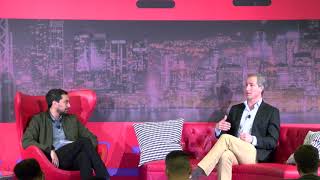
UserTesting CEO Darryl Benatar discusses scaling from a $49-per-test SMB tool to a $25K annual enterprise platform. A Cisco buyer with a $25K budget forced the shift. The company had to split messaging between frontline users wanting speed and executives wanting ROI, hire field sales, and tackle security and integrations.
Chapters
Alright, thank you guys for having us. Day 3 at SaaStr. Hopefully everyone is feeling fed, or if not, we will attempt to nourish you with some insights on what it means to go upmarket. Just a quick audience check, this is the going upmarket section. So if you are already upmarket, I'm not sure if we're going to have much interesting stuff to share with you guys. But we are, you know, obviously from the investor perspective, I've been a partner at Accel for about 8.5 years now. We have the great fortune of being an early investor in user testing, and we've seen many SaaS companies grow through this lifecycle, which I'm sure many of you have pondered or experienced as well. Oftentimes the early years of selling your product often means you're targeting SMBs or mid-market customers that tend to be very forgiving. They have quick sales cycles. Perhaps they're checking out with a credit card as opposed to a purchase order. You haven't gone through procurement just yet. A lot of the early revenue for companies tends to originate within that segment of the market. And then eventually one day a larger enterprise comes calling and you are expecting exposed to and you start to learn about the complexities and the realities of selling to much larger customers, their product requirements, and certainly their requirements from a sales cycle standpoint. So we're going to attempt to illuminate that transition through the lens of user testing. And Darryl Benatar, who's been a founder and chief executive officer of the company for, for about 8.5, 9 years now, and I'll also attempt to share some learnings that we've seen across the Accel universe. But please welcome Darryl. Darryl, want to give a quick background on you and what the company does?
Yeah, so I started the company actually more like 10 years ago. I mean, if you go back to the lunch where we decided let's do this thing, and I had kind of an eclectic career before that, started running a family small business, I did some development work, had some partially successful startups, and then user testing is really kind of the first one that really made it big. So, yeah, so you want me to just tell you a little bit about user testing? Yeah, absolutely. So I co-founded the company with Dave Garr, and he's somebody who had managed some of the largest of websites in the Valley. He was responsible for Apple's homepage, HP.com, Intuit.com, Palm, and he was great at building great experiences and optimizing those sites, and his kind of secret sauce was getting real people in front of those websites and learning and iterating on that. And the process that he had to go through to do that was a very time-consuming and expensive process. And he and I had worked together previously and wanted to figure out something to do together. And he came up with the idea which became user testing, which was really to solve the problem that he had. So, just real quickly so you have a picture of what is user testing, I'll kind of give you the picture of what it was when we first started. And it's— It's the ability to tap into a large panel of participants and find those who match your target customer and have them do tasks on your website or app with the intent of learning where are they having frustrations and what do they find compelling. For example, if you had a travel website, you'd say, "I want to see 10 people planning a vacation." "Try and book a reservation on my site," and you would use user testing, and in a matter of hours you'd get back these videos where you'd see the person using the search, speaking their thoughts out loud, and you'd hopefully get some insights into where you can improve.
Makes sense. Yeah. It's a very scalable way of doing user research really across the globe, across devices. And how do you extract and centralize all those insights so a product team can make better decisions over time? Yeah.
Mm-hmm.
So, Darryl, maybe share a bit with us when you first started to feel the pull to go upmarket. What was that transition point like? What did you first observe in terms of your customer engagements?
Yeah.
Take us back to that moment.
It's pretty distinct, actually, and there was— there's kind of a setup for it. We had been in business several years and we went to market selling on a pay-as-you-go basis. And we were maybe between $1 and $2 million in sales and I actually had a conversation with an advisor who said, you have a nice business, but we're not seeing the growth rates here that are going to be of really significant interest to, you know, professional investors. Something's got to change. We were having kind of a challenge in that people were using the product, loving it, but their usage pattern was somewhat intermittent. Their thinking was like every time we do a redesign, maybe we'll run a few tests right before we launch our website. So it was kind of serendipity when one of our pay-as-you-go customers called us up, and it was Martin Hardy from Cisco, and he was responsible for some consumer website that Cisco had. He said, "Hey, I got $25,000 left in my budget. I have to spend it by Friday, so I'm calling up all my vendors and I'm asking, 'What can I get for $25,000?'" We said, "Perfect timing. We're just introducing our enterprise version, which actually costs $25,000 a year." Of course. For $25,000, you can you can write as many tests as you want, and we'll annotate the videos for you. And he's like, sold. And I'm like, Chris, who's going to watch all the videos? He goes, ah, my little brother will do it. And so that was Jonathan, who ended up becoming the head of customer success at some point. And that's how it got started.
Yeah. It's interesting you saw that demarcation in the company around $1 to $2 million in ARR. That's actually something we see quite quite often across our SaaS portfolio, it tends to be around the $2 to $3 million mark where you're getting larger logos that are starting to knock on the door. The enterprise pipeline is starting to swell. But I think one thing that you touched upon, which I think is really important, is it's critical not to get lured into the enterprise market. You want to get pulled into the enterprise market. And that is a much more organic feeling than I think most SaaS founders expect to have. You think you have to, out of the gates, build an enterprise product, construct the sales team, and then push your way in. But I think more often than not, you're getting pulled in by enterprises who have heard great things about your product word of mouth.
Yeah, so, right, I mean, 'cause the story continues from there where we hired an enterprise salesperson who essentially started mining our database of all these pay-as-you-go customers seeing that there were individuals at very large companies using it and calling them up and saying, "Hey, I want to tell you about our new enterprise version." So we got pulled into it for sure, but I think one of the things, questionably, we got pulled in too early because we didn't have the clear product differentiation to explain like, well, how come it's $29 a video over here and it's $25,000 over here? What's that about? And so we actually early on differentiated by adding services, and with the thinking like, well, eventually we'll get product maturity and we'll have the differentiation. But it is, I think, looking back, one of the factors that people should consider that you, if you're gonna start downmarket and move upmarket, you need to have the product maturity to— to justify the pricing difference, and pricing becomes a challenge. You need a value metric that scales so you can— like the Salesforce model, right? That's the ideal.
Absolutely. Yeah, I know it's important to be deliberate about that. I mean, for most early SaaS companies, you have product and packaging that is easy to read on the website. Oftentimes you're taking credit cards over the web. When you start talking to these enterprise customers, well, you have reference pricing on your website. How are you selling the large 5 and 6-figure deal out to the Ciscos and the JPMorgans of the world when they can very clearly see that you have lightweight pricing and packaging on the web that is going to obviously anchor them from a deal negotiation and an ACV standpoint?
Exactly.
You guys, to counteract that, you layered on some services to help bolster the enterprise offering for user testing, beginning days.
Yeah, and we just did like, we had a low-cost approach of doing managed services, and it turned out that was solving a problem that a lot of companies had, which is they had a very small number of people who were doing user research, and then you give them this tool that allows them to do a lot of research, but they don't have the manpower to do it. Sure. So it's very compelling if we can cost-effectively let them offload that. Yeah. But later on in the evolution of our business, that becomes a problem because you're trying to build a technology company, not a services company. So you're kind of in a race to develop the product maturity and then the professional services to start making professional services enablement. Training the customer how to do it instead of doing it for them. And ultimately, if necessary, developing partners that can do the managed services piece, 'cause you don't want to do too much of that yourself.
Yeah, absolutely. No, it's so critical to be deliberate about how you define those cut lines between what is self-service and what is enterprise. And designing that very methodically in the early days is obviously gonna help you. I want to come back to product and packaging, but part of the title of our panel is "How to Keep Growing When Your Buyer Is No Longer Your User." Yeah. And so I imagine for user testing, you have frontline user experience ICs, maybe design leaders within your organizations that are using, that are using the platform. And then over time, As you're selling into these enterprises, well, they're no longer the budget gatekeeper. In fact, they're actually kicking you higher into the organization to actually affect the enterprise sale. Share some perspective on what that transition was like and how you really navigated moving from the frontline user who's obviously getting all the utility out of the platform to ultimately get to whomever has budget authority to write you, you know, a 5 or 6-figure check?
Yeah. Well, there's 2 angles at it. There's the kind of homegrown, and there's when you're coming in new on the account trying to get high, get the power in the organization. For us, the evolution was, you know, it starts with that Martin Hardy story. We had a lot of rapid revenue growth selling a tool into the UX department. Where the compelling aspect was speed. Now you can do a lot more research and we can make you into heroes within your organization. But we started to see that there was a real— there were some real limiting factors around selling into that department. They tended to have not that much budget. We would get oftentimes caught with a single champion who might leave and we saw suddenly we're having to resell the account and they were somewhat reluctant to allow us or introduce us into other parts of the organization because we were kind of their secret weapon that they just kind of wanted to hold on to. So initially it was about building trust with those departments. And so as they started to realize their— value and profile in the organization was being raised by using us, they kind of started to have the courage to enable us to work with other parts of the organization. But, you know, I think, for example, you might have a company like Target where we had this same path where we built up this trust, and then finally they said, okay, we want to let our designers and product managers use the tool directly, and we're going to give them a little bit of oversight. So suddenly our world changed because we're going in and we're doing a training session with 60 product managers and designers, and we're now in the business of— we have to provide training. That wasn't part of the original plan, and enablement. And now there's a head of— a VP of product who has their own set of needs, which include understanding, is this creating value? Like, what's actually being done, and is there a return on investment in this, and how is it being used? And so now there's kind of— we start to have to have a real professional services organization where we're doing kind of a quarterly business review and talking to them about how— the value that they're getting out of the product and what are some of the other ways that they can use the product and get expansion, and then you start trying to grow throughout that organization. So that was kind of the homegrown version. But to answer your question, like, if we are selling kind of just initially into a larger organization, there's a couple tactics that I think are valuable to mention. One would be we get an individual contributor They maybe have a sense of urgency about some project they're working on, and there's kind of a deal like, okay, we'll do a proof of concept for you, and it's going to help you solve a problem that you have right now. But when we review the results, the person with power, the signature, the signer, is going to be part of that debriefing meeting. We're going to start to build that relationship.
Makes sense.
I'll just comment on that also. There's a danger that that VP's very skeptical and you're in a no-win situation. You just did this proof of concept and you're not gonna get anything out of it. So we try as hard as we can to kind of take the temperature on that VP and if we can get to them to let them know there's kind of a quid pro quo going on here. 'Cause it's kind of a dangerous angle that you're going. Down.
That's an interesting tactic. You want to involve as many of the budget gatekeepers, the folks with the purse strings. You want to involve a lot of the decision makers early in that process. For you guys, offering a free proof of concept so long as those individuals, those constituents would be in the debrief with you guys, that justified the initial, say, sales cost and service cost of engaging with that customer, but because you had the audience that you wanted to have.
Yeah. The other thing that happens with this is we'll go to a department and we'll quote them a price for their team, and they'll feel like, "Ah, we don't have budget. That's too much." Then we say, "Well, let's work together here. If we can get 2 or 3 other teams in your organization to do this, then the price per team comes down dramatically." So let's work together on this. And so that's the other way you develop kind of an internal champion to help you.
Yeah, makes sense. I think one thing that you're touching upon, and we see this in and among our SaaS portfolio as well, is just as you're now moving upmarket, you're suddenly marketing to two different constituents.
Yeah.
You have the frontline user who is getting great utility out of your service.
Right.
and then you have someone higher in the organization, often the VP or the CIO or the CTO, who has a different set of requirements, and they're thinking about the world in a very different way.
Yeah.
You know, we take— I'm on the board of a company called Envision, which is in the design collaboration space. You know, we offer great prototyping and workflow tools for end designers, and they are the ones who are living within the application day in and day out. But when we show up for an enterprise deal, deal, we're often talking to and marketing to the chief design officer, the chief product officer, oftentimes the CIO and the CISO.
Right.
And they're thinking about the world in very, very different terms. They want to know about how we can impact business agility and how to drive their digital design transformation and how they can be the best product org possible. Possible and how they achieve broader business milestones with a tool like ours. Oftentimes we're marketing the same product, but we're selling very different things to different constituents. That's a critical thing to design for as you start to move upmarket. I'm curious, through the user testing lens, how have you guys balanced that marketing messaging relative to the end user that you're actually targeting?
[Speaker:JASON M. LEMKIN] Yeah. Well, as I was mentioning before, it starts off with the pitch to the user is, this is going to be fast, and it's going to be a lot easier. And that sells. But when you're talking to an executive, you want to really understand what their problems are and try and solve those problems. In a broad sense, The way that we talk about our offering with that executive is to, generally, we're talking to executives who recognize the critical importance of delivering great customer experiences, and they have that problem of figuring out, how do I operationalize that? How do I get actionable insights that make a difference? How do I measure if that's effective or not? And so our, The way we present to that executive is to say, right now you're using analytics and surveys and a lot of quantitative data to try and understand what your user's experience is and how you can make it better. But we bring the perfect complement. We're the human insights platform. You can't really deliver great customer experiences until you understand what the customer's what they're actually experiencing. That's what you get from us. We have the ability of being able to show a video where you hear the user's frustration and people kind of have that aha moment and they get it. But we can now say we're going to enable your customer-facing employees to make better decisions when it comes to delivering customer experience because they're going to have the benefit of human insights when they do that. And this has never been available— this has never been available before because no one could ever get these kind of human insights at the speed and the scale that is necessary to keep up with a business. And we've developed a solution that provides that.
So, so for the frontline designer, it's all about speed, agility, getting data back very quickly so that you can iterate on your designs and prototypes, right? And how user testing is the the input to that workflow in that process.
That's right.
For the VP or the CIO or the CTO, it's more about, in some ways, organizational empowerment. It's helping your employees make the best decisions possible so that they can serve your customers as a whole. And so those are— it's interesting, those are two very different messages. And so how you package that messaging and deliver it to your two different constituencies is critical as you're moving upmarket.
Yeah, so that's kind of the broad thing, picture, but another critical element of starting to go upmarket when you're selling is that selling process is so different.
Yep.
When we're selling to an SMB, it's very transactional. It's about demoing the tool and demonstrating utility. When you're selling upmarket, you are, you have a selling process where you want to slow things down and, and go through a process of discovery. You want to as deeply as possible understand what the business needs are, what are the specific problems that that executive has, what's the KPIs that move the needle for them, and then you want to come back with a custom presentation that orients what you do as the solution to the exact thing that they want. And, you know, if you get that right and you're talking to a large enterprise, there's a huge difference between what you're charging and the value it's delivering, and price becomes much less of a consideration if you get that right. And so we've worked really hard on improving that process and getting good at that.
Yeah, I think one of the interesting learnings I've seen from some of our companies that have moved upmarket, you don't realize how helpful that initial product champion can be, even if they're a frontline IC, they can be invaluable in helping you to unpack the rest of the organization, who the buyers are, where the budget is coming from, what their pain points are. And so as you move up market and the conversation transitions to more of a VP or a C-level person, you know, it's important not to forget that first end user, right? That first frontline user who actually brought you into the organization. They can deliver valuable insights as you try and unpack your way through that enterprise sale.
Yeah, no question. It's not untypical for a salesperson selling a large 6-figure deal to never show the product to the executive they're selling to. I mean, never. That executive is just going to ask the manager or the individual contributor down below, Well, does it work? Is it really good? And they're going to— if they say, yeah, it's awesome, that's it. There is no demo here, right? So, but you need to have that confidence from that individual contributor to check that box.
Let's talk a little bit about sales specifically from a tactical standpoint. And I think this is both people and processes because I think it's easy to underestimate how much reinvention is required as you are moving upmarket into these larger deals and these more complicated sales. So take us back. User testing, you were at $1 to $2 million in ARR, you had just gotten a call from Cisco, and you're starting to see maybe some more Fortune 500 repeatability.
Yeah.
Did you have the team in place? Did you have the processes in place? Did you have the support and services structure in in place to be able to make these larger enterprises upmarket successful? And how did you think about starting to design that organization? Because, you know, you have this thing that's been working and has gotten you to a certain point, but then you have the end state of where you want to go and you realize the reinvention that's required to get you there. And so, yeah, talk a little bit about what that was like from maybe just from a hiring and team standpoint and then also from a process standpoint.
Well, definitely kind of a multi-year effort. It took us a long time, and we're still working on getting good at this. There was kind of two steps for us. There was first that small UX research team in a large company, and then selling to an executive at that large company, which was another set of requirements, because the first one was still more of a transactional tool, and the other one was a transformational solution.
—Did you find that the same rep could do both? —No.
Right. So you start off with an inside sales rep who's very transactional, and when we started selling to power in a larger organization, we went to a field sales team. And I think the reality still stands that you kind of have to do a lot of in-person selling if you're going to be selling 6-figure deals into large companies. And you're hiring a more experienced rep who has the sophistication to ask the right questions and craft a solution. But it wasn't just the level of the salesperson that we hired. We introduced the concept of a solutions consulting team. We had over time built up a team of people who could do research on behalf of our customers. So some of those people kind of moved over and became solution consultants. And they were able to provide kind of the credibility, but also kind of the creativity, because they had seen so many different ways that we had been able to impact impact an organization, that they were critical in kind of crafting that kind of custom presentation for the buyer. So, you know, our professional services organization started more as pure kind of managed services, and then over time it evolved into enablement and strategic planning and training, and it started be a part of our sales process. That had to grow up over time.
I don't know what else to say. I think one of the things for young SaaS companies that are beginning to make that transition, I think you often forget that the best seller within your organization is actually the founder. You know, it's the person who started the company, who oftentimes built V1 of the product, who has a vision of where the product roadmap is going to go. So for enterprises to bet on a startup, yeah, having the founder in those early pitch meetings is so critical to give them assurance, to help them feel at ease that, you know, if they are introducing a dependency agency that is being built by a very young venture-backed company that you at least have the founder and the CEO on speed dial, you know, by email. You have a direct connection to him or her. Yeah. And, you know, I'm always, I'm always amazed at just the power of a founder going into that room and selling those first few enterprises. Yeah, it can be very transformative. And then What's interesting about that evolution is that, you know, the founder suddenly learns the skill sets and the traits that are required for that role. And so it's much easier to make a higher fidelity hiring decision. You know, you can hire the right person into that role when you have actually sold those early accounts yourself. And so I think, you know, one of the learnings I've seen is don't rush out too quickly to go hire the expensive enterprise sales reps. Learn how to sell those early enterprise deals yourself. Yeah. Because it is illuminating from a product marketing sales support and success standpoint.
Yeah.
And you know, that will certainly inform how you design the rest of the organization to hopefully scale it over time.
Yeah. Good advice. Everyone take a note of that. Unfortunately, Voss didn't give me that advice at the right time. But yeah. Couple things there. User Testing was fortunate, like Envision, to have a significant period of time just doing SMB. We had tens of thousands of customers when we were going to talk to those enterprises. That provided some kind of credibility. Another kind of experience I had as a founder going in on a sales call, is I think there's a lot of times in an enterprise, the person you're talking to, like they really admire somebody who has started a company and been a founder. And it's, and you know, there's— Especially for technical buyers. Yeah, yeah. So you know, you have this kind of this little bit of this star status, you know, and so you have that going for you when you go into those meetings. And so it's just, if you're in those situations, you should have some confidence knowing that that's how people kind of tend to perceive the founders of a technical startup. Absolutely.
I'd even take that one step further, which is to say, as you start to penetrate larger Fortune 500 logos, you know, there is a general awe of the startup ecosystem. Mm-hmm. And so if you think about selling to JPMorgan or Goldman Sachs, well, they're really enamored by what is happening with Wealthfront and Robinhood and Venmo and some of the progressive early-stage financial services companies here in the Bay Area, here in Silicon Valley. And so if you are like most early SaaS companies and you are, you know, you've largely sold to friends of yours, other startups, that's actually incredibly valuable marketing fodder as you then start to penetrate some of the larger enterprise logos because believe it or not, they're actually really enamored. They want to learn from what some of these younger upstarts are doing. And so from a case study standpoint, certainly put your best case studies out there and don't be shy about some of the great startups that are actually building upon you or working with you because that can actually be really relevant marketing collateral for you as you start to move upmarket. That being said, I think there's there's the respect of the startups, but then there's also just the assurance that you can sell and support a larger enterprise customer. And so having some balance or blend of the two is always gonna be really useful because JPMorgan doesn't always wanna be the first large enterprise that's gonna work with you. They're gonna hope that someone else has been the hamster and has really battle-tested you from an enterprise standpoint.
Yeah, I mean, one of the things that happened to us, which is, it's partly just good fortune, but I think you can look for this, is one of our first enterprise customers, they had a visionary, there was a visionary executive, and he was very focused on measuring how they were doing on kind of user experience, but he didn't have any tool that led to kind of actionable insights. And once he saw what we were doing, he just totally believed in it, and he made it like kind of a requirement in their organization that everybody do it. And my point is that we didn't have the credibility to be selling a— in that case, ultimately a 7-figure deal into a company like that. But we had this champion who totally believed in it. And so we did a lot to nurture that relationship, and there was some quid pro quo that he would give us testimonials. And I feel like that account was always an important factor in us getting other large accounts. Yeah, absolutely, absolutely. And raising money. I mean, anytime we were able to tell somebody we had a million-dollar account, suddenly investors perk up.
Sure, sure. I want to talk a little bit about product readiness because I think this is one of the things that is often a lagging indicator to moving upmarket. You start to understand the requirements of these larger logos and you don't realize that, hey, from a product standpoint, we actually We have a backlog of things that we have to fill out. I'm always, you know, a lot of companies are often surprised just by the amount of technical debt they actually have to pay down to get their product ready, certainly from a security standpoint. But then there's the litany of requirements that comes as part of the sales process, integrating with Active Directory and single sign-on, audit logging, and the bevy of enterprise integrations that some of these customers ask for. So can you talk a little bit about how you guys became enterprise ready as you started to have these conversations and how were these types of customers leaning on you guys? What did you absorb or agree to put in the roadmap? What did you push back on? Because I think that's also critical here. What are you saying no to? What are you saying yes to? And what that process was like for you?
Yeah, well, we definitely just had a huge amount of technical debt once we started selling to enterprises and just had to have the patience and make the investment to get everything up to speed and start to— it took a long time to meet all these security requirements and the neat things that they need. There's this website, enterprise-ready.io, and so we're trying to check the boxes on that. At the time, it's frustrating because you want to be building new product, but what you're doing is trying to get everything to work really well and to check those boxes. The good news is that that's a requirement for selling into these companies, and it becomes a competitive differentiator after you've invested that time in it. The other little startups that are coming along, they're going to have to go through that too, and you've got a head start. Start on them. When we think about that issue of large startups wanting you to do special things that maybe weren't on your roadmap or whatever, we've been pretty disciplined about that. The policy is if it's something that's pretty close to something that's on our roadmap and maybe it was further out, if it's a big enough account, we'll pull it forward and we'll do it feeling like, okay, we're not compromising because we were kind of going to do it anyway. I think one of the last ones that we did was secure prototype hosting because this company that we were dealing with, Envision's hosting did not meet their security requirements. Oh. And we did. So they now test all Envision through user testing. So if you want to talk about that afterwards, I will give you the inside scoop.
It's interesting, you know, you often see larger enterprises, they see a small startup and they think that they might be desperate, you know, that, hey, we, you know, they need us more than we need them. So it's very easy for some of the buyers in these organizations to demand the world of a startup, and they almost treat a startup like outsourced R&D. Exactly. And I think that's a very challenging tension that founders at early-stage SaaS companies have, which is how much, how much of those requirements do you start to fulfill in service of getting that deal done versus how much do you actually maintain your own true north star? And one of the things I've found is just being very open and honest and communicative about what it is that your roadmap is. Talk about your rate of innovation, talk about all the incredible features and functionality that are coming down the pipeline. I think larger enterprise customers love to hear that stuff. And again, it gives them the assurance that this is a company that has a very high rate of change, that, you know, I'm going to be dependent on them not only for the next 6 months, but over the next 5 years. And this is a company that can keep up from an innovation standpoint. And so just being overly communicative about what are the things that you are building, what are the things that you're excited about, pushing into the platform, I find hopefully can put them at ease or put them at bay when it comes to demanding things that can potentially be very onerous.
Yeah, it's definitely a difference in the relationship with the customer. When you're selling in the lower end of the market, it's this kind of transactional off-the-shelf kind of thing. And when you're selling to a larger buyer, there's a sense of partnership. Yeah. And seeking their feedback and sharing with them your roadmap and vision helps build that partnership and it helps create— gives them some psychic value of being a part of what's being built. I mean, we went through some significant growing pains though because we had a relatively consumer-oriented product development orientation because it was kind of where we were in terms of just such a backlog of fundamental things we needed to do to make the user's life easier. We were catching up on that. But then as we started to have more and more success selling into larger organizations, there was this need to be able to share a vision. So we went through a process of creating a vision of where we wanted the product to be and starting to lay out a roadmap. That was kind of an uncomfortable thing for for our product design organization that had been previously just kind of iterating on, working on the top thing that people really wanted. That was kind of where it was going. And being very committed to a true discovery process where you don't know for sure really what you're going to build. You just try to understand the problem better. So you can't know exactly when you're gonna be able to deliver this thing, 'cause you don't know what it is exactly. And so we had this tension where product's saying, like, "We don't know what we're gonna build in the second half of the year yet." And product's, even sales saying, like, "But we need to show a vision to the customer." [Speaker] Exactly. [Speaker] So we had to kind of get to a kind of a level of trust where we could put out that roadmap and understand that some of the things that are further out aren't going to happen. It's going to change. Believe that customers are going to understand that. They're not going to hold you to every single thing on your roadmap. Once we started to believe that and see that that was true, it made it easier to go ahead and go out on a limb and say, "These are some of the things that we're going to be delivering." [Speaker:JASON M. LEMKIN] I think we have 1 or 2 more minutes.
Now that you have made the transition upmarket, and you are selling enterprises repeatedly. What sort of tension are you feeling organizationally? The heart and soul of User Testing early on was these young, scrappy user testing— sorry, these young, scrappy UX teams. Now, your focus is on these larger enterprises. Is that a tension that you have to grapple with internally from a sales and marketing standpoint? How do those teams coexist? How do they support one another? Give us a quick sense of how that transition has been, and then we'll wrap up.
[Speaker] Yeah, I mean, it's a tension that we've had that still exists. Enterprise is the fastest growing part of our business in terms of revenue, not in terms of customers. And so there's a lot of demand for resources to make that successful. But we still want to serve all segments of the market. And when you start coming up with your packaging and pricing, there's tension around who gets which features, because you want to be a great solution at the low end of the market, but you don't want to give them everything. So we've had those challenges. We still have a $49 pay-as-you-go offering, which creates price anchoring problems for the sales group, and we continue to look at how we can evolve that so that that's less of an issue, but it's always been a great source of leads for us as individual contributors get a taste of what we do and have that aha moment and create a buying signal, so we don't wanna give that up, but we gotta find the right balance. So it's just kind of an ongoing dance that we continue to do and try and, get better at. Yeah, makes sense.
Well, SaaStr 2019, we'll come back. Yeah. Next panel is, now that you are upmarket, yeah, what do you do now?
Okay, what do you do now?
Thank you guys for having us.
More from Jason

Why Your Next Hire Should Report to an AI, Tragedy Apps, and Too Many AI SDRs? | The Agents #004

Our Agents Drove Our Salesforce Bill Up 80%, Marketo Hates Agents, and We Stealth-Churned Off Notion




Managing 20+ AI Agents: Lazy Agents, Our $500K AI Bill, Stealth Churn & the Death of 60% Solutions




