How $10B Figma Nurtures a Community-Led Growth Strategy with CCO Amanda Kleha
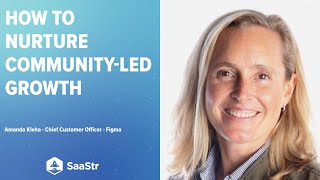
Amanda Kleha, Figma's Chief Customer Officer, outlines how the company built community-led growth through four stages: early influencer outreach, establishing designer advocates, launching the user-driven Config conference with 1,000 attendees, and pivoting to virtual events during COVID. Figma's 8-person community team leveraged authentic user-generated content on Twitter, Slack, and Meetup to fuel product adoption and organic reach.
Thank you for joining our next session. We're excited to welcome Amanda Clea, CCO at Figma. She's gonna be talking about how Figma nurtures a community-led growth strategy. Amanda, thank you so much for joining us today. I'll pass it over to you.
Thank you so much. Hello. My name is Amanda, and I'm the Chief Customer Officer at Figma. I lead our go-to-market functions, which include sales, marketing, and support. Prior to Figma, I was for over a decade working in different SaaS companies, including Zendesk and Google. And today I'm here to tell you the story about how Figma has leaned into a community growth Strategy. And the story starts like many Silicon Valley beginnings with two founders and an idea. And these two founders had an idea to disrupt the creative software space with a collaborative web-based UI design tool. But the problem was they weren't professional designers and they weren't experts at what designers needed necessarily. They knew enough to know that there was a better way to design in a team and the process behind that. My story actually ends with a tweet, a tweet we saw earlier this year after Figma held its first user conference. And it goes, I don't know why, but Figma design feels like family. All the fine people I met at Config 2020 and all that community reflect a common culture you've developed. Politeness, Humor, respect for each other, open-mindedness, passion for learning, creating, and sharing. Hat tip. This is just one of the examples of the kind of community sentiment we've worked hard to nurture at Figma. And so I've told you the beginning and end to the story, but as you can see, the real story happens in between these two points. Now, before I get to the story, I want to give some context on why community is a powerful growth strategy for any business today. We're in the age of transparency where anything that happens can be and often is tweeted, livestreamed, or posted. And the good news is that this level of radical transparency is driving companies to listen more to their customers, their employees, their investors, and stakeholders. And how people get information has changed, um, and how they communicate. And many people get their information from people they already know or even friends of friends. Today, people have got tools and platforms to make their voices heard that didn't exist even a few years ago. And people share their opinions on products, uh, on things like Product Hunt. They get their questions answered on forums or online reviews. And the rise of these tools came at the same time of the disintegration of media. Now, taken together, these trends have created challenges for companies. They've also created a great opportunity, though, for companies to embrace and empower all the diverse voices who engage with their brand. And all of this directly applies to the strategic approach I want to talk about, which is community-led growth. So let me give you a couple examples. Example 1 is another tweet. And this designer sharing his view on Figma versus a competitor. And he follows it up with a very authentic clarification that he wasn't paid to tweet this. Now, if you compare this tweet with any kind of what we would call owned content on the figma.com site, we actually have some information on how we compare to some competitors. But I think you'd agree that this tweet wins out on clout, of compared to any kind of content we might put out ourselves. It's a community-driven, unbiased message that just holds more weight. My second example is an in-depth article that a designer wrote comparing Figma to other tools as well. And he goes into a lot of detail about his analysis and reasons for his insights. And again, Figma didn't ask Ben to write this article. But if you compare it to a piece of earned content, like a professional media story, I think you might also agree this kind of content wins out on clout too. It might not have the reach of a Forbes or Verge, but it's got authenticity nailed. And in marketing, we talk about owned and earned content. Owned is the content your company produces. And earned is the media content you work for. But I'd like to suggest that one of the benefits of a community-led growth strategy is what I'd refer to as nurtured content. It's different from owned or earned because it's from your community. It's from people who know you really well and they know your product really well. And it's powerful because it's much more similar to word-of-mouth awareness building than any other marketing strategy you have. Yet it's also scaled because it's online and public. It's not— it's greater than one-to-one marketing. So it helps also with your organic search traffic. So in summary, community-led growth means investing in word-of-mouth marketing and nurtured content. And this starts with creating a genuine relationship with your community. And many of the best things in life require a lot of hard work, and nurtured content is no different. It can't be bought. So now I'll get back to my story and tell you how we got there. It comes in four stages, my story. So Stage 1, this is really the early days of Figma. The product at this point in time is still very much in development, and we generally want to learn and get feedback from respected people in the community. So the first step taken was to identify a target list of influential designers. And while it would be nice if you could just Google and ask, ask who those people are, it's not that easy. So the approach taken by Figma was, well, who do we know in the community already? And let's, let's find out what kind of followers they have. Figure out who they're following and what are people's expertise really in. And this exercise allowed them to identify and better understand those who had very interesting and thoughtful point of views and what the various spheres of influence they had. And then they started reaching out to these people asking if they'd be willing to provide feedback on this product that was in development. and there was a lot of good success reaching out and planting a seed about Figma. They also kept really good tabs on who they talked to, what, what those people thought, and, and specifically, what did they think the product needed to be successful? And at this point, Figma also ended up hiring a respected designer who had a podcast. Now, this internal evangelist opened more doors to a lot of his designer friends. And it's interesting to note that he wasn't necessarily a huge super fan of Figma. He liked it and thought it had potential, but he also had a lot of critical feedback about the product, and he wasn't afraid to share that with Figma or with designers that he ended up talking to. But this actually ended up working in our favor. Because he was so open in telling designers what was wrong with Figma, in addition to what he liked, Designers trusted him. And this internal evangelist served as a bridge for Figma and ultimately set the tone for having really honest conversations with designers. We weren't trying to sell them the product necessarily at the time. We were acknowledging both the strengths and the weaknesses of the product and really actively listening and incorporating their feedback. As I mentioned, at this stage, Figma's also, it's still early. So we're still trying to develop it and it's just not quite ready for prime time. But at the same time, you want people to try out your product and, and see it and touch it and feel it. So in order to do that, we had to be really creative. And one tactic shown here is about a game. So you, you can have people involved with beta programs, but this was more of a fun thing. So creating a low opportunity for influencers to test out Figma without actually having to commit to it. This game is called Pixel Pong, where you'd invite designers to compete with each other to design silly things and then do it in a live stream for people to watch. And this worked really well to get people exposed to the product, not just the people trying it, but people watching too. So some of the lessons from this early stage 1 include, you know, finding people who will help you build long-term trust with the community. And don't treat it like a research project, really approach it like you're, you're building friendship, friendships with people that you want to have a relationship with. If you can, hire someone with a network who can help you get your foot in the door with the community you want to build a relationship with. And that person should have some connections. They should be well-respected and well-known and ideally social. And try not to be too directive with them. You know, this person might not fit the description of a typical 9-to-5 employee. You want someone who's living and breathing your community. So you don't want them heads down working by themselves. You want— you also want to assume that they're not going to be scripted. Like you can't create Instagram posts drafts for them. They're serving you at a certain point in time where you're trying to establish product-market fit. So they may not be with you forever, but they're at a very critical inflection point. And helping you open some doors. And so you need to trust that this person's gonna take your story to the audience you're interested in that's really authentic. And then finally, get comfortable knowing you've got more to learn. As you meet more and more of your community, you're always gonna take things away from each conversation. And winning that community really starts with great listening. And you might hear things you don't want to hear, but having an open mind is, is definitely part of the success. So it's also worth noting that Figma hired a community marketing leader at this time, early on, to help some drive some of these efforts with the evangelists in the community. And Claire, she's still at Figma and thriving because she's very passionate about fostering an authentic and honest conversation with our community. Stage 2 is Immerse and Listen. So immerse yourself in growing your community and really listening to your users. Often I think we get really busy messaging to our users and we forget to, to listen to their everyday insights. So at this stage, we've got product-market fit and some early momentum. We also start to see some real super fans start to emerge that are real product experts. And a role that we called the designer advocate starts to solidify inside the company. In, in stage 1, we were connecting with important influencers, but in this stage, the design advocate may or may not have a big following, but they certainly are a super fan. They believe in Figma and have a very deep understanding of it. And the designer advocate role at Figma does a lot of things. They listen to the community and build relationships, as you would expect. They also are involved in our— involve the community in our beta programs. At this point, they work with sales to help answer deep technical questions. They also create best practice content for the community, and they, they in addition bring key feedback from the community to influence what features we build. They're really the liaisons with our super users and have built a true collaboration with them. At this point, we've also started to put the CEO, Dylan, out on the road, and he flies abroad to meet users around the world. In fact, 81% of our active users are outside the US, so it was really important that he meet some of them face to face. He traveled all over the place. He went to Nigeria, Russia, the Ukraine, Singapore, and Indonesia, to name a few. He came back always with a lot more questions than answers, but super energized with tons of ideas and insights. And for each of these trips that he did, we worked with local evangelists to host the meetup at their place of work. And then invite the community, the design community. And it was really inspiring to see how many people would show up to, to these very informal events. But, you know, we also meet up with our community online every day. In fact, Twitter is sort of like one of the water coolers of our community. And part of what's beautiful about it is, you know, we do have an internal social media manager who represents our Figma account. But we also have multiple other people in the company who interact online with our community too. So whether it's people on our design team, of course, our designer advocates, some of our product managers, our support team, our CEO, they all chime in to connect and learn. And in return for that, our community feels like they're talking to employees at Figma. And not just a faceless brand. So a real connection's made because the community feels like we're listening and engaging with them one-on-one. At this stage, we also start to see some of that nurtured content start to appear, like I showed you at the beginning. Um, the community is very passionate and they want to share insights on how they think about improving design processes, how they solve design challenges, and of course, uh, how they choose design tools. Um, and we also do some of the same, uh, on our own blog. We share very detailed posts about why we built features the way we built them, the design decisions that we had to make along the way. We really bring them deep into that process and bring our community along for the ride in that product development process. So much so that they are able to articulate to other people why did Figma build things a certain way, or, you know, why Figma's take on line height or shadow spread, for example, makes sense to them. It's also important in this stage that you go back to those early influencers that you initially reached out to and you update them on your progress. It's really powerful to give that personal follow-up even months later saying, hey, I heard you. This is what, what we went back and did, and I wanted to show it to you again. It goes a long way for creating a loyal brand follower if you're able to do that well. A lot of those early influencers are part of our community today and helping spread the word of how they use Figma and what they think of it. And the community definitely keeps things very honest. They're not always positive about what they think, which can sometimes be a little alarming in a public setting, but it's what keeps it really genuine and impactful too. So Stage 2 lessons. At this point, you're still taking a lot of care to personalize things. So you're probably not solving for scale. And that's okay. You're really winning the hearts and minds of people by making them feel heard. And it's hard work and there's not a lot of shortcuts to it. It's also important to be intentional about listening to a broad and diverse set of users. So we put our CEO out on the road as one example of this, but it's not just about top brands using your product. And we're building a product and a company that's serves a very diverse set of users. So it's really important for us that we include as many of them as we can to influence the shaping of our own thoughts. So that brings me to Stage 3, Elevate and Amplify. And this is about, you know, identifying the voices that reflect the values that of the community you wanna build and amplifying them. Create a space for them to shine their thoughts and opinions. So earlier in 2019, we've got a lot of momentum. People are moving over to Figma and we're starting to see some really great network effects. The community has achieved new critical mass. And at this point, we're like, you know, it really makes sense to have a user conference. We wanna bring our community together in real life. So we picked a name, Config, and a date in early 2020, and we put a deposit down on a venue that held 250 people, maybe 300 max. We thought we'd keep it on the smaller side to have the ability to focus on really great content. And then what ended up happening is in October, we finally were ready to open up registration, But we'd grown so much since we first thought that we wanted to do this, and we started to realize we might have to tell a lot of people that they can't come. And this, this was a bit unsettling for us. So the problem is our mission, Figma's mission, is to make design accessible to all. And when you have your first user conference and you, you don't make it very accessible to that many people, that doesn't really gel very well. So we very quickly put a second deposit down on a bigger venue and we went forward trying to gauge interest to see which venue to go with. So I think you can imagine that we probably chose the bigger one, which is the answer. So we'll get to that in a second, but we're also starting to debate what kind of content did we want because When we all went to conferences in real life a million years ago, there were a lot of design conferences out there. And so we didn't want to be just another one. And so we realized that the user conference was really going to feel most like Figma if we enabled it to be by the community, for the community. And so how do we do that? Well, this is just part of the, the afternoon session, but we had a whole day, and the entire afternoon was all represented by users that had raised their hands to speak. So we had put out a speaking proposal form, and within a couple weeks we got 300 people that, that said, hey, I want to talk, and this is my topic I'm interested in. So it was quite, quite incredible. We ended up having 1,000 people at the conference. The complaints of the day were long lunch lines and not being able to get into sessions that everyone wanted, which isn't great, but I suppose kind of a good problem to have. Otherwise, the overwhelming feedback was that it felt very Figma and very community-oriented. People really appreciated a lot of the details that went into making it that way. And some of those details were pretty basic, such as We were very conscious about putting together a code of conduct that we published and held people to. We also, prior to the event, we started a Slack group and invited all registered attendees so they could start talking to them— talking with each other and meeting each other. We also invited everyone to contribute to a digital quilt that we collated. In Figma, of course, and asked attendees to design a square that represented what community meant to them, which was kind of a fun little collaboration that we did. We also had a very nice mix of geographically diverse voices. We had some experienced speakers, but we also wanted to have new speakers that, had never spoken at conferences before. We had a lot of different types of people, different roles, and different topics they spoke on. So it was very representative of the diverse set of submissions we received. So that's what the story of what finally brings me back to the end, which is that tweet that we got after the conference. And what I like about it is it's just a wonderful confirmation that we're not just building a great product, but also a great brand. Now, I know I said the tweet was the end of my story, but I also said we had 4 stages. So I've got a bonus stage for you because Config was in February. We got very lucky with that date, and we all know lots happened since then. So I'll tell you about what's happened. Since February. Before I get to that though, Stage 3 lessons: create a space for your users to deepen their connections with each other, whether that's in person or online. They really, they want to connect with you, but they also want to connect with each other. And also, you know, elevate the voices that represent not just your community, but the values of your community. And it's very important to be intentional about whose voice you amplify. All right, so Stage 4. Our community's been really important during the last several months. People have rapidly started to share how they're adapting to changes. They help each other find jobs, and they provide support to each other in a lot of different ways. So it's not just about us transitioning online, but really the community's been helping each other in a lot of new ways too. And we were just really extremely lucky having a user conference on February 6th. And shortly thereafter, just like SaaStr, we had to pivot to a lot of online plans and scrap the plans we had for the remainder of the year. But I feel really lucky that we have this community foundation to build on this year. We've really leaned into that foundation by giving users a lot of resources in different ways. So we kept our Slack channel from the user conference active, and we've been getting a lot more active on our social channels. In fact, I mentioned it's our entire team that's involved with social. And so if you track all the impressions of the team, they actually outnumber the Figma Design channel by quite a bit. So it's very much a team effort. We also share a lot of the resources that our community creates, and spending a lot of time thinking about what could our community really use during these last few months as people face different kinds of hardships. So we're also very focused on empowering new circles of evangelists to lead locally. Or for whatever interest group they might have. And so we created a new brand that we're going to be launching at— in the next couple weeks called Friends of Figma. And it's for external evangelists to be able to use with their own local communities. And we've been working on different ways we can support them to bring their communities together online. And one of the ways we're also pivoted to online is we have a virtual user conference that's targeted towards Europe. It's happening September 17th. So no matter where you are in the world, if you're awake at noon British time on the 17th, you're welcome to join us. It's free. And as you would expect, all the lessons we learned from Config in February, we have taken to think about for Config Europe. So our focused community approach for the agenda is definitely well and alive here. We've got a lot of users driving most of the sessions, and we've got a fantastic lineup of speakers from a number of different countries. So in closing, community-led growth. I hope I've given you a few things to consider in the argument that it's an essential long-term strategy for building relationships with your users and the communities that they represent. It's very important that you figure out how to make it authentic. In fact, one of the things that I do is when I'm looking at content we produce, even this presentation, for example, I'm thinking about, is our community going to be proud to be associated with? And I think it's a great litmus test. I also hope, hope I've given you some thought about how a strong community can deepen not only your brand's loyalty, but also aid in product education. And product development for your teams. So it has a lot of different benefits to not only you internally, but the broader community that they're part of. So thank you so much for tuning in. I hope you found the Figma story interesting. I'm going to be available to answer a few questions from chat. If I don't get to yours, Feel free to reach out to me on LinkedIn, or if you want to just connect with me directly, LinkedIn is a good place to find me. So thank you very much. All right. I've got, got lots of questions here. Let's see. First one I see, do you have to be open source to be community-led? Well, Figma is not open source, so no, I guess you don't have to be open source to be community-led. Certainly open source communities are great community, ripe for community-led strategies, but I think it's applicable to any kind of business. Let's see. What is the size of the team at Figma that manages the community? So we've got about 250 people at Figma total. And there's about— community marketing is one of the major pillars of marketing at Figma. So we've got about 8 people on the team right now, if I counted right. Half of them are design advocates and half are community marketers and do things like help drive our user group program and the— Friends of Figma brand that I mentioned. So yeah, that's the size of the team right now. Let's see. What tools do you recommend for building great community? That's a good question. We have been— we started using Meetup, and then we recently started to move over to Bevy. So those were two tools. And then for our Config Europe, we're going to use Hopin. So those are some of the tools we use. We also use Figma quite a bit, as you would imagine, dog fooding your own product. So our one great thing about Figma as well on the community side is that we've started to build a community inside the product. Oh, and so you can create your own profile on Figma and share Figma files that other people can inspect and remix. So we have this wonderful community element baked into the product as well. Someone asked about Bevy. B-E-V-Y is— Bebi, not, I know that's a hard word, bebi. See what other questions do I have here. Have you experimented with podcasts? Uh, we have started to invite a lot of our community members, uh, and users to join us in live streams. So if you go to our YouTube channel, you'll see a ton of the recordings from different live streams that we've been experimenting with, um, from lots of different brands, lots of different points of view, and we— in some cases they kind of feel like a podcast, but we haven't officially started a podcast. We've talked about it a little bit, so if you have ideas, ideas for us of a podcast that you'd listen to, that would be interesting to know. How do you measure the health of your community? That's a great question. You know, we, we track a lot of different things. One of the major metrics at Figma we track is weekly active users. That's both a metric that is interesting for us on the go-to-market side as well as the product side. We also track a lot of basic things like What's our— share our voice out in the market? What is— what's our impact on impressions on social media and things like that? We certainly have ways to think through what the health of some of our— customers are in accounts. So, but on a broad base, the weekly active users is probably the main metric that we look at a lot, and the growth of that metric. Let's see. What are the disadvantages to community-led Strategies. Hmm, the disadvantages. Well, maybe not all businesses are set up to be community-led. Like, for example, I used to work at a security SaaS company, and a lot of people don't like to talk about what security products they use because they want to keep it secret. And I'd say that might be a harder industry to do community-led strategies for. But I think that if there's a dearth of thought leadership in your industry, then a community-led strategy is definitely something that could be quite, quite interesting for you. See what else we've got here. Any tips on how to make the sales team be more engaging with the community? That's a good question. Let's see. Our sales team is very engaged with our community in lots of different ways. We do a lot of internal communication of what the community team is doing, and I think that's That's probably step one, is just making sure the sales team is aware of different things the community is doing. The sales team also helps invite community members to join us in different events that we do. So they end up taking a personal interest in seeing it through. We also tie a lot of the dots together about explaining why we think certain community programs are useful to different people that the sales team is working with. So, so those are some of the things that we do. See, do you have any tips for the first community hire? Say you're working with someone who has to first grow their own community as they do their job? Hmm, okay. I'm not quite sure what the second part of the question means, the growing their own community. But the tips for the first community hire, that's a good question because I didn't hire Claire, but she's fantastic. She, I would imagine, showed a lot of signs of just being really passionate about, about the company and what, what the vision and mission was. So that would be criteria number 1. Criteria number 2, I think you have to have someone who's got a lot of empathy. So testing for, do they show signs of being able to empathize with a lot of different kinds of people and want to come up with strategies for making people feel included. Foster inclusivity is one of our company values and certainly one of our values in our community. So it's a huge theme that we're always testing for in everyone that we hire. So maybe, maybe that's a good starting point is think about what are the values of your— that you want your community to have, and then make sure you interview and test for that in your hiring process. Where did you see customer growth during the early days? More like Slack's bottom— bottoms up in orgs, SMB teams, or individual designers? And how did that play into your community strategy? Um, so in the early days, and even still today, there's definitely a bottoms-up motion. So we make it very easy to try out Figma, so anyone can sign up, uh, very easily and start using the product on their own if they want, for free. We have a free product to start, so that's similar to Slack. Uh, and so those individual designers, if they are freelance designers, you know, they often will continue to use Figma for free, but then we also have, you know, quite a few people who work on teams in companies using Figma, and it often started with that bottoms-up motion. So once you start collaborating in Figma, you start to see the power of how your entire design workflow can really evolve and be completely changed in, in so many good ways because you haven't been able to collaborate that way in other tools. So, so they, they act as product champions, and I'm sure other bottoms-up companies see that as well. So they use that, those product champions to help sell internally to the rest of the the organization. And that's still very much alive today. Our community strategy is really, at the heart of it, is thinking about those product designers, what is helpful most for them. And Figma is also, it's not just a professional design tool. It's a tool for the entire product development team. So product managers, developers, marketers, they use Figma as well. So it's, it's a very collaborative tool. And our community strategy is about thinking through those different personas and different users and how can we help show them the value and things that they can get out of the product, as well as our community too. So I mentioned that inside our product, we're building community there. And so a lot of these Figma files that you can see publicly and search on have also been really useful and helpful to the community because they're— in some case, they're UI kits that companies like Google or Dropbox have posted. And then in other cases, they're individual files that people have shared And so they are used for inspiration or even a starting point as a template. So that feeds into some of our strategy too. Let's see. Still taking questions. Do you find that some members use or misuse it as a product feature request board as opposed to engaging with others? I'm not sure what it is, but if it is like the community in general, yeah, I mean, people aren't shy about telling us feature requests they have on Twitter, for example. But that's okay. I think, you know, at Zendesk, we had a public forum feature request forum, and, you know, it can be alarming when all of your users vote up certain feature requests and you're thinking to yourself, "I don't know if we've got that even on our roadmap yet, so how do I handle that?" But it's really powerful to be able to hear what your customers want in very easy ways. I also find it really interesting that in public forums, you can really rally the whole company because it's public, around what are people saying. So we have a number of Slack channels inside the company that help give employees insight into what are, what are our users saying about the product. And I think that's really powerful to build this inclusive community value even within your own company, to have that level of transparency with your users on what they're interested in and why. Okay, looks like a lot of people asked about recordings and Sastre is all over that. Slides are also available. And I'm not seeing as many questions come in. So if I didn't answer your question, or you want to ask me directly, again, like I said, feel free to ping me on LinkedIn. Would love to meet you and really appreciate you tuning in and hearing, hearing me chat about something I'm passionate about.
Amanda, thank you so much for joining us.
We really appreciated it.
And great to see so many questions coming through. Thanks so much again.
Thank you.
More from Jason

Why Your Next Hire Should Report to an AI, Tragedy Apps, and Too Many AI SDRs? | The Agents #004

Our Agents Drove Our Salesforce Bill Up 80%, Marketo Hates Agents, and We Stealth-Churned Off Notion




Managing 20+ AI Agents: Lazy Agents, Our $500K AI Bill, Stealth Churn & the Death of 60% Solutions




