How Selling Sunny Delight and Software are Similar: 5 Truths of B2B2C
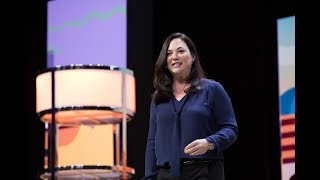
PagerDuty's CEO shares five lessons from selling Sunny Delight at Procter & Gamble and applies them to B2B2C SaaS. Prioritize solving real problems over product features, balance consumer and enterprise needs, build genuine relationships, listen to customers for innovation, and treat time as your most valuable currency.
Chapters
All right, let's welcome Jennifer up to the stage. Morning, Saster, how are you? Little soggy outside, but dry in here. I'm really excited for the opportunity to spend some time with you this morning. I relate to a lot of the people that are here at the show today. Many of you are founders, you're CEOs, you came up as marketers or product people. There's a lot of engineers in the crew. And I'm really looking forward to an opportunity to share a few lessons I learned in a kind of less conventional path to becoming the CEO of PagerDuty. See if I can find a slide here. So I am the CEO of an awesome SaaS company called PagerDuty. We built a business on solving big problems for developers at a time when most companies were focused on the enterprise. If you are a developer, if you've been a developer, you know that everything is great until it's not going great anymore. And when the stuff hits the fan, there's usually a massive amount of chaos associated with trying to lock things down, trying to reduce customer impact, trying to make sure that you don't have a tweetable scenario on your hands. And PagerDuty is a platform that enables developers, DevOps engineers, and generally people, to manage unplanned events when they happen in business. Most of those unplanned events these days are sourced somewhere in the IT stack, in the digital stack. There we go. I'm a kid from the Midwest. I graduated from the University of Michigan a long time ago. Go Blue! Got any Wolverines here? That's great. And back then, the economy was not as strong as it is today. I was very fortunate that I had a number of opportunities to go out in the world and gain some foundational experience that would be useful to me. I had opportunities to go to places like Goldman Sachs, or back then it was called Andersen Consulting, we know it as Accenture now. But I made a choice to join a little consumer goods company in Cincinnati called Procter Gamble. Because I had heard that they were the best in the business at marketing, and I wanted to build a classic foundation in branding and marketing to give me options, to help me build out a career that would be meaningful in the future. Procter Gamble sends you to university for the first 2 weeks that you arrive, and there we were told that while it seems like we're a consumer business, actually we spend a lot of time selling to the enterprise, selling to the retail channel. While P&G spent most of its R&D and a lot of its television advertising and plenty of marketing on their target consumer, who was usually the stay-at-home mom, the female head of household, a lot of our sales effort, the vast majority of our sales effort, was focused on the retailer. It was at P&G University that I was introduced to this very exciting exciting technical innovation, this acquisition that P&G had made, this thing called Sunny D, lauded for terrific technical features like absorbable calcium and a silky smooth mouthfeel. I want you to picture me as a 22-year-old kid in a training room being asked to swish Sunny D around in my mouth like a Napa Cabernet. It's kind of sickly and sweet, and if you're not an 8-year-old boy, it's actually not that appealing. It was just, eh, kind of gross. Here's a little reminder of Sunny D back in the day. How many of you remember Sunny D? You just move in? Yeah. Nice shot. I was all conference back home. Hey, you thirsty? Sure. Hey, Mom, this is, uh— Ollie, hi. How you doing? Want some soda? OJ? Purple Stuff? Sunny D? Sunny D's great. Good stuff, too. Can I try one? How's it going? Off-state last year. See ya. More Sunny Delight? Goes great with humble pie. Sunny Delight, the good stuff kids go for. Pretty cool that me and Stifler started our careers together, huh? So what they didn't tell me when I took this job at P&G was that they were gonna send me to Cleveland. Could have been in New York. Could have been Chicago, could have come to Silicon Valley. Cleveland's really nice in the winter. They also didn't tell me that instead of calling on Kroger or Target or Walmart, my territory would include Save-A-Lot store number 17. And rather than talking every day to the CEO of Kroger and having these big top-to-top VIP meetings, I'd be spending most of my time with a guy named Freddie. And to be really honest, this is stock photography. Freddie was not this nice looking. He was kind of a crusty old guy. He did not want to see me ever. The first time I met him, he told me he hated Procter Gamble almost as much as he hated Kimberly-Clark, that we should ditch our fancy clothes and just leave him the eff alone. We were off to a very good start, me and Freddie. And he wouldn't give me the time of day. I literally would come by on a Tuesday morning. I had been instructed by my unit manager to only go into this store in the mornings, never to go after noon. It was in kind of a seedy neighborhood. It was a store known by its community to accept food stamps for anything, including liquor, no questions asked. And I learned that apparently criminals sleep in, and about noon is when the bad stuff starts happening, and that was why My unit manager did not want me in there in the afternoons. I learned the hard way when Freddy and I were held up at gunpoint together in the store. But I did find out that if I went to see Freddy during his lunch break, he would make time for me. And over the course of several months, a really interesting relationship ensued. And you're probably wondering why, by now, what the heck does Sunny Delight, Sunny D, have to do with selling software? And I will tell you that early in my career, all this focus on the technology, on what was going to make Sunny D this nutritious, economical alternative to milk for moms, this wonderful silky mouthfeel that we talked about. We visited the factory to see how Sunny D was made. And I got to tell you, after visiting the Pringles factory and the Bounty factory, you don't want to know how the sausage is made in consumer products. But in the process of going through this, we were kind of positioned to fail. As salespeople, when you're out on the front lines— how many of you are salespeople? Jeff earlier talked a little bit about building a sales culture. If you have not carried a bag, carried the number out on the front lines, represented your company, had to actually make a sale, you don't realize how hard it is. How important your messaging is. And one of the things that I learned while I was at Sunny D is that we often over-rotate on all things technology, on the shiny new features, on the cool product, when we should be talking about solving big problems. We lose sight of why we exist. I see this every day in the SaaS industry, in the tech industry. We forget that the reason we're here is to solve big problems for our customers, whether they're our business customers or they're our consumer practitioners. And when we do that, we not only fail our customers, we fail our employees, and we fail our investors. One of the first things I learned at Sunny D, selling Sunny D, was that It's about solution to market fit, not product to market fit. Where is the big market that has a big problem where there's ownable territory? That problem is currently underserved, right? That's where the opportunity is. You don't want to go after a niche market. There are tons of stay-at-home moms in the world, right? And you want to make sure you're solving a real problem. Back in the early '90s, Dollar times were tight, and paying expensive amounts of, paying expensive prices for nutritious food and drink for your kids was a hardship, right? And nobody was really doing it. Back then, the only nutritious alternative was the stuff Stifler referred to as the purple stuff. It was Gatorade. We didn't have Vitaminwater and Hint water and 72 other flavors of fortified water. We pretty much had milk. Juice, and things like Sunny D, Gatorade. The other thing I learned is that the B in B2B2C is for balance. It's about striking the balance between the consumers and the enterprises. One of the reasons that we were destined to fail when we first went out to sell Sunny D was that we had a pitch for consumers. I nailed the ability to talk to Freddie about why a stay-at-home mom would want to buy Sunny D. But what I missed is why the hell would Freddie care? What's in it for Freddie? Right? Ever worked in a grocery store? Retail margins are like 3%. Do you know how lucky we are in the software industry to be selling at margins above 60, 70, 80%? Right? These guys are looking for every penny. And the stuff that's in the middle of the store is pretty much worth nothing to them. They make nothing off a bag of flour. The stuff that's around the outside edges of the store, the fresh food, the prepared food, that's where their livelihood is, right? And by going in and talking about things like absorbable calcium and mouthfeel, I left Freddy in the cold. He was not interested. He sent me packing. It was embarrassing. The other area where we got to look to balance is, you know, where is the power? Where's the buying power in an organization? If you think back to the early days of the Macintosh, right, wonderful product that consumers love, but very difficult for IT organizations to administer. Difficult to roll out, difficult to manage a fleet, difficult to collaborate across, etc. Now the tables have turned. Right? We've struck the balance, but we've also seen that the consumer, the employee, has more buying power. Jeff earlier this morning talked about how developers are the entry point into enterprise for many of us, and that's very true for PagerDuty. Our developer community are probably the biggest marketing machine for PagerDuty. They see a platform that helps them make their lives better, and they walk that platform into a business, and after a couple hundred of them use it, or a few thousand of them use it, we start having conversations with the CIO, or the CFO, or God forbid, the head of procurement, right? And we better have a value proposition for those people. We better be able to articulate in a balanced way why PagerDuty is good for business, good for the enterprise, and why PagerDuty is good for the developers. But it helps to You have to know where the balance of power lives in the buying process. The other thing that I found we tended to forget back in the day of selling Sunny D, and I still see it now in the SaaS industry, is it's about people. In an age where we look for frictionless product engagement, in fact, a lot of my customers never ever even want to see a human or talk to a human in the process of trying my product and buying my product and using our solution, et cetera. But when— where the rubber meets the road, where the big deals live, there's a human involved. There is somebody betting their job on your solution. There is someone betting their job on a 3-year investment in your company. And they're not betting just on your product. They are betting on you. On the commitment that you make. I learned this with Freddy. After about 6 weeks of driving by at lunch, you know, running in through the parking lot to say hello, he lived up in this kind of plexiglass pedestal cube above all the cash registers. Does anybody remember those back in the old grocery stores? So you could see, you could see where the cash drawers were and where all the money was moving. So I'd have to kind of climb up these 3 steps and talk to Freddy up through the plastic. And one day we're talking and I said, look, I'm probably gonna get fired. This is gonna be the last time you see me because this Sunny D thing is not going well for me. Like, I haven't sold any. I know you don't like it, but like, what can I do? What could I tell you to just give it a go? And he said, look, you seem like a really nice kid. You're the only person that comes in here and remembers all 5 of my kids' names. He's like, frankly, you buy me lunch every week, so that's why I'm talking to you. But he said, I'll tell you what, ship me 1 pallet. If it doesn't work, you're gonna have to figure out how I get rid of it. This was a big risk, right? Back then, a business doing 3% margins taking on inventory risk, and a pallet of Sunny D, it's a lot of Sunny D, people. That is like more Sunny D than you ever wanna see. Right? He brings in this Sunny D pallet and he, in a happy mistake or accident that we might call mixology, he dropped it on the floor on a Friday next to a pallet of Papa Vodka. The new target consumer in Cleveland for Sunny Delight is the Dog Pound, and that's dog with a W, right? Turns out that it's cold in the fall of 1993, that Sunny D mixed with vodka, you can't even taste the vodka, and the vodka does something to that silky mouthfeel that's apparently very good, and it's calcium fortified, right? What we learned was that sometimes the best innovations come from your customers, and sometimes your consumer customers Don't live where you think they live. P&G has spent millions of dollars getting that nice-looking, wholesome stay-at-home mom to buy Sunny D, but I went to President's Club 2 years in a row selling to the doghouse, the dog pound, right? Selling to these Cleveland Browns fans going to tailgates. And Freddy won too. I think in my first, Fall leading up to the Super Bowl, we shipped 10 full trucks of Sunny Delight to one store in inner city Cleveland. The second year, I actually gave Freddie my President's Club Award, and he kept it up in his little plexiglass thing, you know, the whole time, the whole time I called on him. The point is, and we see this at PagerDuty, like our customers are leading into use cases that we couldn't have conceived on our own. Because they know where the problems live. And the challenge for us is listening really, really hard to our customers. When you think about how you engage, particularly with those consumers, our practitioners, we think about how we engage with that community, it's often through customer success or customer support. The hand raisers, people often call them. Silence is a message. Your consumers, your customers who are not talking to you, there's something in that. You need to figure out why, right? So listening very hard to these consumers and your business partners, what is their day like? What are their dreams? Who are they trying to become? What are the biggest challenges they face every day? That's where the brilliance lives. That's where the innovation lives. Not you sitting in a lab or in a cube coding away, trying to come up with the next sexy feature, right? There's nothing more frustrating than a product looking for a problem. Anybody ever seen that? See that in your software experience? That's a tough gig as a salesperson. Take my word for it. The last thing that I learned selling Sunny D was that the value proposition that we usually orient ourselves around Usually has something to do with revenue, or profit, or growth, or stardom, fame, who knows? But when you really think about what the most valued currency in our world today is, it's time. If I think about the common thread between my enterprise customers, you know, Jeff Smith, the CIO of IBM, or my developers who tend to be hoodie-wearing dudes that hang around all over Soma, right? They're all time-starved. They're all killing themselves every day to optimise for every minute. How many of you used Waze on the way here? Right? Wouldn't dare drive without Waze now, we might lose 2 minutes. That would be hideous. Right? Time is the most invaluable irreplaceable, difficult to find currency in the market. Now, think for a minute of how much time you have wasted for your customers. And think about what you do every day, the set of problems that you solve. Is there any problem Bigger than this one? I contend that the technical problems in the world are easy to figure out. It's the human problems that are harder to solve for. And if we can start to optimize around giving time back to the consumers we work with, to the enterprise professionals that we work with, it's a win-win for all of us. Thank you so much, and I hope you'll enjoy Sunny D the next time you hit the grocery store.
More from Jason

Why Your Next Hire Should Report to an AI, Tragedy Apps, and Too Many AI SDRs? | The Agents #004

Our Agents Drove Our Salesforce Bill Up 80%, Marketo Hates Agents, and We Stealth-Churned Off Notion




Managing 20+ AI Agents: Lazy Agents, Our $500K AI Bill, Stealth Churn & the Death of 60% Solutions




