How to Design an Authentic Influencer Marketing Program | Tipalti SVP of Marketing Amisha Gandhi
Amisha Gandhi, SVP of Marketing at Tipalti, breaks down how to build B2B influencer programs that deliver real ROI. She shows a 6:1 return on investment, maps influencers across the entire buyer journey, and explains how to work with customers, analysts, and internal champions to co-create content and events that actually move deals.
Questions this video answers
Use open‑ended outreach that asks the influencer how they like to work with brands rather than demanding amplification. Reference mutual contacts or smaller influencers they engage with, and position the request as learning about their process.
Identify passionate reviewers, engage them to become influencers, and only ask for reviews if they genuinely love the product. Avoid asking influencers who haven’t used the product to write reviews, as it can damage credibility.
Linkia and Tracker are recommended for B2C campaigns, offering transaction handling and tiered influencer management. For B2B, Analytica (with its new B2B network) is a strong option.
Make select sessions publicly available (e.g., first 15 minutes) to entice broader audiences, offer recordings or snippets as teasers, and cross‑promote multiple influencers to increase perceived value and drive future attendance.
Chapters
Hi everyone, welcome to SaaStr Annual 2021. We're thrilled to have Amisha Gandhi, SVP of Marketing at Tipalti, joining us for this session. She's going to be discussing building trust, how to design an authentic influencer marketing program today. There will be time for Q&A at the end, so please make sure to drop your questions throughout the session using the Q&A button down at the bottom menu bar. Join me in welcoming Amisha, take it away.
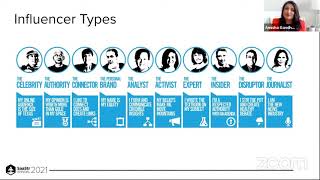
Thank you so much for that lovely introduction. Let's jump right in. So we're— today we're going to talk about one of my favorite topics, which is influencer marketing for B2B. My name is Anisha Gandhi, and I was the founder of the SAP Influencer Marketing Program about 7 years ago. So I've been doing this for a while, and I just recently joined Tipalti. And Tipalti, if you don't know, is a payables automation, accounts payable solution, and we also do PO management. So with that, We're gonna jump right in. So what is influencer marketing? When people think about it, they really think about it as Kim Kardashian and social media and people hawking goods on Instagram and TikTok. But for B2B, what is influencer marketing? And this is my definition of influencer marketing for B2B. Influencer marketing is the practice of engaging internal and external industry experts, and influencers that have active networks. It helps you influence the audience you're trying to reach, and you're trying to achieve a measurable business goal. So that is quite a lot. We'll break it down, but what we're really trying to do is we're trying to associate our brand with those that are influencing the people and the personas we are trying to influence to come to engage with us, to know about us, and eventually buy from us. And the most important thing here is These are people with active networks, and it doesn't matter the size of the network, but that they're active, and it's the persona that you want to reach. So why do we want to do influencer marketing for B2B, right? Because we see the Kardashian model and you think, how does that apply to us? Because our sales cycle is so different, right? We're not selling Dove soap where you can click and just buy. It's a much more thoughtful process for most of our companies and most of our customers. So the customer in mind, we're A lot of the buyer's journey is really complete before they even speak to any of our sales development associates or to our sales, right? When you're looking at it, why should we make this investment? We find that it's a 6-to-1 return on investment. So that's pretty great, right? And if you think about it, since the dawn of time, human behavior, who do we listen to and who are we influenced by? Our friends, our family, our peers, people that we even look at and say, wow, I love how that person is doing X, Y, and Z. And you listen to that person because you trust that person. So 92% of our customers do the same thing. They get referrals from other people that they know. That's why one of the top influencers are your own customers, right? And I already talked a little bit about the ROI, but for each dollar spent, right, you get $5 back in return about. That's pretty high, right? So let's take a look at what that really means in B2B. So when we approach influencer marketing, think about your entire customer journey. So don't just think about your TOFU, right? Your top of funnel content. Think about all the other things that happen to push people along the sales funnel, and that will help you when you're trying to design an influencer marketing program. So think about the outcome that you wanna achieve with your program before you even think about starting an influencer market. Why do you want to do this? What is the outcome you hope to achieve? Is it awareness in the market of your brand? Is it leads? Is it engagement? But know what you want to do before you start a program. So you can do things like build awareness through working with influencers, finding the right ones. They have these active networks and they have blogs and podcasts. You can sponsor those. You can work on content with them to kind of build awareness, or they can blog for you and come in to an event and be a speaker and promote and, and kind of get your message out there in their own words. They will pick up the pieces they think is right for their audience, and you can get really great top funnel content. There is other types of content you can co-create with a, with an influencer. You can create gated assets, you can do an ebook. I've done interactive ebooks with influencers that are ungated that lead to a research that is gated or to webinar series that is gated, and that helps you increase demand. I found in the programs that I did both at SAP and the one that we just did at Tefalte, we get about 2x the amount of people to be engaged, and we usually get 4x to 6x the amount of leads. And these are active leads. These are leads that are in your ICP, because when you do the research and you find the right influencer, right, we'll talk about in a second, you will be able to reach the right persona. Therefore, you're reaching the folks in your ICP, which which is really important if you want your program to be successful. You can also work with influencers in your ABM program, in your one-to-many and one-to-one. In fact, I had an influencer come in and write a lot of really great website content and made a personalized website for a large deal that I was work— we were working on. And that really helped because the content and the flavor was right for that persona. And it really create a lot of engagement with that persona and all the influencers in the cycle within that company to help close the deal and help get the conversation moving. You could also do design thinking workshop, right? Depending on your company, you may be doing implementations and, and the like that require some consulting. So you can have an influencer come in. A lot of influencers are developers. A lot of influencers are implementing technology. They're not just talking heads, right? They're actually doing the work. And they can actually really speak to your customers in a way that even you can't speak, right? And they can eventually become advocates for you. There is always on social, that always helps, right? LinkedIn and Twitter are better for business. But what we're trying to do is create impactful, really good quality content and motions with the influencer that will help create advocacy for your brand, and it will help you increase your brand value over time. So who are these influencers? Let's just take a minute. And take a look. There is many different types of influencers out there, right? There is a celebrity, you know, where they have a huge online. And yes, in B2B, there are celebrity speakers and influencers, you know, whether it's IoT or AI or finance, there are the people that everybody looks up to, right? There's a person who's the authority. They could be analysts, they could be someone that's written a lot of books, but they're an authority. If they've done— they have done the work. Somebody's a disruptor, somebody put out got out and really disrupted something in your industry, and they're well known for that. People love to hear from that person. There are journalists, there are also influencers, right? Um, people who have also been at other companies and they have built up their voice. A lot of companies now have evangelists. So if you have your own evangelist or your own internal person that's really knowledgeable and just speaking a lot out there, they can also be an influencer too. Right? So think about the different types of influencers that are out there, both internal, external, and of course, don't forget your customer. Your customer can be your best influencer, right? That it gets that peer-to-peer influence, which is really, really important because they listen from their experience. So let's talk a little bit about influencer marketing versus influencer relations, because it is set up differently in many different companies, right? Maybe set up on your PR team, and then it's more about influencer relations, getting the that top of share voice and getting blog content and getting coverage, right? When you think about influencer marketing, you start thinking about the whole customer journey. So someone is managing that relationship with the influencer, but you're doing a lot of other things that are, you know, middle of funnel content, late funnel content. You're really getting and getting some good content with the influencers. They're coming in, they're speaking at events. You're doing one-to-one experiences with the influencers and your customers. You can do some really great things and programs through ABM even, right, that I talked about. But that's influencer marketing when you're doing it across your entire customer journey and you're really getting influencers in, right? But they're not going to talk about your product and they're not going to sell your product. What they're going to do is give you really great thought leadership, really great insights to their audience. That's really going to be the hook that keeps people engaged, and they're going to— people are going to walk away with something of value. When somebody walks away with something of value from an experience they have with their brand, your brand, even though it's the influencer leading, you are associated, right? I call it guilt by association, right? So when you think about relations, right, just really think about those two things and how you're approaching your program and the outcomes you want to achieve. And B2C, it's going more of the way of advertising and media buys, right? So when you look at influencers on Instagram, you know, there's, you know, you can see the like, likeit.com, and you can click on it and you can see what clothes they're wearing and you can immediately buy buy it, right? We don't really do that on the B2B side, right? It's a little bit more complicated, but it doesn't have to be. You want to make sure that your influencers have links and they can— you— people can click on it and get that information or get that piece of content that you're doing. And you want to make sure that when influencers are promoting your content, you're promoting theirs, because it is a two-way relationship, right? You want to ask your influencers when you're looking out and trying to identify influencers, which is really important Make sure you ask, how do you like to work with brands? What are the things that you'd like to talk about? What is your audience like? Here's what our campaign is. Here's our program. Here's our event, whatever it is, and get their feedback. Because oftentimes when you get their feedback, you're going to end up with a much better program. So really just keep in mind, it's a two-way relationship. You don't want it to be transactional, like, oh, come and speak and we'll pay you. Because if you do that, it will just end up being a transactional relationship and both sides don't get the best benefit out of it, right? Because they're looking to build business. You're looking to build business, find a way to do it in a way that's very collaborative. And over time you'll have a core set of influencers and that will be your community of influencers, right? Which then you can think about, hey, do I build an external community with these great folks, right? And that is something that you can think about. But think about this as a long-term relationship. And then think about the different communities of influence that you can bring together for your brand, whether it's external influencers, The partners that you have in your ecosystem. There are communities and associations, right? I know in finance for Tipalti, there's like CFOLC. We work with them very closely. Find those associations and the people running them because they are very influential. Your analysts and media, very influential. And then last and certainly not least, your most important influencers, your customers and your employees. Some of your employees are very passionate and just posting out there. And they may not have a big audience, but I bet you they probably have a very engaged audience and they have the knowledge. And then really quickly, you know, before we wrap up, I just want to talk a little bit about approach to integrated influencer campaigns. We all talk about the notion of integrated marketing, and this is where you can infuse an influencer program, whether in your campaign. So you think about what's the outcome of your campaign, you design your campaign, you put some programs around it and the offers. So So make sure you infuse influencer content, influencer offers with influencers, right? And then think about your channels. It comes down to all the distribution channels and the influencer channel, it can be quite a powerful one. And not just on social, they're going to other events, they're speaking, right? So think about how you can bring them along for the ride and they can bring you along for the ride and create something really memorable, right? So that's something to keep in mind. And then just really quickly, These slides will be available after, but take a look. There's different kinds of media. There's organic influencer engagement as well as paid influencer programs, right? So if you are going to ask somebody to do work, you have to pay them. If you're asking them to come with a keynote, if you're asking them to come with a case study, pay, you want to pay people because that's, you're paying them for the work. You're not paying them to go out there and amplify your content. If you start doing that, then again, you go back to transactional, right? So think about creating personalized creative content for your influencer engagement. Work with your influencer really closely, and you'll find there's some things that they'll do that's very organic and it makes sense for their audience. And because they've helped you create it, it's great. And then other channels are going to be paid influencer programs. So just keep that in mind as you're designing your program. There are these different channels and you wanna research, find the right person, and then figure out how to amplify their content, not just ask them to amplify yours. And then some funny things you can do is create like a cameo. We did this with another actor, right? At the end of our campaign, we sent this out to invite everybody to an event. So you can do fun things like this as well that make people laugh and, and they find engaging too. So that's just something to think about. Think a little bit outside the box. We did this IPO campaign For Tipalti, we had influencer videos and different things happening on our, on our, on our centralized hub page for the content. And then as people signed up, we invited them to this event this way with a nice video that was personalized. So think about personalization and the experience you're offering to the people signing up. And then last but not least, the keys to successful, right? Vet carefully, look at the influencer content, make sure they're real experts and they have really real people commenting and Creating discussion. People who create discussions are the ones that are going to create the best content and you're going to get the best results. When you talk to people, look at their attitude, offer an experience. You're seeking to educate and inform. And remember, if you can— I had a philosophy that I developed when I started influencer marketing was, you know, I called it SAP-inspired. Now I say Tipalti-inspired but influencer-led. What does that mean? That means you're really talking to the influencer and letting them lead you, right, with their audience. And then you want to create authenticity, right? If you are authentic with the influencer and you listen to them, they can be authentic and you'll get the best results. You're enabling creativity. And in the end, what are we doing? It's the old form of storytelling, right? Word of mouth. Um, so with that, I'll stop and ask any questions. But in the end, what we really want— if you look at the little cartoon, something I always end on— is Someone— we're all bombarded, right? Your customers are all bombarded with all your competitors, and the lady's having something in a bottle and her friend says, I'll have what she's having. And so that's what we're really trying to do with influencer marketing. So thanks for joining, and I look forward to your questions. I'll stop sharing and we'll go to Q&A.
Thank you so much, Misha. Um, we had one question that came in. Um, someone has been trying to reach out to influencers on Twitter for, um, a Q&A to share on their website and promote, and the influencer's customer base resonates with this person's firm, but she mentioned that she's having a hard time getting responses. Any tips?
Sure. So when you're reaching out to an influencer, if you just go in and say, hey, I want you to come in and amplify something, they're gonna be turned off because what they're hearing is, oh, I want you to come and just amplify my content. Instead of, you may wanna try reaching out to others So see who this influencer is talking to. They may be talking to other smaller influencers. So try to reach out to them and say, hey, you know, how do you reach out is really important. You can say something as simple as, I'm starting influencer program at my company, would love to hear how you work with brands and how we could work with you. It's very open-ended. It's not defining. It's not saying come and amplify me, right? They might look at your brand and say, I'm not interested. You don't want that to happen, right? So you You want to make it very open-ended, that you're seeking to learn how they like to do things and that you would like to engage with them. And a lot of times influencers get bombarded by companies that ask them to amplify for free, and they don't really want to do that. So that can be a turnoff.
Awesome. And then another question from Joe, where do you see user reviews fitting into these influencer marketing programs?
So with user reviews, you want to be careful that you're not, you know, obviously everybody's trying to game the system. So user reviews is, If you're looking in, you see a user that's like really passionate and really likes your brand, you could reach out to that person and say, hey, we really see that you love our brand, you know, we'd love to learn more. And they could eventually become an influencer for you if that's what you're thinking. Um, if you have an influencer and they have not used your product and they go into user review, that's probably not a good way to do things. And most influencers won't like to do that because they have their own brand and integrity to to do. But if they get to know you and they really like your brand, then you can say, hey, by the way, if you really like us and you, you know, don't mind talking about this, do you mind submitting one for us, right? So that's a little bit different.
And then question from Madeline: What influencer management platforms do you recommend to run influence campaigns at scale as a B2C marketer?
For a B2C marketer, there's Linkia, there is different— there's Analytica for B2B, um, and then there's, um, Tracker. So there's Tracker and Linkia, which I think are really good for B2C, uh, marketers. I've used both. They're really good for transactions, for paying, and also for communicating when you have a much wider range of influencers you're trying to reach. And you can tier them out as well, your program. So it's really helpful and it can be managed really well that way and also allows you to manage your top-level, top-tier influencers on a more one-to-one basis. And then on the B2B, B2B side, those are also very good. But there is Analytica, and they just launched a B2B network. So you can also pay influencers as well.
So great. And then we have time for one more question. What might be the ROI of making a closed-door event like an advisory board or specific conference for customers? How do you make these experiences shareable?
So if you have a closed-door conference or something and you have some sessions that might be really valuable, when you're done, you could make one or two of them open. You can make the first 15 minutes open and then you can say, hey, if you like the content, come and check out more. And you can then have people sign up, right? So you, you're enticing everyone with the great experience. Or you can give one experience and one session away and say, did you like this? Come back for more, right? So if it's really good, they will come back for more. And that can be a really great tool because if you had one influencer on one, you have another one, you can say, oh, if you like this person, check out what so-and-so said in this session, right? And then it will be more enticing to people because they know they're gonna get something of high value that's not just a sales pitch for the company.
Great. Thank you so much, Ayesha, for the wonderful session. Thank you so much to everyone for tuning in and for your questions. There's a ton of content throughout the day here at Saucedr. So hope to see you all later. Thanks, Ameesha.
Thanks, and feel free to reach out on LinkedIn if you have questions. Thanks for joining, everybody.
More from Jason

Why Your Next Hire Should Report to an AI, Tragedy Apps, and Too Many AI SDRs? | The Agents #004

Our Agents Drove Our Salesforce Bill Up 80%, Marketo Hates Agents, and We Stealth-Churned Off Notion




Managing 20+ AI Agents: Lazy Agents, Our $500K AI Bill, Stealth Churn & the Death of 60% Solutions




