How to Implement Tools that Teams will Actually Use No Matter Where They're Located with Lucid
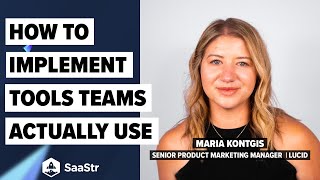
Maria Conges from Lucidchart shares a framework for rolling out collaboration tools that remote and hybrid teams will actually use. Three things matter: level the playing field so everyone has equal access, make adoption easy with champions and integrations, and build ongoing collaboration with interactive features that scale. She walks through concrete practices like pre-meeting prep and shared information pools.
Chapters
Alright guys, so welcome to another session. It is afternoon for some of you, moving to afternoon for the rest of you. We are here today for— with Lucid, um, to meet with Maria and talk about her. So without further ado, I'm going to pass it to Maria, but I forgot one thing, that we are, um, live streaming and being recorded. So don't ever forget that. And that if you guys have any Q&A, please feel free to throw it in the chat. We'll have some time for questions at the end. So for real this time, without further ado, I am going to pass it over to Maria. Maria, welcome. Oh, you're on mute.
There we go. Thank you so much.
You're welcome.
I am Maria Conges. I head up product marketing at Lucidchart for Lucid, and for the last 10 years I've been within a product-led organization helping teams scale their processes, also the tools that they implement, but also focusing specifically on, uh, product development and go-to-market. So I'm really excited today to talk about how to implement tools teams will actually use this has been extremely impactful in the work that we do in scaling teams. And so, you know, this last year highlighted a lot of inefficiencies that come with the way traditional work practices are implemented. And, you know, what does that really mean for us? That means that this last year, as we were adapting to CDC guidelines and working remotely, you know, as team leaders, we realized really quickly that The workforce that we have, you know, is very adaptable, but they need the right tools to be supported. And so what are the tools that we're implementing to make sure that we can help support them in the best way possible? And so part of, you know, being at Lucid, we interview our customers all the time to make sure that the tools that they're implementing are effective, efficient. What are the problems they're trying to solve? What are pain points that they have. And over the last year, we've done probably hundreds of interviews, and the 3 themes that surface over and over again are the 3 themes that we're going to talk about today to make sure that you guys implement for your teams. So first and foremost, we're going to look for tools that level the playing field for all of our employees from the team. Second, we're going to look for facilitating effective training and usage of these tools. And then lastly, how can we drive collaboration amongst our team with the tools that we implement? So first and foremost, looking at leveling the playing field, we have Brian Stallings. He's our chief evangelist, but also he's been an agile coach for the last 20 years. And he put it really well, which is, you know, tools can get too mechanistic and we need to make room for both communication and connection in meetings and utilize tools that enable both. So You know, we're used to leading our teams to kind of align to this left-hand column here, communication about what's the status update of a project, what are the next steps of the project. And some of the tools that we leverage that support this communication style fall under like these three buckets, right? It's how can we connect asynchronously, how can we point to artifacts and sources of truth, how can we continue to have this agile mindset of iterating early and often, but making sure that those iterations are captured and documented within a toolset somewhere. And then how can we make sure that we have working agreements so that we are communicating effectively and efficiently for everyone as individuals? I think that's like standard, obvious communication practices that we all employ. But this second column of connection is the area of communication that was really highlighted this last year as being a driving force for our teams to really enable them further. And so how can we make sure that we are building and implementing tools that are providing hybrid solutions so that our employees can all be on the same page regardless if they are in remote or in office and all have the same visibility? And then how can I make sure that I'm bringing all of my employees along for the ride and folding them into the decision-making process So that as we're going through the process, at the end, whether our solution wins out and we all have a shared sense of achievement and collaboration and we, we did it, we won, that's great. Or a shared sense of, hey, this didn't actually win out, we need to test further and implement further. We have a shared sense of empathy and understanding around each other because we made this decision by committee. And then that takes us into our third point of connection. It's not just about communicating about the work that we're doing and what the status of it is, but also communicating about how things worked for us as individuals, what worked well and what didn't work well. And as a team lead, it's not only my job to make sure that, okay, we're, we're taking the lessons that we learned and we're implementing them in future iterations, But I'm also documenting what went well so that I can merchandise my team to other departments externally. After we are connecting and communicating effectively within the tool that we've identified, I want to make sure that my team is set up for success. So how can I employ effective training and proper facilitation for them? So being in a product-led org, I like to think of training the same way I think of like a go-to-market for a new product. When I'm looking at a new product, I look at, okay, who are my customers or users? What are the pain points they're feeling? How can I serve them? And how do I make sure they're aware of my solution when they need it most? Taking that same framework and mindset, applying it to my employees and putting my people first is going to make sure that I'm looking at and identifying and implementing the right tool because I'm thinking of what is the pain point that they have as employees? What are they trying to solve? What areas of work and tools are they already using? And then how do I make sure that the new implementation folds into, say, Slack or communication streams that they're already leveraging? After I've identified what the right solution is that works for them in the ecosystem of tools that they have at their disposal, I'm going to identify a designated team owner. Someone that can be the subject matter expert and the champion of this tool. Again, going back to the product analogy, this is like our early adopter. This is going to be the person that takes the training and actually makes sure that everyone is aware of it. Everyone has same equal opportunities to engage with it, and they can provide custom solutions where needed for this tool. As I've selected them to be the team owner, I want to now support them in making sure that I'm selecting a tool that is going to have ease of use so that they're not having to go through a lot of pain points in onboarding and documenting what needs to be done next and why. And so finding tools that will be easy and effective to implement across teams. Again, especially in wider organizations, thinking of security and compliance, like Making sure all of that is built into the tool will be immensely helpful for our subject matter expert. And then lastly, making sure that we have full implementation. I find this to be a huge growing pain across organizations where, say, a product team will send, you know, a Qualtrics survey, whereas the marketing team will send a Google survey and then there's SurveyMonkey. And essentially, as team leads, now all we're doing is we're getting the work done, but we're building silos. And I really believe that it's up to us to make sure that we're building pools of information that can be fully disseminated across teams. And so when we are creating new tools and bringing them into our workforce, how do we make sure that we have full implementation across all teams so everyone knows what's at their disposal, what they can use, how they use it, and make sure that everyone's set up for success. And then moving on to facilitation of these tools. Facilitation has two meanings here. One, I want to facilitate training and proper adoption of the tool for my employees. But two, I want to think of my employees and the work that they're doing every day. And what are the tools that will help them facilitate the meetings and the work that they're doing? And so, you know, I was reading this last year, The Surprising Science of Meetings, and In the book, they stated that it's estimated around 55 million meetings are held a day within the US alone. So that leaves a lot of room for improvement when we're looking at meeting dysfunction. And so in terms of facilitation, I like to think of first and foremost, step up and step back. This is an analogy that we use internally that really states that, look, you will naturally have contributors that will always step up, share their points of view, and are go-getters and are very like extroverted. And you will naturally have contributors that are a little bit on the flip side of that. They're very introverted. They will, you know, present their point of view when asked, but they really like to take a step back. And so how can you kind of reverse those and find and implement a tool that allows space for those that are naturally not inclined to share, to step up and those that are naturally inclined to kind of step back and see the wide picture and everyone's point of view. And then how can you also implement tools that help teams prepare ahead of time? So we use Lucid Sparkboards all the time internally to say, look, here's the problems we're trying to solve. Here's what we're going to brainstorm today. Go ahead and throw your thoughts or go your— throw your questions onto the board. So that we can all come to the meeting prepared, and then we can leverage the time to actually ideate and discuss and move forward, as opposed to just analyzing kind of where we're at today. And then lastly, making sure that we're getting the group engaged. This ties to our earlier point of bringing everyone along for the ride. I'm not saying, hey, this is the tool that I selected that is going to work for you. I worked with the team to say, What's the problem we're trying to solve? How can we solve it together? What are the tools that we want to use? And then how are we getting feedback and iterating on them and actually engaging in these tools? So that kind of facilitates this next step of collaboration and what we're ultimately trying to drive, which is interactivity and a connection, not just a communication style. So Thinking again about long-term solutions and being in a growing organization, we want to grow our individual team members, but we also want to grow our processes and our teams and our products and organizations so that we can be set up for success. So how do we ensure that the tools we select grow with us? First and foremost, let's make sure everyone has a voice from the onset. So Again, if this is their mouse with their name tied to it, if this is a designated sticky note color, whatever it may be within the tool that you're using, we want to make sure everyone is on the same playing field, everyone has the same visibility, and everyone has a channel where they can communicate their point of view. And then second, we want to make sure we're facilitating multiple communication streams. I think Zoom is a good example of this. We can have a verbal conversation, which is one communication stream. And while this is happening, a second communication stream can come into play through the chat feature. And then while that's happening, a third communication stream of like visualizing data and information can come into play by actually drawing on the screen and highlighting, hey, this is an area we want to spend more time on. So anytime you have a tool that has multiple layers of communication streams or notifications, is going to be ideal in this long-term factor of growing with your team. And then number 3, making sure that the tools have interactive features. A lot of what I just said can be interactive, but it's not interactive in terms of communication— or I'm sorry, it's not interactive in terms of connection. It is interactive in terms of communication. And so what I mean by this interactive features, I really mean driving home that connection piece. And so how can we build connection across the team and trust and really a sense of who we are as individuals that we're working with? And a lot of that is done through adding GIFs or emojis or anything that drives self-expression or voting or polling. So making sure those features, um, come into play with the tools that you're implementing will be huge as well. And then we talked earlier about ease of use in terms of implementation and training across teams. But this is ease of use in terms of actually using the tool every day and interacting with each other, like, how many steps do I have to go through before I can notify someone of a change or just to thumbs up something. So, taking a step back to look at everything that we just discussed, when implementing new tools, as a leader, what are the things you want to make sure you're covering? First and foremost, look for tools that will level the playing field. So every team member, regardless of where they're located, has the same visibility and you're driving connection and communication while you're going through this agile mindset of constantly iterating and improving. To look for tools that are going to be easy to build adoption, identify an early adopter within your organization. And provide your employees with effective training and make sure that these tools will leverage the facilitation they need for the work that they're doing day to day. And then finally, number 3, how do you ensure that the tools you put in place are long-term and grow with you and drive the behaviors you want? So look for collaboration and interactive functionality. So that's what I have for you today that we've seen and heard from our customers time and time again and that we employ specifically at Lucid. If you have any questions, we can take them now, or my contact information is on the screen. I would love to hear from all of you, and we can talk individually offline. Thanks.
Thank you, Maria. Guys, if you have any questions, feel free to drop them in the chat. Um, if not, Maria said she's also welcome to talk to you guys offline. And as you guys are thinking of any questions, one of the things I do want to note Lucid has a virtual booth in our sponsor hall, so you guys should check them out there. It's just sasterenterprise.com. And then if you have more time, make sure to visit the rest of the sessions throughout the day. We have a few more hours left. Maria, thank you for having us, and I'm sure people will be reaching out to you directly. We appreciate having Lucid and you, so thank you.
Thank you so much, appreciate it.
More from Jason

Why Your Next Hire Should Report to an AI, Tragedy Apps, and Too Many AI SDRs? | The Agents #004

Our Agents Drove Our Salesforce Bill Up 80%, Marketo Hates Agents, and We Stealth-Churned Off Notion




Managing 20+ AI Agents: Lazy Agents, Our $500K AI Bill, Stealth Churn & the Death of 60% Solutions




