How to Market at Mass Scale | Harry Stebbings, The Twenty Minute VC & Whereby CMO Ryan Bonnici
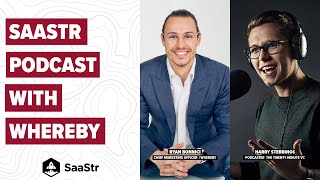
In this 2021 interview, host Harry Stebbings talks with Ryan Bonnici, CMO of Whereby, about his unconventional journey into SaaS marketing and the strategic decisions that shape modern B2B growth. Bonnici recounts his path from a Qantas flight attendant to senior roles at Microsoft, ExactTarget, Salesforce, HubSpot, G2, and finally Whereby, highlighting how each stop taught him about consumer vs. enterprise marketing, martech, and talent building. The conversation dives deep into when founders should hire sales versus marketing, why Bonnici favors a marketing‑led go‑to‑market for many products, and how marketing now owns the entire customer lifecycle – a responsibility that contributes to the high turnover of CMOs. He shares concrete examples of data‑driven automation (using Clearbit/Datanyze to trigger LinkedIn‑pixel outreach), his rigorous hiring process (250 interviews in three weeks, Loom video submissions, impact‑focused questions), and how he measures brand health through direct traffic, social mentions, and a tree‑planting campaign that aligns brand values with user growth. Budget allocation is framed as a “core” budget for reliable revenue goals and a “play” budget for experimental brand work. Bonnici stresses the importance of clear CEO‑CMO alignment via crisp OKRs, hard conversations, and trust. The interview also reveals his personal challenges – imposter syndrome, therapy, and the balance between results and relationships – and how vulnerability and self‑awareness have shaped his leadership style. The episode ends with quickfire questions about why he joined Whereby, the biggest SaaS marketing myth, and his 2021 personal and professional goals.
Chapters
Well, I'm so excited to be here on SaaStr with the one and only Ryan Bonici. So I want to start today, uh, and we can start with a little bit of intro. So I'm Harry Stebbings, I started the 20 Minute VC podcast, the largest media asset in venture and startups, which is great. And I'm joined by Ryan Bonici, who is the man, the myth, the legend, and just an incredible, incredible CMO. I've interviewed over 100 CMOs and Yeah, luckily between us, Ryan's my favorite.
So lucky.
Please, please.
But Ryan, I wanna start with a little bit on you. So you're at Whereby today, but like how did you get into the world of SaaS and how did you come to Whereby as CMO?
So I've been in the industry for a long time now, which is, and I got my break actually, weirdly enough, I was a flight attendant for Qantas, which is the biggest airline in Australia. It's actually the world's oldest and most experienced airline.
And I met an executive on in first class when I was traveling, working, and they told me that Microsoft was hiring and that was over a decade ago.
And then so started doing B2C marketing at Microsoft back in the day when the Microsoft and Mac battle really wasn't kind of, no, there wasn't a clear winner, right?
Needless to say, Mac won.
And so started my career there in consumer marketing.
And then one of the tools I was using at Microsoft was a tool called ExactTarget. Which was the world's largest email service provider at the time.
And then ExactTarget was entering the APAC market.
They poached me from Microsoft and then I built out their marketing teams across Asia and Japan and Salesforce and acquired them. And then I did the same for Salesforce for a while.
So had a lot of experience in enterprise B2B marketing.
And then I decided that, you know, I wanted to start my own company eventually and realized that I wouldn't have $100 million to throw an event like I did when I was at Salesforce.
Amazing company, but obviously not the most ROI-focused marketing.
And so I really, I joined HubSpot at that point in time because I wanted to learn inbound marketing and I really wanted to learn how to make your budget stretch. So I spent a while at HubSpot and had the most amazing time there, learned a lot and then moved to G2. It's called G2 Crowd when I joined, we changed it to G2, the world's largest software marketplace where, you know, over 10 million business buyers go to it every month to find the right software for them. And then only, you know, a month or so ago I started at Webuy Webuy, the world's easiest to use video meetings, kind of like Zoom but newer and sexier.
I mean, it's so much newer and so much sexier. I have to say, I'm just the biggest Webuy fanboy in terms of the product itself.
But I want to say, well, you know, and real users love it as well. It's rated best and easiest to use on G2.
So, you know, there we go.
I mean, the blending of new and old.
Yeah, I love that one.
Um, let's start today with, you know, something that I think a lot of people think about, which is you said there about building out teams at the different companies you've worked at before. You know, often people discuss, do we hire sales? Do we hire marketing? Jason M. Lemkin often says you hire marketing. I had someone on the show the other day that says you hire sales. How do you advise and, like, you know, discuss with founders whether they should approach the sales or the marketing first when building out their core team?
I mean, I think it totally depends on what you're selling, right?
If you're selling a product that sells online, a product that growth as business, it's freemium, then I mean, you're hiring product first and then people to help promote the product online. So more so marketing. On the flip side, if you're dealing with like an enterprise sales go-to-market, you know, you want, you'll want from the get-go to have salespeople testing the product in the market with people to see what does and doesn't work.
So I think it really depends.
I'm personally a big fan though of hiring marketing because I think that marketing really helps prepare the market for whatever it is that you're wanting to get into them. So at HubSpot, for example, when we were launching into a new region, we started like when I was overlooking at APAC marketing for HubSpot, I think about 3 years before we started, before we hired a salesperson for Japan, we launched the Japanese HubSpot blog because we wanted people to start getting our content, start reading it, start building up our database so that there was enough inbound demand coming from the market already. And the benefit there is marketing actually then can serve as a way to test the market and see if the market is or isn't ready.
So I'm a big fan of obviously a marketing-led approach, but I think it really depends.
And, you know, it really comes down to the go-to-market function of the business and whatever product or service it is that you're selling.
So listen, I'm a slight marketer, so I obviously am slightly biased in this respect, as I'm sure you are. But I see like marketing bunny eating the stack where you think about kind of the content and the resources that marketing creates really serving the inbound and actually warming the leads so much that it shortens sales cycles and creates much more efficiency there, but also is so useful in terms of customer success and ensuring the customer really is as productive as possible. How do you think about like marketing kind of eating the stack, so to speak, in many ways?
You know, I don't know if it's marketing is eating the stack. I think marketing is the one function in the business that's been tasked with owning the customer lifecycle, which is a great thing in many ways, but it's also a really difficult and challenging thing. And I think that's actually why so many CMOs turn over so quickly, right?
I can't remember the stat, but I think like the average tenure of a CMO is something like 14 or 16 months.
So the CMO has the highest turnover in the C-suite. And I think it's because there's this, I think a lot of companies don't have a very clear and concise understanding of what marketing should do in a business.
And I think a lot of CEOs don't enable marketing teams with the tools and the authority to be successful.
But I think you're definitely right because martech has moved so quickly, marketing teams have been able to really quickly start to impact all stages of the buyer journey from awareness to consideration to decision and then post-sale into delight and repeat purchase. And I think marketing people and product people, I think, have a unique skill assuming that they're good, right?
There's lots of bad marketers. Because there's lots of bad product people.
Assuming that they're good, I think they can have this kind of toolset mentality of solving problems with the tools that they have. So, you know, one of my last companies, I remember chatting with our customer success team and they would do this manual pull from Salesforce. We were launching a new product at the time. It was a connector to LinkedIn Ads.
And so they would basically pull a list of all of their customers and then they would go to Outreach or whatever it was they were using for their sales emails. And then they would send those people to let them know we had this new product that connected them with LinkedIn.
And I remember sitting down with my marketing team and saying, hey, what if we use a tool like Datanyze or Clearbit? We can actually find out all of our customers that have the LinkedIn pixel on their website based on these, you know, data enrichment tools. So whenever we see a customer that has the LinkedIn pixel on their site, let's just fire off an automated email on behalf of the customer success manager saying, hey, notice you just added the LinkedIn pixel LinkedIn tracking pixel to your site. That tells us you must be doing LinkedIn ads.
Did you know you can integrate our product with LinkedIn ads to do them better?
And so that I guess is a bit of an example of like where we can think, I think as marketers, big asterisk, you know, a good marketer can think like with the idea of how do we use the technology and the know-how that we have of I guess the business and technology to enable other teams in the company to be more efficient. Because at the end of the day, a customer success manager shouldn't be doing those kinds of emails.
They should be calling their customers and building real relationships as opposed to doing menial work that a marketing automation platform can do.
So I guess like to answer your question, I think it, you know, marketing now is just being tasked more and more with owning all aspects of the customer journey and good marketers I think are stepping up to that challenge and executing really well.
And I think you're seeing a lot of marketers that are maybe more the brand style marketers are struggling because they don't know how to think about the new world in that old school kind of brand-oriented way.
Does that make sense?
It totally makes sense. But you mentioned there about kind of CEOs making their marketing teams as effective and successful as possible. If we kind of go one step before that to like the attainment of the best talent in marketing, how do you think about like what it takes to truly attract the very best marketers? And also maybe for like technical product-centric founders, it's not that obvious who the best is. How do you think about determining good from great for those that maybe aren't marketers themselves?
Yeah, look, I think it's a tough one even if you are a marketer to work it out sometimes.
You know, I'm, I have about 20 open roles on my marketing team at Whereby, and I think in the last 3 weeks I've probably done about 250 interviews. A lot of them have been Loom videos that people have sent to me that I asked them. I kind of built a bit of a streamlined process.
And I mean, the challenge with marketers, I think this is similar to salespeople, right, is like they can use their craft to sell you or to market to you during the process, which I think makes hiring good sales reps and good marketers that bit extra, extra difficult.
I think for me, I have just a very structured way in which I interview. And when I'm interviewing someone, what I ultimately really care about, I typically start all my interviews outside of like just the get-to-know-you elements. I really kind of immediately want to ask and I do ask, what was it that they were brought into their company to impact?
And so from the get-go, I understand, like, do they understand their role and their role's relevance and importance in the broader company?
And so like, I guess an example of a good response there would be like, if I asked an email marketer what they were brought into the company to impact, like a good response to me would be, you know, I was brought in to grow marketing source revenue. And the way I do that is through the email channel. And the email channel, when I joined, was responsible for 10% of our marketing source revenue, and now it's, it's responsible for 80% of our marketing source revenue since I joined.
So I'm really trying to understand how they connect the tactics of what they do with the impact at the highest level, because there's so many buzzwords in marketing that you really kind of need to keep going level upon level deeper to really understand if they truly understand how it works. Does that make sense or do you want me to dig deeper?
No, it totally makes sense. My question there is like, if you think—
And call bullshit on anything if you disagree, by the way, too.
Don't worry, I think we both know that we're close enough. In terms of like the impact though, you know, we're seeing more and more companies engage in brand or awareness campaigns where impact is kind of, it's a little bit looser than an uptick in conversion from 10 to 22% or whatever that may be in terms of the business. Core metrics. How do you think about measuring impact in brand or awareness campaigns where it feels looser?
Yeah, good question. So I guess I, I tried to really simplify marketing into short-term and long-term.
And short-term in my mind is growth marketing, the things that will drive leads and revenue right now.
And then I kind of think of my, my long-term bucket is brand, right?
The brand bucket is like the things that you're slowly building up over time so that people trust your company, they trust your product, and they want to use you.
And so I think to your question about brand, really the few ways that I really like to measure it is, and I think you can do it in a really objective way, is by looking at direct search to your site.
So direct traffic, how many people are actually typing in whereby.com and coming to our product site.
Now don't get me wrong, if we do paid ads or social media ads and other things, you know, those things will impact direct and will give it some lift while we're running it.
But if we turn all of those things off, you get a pretty nice idea of like a baseline for how many people are organically coming to our site from our website directly. I mean, that tells me that there's brand recall because they're literally coming to our site. They haven't gone to Google, searched best or easiest video meetings tool, and then come to Whereby. That's not a bad thing either. That's obviously great.
So that would be one of those things.
I think I'm pretty obsessed with social mentions as well and looking at market share in terms of like people mentioning me versus competitors. And I think that's another way you can start to at least better understand what percentage of people that are talking about products in our space or talking about us, and you can incrementally set someone on your team a goal to increase that.
But look, I think at the end of the day with brand stuff, you can, you can really over-index on measurement.
And I think so long as you've got a good gut idea of what is and isn't working, I try not to over-index on measurement of brand initiatives.
And I think the big asterisk I would say with this is that, that all of this is true assuming that you were doing the right short-term things, right?
Like as long as in the short term you are growing revenue like you to, then I think you can be a little bit more lax on the brand side in terms of measurement. If you're not meeting revenue goals through the form of, you know, new users, new activations, and whatever it is that you care about in your business, and I would always kind of lean into those things first.
That said, I think there's a ton of ways in which you can combine the two.
And I'll give you an example if you're up for it.
Like, so, you know, a few weeks ago, I randomly tweeted something around like, hey, you know, it's like my first week at Whereby, we're thinking about you know, I'm curious, like, if we planted a tree for you for every time you met on our platform, like, would you be interested in trying it, trying it out? Um, and the overwhelming majority said yes. Um, and so we haven't announced this officially yet, but next month we're planting millions of trees. At least we're starting with a million. Um, and so basically for every time you meet on whereby.com, we'll mark a tree and you'll see it in your, like, portal. It'll show how many trees you are responsible for planting. And I think to me, that's a good example of something that is doing wonders for us from a brand perspective because people are noticing us because we care about people, we care about privacy, and we care about the planet. These are things that companies like Zoom, Teams, Google Meet, they're so far from like the humanity of their users.
And I think most people know that, which is ironic that we are on this Zoom right now and this like very dark looking black screen.
They know I'm talking about them.
I'm sorry, Eric, I love you still.
But so that I think to me is a good example of something that helps align our users and our future users with the values of our company and why they should care about us.
But it's also going to drive bulk net new users to the platform as well to try us, right?
The way we're marketing it is we don't care what other video meeting tool you use, you can keep using that, but switch a couple of your one-to-ones each day onto WebEye.
It's completely free to use. And now you can plant a few trees every day and just do some good. And I guess my hypothesis and hope is that once they start using Whereby, they'll see that it's a better platform, it's easier to use, and their, their people that they're meeting with prefer it as well.
So that to me, like, will drive brand, but it will also drive, like, retention and net new users, um, to our platform.
Yes, you mentioned brand essentially, and you mentioned— I love that in terms of planting new trees. But in terms of brand, I always say great brands, they create armies, they create division. You're either for or against them. You're not— you're never in the Yeah, it's fine. Like, you want to— oh, I love it, or not for me. Would you agree with that, or would you say I may be too binary in my perception of great brand, actually?
Oh, I don't think so.
I, I don't think that's the def—
so I guess I would disagree in that being the definition of a great brand, but I think that can be a really useful tactic in differentiating yourself, right? You know, it worked for Salesforce against Oracle with the no software You know, I can think of countless examples of companies that have done something like that, right? Drift against HubSpot by saying, you know, forms.
It can be a nice way, I think, to, to stand out and draw a line in the sand and get a little bit of buzz. So no, I think those things can be, can be good and be, can be incredibly powerful.
You know, for us in a lot of ways at Whereby, it's like software is, is to some degree our enemy, right? Because what people love about Whereby is the fact that it's like one click in your browser but more than that, right, it's, it's about privacy and other things.
So I guess I think that's a really useful tactic, but I think it can be overdone as well.
And so it just really depends on the market and who you're going after, right? Like, one of the best examples of all time, I think, is Apple versus PC, right? The 'I'm a Mac, I'm a PC' ads. And so they're, I think, the best execution of it.
And so I think it can be done really, really well, but once you get to a point, you don't need to do that anymore.
Like Apple doesn't need to talk about PC anymore, right? They're number one.
Oh yeah, I think, I think it becomes more of a thing only if you're not number one.
Yeah, no, I agree with you in that perspective. Can I ask you, you know, going back to the kind of short-term versus kind of longer term and then the like immediate ROI versus the kind of more brand marketing world, how do you think about like— and I know this is like case dependent obviously, but for you personally, say, how do you think about like budget allocation across the two? And I always think like actually CMOs are more like venture investors. You've got to place a number of bets, see what sprouts, and then double down. How do you think about resource allocation across channel and what's right?
I definitely don't think there's, there's a definition of what's right, really.
I think to me, the way I look at it is ultimately about what's going to give me— what helps me reach my short-term goals, right? So if I know I need to drive a certain amount of ARR for the business like my budget goes to that first, right? Like that's the most important thing. And once I can get that working well, once I can get that as efficient as possible, then my remaining budget is really play budget essentially. And by play budget, I mean that's where I can take bigger risks.
So I guess, I guess I would say I dedicate all of my budget to more secure channels that I know will work.
And obviously in real time we can test these things and see what does and doesn't work. And once we have, I guess, an equation that is working for us or a cost per acquisition through certain channels, then I can then dial up those channels or dial them back down. But look, if I had a really fixed budget and needed to use all of it to meet my revenue goals, and that would be how I would use it. But I think that's the one thing that I always try and teach my marketing teams is like doing the core components of your role is kind of like the boring work in my mind, right?
Like hitting the revenue goals in a really reliable and sustainable way. It's the most— it's super critical. You have to do it, but it's probably not going to be the fun stuff, right?
And so I've always been a massive fan with my teams of working out like, how do we hit our revenue goals in the most reliable and consistent way possible and in the most efficient way possible so that we can almost put that on autopilot and then we can start blowing shit up on the other side of the house and start to like really do things that might completely not work, but nothing will happen if they don't work because we're still meeting our revenue goals. So that's maybe not a very perfect answer for you 'cause I don't have an exact ratio. I think it really depends on the business and it really depends on how long it takes for you to see the revenue from the activities, right? Like I'm really fortunate at Whereby in that people sign up for free and then we convert them to credit card. And so in a real, we kind of have e-commerce-esque or D2C components of our business, which make it really easy for me to see dollars in, dollars out when I'm doing paid media. For a company like Salesforce or a software company that goes for a sales team, it's a much longer sales cycle, right? And so you can't optimize as quickly.
Yeah, no, listen, I agree in that. I think you can blame me, it was a totally crunk question. I'm not allowed, I don't think, but I mean, I'm holding back on that one. Question is set by obviously someone, in most part they're set by the CEO, and you mentioned earlier like what CEOs can do to make their marketing teams most effective. What do you think, like, is the optimal relationship between that CEO and the marketing team, and what can they do to really drive efficiency and productivity within marketing teams?
Look, I think having really clear goals for marketing is, is probably the most important thing and the most overlooked. I think marketing can really quickly become a catch-all for all things. And I think being really clear with your boss, the CEO, around what is the number one goal, like, or the one, two, and three goals you have to hit. And so if you haven't hit those things, you should deprioritize everything else and focus on those things. So I had a call with my boss today, Avind, who's a really good guy. And I said to him, I was like, look, we're doing the OKR process right now, and I'm confused by some of these goals.
I think we need to get to a more crisp goal for marketing so that it's really clear, like, what success looks like, but while also putting in some parameters, right? So as an example, one of the core metrics is unique participants in meeting is something that we care about at Whereby, right? So then the number of people that are in conversations, and he was kind of putting that as like the number one metric for marketing to be measured by.
And I was like, I think we need to like guardrail that metric by something because, you know, I could like promote Whereby as a tool on Reddit for like people that want to get their jollies off together and just meet random people, which will increase our user numbers like exponentially, but it won't mean any revenue. So like, let's like find a, a volume metric, which is participants, and then like a quality metric, which is about revenue. And so I guess being able to have that kind of a dialogue with your boss around metrics, and I think you just have to have been to the movie enough times to see like how can certain goals be manipulated unintentionally so that you can avoid that in the future. So I think to answer your question, Harry, it really just comes down to having a really strong relationship between CEO and CMO, the ability to have really hard conversations around what marketing can do and what they can't do. Too many CEOs think that like marketers can convince PR people and journalists to write about anything, and the reality is journalists don't give a shit about your product unless it is truly doing something or unless it's breaking rules and they'll write about it forever. And I think most CMOs don't have the hard conversation with their boss. And I remember even at HubSpot sitting down with Brian Halligan and being like, look, I really appreciate that you want to get the word out there about this new feature, but no one cares. It's not like an innovative feature. It's like a feature that we have lacked that everyone else has. So I'm just gonna piss off journalists by going to market with this thing. Let's just avoid it and focus on something else.
And so I think being able to push back on CEOs is key.
And I don't think enough CMOs CMOs do that.
And then I also think just getting really clear and concise metrics. And trust is ultimately the most important thing and just assuming that you're both doing what's right for the business and being able to give constructive feedback. Hope that makes sense.
I think the thing I always find with you, Ryan, is like, you know, you've just seen, you've seen this show before many times in many different situations and segments. I think something that just kind of springs to mind for me is like, what do you still find really challenging? What like continuously is tough? That you continuously find yourself being kept awake at night with?
Oh, that's such a good question.
You're so good at this. You know, I think for me, so early on in my career, I was a bit of an asshole. And I think, you know, I was really fortunate to have a COO at one of my prior companies get me an executive coach. It was like $1,000 an hour every week. So clearly they thought I had high potential, but I was like, I needed some help. And, um, and one of the things that she really helped me understand was like this idea of needing to balance results and relationships. I don't know if you can probably tell from talking to me that like results and like focusing on results, I'm like a super results-oriented person. And so I think in the past I have— I would focus a lot more on results than I would on relationships.
And I think the more senior you get, the more you realize that the relationships are what gets the results ultimately.
And, and yeah, so I would say that's the big thing for me that I'm always thinking about because like my natural inclination, like as a—
I'm a D in DISC, so which is like direct, like I move fast.
I sometimes like forget to be more empathic and it's something that I've worked on a lot and I think I'm doing pretty good on that now.
I would give myself like a B+, A-, I think, for where I'm at now in terms of like managing that dichotomy of relationships and results.
But that's probably one of the big ones for me, just because like I speak quite negatively to myself in my own head and I've needed to do a lot of therapy to work on that and like not bash myself up and beat myself up too much.
And without realizing, I think that was coming across to my team members in the past. And so, you know, that's one of the things that's been a big one for me to work on and constantly care about.
Um, yeah, sorry, how have you worked on it and what's worked in terms of practice, in terms of structure? What, what's worked in terms of really kind of figuring that bit out?
You know what, I think a big part of it was just around— so I mean, therapy is a huge thing for me. Like, I'm— my wife is a doctor of clinical psychology. Um, she—
we— I majored in psych, that's how we met.
Um, so I think like actually not pushing your feelings and thoughts to the side, which I did for over a decade, and actually talking to someone about That is so important because so many interpersonal things in our lives are driven by experiences when we were young.
Like when I was a kid, I was bullied really badly and I'd put—
I'd pushed that away and forgotten about it and created this persona of this really extroverted person who is really confident and can speak on stages in front of 20,000 people. But then I still had this like broken little kid inside of me that I needed to like rebuild.
And so, and, you know, always work in progress.
So I would say like therapy was a huge one for me really. And like learn— this sounds so corny, I've clearly been living in America for too long, but like genuinely learning to love myself for me and not my achievements has probably been the biggest thing that's helped me show empathy to others is that I've had more empathy for myself. So I'd say that's like step one. I think step two really around how I guess I put it into practice is, you know, like I've been pretty vulnerable and open with you right now. As I became more vulnerable and open with my team, they, they kind of reciprocated that back to me.
And, um, and I guess authenticity sort of begets authenticity.
It's like very hard to tell someone something really authentic about yourself and for them to like keep a hard wall up.
Like, they typically let their own walls down. And so I think by doing that, it helped me connect with my employees more. And in the past, I would I would intentionally build up walls between me and people so that they couldn't hurt me, right? Like, again, this is that fragile little Ryan. And so I think by like not needing to do that as much because, you know, I felt more self-esteem and whatnot, has just helped me, I guess, connect with people better and feel a bit better on my own self-esteem.
But, you know, I think it's like always a work in progress, and that's why I still see a therapist just every week, and I freaking love it because, um, you know, it's really easy if you're a Type A alpha person to just not, um, access your emotions and to push them away.
And therapy kind of forces you to reflect on those things that, um, that you might avoid. And we all avoid things.
And I just so love chatting to you always.
Um, my final one before we move into a quickfire, and it's like, just self-doubt. You struggle with self-doubt. How do you think about approaching self-doubt? Often people have it with moving into new roles. How do you think about approaching self-doubt for yourself?
Yeah, I mean, it's a really hard one. Like we kind of talked a little bit about imposter syndrome earlier, right? Like I just think back to when I joined G2, it was my first CMO role. I was 29. Boy, did I feel like an imposter. Like I felt like I could do it from my results and my track record, but still deep down, obviously I didn't. And so like the way I dealt with it back then, which is so embarrassing, I don't think I've ever told anyone this, is I bought a $12,000 Tom Ford suit. And needless to say, it did sweet F.A. for myself. I mean, actually, I felt really amazing when I was wearing it. I'll give Tom Ford that.
His suits are beautiful.
But really, it didn't fix the imposter syndrome at all. So, and I think what helped with the imposter syndrome and self-doubt was verbalizing it, actually. So, like saying to your team, like, hey, this is what I think we need to do, but I'm not sure. What do you think? And I think just leveling with your team and saying like, hey, I know I'm your boss, but like, I don't know that much more than you necessarily. Don't assume that I am the person with all the answers. Like, we're learning this thing together. We're both going to make mistakes together. And that's part of like the fun. Like, I want to grow and I'm sure you want to grow. And so like, let's grow together and let's just try and make sure that majority of the shots that we make, we don't miss. Kind of a thing. And if we do, let's hold each other accountable and let's learn from that. And so I think, to me at least, to try and avoid that has been by, instead of faking it, actually just owning what you don't know, which is a really hard thing to do. And it's a really easy thing for me to say now in hindsight, now that I feel like I'm at a point in my career where I am confident enough that I don't need to put on a show as much. Like, I don't know if I would recommend people people that aren't where I am to do what I'm saying necessarily. Like, I think about this all the time. I'm like, if I knew what I knew now, would I go back to where I was and admit that I don't know the answer?
Because I faked it a lot to get where I was and learned on the job, right?
And so it's a really hard one. It's something that I think about all the time.
But I definitely think owning it and not pretending to know all the answers early on in my career would have certainly alleviated a lot of depression and a lot of anxiety for me.
Listen, I'm totally with you in terms of owning it in that respect. But I do want to move into my favorite, which is the quickfire. So I'm going to give you 3 questions, and you're going to hit me with quickfire answers. Sound good?
Sounds great.
What was the number 1 reason you joined whereby?
Other than Oyvind's charm and good looks.
He is a very charming man. That's a great question. I think, you know, I don't do what I'm told, unfortunately.
So there's a few reasons.
Um, I would say it's a combo of like people and product ultimately, right? Going through the, you know, I wasn't active in the market, uh, the team reached out and, and I was just genuinely blown away by the talent. Everyone from Avind to Ingrid, um, our Chief Product Officer, to Jess, our VP of People, to Abby, our Chief of Staff, to Fruda, our COO, like genuinely the most remarkable people. And I should say that like the most remarkable with the least ego, which in tech is like a really rare thing, right?
There is so much fucking ego in this industry.
And you know, as like a, as a kid that, you know, was bullied as a young kid, like it's easy for my ego to get activated and I've done a ton of therapy to avoid that. And so working around people with no egos is such a refreshing change because it kind of means that my ego never feels threatened, I guess. So people was a huge one for me and then the product was the other one, right? The NPS of the product is through the roof. Like, you know, Zoom is a great product.
It's really reliable and it took off with, you know, in tech and then with the coronavirus.
I don't think many people feel a lot of love for Zoom. There's no humanity, there's no personality.
It's clunky AF.
And so what I love about Whereby is how easy it is to get started in a meeting. Like it's one click, everyone can just go to your meeting room. Beautiful, you can brand it the way you want. It kind of has become my digital office, actually. So like, I always have my Whereby room open and my team just drop in as they need things. So, so I think it's a combo of the people and the product.
And I know that wasn't a very quickfire response, so sorry, sorry, Harry.
Terrible quickfire response.
I know, sorry.
I never struggle with ego though, so at least we're good in that respect. Um, tell me, what do you think is like the biggest misconception about like SaaS marketing that you see thrown around on Twitter, forums, speeches? What's like, ah, the biggest misconception?
Biggest misconception. Well, I think it's just the biggest misconception of marketing is that we just make pretty presentations. And I think that's like old school marketing, like just using things and making them pretty. I do think that we over-index as an organization or as a marketing group in terms of moving too far away from branding, creative, and too far into demand gen. And I think we lost a lot of the art of marketing, which I'm trying to bring back with my teams. And I know a lot of other great marketers are trying to do the same.
But yeah, I think, I think it's just a combo of like, like marketers not having as much impact and being just focused on the fluffy metrics.
And that's, that's, I think, one of some of the biggest misconceptions.
Tough one here, but final one. What would be a great 2021 for you to achieve? What are your goals and milestones and what do you want to do this year that would be a great year?
Yeah, so I have a 4-month-old little son, his name's Jagger.
So I think like a personal milestone for me is to be an amazing dad, a remarkable dad. And I'm loving, I mean, being able to work from home with Whereby because we're a 100% distributed team has really helped with that, I think. So I would say that's like on the personal front, like Jagger and spending time with my wife for the two really big ones. And I feel like I'm ticking those boxes.
I feel like I'm green light on those right now, which I feel really grateful for. You know, I think on the professional side, I really this year want people to give Whereby a look because I think once they try it, they will see that there is so much better of a solution for so many types of businesses.
We don't want to go after the enterprise for Zoom, right?
Like we're not going to do that. That's not our game. I think we want to do what HubSpot did for the SMBs, for companies using video conferencing and make like an amazing, easy-to-use experience that they love using. So I think if by the end of this year, our user numbers have grown exponentially upon where they're at right now, and they're already growing exponentially, I think that would make me really, really happy.
Ryan, as always, I just love chatting to you.
So thank you so much for agreeing to do this with me, and it's been so much fun.
Thanks, Harry. You too. My like sub-goal is we need to hang out more. I think let's set that up as an additional goal.
I'm here to hang out. I love it.
Let's do it. Thanks again.
More from Jason

Why Your Next Hire Should Report to an AI, Tragedy Apps, and Too Many AI SDRs? | The Agents #004

Our Agents Drove Our Salesforce Bill Up 80%, Marketo Hates Agents, and We Stealth-Churned Off Notion




Managing 20+ AI Agents: Lazy Agents, Our $500K AI Bill, Stealth Churn & the Death of 60% Solutions




