How to pitch Sequoia & Angel Investors w/ WorkLife VC, Stride.VC, Chapter One Ventures, and Sequoia
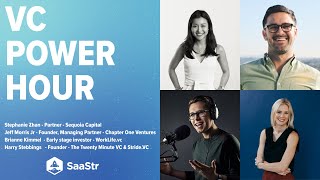
In this panel hosted by Harry Stebbings, Sequoia partner Stephanie Zhan, WorkLife VC founder Brianne Kimmel, and moderator Harry discuss the current SaaS funding landscape, investment strategies, and practical advice for founders. They begin with personal backstories, then assess the post‑COVID SaaS market, noting high valuations, rapid deal velocity, and continued excitement driven by remote‑work tools like Zoom. The conversation shifts to product versus feature differentiation, emphasizing deep consumer‑grade experiences and community building. Stephanie outlines Sequoia’s full‑stack, multi‑stage approach, while Brianne describes WorkLife’s early‑stage, community‑focused model and her perspective on solo capitalists. They debate the impact of multistage funds pricing seed rounds, offering guidance on cap‑table construction and the importance of disciplined fundraising. Building trust with founders is highlighted through regular board‑like meetings, structured programs, and informal support. The panel also covers the rise of solo capitalists, the challenges of remote hiring, the value of personal branding for VCs, and common founder mistakes that hinder scaling. Throughout, the tone is conversational yet insightful, offering actionable advice for founders and investors alike.
Chapters
Give yourself about 15 seconds and then go time.
Someone counting? Ready to rock and roll?
Yeah!
Let's do it! Okay, awesome. Thank you so much, Brianne and Steph, for joining me today. I'm very excited for this one. I think it's always good to set some context, so let's start with a little bit on you. And how you made your way into this very wonderful but unique world. So let's start with that. How did you make your way into the world of investing and how did you come to be where you are today? You can choose who goes first.
Steph, you go first. Okay.
Well, first of all, thank you so much for having us on stage, Saster, and Harry, thank you for joining us. Brianna, it's wonderful to be with you too. I'm Stephanie, I'm one of the partners at Sequoia, have been here for about 5 years working on everything early stage where we're partnering with companies from idea, so seed, pre-seed, all the way through to IPO and beyond. Found my way, you know, into Silicon Valley after a long period of time across Hong Kong and then Beijing. And it had always been my dream to be at the epicenter of everything Silicon Valley and entrepreneurship. And so it's been a dream to be here working with a bunch of interesting companies across the enterprise and SaaS worlds.
Briane, tell me.
Hi everyone, thanks for having me. I'm Briane Kimmel. I am the founder and managing director of a new early-stage firm called Worklife. I started out as an angel investor prior to starting the firm. I was on the go-to-market team at Zendesk and had built a great program called Zendesk for Startups and had spent— been spending a lot of time in the ecosystem. And one thing that I noticed, especially at the earliest stage, is you know, there's a lot of really business-critical questions that founders ask. Specifically for SaaS companies, there's always a question on, do you start more bottom-up, or at what point do you start thinking more top-down and layering in a sales team? And so I found the more time I was spending time with early-stage companies, SaaS companies in particular, had a lot of questions. And so I had built a program called SaaS School that I run once a quarter Essentially used that program and a lot of great relationships that I had in the ecosystem to start my own early-stage fund. And so we are less than a year old. We've made about 20 investments to date in some great companies that are actually speaking at SaaStr this week. And we help companies with go-to-market. So that's everything from building early community, sort of bottom-up evangelism, which is especially relevant for dev tools. I spend a lot of time on self-serve growth and growth engineering and what that means for SaaS companies. And we host a lot of events actually over Zoom, which is really awesome. We've been doing weekly events, kind of chipping away at different questions across an organization. So we host everything from sales ops to marketing ops. You know, what's it like to hire your first developer evangelist? And so we're very much a community and network-based firm, and I'm a solo general partner.
So I said we'd go off schedule. I didn't plan on it this early, but I do actually just want to talk about the market a little bit, because it seems crazier than ever right now, especially when we look at kind of multiples on revenue being paid and just like the velocity of rounds being done. So when we like assess the health of the like SaaS funding market today, for me, it's kind of crazier, more expensive, and more liquid fluid than it's ever been. I'd love to hear your thoughts. And Stephanie, we can start with you, you know, from the Sequoia perspective, and then move to you, Brian. How are you assessing the health of the SaaS funding market today? And are you with me in terms of almost being concerned at the sheer volume?
It's a crazy time in the SaaS and enterprise world right now in terms of, you know, I would say both on the private market side as well as on the public markets. I think Zoom has been, leading the way in terms of just building an incredibly interesting business at impressive scale and continuing to grow so quickly. And the same is true, I think, for many other SaaS companies in the public markets. And so that's, I think, fueled a lot of the excitement as well in the private markets, even down to the Series A and C stages where we're seeing that. I think it's an interesting time because There are a lot of new interesting applications that are now possible because the future has been accelerated by a lot of what COVID has brought. A lot of things around the productivity collaboration world in SaaS has seen increased adoption. Zoom and Slack are, of course, two good examples. But I think the same is true for many new emerging products that are coming out because people are realizing that this could be our future for a long period of time going forward and even a lasting impact post-COVID. And I think the same is true with the enterprise adopting more and more cloud applications. Again, that future has just been accelerated. So there is a lot of excitement that is fueling a lot of energy and high activity, as well as higher valuations and multiples being paid. And I think the investing ecosystem has, has been super active.
I know for us at Sequoia, And I'm sure this number is even—
I think this number was maybe what we looked at in August, but we have now partnered with 15 companies at the seed or Series A stage since March, after COVID and after shelter-in-place in mid-March. And so that's impressive in terms of just the high activity that we've been having in a time of a lot of uncertainty and a time where there's been a lot of adjustment, I think, both on the entrepreneurial side and on the investing ecosystem side as we've adapted to working from home and meeting founders virtually.
Yeah, I completely agree. I mean, building on Steph's point, Zoom is now worth more than 85% of the S&P 500. And as of 2 days ago, Zoom reported that they are worth more than IBM. And so we're seeing these new Silicon Valley-based companies achieve like true global and mainstream adoption. And so it's been really, you know, it's been fascinating to see even, you know, pre- and post-COVID for early-stage companies, you know, a lot of— there's what happens behind the scenes is really interesting because there's periods of unexpected demand. And so if anything, you know, as an earlier-stage investor, There's a greater need for talent. And so hiring is, is more important than ever because if anything, we're starting to layer in go-to-market playbooks and help helping companies go enterprise-ready sooner than they would have previously. Because, you know, large Fortune 500s and large enterprise and, you know, teams that were maybe slightly more adverse to working from home have now been pulled into a force and pretty steady state of working from home. And so there's a lot of considerations there, both on the company building side of things for founders, you know, on the talent side of things for, you know, people that are looking for their next job. And from an investor standpoint, you know, initially prior to COVID, you know, I had a theory that there would be a little bit more of a market reset or return to basics where, you know, I felt like prior to COVID, we were already seeing really high valuations. We were seeing really great teams and really great products being built. But I think at the earlier stage, we see that good ideas come in bunches. And so there would be many companies going out to fundraise at the exact same time with awesome teams that are all building something that's really impressive. And so I had a hypothesis that it would get back to traditional SaaS metrics and that there would potentially be a cooling from a valuation standpoint. But what we're seeing, you know, mid-COVID and even where we are today is that that doesn't seem to be the case. And, you know, companies are— there are great companies being built right now. I think that with an extended period of time at home, there's a lot of people starting companies. And what's awesome is that, you know, I get really excited about, you know, the companies that, you know, are potentially seeing a higher valuation or are potentially seeing accelerated periods of growth. Many of them are leaving high-growth tech companies like Airbnb and Uber. They're making their way into enterprise, which is awesome because, you know, when people are at home or when people have experienced some of these business-critical, you know, missing pieces of their tech stack, they end up leaving the company to start something great. And so I'm very excited to see just the amount of companies being started. And I think, quite frankly, given the success of, you know, how these— how specifically SaaS companies are performing in private markets and then scaling very efficiently into public markets, the valuation is sort of where it stands today.
Now, we will get to the schedule, but I just want to roll with the conversation here because it's much more interesting. And that is, like, you've mentioned the proliferation of kind of tools that are being built, especially around remote and collaboration. And when we look at them, there's a lot of people that would say, it's a lot feature-driven. And so it's the question in the investor's mind, is it a feature? Is it a product in its own right? How do you think about determining feature versus product with the proliferation of these tools? And then secondarily, I guess, do you think we'll see this kind of consolidation, consolidatory market where these tools do get acquired for your anywhere $20 to $100 million by your Zooms or mega companies? Who are kind of eating the stack, so to speak. How do you think about that?
Yeah, it's a great question. I'll jump in. So my point of view is always on the side of the individual who's using the product. And so the entire shift towards the consumerization of enterprise is, can we efficiently acquire as many users as possible? The interesting thing about the way that people are working today is there's a lot of tools available. You know, there's a lot of great products and things that you can use. And so what I find to be really interesting from a feature wedge standpoint is now the wedge has to be much richer and much deeper than it used to be. I would say that consumer demand for great product design, for great onboarding, for, you know, personalized customer success is really important. And so I find, if anything, especially during COVID companies are investing more in community and customer success and these programs where essentially, um, there needs to be, yes, amazing product design and yes, amazing features that do differentiate one product from another. But also I'm noticing that even at the earlier stages, companies are starting to layer in more programming and, and more resources to ensure that individual users see a noticeable differentiation from other products that are available.
I completely agree with that. I think for me, I think it comes down to just back to basics, figuring out who your core user is, what their pain is, and figuring out how to build a product that's differentiated enough for them. And I think if you have a very— if you focus on the right core user and you try to solve their top 1 or 2 needs, in a very differentiated way, in the same way that someone like Figma has done for designers, which we're thrilled to be partners with, something like what Linear has done for modern-day developers, or something like what Zoom has done for the average user. I think all could have said that their initial product, you know, in the early days was, or could have been, just a feature. But the extent to which they really honed in to focus on delivering the most delightful experience that was differentiated from all the incumbents in the space and then build around that, I think, is what has given them that opportunity to really define a category around them.
Yeah, no, I totally agree with you there. And I did promise we would actually move to the schedule and not just have random questions to you. So if we think about kind of investment strategy in a little bit deeper and more personally, How do we think about that? And do you have any nuances to yours in particular? And I guess also, has it changed over time at all?
Well, so I can take a swing at this first. So at Sequoia, we are, I would think of, as your full-stack partner. We want to be your first partner, and we want to be your long-term partner. And we want to be with you, supporting you at every step of the way, both in terms of capital and resources, and also just time and energy and help. Our investment strategy, so it's very full stack. And I would say in the early days, you know, we are actively working with our companies, whether they're, regardless of stage, and we, you know, we dive in to help on both the strategic side of things as well as more of the tactical. Which SaaS companies do we work with? You know, I would say everything from Dropbox, which we were actually an early-stage seed investor in, seed investor in, and we've continued to partner with over time, as well as, you know, companies like Snowflake and Zoom and Okta as the bigger players. And we're also excited about many of the emerging SaaS companies in our portfolio. A few that I work with in particular are Linear, which is building a modern issues tracking tool, MidDesk, which is building trust and identity for businesses, through API infrastructure. Evervault, which is building dev tools for data privacy, and amongst a number of others. So I think we're big, big partners with everything in SaaS. They're beautiful businesses when you have a differentiated product and a defensible moat around you, and we can't wait to partner with more.
Brianna, hit me. What's the strategy?
Yeah, so I mean, Worklife is less than a year old. Um, we initially got started in a lot of workplace productivity and tools for remote teams, and so early investor in Tandem. Lately we've been spending a lot of time on dev-friendly infrastructure. And so I, uh, prior to starting the fund, um, I had been an early angel investor in Webflow and had made a number of angel investments in the low-code, no-code space. And so I love thinking about what are new technologies that enable anyone to start their own business? And what are, what are ways to get businesses off the ground faster? And so one of the interesting things that I think a lot about is, in the same way that, you know, Stephanie thinks across the capital stack, I'm primarily focused on early stage, but I want to think— I think broadly across the entire work stack. And so the work stack for me means everything from internal tools, you know, HR and culture, things that actually make a great place to work. And I think that's increasingly important when teams are fully distributed. I also think about financing to start your own business. And so a number of investments have been new forms of financing for traditionally underserved segments. Think individuals that want to start their own Shopify store from home, which is increasingly important as people are looking for new ways to make money. I'm an investor in a company called Pipe, and Pipe is a great new financing solution for SaaS companies, essentially enabling you to think beyond venture capital.
We—
I always take the opinion that not necessarily to compete with venture capital, but I think increasingly founders want more options. And so I view this as part of just a broader democratization that's happening across venture, across, you know, small businesses, and now for SaaS companies. You can actually finance your business using your recurring revenue, which is a really powerful driver. And so I would say broadly, you know, through and through thinking about what are new services and tools and technologies for different teams across a traditional workplace, but increasingly while people are at home or, while we see this greater shift towards people starting a business from anywhere, I do look at a lot of tools for SMBs too.
Now, I do have to ask, and I never used to like kind of divisive questions, but actually now I quite enjoy them. So I'm gonna try this one. It's like, you mentioned being full-stack there, Stephanie, and like, that's fantastic. It's also challenging in a lot of ways for the early-stage people, because like, Bunny, price sensitivity-wise, you can build ownership across rounds. And so, what I've seen, and I'm sure what Brianne's seen, and obviously not from Sequoia, But from other hedge funds, they just price it at 25 pre on a pre-launch company that should be 12. I mean, it's like, it's not right. And it just compresses all multiples. I mean, it's fine for them because they've got a billion under management and they're just spraying £3 million checks into 30 companies. You've got 30 options and you know what, you only need 3 to be great. And so, like, I don't really know where I'm going with that, but I guess my question is like, how do we feel about like, multistage funds investing aggressively at seed? And then how would you advise founders in terms of constructing their early cap tables when speaking to these big multistage funds?
Yeah, it's a very, very interesting question. I mean, it's funny, I feel that— I mean, I think we feel that pain too on our side. And the reason is that, you know, with Sequoia, we're investing multistage. We do that One, we have two separate teams internally. And so the early-stage team, which focuses on everything seed and Series A, and seed being anything from an idea to just a pitch deck where we've partnered with companies, sometimes even no pitch deck. And so they're super early. And then we have our growth-stage team, which partners with everything Series B and onwards. And so, and then the other thing is that we also have separate funds at which we partner with different stages. I actually think that gives us the forcing function and the discipline to be investing at the right stages and to be disciplined about the investment rounds and the valuations at each stage. But we definitely feel that pain, you know, on the other side as we're seeing multi-stage funds investing out of one fund and, you know, paying super high prices as well. That has definitely changed in the ecosystem and it's definitely more and more present. How do we—
How do you advise founders when they've got this big term sheet for an overpriced round and they know it's overpriced. They're often like, "I don't know how I got this, but I've got it." How do you advise them?
It's— So, you know, I think of it as, think about what you want to build long-term and what is best for you long-term. I think on one hand, it's great from the founder perspective, from a dilution perspective, if you take a 1-year, 2-year timeframe, but there is a forcing function of what is reality. And at some point we will be back to reality. And the business that you've built will have to support whatever valuation you are raising at today. And so if you think you can grow to that stage, fantastic. If not, what is the right, healthy, long-term view you want to take for this stage, thinking through the entirety of your journey over, you know, 10 to 15 years. And there will be many, many ups and downs along the way. And so you do wanna be prepared and disciplined yourselves. And I think it's a good filter too for founders who realize that and who have that long-term oriented view. And are very, you know, I would say, are truth-seeking in what the— where they are at today in terms of stage and also truth-seeking in terms of the journey that they have going forward and what they want to deal with along the way.
Brianne, what are your thoughts?
Yeah, it's an interesting time in the ecosystem. I find broadly You know, there are more new funds than ever. And so I encourage founders from day one to think about founder-partner and founder-firm fit, because I think there's a lot of optionality in the ecosystem. What's awesome and what I respect so much about large platforms like Sequoia is, you know, the fact that they have a large existing portfolio. You know, oftentimes your new investments could be repeat founders that you backed before. And so we have a shared investment in Phil Libin's new company, Mm-hmm. And Phil had a really long-term relationship having started Evernote and now working on something new. And so as a new VC and as an angel scaling into a new fund, what's awesome is that the more time you spend with founders and the earlier you are in building that relationship, the more value you can add. And so You know, Harry from Prythe Hill talks about check size to helpfulness ratio. And so for new angels, for operator angels, for new firms, we overdeliver on value because we're building a reputation, because we're from day one, from idea to that next round. And so what's awesome is just hearing directly from founders how much optionality there is currently in the ecosystem. And so whether you're approaching it at a partner level and you're looking for someone who has backed companies that have a similar path and growth trajectory that you aspire to achieve, or you're choosing a partner that has previously started or built or worked at a company that you admire, respect, and want to learn alongside. I see more optionality in the ecosystem when it comes to the— the multi-stage firms. In the short term, I'm very much focused on early stage, and so oftentimes I'm investing prior to a large platform. When there are options, when a founder would like to work with a multi-stage platform, there typically are allocations and there's room for all of us to collaborate. And so I actually love those partnerships. Those are some of my favorite because as a new firm, as a solo GP, getting plugged into programming community and a large portfolio does present a lot of value for founders. And so I always encourage teams, you know, both co-founders to really think through strategically, what are some current gaps or learning opportunities and how do we complement that with angels on the cap table early on? And then also, how do you build You know, fundraising is a sales process. And so you have to really build a pipeline. And so part of it is actually driving that strategy, meeting with investors over time, getting to know them, you know, doing virtual whiteboarding sessions over Zoom. And it's building those relationships to find who is the right fit. I'm typically, you know, less concerned with which firm, but oftentimes helping founders who are the right partners and who has the right operating experience to build the business that you want to build.
I'm really intrigued because there's kind of two different schools of thought there on the fundraisers. It's like, you know, investors invest in lines, not dots. And then you have a lot of YC companies that I'm sure we all got for the first two weeks, like, oh, we're heads down building. And, you know, some say, hey, you know, be very focused and only raise when you're actually raising. How do you think about that always be raising versus the heads down building? And how do you advise founders in your portfolio actually? Because they always get inbound.
Great question. This is where I think— so I would say trusted relationships from the beginning are really important. And so oftentimes I'm investing in pre-seed, you know, idea, giving, enabling founders to build an MVP. And so oftentimes those conversations happen behind the scenes where, you know, potentially early angels can make introductions. I think having Sector-aligned CEOs on the cap table are really important. So my LP base is primarily sector-aligned CEOs. CEO of Zoom, Slack, all of the large cloud companies are part of the WorkLife network. And so having the ability to ask questions and knowing when to meet investors can be really important. I oftentimes find, especially in this environment, as the multi-stage platforms are coming down a little bit more, building that relationship is actually really helpful. I think in a lot of ways, specifically specifically SaaS companies are seeing preempted rounds. And so building that relationship, getting to know someone when you're not fundraising, it removes a lot of the pressure. I find that if anything, that's when you build trusted relationships rather than walking into a pitch meeting and it becomes more of a transactional dynamic and it's a need for capital. Sometimes building the relationship ahead of time and really getting to know people is a better way to understand what it's like working with them, you know, by giving that time and that space. And allowing investors to truly help. So making customer introductions, spending time on product, like getting a real feel for what is the value add beyond capital, because, you know, all partners and firms are quite different. Yeah.
I completely agree with that. I think picking your partners, both your investors and then your future board members at different stages is an incredibly big commitment that you'll be making at different stages along the way for the next 10 to 15, maybe more years. And so, you know, I think on one hand, it's always important to be hyper-focused on building product and building out your business and, and growing your team and culture internally. At the same time, I think you want to be super thoughtful about the folks that you do want to be building relationships with along the way, because it is such a big commitment. And so, you know, I don't advise talking to a bunch of folks, but I do advise talking to handfuls of folks that you think will be tremendously valuable at some point in time. And so, as Brianne just mentioned, I think a lot of these are built over time where, you know, you talk and you're brainstorming about product ideas, about go-to-market, making potential customer introductions. And getting a sense of how they work, because that's going to be what you have with them over the next 10 years. And I think you want to find a partner— Brianne mentioned something else earlier on, which was part of the question that Harry had asked around how do you pick your partners? I would always recommend picking a partner or a handful of partners who you think are going to be deeply invested in your company and your business. And I think the only way— I think one good way of knowing and filtering for that and knowing how they add value is by working with them over time. So highly, highly recommend. I think it's one of the most important things, picking a partner that you know is going to be deeply invested in your company and can be your first phone call, whether it's good news or bad news, through all the ups and downs along the way.
Totally with you there. Can I ask, how do we feel— and again, maybe it's like a divisive one— how do we feel about the rise of solo capitalists? It's got a lot of attention and press over the last few weeks, and a lot of founders are going, how should I think about it versus traditional firms? Because their check sizes are competing now. How do we think about the rise of solo capitalists, and how do we advise founders there?
One, I was gonna make one comment, um, sort of a tactical comment based on the last question. As a managing director of a new VC fund, I now have investors. And so I was given a really great piece of advice from one of my mentors who's been a longtime managing director at another firm. And he had said, you know, especially as an early-stage firm, 20% of your week will always be spent with investors. They're either your current investors or your future investors. And so tactically speaking, you know, I maintain a list and I check in with investors and I have my own version of that fundraising process that is always on. But I highly encourage founders to spend most time on product. And then, you know, maybe it's 10, 15, 20% of your week casually catching up with investors, whether it's your current ones, you know, pre-board member, or, you know, obviously boards take up a little bit more time, but, or it's courting and actually spending time with potential partners for future rounds. Switching gears to solo capitalists. I didn't aspire to be a VC when I was growing up. I grew up in Northeast Ohio. I had never heard a thing about venture capital. When I was in— when I was at Expedia working in products, I think product managers in particular tend to start really spending time and trying other people's products. I had been teaching classes at General Assembly, which later I turned that curriculum into SAS School. And so I, towards my earlier part of joining Zendesk, I started to think about what it would look like to join a firm or to make that transition later in life to doing independent board seats and angel investing. One of my great mentors, um, Ann Raimondi. Um, she's currently on the board of Asana and Gusto and, and Patreon. And so I, I saw firsthand what it's like to have an amazing operating career, plus start to build a reputation, a known reputation, to later have board seats. Um, it wasn't until a few years ago, um, when AngelList started, um, making it incredibly easy for individuals like myself to start their own firm that that was even an option. And so for myself and for a lot of the other solo capitalists that have been operators and were first-time VCs, I believe there are a few things that are happening. It's never been easier, in the same way it's never been easier to start a startup because of AWS, because of low-cost software, because of just the capital efficiency of even starting a SaaS company. The same is happening in venture where if you have operating experience, if you're consistently publishing or recording podcasts or building something that attracts great companies, the natural progression is to invest in those companies because you're already providing advice, you're already digging in, you're already being helpful. And so I'm excited to see the new rise of solo capitalists. I'm curious to see how, to what extent solo capitalists remain solo and continue investing under their own name. Or to what extent are there individuals that aspire to build an institution? And so I think that's the question I typically have for other solo capitalists is, is this a great way for you to spend time with companies, you know, build a personal brand, build your own personal portfolio, but that will always be under your name? Or are you— is the long-term goal to build the next Benchmark Sequoia or enduring institution. And so it's still very early, but I think it's great to see to what extent solo capitalists can write flexible small checks as a, you know, $50K, $100K entry check, now scaling into solo capitalists that are writing Series A, Series B level checks.
Steph, what are your thoughts?
It's a super interesting topic. I think it's the topic of 2020 in the investing ecosystem, for sure. It's interesting because I almost think a lot of this is in cycles. —right? And I think many of the most wonderful solo capitalists, both of you included, are— I think this is the next era of having proven yourselves as angels prior to that. And so I do think that this is the next inning. And to Brianne, what Brianne alluded to, it'll be interesting to see what the next inning of this is and whether these funds will remain solo GPs or whether these funds will potentially merge, whether partners will merge, and build more of an institutional multistage fund over time. And I think that'll be interesting to see what happens over the course of, you know, a number of years and a number of different funds, I think. From a founder perspective, I think it— you know, I actually think it comes down to just one simple question still, which is, And it doesn't matter if it's a— it doesn't matter if it's, you know, an angel or a solo capitalist fund or an institutional fund. It really comes down still to picking your handful of partners and, you know, figuring out and exploring, doing the diligence to figure out how and where and at what point in time various folks can be super helpful to your business. And it still comes down to picking your partners thoughtfully. I think, and taking a very, very long-term oriented view on that and putting yourselves in the shoes of 5 to 10 years from now, who are your starting 5 folks who are going to be your first phone call down the road? So I'm excited to see a lot of these solo capitalists rise and build up that ecosystem. We've been very, very collaborative with both of you and as well with many others. In the ecosystem, and we're excited to work together on more as this ecosystem grows.
Can I ask, in terms of building that really trusted relationship with the founders, how do you think about doing that and kind of really building that relationship of trust and intimacy where you are one of the first 5? And yeah, is there a process for you in terms of how you build that?
Well, I think, you know, once you get started working together, you're in it together. You know, through many of the ups and downs and through both the expected predictable as well as the unexpected. And, you know, I think there's— there would be a few ways that we look at it. There's the structure, you know, company building aspects. Some of that is specific and one-on-one to your company. And so, you know, with all of our companies, including seed stage, pre-seed stage companies, we're meeting with them on a regular monthly basis as almost training wheels for, you know, real— what real board meetings are. And as a way for us to kind of dive in and help with both the strategic decisions that you'll make, you know, things like what is the one most important decision you'll make in this year? And what is that one most important thing to get right? As well as the more tactical around hiring and product and go-to-market. And then on the structured side, I would say there's also what some of our new programs that we're putting together at Sequoia, where we bring together 10 of our companies, existing portfolio companies, to work together and learn in a structured, you know, Yes, you can build a business. How do you build a good business? How do you build a great business? And how do you build a lasting business? And so there's a lot of structured content there. And then I would say it's the, all the, you know, in-between late night phone calls, weekend phone calls that you get, which are sometimes, you know, super exciting and fun. And it's an interesting new partnership that you're thinking about. It's an interesting new product idea. It's an awesome hire that you're making and you want help closing, or it's just something you want some feedback on. And sometimes it's the totally unexpected, right? It's the— you thought you had product-market fit, but something's changed in the ecosystem, and so what do you do now? You thought you had this hire, but this candidate, but someone's potentially— he or she's getting hired away. It's things like, you know, the unexpected of what happens inside the building that that you would never hope to happen. And it's just being there at every step of the way and figuring out, one, how to tactically navigate through that, and two, offering the support and help that folks need through it. You know, I think Sequoia likes to joke that through all the ups and downs, at the highs, we're your sparring partner. And so when everyone's cheerleading you on, we'll be be there too to cheerlead you on. We'll also be there to help figure out the next corner. And that's where the sparring partner piece comes in. And then at blows, we're there to kind of help soften that blow and to help figure out who you should talk to, to navigate through this, who might have gone through it themselves prior. Many folks in our portfolio likely have gone through that. And also, what are the mistakes that other folks have made along the way that can help that you can avoid if possible. So it's really just being there for the good and the bad and being supportive and being in their corner for the entirety of their journey.
Brown, is it— Yeah, so pre-COVID and post-COVID, it's a little bit of a different strategy. Prior to COVID, I was hosting SAS School once a quarter. Doing a lot of in-person events in San Francisco. I had a joke that I was typically eating lunch at Uber and Airbnb more so than any other company because essentially as a first money and investor, it's my job to know who is thinking about starting something. Because oftentimes there's an idea, there's something that you've been thinking about on evenings and weekends. There's a team that you've been working with for a while and you're just waiting for that first check. And so I love being that first check that puts someone else in business. And so the way that I think about that today, even, even during COVID is I do actually spend a lot of time inside of other companies judging hackathons, hosting office hours, doing more sort of networking events, because my goal is essentially to have really good coverage across companies that have really strong entrepreneurial cultures. That's like my version of finding companies early. It's really figuring out who is most likely to start something or who are the early builders of high-growth companies that are most likely to start something. So that's the first thing. The second thing is, I would say, especially today, what's interesting is that investors are quite readily available. Now that we've removed the commute, now that we're not having long dinners with portfolio companies. And I just feel like the new normal for investors is actually quite different. And so I find having unstructured time throughout the week for more ad hoc working sessions that people are getting with, with small teams that are getting ready to start something or small teams that have a proof of concept is really important. Harry, you've done this better than anyone I know, but also having a reason for founders to talk to you. I think the fact that you've built this amazing platform that founders are excited to join the podcast or founders are excited to learn about different investors. You know, when I was just getting started in thinking through the core mechanics of building Worklife and whether or not I wanted to operate under my own name or build an institution, a lot of these questions that I was thinking through, it was so helpful to have the podcast as a resource because, you know, I myself was a new VC. And so learning from other people's styles and sort of adapting accordingly, but then also, you know, finding my own style has— it's been really helpful.
I really appreciate that. It's always quite, uh, insane to me because I'd pay like huge amounts of money to speak to people that I do, and then I just get to record it and make money from it too. So it's, uh, it's kind of the dream job in many respects. I do want to ask that I've been kind of, uh, a little bit— and actually kind of Q&A-wise, I can see we've got questions coming in, and so I'm relying on, on you to help me. On Q&As coming in. I'm quite passionate more about bringing a little bit more humanity and vulnerability to the investor class. I think between VC brags this week on Twitter and S1 teardowns, I think VC's lost all humanity, actually. Yeah, I'd like to bring some of it back. What are you feeling vulnerable or challenged by right now? Yeah, how are you thinking about that? Sorry, that's a really out there question.
It's a really good question. I mean, I think it's interesting because especially when you're partnering with companies at the earliest of stages, even when it's just an idea, you know, Brianne mentioned having lunches at Uber and Airbnb headquarters just to meet folks who are starting to think about leaving their jobs and thinking about taking the leap. I think the challenge in a time where more and more people are starting companies than ever, especially when we're all remote, and so it's not exactly a physical location epicenter anymore, you have no idea where the next company or interesting founder is going to emerge. They're kind of like little nooks and crannies in the Zoom universe, and you just— have to, you know, you have to put yourself out there and have to magically meet or learn about something that's interesting. And, you know, I think the waterfront of companies that are being started today is higher and larger than ever. There are more and more ways to put yourself out there. And Brianne and Harry, you both mentioned, you know, various things around building a brand and creating content that allows people to build a magnet, that helps you build a magnet for other people to come to you. And so, you know, I think it's just an interesting challenge of it's no longer the days of, I think, what venture was probably 30 years ago when you had both fewer entrepreneurs and also fewer investors. The world looks completely different and that pace is just accelerating.
Did you think about building your own personal brand then and do Stephanie Sessions, like a podcast into the world of Stephanie Zhang? Like, I'll say that as a creative idea.
Yeah, no, I've definitely thought about it. And I think we think a lot about, I mean, creating content for all forms of everything, topics as well as formats at Sequoia. I think we've always been, the Sequoia ethos has always been you know, we are part of the Sequoia brand. And so I think unlike other firms where everyone creates their own individual brand, you know, we've stuck to more of the be the Sequoia tree and, you know, be a part of, represent that platform in that firm, which I've, you know, which I've also loved. And so I definitely wish regardless that, you know, I had the time and I could create content I think both of you guys are leading the way on that.
Brianna, what do you think? It's a really interesting point, Steph. I feel like in a lot of ways, you know, venture is all about decision-making. And so a part, a huge part of decision-making is knowing when to say no to something and when to lean into something. And so I think about this a lot. I would say prior to starting the firm, I was tweeting, writing, joining a lot of podcasts and having more conversations more regularly. Now that I'm the managing director of a new firm, the opportunity cost for me is, would I rather write a blog post that can be fairly self-serving, or would I rather get together and do something that supports the entire portfolio? And so I've been spending a lot more time on programming, on back office, on actually building out systems and processes and, you know, differentiated programs to ensure that, you know, portfolio companies across the portfolio have an immediate answer to questions. They have, you know, great peer relationships and there's sort of a cohesive nature across the entire portfolio because it is primarily SaaS, because it is primarily seed and Series A. And so I think about that a lot where I think the one thing that I have learned and that I deeply appreciate about, you know, the craft of venture capital, which, you know, historically has been a little bit more of a cottage industry. There hasn't been a lot of writing about it. You know, the actual like core mechanics of a lot of this is has been largely, um, quite quiet and confidential. Um, I think there's a lot that happens behind the scenes. And so a personal brand is one way to attract companies. I also find that, you know, the, the— some of the best introductions and some of my strongest relationships have just been one-to-one email intros, or, um, you know, spending— doing one helpful thing for one portfolio company then leads to them feeling comfortable and confident in introducing their friends who are also starting companies. And so I think there's just a lot of different styles when it comes to venture. And broadly speaking, I think having a personal brand is great. It is a way to get discovered. It's, you know, if you're an operator and you want to build a lot of expertise around a specific skill set or sector, I think writing is a great way to do that. I highly encourage it. I'm also increasingly excited by The fact that there's even more optionality with, you know, tipping on GitHub. I actively tip and support a lot of projects that I discover. They're not quite ready for venture capital. They may not be compatible with the work-life model, but I think tipping developers for the things that they're building is a really valuable way to support the broader ecosystem. I also feel the same way about Patreon for creators. When I discover a creator or hear a podcast or, you know, learn from a piece of content, I do believe that there are many ways that you can actually pay it forward and that can actually help someone scale from a hobby into something that becomes a more substantial career or way for them to make money.
Yeah, totally. Tell me, do we have a question each? Because we're running low on time, but is there any question that you want to select? Balanga, you've been incredibly helpful on the question selection.
I've been trying to answer these as they come in live, and there are so many.
Is there one you want to choose?
Brianne, do you want to take one? Sure, I'll choose one. What's the most common mistake that you've seen founders make which limits their ability to scale and grow? Harry, do you want to go first? I'll turn it around to you.
Oh great, that's fantastic. I think a big mistake I see founders make, especially in the early fundraising days, is they go out get a load of investor feedback, speak to, obviously not Sequoia, but large multistage funds. The multistage funds say, "Hey, you're raising 1.5 now, you should actually raise 3 to 5." Then they come back to the original seed ecosystem and say, "Actually, I know we were raising 1.5 and we lost faith, but look at X fund who told us we should raise 3 to 5. We're going to try and raise 3 to 5 now." Then it's like, whoa, whoa, whoa. Now moved out of seed and moved out of our comfort zone. So, you know, sorry, it's not going to be for us. And then they go back to the multi-stage players and they're like, well, actually, it's kind of too early for us too, actually. So we're not going to dive in. So it's like, be very deliberate around like what you're trying to raise. Do not get high on your own supply on anyone else telling you that you can raise more, you should raise more, unless they put a term sheet down, which, you know, fine, that's something to consider. but just be very disciplined in your mindset around what you want to raise. Build it like, build a sports team. Everyone has a position on the cap table. Mine is distribution and content. I'm not going to help you on product strategy. Jeff Morris Jr. and lots of other brilliant people are much better at that than me, but I will help you on scaling a content engine to millions of listeners. Do you know what I mean? To have a very defined role for each investor and just be very disciplined around that and kind of what you're wanting to raise. Yeah, I could talk for hours on that.
I have a lot of thoughts on this as well. I think especially as a first money in investor, as a firm that invests in many first-time founders, scale is a really interesting— it's a really interesting— there are problems behind the scenes that remove your ability to scale. And so the thing that I encourage founders to do a lot is, Be open and transparent about highlights, lowlights, where you're spending your time and where you're getting blocked. I think that oftentimes, especially if you're a first-time founder, there is a desire to build everything and there's a desire to be like, have your hands in everything that's happening across the company. I find oftentimes knowing who to hire when is really critical and also hiring individuals that you trust to to own with a lot of influence and authority for their craft, because I find at the end of the day, the great thing, one of my favorite parts about early-stage company building is hiring great people. And so your ability to know who to hire when to actually enable the company to scale is really critical. I find, especially in recent months, and this is something I'm seeing consistently and hearing broadly across the ecosystem, is we also have to get comfortable with hiring people fully remotely. And so that can actually be really challenging for first-time founders when it's your idea, when you've gone out to raise, you know, that first round of funding, to actually start hiring people, onboarding them, and bringing them on the team in a fully remote world is a lot of work. And so I highly encourage— this is an area where investors can be really helpful in terms of, you know, designing what the org should look like, thoughtfully, you know, curating and going through individuals in their network. And especially, you know, during shelter-in-place and in this extended period of working from home, ask your investors to jump on closing calls. I do 10 to 15 closing calls per week. I like to, you know, talk to individual hires. I like to say hello, give them my vote of confidence in why I invested in the company. And more importantly, I love connecting them with mentors across the portfolio or across the broader WorkLife network. I think that Hiring is increasingly hard, especially at the earliest stage. And now increasingly when we're at home as well, I think it requires a very different muscle. And so I highly encourage founders to take hiring seriously because those decisions are really business critical and that will enable you to scale much faster than anticipated.
I agree with what Brianne and Harry just shared. I think hiring is super key in the earliest of stages. Figuring out who to hire, how to hire, and then when to hire and how quickly to hire, I think is I think that's incredibly important. And I think the second thing is really about prioritizing what to build and having enough focus. And I think that's where your partners and investors can help because they're close enough to the product and the business, but they're also one step away. And that distance can also provide some valuable, I would say, strategic decision-making on that front.
Alrighty team, well done! This has been so much fun. Thank you so much, Sasa, for letting us do it, and thank you for letting me pester you with questions that weren't on the schedule at all.
Thank you, thank you guys so much for coming, we appreciated it. Have a good one.
Bye! Bye!
More from Jason

Why Your Next Hire Should Report to an AI, Tragedy Apps, and Too Many AI SDRs? | The Agents #004

Our Agents Drove Our Salesforce Bill Up 80%, Marketo Hates Agents, and We Stealth-Churned Off Notion




Managing 20+ AI Agents: Lazy Agents, Our $500K AI Bill, Stealth Churn & the Death of 60% Solutions




