HubSpot Co-Founder and Chair Brian Halligan on AI and SaaS, Board Meetings, and When Incumbents Win
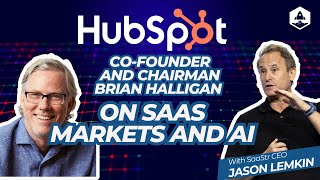
Brian Halligan, HubSpot's co-founder and chair, says the SaaS recession peaked in early 2024 and began recovering in Q3. He argues incumbents like HubSpot have a data advantage in AI that startups can't match. HubSpot redesigned its board meetings with flipped agendas and memos to boost engagement.
Chapters
It being said, SaaS was in a downturn. I don't know when it started, but I think it ended in Q3. If you look at the SaaS companies' numbers, see it through Sequoia, see it through all my HubSpot dashboards where I see our customers, it felt like we came out of the recession in Q3 of 2024. And I also just think it's like the universe like slammed SaaS down and then splashed it way up and then slammed it down again.
Yeah.
And it's splashing back up. I think we're in a different place in Q4 of this year than we were Q4 of last year, economically, SaaS. People overbought, people had too many employees, and the downgrades were high. The growth retention for people were low, and I think we're just getting back into a better spot.
Hello, Saastr. We are here with one of our all-time friends and favorites, Brian Halligan, co-founder, chairman of HubSpot. OG SaaS executive, thought through all the things we've thought through over the years, been to SaaS Annual several times. Now wearing 3 hats, right? 3 hats. Chairman of HubSpot, Sequoia Growth, and Propeller VC fund, wearing 3 hats in, in Mountain 2. Are you on Mountain 1 or Mountain 2? Do you know?
I don't know, but nice. I would just say nice to see you. It's funny to be someone describing me as OG. It's like, that's funny. I don't think it's happening. I don't think people are describing me as OG before. I'll take it though.
I don't know where the line, where's the line? I used to think it was like Marc Benioff and Larry Ellison, right? But now that maybe that's OOG. I don't know.
We started in 2006. It feels like it. Feels like yesterday.
Yeah. It's crazy. Salesforce is now worth $340 billion. Larry Ellison, I don't know, he may be worth $340 billion himself. I don't know. I have to look it up. This, you do it right and really laugh. You've been doing this since 2006, HubSpot, but in some ways it's just getting good, huh? Yeah.
We had a very ambitious vision and it's like a big giant painting. And it's starting to get good, but it's still early. There's so much more work to do, and this is a platform shift afoot that we're very well positioned for. Yeah, these SaaS companies, they last. You look at Adobe and Salesforce, both worth, I really haven't looked recently, but 3, they're called 350 billion. Oracle, you gotta take your hat off to them. It was like, oh, they're going to die. They're going to slide. Rose from the dead. The last I checked, they were like $500 billion. So yeah, these SaaS companies, they last.
Yeah, it's, it's, it is funny when I was briefly at Adobe when my last company was acquired and that now this is dating myself, but it was 2012 and it was just before things came back and there was malaise. I don't, I think only Shatnu believed it, right? He turned out to be an incredible executive, but to be honest, On the management team, I don't think that many people believed it. They really thought that you couldn't go forever, that growth had plateaued, even that cloud wouldn't— we could laugh that they didn't believe in cloud. I did because I was a cloud CEO, but it's not lit. It's hard to see it sometimes, isn't it? Did you always know that HubSpot would be—
honestly, I didn't think it would get— I, we did when we started HubSpot. I'll tell you a funny story about HubSpot. I remember the day of the IPO, we're on the floor.
Yes.
And ringing the bell and the whole thing, really good. Everyone's fired up. And my co-founder Darnest ran over with his phone, picked the phone up, and he had the stock app and he's, look, Elstron's worth a billion dollars. And I remember I said, take a screenshot and never see that again. Hey, what else did you say when we were starting it back in 2006? Classmates, you know, what were the odds we create a company worth $30-something billion? I would've put the odds very low and a lot of stuff had to go right to get there.
Yeah.
And the industry really came together. I don't know what Salesforce market cap was in 2006. It was nowhere close.
I don't know what it was.
What was it?
Because it was in my investor deck when I raised my seed round. $2 billion.
Yeah.
I wrote my comps on my comp slide. My comps were eFax, which is now a different company, $800 million, and Salesforce, $2 billion. I said we could do almost as good as Salesforce, and we can certainly do— in e-signature, we could do better than a fax service. So I said, this is my VC pitch, $2 billion. Hard to imagine HubSpot could be worth more, right? Back then, if your comp is $2 billion, right?
Okay. Let me ask you, I know this is a podcast supposed to be interviewing me, but do you regret selling your company?
Boy, it's funny. I regretted it almost every day until about a year ago.
Why?
There's probably two questions. Why do you regret it? And why did it finally stop after like more than a decade? I regretted it for—
I regretted it because it was worth a lot more money over time.
That's 50% of it. But you know what the bigger mistake I made? I didn't realize the team wasn't remotely done. Our revenue team went on to be the CROs of Brex, Rippling, Gong, so many leaders, the others, like 10 of them. And like that, we had this monster team and I missed, I didn't, what I didn't know was how good I had it in some areas. I knew how bad I had it because I didn't have enough folks to emulate. This is why we started SaaS. I didn't have enough lessons to learn from. I thought we were a C, B tier, B minus tier, right? But I didn't realize we were not S tier. But we were A-tier. That was my met. So that's what I regretted. And then there's certainly a financial aspect, like it would, you know, be nice to be a billionaire today. It wouldn't change my total life, but there is. So the only thing that changed is, and maybe this will change again as the markets have come back in force, right, the last couple months. But now I've seen the effects on some folks that said no to M&A, and I'm seeing Man, sometimes I, this might be the worst advice I've given in 12 years was always say no if you have something good.
Oh, I see.
It might've been wrong.
People said no in 2021 when things were on fire.
Yeah. I mean, I have one and one, I think if you're not, and I literally this week, I have an investment I made where the companies, the markets are back, the startup, a great company. They're at $25 million. They have an offer for $1 billion on the table right now. $1 billion. Now this is a very good, it wouldn't be there. This is not, this is an elite level company, right? And I, but I asked the CEO and the VCs that are bigger all go for it. Billion. That's nothing. We'll build, we'll be bigger than HubSpot. No one's literally said that, but that was kind of, and I was like, and here was my question to the founders and you could tell me yours. I'm like, here's the question. You've obviously built something great. Okay. You're growing triple digits at $25 million. Obviously in a year, in theory, you'll be bigger and better. Do you want to be a public company CEO?
And did he?
That's what that got them to take the meeting. They didn't want to do the meeting. I'm like, be honest. Like, you don't have to decide this and you can tell me when you decided. It's interesting, but I'm like, you don't have to know at $25 million if you want to be a public company CEO, but maybe at $50 or $60. You gotta know, you gotta know. And I think it's, I wish I'd done that, but I don't think it's for everybody. Some people really want to just live this. This is why a lot of folks want to delay going public. They don't want the scrutiny. They don't want to live that life, right? They don't want to spend a third of their life meeting with public company investors and then another third of their life doing the public and only a third of their company doing the company stuff. And then they're supposed to grow 38% and they grow 37% and they get crushed and they just don't want to live. Most folks, I So that was, if you want to do it right, do it right. But that's just the one thing to think about. That was my, if you have an off-ramp and the offers hard to match, right? A billion dollars today with dilution, let's say it takes you another 7 years to IPO and you suffer and you're capital efficient, but you have 2 more rounds and then 6% dilution a year. That billion today is like 2.5 billion, 7 years down the road probably, isn't it?
Yeah, I would say I want on my life list, I wanted to take the company public. I don't know why.
There you go.
I'm like, it was like, it was the capitalist Super Bowl. And so I, yeah, I was focused on that. Here's the other thing, like a lot of companies aren't going public now. And for a lot, well, the market was closed this summer. It's pretty open right now. And you can do, you don't have to because you can sell, your employees can sell their shares. Without being public.
The best ones.
Yeah. But I think what people underestimate is the joy it brings. Like probably the happiest day of my life was the IPO. And I remember the day, like Dharmesh and I drove up in our, we got a car and we had dropped around the corner from the stock exchange. And as we rounded the corner, The stock ex— I forgot that this happened, but they wrapped the New York Stock Exchange in like orange and our colors and our logo. And I just remember I stopped and I turned around because I didn't want Dharmesh to see me crying. And it just grabbed me. And then we get whisked into the giant like conference room down in the basement of New York Stock Exchange. And the head of the stock exchange is there. It's just very formal and nice. And people are saying nice words again, like fighting back the tears. We're on the platform or ringing the bell and just to see the joy in the faces of our teammates as we went through all that. And then the next day we had a terrific party at the Museum of Science in Boston and just the joy and so many tears from so many people who worked so hard. I think that's underrated and yeah, it's hard to find that someplace else.
I've only been through it once. It is a magical day, right? The weird thing, and I'm dating my, the weird thing when I went through it once and it wasn't as a founder, it wasn't as an executive. The weird thing was the next day everyone was back to work and it was a weird day. The, the party was so fun. I remember standing up on the desks in the office and cheering and explaining to people how it would work. And it is so special, right? But next day was weird. Everyone's looking at each other. At their desks.
That's it.
Like, well, the stock price went down like a dollar, like from $80 to $79, and people were despondent. You know, they were so distracted for a week because I think the stock went from like $20 to $80 and then down to $60. And then people in a day felt like they were, then they felt impoverished even though it had actually tripled overall.
Yeah.
It was so distracting.
It's so, I'm the Boston guy. And I think one of the big advantages and one of the biggest disadvantages about some of this is that we were in Boston. We were a Silicon Valley company based in Boston. And most of the companies that have gone public in Boston are of the previous generation. They went public and then their stock just stayed flat for like ever. And it was like, Boston, the IPO is the finish line. In Silicon Valley, it's the starting line. And I must have said that line a million times. Anytime someone brought up the stock price or looking at the stock price on their phone or their watch, I'd be like, why don't Don't look at the stock price. It's going to go up and down. Look at it once a quarter. And so, yeah, we tried to frame it that way and try not to get too obsessed about it, but it was a very joyous day. I also just think if people who haven't been CEO of a public company, there's no way they would know this, but it's not as bad as people think. You're switching a bunch of venture capitalists. Who are misaligned in a lot of ways and quirky in a lot of ways.
Yeah.
There are a bunch of public investors who are misaligned in a bunch of ways and quirky in a bunch of ways. And so it's, you're trading, there's like a year where you have both, which is uncomfortable. But the public investors I find to be quite rational if you tell them the truth and you paint a vision of the future. If you bake your numbers and you're obviously you're conservative on your numbers, I find them to be much more rational than they deserve credit for. There's two types of investors. I call them long only, the Fidelities and the Wellingtons, the durables and the tier one priced. They tend to become— they come in and out, but they tend to hold. And then there's hedge funds who will take a short position or come in and out much more rapidly. In most IPOs, the hedge funds are a very small slice. And the long-onlys hold most of it. Anyway, my experience has been very good on the public side. And by the way, our stock has run up and run down and run up. It's been volatile. Yeah. And I've still been pretty happy with the whole thing.
Yeah, it's funny. I remember I was at an event with Michelle Zaitlin from Cloudflare right after, maybe a year after that IPO, and she said the strangest thing was they didn't realize they'd have to spend more time with investors after the IPO.
Yep.
They thought the days of having to spend time with investors were behind them, but that was the most ever.
Yeah. And people think you have to spend a ton of time with them. Okay. So we would do our earnings calls. I think people think Jason M. Lemkin, who would do the earnings calls? You have to prep for the earnings call. And after the earnings call, you have one-on-one calls with all your big investors and all the analysts. And that goes late to the night, early the next morning sometimes. I didn't, I never did those. Like our CFO, our investor relations person did it. And then once a quarter I'd do a conference and I'd speak at a conference and have a bunch of meetings at conference. So all in maybe maximum 2 days a quarter thinking about public.
Oh, that's not much.
That's not, it was, it's not as bad as people think. And they're much more rational than people think and they want you to succeed.
It's a good insight. It's almost reassuring. To have just very rational investors. Like they may, your stock may go up and down as variables happen, but you know where you stand all the time. It's very, very, versus VCs, so many different goals, so many different human levels. It's complicated.
Very. I'll tell you another thing I've been thinking about. None of this is probably on your bingo card. That's fine. I had a home board meeting yesterday. They're 2 days long. We've been doing the same board format for about 100 years and it just got a little rote. And honestly, I get a little bored in the board meetings and I think a lot of the board members did. So I was having like conversations with some board members and some people started complaining about us. You're right. You're like, we need to rethink it. And so we changed the format up on this recent board meeting and we have the best board meeting we've ever had, and the changes were very simple. Typically, the board meetings are 90% main course, 10% side dish. And the main course is the presentation from the executives overseeing a certain part of the business. And the side course is—
Yeah, that's the classic format, right? Goals, diff, the whole—
Yeah, and the side course—
Every leader.
Discussion of the topic du jour. And oftentimes around that time, you never even get to the side course. Let's switch that and let's try to make the side course the main course and the main course the side course. So we made a very simple search, a lot that people have done, but we said, just write a memo with any data you have, put it in the memo. We'll read it. I promise we'll read it and everything about it. Put forth it, we read it. And then at the end of the memo, put 3 questions you want to talk about. And so that was the first change. The second change, and so that happened 90% of the discussion was side dish, was the discussion. 10% was the, here's what was in the memo. The other change we made was we didn't want it to be readouts from the, we have 3 pillars. We have the product pillar, we have the go-to-market pillar, and we have the ops pillar, call it.
Yeah.
Usually the DRIZs are like, let's not do readouts. This isn't a QBR board meeting. Let's, what are the tough topics that might cut across or whatever? We don't want those readouts. And that was interesting. Third change we made is in a typical board meeting, 90% of the words that come out of people's mouths are coming out of the CEO and the management team's mouth, and 10% from board members. We have some really smart board members that we work hard to recruit and they're happy and they have contacts. It's not like they're clueless. They're great. I said, I want 50% of the words to be out of The board's mouth in 50% of the words. I've missed you as well. Anyway, we put those Jason M. Lemkin, it was really good. And normally you run like way over and we skip lunch and we skip the breaks and no one goes to the bathroom. Like we finished early and we covered everything. It was a terrific board meeting.
Yeah.
I don't know why I get on that, but I'm still on a little bit of a high of our new format.
Let me ask you two questions about that. One, flipping around now as the executive chairman. Was it worth 2 days of Yamini's time? 2 days of the CEO's time. I get that there's a lot to do, but she has a big job.
See, I would've argued historically a lot of a board's job is compliance, right? Yeah. And a lot of what a board does is make sure you don't back up over a cliff. And what I want the board to add more value. The board's given a lot of context and a lot of experience. How can the board help us navigate a little bit? And so historically it's been a lot of readout and it's been a little bit of, okay, so I'll give you a little inside baseball. One of the management team members criticized the board meeting and said, the board meeting, Brian doesn't, isn't CEO anymore, so he doesn't get a QBR. It's basically Brian's QBR. And so we said, let's move from Brian's QBR to our traditional board meeting. And I think it was mostly compliance and for the board, and this board meeting was much more for the management team. I'll tell you one other change that we're working on is we do annual 360 reviews of board members and whatnot, and they're really good. They're really effective, and I recommend everyone do that. But one of the board members said, I hear what my fellow board members think, but what I really care is what Yamini and the CMO and all those people think of the feedback they're getting and the help. So let's flip it around and have it be much more of a management view of how we're doing and adding value versus how we think of each other. That's another nice change that we're putting in place now.
Yeah, that's good. The one thing just for founders and others, I, the, and obviously HubSpot is a public company. In some ways it's different, but so many founders like this idea of doing a memo-based board meeting. Okay. I'm tired of reading the slides, read the slides ahead of time. Zoom me if you want to talk. Let's talk about the real issues that are on my plate and let's talk about the issues that are on yours. And especially if you have a, a somewhat engaged board, people love it, right? This memo style board meeting. My only counsel to founders when I see it is, listen, I know it's what the CEOs want and the board likes it. What I see time and time again is accountability from the management team is lost in that format. And maybe it doesn't matter at HubSpot's scale because the accountability is crystal clear. But when the CRO doesn't have to get up there and sweat about why there was a commit to hitting $10 million this quarter and it was really $9.4 and it's just a pass, I, I, I don't get the CEO loses their helper, the helper in the room.
That's, that's, you might be right. I would've, I know for a fact that Yalminy holds people very accountable. It is, I have no doubt much tougher than she looks. And so I'm not worried about that at all, actually. Maybe, maybe in an earlier stage company that probably makes sense.
I just, for startups, sometimes as CEOs, especially if you're likable, like you are, you're likable. It actually, it's confusing to bring down the hammer. You can't beat people up every week. Right. And how do you manage that? And sometimes I find it helpful for the board to be the hamper, to be the tough room, even if they don't say anything, just having to walk in every 60 or 90 days. And say, geez, I didn't deliver my SQLs. I didn't, I didn't, we slipped the release. Like, and how often can Brian or Yamini, earlier stage, maybe how often can you yell at the team? Even if you're not, I think you can yell once a year. You yell more than once a year and it's tough, right? It's tough. Yeah.
I would say I yelled very infrequently. But I was grinding people all the time.
Yeah.
The grinder. And I think Yammer is a grinder and I think people are accountable to the CEO. They're accountable to themselves and they're accountable to their peers. Hopefully if they're adults and they've got some experience that they're deeply troubled by those numbers and they also have to sit through their own management team meetings and present all those numbers.
Yeah.
A lot of accountability in that management team meeting. Like I was the head of sales for a long time before CEO pops by. Every frigging Monday morning I had a staff meeting for my whole life, by the way, which was a forecast update. Yeah. So some mornings were tough and you just dreaded that Monday morning meeting. I didn't necessarily have to do that again for the board.
I hear you and we can move on. I think it's, if they dread the Monday morning meeting, then I think you have the CEO's helper, right? Is dreading the Monday morning. If the team doesn't dread the Monday morning, sometimes I find the board meeting is the helper. If they dread the board, if they're sweating, if your manager team is like getting hives for a week before the board meeting, I actually think that's great because then the CEO doesn't have to do it. I have an external force where they're going to, yeah, you don't want them working, you want them working on their slides for 20 minutes, not a week. But if they're sweating it, I don't know. I just don't, I think I'm a good guy, but I don't mind being the bad guy if it helps the CEO to not have to be the bad guy. Right? Sometimes you need, you need someone else to be the tough one. It can't always be you. Right?
I think it's a good point. I think it's a good point.
Okay. Let's, should we dive into some of these meta learnings? I'll tailor them to our convo.
Couldn't be a bigger fan of SaaS or Jason M. Lemkin. So I'm here for you.
I love it. Okay. Let's do two things and you were kind enough to pre-answer them, but I just like to do a vibe check these days because it, I think the vibe has been so volatile the last 24 months in SaaS, right? A negative from folks thinking we're in the greatest downturn since the tulip crash to exuberance in AI. Like, this just, it's a whiplash time. So you're, you've seen it all. You're chairman of HubSpot, you're at Sequoia, you're seeing an entirely different category, right, in clean tech. So are we, were we in a downturn? Are we in a downturn? What's the vibe check as we talk today?
I think SaaS was in a downturn. There's a SaaS recession. And it start— I don't know when it started, but I think it ended in Q3. If you look at the SaaS company's numbers, see it through Sequoia, see it through all my HubSpot dashboards where I see our customers, it felt like we came out of the recession in Q3 of 2024. And I also just think it's like the universe like slammed SaaS down and then splashed it way up and then slammed it down again. Yeah. Flashing back up. And it's like the sine wave that's working through. And I think the size of the sine wave will go down over time, but I think we're in a different place in Q4 of this year than we were in Q4 of last year. Economically, Seth, with people overbought, people had too many employees.
Yeah.
And the downgrades were high. The growth retention for people were low. And I think we're just getting back into a better spot.
That's what I think. It wasn't They're just, one of the frustrating things, there's so many people like ZERP, it's interest rates. I think people just bought too much during a generational pandemic. They bought too much software and so they dialed it back maybe too much because that's what we do and we're through that, right? We're through the overbuying cycle for the most part. I think it's that simple, isn't it?
I think it's that simple.
Yeah. And we're seeing it.
So you're out there, you're listening and you got a shitty Q3 and Q4 is not looking good. It's not the market.
That's the message I try to say. You can't blame the market anymore. If you got a pass in 2022 or 2023, like you gotta be honest.
Yeah. Even Q1, Q2, I think we're still tighter. Q3, it finally loosened up.
Yeah. And look, this is a, this is, this may be a question where there's no good answer, but especially as you're looking at stuff in Sequoia, if someone isn't seeing any rebound at all now, And let's say growth is weak. Let's say it was great in 2021. Okay. It was 100% and now it's 22% or what's your advice? Is there any advice? Not if, if it's fallen from 100 to 80, it's one thing, but if you have fallen far and look, there's a lot of companies north of $100 million in ARR where growth is in the teens now or lower, right? Any meta advice that you see yourself or at Sequoia? Any ideas for that tough position?
I'm worried about that whole cohort of companies that's $120 million in revenue growing 18% and raised a crazy round at a crazy, crazy price in 2021. I don't know what happens to all those. I just don't know. I maybe they combine with each other. Maybe they just continue to limp along for a long time. I also just think SaaS in general, there's too many companies. If you look at those charts that Scott Brinker, and you probably make them too, where this is the marketing automation—
I can't even see the logos anymore.
Like the 100 marketing automation companies.
I think there's 1,000.
Yeah. And yeah, I think that people are going to be in a, I don't know, tough spot. They can grind it out, but yeah, if you're over 100 growing 18%, I think you got to be creative. You're not going public. Maybe PE starts buying a lot of them.
That, I hope so. Right. I was with one of these CEOs when in our London event, a great founder. Right. And he's like, yeah, we've just decided that 20% is the new acceptable growth at 9 figures in revenue. Right. And I can't challenge him. He's done much better than I have, but you can't IPO. In the teens. So I don't know what— I think we're all trying to work. It's a quiet topic, but I bet at Sequoia and others it's discussed. What are we going to do with these companies? Right? These are real companies, but they're never— will PE buy them? I hope so. I hope that's the answer. I just don't know. We'll know in a year.
I do think things change for the positive. So it did in the, like, venture, growth venture world where these companies would live.
Yeah.
In 2021, there was a real bubble in privates, but there was a bubble in publics.
Yeah, I think they matched.
I think they did too.
Yeah.
If I look at like the beginning of this year, first half of this year, still a bubble in private, at least in the anything that rhymed with AI. And the publics were, it was tight and I think they're matching it. The publics have really rallied recently.
Just recently, right?
Just recently. So yeah, this is, I don't know if bold's the right word, but they've at least, there's some hope. And I think the IPO window will open and I think the PE window will open and I think the M&A window will open. It's going to be easier to sell companies. Going forward. Yeah, it may be an interesting time over the next few years.
Yeah, it's, I thought, I really thought the begin, the first half of 2024 was much crazier than 2021 because we forget in 2021, if Snowflake's trading at 80x or 100x ARR, if you're investing in the next Snowflake, like those unicorn valuations weren't so crazy, right? The AI ones are, they're hoping, they're, the growth rates are incredible for some of them.
Yeah.
But there's no public comp with 200 or 400x ARR trading, right? There isn't one of them, right? So it was the highest spread ever, right?
The IPO window was closed. And then if you think of a company that gets to a valuation of $5 or $10 billion, it's expensive for a PE firm to buy it. It's too small to go public. And then I don't know, it's Salesforce buys a company worth $10 billion, it's definitely going to get a look from regulators in the US and Europe. So there's a little bit of no man's land around that $10 billion. And I think the world's feeling— I'm feeling better about those ones in that as long as they're growing nicely, I think they're going to have a good home either through an acquisition, which will get easier, or the IPO, which seems to be easier, or PE. I think PE is going to start raising a bunch of money and going—
Yeah, that's my hope. All right. Let's talk related. Okay. Let's talk because now you've, you're seeing this at HubSpot and at Sequoia and others about AI and who wins. I've thought about this a lot, two elements to it, but I don't think it's obvious who wins incumbents and startups. It's obvious there's 1,000 startups. There's 1,000 flowers, but what's your nuanced learning from HubSpot plus Sequoia on who wins and in B2B who wins in AI? Who benefits the most, or who benefits the most is maybe a better way to put the question, right?
I think it's the age-old, it's the startups are innovating and they're racing to get distribution and the bigger companies have distribution and they're racing to innovate. The twist this time is the data's very hard to acquire for a startup. So it's not just the innovation, but you need a proprietary set of data to do something cool with AI. And I think of HubSpot, for example, we've got the Zoom data, we've got the calling data, we've got the email data, we've got a lot of the unstructured stuff, and then we have all the structured stuff too. And if you're a startup breaking in and you want to do some amazing AI work, it's tricky with all that. And so I think it buys Salesforce, HubSpot, the bigger companies a little time. The other thing I think is a little bit different about this than other platform shifts is It feels like everyone has read and learned the lessons of Clay Christensen and The Innovator's Dilemma. And the incumbents seem to be moving very quickly, whether it's Microsoft or HubSpot or Salesforce, you name it. No one seems to be sitting on their hands in this one. So I like, as I play on both sides of this, but in this particular case, I think the incumbents have a little bit more of an advantage than in most platform shifts.
Yeah, I advise founders, I think they get bigger, big company, maybe HubSpot's bigger or not big, depending on how you think about it. I think they misunderstand agility. When there is a core priority and it's truly core, they move fast, not quite as fast as a startup, but when they put 200 engineers on something, 300 engineers, it's a force of nature. What you get wrong is when they put 10, when they put 10, it's weird because they launch a really cool product. There were, even in my little team at Adobe, we had 10 extra engineers, extra. You never have extra engineers at a startup, so you could build anything, but you can't sell it and support it. You give up, right? But when HubSpot says, and you fucked Dharmesh really early saying, we're going all in, be careful. And Mark Benioff putting 1,000 new sales folks, like just, you can still beat them. Don't get me wrong. Everyone beats somebody before them, but it's a force of nature, isn't it?
It is. I see it inside. We were early on it and our metrics are early. Let's just say per 1,000 engineers. So if we make a bet with 20% of them, that's 600 engineers with this unique proprietary data source. We're just hard to compete with. We can obviously be here, but it's hard.
Yeah. So I think we don't know. We will, I think I certainly personally don't think incumbents lose. That maybe just to be con— there's no reason HubSpot in the, in B2B, I don't think there's any reason HubSpot or even Salesforce, even with age, I don't think there's any reason they should lose. There's no reason to lose. There may be many winners, but I don't see any losers there.
I agree. I think the tricky thing for HubSpot and Salesforce and the rest of the bigger players, yeah, small compared to Salesforce, but it's the business model disruption. Like instead of charging charging per seat or a subscription model, you're charging per, I don't know, per chat, or you're charging instead of hiring that sales rep, you hire that agent. That's tricky, but I, I have, even on that, I think HubSpot, Salesforce, Microsoft, everyone's looking at those pricing models. But yeah, that's a harder thing almost for bigger companies to deal with the pricing and business model disruption.
Yeah, it's a good point.
And I don't think it's like, you think of CBOling, you think Salesforce, like part of it was, oh yeah, it's much easier to set up, much easier to use, but the credit card and the subscription and like all that, it was, it made Salesforce work relative to CBO.
Yeah, the pricing, that can be hard on the bigger companies. Just thinking about it aloud, I don't, but if, if we're aligning, and I think this pricing model is in flux because in some ways It's tied to a time when the hard costs of AI were high and they're plummeting so quickly. I, we'll see if it sticks. We'll see if $2 per resolution per action sticks. But if everyone does it, if Salesforce, it's right on Agentforce's website. I looked at HubSpot. I'm not sure exactly where it is, but right on Agentforce, Mark's putting so much effort. It's $2. Okay. Finn for Intercom is $1. Zendesk is like $1.11. They almost line up to where they are in terms of gravitas. But if everyone does it, the big companies can thrive because it's understood. It's not cannibalistic. It's tough when you have to charge another $100 a month.
We haven't charted, started charging. We're talking about it.
Maybe that's why I missed it. Yeah.
And our philosophy has always been like, let's add a lot of value before we try to spend too much time figuring out how to extract a bunch of value. And so we're still, we're adding a lot of value. Like people are using HubSpot. AI and doing some amazing stuff, but we'll probably do something later on that. But we haven't started charting. By the way, I think that the conversation of per ticket is interesting. I think more interesting is instead of hiring— I just had lunch with Elias Torres, who's the founder of Agency, and he's building something that helps the CSM do their job and it even replaces some of that CSM function over time. And like, how would you charge that? Would you charge $10, $10,000 a year, that kind of thing? Okay, if CSM costs you $80,000 a year, do you charge $10,000 a year? I don't think that the story's been completely written on the pricing models for AI in B2B.
I agree. And not only that, my advice is don't overanalyze it. Close the customer.
Yeah.
Too much talk about pricing, not enough talk about great product. It'll figure itself out. And even if Elias is trying to figure out, it doesn't, he can change his model in a year or two.
Yeah.
Who cares?
A lot of this stuff I'm seeing at Sequoia is growing fast, but has very high churn. And I'm just, it's like, The underlying platforms aren't quite there yet. The craft of building the AI applications isn't quite there yet. It is super, super early to be trying to extract too much value from this stuff. I do think a year from now, the underlying platforms get so much better. The crafting of the application is going to get so much better that we're just on a very steep, exciting curve.
And one other question on that from both Sequoia and HubSpot. Related to this is something I think a lot about, but I don't see discussed much, but it's really clear in the field is what is AI parity? And I did a thing the other day. I pulled together, I compared HubSpot was a little bit different, but I compared Zendesk's claims for AI to Intercom's to Gorgeous, which is just e-commerce where I'm on the board and a few others. And the check the, this point, everyone's claiming the same thing, the same type of resolutions. Same percent outcome, same throughput. Now, obviously not every— everyone performs the same. We could talk about technology parity, but is there— can customers even tell? Do they— can I even tell if HubSpot is better? And do I even care if I trust HubSpot? Are we going to have parity in B2B? In B2B, are we going to have parity in many ways?
I think that's a really good question. I just think of that use case. So let's say customer support use case.
So far ahead.
Yeah. And that's the one that's working. It's also working for HubSpot customers. Okay. You've got your knowledge base inside of Zendesk or HubSpot or Intercom, and that's the starting point. So when we look at our customers who are getting like 60, 70% resolution with the agent, it's because they had a really good knowledge base. Yeah. Yeah. Because you got to train it. And if you have an awesome knowledge base, It's well-trained, it can answer it. But there's a lot to the craft. Like you've got to upload that knowledge base. You've got to— it's got to get smart on that. Then you've got to have it listening to every support call that's going on, be able to turn it up and down on your best support reps over time, and that'll get better. Then you have to connect it to your Snowflake instance and your Amplitude instance. You have to connect it to all your other systems. Then you need to connect it to Zoom. In an email, you have to be gathering all this information and making it better. And then you have to be able to build an avatar that's engaging and human-like in such a way that, I'm with you, Jason M. Lemkin, his avatar ain't quite tough, but Reid Hoffman's avatar is pretty darn good. So I think we're still, even though that's the use case that's working, it's working for a whole bunch of vendors, I think there's still a long way to go to make that what it could be. And I don't think it's table stakes. You can build a support agent with just that knowledge base and it's pretty good. It's actually pretty good. But if you train it on that knowledge base and then you have an editor going in, watching the responses that go, then editing those responses, post facto auditing the responses, then you train it on your best support rep, and then you create an avatar and train that. I still think it's quite early and the implementation really matters and the data really matters.
Yeah, I really, we're still all learning. I'm not a HubSpot support agent in 2025 with all of the HubSpot data. I'm not convinced the best standalone AI agent can beat it. I am convinced they can build, they already can build better technology. And I went through this with a company where they graded AI agents from technology versus implementation and okay. We're not going to catch the one with standalone, the technology, but when I'm implementing with all of our data and the training, it's like, it's better, right? That's the meta question, right? Can it, right? And I just—
I look at agency and what Elias is building for CSMs. It's really good if he can connect to the Snowflake instance and the Amplitude instance and he can connect to the knowledge base. And so the— you need access to the data. You gotta train it. And by the way, on all these functions, like support and CSM, whatever, we're using his product inside of HubSpot. And we're using it in the group where it's like very— what, each CSM has 1,000 accounts. So it's hard to get a personal relationship with 1,000 accounts. But it's like, how much of that can you automate and make really good over time? That's, I think, a really good example, a really good use case for this kind of stuff.
Yeah, the quality, subjectively, the quality of long tail interactions has just deteriorated over time. So I just ordered, I ordered for my son for the holidays, a gaming chair from Secret. It's like the cool gaming chairs. And I, we put in the wrong address, right? And we tried to manually change it. It got there over the weekend. And every day I get an email from Zendesk. The Zendesk implementation, it's not Zendesk's fault, but it's the implementation. We're still trying to track down your chair. I'm just watching this to see how it gets resolved. And nominally they have AI, they actually build their own support. They have Zendesk and then they have their own thing they built on OpenAI, but this cobbled together thing still doesn't know the chair was delivered. It still doesn't. Every day I just got an email today and I don't mean to be mean. I don't want to get two chairs, but I want to see what happens because the data's there, right? But their AI plus Zendesk can't connect at all. They don't know that the chair was already delivered to the fixed address.
But they weren't thinking about all this stuff. Like I built my own clone.
I talked to it. It was good.
Yeah. It's getting there. And some questions you ask it, it's like, oh my God, that was an amazing, that's an answer way better than the real Brian Alley could ever would have given you. And other questions you're like, how did you whiff so hard on that question? It's just not completely there. It's amazing compared to what, 6 months ago. I can't wait to see what it's like 6 months from now, but it's all just, it's early, super early.
More from Jason

Why Your Next Hire Should Report to an AI, Tragedy Apps, and Too Many AI SDRs? | The Agents #004

Our Agents Drove Our Salesforce Bill Up 80%, Marketo Hates Agents, and We Stealth-Churned Off Notion




Managing 20+ AI Agents: Lazy Agents, Our $500K AI Bill, Stealth Churn & the Death of 60% Solutions




