Kairos CEO: How To Use an ICO to reclaim equity and ignite growth
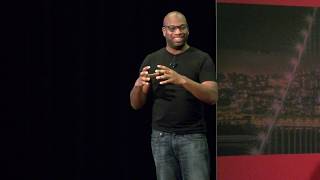
Kairos CEO Brian Brackeen raised $30 million through an ICO using a dual-token structure: a security token representing equity and a utility token that timestamps transactions on blockchain. He skipped a traditional Series A, valued the company at $100 million, and worked with law firms Greenberg Traurig and Cooley to navigate Reg D compliance.
Chapters
Hello. I usually like to pace, but this table's gonna— I hope I don't fall over it. So I'm Brian Brackeen, CEO of Kairos. We're a facial recognition firm based in Miami, Florida. And when we were thinking about how to put this session together, We thought, you know, how do you tell this story? We have a limited amount of time, and how do I get to share with you guys the things that are most important to you? So we quite thoughtfully decided to do a 15-minute talk and a 15-minute Q&A, because everybody's situation is quite different, and we wanna be able to answer as many questions as possible. And as well as afterwards, I'll stay a little bit after and talk to some folks as well, so these sessions are really all about you. The value really comes from your questions, not just me. Kind of blabbing at you guys the whole time. That said, just to kind of set the stage about some of those kind of gaudy numbers. As a company based in Miami, it hasn't always been easy to raise capital, right? It's hard for everybody to raise capital, depending on what city you're in. But for SaaS businesses, as we all know, there's a long time where you're kind of getting Revenue up, trying to get churn down, and there's like a long kind of flat period until you really, really hit it. If you've got the right venture investors behind you, if you've got the right funding, you can live through that, those skinny times to make it to the good times. But if you don't, you won't, right? And too many good SaaS businesses die in that trough. And if you're in other geographies, sometimes it's even harder to get the people to back you to double down in what seems like the darkest hour. And so it really, for us, enters this new process of fundraising. And we think of it as first locally finding people in your area, in your tribe, in your city that believe in you, believe in the founder, believe in the team, friends and family. All those rounds will continue to exist. So in our case, we were able to raise about $8 million about 80%, 85% of it all within the Miami kind of South Florida markets. And then we reached that point where we had revenue, we had customers, we were growing, but the Series A crunch starts to kind of hit you, you get stuck in that middle point. And so in the future, we believe people will start to ICO at this stage, completely skipping an entire kind of painful level. So this is what we did. We went out and we said, you know, we're gonna do facial recognition on the blockchain. We're gonna help verify the identity of people in anonymous transactions. That said, we don't need to know who the person is, just that they are the right person. So I don't need to know that it's Bob Johnson, I just need to know that this face is the face that owns this Ether, that is transferring this information. So keeping your anonymity, but verifying transactions. And the ICO market absolutely went wild for us. As mentioned at the opening, we set out to raise about $30 million, which for us was, you know, having only raised $8 million in our whole 6 years of life, was an incredible amount. We opened things up, and the first 9 or 10 days or so, $10 million came in right away. People were investing every 30 seconds or so. and we just actually didn't even have the infrastructure in place to vet everyone properly. So we had to stop it, get ourselves back together, and we'll be opening it back up for the back half of the '20. So at that point we said, okay guys, let's slow down. We're just gonna take a reservation system. Just tell us who you are, accredited, non-accredited, how much you're interested in investing in either Ethereum or in cash. And over the next 3 to 4 weeks, we took 40,000 reservations to invest in Kairos for a total of $928 million. All right. So there is a real deep interest there. But there's also questions around, okay, who are folks? Are they accredited? Are they not accredited? How do I do this without going to prison? I don't have the features for prison. I'm not— it's not me. It's not me. So we then said, okay, let's stop again, let's just figure out what's the best and logical way to do this. And we came up with this approach. We want to share this information here today because we think the approach that we took is gonna become the standard for companies that want to do this. We issued two tokens, right, not one. Oftentimes in the ICO world, people create a utility token and this token theoretically isn't an investment but they use it for an investment. And they raised money on that utility token theoretically based on the utility of what they were providing. What we said is there is utility in what we're going to do. We do see the value of creating that token, but we're not going to charge for that token. We're gonna just give it away to people who invest as a bonus. And we're gonna have a second token called a security token, which really is security in the business. We decided that it was gonna be worth 50% of the value of the company. That the money that people invested would be in actual equity in Kairos. So these tokens are following all standard SEC rules based on like a standard Regulation D. And so you're taking accredited investors, or you can take accredited and non-accredited investors through something called like Reg CF or Reg A+. I don't wanna get too like techie here, but there's opportunities to do this the right way and in a way that is been long established by the SEC. And so by doing it this way and by having security, which is actual equity in the company, and this utility, which is not, you really keep from running afoul of SEC regulation. What it also allows you to do is that security token, which is equity in the company, can have different rights than the other equity. If you're like us, you've had a Series A, Series B, other rounds, and those rounds are preferred rights in front of the founder, right? Our security tokens are non-voting tokens. So you do have equity in the company, but you're not voting and you don't have additional rights at exit, right? So you'll get your just pro rata share, and that's really all you'll get. But because these tokens are eventually gonna be tradable, right, and they're liquid, many of our current investors want to move out of their current preferred shares and into the token shares, right, 'cause it provides, one, a huge bump, and two, liquidity. And so what we have, and why we talk in the session name about reclaiming your equity, you're not necessarily getting equity back, but what you're getting is better rights back, right? Which makes for a founder who's been in this thing for probably years and years, who's given up a lot of the percentage, it really rebalances, realigns the goals for both the investors, for the customers, and for the founding teams. Also because there's so much market demand on these ICOs and there are a number of large venture capital firms participating, it resets the valuation in a really positive manner. Our valuation prior to this was about $16 million. The valuation now is going to be $100 million. And so needless to say, that's obviously in the benefit of, well, really everybody, but certainly in the benefit of the founding and the founding team. And because you have so many venture capital investors investing through token, it really is the market price. You'll be able to go to the market and say, like, look, we've got 10 VCs in, we've got all these investors all saying this is the valuation, kind of valuation kind of is what it is. And by giving each person that buys a security token one free utility token, it allows you to have this situation where you're not in trouble with the SEC, at least we believe, we'll see. If I end up in jail, You know I was wrong, but that's what I believe. And so on the security token, we're telling people, you know, this is interesting, Kairos, this is quite serious, we're gonna require a 6-month lockup. We're not gonna let you just come in, trade in, trade out, day trade of our kind of company equity. But for the utility token, we're saying it's different, it's a utility, if you wanna take that token and put it on exchange, Traded day one, no problem. And so this is this interesting juxtaposition where you've got obvious value on the security side, but also the company can retain a large number of utility tokens as well. And as those trade up, if you're accounting for these the appropriate way, a utility token again isn't investment, a utility token is inventory in your business. And so now as the value of that inventory goes up, the value of the company also goes up. So you have like a two-for-one situation where you've got the security side driving up the valuation of the company and the utility side as an asset of the company driving up the value of the company. So again, we think this approach is not just the kind of the right way, legal, ethical way, it aligns all the different parties in the buckets that they should be aligned in, and we believe because we're following standard SEC kind of rules, it's just a simple offering essentially. So I'm gonna— we stop, there's a lot of talking and it's a lot of acronyms, I'm gonna stop there, open up for Q&A, and we'll kind of dive in. So yep, raise your hands and I've got somebody with a mic coming here, he's coming, getting his workout.
Hi.
He's—
all right.
Thank you, first of all.
Quick question.
As you see this play out, what do you think the endgame is for the people who invested in your ICOs?
How do you see them sort of liquidating their holdings?
Yeah, yeah, absolutely. We think of it two ways. Unlike a traditional fundraising where you're stuck in for 3, 4, 5, 7, X number of years. You can trade in or trade out based on how the company is performing. So I think that's good. People can be a 1-year investor, a 10-year investor, what have you. At exit, they will still participate in the company at their share, right? So the company will still maybe be bought by Google or Microsoft. They're still gonna get their money that way. Or they want to get off the train earlier, they can get off the train earlier. How do you manage the storage of the two tokens? How do you manage the storage? I'm gonna repeat the question for the cameras, they told me to or else I'm in trouble. How do you manage the storage of two tokens? So we're giving people wallets, they have wallets that are Ethereum compatible, we'll use that word, ERC-20, but I'm using easier terms. And so those wallets will deliver both the utility token security token, just like two different line items.
Hi, so I'm curious with all of the tokens that are being issued, but I'll use you as a great example.
Sure.
The intrinsic value of the utility token, in other words, I understand that you own these tokens, you can trade these tokens, but at some point in time they have to have value to do something, let's say on your blockchain. —what is that value in your case?
And I'll speak for myself, right, because I think some utility tokens don't have value, right? That's part of the problem. A lot of them. Right? But we're speaking for ourselves. The two tokens, the security token, obviously the value is the value of the company. On the utility side, we think of it as almost like certified mail, right? Not every blockchain transaction requires verification, right? If I'm sending you 2 Ether, I just trust you, you give me your address, I'm just going to send it to you, no big deal. But if I'm gonna send you a million Ether, right, I wanna be absolutely sure that it's you, and so you will use our tokens to basically take your face and apply it to the transaction. To do that, you'll use our tokens to do that, like a stamp. [Speaker] Charge a fee, if you will, to do that. [Speaker] Exactly, we think of it like a stamp on certified mail, and then you'll be able to use that and on.
[Speaker] So in theory, there is real, if you're successful, there will be real value in the utility token. Exactly correct.
Hi Brian, my name is Ray. I'm also from Miami.
All right, Ray. All right, come on.
So besides the, besides the, the value of your product, what else do you think was the major reason for having such a successful ICO? And second question, How much money did you spend total on your ICO between legal and marketing?
[Speaker] Very good questions, very good questions. Second one first, we budgeted a 5% cost of capital for this. That's because some people charge based on the percentage of the raise, so we were trying to cap it at 5%. We ran a little bit over, we're not done yet. We're running about 6%, but that's generally kind of where we are. And what was the first one again? Besides your product? Oh, why, yeah. Besides the product and my handsome good looks, which is not true. We talked to a bunch of influencers. There was one in particular, a guy named Ian Ballina that covered us. He's very transparent about his investments and what he made and that kind of thing. And so when he covered us, he thought, well, he looked at the numbers and thought we had a good offering. And when he put us on his kind of public spreadsheet, He rated us as like the number 4 ICO that he's ever seen or in his group or whatever. And so that told a lot of people in the market. From the time that he said, "Hey, I think Kairos is great," to the time that we kind of cut off the spigot, about $27 million came in from just that group.
No problem.
[FOREIGN LANGUAGE] Question about the timing and the marketing of the roadshow of the ICO.
Can you talk through how you guys as a team market and did the roadshow of the ICO, as well as the timing of that?
Yeah, yeah, that's another good question. And we could have done some of these things wrong, right? This is my first ICO, so keep that in mind too. But we decided to first work hard on the white paper, as you all probably would, and then I did one trip into Dubai. There was a blockchain conference in Dubai, and we kind of shared our story for the first time in this kind of format. Learned a lot, got a lot of feedback, made some tweaks, And then I did one more small presentation during the Miami Blockchain Conference, it's for all of North America, just happened to be in Miami, and shared our story there. And that was it for the kind of road show, at least so far. I'd like to go to Asia one time, we see a lot of interest in Asia in our deal, and I haven't been there. But I think that'll probably be it, you know, a Mideast, a US, maybe one Europe, like Zug or London, and then one place like Singapore or Japan. So far finished how long? We're not quite done, but we started this process about 9 weeks ago. Yeah, yeah, I couldn't have given this talk 9 weeks ago. Congrats, Brian.
My name is Danel. I'm a Kapor Capital guy like yourself, although much poorer than you are now. So congrats. My question was about the relationship between the aspirations in the white paper and your actual tech and how far along you kind of got at the beginning of the ICO process. Like how far along were you in the development process, not for your core tech, but for the tech that was involved in the white paper?
Yeah, yeah, and Kapoor Capital has been one of our, the few investors that were outside of Miami, bet on us very, very early in the company's life and are being rewarded for that bet. So thank you, thank you. So I'm sorry, I get so caught up in my first answer. What was it?
[Speaker:AUDIENCE] Yeah, so you described the tech in the white paper. I'm a corporate entrepreneur out of— [Speaker:JASON M. LEMKIN] Oh, I'll take it. [Speaker:AUDIENCE] All right, so you described the aspirations of tech you're going to build and deploy in the white paper. How far along were you?
[Speaker:JASON M. LEMKIN] Got you, got you. Gotcha. I mean, the core of our offering is facial recognition, right? And we were already a facial recognition company, so yeah, you would think, you know, 90%, 95% of what was necessary we already do as part of our core everyday business. The last, that last 10% is applying it to wallets, you know, writing the tokens themselves. In our case, the tokens don't have to be anything special. It's more about the smart contracts that look for this information. But long story short, that's, from a development perspective, I'd say 5 to 10% more on that side. [FOREIGN LANGUAGE] No, we're still doing that right now. We're still doing that right now. Yeah, we did a pre-ICO and we took some of that money and then built the things that we're promising to deliver in April.
[Speaker] How do you think about future fundraising given the valuation that you've achieved and the money that you've raised so far? I'm gonna be slim.
So when you've raised at this valuation, right, the company has to grow into its valuation. It is gonna be extremely difficult, next to impossible, to raise at a round equal to or greater than this until we get to, we believe, $5, $8, $10 million of MRR. Now we'll have $30 million to get there, and in a market like Miami, That's about 5 to 7 years burn, so we'll get there. And the nice thing about taking a long approach is the investors can leave at any point they want because then I'll be liquid, right? So we can take longer bets, we can think deeper about how do we wanna grow.
[Speaker:JASON M. LEMKIN] So I have a question about how you're gonna use the utility tokens. I know that using blockchain as a financial ledger makes a lot of sense, but even there there's some concern about, how long it can last before it bloats. And if you're going to now use facial recognition, I assume that's a lot more data being put into the ledger and on the chain. So what's your philosophy of that and what kind of technical hurdles do you think you're going to run into?
Yeah. So being a facial recognition company before, some of our kind of secret sauce is taking a face and kind of template-izing that face in a very small number of characters, somewhere between 250 and let's say 500 characters. So to put your face on a transaction is only going to cost 500 characters, which is perfect for the blockchain. And because we're working on public and private blockchains, it could be larger, smaller, faster. So we'll work in any scenario. Hey, Brian.
A follow-up question I wanted to ask on the utility side. You know, I've had some discussions with some people on this, and one of the things that— maybe this was relevant for you, but You know, when we think about the traditional way in which you charge for services, especially in the SaaS world, it's like, hey, we're charging per user, right? So I'm curious if you could talk about how you see the value of utility tokens changing when they roughly equate to, you know, sort of a standard dollar per user type, you know, type, type valuation. That's right.
It's, it's less SaaS B2B recurring, as was where we traditionally been and will continue to be, by the way. So we've kept That side of our business, if Walt Disney wants to pay us, they're gonna pay us in fiat the regular way on a recurring model. That will continue. We see this as a new line of business, which is a slightly different model, will certainly inflate revenue, and then we'll show investors again maybe years from now how consistent that revenue was over time. Behind you.
Just a follow-up clarification question. You said something about your existing Series A or Series B investors getting liquidity. Do they get that by buying token— by buying the tokens, or do they— are they able to, for example, exchange their equity into tokens? B.
We're allowing them to exchange their equity into token. So there's hope for me and my other company. There is hope. Hi, sorry. Just a quick question about some of the service providers that you've worked with. I don't know if you could name a few that you've talked to that you liked working with in your experience. On the law firm side, there's 3 that we like a lot. Greenberg Turrig, one of the— it's actually the largest law firm by number of lawyers in the country. They have a really good practice based both in Palo Alto and LA. Their headquarters is in Miami, so we chose them. Holland Knight does a very good job, another group also out of Miami. They actually helped on some of, they helped different currencies not to fork, that's how into this kind of stuff that they're in. And then Cooley does quite a good job. Some of the traditional firms, I don't wanna like bash anybody, but some of the ones that aren't the three I mentioned are not so good.
Hello. So here. So I'm from Berlin. I run a company called Scalify, and we are helping SaaS companies come and do their ICOs. We've done pretty— some of them pretty successful ones as well. My question is the one issue we run across a lot when we are working with SaaS companies is the team getting distracted by the whole ICO process. So we try to stay— keep them away, but how was your experience in in trying to keep your team focused on the core and not getting distracted by the excitement of ICO?
Yeah, yeah, who wants to work on anything exciting? I don't know, I agree. So in the beginning we were like, okay, there's a small group of us over here that are working on this little cool thing. Don't think about it, don't worry about it, we're just gonna be over here. But if it works out, if it's what we think it is, we're gonna come back to the main group and then we need Everybody's help on this. Now when we come back, we may have had some investment and things, so we're gonna be able to add to the team, add service providers, that kind of thing. So we kept it kind of separate, skunkworks, until it was really part of the whole company's vision. One more service provider too for you. The people who are running our token are a group called Decent Crypto out of Ohio. They're really, really good.
So my question for you is, obviously you raised your money from your investors and your board. How did you even broach the subject where you're like, "Ah, we're not gonna go the traditional route, we're gonna do this ICO," and did you receive any pushback, and if any, like, board objections?
Pushback, death threats. Yeah, no, lucky for us, like a lot of people in life, there are people that will go first and get the arrows in their back. We were lucky enough that a company called RecordGram, also in Miami, decided to do an ICO about 6 months before us, and the Angel Group, which is our largest investor, was also one of their largest investors. So they'd all been briefed and known, and at least it was a softer entry and a softer conversation. We have a 3-person board, one of which is that group, one of which is me, third person, and then we were good.
Hey, I don't fully understand how you ensure that the security token really mirrors the real equity value. Do you need to hold— I mean, does the company need to hold kind of common shares in mirror of the security tokens, or how does it work?
They don't mirror. They could actually trade completely independently of each other because theoretically the utility token is based on the network effect of the utility. The security token is based on the performance of the company.
Yeah.
Hi. Hi, can you hear me? Congrats on this round. The second round or the next round is probably far out of your mind, but when you think about the transparency, or how do you think about or have you thought about the financial transparency that, or the milestone transparency that you would have to provide to raise the next round if you decide to go ICO again, and how would you handle that? Because in a VC model, for example, You might be able to keep some of that private, but if you're— especially if you're trying to do an ICO again, then that might involve showing a lot more results or details. Yeah, yeah.
I mean, we're thinking of it as a private offering, even though it's a very, very large one, because it's accredited investors, because it's Reg D. They will have information rights, certainly, but we won't be posting like our financial results on the site or like that kind of thing. We don't believe, TVC, we have to do that. Now even if we did, that's part of the pill you've got to swallow. If you're gonna take this money, you're gonna take these funds, and it's more funds than you would ever be able to take otherwise, you're gonna have higher reporting requirements, you're gonna have higher regulation, and we accept that. I think there's some over there, yeah.
Hey.
As a founder, you're usually the last person to be able to take out anything, so you're putting a lot into it, and you usually have to wait for some sort of an exit. It's usually a couple of rounds up. Using this ICO method, are you, as a founder, able to cash out?
Yeah, so we're, what I wanna do is tokenize the entire cap table. That's still a conversation we're still having, but I will definitely be tokenizing all of my shares because I'm a big believer in us being in the same boat. Now again, we'll talk to the different parties, see if everybody wants to come over to the other side of the ship. I think that we will, but that's not decided yet. And if we do, obviously I could take some of those shares and sell them on the market like everyone else directly could.
[Speaker] And if you're at the area, you're self-funding and you're going for your seed round, local, I'm from Miami too.
Can you skip that round and just go ICO? It goes back to the question about what did you have before, right? If you have enough of a product, a good blockchain use case, it makes sense, then I think you can. If there's still a lot of work to be done, you may or may not be able to, and it just depends on the market and how the market's viewing those things. I'd say sooner would be better than later. In that scenario if it's too early. Yeah. Thank you. Yeah, did you have institutional investors like VCs in the ICO, and if so, did they accept the general terms or did they demand side rights, voting rights, etc.? Got about 10 so far. 10 venture firms so far, they all accepted the right, the same voting rights, everything. Mostly again because they're liquid. So after the 6-month hold, they can do what they want with the tokens. [Speaker] Okay, thank you. [Speaker] You said that ICO is non-voting tokens.
If you convert all of your tokens, everybody converts their tokens, who's in control?
[Speaker] Exactly, which is why we're still talking about it. So we're gonna have to have governance, obviously, right? 'Cause there'll be no one left. To vote, so that's all, that's part of it. We expect that because of the size that we are, we're gonna have to do much stricter governance than you would expect for a company our age and our size before. And so we'll go to more board members and we'll go to different governance structures. I think I got the, is that the hook for me? Yes, it is. Guys, thank you so much, appreciate you coming. I'll stay around.
More from Jason

Why Your Next Hire Should Report to an AI, Tragedy Apps, and Too Many AI SDRs? | The Agents #004

Our Agents Drove Our Salesforce Bill Up 80%, Marketo Hates Agents, and We Stealth-Churned Off Notion




Managing 20+ AI Agents: Lazy Agents, Our $500K AI Bill, Stealth Churn & the Death of 60% Solutions




