Lessons From a Second-Time Founder: How Brex Went From 0 - $1B in Under 2 Years
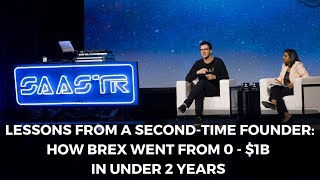
Enrique Dubugras built Brex into a $1B company in under two years by spotting a gap: startups with capital but no credit cards. He shares how early hires like a CFO shaped the company, how a San Francisco billboard campaign built brand awareness, and why listening to customers and keeping multiple options in negotiations gave Brex leverage.
Chapters
Hey, all these startups, they have a lot of trouble getting corporate credit cards. They're like, okay, let's investigate that. And they figured out that one, we couldn't get one. Why? Because we went there and they're like, well, you don't have any financial history. I was like, but I have $120,000. The whole point of building a corporation is not having like personal liability attached to it, right? So there was all these people who just using debit cards and like just walking around with debit cards with $120,000 in the bank or just using their personal cards and all these things. He thought, okay, that has to be inefficient. Like there has to be a better way to do this.
We know you want our numbers on speed dial, but you can't have it, you gotta do without it.
They wanna hang with us, but we're too cool for school. What you gonna do? Please welcome partner YC Continuity, Anu Hariharan, and Brex CEO Enrique Dubogras.
Hi everyone, it's really great to be here. I know you all got to see a preview of the video of Brex.
We—
I've known Enrique for a very long time because he went through YC from the early days. But for the talk today, we thought we would touch upon a few themes, you know, how they came up with the idea of Brex and product-market fit fit. We'll also talk about growth and fundraising, and we'll have some time left for Q&A as well. So please feel free to ask questions. This is your opportunity to also learn from some of the lessons that founders go through. So without further ado, Enrique, I know that we— when you first applied to YC, you actually applied with a VR startup idea. But the video showed all about credit card. So can you talk a little bit about the early days of, you know, going through that idea iteration phase and how did you decide to launch Brex?
Yeah, so, so, you know, both Pedro and I, my co-founder, we were born and raised in Brazil. And, you know, we started out, we're both coders, you know, and I started coding by the time like I was like around 12, Pedro, he was 9. and you know, we both kind of like worked in tech and tried to start tech companies while we were teenagers, and you know, in the end of 2012 or beginning of 2013, we actually met and decided to start one called Pagarme that actually worked, which was a payments company back in Brazil that did, you know, payment processing like Stripe, Braintree, WePay, all those, you know, that's the US versions of the company, and you know, and we grew that company for a while and sold it in September 2016. I was 18 and came to college, and after college, you know, not after, before I was in college, after 3 months of college, we decided that we wanted to start a company. And we were tired of payments. We're like, we're not gonna go into this payments thing, you know, we all have all these like banks and they're like a pain to deal with, like it's a big, you know, a lot of trouble. We're gonna go into the bleeding edge of technology, and the bleeding edge of technology was like VR. VR seems super cool and seems like the next thing that's gonna happen. So, you know, so we applied to YC with this, you know, VR idea, which looking back, it was like pretty bad, but at the time we thought it was great. And within YC, you know, we were like, yeah, we don't even know where to start to build this. It was, you know, pretty complicated. So we started to look for other stuff to do like within YC, and we'd circle through a few ideas until, you know, we We got some feedback that we should start a company that we as founders have an unfair advantage by starting that company. We felt, well, we know a lot about fintech, right? We know a lot about payments. That might be an area. We figured out there was all these startups in YC that couldn't get a credit card and had raised millions of dollars. We thought that was super dumb. Why can't they get a credit card if they raised millions of dollars? And, you know, that's kind of how, you know, working through with the YC partners, we came to the idea of Brex.
Yeah, and I think two things that you mentioned there. One, actually, when Enrique and Pedro applied, they were class of 2020 Stanford. So it was literally the first year. And I think when we went through the application, it was like, why are these people actually doing VR as an idea given, you know, everything they've done in the past? Is something in fintech. So it's very interesting you mentioned that, you know, it's something we look at very actively in YC Applications is does the founder really have unique insights about the space that they are working on that others don't know? Because then you're truly solving a pain point. So you, you mentioned that, you know, you came up with this whole idea during those 3 months, right? What— one of the things I feel like fintech companies really struggle with is what is product-market fit? Because if you're launching a consumer company or even B2B SaaS product, you know, you can pretty much sell or have a product ready in those 3 to 6 months and even have 10 customers. But for fintech companies, it's hard. Can you talk a little bit like you came up with that idea during those 3 days, but by Demo Day, did you have any customer? Did you have a product? Like, how do you really—
because it takes a long time in fintech for product-market Yeah, so I think, you know, one of the different things about fintech is that starting out is kind of hard because you have to line up a bunch of stuff. And, you know, we came up with a clever hack to actually, you know, start earlier. So, you know, we, by demo day, we actually didn't have a product, but, you know, we were able to raise our Series A. But then we actually got our first transaction going in June. But, you know, it was really hard to actually get that product product out because we needed to get partnerships, we needed to give credit, right? So all these licensing things we had to do and regulatory and fundraising, like there's a lot of things that needed to go right. I think the advantage was that we knew that people needed a credit card, right? Like all of, you know, you, if you work at a company, probably someone has a corporate credit card somewhere. The only thing we had to do is like how do we work through the backend to make it better than the others? So it wasn't a question of, you know, finding if people need what we're building. It was a question of, can we build what we say we will build? And if we can, we know that a lot of people will want. So when we actually did build it and launch it last June, it just, you know, exploded really quickly because it was something that a lot of people needed.
And you took at least 10, 12 to 15 months after Demo Day to launch Publicly?
Yeah. So we demoed it, like we raised money in like March, we launched it in June.
March of 2017?
'17, and we launched it June '18. So it was, you know, 15 months between, you know, idea and actually launching. Between now and then, we got our first customer probably in August or so, but you know, they didn't even have a dashboard. It was like, it was kind of like a developer friend who had a startup, so they saw their transactions on a terminal. That was kind of like the MVP, but we never launched it publicly until June. We probably, by the time we launched, had 100 customers or something like that.
Talk about what were the 2 or 3 important things you did in those 12 to 15 months.
I think during those 12 to 15 months, the thing we focused on is, one, actually getting the product ready, building the basic functionality. And two is like figuring out like what people want and what people like about this. Like what is the main— like we're building, we can build a lot of stuff, we can go in a lot of directions. What are the things that people really care about? And we found out that, you know, for Brex, you know, not having a personal guarantee was something people cared about, having higher limits was something people cared about, expense management is something people care about, and also very fast onboarding, right? If you're a startup, For us, it's very important to build something that you could get like a card in like 5 minutes. And you know, that one was actually the toughest one to do. Like this really instant onboarding that we have took, you know, probably 6 months developing all the, you know, the backend infrastructure, KYC, AML, and all the regulatory requirements to be able to issue a card in like 5 minutes.
And you know, one of the things we often tell NYC is talk to your users a lot, right? Because then you sort of learn how they're using the product. How did you sort of do that in Brex given in your early days you probably had 1 to 5 to 10 customers versus, you know, it took almost a year for you to get to 100?
Yeah, so I think, you know, in the beginning was we had a few learnings, right? The first time it was like we didn't know, we could have imagined this, but in the beginning we didn't know it's kind of creepy to tell people what they were spending on. So it was like, oh cool though, you went to Starbucks yesterday, and people are completely creeped out. So we're like, we should stop, you know, not do that, and then encrypt all of this so, you know, we don't have any problems. But, you know, we were in regular touch with users just asking, hey, you know, what do you like about our card? What do you think? And a lot of the feedback we got, you know, was super, super helpful to build what the first version of the product was. And also, like, a lot of people got stuck, for example, like, never onboarding. So we're like, hey, we need to make this onboarding, you know, more simple.
Got it. And what are some of the lessons from the first startup, you know, Pagaa.me, that you guys, you know, pretty much founded at 816, and then you launched this 2 years ago? So what are some of the lessons that you feel were very valuable for you from the first startup that you brought to Brex?
I think there's, you know, all the payment lessons, and the payment lessons that we had in the fintech lessons is if you rely on a banking partner to do something, you will be slowed down more than you think you will. So, you know, try to own everything yourself. Otherwise, your product will be slowed down by the bank. I think that's the first thing we learned that, you know, so we do the credit, we do underwriting, we do the technology, we do basically everything. We have a banking partner, but, you know, we basically do everything. And getting that was like, and being able to control the entire stack was something that we learned from the first company. The second, you know, more applicable to outside of fintech thing that we learned was, you know, I think that we were very cash constrained in our first startup, so I think we lost good talent because, you know, we didn't want to pay, and I think for Brex, one thing that we had since the beginning is like, we're not gonna lose talent. Like, we'll do whatever it takes, but if we want someone, that person is incredible, we'll do whatever it takes to get them. And, you know, that has been paying out for us a lot, you know, and it's very helpful.
Got it. And can you talk a little bit about touching on the hiring point? Because you did say that, you know, you focused a lot on talent and recruiting. So talk about, you know, you were one of the few startups that I saw had a GC in your pretty much the first 5 hires. So talk about the first 10 hires of Brex in those 12 to 15 months, and you know, why did you decide to hire a GC?
So yeah, on this thing about owning everything, right, like banks, they are only comfortable letting you do everything if they feel that you know what you're doing, and you know, we had a lot of experience with payments and engineering, but with US regulation, it's like not something that we were super comfortable with, and a lot of people go the route of like, oh, I'm gonna have like this external lawyer and he's gonna do stuff for me, but we felt that, you know, if we were in a bank's position, we wouldn't trust just an external lawyer, right? We want to want someone internally. So we wanted— like, actually, our GC hire was our third hire in the company, and it was fundamental for us to get our banking deals and regulatory stuff done because, you know, there was someone that actually knew what they were doing. And more than, you know, we could, we could learn some of this stuff, not as much as he did, but we could learn some of the stuff. But more than that, it's just also the credibility of, you know, having someone there in the back, like someone that's supervisioning, seeing you're not gonna do some crazy regulatory thing, makes the banks very, very comfortable. And, you know, our CFO is actually our first hire because we thought, hey, this is actually a financial business. We have to raise debt, we have to underwrite, we have to do all these things. So hiring a CFO as like our first employee was actually critical for the company to be what it is today.
So CFO was the first hire. When was the GC?
The third.
The third hire.
Yeah.
And then the rest of the team, the first 10 team.
And it was actually hard for us to have hired to rest. It was basically engineering, design, main. And coming from Brazil without a big network in Silicon Valley, unlaunched, without a website, it was actually really hard to recruit the first 10 people. And honestly, I wish I had a better story for this. We just spent a lot of money in recruiting fees for these outside recruiters that helped us get the first 10 people, but after that, referrals started going and started making it better. But hiring the first 10 people, especially in San Francisco, is really, really hard. With the bar that we wanted, right? If we wanted to lower the bar, it would be easier, but like, with the bar as high as we wanted, it was really tough.
Got it. And you mentioned quite a few times about banking partners. You know, one of the things that fintech startups often have to do is they need to have contracts in place with not just the banks but quite a few of the partners to really build a full-stack solution. How do you get these partners to trust you, especially given You're a startup and you probably haven't been in the fintech world as long.
So, you know, one, you need a team. Like I said, the CFO and the GC, you know, they're, they're a team that you need to make them trust that, you know, what you're doing in that side. Second, what helped us a lot was credibility. So getting good investors of good credibility, like, you know, makes the banks perceive that you have a higher chance of success. So because in a way they're also investing in you in somehow, right? So it's a little bit like an equity pitch, you know, when you're raising equity that They need to believe that you will be a successful company and that their time is worth spending. And 3, you need to think ahead. You need to go in the first presentation that you meet them, you already need to have thought of all the problems that they might have and think about that and already present it in a way that works.
Got it. And switching gears a little bit. So you launched one year in, in June publicly last year. You had around 100 customers, you mentioned. Accelerate that to now February, like probably close to 8 months. Talk a little more about Brex's scale so far and what sort of contributed to that scale and that acceleration.
So for us, we scaled faster than we thought we would. I think we had a very aggressive plan.
They did have a very aggressive plan.
Yeah, and I think we did like 2x what we thought we were gonna do, so it scaled really, really fast, and I think if I wanted to talk a little bit about the things we did for that was one, we went where other people weren't going, and we went bold, so one of the things that a lot of people know is for the billboard campaign in San Francisco. We basically bought a shit ton of billboards in San Francisco, and a lot of people recognize us from that. When we did that, honestly, I wish I could say, "Hey, I was like, you know, our team was like this marketing genius and like knew what was gonna happen," but it was basically for awareness and recruiting and stuff like that. We thought it was a good investment, but it turned out that a lot of our niche, our market is in San Francisco, and what people do when they go buy offline media is that they want to buy like one billboard. A lot of people are engineers and They're like, oh, I'm gonna buy one billboard. I'm gonna like try to measure that and then I'm gonna measure that. I'm gonna go and scale it up and you like, they're stuck in this mentality of like you have to put $1 and get out $3 and I think what we did is like we took a little bit of a bold move and said we're just gonna buy like all that we can. We actually got a really good discount. We paid like $300,000 for 3 months of like a lot of billboards.
And I think I want to pause there because a lot of people don't expect expect that, right?
Yeah.
When you see billboards, you immediately think outdoor advertisement is the most expensive channel advertisement a startup could use.
Yeah, no, it's not that expensive, especially if you buy a lot of them. It gets— becomes cheaper.
Yeah.
Um, and the thing about billboards is you have to buy a lot of them to work because, you know, marketing is about repetition, is about, you know, awareness and people hearing about you many times. So, and it's really hard to attribute, but, you know, a lot of times when we went to do outbound and we reach out to a customer, we talk to them, they're like, oh, I saw your billboard already, right? So like We had actually a higher response rate on outbound emails because we did this billboard campaign, and that was super powerful. Like that, we had a lot of other things that we try to think a little bit outside of the box, and outside of the box is outside of Google and Facebook, honestly. So we did podcasts, we did all these things that started helping a lot. That is not the traditional pay, and the thing is it was hard to met— like we put a lot of effort to measure the ROI. Yeah, you know, but in the effort we put on that paid off because we could use these more different channels.
Yeah, and I think what helped also in Drex's case in particular was the niche target market. Like you were so specific that this is for startups, right? That helped a accelerate that.
Yeah, so, you know, people asked us like, hey, why do you know— why is your slogan like Brex, the best credit card for startups? Like, why did you make that decision? Are you not restricting yourself, you know, to startups? And actually, like, it was a very conscious decision of, you know, because of brand as well, in the sense that, you know, a lot of our Brex customers like, oh, why do you use Brex? Oh, because it's for startups. Like, I know it's the best for me, right? So we have like this very strong brand association of founders today, and that people feel it's for them. So whenever we go to our next niche, we're going to be Brex for that niche and we're going to use that strategy. And that helps with the brand and it helps also target and make your distribution strategies more targeted, which helps a lot.
Yeah. And one of the other elements we actually talk about a lot in YC is it's not just customer scale that happens. At this pace, like especially if you're hitting a huge pain point, but also how do you scale the company along, right? Because when you, in June, you had probably like 12 employees.
Yeah.
And how big are you today?
Is it 95?
95. So how do you go from 12 to 95 and what do you prepare into, how do you prepare internally to keep up with that pace?
So, you know, you're gonna have a little bit of a counter advice is that is a little bit against what people say. One thing that worked really well for us is bringing executives really early on, but the type of executives that we brought was very specific, where people who been in successful startups in the beginning and scale of the startups. So, you know, we bought people from SoFi, Stripe, Zenefits, and all early employees, early executives there that grew the company. And having these people early on helped a lot because, you know, there are people who know what they were doing. And they had people from their network that they could hire, and it was insanely helpful. One of the things that we tell people was, if you can, you can afford, you have the brand, hire executives earlier on. They'll take just a huge chunk of your time just doing things by themselves. That was very helpful. The second thing is—
How early did you bring those executives?
So, you know, he's the first 10. Our head of sales, he was probably 10th or 11th or something like that, maybe 13th, definitely under 15. And, you know, now we brought our head of engineering. We were probably, when we hired him, 50 or 60. And, you know, all these people, they managed much larger organizations before. But they also were at the beginnings of startups, so they kind of like had both and they could do the best of both worlds. So it was pretty early compared to a lot of startups.
And one of the things I've seen you do really well is spend a lot of time on the recruiting side. Can you talk a little bit about how your role has evolved in these 2 years and where do you spend a big chunk of your time?
So, you know, this is like, you know, an advice for all the CEOs out there. And like, as doing this for the second time, is that You know, you as a CEO, you have this thing, right, that, hey, what is a CEO job, right? And you see all these CEOs you admire, and you're like, you see Elon Musk, and Elon Musk, you know, there's, you hear the stories where someone who's not doing a great job, and then he, you know, worked the entire night and then did that job, that person's job, like one night, and you're like, oh shit, I'm not like that, or like, I don't know if I can, you know, do that job that I never did before.
He also runs two companies.
Yeah, and runs two companies and all these things. And you know, the thing that I learned the most about like the CEO job is that the CEO job is doing what you're great at and hiring for the rest. That's your only job. You're probably good at something, otherwise, you know, you wouldn't be like, you know, starting a company and like things are going well. So do that and hire for everything else. So your job is just this, is, you know, doing what you're good and hiring. So I took that to heart, you know, when I heard this for the first time. And that's the only thing I do. There are some things I'm really good at and I focus on doing those things and I hire for all the others.
And is this something that you did different from when you ran Pagardot.me?
Well, totally different because, you know, the thing about running a company outside of Silicon Valley in the US is that there's very few executives outside of the US, so people who actually seen growth stages of startups. So you either have, you know, big company people who sometimes don't know how to like bootstrap something Or you have people, you know, that never had experience doing what you're doing. So it— there's this very, very particular thing that happens in Silicon Valley that, you know, you have these executives. But, you know, in the first company, everyone that we hired was, you know, kind of like our age. Well, older, but, you know, they were 24 or something. And, you know, we— they didn't know what they were doing. We didn't know what we were doing. So we kind of had to learn and teach them at the same time. So it was very different. We actually went functionally into all these areas. Today, I think, you know, we focus much more on like who's the best person we can hire for, you know, this role instead of— and they know what they're doing— instead of trying to do everything ourselves or learn everything ourselves.
Yeah. And, you know, as part of scale, one of the key things for startups, and especially probably more so for fintech startups, is you start with an anchor product. Or a service or a feature, but then you need to have a clear strategy or vision in terms of where your company is headed, right? And how— what is the long-term vision? And, you know, we often see at YC that this is where, you know, we see a clear difference between CEOs that scale versus not. Like, they're able to clearly articulate, like, where the company is headed, at least, like, from 3 to 5 years. How do you and Pedro do that? Like, you know, how do you think of— how How often do you think about strategy? How often do you think about where is Brex headed, especially given the idea was born in 3 months?
Yeah, so I think that we think of— I personally think about that a lot. Because we hired all these executives early, I'm not the kind of CEO that doesn't have 1 minute to drink water during the day because the team does a lot of stuff. So I actually have time to think about strategy a lot. But I'll jump into fundraising. That actually is a really interesting interesting thing is that I talk to a lot of founders about fundraising, right? And the interesting thing about VCs, and you can confirm or not this, Anu, but is, you know, a lot of times they say no and they don't want to find a mean reason to say no, so they pick on the metrics, right? They pick on, you know, oh, it's because, you know, I want to see you get here, I want to see you get there. And a lot of times my impression is that, you know, and then you, when you, when VCs say no of you because of this, you get in this mode which is like, how do I not get rejected? Instead of like, how do I get accepted, right? And how I not get rejected is you get obsessed about pitching these metrics or these sales efficiency ROI and all these things, and in the long run, a lot of these things adapt, right? If you have unit economics that's decent, it gets better over time. The thing that helps a lot is like, which is the biggest market you're attacking? How are you gonna be like a $10 billion company or more, and how are you gonna get there? Thinking more through the strategy and thinking more through not only your niche product that you are today, but how are you going to get to be this very big company, and thinking more truly through that and testing out some of the hypothesis there is actually time well spent before fundraising. Leading the pitch with that, more around, "Hey, where is this company going? Why this is going to be gigantic and why my strategy is the winning strategy?" instead of obsessing about, you know, what is the sales efficiency or, you know, the payback period in the very, very early days, you know. My opinion on this is, you know, focus on growth, have positive, like, you know, good unit economics, but, you know, spend some time pitching, articulating how you're gonna be a $10, $20, $30 billion company in the future.
And I want to come back to the, you know, spend carefully, because I know as part of Brex's mission you have that for startups, but I want to dive in a little more on the fundraising point. So you are right, like the art of storytelling and being very clear and articulate where the company is headed is something that I think most investors look for. And it's not just— it's a sign that tells you that the founder can actually attract really good talent to come work at the company behind that mission, right? So it is one of the important attributes. So talk a little bit about, you know, you did your demo, you know, by Demo Day, even though you hadn't launched launched, you did your Series A round, and you know, you have Mickey from Ribbit left that round, and then YC, we did the Series B, you know, in June, and then you announced the C late last year as well. So talk about the three, because you've done three rounds now, you know, formally priced rounds. Talk a little bit about each of those rounds that you raised and how, you know, were they all similar, or, you know, were there certain differences depending on the stage of investor you were pitching?
Yeah, I like to say that, you know, our rounds, they were called a letter ahead of what they were a little bit, and I think that's kind of true in fintech, and it may not be true in other industries that, you know, our Series A was kind of more like a C, our Series B was more like an A, and our Series C was more like a B. But, you know, I think the general advice I had there is like, I think, you know, One of the things that is usual advice is like, "Hey, you should just fundraise through this period of time and then don't fundraise anymore and then go back and focus on your company." One thing that we did for all the rounds is just we kept meeting and building relationships with VCs. Instead of just saying, "Hey, now I'm fundraising, look at my business," we just met them throughout a long period of time and got them excited over a long period of time. So when the time came to actually raise money, you know, they already kind of made a decision. It wasn't like, you know, they didn't have to think too much about it. It was already— they've been thinking about it for a longer period of time. And we didn't engage, you know, before. It's not the first person, "Oh, I might want to give you money," that we engage in the fundraising process. We actually, you know, engaged by the time that, you know, we thought we were strong and it was the right time to raise. But the first raise was with Ribbit and Mickey. I think a lot of that was, you know, Mickey, we knew for 2, 3 years. He had seen us in a previous company. It was a lot of a bet on us, like, hey, in the market, it's like, hey, you know, these guys seem to be good and are executing in the market because we didn't have one line of code. It was, you know, or a PowerPoint. It was just literally us selling them. And then on a Series B, you know, I think that the thing that we did is like we got to launch, like we had a card that worked, you know, That's actually hard, and people who invest in fintech, they know that is not the most simple thing to actually get a working credit card. I think we got to the barrier of entry, actually getting the licensing that we needed, getting the card working, the product working was already a barrier of entry. I think that was the point. Then the Series C was like, "Wow, we launched and the early traction looks great, and we need capital to scale this faster than every other company." That was a little bit more of the pitch, but all of them, Anu and then the Series C leads, we knew for a longer period of time. We kept talking to them for a longer period of time, and when the time came, you know, we pulled the trigger.
Yeah, and I think one thing I would say that was common across all your pitches and probably the theme was that, you know, you had a clear— both you and Pedro had a clear articulate, you know, like, vision for where Brex is headed, even if it's not there today. And I think that's one of the most important things that you can do as CEOs whether it's pitching to investors or pitching to future employees, right? Because everyone is trying to get behind the mission that you're going after. You know, one of the things that, you know, be it partner conversations or with fundraising, you know, one of the things I've noticed with you, Enrique, in particular, that you have is you're really good at hitting, you know, what's the key thing that the partner is really looking for, and really good at negotiations. So how, where did you learn that? And is that, are there lessons from your first startup that helped you in the second phase?
Yeah, just really quickly because I think we're running out of time, but the two lessons here are one, you know, it's like selling. If you, I had to learn how to sell in ParkGround because, you know, Peter coded better than I did, so he sent me, you know, to the, to sell. So, you know, you need to listen more before you talk. So listen about the fun, listen about what they believe in, and you kind of show the part of your company, you know, that they're excited about. And two, negotiation is just about having, you know, other options, and if you're more comfortable to negotiate because they're like, well, if this doesn't work, I'll be a little bit more risky here because if this doesn't work, you know, I at least have that. So you get more aggressive if you have another option. So, you know, lining up more than one option is the advice.
That's great. Well, thank you so much. I apologize, we don't have Q&A in this room. I just saw the note. So, but hopefully you can catch hold of Enrique like once we're done. Thank you.
Thank you so much.
More from Jason

Why Your Next Hire Should Report to an AI, Tragedy Apps, and Too Many AI SDRs? | The Agents #004

Our Agents Drove Our Salesforce Bill Up 80%, Marketo Hates Agents, and We Stealth-Churned Off Notion




Managing 20+ AI Agents: Lazy Agents, Our $500K AI Bill, Stealth Churn & the Death of 60% Solutions




