Live From SaaStr Annual: Stage A Masters - Monday
Dave Kellogg and CMO panelists discuss aligning sales and product-led growth teams to avoid wasting leads, and why PLG only works when customer journeys are standard. Robert Chesnut argues that paying commissions on expansion seats instead of just new seats drives better onboarding. The group emphasizes measuring product-market fit through early usage thresholds, not revenue, and scaling only after unit economics hit LTV/CAC above 3.
Chapters
Aah! Hi, good afternoon. Thanks for joining me today. My name is Dave Kellogg. I'm a principal at my own consulting firm. I'm the author of a blog called Kelblog. And as we announced a couple of weeks ago, I'm starting up an assignment as an EIR, an executive in residence, at Balderton Capital, a European-based VC firm based in London. So today's presentation is a CEO's guide to marketing. So let's jump in and talk about the founder experience. And you know, most founders, the story goes something like this. They're working one day, and they see this kind of unserved need in the marketplace. And they think, I'm going to build a product to fill that need. And they get a team together, and they build a product, And congratulations, it works. And things are going well. And many years later, they've built a successful SaaS business. Maybe on a Sunday night, they're looking at their P&L, and they notice something funny. They say, wait a minute, I'm spending twice as much on sales and marketing as I do on R&D. I thought I founded a product company. And they think, well, maybe, maybe I'm abnormal. Abnormal, right? Maybe those silver-tongued folks in sales talk me into spending too much money, or those crazy marketers that waste half the budget are wasting more than half. Maybe I'm abnormal. So we go to Meritech Public Comps, and we start comparing ourselves to others. And we find out, no, wait a minute, I am normal. The median enterprise SaaS company spends twice as much on sales and marketing as it does in R&D. Sure, you have folks like Datadog that only spend as much on sales and marketing as R&D, but that's literally the 90th percentile. 9 out of 10 SaaS companies spend more on sales and marketing than R&D. 50% of SaaS companies spend more than double on sales and marketing than R&D, and it only goes up from there, right? If we look at some of the names up there, kind of surprisingly, folks like Smartsheet and HubSpot are coming in at 2.2 and 2.4. Well, Salesforce, they're a marketing juggernaut. What do they spend? Well, they spend 3 times as much on sales and marketing as they do on R&D. Zoom, 4 times as much, although off really small numbers. Monday.com, the work OS, aren't they kind of a PLG company, product-led growth? Doesn't the product kind of sell itself? Well, they spend 5 times as much on sales and marketing as they do in R&D. So in my opinion, the founder experience that happens a lot is you found a product company, and one day you wake up and you're running a distribution company. And you go, what happened? And you say, it's OK. I'm going to be all right, because this sales thing, I don't know exactly how it works, but it's super measurable. Quote of performance. Customer success, that's pretty straightforward. We know what they do. We can measure it through renewals and churn, or as we talked about last year, net dollar retention. But marketing, there's this thing called marketing. And I'll tell you what's the scariest thing a CEO can hear at a QBR. The marketing session's up next, right? Now, why is that, right? I've been 25 years in the business, probably literally 100 different QBRs. Why is the marketing session always so scary? Right? Well, think about it. What's the session most likely to take more than double its allotted time slot? Marketing. Right? What's the session most likely to leave people dazed and confused at the end of it? Marketing. What's the session most likely to generate a knock-down, drag-out fight? Marketing. Right? What's the session where people's careers can literally be ended? Like I've been in QBRs where after the session I said, I don't know what that was, but that can't happen again, right? We need to get a new head of marketing, literally. So the question is, why is the marketing session so scary? And the answer, particularly for product-oriented founders and executives, is first it's unfamiliar territory. Most founders didn't grow up in marketing. Second, you get overwhelmed by a blizzard of buzzwords and acronyms. You know them as well as I do. Marketing people love them. You're buried in a sea of numbers, conversion rates, and funnels, and web traffic, and clicks. You're confused by ill-defined terminology and process. Most marketers are not that rigorous in their thinking. And you're drawn into conflict between sales and marketing, right? So this is why the marketing session is so scary. And the other reason is, maybe, just maybe, you're a little afraid to admit that you don't understand all this stuff. Right? And that makes it even harder. So what do you do? Well, you do what any good CEO would do. You wait for the session to end, and then you say, with trepidation, "Well, that was great. Next session." And you continue to leave You continue to live a life of quiet marketing desperation, right? You don't understand it, the session is terrible, and you just say it is what it is. And I'm here to help change that today, so I'm going to be your marketing guide for the rest of this session. My name is Dave. I bring a perspective that comes from 3 places. One, I've been a CMO for 10 years at companies with as little as $1 million in revenue and as big as $1 billion in revenue. So I've been a CMO across a broad range of sizes. I've been a CEO in the $0 to $100 million range, again, for combined more than 10 years. And I've been combined well more than 10 years experience serving as independent director on startup boards. So hopefully, I'm going to be able to bring you this kind of marketing-rooted but CEO vision, CEO viewpoint on marketing. So— and the way I'm going to do that is we're going to talk about 5 things that every CEO should know about marketing. And it's important that this is not a generic Marketing 101 course. This is not just some quick survey course on marketing. This is rooted in my experience working with startups. So it's biased towards the mistakes I see people make and the challenges that I think they face. So that's where I'm coming from. And these are the 5 things that I think CEOs and C-level execs need to understand about marketing to work work effectively with marketing. Now there's two underlying themes in this. One is use market research. In this day and age, we have so much data from our systems that there's a tendency to only want to analyze that data. And back before we had these systems, we used to rely on market research, and now we almost don't. And the problem with only relying on our data is it's kind of navel-gazing, right? We're only analyzing that portion of the market that found it into our CRM. So one underlying theme, I'll give you numerous examples, is here's a question you should use market research to go figure out. The other underlying theme is keep it simple. Don't get sucked into the complexity, stay high level. So I'm going to give you some high-level models that you need to come back to, that if your marketing person is kind of pulling you down in the details, you could step back and pull things right back up. So let's jump in. Here are our 5 principles. The first one is that you can reverse engineer all of marketing from buyer empathy, right? If we just think about the buyer and we think about what marketing is trying to do, we kind of figure out marketing's job. And in effect, you can derive marketing from these 2 things. If I only knew 2 things, I could derive marketing. One, the state of mind of the buyer in terms of what question they're trying to answer. And in my mind, there's two fundamental questions: why buy mine, or why buy one, right? And why buy mine is kind of exemplified by Southwest's bags fly free, right? Bags fly free answers the question, why should I buy a ticket on Southwest? It doesn't answer the question why I should go see my uncle in Toledo, right? It does say if I'm going to see my uncle in Toledo, why should I use Southwest? Because bags fly free. Right? That is a differentiation message. The other state of mind the buyer can be in is a value message, which is, "Why should I buy one at all?" And for early-stage startups, this is often what you face. You've made the first thing, and they don't know whether they should buy one. And in that case, you need to sell value, right? Here's the value of the thing. I exemplify this with an old Campbell's Soup campaign called "Soup is Good Food." Right? Here's why you should buy soup, because soup is good food, it will make you healthy. Bags fly free versus soup is good food. So answer incorrectly at your peril. Right? Just say, I work with a company called Elation, they sell data catalogs, and say when you listen to the Gong calls, which I recommend that everyone do, the whole E-staff as a group should do it once a week, and you listen to Gong calls, are you hearing things like, I'm going to buy a data catalog. I called up Gartner and they said to evaluate you and competitor B and C, and I'd like to know why I should buy yours. If you're hearing that and your salesperson gets on the phone and goes, I've just been to value selling. I know that people buy solutions to business problems. Let me tell you why you should buy a data catalog. What's going to happen? The customer is going to be like, do you have stuff in your ears? I just told you I've already decided to buy a data catalog. I want you to tell me why I should buy yours, and you're telling me why I should buy a data catalog. You're not listening to me. Right? So don't get these things wrong. And the easiest way to figure out which situation you're in is listen to gong calls. Market research can help. Also, just looking at category formation, if the category has a hasn't formed yet, you're probably in a why buy one mode. Hey, I know there's this thing you never heard of. Let me tell you why you should buy one. If there is a category and there's 5 vendors in it and there's a magic quadrant, you're probably in a why buy mine mode, right? And the buyer is probably trying to figure out which one to buy. So that's the first question. We can derive marketing from understanding where the question in the buyer's mind. The second is the consideration level of the purchase. And I put this one in because there's some things, two things confuse it. One is PLG and the other is lazy marketers. And the concept in marketing is simple. We have two types of purchases, low consideration and high consideration. Low consideration, you're checking out at the supermarket, you see that pack of gum, you grab it and throw it on the conveyor belt, right? That's a low consideration purchase. You didn't think much about it. Buying a car is a high consideration purchase, right? You might spend weeks thinking about it, comparing models, going to Consumer Reports, right? You put a lot of energy in. Now you might think that price is the only factor that drives consideration level, but it's not. How about you want to buy tires for that car, and you're going to put your whole family in that car and drive it to Lake Tahoe in the snow. Is that high consideration or low consideration? They're only $1,000. Ah, it's high consideration, right? Because you're putting your family in potential peril driving on those tires. So we need to understand which question the buyer is trying to answer, and then how much energy they're putting into getting that answer. Because lazy marketing people will tell you the following. No one has time to read these days. We should only make short content. Nothing should be longer than a paragraph. Everything. Should be short. And that's wrong. Because if this is a high consideration purchase, right, if I'm betting, say I'm buying a financial planning system, and I'm going to bet the year's financial plan on it, I'm going to get all kinds of managers through the company to use it, I have to set it up, I don't care how much it costs to buy, the cost of owning it and deploying it is high. And if it fails, I look bad. That's a high consideration purchase. So we have to understand how important the purchase is to the buyer. PLG confuses this. That little trial of a collaboration system with 3 people in your department, that might be low consideration. It's free, who cares if it works, no harm done. To deploy that same software package to 1,000 people in your engineering organization, that's high consideration, right? So we need to understand first consideration level varies, and second, to quote one of my favorite traditional marketers, David Ogilvy, long copy sells.
Right?
And nobody says this anymore these days, but the fact of the matter is if you're talking to your buyer and it's a high consideration purchase, they will have time to read a 12-page white paper. They will have time to go to a 1-hour demo. Right? And instead, a lazy marketer who doesn't understand this will be saying, "No, the demo has to be 20 minutes. The white paper has to be a 2-page ebook." Right? So the action here that I recommend is one, make sure your marketing is thinking about this issue, produce a mix of long and short tools, and if you're an early Early-stage startup, write what I call the seminal white paper, which tells your story in 8 to 12 pages to your buyer. They will have time to read it if you're thinking about the right buyer. And almost nobody does this. The best one I've seen lately is from a friend of mine who runs a company called Skyflow, and I suggested this idea to him, and he wrote a banging white paper. You can get it off their website. I think it's gated. So those are the actions there. The other way to look at this is just imagine you were the buyer. Where would you go for information? What process would you use? Who would you want to speak to as references? Important point, the answer is always people like me. So the question is, what's like you mean? Your industry, your company size, your age, your seniority, your risk tolerance and profile, right? People want references who remind them of themselves. So this is a large part of the whole Crossing the Chasm book, is you can't take a technology pioneer and reference them against a pragmatist. It doesn't work. What process would you use to make the final decision, and what criteria would you make the final decision? So to me, you don't have to just imagine this. You could ask customers about it. I think if we have 60 minutes with a customer, we spend all 60 talking about their problem and our solution. I'd actually say to carve off 8 to 10 at the end to say, "That was great. Can I talk to you about how you buy this stuff? How do you think about this purchase process? It's going to make me more effective. It's going to help my company." And ask them these questions to understand how they think about the buying process, not just about buying your software. So that's our first point. We can reverse engineer marketing from buyer empathy. The second point is that marketing is all about funnels. And this to me is the only funnel you need to know. There's a lot of funnels out there. We'll talk about some of them, but this is the one I always come back to when things get confusing. Awareness, consideration, trial, purchase. Have you heard of a product? Yeah, I've heard of a Ferrari. I've heard of a Subaru. I've heard of a Buick. Have you considered buying one? No, I've not considered buying a Ferrari. Why? They're too expensive and I don't fit in them. Okay, have you considered buying a Subaru? No, not too much, I mean I would have. Have you tried driving a Subaru? Well, no, actually, because you know what happened? When I was making that purchase, I didn't have time to test drive every car, so I decided to test drive 3, and I tried the BMW, the Mercedes, and the Volvo. So I was aware of Subaru, I'd considered buying a Subaru, but did I try one? No, right?
Right?
And this is it. Are you aware? Have you considered buying? And those are the reasons why you may or may not consider buying. Have you tried it? Right? How easy— in software example, is it easy to use your trial? Right? Do I have a free download or a free trial? Does it take a lot of time to set up? Do I have to speak to a salesperson? Big impediment usually. And if I do, do they call me back promptly? Even bigger. Right? So— and then finally, did you purchase? And if you didn't, Did you buy a competitor? Did you just defer the whole thing and stick with the status quo? So I was looking at buying a financial planning system. I considered buying 3 vendors. I tried 2 of them. In the end, I stuck with Excel. And again, going to be a continued theme, you can and should use market research to understand this funnel. You can't find this funnel in your CRM. It's not there, right, because it's a lot of people who never made it to you. All the people who never heard of you, all the people who never considered you won't be there. So that's the first funnel. Come back to that when things are confusing. If you go to a QBR, this is the funnel you're more likely to see. Marketing will present the funnel on the left, web traffic, names, responses to campaigns, leads, marketing qualified leads. Sales will present the funnel on the right, sales, SQLs. I did a blog on this, but I always call sales S1s and SQLs S2s. That's twos, and I use as my definition the safe deposit box. Two keys have to turn. If a BDR or SDR thinks it's an opportunity, they turn their key. If a quoted salesperson thinks it's an opportunity, they turn their key. So you have to turn two keys to get into the pipeline, which is appropriate if you think about how valuable the pipeline is. It needs to be protected by two keys. So sales and SQLs, we talk about conversion rates from there, solution fit, demo, which I hate as a stage, but a lot of people use it, so I put it up there, vendor of choice, legal one. You're going to see these funnels. The mistake I see people make is they forget about these funnels, which is in reality you have 4 pipeline sources in your business. Marketing, which gets a lot of attention. SDR outbound, which you should be using in a named account strategy. Alliances, which can easily account for 10 to 30% of your pipeline, usually that closes faster and with a higher rate. And then sales outbound with a targeted strategy. So the first mistake I see people make is they forget forget to think of all 4 funnels, and they forget to allocate a target, and a target not for ARR pipeline dollars, but a target for opportunity count to each of those pipeline sources. Now to me, the best practice here is that marketing should be the quarterback of the pipeline. Because if you think about those 4 funnels, the only person they all report to is the CEO. So either you're going to be the quarterback of the pipeline, or you're going to delegate it to somebody who doesn't run all I think you should delegate it to the CMO and say, I know you're only one of those 4 sources, but I want you to make sure that we start every quarter with enough pipeline coverage. So I want you forecasting pipeline coverage. I don't want to wake up on the first day of the quarter and go, oh my God, we don't have enough pipeline. Right? I want you to forecast a quarter in advance, or more, if we're going to start next quarter with enough pipeline coverage, and I want you to work with the other 4 sources to make sure we have enough pipeline coverage. If we don't. And you're the quarterback of the pipeline. So, and in general, look for these rates. MQL to S1, 5% to 10%. S1 to S2, 60% to 80%. Stage 2 to close, 10% maybe, but 15% to 25%. Those are all— and the ranges can be much broader. These are only rough benchmarks, but these are sample ranges for these rates. Now, as soon as we talk about funnels, that leads to models. And we can build these amazing models where we have sales bookings capacity that starts with hiring, and a rep ramp, and an attrition that generates a bookings capacity number that we shave to get the plan number for new ARR. Maybe I'll cut 20% of that off to account for expansion, so then I get a new logo ARR target. I divide that by an ASP to get the number of deals I need, 21.3. I phase shift it 3/4 to say if I need 21 deals now, I need 107 stage 2 opportunities 3/4 prior. And then I say, well, if I need 171 stage 2s, then I need 1641 MQLs calls the quarter before that. Right, we could build this awesome model. They're all over my blog. I love these models. But don't ever forget reality, which is that's not how people buy enterprise software. Flat, full stop, period, no. Right? And this is Gartner's buying model for enterprise software. It would be 15 contacts, 4 roles, nurturing people across 2 different companies, across 2 years. Well, I used to work at Company A, and I moved to Company B. Enterprise software buying cycles are complex. And the question is, what do we think about all that? And the answer is pretty simple. This quote, "All models are wrong, but some are useful." Right? And that's the way I think about this. Of course that model's wrong. Should I not build it because it's wrong? In my opinion, no. You should build it anyway, but you should understand its limitations. So we need to use models as guiding abstractions. We need to use them as tools of enlightenment, not oppression. I think the number one mistake I've seen founders make is they hold people's feet to the fire on all those sales. And I think that's wrong. I think it's demotivating. I think it doesn't reflect an understanding of the fact that the model deviates from reality. People don't like it. So I think as CEO, you should hold people accountable for the two things that matter. Pipeline coverage, basically are we giving ourselves a chance to hit the number? 'Cause if we don't have enough pipeline coverage, we're not giving ourselves a chance. And then actual sales. Did we hit the number? That's it. Those are the only two things that matter. Everything else in the model is just helping to guide us. So I'm gonna skip the pro tips for now, but I have two actions I suggest strongly on this, which is because often, particularly product-oriented founders are very quantitative people, they kind of fall in love with these models and they get kind of model myopia and they start using them as tools of oppression Everybody hates the models, and they forget the reality of the underlying business, because the model's so simple and so clear. The way to solve that is two things. One, quarterly win-loss analysis at your QBR, right? Hire a third-party firm to analyze wins and losses to bring reality back into the room. And second, this is done far less often, but I think even more important, a win-touch analysis. Take 3 to 4 deals you closed last quarter, and have marketing present every single touch made over the last several years. And when you're done with that, you're going to be like, oh my God, that model, I mean, it's useful for making the budget, but it's so far from reality, right? So it kind of keeps you humble. It keeps you grounded in reality. Let's talk about messaging now. So we're 3/5 of the way through. Messaging is a term marketers use all the time, and I want you to think of messaging simply as a structured FAQ. So a frequently asked questions document. And it's just simply standard answers to commonly asked questions. They teach journalists in journalism school that for any story, it's about 5 W plus 2 H, right? Who, what, where, when, why are the 5 Ws. How and how much are the 2 Hs. I add a third H for how different, because in tech, differentiation matters so much. Like, so it's not just enough to have the 5 W plus 2 H. We should also have the how is this different different from the other people doing it. So your messaging should address, for a product launch, for a company announcement, it should address all those things. And that's not to say you can't tell stories as part of those answers, because I'm a big believer in storytelling, but still the story is in response to a question. Now messaging should be simple. You should be able to tell your story on a paper tablecloth. That's my test. Whenever I test people on messaging, I never do it with a deck. I do it on either a whiteboard or a tablecloth, and I start asking them questions about the company, and I want them drawing pictures on the tablecloth, because I want the messaging in their head, because it has to be simple, right? And I like messaging to be black and white, particularly when we're on offense, we want to be black and white, only we have this. When we're on defense, we want gray, right? Well, you have consolidation, well, they have consolidation, you don't. Well, actually, we just introduced a consolidation module last week, it's kind of thin, but it's out there. And when you do that, all of a sudden you've taken the other guy's black and white claim and made it gray. And now they're obliged to explain why they're better, which is hard, right? Black and white is much easier than gray. The other thing about messaging is you got to follow the rule of threes, which is the answer to every question is 3 points. This is well known. I do have my own little spin on it, which is what if you have more than 3 things to say? What do you do then? How do we build messaging that we can remember that we have more than 3 things to say? Example, this is an approximation of Alation's messaging. Alation's a leader in data intelligence, and this is not their exact messaging, but it approximates it. What makes Alation different from its competitors? Well, 3 things. Glad you asked. 3 things: intelligence, collaboration, and guided navigation. I can remember that. I can let the customer pull the thread. What do you mean by intelligence? Glad you asked. I mean, we have query log ingestion, we have a behavioral analysis engine, we have expert identification. And for each of those features, I should be able to do feature benefit, right? I won't do it now for time, but when I name a feature, I should instantly be able to go, expert identification is great because it helps you identify the right people to govern your data, which means your data governance program will be successful, right? I can go feature benefit for each of those. The other fun thing, I could do the same thing for collaboration. And the same thing for guided navigation. Here's a demo. Hey, only we have guided navigation. We have an intelligent query editor that features real-time suggestions. So it helps you build your query, and in real time, it's suggesting where you should go to find the answer you want. And it's got inbuilt data governance. It will literally guide you towards things you're supposed to use and guide you away from things you're not. That's interesting. Tell me about real-time suggestions. Glad you asked. 3 things. It could suggest tables, joins, or filters. I got 27 things now. I got a 2-level ternary tree, right? I can pack 27 things into this, right? So this is the key to building simple, memorable messaging. I still— I launched Business Objects version 6 in 1996. I still remember the messaging. PDE. Why? Because it's in a ternary tree. Right? So I firmly, firmly recommend using ternary trees to structure complex messages. Finally, last thing you need to know about marketing relates to hiring your next CMO, because CMOs last 1.5, 2, 2.5 years. You're going to be hiring one soon, whether you just hired one or not. And the number one mistake I see people make in CMO searches is you get down to the last 3 candidates, which is when they call me. They say, "Hey Dave, we got 3 candidates, love you to meet all 3 of them." I say, "Great." And I meet the 3 of them and I go, "Apple, pear, orange." They're completely different. You're a demand gen person, you're a product marketing person, you're an SDR leader, or a comms person, or a brand person. Apple, pear, orange. And I say, "How is it that we ran this process and we paid recruiting firm $100,000 and we're at the end of it and we have 1 apple, 1 pear, and 1 orange?" Right? And you may not want to admit to yourself that you do this, because a lot of people are in denial, but that's wrong. If you get to that place, you screwed up. Right? Because you never at the start of the search said, we need an apple for our head of marketing, or we need a pear for our head of marketing, or we need an orange for our head of marketing, and at the end I had 3 oranges, and then I got to pick the best orange. Right? What do I mean by that? Marketing people come in different flavors. You can think of marketing as having 4 pillars. Product marketing: launch messaging content, demand gen, digital programs, events. Marketing comms: PR stories and brand. Sales development: inbound, outbound, hybrid. Note the rule of 3s apply to the pillars, by the way. So in any case, marketing pillar— well, there's 4 pillars, but sometimes there's only 3. Sometimes SDRs work in sales, but at least each pillar has 3 subpoints. And the issue here is Marketing people, like, they don't make 5/5. There's nobody who's a 5/5. God doesn't make them, right? You either grew up in product marketing or you grew up in demand generation, right? You also don't get 20-pointers. I think 15 is the maximum number of points you can get on this scale. So the first thing you have to do is be realistic and say, what does the market have to offer me? And you only get 15 points across the 4 pillars, and then you need to decide what you want, and then go Tell the search firm, and then find 3 of them. And that's the way to avoid ending up with a search that results in you on the last day of the search deciding whether you need somebody stronger at demand gen or product marketing, which is really not a good place to be. You don't want to be there. Personally, I'm a 5'3", 5'2". I think it's very hard— not only— I mean, God doesn't make 5'5"s. I'm not sure he or she made many 5'4"s or 4'5"s, right? Those first 2 pillars, it tends to be 5'3" or 3'5". There aren't many people who can honestly say, I'm a 4.4 or 4.5. So think about the pillars. You can map your candidates out like this. You can just put the 4 pillars up there and put each candidate's score. And in this case, I think we need to restart the search, because the first bar is what we're looking for, and nobody really approximates it. So those are pillar profiles. So to wrap this thing up, odds are you're spending double on sales and marketing as you are in R&D. Welcome to running a distribution business. Distribution's about sales success and marketing. Marketing does not need to strike fear into the hearts of you and the E-team. By the way, great marketing people make it easy. They love to teach marketing. Bad ones obfuscate. And if you remember these 5 things, it'll be much easier for you to work with your marketers going forward. First, reverse engineer marketing for buyer empathy. Second, marketing is all about funnels. Third, marketing— use models as guiding abstractions. 4th, messaging is a structured fact. And 5th, use this notion of pillars to hire your next CMO. So thanks very much. I'll post the slides on my blog. And thanks for attending the session. Take care.
Hi, everyone, and welcome to our session. I just want to thank Jason M. Lemkin sincerely and all of the organizers at SaaStr. We are so excited to be live and in person. How wonderful is it, ladies?
It's awesome. Yay!
Great to see everyone.
I'm also so thankful to be here with you guys because we have a very hot topic that we're going to talk about. So let's just do a quick round of introductions. So why don't we start with you, Sarah? Go ahead.
Yeah, sure. Hi, everyone. I'm Sarah Varney. I'm the CMO at Twilio. For those of you who aren't familiar with Twilio, we're a customer engagement platform delivering a series of APIs for a massive community of developers. Covering everything from voice to SMS, email, video, you name it.
If you haven't heard of Twilio, you might not be in the right room. I'm Stacey Epstein. I'm the CMO at Freshworks. We make tools that make it really easy for companies to delight their customers and employees. CRM, ITSM, HR. You might have heard of us from our IPO, which was last week.
Woo-hoo!
My name is Carrie Lou Dietrich. I'm a former CMO, most notably the head of marketing that took Atlassian public. These days I'm an advisor to companies including 1Password, Segment, Miro, and other hypergrowth companies.
Hi everybody, I'm Bibiana Vega, and I'm soon to be a general partner at Felicis, and I'm a 3-time CMO with 20 years of experience as well. So thank you. All right, so let's get to it. We're here today to discuss to discuss a very hot topic that every CEO and C-suite leader is talking about today. Product-led growth. The beauty of it and some of the common pitfalls that we would like to help you avoid when you're working with sales. So what is PLG? It's funny. I went online this weekend to look up the technical definition, so I'll read it to you so we're all on the same page. It's a growth and customer acquisition model that relies on the product and its viral hook to drive customer acquisition, retention, and expansion. And what we were just chatting about earlier today was that it's actually been around for about 10 years or so. And so we're really excited to go through what we've learned in the last 10 years as it's been deployed across all the companies that we've been fortunate enough to work for. So ladies, tell us a little bit about PLG at each of your companies. Who wants to start?
We decided I was going to start because Atlassian's one of the most pure models. And product-led growth is really just using a product that that sells itself and giving people access to use it right away without ever talking to the salesperson. And at Atlassian, that took place because the two guys who started the company were in Australia, and they didn't want to sell directly themselves, and they didn't want to hire people to sell. And they were selling to developers who were super excited to never have to talk to a salesperson. And so putting the product online and making a product that is so wonderful it sells itself, Atlassian set up a business model that spent a ton on R&D and very little on sales and marketing to help propel and make this viral product-led growth. And now has tried— you know, has some sales that comes through upsell, cross-sell, and mostly kind of customer support sales. And we'll talk a little bit more about that. But the whole motion is the product sells itself. The consumerization of enterprise software.
In the hope that you don't really need a person to have to sell.
You don't. The product does not need a person for you to be able to use it, buy it, and continue on happily.
Until you do. Sarah, so tell us a little bit about Twilio and their model.
Yeah, absolutely. So our joke at Twilio is that we're a 14-year-old company with a 3-year-old sales organization. And up until very recently, we were almost 100% a self-service and product-led growth motion. Similar to Atlassian, we sell to developers. You're not going to go throw inside sales reps at them to call them and ask what their budget is and time frame. It's probably not going to go down too well. And at Twilio, we really focus on how at every step of the journey we can unblock developers and get them to what they need to do. So we invest a lot in documentation. We invest a lot in code samples and snippets to get people going and thinking about what they can do with Twilio. And it's really just all about making our developer community successful.
Yeah, at Freshworks, it's a little different for us. We don't sell to developers. We sell to technical support teams, sales teams, marketing teams, IT teams that do internal ITSM. I say we layered on sales a little bit earlier in our history than some of the companies. We're also not like a Zoom or a Slack where it's very viral. I think there are a lot of people think of PLG and virality as synonymous, but they're not. I think you can still have a purebred PLG model where it sells itself because the buyer can get right into the product and they can actually even use it in a trial or in a free version and really experience it, and that's what leads them to buy. But it— you may not have the viral component of like like, you know, Zoom, well, I need another person to be on a Zoom call with me, so now suddenly Carrie Lou and Viv are in Zoom too. That's not true with a customer service department. It is actually a buying process. And so even though they may go all the way through the product, through the trial, and decide they want to buy it, you still might need some of that sales to come on and actually help with, you know, getting buy-in from a higher buyer in the organization, et cetera. I think, you know, it is when you're selling to a different constituent and you don't necessarily have the benefit of that virality, you might have to think about layering in an outbound motion a little bit earlier in the process.
Definitely. Before we dive into how to layer in that outbound motion, one of the things that we were also discussing that was really interesting was just the level of investment required when you're working within a PLG model. So, Carrie Lou, talk to us a little bit about that.
Well, I was gonna add on to what Stacy was saying, 'cause I think she's underselling Freshworks, which has a viral word-of-mouth business, right? The, the core aspect of product-led growth and the reason it's so attractive is because it can be way less expensive than salespeople. There are a whole bunch of things you might try to sell that don't warrant a very expensive enterprise salesperson to pick up the phone. That's why marketing marketing automation and automated user journeys are so important. In a product-led growth environment, there can be a lot of sales that are happening when someone's in the product. We used to call them wow moments, and we had these amazingly smart growth analysts that would figure out how to make those show up faster or engage people through email and in-product. But, you know, one of the business model things that's required is to invest in invest a ton in a fantastic product. For product-led growth to work, the product has to be fantastic. People have to be talking about it word of mouth. And a salesperson can follow up and sell that. But if you have a dud product, you can't have product-led growth. So at Atlassian, the whole business is set up around this. And we invest more— and this is from a recent blog from the CRO, Cameron Deitch. On his LinkedIn that 35% of future revenue is invested in R&D and only 15% is in sales and marketing because there is no sales team of significant size. And so this type of business strategy underlies it. It's not just something the marketing team slaps on the front of the website.
Great. Great.
All right.
So here is the million-dollar question.
And go for it.
Yeah, I was— before we get to sales, the why is it so hot, and I know you'll add to it too. I also think, and you touched on this, I was having a conversation earlier about empathetic marketing and empathetic just that approach to business and building products. And it really, you have to get into the mind of your buyer and your user and what they want. Because you don't have a chance to do a pitch deck or to be a really dynamic salesperson who just sells you by how great they talk about the product. They are literally experiencing the product that they're going to buy. And if the product doesn't meet their needs when they're experiencing it, they're not going to turn into a paying customer. So it is much more efficient, and it's also— it makes your team really focus on building that great product. All those all the value that they're going to get. You have to be an empathetic product company in order to be successful with PLG. And I think that's— it's been a good trend for us in SaaS to get more of that focus on that great feature.
Yeah. And I'd just add on exactly to that. I think when you're thinking about the investment you need to make in PLG, you want to think about, all right, where does the ownership live? And it can't just be one person who has to wake up and think about, I have to go acquisition, I think it's super critical for PLG motions to work, to have a shared metric across both your product and your growth team, if that growth team sits in marketing, wherever it sits. But it can't be just the marketer keeping up at night sweating about hitting that metric. It also has to come from the product because they're going to be— they're going to have the leverage to make the tweaks within that onboarding experience or flow or whatever it is to help move those numbers the right direction.
Yeah, and every team, right? The customer support team needs to think that way. The engineering team has to prioritize features that might be in the first 5 seconds of starting it. And the email team needs to be thinking about how you get people back into the product if they've fallen off for the last day or two. So I think it changes a lot of the fundamental metrics and teams.
Yeah, I think it's— there's a journey that we talk about website to trial. Like if you're doing pure PLG, they may be coming in through your product, they may be coming through the website, but your whole goal is, okay, if I'm PLG and they've come to my website, how quickly do I get them to the trial? And what does that journey look like? Okay, now they're in the trial. What features am I exposing at what point? I don't want to overwhelm them, but I want to show them value. Am I giving them cues along the way? Like, how am I literally leading them through the process to become that paying customer, which is really pretty different than the old world of, okay, we're going to do a requirements gathering session, and then we're going to come and pitch to you, and then we're going to do a custom demo, and, you know, 4 months later you're going to tell me if you want to buy. This is like you got to get your journey from traffic to trial to conversion down. It's so important with PLG.
And I think we can learn a lot just from looking from our consumer lives. Right? PLG is the consumerization of the enterprise. People want to research themselves. They want to comparison shop themselves. They want to try it out and see if they like it without any pressure. I like shopping at DSW, the shoe store where no one, no salesperson ever talks to you. And they don't have the most stylish shoes. I just don't want to talk to salespeople. I'm a great target for PLG. And I think we see across a number of of things that there's some specific audiences. Most developers hate marketers and hate sales. So for selling developer tools, where Atlassian started, PLG was a great fit. And up to 70% or 80%, even of normal enterprise sales these days, people research themselves. They're not looking for someone else to educate them in person.
Viv, I think we might want to move to your next question.
I know.
So everyone that's a salesperson in the room doesn't feel bad.
I feel really bad for every salesperson in this room. I'm so sorry. We actually do love you, and you do play a very important role, but you play a very important role later on in the process, and we'll talk a bit about that. But I think you touched on this, Sarah. One thing that we'll talk a bit about is the org chart and how different it is. This idea that there's now a growth team, which at Yammer, it was an independent team that was comprised of marketing, sales, customer service and support, product played a big role, analytics as well. You kind of need— one thing that you should think about building as you're building out your PLG motion is to build this independent growth team.
Mm-hmm.
Oh, now I think we could debate that. So I advise like 6 or 7 teams and the CEO— companies, and the CEOs are always like, where should we put growth? Should growth sit under the CMO? Should it sit in product? Should we split it up? And it's a really tough question because really it's both, right? The way The website team needs to think with the testing mindset that's the same as what's happening in product. And there's so many different intersection points that I do think we'll see org charts evolve.
It depends on the company. Everybody does it differently. I liked it how it worked independently, but I've certainly seen it roll into product and I've seen it roll into marketing. It just depends.
Yeah, I mean, for us right now, it does roll up to our marketing ops function, but I was talking to another CMO the other day and they were talking about different models they've seen. I thought that was really interesting was that Eventbrite actually, where they've got like a growth kind of SWAT team that goes in and attacks certain parts of the funnel depending on what's happening in the company right now. They kind of embed themselves in that team if it's onboarding or if it's customer lifecycle and nurturers or whatever it happens to be the issue. And I thought that that was a really interesting approach because you're really, you know, you're not just saying, oh, I'm just coming out from a marketing angle or I'm just coming out from a product angle. It's really what the company needs most overall based on what you're seeing.
I love that. That's what we did at Yammer. It was independent. It would attack specific issues and go on from there. So let's talk about sales. Our favorite— folks, I think I went one slide too early. So if we can go back, that would be wonderful. All right. So where does sales add the most value? Who would like to start? Stacy?
Yeah. I mean, we definitely have outbound sales. I think certainly as you're moving up in the enterprise, you're going— the bigger customers, the bigger companies are going to expect to have have that relationship and that higher touch. They just— it's part of how they're used to doing business. And especially if they're spending hundreds of thousands of dollars or millions of dollars, they want— they want to really meet the people and have that relationship. So that's certainly— as you get higher up in the enterprise, certainly companies are successful there with purebred PLG models. Twilio is a great example. But that's, I think, one area where where sales might be necessary. I also think, you know, there's inbound and there's outbound. You talk about the growth team. Are you just trying to capture all the interest that exists for your market by capturing inbound, or are you also trying to create new pipeline and new opportunities? And we do a mix of both inbound and outbound because we want more people to know that we exist, that we're an answer. We're in very crowded markets. CRM, ITSM, HR, and we want people to know that there's an alternative way of doing business. So we're doing outbound campaigns and programs, and that's, you know, sales is working both of those leads in that pipeline, and they're going to events like this. So I think, you know, again, we don't sell to developers who mostly just want to buy online without talking to somebody. We sell to department heads and CIOs, and sometimes just sales is, is the best way to meet those needs.
We were debating backstage about which way is easier, to have a product-led growth company that adds on sales, or a sales-led company that tries to get into product-led growth. And we voted that it was easier to start with product-led growth and layer on sales than to go the other way. And one of the reasons is, is You know, let's take 1Password for instance. 1Password is a very successful consumer password security management company that is now in business for both passwords and securities management. And so the model is actually very well established for product-led growth because it's been a consumer company that's been successful for many years. Leads come in, they can buy themselves, they can install, things work well, and now they're a sales org to help with larger, more complex deals. And primarily to help people who are already using a lot of the products go wall-to-wall. And I think really sales is absolutely helpful in upselling, cross-selling, accelerating deals. It just has to be at a company and a scale of revenue that makes it worth paying those salespeople. And that really has to be the tradeoff. And so the inverse, another company I advise is trying to add PLG on to a very large enterprise sale to get some like cheap, fast leads. But it's totally disrupted their revenue. They slapped it on the front page and they took off all the get a demo leads from their sales reps. They messed up their SEO. The whole mechanism isn't necessarily working because it's not just something you can slap on. It requires so much different product development, experience, engagement. And you can't just steal leads from sales reps and expect people to self-serve at this— in the same format.
Yeah. I mean, I would just say that at Twilio, we really think about applying our salespeople, again, where we can help get people unstuck. And yeah, sure, 9 times out of 10, the developer doesn't want to be called. But there are signals you can see where they are stuck. And they do want help. And I think it's just a matter of making sure that you're Applying the right resources, one from a cost perspective. You want your salespeople on your highest, you know, value deals. But, you know, second from an experience, if someone is stuck and legitimately raising their hand, you should be, you know, helping them.
And tell us more about the relationships that you guys had some massive clients before you had salespeople and you found that you really needed the—
Yeah, I mean, I think when you don't have a relationship and it's all self-service, you're not gonna know, you're not gonna have an ear to the ground on what's what's actually happening in that account, what challenges are happening. Maybe they're having an issue with pricing, whatever it is. And without having that relationship in place, it's, you know, those customers can disappear as quickly as they came to your website and converted. And so I think you've got to just, you know, I think that that as you're moving up into bigger and bigger deals and bigger accounts, and again, echoing what both of you guys said in terms of how are they using the products, you know, understanding that at the account and being able to promote the next product or the next best thing or the best way to implement them at what they're doing is only gonna lead to a healthier account long-term.
I think it's also, you gotta stay true to who you are. If you look at like the Slack versus Teams sort of fight that went on, and obviously Slack was pretty pure PLG. They would publicly say they didn't have salespeople. They eventually did. But you would've never thought that Teams stood a chance with such a great product and so much viral use of Slack, but Microsoft had the relationships with the CIOs, and people were, companies were wall-to-wall Microsoft, that their product didn't even have to be as good as Slack. They could still go win so many customers. And they didn't say, oh, wow, there's this new PLG thing. Let's go try to have Teams be PLG. They stayed true to an enterprise outbound, we've got salespeople, we have relationships, I mean, they certainly gave Slack a run for their money. Then you look at Zoom versus Webex and some of the earlier— they just came in with pure PLG and said, "We're just going to build it so it's so easy and so great." Obviously benefited by COVID. But I think that we talked about it, that like, "I am going to build it so exactly what my customer wants that it's just going to take off." and maybe they were a benefit of— they benefited from later technology that WebEx and some of the earlier ones hadn't caught up to. But they just— purebred PLG, they just hit it out of the park.
Yeah, I think you touched on something that's really interesting. When you think of Zoom, the product is better. Yeah.
Right?
And I think when you talk about Teams and Slack, those deep entrenched relationships really mattered, right? So that's a perfect example of where you needed sales to come in. One thing to think about at Yammer that we did to help the relationship with sales, and I wonder how you guys run this, is we built this system called Mission Control. And what Mission Control did, it was really an, kind of an early warning system. Like, hey, there's this very specific lead that is very hot, that could be very big, and we want sales to call them right now. And they fell into a very specific bucket. Did you guys have a system like that as well? So the sales knew, hey, I need to jump in on this one, but I shouldn't touch these other ones that maybe should be, you should go directly to self-serve.
I mean, I think there's a lot to segment. Segmenting your audience in any marketing and sales strategy. And so lead scoring is very popular and account-based marketing and enterprise targeting I think makes a lot of sense. One of the things I was gonna add on that's kind of interrelated to those two questions is I think that the product-led growth methodology that I grew up in at Atlassian requires a testing mindset that's very different than the sales methodology mindset. Mindset, that in a sales model, and I started my career as an enterprise salesperson in accounts where I had to sell internet infrastructure for more than $1 million per client or something. So I was doing like large account management. There has to be a methodology and consistency and a sales territory, and you have structure and predictability. Whereas in the product-led growth, you might add things in and out of the product all the time and change journeys. And switch things around. And I think that those different mindsets can be tricky. And so I don't think you can just like throw things out of the product-led growth into the sales org and expect them to go as well as thinking kind of like at quarter or a half year. Whatever their sales quota is in, you can't change things faster than that, right? Yep.
Yep.
And one thing I want to touch on when I talk about mission control really wasn't lead scoring. It was that integration of product where we could see if a a specific network.
Like a product-qualified lead.
Yes.
Well, you could know how healthy was that network. Were people using the product? Right? So that was a clear indicator as to whether or not the propensity to sell. So that was really important. So awesome. I've got so many more questions, ladies. So talk to me a little bit about what are some of the challenges between sales and marketing that you guys have faced and how have you overcome them?
Yeah.
I mean, I think that you've got, you have to have kind of an honor code between the two teams to not, like if you started like Twilio as a product-led growth function and company, and then you graduate to sales, you want to make sure that you're, again, not running like an enterprise playbook on, you know, developer base like that, because that could erode the trust and brand that you've built, you know, however long before that. And so we really try to make sure that we are training our sales organization, partnering with them to first like identify, hey, are there new signals that we should be more aware of, and trying to systematize across the whole sales organization. And then, you know, just— and making sure that we're connecting our salespeople with our developers that are on the ground so that they understand what a good experience and what a bad experience might be. I mean, in some ways, it's all going to work out in the wash. If a sales rep's not able to convert these people and use what's in front of them to close business, they're probably not going to be at your company for the long haul anyway. But I do think I think to the extent that you can recognize repeatable signals in your base and enable your entire sales organization to address them in a consistent way, you're gonna protect that brand while still being able to, you know, get more out of your customer base and upsell and cross-sell.
Do you find that there's a good balance between sales reps not trying to steal too many leads from the product-led growth funnel?
I, look, I'm always like, We both— I was at Salesforce prior to Twilio, and at Salesforce and Twilio, we kind of have this horseman model of contributors to pipeline. And I never like to get too wound up around one horse, but collectively, what are they all doing together? And if at the end of the day, by mining our self-service funnel in a smart and effective way that doesn't degrade the customer experience, I'm all for it. I will do it all day long. And I work with a lot of— of our sales leaders and sales development team to make that happen.
Yeah.
I'm the same way. I feel like we could do a whole session on, like, don't try to attribute this, something to marketing and something different to sales. It is a group effort all the time. Everything that I'm doing in marketing is helping the salespeople win, and everything that's happening in sales is leveraging, you know, we're leveraging each other. We're helping each other. We're all working on the same stuff. I think where a big collaboration happens, again, I talked about this before, is that journey. For us, the trial is owned by product because it's product, right? They're going through the actual product. So features get added to the trial by our product team, but we're heavily involved in helping with what should that trial flow look like. Again, what are we exposing along the way? And because we study the pipeline and we spend so much time looking at our conversions, we can help product with how to build the trial so that it better converts. And so it's not just a collaboration between sales and marketing. It's also with PLG. It's all very much a collaboration with the product team.
I see a lot of problems as an advisor. I get to see into lots of businesses, which is awesome because I get to compare them to each other. But I see a lot of problems where in a pure PLG, PLG, you don't have that much control over the sales pipeline. You only get as many leads and sales as people who kind of come into you. But in a sales model, if you add philosophically, for every salesperson you add, you can add $100,000, $200,000, $500,000 of revenue for each salesperson. So companies start adding salespeople really quickly, faster than the PLG model can feed them. And then they're doing outbound and you're trying to feed them with these inbound organic product leads. But you end up in this stealing process where, where the product qualified leads don't actually get to go down the low-cost path to self-completion. They just become leads for a salesperson to call as soon as possible. And that could be okay. It could be a great super highly qualified lead, right? I mean, if it's a Fortune 500 high-ranking person that's doing the product Got it qualified, then salesperson should call them. But I see a lot of problems of this, you know, especially in the power dynamic between marketing and sales. If sales is kind of the savior of the company because they're going to hire more salespeople and make more money and it's just sucking all the leads, you can't have a product-led success at the same time.
Yeah. And I think that's why you always have to be monitoring what is that threshold that kicks it over to sales or when it's going to hit their dashboard, and is that at the right level? Should it be lower? Should it be higher? So that, you know, you're not leading a really expensive product-led growth motion and defeating the purpose entirely.
And there is an argument to be had to say the ones that are actually really hot and growing fast are the ones that you should not be putting your expensive salespeople on. Let those go and convert.
Right?
Right? Put your money and your resources on the ones that maybe need a little more nudging and a little, you know, it's sort feels risky, but if you're looking for efficiency, maybe you should be focusing on the other ones.
The harder ones.
Nurture those more with product or, you know, a little bit more—
Nurture through it. Yeah.
One thing I've certainly seen, and for everybody to consider here, is that, and you touched on this, sometimes companies will get so excited because they see some early signs of success with PLG, and then they add too many salespeople. And that can actually kill the culture in many respects. Because it's never good when salespeople are not hitting their quotas, right? So be very thoughtful around when you hire and who you hire so you don't hire too quickly.
And I think that was why we were saying it's easier to have PLG and add some salespeople. So Atlassian has an upsell, cross-sell enterprise sales organization that's not hunters. It's all farmers. And Sarah was talking about that, the Twilio sales group as farmers. It's harder when you have hunters and then you're trying to add leads that you're not gonna work. 'Cause hunters want leads. And that's how they operate, right?
And I know we only have a few minutes left. So I wanted to actually ask you guys a question that I'd love to leave with the audience a couple key takeaways. So if there was one or two major lessons learned that you've experienced while building out PLG within your company. Tell us a little bit about that. Why don't you go ahead and start, Stacy?
I knew you were going to ask me first.
I know.
I mean, I feel like I talked a lot about them. I go back to the— I think the collaboration is really important. If you're spending your time arguing over the fact that, well, my SDR called this company 10 times and that's why they got a trial. So why is marketing taking credit for this trial? 'Cause it was really sales, and I just, you know, I look at my CRO and we just look at each other like, we're not gonna fight over this. We have a great prospect that's in a trial, and that means pipeline. So we're doing it right. So let's just keep doing more of it. So I think that's, if you're gonna have both PLG and an outbound sales, SDR kind of motion, you just don't get in the the fight of who generated— we're all one team, right? You might be making the pass. You might be scoring the shot. It doesn't matter as long as you score the goal. That's what matters for the team. So that collaboration, extending it to product, to me is, I think, a big takeaway for me.
You got a great product-led growth CRO, too. She is the last—
at Atlassian.
Yeah, he's great. Sarah, what do you think? We have a slide about this. We do. We get there last.
But I wanted to just kind of hear quickly if there was one.
Yeah, I mean, I think when you're thinking about marrying product-led growth with a sales organization, there's a bunch of surrounding programs that we haven't even touched on that have nothing to do with digital too, right? How can you think about joining both a bottoms-up motion and a tops-down selling process? And so, you know, things we've thought about at Twilio, like we have what we call enterprise hackathons now. And so we will bring developers along with the line of business owners at an account together. We'll have them hack on real problems that they're having in their company, and at the end of the day, they'll do like an American Idol-style demo competition on what they built.
Very cool.
I love that.
It's awesome because these developers in a company get trained up on Twilio in a day. The, you know, business owners also get to see, you know, proof of concept very quickly. And, you know, our sales organization loves it as well because it obviously shortens the fuse choose between that bottoms-up and tops-down motion. So there's a whole world of surrounding programs that I think you need to think about when you're taking this path to add on that sales organization, just to bring those two groups together.
Awesome. Awesome. Carrie Liu, anything you want to add?
My dad likes to invest personally. And I have spent the last, what, 15 or 20 years being like, Dad, tell me how it works. If I do it just right, how will I pick the company that makes a good And he's like, well, sometimes it's high growth and low, you know, this. And sometimes it's high this and high that. And what's so frustrating is that there's no right answer. And I think there is no right answer. If you go home and you're like, we have to do PLG, it's so hot, and you're selling to large enterprise customers who are like, I don't know, this would be misqualification, but in HR and don't want self-service or some non-self-serve, it won't work for your company. Like, you have to look really closely at who are you selling to, how do they want to buy, and how are you gonna set up the right profit-loss business to serve them most effectively. And, and sales and product-led growth are two tools in your tool belts that you might use, but I don't think you can just over-rotate on the most recent hot thing or you will fail. The company has to be set up to be successful in that mechanism in a really serious long-term way.
It's pretty hard if you're selling to the Fortune 50 to— like PLG probably isn't your thing. You need to build relationships. You need to think about things a little bit differently. So here's just a couple of the key takeaways that I think we've talked ad nauseam about on this session. This has been so much fun. But the first one was product must have product market fit.
And must be fantastic. People must love to use it and tell all their friends.
Absolutely. And they have to invest in product. Absolutely. The network effects are a critical, critical driver. Talk to me a little bit about the technical teams. The small team buyers tend to like PLG. We talked a little bit about that.
Yeah. And I think with like the examples we've used, Twilio, Slack, Zoom, Atlassian, these are all companies that sell to buyers who are really comfortable buying that way. Small teams, technical teams.
They don't, they don't want to get on the phone.
You can roll them up. Up later, right?
Yep.
That sounds good. So building systems to rapidly identify these hot leads, however you define them. Beware of the cannibalization. So sales and PLG will fight over leads, but let's stop the battles and realize that although people get comped, you know, it's funny, we had talked about this once. Whenever I would present to the board, I would always present with our CRO, because I wanted this to be really one team. So try not to allow that divide between sales and marketing. So sales adds value in complex enterprise deals. And build a self-serve model for non-enterprise deals. It's something to really think about. And it's hard to build both at the same time. So try to pick one, do that really well, and then move on to the other. All right, and that's it. And I think we're right at the hour.
Well, I have one other thing, because we still have 6 minutes, don't we? Oh, we do. We still have 6 minutes.
That's 6 extra minutes.
So I have a trick, because last week I was speaking at a CMO event on product-led growth. And this one woman who worked at a very illustrious product-led growth company said, We just faked it. I said, you faked it? How did that work? She said, well, we didn't really have them in the product because it wasn't a cloud product at that time, so we had this really intricate demo where they went into a web form and could click around and do all the key things we were telling them. Things would pop up and tell them to go places, and they felt like they were getting the experience of the product, and then we'd kick them over to a salesperson and we could do a custom demo or whatever they needed. And it was fascinating because I think there is a lot you can take from product-led growth to say, how do I just help serve, self-serve my customers better? How do they want to experience a demo and a deep feeling for what the product can do for them? And you don't have to change your company to be product-led growth to have amazing online demos.
And yeah, I think it's just getting them, or I think it's getting prospects likes to see the value of your product as quickly as possible. And that might be through a real product, or it could be through an interactive demo or whatever you're talking about. But I think if they can't get to that, that's where you are going to have to get a salesperson to sell that vision or a sales engineering team.
And that's a whole other session, right? That's really growth hacking. That's a totally other, like, let's find different ways to think through our user, libri free them, and how do we in effect hack their brain, so they buy our product, which is—
which is like, I think that's the part that energizes me about product-led growth, right? Like 20-some years ago, I was an enterprise salesperson, but all the new technologies around growth hacking and all the smart people you guys must have on your analytics teams too, like pulling it apart, I think that speaks a lot to where things are going and how much better they're getting.
Yeah, I think one of the things we haven't really touched on today is that For product-led growth to work, you do need a somewhat similar set of best practices and needs by your customer. So for example, my last company ServiceMax, like, you know, you look at Slack, you look at Zoom, Twilio, like most companies, most buyers are going to use it in a somewhat similar way. So they can go through one of several journeys and it works. But, like, everybody does field service different. And if they go through a standard journey, you really risk them saying, "It's not going to work for me, because I— the way I dispatch my technicians is very different." And then they have to do a debrief. And so that's one of the reasons why PLG won't work, is if you can't walk people through a somewhat similar journey in your product, really, if it needs customization. For it to meet the needs of the buyer, you're probably going to need a sales team to come set up a custom demo and show it to them. And it's not product market fit. It's more about the, like, you know, customer service is done, you know, I get the problem. I try to solve the problem. I tell my customer I've solved their problem. It's like not that different across industries. Great.
Well, anything else you guys want to add to our session? This has been a lot of fun.
Great.
Thanks for having us.
Good luck. Good luck at Product-Led Growth.
Thank you guys so much. It's been great.
Thank you.
All right, SASTR 2021, great to be back, great to be back. Do you have this, do you have this chart? Do you have this chart? First pothole we're talking about here. I'm seeing it as a big problem in the industry. For some reason, our customers are buying more than they're using from us. We're all in this subscription consumption economy. We're selling seats, we're selling gigs, we're selling leads, we're selling contacts, we're selling features, and for some reason, our customers are only using 50% of what we're selling.
Why? Why?
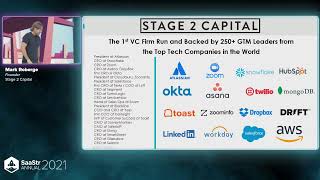
When I'm in the board meetings and we're looking at this like, it must be the product, it must be the user experience. Yeah, but they're not even trying to use the license. Okay, well, it must be the onboarding process, it must be the CSMs. No, they're pitching it. They're doing a great job. Why? Why are our customers only using 50% of what they bought? And it's a big problem because it doesn't make for a very good retention conversation a year later. In fact, it leads to revenue contraction. Why is it happening? We're using a comp plan from the 1980s. We're using a sales comp plan that was invented in the 1980s, and it's causing our customers to utilize their licenses at a lower rate, and it's causing revenue contraction. And so I I did a little innovation at HubSpot and with a bunch of our portfolio companies at Stage 2 that I'll show you has worked in a very scalable way to get this utilization up and get us back into revenue expansion. So a lot of these comp plans since the '80s, we have compensated our salespeople more for the first revenue from a customer. Pretty logical. Hard to get in the door. But easier to renew and expand once we have a relationship. But look at what happens. In today's subscription economy, consumption economy, our customer's like, "I love your product. I could see our entire 1,000 employees using this, but I would just like to start with 10 licenses for this team to get it set up, and then we'll roll it out to the rest of the company." And what does the seller say? "No. No. You need to buy licenses for the whole company." 'Why?' And they make up some BS thing. It's really because that's how I get paid. I get paid for the first revenue from the account, and because of that, we're left with low license utilization and we're left with revenue contraction. Simple innovation. Try paying them more for the expansion revenue. Try paying them more for the expansion revenue, so when the buyer says, 'I want to start with 10 accounts and then we'll roll out to the whole 1,000,' they're like, 'Perfect.' I'm gonna make more money, and your utilization goes up and you get back into a revenue expansion mode. The beauty, the gold mine for SaaS businesses. When I rolled this out at HubSpot when we were doing the CRM, I told the reps, I said, hey folks, I'm gonna pay you 20% more for expansion seats than for new seats, and the reps were like, Robert, you're so sick. I was like, stupid. They were like, you know what I'm gonna do? I have a 100-seat account right now in the pipeline. I'm gonna close 5 seats this quarter and I'm gonna get the other 95 next quarter. And I was like, beautiful. That's exactly what I want. Because when you sell those 5 accounts, you're not gonna lie. You're gonna tell the truth because you know the money's made on the other 95. You're gonna set really good expectations. I don't want you to turn into CSM. But you're gonna watch that account. You're gonna make sure that thing onboards well and then you're gonna get the 95 and you're gonna get paid and guess what? If you sell that thing wrong, I only lose 5 accounts as opposed to most sellers are getting the 100 accounts and they churn and it crushes us. Okay, now this is all connected to the pricing model too.
This is—
the pricing model has to feed this as well and then a lot of board meetings was like, hey, you hit sales in second quarter. You hit sales again. Great. Hey, we should raise prices. Let's raise the prices. And the CEO's like, hmm, yeah, maybe we should raise prices. And the VP of sales is psyched. Yes, let's raise the prices. We're gonna double our prices. I need to close half the number of customers. This is perfect. And no one's paying attention to what this is doing to sales cycles, close rates, and most importantly, our disruption risk. We are misaligning our customers with our product because of the pricing model, because we're raising the price and it takes them so long to equate that value, the sales cycles go up, the close rates go down, and the one that we don't pick up on is our disruption risk goes way up. Our disruption risk goes way up. Because now you're charging $20,000 a month for this thing. Fine, it works for a couple quarters because you're the only player in the in the category, but you are a ripe target for a bunch of hotshot engineers here in Silicon Valley to rebuild your product and charge half the price. So be careful about raising your prices unless you have a sustainable moat. And that's number 3. Well, what is a sustainable moat? How do I know if I have a sustainable moat? Because I asked like 10 engineers, you know, founders were talking about investing, this sounds awesome, it's a great market, you're obviously very talented, you've got You've got some great traction. Can you tell me about your moat? How are you going to defend against the competition? And they're like, well, we built this awesome feature that everyone likes. And I'm like, OK, well, how long would it take the competition to build that feature and copy it? Because they're obviously going to find out about it. And they'll say, I don't know, like 3 months. And I'll be like, well, that's not a sustainable moat. That's a temporary moat. So this begs the question, what is a What is a sustainable moat? And I can tell you, like, here's my little test. Here's my little test is great. You're crushing it. You're in the category. You're the only person in the category. Fine. You want to consider raising prices? You want to have a good answer to moat? Tell me this. Imagine if 5 rock star engineers from right around the corner, maybe they're at Google or something, quit their jobs, raised $10 million from Sequoia, which is happening all the time right now. And they reverse engineer your product and sell it for half the price. Do you still win? Do you still win? If so, you have a sustainable moat. Well, that sounds really hard. That sounds really hard. And I'll tell you, it's not because of product features. It's not because of your support hotline. It's not because of how much you raised, $20 million. It's not because of the integrations you built. And the best work that I've seen in this space was decades ago with Porter's Five Forces. Michael Porter, anyone know Porter's Five Forces? Couple MBAs in the room. Okay, so let me try to translate, 'cause he did this decades ago, and I'll translate his work, which I think is the best. He's an HBS professor. Translate to today's modern software and SaaS businesses. So network effect. The more people that use the product, the more valuable it is to all the users. The first phone sucked. Like, who do you call, right? But as we built, and you know, It got better and better. It's the same thing with the stuff that's happening in social networks and marketplaces with Amazon, etc. That's a true network effect and sustainable moat. Brand. Why do we spend so much money on our Armani shirt? We build a brand, and today if you've read Play Bigger, then you know category creation is a way to build a sustainable moat. It worked beautifully for us at HubSpot. We were like, listen, we're gonna invent a word called inbound marketing, and if it If it fails, the company will fail, but if it works, we'll have a sustainable moat because we'll own the first 10 pages of Google, the conference, the book, the LinkedIn network, everything. And it worked and the competition copied us and it just fed our demand. Everybody can build a category, read, play bigger, and that's a sustainable moat. Economies of scale. If we're buying bulk, then we can buy it cheaper. AWS does this. They buy servers cheaper than anyone else. And the big one right now is AI. There's an economies of scale in terms of more volume. So let's pretend we're selling GONE.io. Alright, so let's say the 5 Google engineers quit and copy GONE's product and they go and try to sell it. Why do I still win? It's very simple. It's like, yeah, fine, you can buy that one for half the price, but you know they've only processed 100,000 sales calls. Their algorithm is only that good. We have been in business for 6 years. We've processed 5 billion sales calls. So what do you want? How important is the software to you? Do you want the one that processes 100,000 or the one that processes 5 billion? It's hard to catch that. That's a sustainable moat. Switching costs, I don't love, but it's out there. Obviously, I don't know if— does anyone think they're paying too little for Salesforce? They really crush it here. No offense, they're rock stars. They're good friends. They're investors, but they crush the switching costs. And hey, Toast, congrats. IPO last year. They have a little hardware-software hybrid. Beautiful. The only time they had churn was March of 2020 because of that craziness. And ever since then and every time before then, they had no churn because of that hybrid hardware-software combination. So that, that's a true sustainable moat. I don't love it because it doesn't help you to win evergreen deals. It helps you keep people and you can raise the price through expansion. but it doesn't help you win evergreen deals. In fact, it could work against you if it gets out that you're gonna take advantage of your customers on that. The other two are slightly less, well, distribution huge, and I know that the woman before talked about PLG. That was fantastic. I'm a huge PLG fan in terms of sustainable mode, and we kind of talked about the last piece with the pricing. Like Calendly, how do you disrupt Calendly? Like it starts for free. Imagine if they charge $10,000 a month. We'd just be attacking it. But you start free. Slack, Zoom, all these folks, it's beautiful. Now the other two, like government policy and capital requirements, those are just in Porter's work. They're probably less applicable to us. But I mean, it would probably be hard to go after Elon Musk and SpaceX right now. You're not gonna raise $20 million and take them on. But hopefully that gives you an example of sustainable moat. This is our job as founders, CEO, is we need to define that for the company. Sometimes as you grow, don't work on sustainable moat, in my opinion, at Series A. Around Series B and Series C, build the moat. Know what it is, build the moat, and sometimes it comes at the expense of growth and that's okay. If I had to choose between this year building a great moat and only growing 80% or not building a moat and growing 120%, I'd choose the former. I want to build that moat. OK. Jesus, more charts. Robert, I had a beer at lunch. It's like I can't handle this. What's going on in this one? Pothole 4. Pothole 4. What is going on here? Switch gears from the first 3. What this means, the chart on the left, it shows that the better the salesperson is at hitting quota and their percentile on the team, the more likely they are to get promoted to manager. Promote your top reps. But it also shows that the better they are on the team, the higher rank they are as a sales rep, the worse manager they are. We've known this forever. Your top rep does not make your top manager. It does not always make a good manager. In fact, the stats show it mostly fails. But so many founders are like, yeah, Tommy's been with us forever. Tommy's our top rep. Tommy does amazing. Why don't we just promote Tommy to manager and he'll hire 8 other people and teach them what he knows how to do? It sounds logical, but it doesn't work. Like the best athletes and the best musicians and the best actors don't always make the best coach, and that's what's true in sales as well. Sales management is about hiring talent and coaching talent. It doesn't have a lot to do with sales. So what do you do? Promote your worst rep? Can't do that. So what do you do? So Robert is just saying you can't promote my top rep to manager. I need a manager. Well, you got to put them through a process, right? So it's like, okay, fine. You want to be manager? Here's what we're gonna do. You just hit your quota for 6 months in a row. Hit your quota for 2 quarters in a row. You don't need to be number 1. You just need to hit your quota. No one's gonna respect you if you can't hit your quota. So just hit your quota. Then I'm gonna put you through a leadership development course. You know, and this, I built this when we were only like $5 million in revenue. It's like, it sounds like a lot, but it's just like I picked out, I picked out like a bunch of subjects like managing conflict and building team spirit and delivering negative feedback. These are the things that a manager needs. Now I built this 12 years ago. There's better readings out there. but this will give you like the sense of what you need to do. And I had them just read this 10-page ebook and then we did a role play for half an hour of like, hey, imagine one of your reps is furious because some other rep just sold a deal that they've been working on for 3 months. How do you handle it? Thank gosh we role played all those scenarios because all of those happened the first week on the job and I just want to see how they do it. And then the last thing I'm gonna do is I'm like, great, you've been hitting your quota. You've gone through this and it seems like you like to do this stuff. What I wanted you to do now is hire the next salesperson. We have a hire coming up next month. You're going to make the hire. You're still going to carry your quota. Not forever. I hate the team lead hybrid, carry, you know, carry your own personal quota and run a team. That doesn't work. But just for like 2 or 3 months, you're going to make the hire. You're going to tell me what you think after the interview. So I know how, how you interview and you're going to coach them for 2 or 3 months to see if you're good at it. You're probably gonna mess up, but it's a lot better to just mess up with 1 person than 8 people. Right, so if you like it and you do well, then we'll promote you. And so we had a pipeline of people vying for management. I would tell you that less than half the people that got into the program became a manager, and most of the time because they opted out themselves. Like, I don't really wanna do this. I just wanna stay a salesperson. And we had a huge success rate through that model. With our management layer, which is so critical during scale. Now the other complement to this, I don't know why more folks don't use this compensation plan. What about the people that do want to stay as manager? I mean, as salesperson. They should be able to get promoted even though they're not going to manager. So we just set up a, like, a way to do that. You know, you come in, you're making $80K a year as a junior salesperson with 5,000 stock options. And you're gonna get promoted when you sell a certain amount of monthly recurring revenue install base, which is probably gonna take you anywhere between 7 months and 18 months to do it, and you need to average your quota, above your quota for 3 months in a row, and then I'll promote you, and I'll give you a bump in your variable, and I'll give you more stock options, and there's the next goal. It's crazy that we do these annual reviews for salespeople for such a metrics-driven success or failure function. This is like we can just use a promotion path and salespeople love this. They obsess with this and you can alter the right-hand side to be aligned with your strategy. This is an example for an SDR team. That's the hardest job, SDR, 12 to 18 months of cold calling. If you're lucky, you get one appointment a day. Holy cow, what a hard job. But this is 6 tiers that they go through every 2 or 3 months graduating up to a kind of executive school and it's very motivating for that 22-year-old SDR. OK? I'll post these slides. I'll tell you at the end. And so if you didn't get it, you can take a look at it. All right. Now 5 and 6. 5 and 6, I think, are causing more failure in SaaS than any of the other ones. And number 5 is scaling before we're ready. When are we ready to scale? When are we ready to scale? I ask 100 founders, when are you ready to scale? They all say, please. "Okay, when we have product-market fit." Great. Thanks to Eric Ries and Lean Startup, beautiful answer. The problem is you ask them, "What is product-market fit?" You get 100 different answers, and half the answers are about revenue. "I have product-market fit when I have a million in revenue." I could not disagree more. That's market message fit. Congratulations, you know how to sell. It doesn't mean your product works. We got to work on this product market fit definition and know when to scale. I know some people say, "Well, you just know there's a lot of pull in the market." It just feels too squishy for me for such an important strategic question. I do like Sean Ellis's model. He says if you survey your customers and 40% say they'd be very disappointed if your product didn't exist, then you have product market fit. I actually really like that. It's about the product experience and whether it's It's actually, you know, it delivered on the value, but I don't like surveys. They're just riddled with false positives. So for me, the metric's customer retention. You know, if someone used your product and buys it again, I feel like we have product market fit. The problem is it takes like a year to figure that out. And so I love customer retention as a proxy to product market fit, but it's a lagging indicator. So what we encourage is to create a leading indicator of retention. That is the key metric for you in the scale-up mode to know when you're gonna scale. What can you see in your customer's behavior in the first month that if it happens, they'll be with you forever, and if it doesn't happen, they're gonna churn? Alright, so the way I think about it is in this format. If P% of customers do event in T time, then you have product market fit. Okay, so Slack, right? If 70% of our customers send 2,000 team messages in the first month, then we have product market fit. It's beautiful. Online, I don't talk to the Slack people. I think it's pretty close to what actually happened. I mean, imagine if the founder of Slack stood up and say, our first North Star metric is a million in revenue. Which happens a lot. Or imagine if they stood up and said, our first North Star metric is to get 70% of our customers to send 2,000 team messages in the first month. That's beautiful. That's a beautiful company. I'd love to build a sales team on that company. OK, Dropbox, back up your device in 1 hour. HubSpot, we caught this late at like $10 million in revenue. Our churn was not good, and we ran 50 permutations and found out that if our customers use 5 or more features in the platform in the first 2 months, the retention rate is like 97%. And if they don't, the retention rate is like 50%. Wow, we found something beautiful about our business. Okay, so I'll post this. Here's a couple guidelines on how to think about defining that. As you can see, it differs with each company, but it's definitely something that's factual, like not a CSM saying they're in good shape. That's too subjective. Objective, but it has to be a very measurable, instrumentable event because we're gonna measure this forever. We're gonna measure this forever because it's gonna break. You can check that out. I like to have them occur in about the first month if possible. If you're doing a big enterprise Workday type thing, it'll take a couple months, and if you're doing a real PLG Dropbox, then it'll take hours, but something at least in the first month. Finally, on this piece, here's how I like to measure it. Is I like to measure it in customer acquisition cohorts so I can pick up on product market fit as early as possible. So what this shows is, let's say, let's use the Slack example. This isn't their data, but let's just use it. So this company, let's say Slack, acquired 24 customers in the early days in January. After 1 month, only 3% had hit the lead indicator of retention, had sent 2,000 team messages. After 2 months, 27%. After 6 months, only 39% had sent 2,000 team messages in a month. That is not good if you're a collaboration software. So they made a bunch of changes to how they sell, to their product, to their onboarding, and look at how that improved. Just look down the month 2 column. In January, only 27% of those customers they signed up had hit the lead indicator of retention and sent the 2,000 team messages, but by September, 68% had done it. They have product-market fit. And it's not because some subjective thing or some random ARR number. It's because of their data and the success of their customers. So that's how I think about product-market fit. Now, are you ready to scale yet? I don't think so. Because notice that I didn't really mention anything about unit economics and scale yet. I believe that we have to tackle our customer retention and success first, then focus on unit economics. Not do them at the same time. David Cancel, the founder of Drift, they just had their exit 2 weeks ago, sold only for $1 billion these days, oh my gosh. So he did this beautifully in the early days. Like he was literally on an airplane flying to onboard customers that were paying him $50 a month. That is beautiful behavior at the product market fit stage. It is so hard to get your customers to realize the value of your product. And he was doing that as founder. Doesn't scale, but throw everything in the kitchen sink at making this happen. And don't talk— we don't need to talk about scalable demand gen or pricing models or compensation. We're just trying to get 80% of our customers to do this event. So are we ready to scale when that happens? No. We have to prove— all we've shown now is that if we're gonna sign up 100 customers in this quarter or 10 or 20 customers in this quarter, We know that most of them are gonna see the value of our product, but we don't know if we can sell them at a CAC low enough to offset the LTV. So we have to think about scalability and profitability, and we usually talk about that in SaaS of unit economics, right? So pick your poison, the magic number, payback period, LTV to CAC. I'm gonna use LTV to CAC. Okay, so fine, we want our LTV to CAC to be greater than 3. All right, so but how, like, what does that mean? Like, I can't tell a 26-year-old account executive, hey, your job is to make an LTV to CAC greater than 3. Like, they don't know what to do. So we have to extract this back to actionable activities that they understand, like the price per customer or the close rate on a lead. It's not that hard to do. I mean, we can take lifetime value and it's just how much they pay us times the gross margin divided by the churn rate. So there you go. What is our average sale? And the CAC, that's just the marketing CAC plus the sales CAC. And the marketing CAC is just our cost per lead divided by the close rate. And our sales CAC is just how much we pay our reps divided by the number of customers they sell. And the number of customers they sell is just the number of leads we give each rep and what the close rate is. So now I've extracted this like very hard to conceptualize unit economics thing of LTV to CAC greater than 3 and extracted it back to stuff that's meaningful and we have a business model. We can actually put that together and say, hey, if our average sale is $20,000 and our cost per lead is $1,000 and we close 5% of them, we have a business. And I can operationalize this into our dashboards. As long as the blue line stays above the red, we're able to scale. Our unit economics are going to spit out great. And this particular framework gives us direction about what we should work on now. Now we do need to build a sales playbook. We didn't need it during the product market fit stage. We do need to get our compensation model right and our pricing model right. We didn't need it during the product market fit stage. So we can figure out what in sequence we should be working on, whether you're starting a new company or rolling a new product out in a bigger company. Okay. Now, now we know when we can scale. We can scale when we have product market fit and go-to-market fit. We have it attacked in sequence, and we have data on our business to know if we're able to scale. Okay, now the other one, the biggest one, the biggest killer, and the last one is how fast to scale. Pothole number 6. How fast should we scale? Because I hear this all the time. These are real stories. Every quarter I hear another one. You know, "Hey, Mark. Yeah, it's September 27th. You know, this summer, we had a good summer. We have 20 people in the company. I think there's like 12 engineers. There's a couple product managers. There's 3 salespeople. There's a marketer. There's a customer success manager. And we crushed it. And we just raised a Series A, $15 million." Great. And so what'd you do? We hired 20 salespeople. Oh God. What? Is that bad? Yeah, you're gonna fire 20 salespeople in like a year. Like, are you kidding me? Do you know what it takes to hire 20 salespeople in a month? Do you know how many interviews that is? And how are you gonna feed them with demand? And who's gonna manage them? The average rep-to-manager ratio in inside sales is 8 to 1. Now you need, overnight, you need 3 managers. Are you kidding me? Why'd you do that? Now you know the answer. It's because they negotiated this huge round, like the huge valuation, and they showed the VC investor the triple, triple, double, double, and they actually bought it and gave them the $70 million valuation. And now they're like, oh my gosh, now we have to do it. Let's hire a bunch of salespeople all at once. It's not good. It kills company. It's the number one killer. So how fast should we scale? All right, let's not think about hiring as this lump sum hiring at the beginning of a fiscal year at the right after a funding round. Let's establish a pace. We are now ready to scale because we have product market and go-to-market fit. Let's establish a pace. Let's hire 2 reps every other month. Let's do that for 6 months and let's watch what this becomes, which is our speedometer. This is our speedometer. It's going to break. I guarantee you from zero to a billion, this will break. And when it does, you know very early because most companies out there deciding if we're scaling too fast or too slow, are looking at the quarterly P&L at the board meeting and the quarterly P&L is what happened 9 months ago. This is what's happening today. So you know more than your peer. You know about your business 9 months faster than your peers. So good. Hire 2 reps every other month and watch the speedometer. If it stays green, hire 2 reps every month. Do it for 6 months. If it stays green, hire 4 reps a month for 6 months. If it stays green, hire 8 reps a month. For 6 months, congrats, you're a unicorn. And you did it in a very scientific way. OK. That's the final pothole there. And you can use— not only does this framework help you understand the sequence of bringing a new product to market, whether it's in a big company or small, but it helps you understand what to focus on. A couple of things here. So yeah, I started a VC firm 3 years ago called Stage 2 Capital. My co-founder, Jay Poh, formerly from Bessemer, is out there. It's the first VC firm run and backed by sales, marketing, and customer success leaders. So you can see there the CRO, CMO, COO of Atlassian, Zoom, Snowflake, Okta, Asana, Twilio. We have 250 of them that have backed us. We look for companies that are around $1 million in revenue. We don't really care how fast you're growing. We care more about your customer retention and your customer engagement. I love to help a company that's having trouble scaling sales but has amazing customer success. Okay, so probably a little different than most of the investors out there. If you want to download some of the stuff here, a lot of this stuff is in this 45-page ebook I wrote on the website. These slides I just posted on my LinkedIn profile. So if you want to go to my LinkedIn profile, you can click through, download these slides, and get these links. I know a lot of you have sent me notes of like the book I wrote a couple years back. Thank you for the support there. Just note that 100% of the proceeds are donated to build.org. Anyone involved in Build? Ah, it's an awesome organization. They start out of here. They basically team up with the worst performing high schools in every major city. Kids that probably didn't have the beginnings that we had. And they teach them entrepreneurship in their freshman year and they put them through a 4-year program to try to get them through high school and into college. And 99% of the kids graduate, which is way higher than regular high school— their regular graduation rate, I think 85%. Go into college. So if you support the book, you're supporting them. Thank you for that. Jason, thank you for an amazing platform. Enjoy the show. Stay safe, everyone.
Aah!
More from Jason

Why Your Next Hire Should Report to an AI, Tragedy Apps, and Too Many AI SDRs? | The Agents #004

Our Agents Drove Our Salesforce Bill Up 80%, Marketo Hates Agents, and We Stealth-Churned Off Notion




Managing 20+ AI Agents: Lazy Agents, Our $500K AI Bill, Stealth Churn & the Death of 60% Solutions




