Live from SaaStr Europa 2022: Stage B with Showpad, Insider, Pigment and Celonis
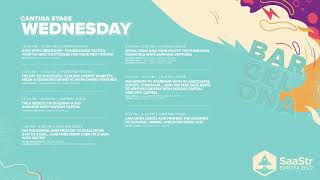
Arsenio Otero, former CEO of Celonis, breaks down how to build a go-to-market engine for hyper-growth companies. He covers a three-part revenue strategy, market segmentation by geography and company size, resource allocation between strategic and mid-market accounts, and a structured 30-60-90-100 day onboarding program. He emphasizes weekly forecasts, granular operational KPIs, and a customer-centric lead-to-cash process.
Chapters
The bigness of the situation and the burden of death. And I'm ashamed of my silence. Oh, my cowardly weak friend, stand behind these walls. I'm feeling all the bitter rage descend. Oh, in the air I hide because I don't think that it's mine. And the gates are open wide with the rushing of the tide, but it's the voices that lift me up, hold me closer to the light. You better take up the battle cry, the battle cry. Strutting in my privilege, Whoa, I'm blinkered on both sides while the steps behind me say, look closer, look closer, and watch what slowly dies. Take heed what's around you, what's hidden from your view. Mother voices, they lift me up, and they're lifting in you. And the gates are open wide, with the rushing of the tide. But it's the voices that lift me up, ground me in this bitter fight. Y'all better watch them as they fly. Better watch them fly. The sentence that's been given. From the powers that be. In from a conversation, no reaction, no decree. And I'm guilty for what I didn't know and what I chose not to see. But it's the voices that lift me up, they lift me. Voices that lift me up, they're lifting me. Voices that lift me up, they're lifting me. The voices that lift me up, they're lifting me. Yet I hide because I don't think that it's mine. And the gates are open wide, I'm ashamed not to decide. But it's the voices that How do I do without you? How will you do without me? Will you be cool without me, baby? Can I call you baby? I know I need to let it go. I love my time with you. I'm sick of holding on, but don't want to fall in Deep. See myself falling deeper. How do I do without you? How will you do without me? Will you be cool without me, baby? Can I call you baby? I know I need to let it go. Wonder, 'cause I know you're gonna miss me. Rain, rain, please stay. Don't go away. Wash my sorrow. Loving you ain't the same. You changed the game. I feel hollow. Oh, oh. Teardrops falling from the roof from the Please welcome Showpad co-founder Peter Jan Bauten.
Alright, good morning everybody. Welcome to this beautiful room in Sastre. I think I'm very happy that we got the best room, definitely the best view of the whole venue. I'm here today talking about scaling from 10 to 100 million in ARR, sharing the good, the bad, and the ugly. I founded— co-founded Showpad about 11 years ago together with my co-founders Louis and Peter. And, you know, since then we've grown the company. By the end of the year, we should cross that magical $100 million ARR mark, and I'm very happy to be here with you to share share some of the lessons learned along that journey. I've led the company as its CEO from obviously founding the company to a couple of months ago. 2 months ago I handed over the helm of the company to our COO, somebody who I hired 6 years ago who has grown with the company. And so now I have a bit of time to do these conferences and share a bit some of the lessons learned. The first slide I wanted to show is, is this quote. It's a famous quote of Jason M. Lemkin: "Getting from 0 to 1 is impossible. Getting from 1 to 10 is unlikely. And getting from 10 to 100 million ARR is inevitable." And for me, I remember thinking, you know, when Jason tweeted this quote, Showpad was about, I think, you know, we were somewhere north of a probably 1 or 2 million ARR, you know, growing fast, scaling, but, you know, still a very small company. I remember thinking, man, I really need to make sure that we get to that 10 million so that, you know, that we get to that inevitable stage and get to that 100 million in ARR. As I'm sure a lot of you come for probably the bad and the ugly, let's start with with the good, because obviously starting a company, growing a business is an amazing journey. And for me, what I really enjoyed about, you know, building and growing Showpad to this day is turning a vision into a reality. When we started Showpad, we basically wanted to solve a problem and make sure that we deliver value to customers. And we started the company My first company was a mobile app developer out of Belgium. Again, founded that company 12 years ago, anticipating the mobile revolution. And while we were building that company, that was a service business, and we were looking for, hey, you know, we want to build a product company, get recurring revenue streams. We were on the lookout for like a product to develop, a problem to solve. And one of my friends, he had an artificial grass business. So artificial grass comes in all kinds of forms, shapes, specifications. He had a big reseller network, and so he was always— they were doing a lot of trade shows. They had to provide their resellers with marketing materials in many different European countries. And I was traveling with him when I heard him on the phone, like, being quite upset because because his marketing agency had delivered German marketing and sales collateral to a French, in France on a French trade show. So that was pretty bad. You know, it's hard to have a booth on a French trade show full of German collateral. And again, this was 12 years ago. And I was like, well, you know, I overheard a conversation. I told him like, hey, why don't you just buy buy all of your sales guys or girls, and girls, an iPad and just, you know, get the content on the iPad and make sure they can present and share the materials from a tablet device. But as it turned out, 12 years ago, that was like super hard to just get content on a tablet, easily share that. You basically had to email it to your inbox and then open it in iBooks, and again, it was a very clunky experience. And so basically, that's how we came up with the idea of Showpad, started building the product, But initially, you know, we didn't have a really bold vision or a big vision. We just, you know, build a product that solved a very specific problem: making sellers productive on a trade show. Eventually, as we built the first product, started to market it online, sell it, we had a free trial, people could use it, we got some traction. We realized like, whoa, okay, you know, we're getting— we're starting to get good feedback, but, but we missed a a bigger, bolder vision of, you know, where is this going? Like, people were asking us like, hey, you know, how are you gonna evolve the product? How are you gonna evolve the company? And so that's when we started focusing on, on what we call buyer experience, because ultimately what Showpad solves is, is that buyer experience. And we developed this big vision. We've developed that we wanted to impact buyer experience for, for basically all customer-facing teams. Teams in the world. We made sure that we evolved from that single product solving a content problem to a broader platform. I'll talk more about that later. But that really helped us to propel the company, ship the right functionality, get traction, attract money from investors. And that's really exciting to see as a founder where you start with this basically what seems like a very simple problem. You know, make sure that sellers have the right content on a booth on a trade show to like a broader platform vision that helps to power buyer experiences for commercial teams. And so today this vision has turned into a reality. Shopify is a multi-product platform. We're integrated in with all the sales and marketing technology you could wish for, and we've obviously built a whole whole product around that, but also services, a marketplace of applications. We have third-party developers developing on top of our platform. So I think that's what I really enjoy about growing a company from zero to where it is today. The second thing which I really enjoy is the people part. I think what is really good about scaling a company is the amazing people you get to hire, the amazing people you get to work with. With the talent that you can see growing in your company and taking along amazing people on that journey. And the screenshot I shared here is a screenshot from Culture Amp. I think some of you might know Culture Amp. We use it to track engagement at Showpad. We've been tracking that over the last 6 years now. So it's a great way of measuring engagement, how engaged is the workforce. If you work together with Culture Amp, it's basically a fixed set of questions we've been asking over the past 6 years. And the end score, the aggregate score, is an engagement score which you can use to measure engagement at your company. And again, it's not, you know, we use it as one data point to measure, and especially I think what's really interesting is obviously as you drill down into teams, regions, managers. You can even filter it across age groups or gender and stuff like that. So it's really interesting data. But I think what I'm really proud of and really enjoy in building a company is that we've, over the last years, we've actually, as we scaled as a business, growing from, you know, Shopify is close to 600 employees now, we've managed to actually improve the engagement of our workforce. And that's, you know, that's a lot of hard work. And because as you can see, we started off 2 years ago at about 68%. Again, if you would benchmark this, this is still a reasonably good score probably if you compare it across many different companies. But we made a deliberate effort to really increase that engagement to also drive our attrition down, to make sure that people stay longer at the company, are happier, feel that they can have an impact. And basically the way that I approached this and we approached this with the executive team was treating culture as a product itself. And making sure you gather a lot of data. Again, Culture Amp being one of the ways that we measure it and the input that we get there. Also talking obviously with a lot of people in the company getting ways to get feedback on how we're doing as a business, what can we improve. And I think what a couple of the really impactful things that we've done is one, really deliberate investment in leadership skills. I think if you're scaling a business, it's so important as you evolve from, you know, being a group of 10, 20, 30 people where you all know each other, where it's not needed to have the values on the wall because because everybody knows those values or lives those values where it's a very informal culture and it's not really outspoken to really be, we became very deliberate about our culture. So putting the values on the wall, but again, it means nothing if you don't operationalize that and put it into practice. And so some of the things that we've done there is a program to really invest in leadership skills across every people manager at Showpad. They get a boot camp. We work with some partners there who up-level the skills of people. We create IDPs, individual development plans, of leaders and every employee. We also made sure that the values in our company, that consistently every 2 weeks we have this, we call it the show pie. It's because we've always, in the early days, we would always eat pie on a Thursday afternoon. There's a pie shop on the ground floor of our office, our first office. And so we have a show pie. It's basically our all hands, company all hands. We do that every Thursday. But we also started to like, we developed a system where people could nominate colleagues anonymously why they should get a showing award. And the showings are our values. And so every 2 weeks we celebrate create one employee who then exemplifies a certain value that we think is very important. And again, all these things, we've put a lot of effort in this, and I'm super proud. The last 2 years, again, tough times, especially for a company like Showpad. We had a big office culture in our offices in Chicago and Ghent, London, Munich, Poland, Wrocław being some of our biggest hubs, and San Francisco. But obviously with the pandemic, people were working from home, working remotely. And, you know, despite a challenging environment, we actually managed to increase the engagement of our employees. And that I think is really— yeah, it's just fun. It's rewarding. And it's then great to see people, you know, building careers, being successful at your company. And the impact of evolving that engagement score in that way is that it It has— this is the graph where you can see our retention, or attrition actually. So it's a percentage of people, annualized attrition by quarter of Showpad. And so like we've seen a massive downward trend. Now we're actually close to like 20%. It's still too high for my liking at 600 employees. But so we're aiming to get it sub-20%, but really investing in culture, treating it as a product. Investing in leadership and making sure that your employees have a good understanding of their, what's my career path at Showpad? In the early days, you just don't, I'm not gonna say you don't care, but you're, again, you're 20, 30 people working hard, but the moment you come at like 50 people, 100 people, 200 people, you need to think about like how do careers of people, you know, what's their, what's the road of different roles and different level of experience at the company. And so this had a massive investment, massive impact on our attrition at the company. So around 20%. So basically means on average people stay 5 years at Showpad, which again, we'd love it to be higher, but I think that's already a good place to be. Then onto the bad. I think the first thing I want to talk about is creating a category. And you would hear this often, especially when talking with VCs or building new products. People always, generally sometimes there's a question like, are you building a new category? Are you creating a category? For some people, it's an obsession. And when we started Showpad, we're in the sales enablement category. Now there's a category. When we started Showpad, we didn't have a clue of what category we were in. We were basically solving a specific problem for, you know, sales and marketing teams, and we're focused on delivering value there. But as you obviously start to talk with more customers, as you start to talk with VCs, as you start to talk with analysts, you start to realize, like, okay, you know, if people are able to put your company, your software into a category, it actually helps with Selling more deals, it helps with closing funding rounds because people have a better understanding in which space you're in. It impacts attracting certain talent to the company. So, but it's also extremely hard and it takes way more, way more time than you would ever think to build out a category. And it's also something with Showpad. I think again, in the early days, we were basically an iPad app for sales teams. Sales enablement wasn't a thing. Then as you spend time with analysts and you see this, we saw the term sales enablement come up. And there was one company at the time who was kind of a big owner of that category, but they were like an on-prem, super old school software vendor. And so over time, as you invest money in marketing, as you get more competition, I think here it's really important when creating a category, it's actually good to have some really strong and good competitors. I actually think it really helps to, you can basically use some of their VC dollars as well to evangelize the space, to create more awareness about the category you're in. And then you just have to make sure when people are researching your solution that you show up and that you can close and win those deals. But the reason why I think it's important, because understanding that category impacts marketing, product marketing in a big way, how you're positioning your solution. So I think that's really important. I think also another reason it's hard is, again, it takes a lot of dollars. You need to do so much evangelizing, show up at a lot of events, collaborate with other players in the space. I mean, if you think about the enablement category, so you have sales enablement, but then adjacent to Showpad, there's companies like a Clari or a Salesloft or an Outreach or a SixSense. And again, all these players together do help to like, you know, build more momentum into the space. But again, that takes time. It takes patience. But the moment that that category is there, so for example, in the beginning there were no Forrester Waves, there was no Gartner Magic Quadrant. Now there's been a couple of Forrester Waves on sales content management. There's also a coming one on enablement. Gartner has now released several reports also covering our industry, not yet a magic quadrant, Magic Quadrant, but they say it's coming. So again, it takes time. I think another great example, which I always love to give here as well, is Nick Mehta, who's a friend of mine. I think what he did with Gainsight and like really basically creating the customer success category is also a great example that it takes time. It's hard, but it's definitely worth it. The second thing, which I think is really which at Showpad we definitely underestimated, and that's why I put it in the bad, because the things I put here in the bad is not necessarily because it's been bad for Showpad, but it's because it's been much harder than I thought it would be. And for us, that's been the evolution from going from single product to like a multi-product, Solution, and we started off as basically a content solution, right? Solving the content struggle for sellers, making sure they could find the right materials. As we evolved from that iPad app, we became available on the web. We integrated with CRM. We've made sure we were available on iPads, smartphones, wherever sellers would live. The first thing that we saw was was the content struggle. But again, as we build out that bigger vision, had that platform vision, realizing that if you want to make sure that sellers deliver a great buyer experience, you also have to make sure they're smart and informed, that they can engage with the modern buyer in a great way. And so we started developing, you know, a roadmap around that. And that involved— we've done a number of acquisitions. So we've acquired a company called Hiccup, and they actually had built a a platform to basically create experiences on top of Showpad. So imagine most sales teams, especially 10 years ago, they would just have PDFs, PowerPoints, and videos. Those were most of the assets that they were using. We acquired a company that on top of our APIs had built like a solution to basically create more immersive experiences. Think about playbooks, guided selling, kind of ROI calculators type of things which are way more engaging to interact with sellers. And so that was our first step into becoming what I would describe multi-product, making sure we not only have a great way to find content, but then also to create playbooks. That was a first step. Then we've started investing in what I would call the engagement layer, which is more about personalization, creating collections. Then we acquired a company called LearnCore, which was all about training and coaching because we believe like, okay, sellers, if they find the right content, that's great. If they can now personalize that and share that, then great. And marketing has— and sales have a lot of insights, but you also need to train and coach them in the right way because else they cannot deliver that great buyer experience. So we've acquired a company focused on training and coaching And that really was the, I would say, a big step and kind of a manifestation of that platform vision. It was also like we acquired that company, it's now 3 years ago, but that also was a big struggle, or 4 years ago. It was also a big struggle in terms of integrating it. It took way more time to integrate that product. It totally changed how we went to market. Our AEs, our customer success teams, they were used to talking you know, content and engagement and those playbooks, that was all kind of like in the same realm and pretty easy to kind of, you know, pitch and sell. And we had like, I would say predominantly the marketing persona we were selling into, and being a sales enablement solution, a lot of the content is owned by marketing. But suddenly we're talking about sales training, sales coaching, you have to involve sales methodology. So the way, not only on the product side, product side, we had to like figure out how to, you know, LearnCore was about 50 people, had about, I think at the time, might be off 1 or 2 million, probably 6 or 7 million in ARR at the time when we acquired them. And, you know, integrating that solution on the product side, way more took, you know, we thought it would take like a year. It basically took us 2 years, but then also like retraining the whole go-to-market organization. Making sure that people adapted to the value proposition which evolved, making sure that we, from a product marketing point of view, get our act together, making sure that, you know, your messaging in the market is consistent. I think that is something that we really underestimated because like you're basically, yeah, have to retrain and re-enable. I mean, the good thing is we have software to do that, our own solution, but we had to like go through a whole cycle of like retraining the entire go-to-market organization on that. And that was pretty tough. And as well, what happened, another thing, when we acquired LearnCore, 50% of their revenue came from selling into HR organizations because they were a training and coaching platform and a lot of training, coaching, even some of those sales training courses were owned by HR at some companies. And 50% came from, yeah, the true sales use case. We made the wrong assumption that it would be quite easy to convert that other 50%, the 50% that was sold to HR, that we would say, yeah, you know, they will understand that they now need Showpad as well to like, you know, do more, and we'll get a foot in the door with the marketing organization. And again, that was wrong. And so what happened is, you know, churn started to, we had basically up until that point always had like single-digit gross churn, amazing net retention, but suddenly our gross churn was double digits. It was like we had a year of going from 8% to 15% or 16% because we were churning out those customers who hadn't bought us for that use case that they were now part of. And again, that's tough. As a company, you're basically churning through revenue. The good thing is we got good traction on the platform side. And we were able to basically evolve our customers from a single product line to now having a content product, a training and coaching product. We later on also acquired a company called Voicefox. We have a bunch of customers using our meeting intelligence products, things like that. But it was definitely a tough journey and it took us way longer to evolve there. And if you're becoming multi-product, make sure you think through the steps very carefully and really think about like impacts on product marketing, enablement, all those things. Then we're on to the ugly, maybe the most interesting part here of the presentation. And I mean, obviously, you know, the journey of Showpad, there's always tougher moments. When you scale a company. And I've decided to share like 2 things which I think are really key when scaling and where, you know, we've definitely had our struggles as we grew as a company. And I think this is an important one here, hiring the wrong executives. And the way I see it as a CEO of the company or as, you know, leaders in your company, basically hiring the right talent is probably probably one of the most important things that you do, especially when you're scaling, and then making sure there's a structure in place to scale, also hiring the right talent into the companies. But obviously hiring executives is definitely one of the most important things a CEO needs to do. And I think that from my experience, like the way I think about hiring execs, very simplistically put, is like you look at there's obviously a skill experience element that's really important. There's the, I would say, the mindset of the people that you interview. And then there's also like a culture fit kind of, and it's linked to mindset, but still you could have people who are definitely an amazing cultural fit with the company, but maybe don't necessarily have the right mindset. And for example, an example would be you have an amazing, you know, big shot executives who definitely has proven that he or she could scale into the next phase with your company. Has definitely, you interview for the values and you see all those things, you know, check, check, check, like you feel a great cultural fit with the company. But then there's also an aspect, for example, of mindset, meaning, you know, do they have the tenacity, the grit, like the drive to really make sure, like to do maybe some something that they've done one or twice already in the past again with all of the effort and intensity involved. And for me, I think, and timing here is super important. I think where I've made, when I made mistakes in executive hiring, for me, it centers around either compromising on the skill experience, mindset, cultural fit, and making a compromise there because you wanna move too quickly. And second thing is like getting the timing wrong in the sense of like either bringing in somebody with too much experience too early, or somebody who basically has the right experience for the moment, for the time that you're at, but not— who won't help you scale into that next phase. And ultimately, it's, you know, it's not an exact science. I think there's— yeah, there's a lot of time you spend as a CEO interviewing people. What I learned how to like do this better and how to really make sure that you get the right executives there is making it more of a collaborative effort at some point. Once you have hired some strong leaders, involve them as well in the hiring process. Be very deliberate what everybody interviews for. And also leverage your network and experts that you have in certain domains. Because to really then make sure, you definitely want to check off the skills and experience box, I think is really easy. I think to check off mindset and cultural fit, which I do think are also two really important elements, just takes time and takes multiple people to interview because people will ask different questions, probe into different things. And another lesson that I learned there is take take more time, like even when you're in pain in the sense of like, ah, we need this person now. And you found somebody who's maybe, you know, 80, 85% there, you're kind of like, maybe it's even 90. But you know, as long as you have, you know, some doubts, you know, don't settle, you know, dive in deep. And I think the moments that I haven't done that, and one example there is, you know, we were crossing like 10 million ARR, Growing really nicely, hired at some point in a short amount of time, we hired some executives into the US because, again, things were exploding there and we needed more leadership. And basically, as I reflect upon some of the hires I made there, again, it was a compromise on one of the three dimensions there, skill, experience, mindset, cultural fit, and then getting the timing not 100% wrong. And at some point, basically, And basically what happened is I basically made the decision, like I came to the conclusion like, oh, my go-to-market leadership is like, you know, off and decided to make a change. Was pretty tough because at some point, basically the entire go-to-market leadership, I decided to replace them, but I didn't have like any new people yet. So I ended up with like 18 direct reports, a pretty tough couple of months. But, you know, took the time to like change the way we hire. Also, you know, having a bigger focus on diversity, for example, making sure we make more collaborative efforts, change the interview process. And I think eventually we came out a lot stronger. And then my last topic that I like to cover is CEO exhaustion, because I founded Showpad 11 years ago. Up until 2 months ago, you know, run the company as a CEO. Showpad basically has a big presence in the US, a big presence in Europe, which also meant I spent, you know, pre-pandemic for sure, spent a lot of time in the US, you know, lived for a couple of years half-time in the US, half-time in Europe, in between a ton of travel. And for me, I think this is something that I, you know, I see a lot with fellow founders, fellow CEOs. I'm also a pretty active angel investor. And in the early days when I founded Showpad, it was basically, you know, basically you work day and night. You work through the weekends. Didn't have the most healthy lifestyle. I am basically, you know, not eating super healthy. Obviously when you're building a company, it's fun to go out with the team, you know, some beers, a lot of travel. And then at moments, there will be very intense moments as well of like, and maybe elevated stress, you know, fundraising, people who quit, big customer you lose, a release that's not on track. You know, there's always stuff happening, right? And for me, I always thought I'm immune to stress. I'm immune to like, you know, I can basically keep doing this for, you know, whenever, however, how long I wanted to do this. But, you know, in those 11 years, I had like 2 episodes, and they lasted a couple of weeks, but I'm generally like a super good sleeper. Overall, I would say I've generally lived reasonably healthy, but definitely not the first years, way too short nights. I thought I did. I didn't need sleep, you know, like the hustle culture, you know, like work hard, play hard. But at a certain moment in time, like my body just said, like I went from being an extreme good sleeper and sleeping like, literally, I go to bed and a minute later I'm asleep, to like having insomnia and like laying awake all night, lying awake all night and saying like, hey, fuck, like, you know, what is this? And, you know, eventually I made some change, you know, that made me realize like, okay, health is pretty important as a CEO. I think if you're exhausted, if you're tired, if you're fatigued, you're gonna make probably not the best decisions. It's gonna impact your team. It's impacting your company. It's impacting how you show up in front of investors, customers, the team, things like that. So as I had my first kind of like, whoa, exhaustion episode where my body basically, and insomnia was just a way of my body saying like, hey PJ, like after, you know, 50 jet lags in the last couple of years and stuff like that, like I need some rest. And basically started meditating, started being more focused on, you know, partying a little bit less with the team on the Friday nights or in the week or, you know, like have a drink here and there, things like that. Really kind of living a super healthy lifestyle. It helped me to be a way better CEO, be more rested, And I see, I really think it's really important to prioritize your well-being so that you're gonna show up better for your team. You're gonna show up better for the company. And for me, those two episodes really learned me that I think as a founder, the most important thing that we all have is our health and our well-being. And I shared some of those stories as well internally with the company to also show like, hey, it's okay if you have, if you're fatigued, if you're feeling burned out, if you're, you know, what is really important is also to, you know, recover. And it's like every great athlete in the world, you know, why they really perform is because they actually, there's moments of big intensity, races, you know, moments they need to show up and perform, but they also know really well how to recover and make sure that they listen like listen to their body, listen, picking up the signals of, okay, I need to rest or change my routines a bit or adapt. And for me, that has been a big change. I just pick up the signals earlier. I try to, you know, it's still super intense. And no matter what, like, building and growing a business is always gonna be intense, and it's always gonna be a lot of hard work. And there's gonna be moments that you're gonna be flat out for, you know, a couple of days, couple of weeks. But make sure that you pick up on the signals I encourage you to definitely think about like, hey, what can small habits can really improve lifestyle, productivity, and ultimately have a way better impact on the company. Because ultimately the moments that I was fatigued and the moments that I wasn't showing up really well are also the moments that again, you know, exec team notices it, the employees notice it. And again, think about that as you grow and scale. Your company. So I have 1 minute left and then we're gonna do some Q&A. So start thinking about your questions. Some of my key takeaways is I think, and maybe the first one I should maybe rephrase that a little bit. Like the way that we start is like solve a specific problem. And we've actually, maybe it's maybe how the reverse of how some other companies have done it, but from solving that problem, Specific problem, we've built an amazing vision around that that helped us to guide our decisions and our product, and then really focused on building culture as a product in our company. The second thing is, if you wanna build a category, and sometimes I'm jealous of fellow founders, CEOs who have like a super clear buyer persona, category they're in, very clear what they're disrupting. Doing things. But know if you want to create a category, it's going to take more time and quite a lot of dollars to make it happen. But it's also super rewarding and amazing if it works out and if you can grow once you get that kind of additional oxygen in your company because you're part of a category now. And then I think in terms of hiring, make sure you hire the best for the next phase. Try to get that timing, think about that timing, think about those different dimensions which I shared, and make sure to prioritize your own well-being. Don't run into the exhaustion trap, which I've seen many people run into. And yeah, that's it. So I hope you guys enjoyed the session. And we have a mic over there, So feel free to ask me anything. If I see any hands in the air, we're going to have a mic coming over. So I think we're going to take like a couple of— 5 or 10 minutes or 15 minutes to do some questions. I see a question there.
Hey, my name is AC. I lead Stitch, a fashion tech company. I was really curious. You were talking about the step from $10 million to $100 million.
Yeah.
What's the biggest difference with the first phase when you went from 1 to 10?
I think, I think 1 to 10 for me is, is you're, you're way more— we were at least way more focused on like figuring out the product. Yes, we were already selling, but it was like not, not yet in a super repeatable way. So you were there was a big focus on the product. There was, I would say, less, you know, we had less kind of KPIs to know like, hey, how are we doing on the go-to-market side? Like, what is, for example, now Showpad runs off like 4 or 5 key metrics that we measure and we're really focused on improving. So it's, for example, LTV over CAC, and we want to see lifetime value over cost of acquisition. We want that to be, you know, at 4 or higher. That's where we want to be. We're looking at net retention. We always need to be, you know, we have certain targets per quarter depending on the renewal rate, but it's like we have targets there. We're looking at attrition. Like we want to get that sub-20%. So we're doing a lot of, we focus a big group of people around those KPIs and try to make it clear how they influence it. I think in the first phase, it's like, it's a bit more chaos, I would say. It's a, you're less maybe, I mean, at least from our side, we were still kind of figuring out what is the category we're in. We were still figuring out like, you're also like constantly upleveling that team. And I would say in the beginning, you don't have managers, directors, VPs, all of those things. And, you know, obviously I think once you cross that $10 million mark, usually you're gonna be more than 100 employees. You need way more structure. You need to think about communication. You need to think about things need to become a bit more repeatable. You need to give a bit more guidance to people. I think that's the biggest change. Maybe in summary, it's more from chaos to a bit more structure, I would summarize it. So cool. I saw another hand here. Oh, there in the back.
Cool.
Hi, I'm Latawa, co-founder and CTO Voice.
My question is, what structure of management meetings or executive meetings did you find worked at this stage?
Yeah. So at our stage, it's— we have a pretty simple structure. We basically have one executive meeting every week, and it's like— it lasts maximum 90 minutes. We try to make it shorter if possible. There's a good amount of work collaboration that we already do over Slack or over, I would say it's more Google Docs and Google Slides where we collaborate a lot. As a CEO, I had my weekly one-on-ones then with everybody on the exec team, and the only exception was I would probably spend 2 times, I had 2 meetings with the CFO and COO, but more like 30 minutes, like 2 times a week. And then we had a, we have a like every 2 weeks we do more kind of like a meeting more focused on the go-to-market side of things, which is like a longer meeting which the go-to-market leadership runs. And again, they set an agenda and we would have every 2 weeks a more product-focused meeting, which again product would run and we would make sure we would select the right leaders to be present in those meetings. Generally, I find meetings to be the biggest, the biggest, maybe that's also a difference with 0 to 10 and 10 to 100 is like the more you grow, I think organizations as they grow and you have more leadership, it tends to increase the number of meetings. I would say as a founder CEO, try to fight super hard to limit the amount of meetings, make them productive, make sure that there's an agenda that people take ownership because I think I see a lot of time being wasted in basically useless meetings. So try to have as few as you can. Yes, there's a— first— okay. Yeah, we'll pass along to you then. Perfect.
Can I go?
Okay.
First, thanks a lot.
I do have two questions. The one is about how did you go from your service company at the beginning? I think it was an agency.
Yeah.
To a product company. Yeah. And the second, if you can, if you can share, uh, what was the evolution of your, of the pricing of your product from when you started to now? So agency to product, um, very short answer there. The agency still exists. We are 3 owners in that, in that business business, no venture capital, and it's 160 people growing nicely organically and turning an EBITDA. I always joke that I know how to build a company that's profitable. But then, and how we did that is we were lucky that one of our founders in that agency business decided not to join on the Showpad journey for his reasons. But we made it work and we always we basically surrounded and then made sure that our first founder in that service business had some great people to help him focus on the service side. And he's really excited about service and positive EBITDA and growing a business like that. And Louis and myself focused on the product. So I would say it was mainly due to the setup that we had. And the first 2 years, the businesses were somewhat intertwined, although we had set up pretty quickly separate legal entities, and there was a Chinese wall in between them in terms of people and revenue and resources. But we did leverage some of the resources from our service business, but we would always, because we had a founder who was not in Showpad basically, or we did give him a little bit of shares to make those conversations easier, but we would always make sure that we would have kind of like, okay, if we're using, you know, 100 hours of developers from our service business, we would basically add it to the debt of Showpad and say, hey, that's when we're gonna pay it back. And then, sorry, what was your second question?
Pricing.
Pricing, yes. Pricing evolved. Like, in the beginning, we had a— basically, we had a free trial. We were kind of a PLG type of product. In the early days with, I think, our pricing when we launched, it was like, it was good, better, best already from the start, basically. Very basic, and basically the best was more kind of like had some enterprise functionality. The best, the good, sorry, the good was like very basic, better more around experiences, best enterprise. And I think it evolved from like, It's always been user-based, per user per month, 1 year upfront. I think the big difference now is that we always do, we don't do 1-year contracts anymore. It's always 2 or 3-year contracts paid upfront for a year. And again, in the early days, it was still possible to pay with credit card and do monthly. But Showpad sells into pretty traditional businesses. 75% of our revenue comes from traditional businesses like Johnson Johnson or like big manufacturers, Schneider Electric, things like that with big field sales forces. And so we went more into the enterprise route and also built it around services package there and added enterprise functionality. And so I would say now it's still 97% of our revenue is recurring, but we definitely, I think the pricing probably tripled on average probably over the last 11 years. I mean, that would be probably the summary. Where on average in the game was like 19 per user per month, I think we're now at like on the high side probably closer to 100, and on the low side probably closer to like 40, you know, 39, 40-ish. There was a question here. Yes?
Thank you very much. So first question is you mentioned competition. Yes, I was curious, how did you find your uniqueness?
And second, what do you see as next in a market, big market trends in the sales sector? Yep.
So I think, how do you find— so good question, competition and uniqueness. I think how you find it is just spend a lot of time with your customers. I would say they, once you reach a certain scale, they have all the answers. And for example, what makes Showpad really unique is that whole experience experience layer that we have in terms of where you can take that content to the next level in terms of, we have customers doing obviously guided selling type of things, but also really interactive things like augmented reality or 3D things. And we've built a lot of, a lot of focused on traditional businesses and manufacturing companies and things like that. We've built a lot of unique functionality there. And listen to your customers. I always say customers to the product team, customers, they have most of the answers. Not all of them, but definitely a good amount of the answers. And I think what's next for an industry, I think, I mean, obviously it's an exciting industry. There's a couple of big players in there. We have Seismic, Highspot, Showpad on the, like I would say, enablement content-focused side. But then it's also very interesting to see how like Salesloft, Outreach, Gong, Clari, Ultimately, I mean, we're solving different problems and many of those companies are very focused on the tech vertical. I mean, except for maybe Seismic. But I expect, I mean, there's been some form of consolidation already on training and coaching side. Seismic did some acqui— for example, acquired Lessonly. We acquired LearnCore. Highspot created, for example, their own training and coaching product. Chopad was the very first to really put out that platform vision. And we've seen basically the competition mimic a lot of that. But at the end of the day, I still believe we're kind of like, I think enablement is at like 10% penetration today. I think it's still a massive market. And yeah, so what's next? Keep shipping great product and listening to our customers and scaling the business. Cool. Andreas? That's a familiar face, so I'm a bit scared, scared of the questions that's gonna come. There's a mic. All right, this will help. Well, as you grow as a founder and as the company grows, I think of it as a bit of like a pyramid. Like, for a half a million or 1 million ARR enterprise SaaS business, there's dozens of founders who've done it. Once you get to like the like the unicorn kind of region, there's not that many people who have been there. But how do you keep finding people to learn from? Where do you keep learning as the resources grow a lot scarcer? Yeah, it's a really good question. I mean, from my side, and I think one of the biggest journeys of going from 10 to 100 is probably, it's also a very, you know, there's the journey of the business, revenue, new customers, team, growing the team. I think there's also a really big journey as a person. It's probably the biggest journey in that sense. It's like how you evolve and grow as a person. For me, there's a couple of things. One, I've had in the last 7 or 8 years, I've had 2 different executive coaches which I took, which helped me more work on certain, work through certain kind of, call it more personal kind kind of growth that you wanna have as a leader, how you show up, how you deal with some of the challenges. I think there's always, I think as you scale, usually it means you're gonna raise money from investors. Hopefully they're good investors. They usually have a lot of portfolio companies which have been on that journey. And I think they, what I really enjoyed a lot is like our investors organizing, you know, very, you know, in a very intimate setting, smaller events where you can spend, you know, obviously SaaStr is great, and in a short amount of time you can meet, you know, a lot of people and have great conversations. But they, you know, as a founder CEO, sometimes you also want to have deeper conversations on some of the maybe tougher topics. And then for me, what worked really well is like, for example, Don Capital, or also Insight. They've organized events where you can, you know, connect more in-depth with peers. And also then obviously after those connections, like, you keep those conversations going. And for me, that's always been interesting. Just learning from other CEOs, other founders, I think is probably one of the best ways. And just talking and listening. And it's not always the 100% identical problem they have, but it's you, or other people have it. It's usually like 90% close, and you can really learn a lot from it. I don't believe in like there's a fixed playbook to do this. I think yes, there's a, a general understanding of how to scale, go to market, and do certain things, and solve certain problems. But I think then you have to make it your own and kind of apply that to your own business and find great people to help you do that. So, cool. I don't know how much longer we can go for it. I'm happy to take a couple more questions, and I'm gonna be here the next two days. So if you see me, you can quickly spot me with my bald head. Met. So always feel free to approach me. So maybe a last question, if that's fine for you. Is there? Yes.
Thanks. Great talk. What was the biggest challenge you faced with one of the 3 acquisitions that you had on the board?
I would say that the biggest, for me, the biggest challenge was around like really not making the right assumption on how, as a founder CEO, you live and breathe the product, you live and breathe the, you know the market, you understand why an acquisition makes sense. You can easily explain it in a couple of sentences. It makes sense on, when you talk about it, it makes sense on slides. It makes sense if you look at the two products. It even makes sense if you talk to customers. The challenge is if you at that time, if you have more than 100 people in your go-to-market organization, who have for the last couple of years have been going to market with a certain message, with a certain, you know, how the way, how we looked at the world, how we talk about the world. And we've, you know, we suddenly started to pivot really strongly from our side from being, you know, everything starts with content to like being super focused to everything starts with like the platform. And that platform proposition, I would say that the biggest challenge was like, Making sure that then from, because it also, it impacts product and engineering, how they think about the product. It impacts your AEs, how they talk to your customers. It impacts customer success when they wanna do an upsell. And so really underestimating, it's not because it makes sense for you and then in here and even with your leadership team around the table and everybody's aligned and yes, then executing that, I think, I think that was way harder than I would have ever imagined. It's also great if it then works. I mean, now I think if I look at platform revenue from Showpad, not single product, we're a couple of years later now, 70% of it is platform. So great, but it was definitely— we went through a couple of challenges there. Cool. I hope you all enjoyed some of the Q&A here as well. I hope you enjoyed the session and see you around here. So enjoy the conference.
Super. Rain, rain, please stay. Don't go away. Wash my sorrow. Oh, loving you ain't the same. You changed the game. I feel hollow. Oh, oh, teardrops falling from the From top! Teardrops falling from the roof— whoa-whoa! Teardrops falling from the roof— teardrops falling from the roof— whoa-whoa! You will never ever see my pain. I grind the grain. Perfect freedom. Free from all the shame. I broke the chain. Moving on. Oh, oh, oh. Teardrops falling from the rolling Yell my teardrops falling from the roof top! Whoa whoa woah— Teardrops falling from the roof from ta-taa-top? Yell my teardrops falling from the roof top! Woohoo-ho-woh-ooh-ooh! [MUSIC] Oh yeah... Yeahhhhhh! Blue raindrops fall upon me, cleanse my soul and lead me to inner peace. I'm at my limits. Damn it, you keep on just You keep pedaling around my head. You keep pedaling around my head. I'm at my limits. I try. You keep on just pedaling around my head. You keep pedaling around my head. I keep falling down. Imperfections, they won't take us higher. So I take my time, I take my time. What you give, I feed it. Reasons to persist, focus and lead it. What you give, I feel it. Reasons to pursue it. Focus set me heated. I think I feel the tension. I think I feel the tension. I think I feel the tension.
There ain't no compromise.
Imperfections, they won't take us higher, so I take my time. I take my time. What you give, I feel it. Reasons to pursue it. Focus every leading. I get up in the session. I get up in the session. I get up in the session. I get up in the session. I get up in the session. —druggles every day like this shit's normal. Folk farming while I'm reinventing the wheel, decided I need to feel something. These old wounds cut here, look, it's still cutting. Pharmaceutical remedy fuel the energy, social use and the tendency for abuse and dependency. Men level to this shit, there's no limit if the dose ain't dosing. Somebody else's business with your nose in it. I'm only with it if my soul's with it.
Experimenting with Aah!
Aaah! Let's go! would I have taken time to hold your smile if I could? But I languished in my steady old demise, watched you lose your nerve and fold beneath your spine. Maybe I appear brave in my own skin, but in truth I'm in a head on the stick spin. Now you suffered from my cold heart and you're through. No more beliefs in lies, they're not enough for you. I'm walking on the red line and I know I'm out of time, but there's a shimmer in the distance, a glimmer that will get fine. I'm a walking on the breadline, jumping over the landmines, and I hope you will laugh at this in a while. Maybe I have never let my true God down, never known no man who searched beneath the ground, but you used up your resources and you checked out. Wish I broke and ran, can wash my poor head out. I'm a-walking on the red line and I know I'm out of time, but there's a shimmer in the distance, a glimmer that will be mine. I'm a-walking on the red line, jumping over the landmines now, hoping that there's Come on, my love, oh please remember the shape that we were in. Let's take it back to the start, oh babe. Come on, my love, oh please remember when we were digging in. Life was a little lighter then. I'm walking on the red line and I know I'm about of time, but there's a shimmer In the distance, I believe it will be fine. I'm walking on the red line, jumping over the landmines, and I hope to be delivered this in a while. Oh yeah, I'm walking on the red line, walking, I'm, I'm walking, I'm walking on the red line, walking, I'm All in the time, all I can say. Go as you please, don't look my way. You have your way, I have no choice. Please tell my story, I have no voice. There's so much more. More than one will ever see. At times it's right in front of you. Spare me your empathy so you can sleep. Now tell me, what are we gonna do? Oh yeah, yeah. You take all that you have for granted. I don't I don't have much, but I'll give all that I can. So much, so much intention. It's every man for himself. Out here on my own, ain't nobody looking out now.
Yo, these babies with flies around their mouth.
How that latte taste? Yo, my neighbor don't smile cause she witnessed some things. 6 nights in a truck, lost a daughter when the boat sank. The old man next door, he don't like her. When the rest gone, who you gonna fight for? Walking past sleeping bags, fast food stuff in your face. I guess we all struggle in our own way, but how you gonna know if your phone breaks? Jumping over hurdles, running circles just to talk about murdering your own race. TV screens pumping fear in the hearts of men. Let's blow ourselves up so we Yeah, yeah, yeah. Cry me a well, I'll make a wish. You can see it from my eyes, the selfishness. Who makes that choice? Why some have more? Equally very, but you You don't seem so sure. There's so much more than one could ever see. At times it's right in front of you. Spare me your empathy so you can sleep. Now tell me, what are you going to do? Hey, yeah, you know all that you All that you have. For granted, I don't have much, but I'll give, give you the best that I can. So much, so much intention. It's every man for himself. Oh yeah, on my own. On your own. I cannot lie, but it's so hard to be true. No need to worry, I'll be coming home soon. Don't know why the summer keeps on passing me by. I've seen it all throughout my years. I've paid my dues and have conquered all my fears. I gave it all Got nothing back. Why is it so hard to keep me on the track? Don't know why the summer keeps on passing me by. I'm feeling home in the river, gee, when nothing is real and it's hard to believe. I've Been there, been blue and been black. Feels like the seas are holding me back. Don't know why the summer keeps on passing me by. Don't know why the summer keeps on passing me by. I'm so awake, but I feel asleep. Go to a club, but I cannot feel the beat. I walk away, then I fall in the deep. I push myself where I don't wanna be. Don't know why, it's something keeping me awake. The sun keeps on passing me by. Don't know why— The summer keeps on passing me by. I don't know why— The summer keeps on passing me by. I don't know why— The summer keeps on Passing me by. Don't know why the summer keeps on passing me by. I'm in the mood for love, it's all I'm thinking of. You got the mightiest touch, it goes right down to my toes. I wonder if you know just how you make me glow. I just can't help but show that I'm ready for Your love and keep it coming. Woo! That is more than enough. I'm in the mood for love and it's feeling so good. Yeah, it's more than enough. I'm in the mood for love. Your body feels the same. Wrap my gift, you know what time it is. Such a great feeling, let me tell you what I'm going to do. I want to sing, laugh, make love, want to dance, laugh, make love. I want to sing, laugh, make love. I want to make love with you, with you. Sing, laugh, make love. Want to dance, laugh, make love.
It's not a product game, it's a data game. In technology, everything changes very fast. Understanding the past is cool, but predicting the future is magic. We are the most progressive marketing software company in the world. The concept now is creating a website per person, creating a mobile app per person. Currently, we are reaching 25% of the world's internet users. We wanted to create something which has a high impact We want to show the whole world that breakthrough product companies can be also created outside of Silicon Valley. We are hungry for success. Once you build the right culture with the right people, I think you are unstoppable. You need to work harder, you need to push harder, you need to read more, you need to sleep 1 hour less. Doing something much more meaningful than myself, this is my self-actualization.
Please welcome CEO at Insider, Hande Selinger.
So hello everybody from this beautiful Barcelona day. I think it's after lunchtime, so I think blood sugars have increased a bit after the lunch, which might cause a little bit like sleep. So I will try to keep you like energetic still with a different concept because, because today we are not going to talk about the achievements, we are not going to talk about the successes, we are going to talk about the mistakes that we can possibly do through our revenue growth story. Let me introduce myself before starting. This is Hande, one of the co-founders at CEO of Insider. Insider is offering— Insider is providing a platform for individualized cross-channel customer experiences. We have clients from 26 different countries. 80% of those clients are enterprise, and we have 800 people from 41 different nationalities. So it's pretty much a global product company. And today I'm going to talk about the mistakes we have also made, not only one time, couple of times during our revenue growth story. So starting with the first one, and the first— before talking about the first mistake, which is going to be an interesting one, I think it will be important to remember the flow. So what is the flow for the revenue growth? We hire our salespeople and then we try to enable them, and after enabling, selling starts. And this is actually how growth occurs. This is the generic and at the same time basic flow of the revenue organization. But during the journey of the growth, we do a lot of mistakes, and very interestingly, the first mistake The first mistake is not accepting that we are mistaken. As founders, we are pretty much strong, opinionated people. And it's sometimes hard to accept our mistakes. But listening people around, talking about the metrics, and reviewing them time to time, and usually, and hearing people around from the organization, from actually external parties, will be important to understand and figure out our mistakes. So we should be accepting that we might make mistakes time to time. And I think second mistake will be about hiding with urgency. I think this is an important point to remember because most of the time we know that the investors are expecting for growth, growth, and all those stakeholders and organization itself is pretty much like impressed or driven by growth, and markets are still buying for the growth even in this macroeconomic fluctuated environment. And this is why sometimes while we are hiring our sales team, we are in urgency, and this urgency might cause a couple of mistakes because We have a tendency to sometimes hire people who may not be good at selling our products. So being able to sell this product of Adobe or Salesforce type companies doesn't mean that they can be also successful salespeople in your own organization because every single product is different. And at the same time, selling a product in a well-known company is pretty much different than selling in a startup or scale-up company who is trying to be a global one. So when you are hiring a salesperson, when you are hiring a quota carrier, please do the reference check by yourself. It is also so important. Don't leave it to your HR department, don't leave it to anyone else. Just pick up the call and call this person Even you can run a roleplay when you are hiring these salespeople, because don't forget that if they cannot sell you, they cannot sell also to your customers. So this roleplay and having the reference check of those salespeople is very important. Please call the, you know, previous company and the manager of these salespeople in this previous company, and please ask him or her that whether this person was hitting their quotas in the, in this company, in his old company. It's very important to check. And the other mistake, which can be called as the third one, is basically about hiring non-competitive sales representatives. What does it mean? Selling is not easy. It looks like easy time to time. Maybe it's easier for a well-known product, but it's not that easy if you're in a very competitive environment. And at the end of the day, SaaS itself is already very competitive. Yes, it's a growing industry for sure. At the same time, it has a huge potential, but it is so competitive. So, and we all know that no product is perfect in SaaS. Most of the SaaS companies are new, just evolving themselves. So in that case, when you hire a sales representative or salespeople, if they are coming from a non-competitive background, trust me, it's not going to work. Of course, I don't want to say anything negative about big, for example, marketing clouds, but I have seen and I have hired many salespeople from very big organizations who don't show the same, who cannot show cannot show this struggle when they are selling, doing sales in your own organization. Because again, selling a well-known product, relatively easy. Selling in a scale-up or startup is a different story, different game. They need to be go-getters. They need to get used to this struggle, and it's a different game, different play. So the other mistake is, And again, as insiders, we did all of them. I as a CEO did many of those mistakes, same for my CRO. And mistake 4 can be counted as lack of enablement. If any of you guys has a SaaS company which already exceeded, let's say, $5 to $10 million of ARR, and if you don't have the sales enablement team yet, then you are missing a lot. What does it mean? In the very first days of your sales organization or of your company, you probably teach the salespeople from your own experience, which might be enough that time, but that's not enough after $5 million of ARR. That's not enough after $10 million of ARR. You need to support them. You need to have special presentations. You need to have training special trainings for those salespeople. They need to know how to act when they are handling your objections. They need to know how to adapt themselves to enterprise sales or mid-enterprise sales. And it's a never-ending story. You don't train them once, you do it like on a frequent basis. For example, at Insider, we have our Sales University run by our sales team run by our sales enablement team every week. And every week they actually go through the documentation, they actually go through the, for example, presentation very specific to vertical businesses. And again, it should be done continuously, and it's not like only one-shot game. And once you do that, once you have a strong enablement team then ramp-up times will be shorter. In SaaS, if it's like enterprise product, generally we are talking about 6 to 9 months. And you can observe that it's going to become like maybe 3 months, which is going to be a big, you know, positive change for your sales cycle. And the establishment of the sales enablement team will be a key function for your salespeople, so they are going to know the answer. Answers. They are going to know more answers about the product, how to sell a specific vertical, and this team shouldn't be like a couple of people. They should be supporting our salespeople on the way. So the 5th mistake. The 5th mistake is I think about being an Iron Man or not being an Iron Man or assuming that your representatives, salespeople, Sales representatives are Iron Man. They are not. And there is a very changing or rapidly changing environment outside. The competition flows, the new products like AIs, and in that case there are too many struggle in salespeople's lives. So you need to support them. There are RFPs joined by different competitors and there are new maybe contract processes packaging, pricing, and your sales representatives should be focusing on what they do, and they should be focusing on the tags, they should be focusing on the packaging, they should be focusing on how to do objection handling, they should be focusing on how to compete with a new competitor. So there are already too many fights in their lives, and don't imagine that, don't assume that they are Iron Man who can do it all at the same time. So this is why with the sales operations who can support the salespeople about the contracts, about the, you know, whole sales cycle and purchase process. With the deal desk or marketing type functions, you need to be able to support your sales representatives because they are not Ironmans at the end of the day. And this is going to, this is going to provide enablement enablement for your salespeople. Sometimes we expect really much from our sales representatives. They have sometimes many product features they have to learn. They need to understand the dynamics of different verticals if you are not, by the way, having different sales representatives for different verticals. So in that case, we should be helping them more to enable themselves themselves also with the support of the different functionalities. So after talking about Iron Man, let's talk about mistake 6, which is about losing control over the sales pipeline. I think, I feel like we can talk about this sales pipeline and metrics like until the morning.
Why?
It's all about having control over your sales pipeline. Pipeline. And most of the time, people are pretty much, you know, obsessed about the outputs. If you ask a SaaS founder, what is the most important metric for you, for your sales pipeline or sales, like, cycle, if they are going to answer like, of course, MRR, etc., it's not right. What is— what are the things that causes MRR? How many leads they have generated in a month or even in a week? Or what about the forecast accuracy? What is the forecasted revenue in a month and what is the realization? And then we can talk about MRR. So losing the control over sales pipeline, meaning that they don't know how many leads they have generated and how much, how many leads they should generate to reach their targets. If they If they don't have control on the forecast accuracy, then they don't know how much revenue they are going to bring by the end of the month. And we should be all acknowledged about this. Every single salespeople has control over their pipeline, and they should be on top of their pipeline. And everyone in the sales organization should be pretty much knowledgeable about this. And number by number, by the way, I'm not talking about I'm talking about really being into the numbers and they should know where they stand in terms of the competitors every deal. If you can't get an answer from a sales representative for a question like this, how many deals you lost over the 6 months against a competitor? If they don't have the answer, then there's a problem. Mistake. So they should have control over the pipelines. By the way, most of the time people claim that if you are hiring a sales manager or sales director, you shouldn't only hire a dashboard guy. That's right, by the way. Your sales directors or managers who are going to manage your sales team shouldn't be only a dashboard guy because they should have a positive contribution on the sales processes If there is like enterprise relationship that they need to manage, then they should do that. They should have different value adds for the sales journey. However, every sales director, every sales manager should be pretty much knowledgeable about all the metrics in the sales pipeline. And you should be going through this every week, I think. Even as a CEO, even I have a as CRO who is responsible for the growth, I'm running growth meetings biweekly and going through all sales pipeline metrics to be able to understand what is wrong, what is going right, what's not going right, so we can figure out, we can predict this risk, and then we can correct it accordingly. So that was mistake 5. Let's talk about— sorry, that was mistake 4. Mistake 6. Let's talk about mistake 7. So mistake 7 is about lack of focus and expansion function. I was listening to one of the Suster podcasts when I was just cycling, because that's the only time I can listen to podcasts. Otherwise, we are all working in front of our computers. And while doing so, I heard something very like, you know, I think strong, especially in that type of economic times or macroeconomic environment. Expansion or retention is the new acquisition. That's 100% correct because always acquiring a new customer is more costly than selling to an existing one. So that's why expansion function is very important to take care of. And you might have different strategies around this. For example, we have separate expansion managers. We also include customer success managers for this expansion pipeline or generating pipeline. However, at the end of the day, we all know that it's a never-ending question and never-ending story between customer success and salespeople whether expansion function should belong to customer success or sales. By the way, I'm really curious about the also practices. For us, by the way, our sales function is responsible for the expansion revenue. And by the way, according to numbers, ideally your expansion revenues should consist at least like 30% of your new acquisition revenue. But before talking about the mistake of lack of focus on expansion function, I would like to run a quick survey if you would allow me. How many of you people actually gave the responsibility for expansion to their customer success team? Wow, more than I expect. How many of you guys actually give this responsibility to sales team? Wow, customer success is actually higher than the sales team. So very important, I think, observation. I think it's now shifting a little bit more on the customer success part because they are engaged with the customer more and they can maybe sell to customer more. For us, still on the safe side, but wherever it is, the biggest mistake would be lack of focus on this function, expansion function. Again, retention and expansion is the new acquisi— new acquisition. So this is why actually we should be focusing pretty much on that. And who should own it? You should decide it according to dynamics of your business, but it is going to highly affect the MRR because most of the time the length of the sales cycles are long, especially if you are doing enterprise sales, and you should be able to decide on that whether the Expansion cycle should be less than, and it should be less than the normal sales cycle, and you should be pretty much knowledgeable about which products to sell. And you should be again pretty much knowledgeable and decisive about this, whether you have strong expansion products that you can upsell. Insider is a Sequoia-backed company, and when we are doing, when we are, and we have also completed our Series D round very recently. Most of the investors also for a SaaS business check the same answer by asking the same question, how many products you have for your upsell? And most of the companies which failed in SaaS, as far as I observe, they are actually lack of expansion products. So apart from your main product, you should have, have this other expansion products that you can you can upsell, you can sell more to your existing customers. And you don't have to just give this responsibility to one department, I believe. They can be both involved in the process by also encouraging them with bonuses. Mistake 8, weak packaging of the products. Most of the time people think that product is the key differentiation. People, of course, That's the differentiation itself, but packaging can be an interesting type of differentiation because you need to first understand the need of your customers and you can create the right packaging for them. And most of the time you don't have to land with your whole product stack. Don't forget that landing with a specific product and expanding in time, especially if there's a competition, is going to be a pretty much strategy, which is also Insight's strategy at the moment. We learn, we don't have the fantasy of selling our products at the same time, just in one time. We land with a specific product and we expand in time. It doesn't have to be a specific product, by the way. It can be a, it can be a, you know, packaging that combines a couple of other products depending on the needs of the customers. So how you package your product products, how you sell them, are the most important indicator of also both new acquisition and also expansion opportunities. And the rule can be counted as land and expand, a strategy works for Insider for the last couple of years. And if you don't think about it, then you might be mistaken. Mistake 9, avoiding POC. POCs. I remember one of the very early sayings of Mark Zuckerberg in Facebook. He said that titles are free, just give them. I'm not going to say the same thing for POCs. They are not free for sure. There we have a lot of cost during the POC processes, but please let your customers to taste your products. Don't avoid to give POCs because they initiate the, you know, selling. They initiate for them to understand what is the real value that you can really create with your products. So let them understand the value. Of course, please put a limitation to your POC. It doesn't have to, you know, last for months and months. For example, at Insider, we are doing 3 months of POC, and it's a paid POC, by the way. We don't give it like for free because if it's going to be free, Free, it's like a free gym membership. If it's going to be free, you will never go there, right? So 3 months paid POC, if they are going to see the value, and of course you have a trust in your product because if you have it, then they will see the value. And then we have almost like 80% of the conversion rate for our POCs. 20% generally fails because of, you know, other technical reasons and pretty much external reasons. After talking about the POCs and after letting them taste your product and really understand the value, let's talk about mistake 10. You might assume that it's the last mistake. Actually, there's a long list of mine, but I just try to put like 10 of them together today, and I'm going to have one bonus one. Before talking about this bonus one, let's talk about mistake 10. Not having pricing for organic growth. What does it mean? It's a very cliché saying, but at the same time I think it's still a very impactful saying. I want us to grow all together. So same logic works for your customers. You want to make them feel like you grow together. So that's why trying to find a parameter which is going to be mutual to your product and your clients' use of your product. Once you do that, you will see that and they will feel that it's going to be mutually beneficial and it should be visible to all parties at the same time. It means that when they are going to make more value through your product, by the use of your product, then they are going to have better metrics, then you will help them for their growth reaching their growth targets, and you will have the same. So having this sense of growth together, then they are going to be, I think, much more satisfied by what they do together, and then they are going to start to see you as your strategic partners, not only something they purchased. So bonus mistake. How many of you guys has read the book Amazon Working Backwards? Really? Okay. So there are two ways for founders to learn, to understanding things, to discover. And the first one is learning from others. We talk to each other, we talk to other CEOs, and we learn from their their journeys, and this sharing actually helps us to understand what was the journey looks like for them and what they have faced. The second type of learning is of course reading. Once you have time, we should try to read a lot of books because they have also some real-time stories or real stories that you can learn from. By the way, one of the other mistakes that you can do when you are reading I think never ever read a book from someone who hasn't been, or written by someone who hasn't been an entrepreneur before. Because an entrepreneur can be actually precisely understood by another entrepreneur. So management books, I don't like them. If there's like a real story there, I read them. And one of them is Amazon Working Backwards. And in this book, I definitely, by the way, suggest you to read it, you can see you can see a concept called input and output metrics. And most of the time, just like the forecast accuracy and MRR, or number of leads and MRR, people are pretty much concentrating on the output metrics. But what causes the output metrics? Input metrics at the end of the day. So the number of certain activities are not directly correlated to results that you will get it. So Instead of just focusing on results, you should be also pretty much focused on the input. You should be able to try to find the activities which are going to bring you to, or which are going to help you to reach output or results themselves. So you should be more concentrated on that. In order to do so, and I would like to read that as it is, before you can improve any system, you must understand how the inputs effects the outputs of the system. You must be able to change the inputs and possibly system if needed in order to achieve the desired results. This will require a sustained effort, constant, constancy of purpose, and an environment where continual improvement is the operating philosophy. And it's pretty much similar for the whole sales funnel, right? In the sales funnel, if you are just focused on the output metrics then it works. It doesn't work. You need to go to every single item, every single path in the sales funnel, try to optimize them, then MRR will improve automatically. So that was also the last and the bonus mistake. But before ending up the whole presentation and the mistakes themselves, I would like to give you a quick summary. Let's remember them all together. Well, mistake 1, not accepting that you are mistaken. Be careful about it. Mistake 2, hiding with urgency. Please do all references checks of your sales representatives by yourself. If they can't sell to you, they can't sell also your product. Mistake 3, hiring non-competitive sales representative. Selling in a well-established company or structure is relatively easier than selling in as scale-up or startup company. Don't hire those guys. They can't sell your product. Lack of enablement. If you leave them alone without any enablement function, then it doesn't work. And don't forget that your representatives, reps, are not Iron Man. So you should be pretty much knowledgeable about how to support them. Never ever lose control on your sales pipeline. And lack of focus on expansion function might kill your company by taking into account that selling to an existing customer is always less costly, especially very important those times. And weak packaging of your product without understanding need of your customers, as well as avoiding POCs, which might prevent for your clients to understand the real value of your products. And organic pricing for organic growth, letting Make them feel like you actually win together might cause those mistakes which may not help you to build a very strong sales organization. And at the end of the day, yes, it's a sales game. Yes, it's a focus game. But at the end of the day, it's a metric game. Sales is sometimes more metrics than only stories. As a bonus mistake, don't also forget that you should be taking into account the input metrics, not only the output metrics. And even in these fluctuating times, please don't forget that sales fixes everything, anything and everything. If you are good at sales, if you are selling, if the investors, if your board will see that you are growing, you are selling, and of course if you are retaining your customers, it fixes everything. But if you can't sell, then you have a problem. And wherever we go, whatever we do, whether which presentation we make, it doesn't matter. At the end of the day, even in this, again, macroeconomic environment, there are people are starting to look for also profitability or capital efficiency. Still, ladies and gentlemen, growth is the king. Thank you very much for listening me.
pra voltar. O que que a vida fez da nossa vida? O que que a gente não faz por amor? Mas tanto faz, eu já me esqueci de te esquecer. Porque eu tenho desejo, é meu melhor prazer Sobre o meu, meu amor, pra mim me abraça devagar, me beija e me faz esquecer. Ave, e poche fa, a parte tutto ricomincerei. E forse è bello avere un anno in più, partire in fretta e non trovarsi mai le cose che servivano di più. De mim, que eu quero sentir o teu corpo pesado sobre o meu. É meu amor, para mim me abraça devagar, me beija, me faz esquecer.
From the first day, you have to believe in yourself. Everyone will make you doubt. When I created Pigment, the idea came from what I saw. We are replacing Excel. We managed to win incredible deals with the best companies in the world. It's always about raising the bar higher and higher. Everything I do, I do at more than 100%.
Please welcome Pigment co-CEO Eleanor Crespo.
Hi everyone, I'm Eleanor Crespo, co-founder and co-CEO of Pigment, and I'm here to explain why— for everyone in the audience, I believe all of you are from SaaS companies pretty much— why you should actually pay more attention into your customers than into your revenue. So that might sound strange, but when you look at the SaaS playbook in general, we always talk about ARR, right? ARR is probably the first metric that we look at when we look at a Series A, at a Series B, and many milestones obviously that are more geared to your financial rather than your customers. However, I'm going to share our own experience with Pigment and my past experience as an investor I used to work for Index Ventures, which is a very large VC fund in Europe and in the US. And one thing that always got our attention at Index was when companies very early stage would come and talk about some iconic brands they managed to sign very early on. And that would always trigger our attention because we would think, well, you know, they probably have a very trustworthy product here because, you know, they managed to sign very interesting names out there and they are probably thinking carefully about their go-to-market. So what I want to explain today is first of all, obviously, why you should actually pay attention into picking your customer, why you should also be very, very much focused into the customer you sign, but also obviously how, because this is very difficult when you want to actually spend time picking and cherry-picking your customers and turning them into advocates. So I will spend time showing you first of all what we did at Pigment in the first 6 months after our public launch. These are the type of companies we actually signed, so you probably know some of them. Some are actually iconic SaaS brands, so you probably know the Figmas, the DBTs of this world. Some are very famous brands for CFOs— Carta, Brex. Some are iconic brands for sales team. I can talk about Gong, for instance. And you could think that this happened by luck, but actually our product is a must-have for finance and sales team. To be very clear on what we do, we actually replace Excel for fast-growing companies. So it means that basically when Excel— when you outgrow Excel or spreadsheets in general, you start knocking at the door and looking for a solution to become your database and to basically have finance team, sales team, and HR team collaborate on one tool. And what we wanted, as you know, we created this core product, was to make sure obviously we could create trust and credibility with all of our customer base. And so what was important here is that first of all, we wanted to build confidence, because what we sell first with Pigment is confidence. Confidence in your numbers, and confidence in the decisions that you take. And encore, personas are actually CFOs, CROs, VPHRs. And when they look to buy a tool, what they look for really is a tool that they can trust and that they can partner with for many years. And so we actually spend a ton of time and effort with my team to try to sign the biggest logos in the fast fast-growing ecosystem, fast-growing company ecosystem, to make sure we could unlock the next wave of customers. So in order to do that, I will explain obviously the methodology we used later on, but I have to say it was literally like climbing the Everest without oxygen. It was a very, very hard process, but I will explain obviously why it pays off and why I think it's very important, especially in this world where, as you know, we have a very very big economic crisis ahead and the IT budget are going to be very much constrained. And so this trust and credibility you can create with your customer is gonna be even more critical. So I will explain the why. So first of all, you need to know that in general, people and organization are risk averse when it comes to buying SaaS. So I've put a sentence here, no one got fired for buying IBM. That could be no one got fired for buying SAP or Salesforce, and you could put any leader name next to it, meaning that literally it could be anyone saying that. It could be Jason M. Lemkin, it could be Elon Musk, doesn't matter. Everyone thinks the same here. The companies, the market leaders, you know, the CFOs, the CROs, they will never get fired if they decide to go for SAP versus another ERP, right? And when you come and you are a new player in the SaaS ecosystem, no matter who you sell to, whether it's to small companies, mid-market, or enterprise, you are nobody. You have no brand. No one knows about you, right? And so in a way, how can a company, no matter what the size is of that company, will trust you and decide to put a significant budget into buying your tool? For us, you know, we have an average contract value of pretty much $70K. And you know, people need to understand why they should put such a budget in a tool. And the problem is that obviously, especially in this time, companies need to understand if you will scale, if you will have enough funding to actually be sustainable in the next 2, 3 years. And we all know that obviously the VC and the tech ecosystem right now is getting harder there. And obviously there are also other questions around your product, the quality of your product, the security of your product. And you see how strong your product is. And because these people are risk adverse, you need to actually embrace that and make it, and turning it as an advantage for you. And this is what I mean by this slide. What these organizations are going to look for are the next generation of market leaders. And here, what I would advise everyone to do, the first advice would be to actually use use confirmation bias as a good thing and turn it into a good thing for you. And what I mean there is that when you sign, for instance, for us, as I mentioned, you know, the Carta, the Brex of this world, that are the best brands for CFO. When we sign Gong, that is a very, very solid brand for sales teams, I can tell you that the next sales team that will actually look at Pigment, or the next finance team that will look at Pigment, know that some of the market visionaries that are worth, you know, 1, 2, 3, 10 billion plus, that they have made the choice to actually go with our solution, that's a fantastic confirmation bias. And even if you are no one in your ecosystem, that will certainly help. Obviously, you need to go further than that. And when I say that you need to go further than that, it's not only about signing these logos, but it's about turning them into to advocates, because it's not enough, right, to say, yeah, we are trustworthy, we've signed Brex. No, it's when someone will talk to the CFO of Figma, he needs to understand that the Figma team absolutely loves your product. And it's the same for any category. You can sell to SMB, and you have these iconic SMB brands that everyone will know about, whether they are B2C brand or brands known for your own niche, right? If you sell SaaS for HR, they there are some HR brands, SMBs that are very well known that you can sell into. If these teams speak for you and say, this is the tool that changed my life, I can tell you that you win even 10x more of trustworthiness in the ecosystem. And obviously, when you manage to convince these visionaries, that will unlock the next wave of customers. And this wave will be massive because you will have unlocked, obviously, some superpower with these fantastic brands. So now I want to give you 6 tips to succeed and to make sure you can actually deliver on signing and be very, very much focused on signing iconic brands and then obviously turning them into advocates. So the first tip I want to give is about the wish list you should make. So here, what is going to be key for you is to first of all draw a picture of your ideal customer profile. And you shouldn't do that 3, 4 years down the line. You should do that even before starting your company. You should do that when you are actually designing the first layers of your product. And with my co-founder Romain, uh, before starting Pigment, we actually spent 9 months speaking to the ecosystem, defining our ideal customer profile, understanding what would be the persona that would have the biggest pain at a certain point in time and yet would be willing to buy fast the tool. And we designed the first steps of Pigment with this in mind, and we kept asking ourselves, are we, you know, taking the right ideal customer profile? And so when I made my list and my letter to Santa, you know, my letter was like, oh please, you know, I would like to start Snowflake, I would like I would like to sign Datadog. I would like to sign those big names, right? That would be my dream. So you put your dream there and you're like, well, actually, is it realistic? You know, you're gonna do a public launch and probably you need to sign big names, as I mentioned before, in the first 6 months to gain traction, right? Does it take 6 months to sell to Snowflake? Probably not. You know, sales cycle are long with large public companies and Snowflake now is a large public company. Same with Datadog. So when you do that list, what I would strongly encourage you to do is what would be an ideal sales cycle for you and understand obviously from there what it means for your market. Like is actually, you know, the biggest name on your list actually probably too big for you for now, but this is probably the next wave for next year or the year after, and what's more realistic. And so for us, what we decided to do is to say, okay, look, we still want to sign very big next generation market leaders. That experience still a massive pain, you know, companies that are post-Series B, post-Series C, that are struggling with spreadsheets, but yet are very capable of buying a tool in 1 or 2 months. And this was our ideal customer profile, and this is what we went after. And we focused all of our time and energy on that to make sure we could sign the DBT, the Ledger, the ManoMano, the Deliveroo, the Figma of this world. The second tip is around leveraging your network. I think it's something that people do not do enough. What I mean by that is that you are surrounded by people that are willing to help and that have an interest to help you. Why do they have an interest to help you? You VCs, you angels, the VCs want you to be successful. They want you to be successful, and guess what? They have a fantastic portfolio usually. So even before choosing the partners that you want with you around the table, my number one advice would be to think what VC, what advisor, what angel, what operator has the network that I need to actually unlock some customers. So to give you an example, if you are selling to small customers, small businesses, perhaps you want a VC that has has a portfolio of 400 companies. If you are mid-market, probably you want a VC that is not only doing seed but also Series A and has a portfolio that can help. Perhaps you also want to bring in your network operators that also have a network and that can help you. One of them is here, Julien, for instance, Julien Codorniou from Facebook that helped a lot, you know, with his network of companies to unlock obviously the first logos. So I would strongly I encourage you to actually look around and find some people that can help you. So that's not enough because it looks very much handcrafted if you just look at that, right? You need to be systematic and to treat that as a proper outbound channel. So it should be a proper lead gen channel on its own to actually say, I have a channel to sign iconic brands that are going to unlock my next wave of customer. So the playbook we did at Pigment is very simple. We started to create some mini CRMs with all of our VCs, all of our advisors, tracking all the P0, P1, P2 priorities of the companies we wanted to sign and making it a win-win, meaning that basically we would all follow and have like proper processes to follow the different ops, making sure, you know, we bring them on board when we are close to actually converting a lead into a demo, starting a demo into, you know, the next step, and then the closing, etc., etc. But you have to treat it and put people to treat this as a proper marketing channel. The other important part is not only to involve your network, but the network you win, you want to bring in the next wave of your company. And the network you want to bring in your next wave of your company are probably the next VCs that are going to come on board. And that has worked really well for for us, and again, it's a win-win situation. What I love to do, you know, when someone is interested in Pigment is to actually tell them that, you know, if they start making a couple of intros to their portfolio companies, not only their portfolio companies will benefit a lot from probably, you know, looking at Pigment and installing Pigment as a tool to help them, you know, take faster decisions around their business, especially in this world when, you know, you have to deal with your financial the most perfect way, but also obviously because they will see if this customer buys the tool and if they are happy with the tool. And this is the best due deal they can do, right? Like if they manage to get one or two of their portfolio companies interested in buying and they see that this company love it, it's a total win-win. Third tip, bring the right people. Here I'm talking about employees and your early employees. What you need at the beginning of the adventure is to bring people that are experts in the field. I will come back to the beginning of the presentation when I told you how much trust and credibility matter when you have no brand, you know. For us, it's very clear we are not in the magic quadrant of Gartner yet. We are too young. We are not in the next wave of Forrester. This is what we are looking for. Because we are selling mid-market enterprise. What do you do? People have to trust your team because they are not buying a product at that stage, they are buying an experience and they are buying the team and they are buying what you offer them. So you need to bring experts that they can trust, but these experts not only need to be experts in their field, they need to be flexible and they need to understand that at this stage of the company you you have no playbook, meaning you have no sales enablement, you have nothing. They will have to sell on their own. So it means they will have to be a mix of BDR, a mix of sales, understanding the product really well, understanding, have a lot of empathy obviously for the customer, but also understanding how to create a perfect communication channel with the product team. This is what will be game changer as your first employees. Finally, something we did with Pigment, was to hire very senior talents day one. And I can tell you that this is a very big accelerator as well of growth for two reasons. First of all, senior people, they have their own network, so they are going to bring also, you know, the next wave of customers. They know the methodology. And at the very beginning, I can tell you, you have no time to train anyone. You know, if someone reports to the CEO, you are not there to coach them. They need to be autonomous day one, and they need to know what to do, but also obviously they bring this trust, this credibility, and they will bring not only the next wave of customers but the next wave of employees and A+ players with them. So these are the things, and it's a very complex recipe, but that I think are instrumental to the first, uh, the first layers of your success. Next tip is tip for the CEO itself. So the CEO here, the CEO needs to be very much involved in this process. So here I can tell you that I spend at least a third of my time with customers. So it sounds like a lot, right? But at this stage, it's just absolutely critical that the CEO creates and liaise relationships with their first customers. Why is that? It's very simple. The CEO, you know, can commit himself commit to things that your sales team will never be able to commit to. So I can tell you right now, we are about to sign one of the largest fintech in Europe, and this company, they are talking directly to me. They have a direct channel. They text me every day, and they know that I commit myself to things that we will deliver, whether it's, you know, customer experience, SLAs, the way we will deal with them when, when they are signed, etc. These are things that obviously they will trust your sales team, but when it comes from the CEO, it's obviously 10x more powerful because they know that you cannot commit to something you will not do. So I would say even if you sell to small companies, building relationships with your first customers is going to be fantastic because you are going to hear their pains and you are going to understand really what can make them the greatest advocates of your tool. That goes with this fifth advice around involving your customers in your product decisions. Here the idea is simple. Your first customers, as I mentioned before, if they trusted you early on, it's probably because they are visionaries. You would probably never buy a tool that early stage if you don't have an idea that yes, it's probably going to change the way you work. And so you should Carefully listen to them. And the way I like to tell my employees about how we should think about our first customers, we should treat them as co-founders of the company. We should treat them as co-founders, meaning that really literally exactly like your first employees, your first customers are co-founders of your product. However, one mistake that many companies do is to obviously leave listen to all of the first customers, especially when they are iconic brands, and take, you know, all the feature requests that they get and panic over it and think that, you know, they have to deliver on all of these requests because these requests are so important because these are iconic brands and you want to serve them well. So a tip actually to avoid this is to set a vision around where you want to bring your product and bring your customer on board with that vision. With some very, very clear feature concept around principles that you want to adopt or not, and explaining them basically what's the next wave of your customers. So for us, it's simple. We are always going upmarket. So idea for us is to sign as the next wave the Fortune 500. And hence, you know, the fast-growing companies is our first market, and it's a market we'll always serve well, but we also have to build for the future. And that's very interesting for for them, by the way, because obviously they are young companies that want to grow and become the next Fortune 500. So we are building these enterprise features, and once they understand these product principles, they can really participate into the roadmap. So something we do at Pigment, for example, is we organize this customer advisory board. We have one actually next week in Paris where we bring all of our first important customers together in one room and we make them look at the roadmap of the next 3 months. We let them interact with that roadmap, give us feedback, understand what's important for them, what's not so critical, what's key for the next 3 months, what's key maybe in 2 years from now for them, etc. And then we debate together. We also created an online community where people can basically come and discuss again features together, upvote features that will be important for them. And I can I can tell you that this has worked so well. I can give you concrete examples, but we built a connector to G Suite thanks to the team at Deliveroo. We are building a sort of spreadsheet mode within Pigment thanks to some feedback that we got, and we accelerated that roadmap thanks to feedback we got from Brex and Figma. So we really listen, and not only we need to listen, but we need to thank them, and they need to understand that these features have been delivered thanks to them. Maybe I will name the feature after them at some point, we'll see, but that's later. And finally, what I've put here is kind of counterintuitive, but it's also about making sure that, as I mentioned, when you have an ideal customer persona and an ideal customer profile, you shouldn't derive from there. And it means that if some people knock at the door and want to buy your product, but yet are too small or too big for you, I would strongly advise you to build trust with them by recommending competitive alternatives. And it might sound counterintuitive, but I can tell you that they will thank you in 2 years when they understand maybe that it's now time to switch to a tool like Pigment because maybe it was not the tool for the size they were in at. And this is something we now do constantly to make sure that we don't lose the focus on the size of the company company we are going after. Another thing to keep in mind is that not only the companies are growing, but also the people that you have involved and your customers are growing. Figma, for instance, Pravir, head of FP&A who bought the tool in December, got promoted yesterday as the CFO of Figma. He, you know, he's going to be a big voice in the valley, right? And so if you manage to actually create a special relation relationship with these first customers, that will obviously change the trajectory of Pigment. And I can tell you that we are very proud of the community we have created, and our customers are willing to help us above and beyond, you know, spending time with not only other customers but VCs, writing G2 reviews, helping us with analyst relationships, etc., because we give them a very strong voice that they don't always get. And this works really well, especially especially when we are in a market where usually, you know, other players have not spent so much time and attention on that category of buyers. Finally, you should differentiate through your product and your touch. So here you need to find what makes you so special as a company, what makes you so different as a brand, and how can you actually create long-term partnerships with iconic brands. So obviously there is this trust relationships we talked about, but it's not only about that. It's about how can we build the future together and how can we both become obviously the next generation of leader in tomorrow's world. And if you manage to do that by sharing obviously not only your product as I mentioned, but sharing a full experience package, sharing your values, sharing what makes you different, different, you know, in the way you will serve customers, because this is very true, you know, for large SaaS companies today. They are not buying a product, they are buying the end-to-end experience, they are buying the SLAs, they are buying the team that actually can help them in a day-to-day basis, support them when they have an issue with the tool. And if you manage to differentiate by showing them that you can treat them differently, that you are always here for them, and when you pitch them your vision, you know, treat them like VCs, like future partners, like co-founders, that will completely change the relationship because they need to understand that it's not a customer relationship. What you are trying to create goes way beyond, and you want them to be on your side for the next 10 years, not, you know, just as a small, quick deal that you're making right now. Finally, you need to be honest about what you cannot and can deliver. That goes back to what I was saying before. Around the fact that, you know, when you have your roadmap, when you have, you know, the customer experience design, etc., you need to tell them clearly that these are the things that, yes, we will do next year, this we won't. You should not overpromise on anything because, again, you need to create this very, very trustworthy relationship. So finally, I'm just going to recap what I've tried to explain today. So my top takeaways are very simple. The first one is to create that top logo list, this wish list, this letter to Santa that you will write. It's exactly the same letter, by the way, you should write when you pick your co-founder and when you choose your first employees. You should always have a wish list. This is a dream. My dream is to have Romain Nicoli as a co-founder. Yes, I've done it. Romain Nicoli is my co-founder. But that's really what you should do is you should write this list and be very clear about the logos you would like to sign. And so once you've done this list, obviously then you need to trim it, you need to understand what's feasible, what's realistic, et cetera. You have to design your roadmap again to be very much focused, not only from a roadmap perspective, but from a go-to-market perspective on that wishlist. Deliver, obviously, a roadmap around the must-have features that are helpful for that market, basically, and then leverage all the halo effects you can use for the big brands that you can manage to sign, and make sure obviously that you turn them into advocates, because this advocacy is the cheapest marketing channel. It's even a channel where your marketers are paying for your tool, and it's the cheapest marketing channel that can unlock the next waves of the hundreds, the thousand customers you are going to sign. And not only the customers, but also your equity story. And finally, please work with your network. Use all available resources and be very systematic about what you do, using, as I said, like, you know, putting in place proper process to make sure you don't do it on the side and you are capable to scale that go-to-market strategy. And I think this is the hardest because it's not an outbound channel that is something that has a proper playbook, so you need to create yours depending on your channel and obviously your, the type of categories that you want to tackle. Thank you very much, and I hope that was helpful. Thank you.
Mm, mm, mm, mm, mm, mm, mm, mm. Will to be strong. Will to live long. Will to be on our own. A song for those who cry.
Please welcome COO at Salonis, Arsenio Otero. Good afternoon. Thank you very much for for joining today. I am Arsenio Otero. The last 2 years has been the CEO of Celonis. Before that, I was 10 years at Salesforce, 6 years at Oracle, and 6 years at McKinsey. So at Celonis, we are a high-growth company. We call it ourselves high-growth company. We have been growing 100% the last couple of years. We more than 2,000 employees and we have almost 3,000 customers. Number one, a market leader in the industry. And this is all that I am going to say about Celonis. Because today our goal is to tell you how we are 100% year on year and how we did a similar journey at Salesforce before. I am going to tell you and to share with you some tips, some learnings, and some tools about how to build a high-growth go-to-market strategy. In that case, I have prepared the, the speak of the session with you in 3 areas: design the go-to-market, build their go-to-market organization, and finally execute flawlessly. Because it's not just about design, it's about building that getting the people, and it's about executing, executing on that. First of all, let's go to the design piece— design the go-to-market. When we are approaching a design-to-go-to-market exercise, there are some premises that we need to have very clear, and that premise is what is the company revenue strategy. What I mean by revenue strategy— basically 3 things that will be condition all our go-to-market decision. Number 1, what is the market opportunity? What is the problem that we are solving and the problem that we are addressing? Number 2, what is our product strategy? Are we single product? Are we multi-product? Is a platform? Is an app? Number 3, what is the pricing? These 3 elements are what they define our revenue strategy. With that, we are in a position to start talking about, okay, how we go to market to make that revenue strategy fit. With that in mind, 3 elements that I am going to touch with you: how we segment it, how we do the, the coverage model, and how we do the resource allocation. First of all, talking about segmentation. We need to really— the market will be as big as we want, but our resources are not— are limited. So we need to find our sweet spots. And the first thing to find our sweet spot is to look into what is the potential impact, what is the size of the market, and what is our ability to capture. And we can have situation in which we have super big market markets, huge big market, but our ability to capture is very limited. Typical one in our segment is public sector US. Yeah, the market is huge. We know that they are investing lots of dollars, but the reality is we need to have certain, certain requirements on security, on IT, on certification. So maybe our ability to capture is not yet there. So the first thing in any segmentation is what is our sweet spot? Especially when we are in a hypergrowth engagement. We really need to focus our resources. High impact, high ability to capture. And I will say it's super important to do that because of course there are opportunities in Asia. Of course there are opportunities in many markets. But we need to focus. And focus is key. What is our sweet spot? When we have clear what is our sweet spot, the second piece of segmentation is how we slice and dice that piece. And for slicing and dicing, from my experience, there is always 4 elements that are critical to do that. Number 1, geography. And that means how important is to be close to the customers. Number 2, company size. It's not the same the large company that they meet other small companies. We will go differently. We will have different speech and different needs. Number 3, industry. How important is that we talk and speak the industry language versus horizontal use cases, horizontal value proposition? And number 4, solutions. Solutions. Are we having a single product? Are we having multi-solution? Is the solution complex enough that you need a specific target for that. And this is the 4 elements for slicing and dicing. And the exercise of segmentation is to arrange the order of them. Depending on all the elements that we were talking before, you might decide it, wow, we have being close to our customers is the most important. So for me, geography is the first one, North America and EMEA, or you can say, UK and France, country-based. And then the next important thing is industry, is company size, small, medium, large companies. And then, oh no, no, no, for us the most important is industry. We need to talk industry, and we have financial services, public sector, and then we go geographies, we go size. So these four elements What will make your segmentation is how you arrange them. And then it's another element, which is the scale. Because depending on the scale, you will go to the fourth, to the third, or to the second. Let's put an example. Many companies will say, "Okay, I have my North America team, my EMEA team, and inside EMEA I have, in this order, company size. My large account team, and my medium account team. I don't even have time to go beyond that. You can say, no, no, I have EMEA team and then I have the country teams and below them in some countries I will have different sizes or different industries. So the first exercise and the first learning is how we segmented the market. Where we put the focus and what are the dimension and the order of that when we are doing segmentation. I will tell you, many of you know Salesforce or Celonis. We are having the same example. We segmented geography number one. So we have the Spain team, the Italy team, the UK team. Inside them, in some of them when we have scales, we have large accounts and mid accounts. And when we have a scale in the large accounts, we may have financial services, public sector, retail, and CPG. Other companies will say, no, no, I have my sales, my, my Solution A team and Solution B team, and inside that I have my, my different industries. So this is the exercise of segmentation, which is the first thing to define a go-to-market, my, my target account and how I segment it Second piece is what is the coverage model? And when I think coverage model, it's very important that we think the full coverage model. So we are at the design phase. So we need to understand how will be a full coverage model end-to-end for the customer lifecycle, meaning demand generation, sales, and post-sales. And this full do not mean that we are going to apply always But in an ideal scenario, how we will do it? Demand generation, what we will do in marketing, what are we going to have BDR and SDRs? Are we not going to have? Then sales cycle, inside sales, account executive, sales specialist, SEs, strategic account advisor team or business value team. And then the post-sale support, professional services, value, value or customer success manager. Myers. This is the full model that you can think about that, and it is end-to-end. Think holistically. And now is the next challenge. So if we have segmented, if we have think, wow, what is the ideal coverage model? Resources are not limited, are not limited, so are limited. We need to do a smart allocation of our resources. This means that we are not going to apply the full coverage model to everyone. Let's take the example that you have here. We are using a segmentation based on the different type of accounts, strategic, medium, and small business account. When you are thinking on a strategic account, you may consider, I will go full. I will go with the whole enchilada. Yeah. Why? Because you need that account is complex. You know that the big— the price is big. So yes, I can put a lot of resources because I know that in that large account I can get a big price. But if you go to the other extreme, you know, wow, I don't need one AE, one account executive to cover this account. One account executive in the mid-market can cover 100,000 of accounts. The complexity is very small. At the end, you go very direct in very use cases, but the price is smaller. So that is the other piece. When we have defined our go-to-market scenario, we do the segmentation, we see what is the best potential coverage model. Next thing is how we allocate the resources. This is the design of a go-to-market exercise. And this is the 3 elements that I will always invite people to think about that. When we have designed the go-to-market, it's time to start building. And building that go-to-market organization. For us, the first thing that we need to do is hire people. But we need to hire people for the time of the company that we are. Which is not an easy thing to do it. Because when you are in a hypergrowth scenario, you are hiring people for tomorrow. For delivering today is your current team, is the people that you already have it on the seat, is what they are going to deliver today. The people of tomorrow is what you are hiring today. So you, I always say, it's not looking about 12 months ahead, it's looking 18 months ahead. What I am going to need 18 months ahead? If I need people to deliver my number today, I am not going to deliver the number today. That is one of the elements that is always in the hiring process, looking ahead of what we are. And then hiring the people for the stage in which we are. Not everyone is valid for a hypergrowth stage. You need the people and you need very clear in the organization what is your criteria to hire. Are people that are in a hypergrowth scenario, you will need to be really on a position that you need to deal with uncertainty. You need to know that change is constant. It could be much more frustration. Every deal is a win deal. It's a battle that you need to win it. In a hypergrowth scenario. There is no install base. There is no portfolio that you can manage. So you need to hire the right people for this. And it's very important to have the criteria because the hiring target used to be high. That makes the temptation of lowering the bar, which is something that you cannot afford. So hiring, hiring strategically for this phase is very, very important. Secondly, take care of the hiring process. Take care of the hiring process. This is the first time and it will be the first, the real first experience of the candidates with your company. It's super important that we have a perfect hiring process from the sourcing to the interview to the offering. It cannot be that a manager do an interview and 10 days after they give feedback, the candidate waiting for it, or that getting an offer approval, it takes 10, rerouting in a month. This is the experience. This is the first-time experience for the candidate and they are, this is what they are assessing you in this process. It's super important. We really try to to nail the process for two reasons. The candidate experience is the company image, is the first brand, but it's also for the volume because you need to get the volume. And this process needs to work the same for an account executive than for an engineer in the company. And this is very, very important. So, and it's not responsibility of the recruitment team. It's responsibility of the hiring manager. And we try to put always the hiring manager at the core of the hiring process, being the responsible of holding the bar. And there is another element in a hypergrowth when you are building an organization, which is the onboarding. What we are seeing many times is that the ramp-up time of anyone, it will range between 6 months month if you are in the low end of the market to 12 months if you are in the high end on the market. So the onboarding is super important. Every week, every month that you are able to reduce is critical. Is critical for the business. So something that we have seen that works well for us has been focused on 30, 60, 90, and 100 with clear KPIs to be achieved in each of them. And it's not the enablement organization to do this because in most of our companies, enablement is very limited, very, very, very small team. It's about putting the hiring manager on the center. Putting the manager in the center but provide the manager with a framework, with a framework to do the onboarding in an efficient way. Because most of the onboarding will happen on the job, but it needs to happen in a programmatic way. It's not like you don't want an AE that has joined the company to go tomorrow to visit a customer. Because yes, the customer maybe has a prior relationship and will accept the meeting, but the meeting will not be be as beneficial as you want. So you want that that meeting happen at the right time when the person is the right skill. And that time should be the fastest possible. So that is what this process is so important and so critical to really build up the organization and elaborate ourselves. And it's very important to keep in mind that the onboarding and the ramping is happening on the job. On the job is where we will see most of this exercise. So let me go back to the summary of where we are because I think that in this exercise that we are doing of building a go-to-market, we find accounts, we segmented accounts, we defined the coverage model, and we allocate the resources. Now we build the organization. Hiring the people that we need for now with a clear criteria, clear, clear approach. We know that we run very good processes inside it and we focus on onboarding because now that we have hired the people, we need to bring them into value, into action and get it with that. That is perfect, but now we need to get it done. And we need to execute. And if something happen in a hypergrowth environment is that we are managing like a dual speed because it's super important to deliver every day, every month, every quarter, every year. But at the same time, most of our decision are not making for today or for tomorrow, are making for the future. And that is what makes super important important for a go-to-market to be successful to have the execution piece. Because we will be all the time in this duality thinking on we need to get this done, we need to deliver, this number needs to happen, this customer satisfaction. At the same time, the decisions are for the future as we were talking about hiring people from the future, bringing them into our equation. Execution. So let's talk about execution. I will be a bit slow here because I think that is one of the areas that I discovered that you can do design and build perfect, but here is the key. We really need to be able to execute and deliver properly. The first thing that I would like to tell is we need to think on execution holistically. It's not about about how I execute my sales, the sales process, or how I execute the customer success. It's looking to the whole process itself from demand generation to sales to customer success. Even you can see this as a cycle. On demand generation, there are 3 pieces that I would like to touch with you today. Number 1 is about Thinking on the funnel. Many times we are building our brand, we are building our capabilities. So it's about the top of the funnel. We need to have a strategy for the top of the funnel, middle of the funnel, and bottom of the funnel. And the strategy needs to be simple, but we need to be conscious that we are hitting— this is for the top, this is for the middle, this is, this is for the bottom of the funnel. Number 2, digital. Everything that we do needs to have a digital touch. No, no, but I am doing a physical event. Yes, but it has a digital touch. Everything has a digital touch. So having a clear digital marketing strategy is fundamental. I can tell you, for us, the first thing that we did was building a digital team. Digital team that we have— you don't need to have the digital team in the best location, more expensive in the world. You just need the good digital skills. In our case, we have a digital team in Madrid. Fundamental. And finally, repeatable plays. This is something that we cannot go case-by-case scenarios. It's not scalable at this stage. It's not hypergrowth. You can make case-by-case maybe a €20 million or dollar deal. Perfect. But it's not repeatable. We need repeatable plays. What are the 2, 3, 4 entry plays that we are going to use it? Because the entry plays, you can repeat it. It's like a machine. And you can organize your demand generation, your action, your communication about that entry plays. Very, very concrete actions on the demand generation. Think on the funnel. Digital is a must, is not an option, and repeatable plays. And then we move it into the sales process, the day-to-day, what most of us feel more comfortable about, different stages, how we progress a deal from the demo to the value selling and so on. Here, for a high-performance sales team, organization, KPIs are super important. You need to have very clear what is your 5, 6 KPIs. Oh no, how much pipeline? How much ACV? Yes, but this is super executive KPIs. When we are in the day-to-day in the trenches, we need to go a bit more deeper than the overall pipeline and overall ACV. We need that KPIs that that makes the difference. And then you start talking about win rates, conversion, conversion, conversion rates. You will start talking about lead to cost time, age of the opportunities. We need to go from the executive KPIs to the business KPIs to the operational KPIs on the sales processes because it's the only way that we will be able to manage is that. Then qualification. From my learning, one of the biggest error is that at the beginning when we are approaching greenfield markets, everything looks like an opportunity. The temptation is to keep investing in any opportunity. We hear always good things and we believe that there is an opportunity. We need to be tough ourselves with the qualification. Is this a real opportunity or not? They are going to have money or not? Are they going to have a pain to solve it or not? Qualification is super important because we don't have time and resources to waste in the wrong places. And I know that the temptation is, "No, no, no, no, give me another demo, give me another thing." No, we need to be tough on this. It's one of the key elements. Honestly, I told you, qualification is one of the toughest pieces on the sales processes. Compensation. What is our goal? We need to have a compensation prepared to define what is, what we are trying to achieve here. It's about getting new logos, landing new logos. It's about ACV. It's about customer success. How we are going to get this done. So for me, when we are on the sales process, the 3 key learnings that I will share with you is, Don't get your KPIs at the super high level. You need to have your operational KPIs very clear. Go strong on qualification. Really force a proper qualification. And your compensation structure needs to be aligned with your objective. I know it's easy to say, but if you just go to a compensation on new logos, you will get 5K deals even in the largest accounts of all. And finally, the last piece of the journey. When we land the customer, we need to get them value. Many times we are all following seed and growth strategy. So we just want to land, prove it, and expand. It was like 20 years ago, it was what Oracle was saying, the wedge factor, no? I have my entry place, I land it, and then I open open. So I think that we are all on that. But now the times are smaller. So we don't have another year to expand. We need to really be on hands, on focus with the customers and with our partners. So obsession on the delivery. I have seen more and more compliance for the sales teams that include a part on the delivery, that include a part on the hand-on on the sales to the customer success organization. Because we know that land is one exercise, but expanding is where the value will come after that. So keep that in mind. And then what is our adoption metrics? Is consumption, is number of users, is value realized? This is another key element that we need to have clear. So for me, execution, we need to be, to look We look at holistically, very few pieces but very clear what we can achieve in each of them and how we can impact each of them. All of that is very important that we use data in this process because we have very few of us and we need to do it very smart. Is— there is an element on execution that is very, very important. Which is the governance model. We need to run a tight ship here with rigor and operational cadence. For me, a governance model needs to tell everyone in the organization what will happen weekly, what will happen monthly, what will happen quarterly, biannual, and annual. No surprises. If you have your weekly forecast call, no one can catch under surprise. It's weekly. If we have the monthly review or the monthly budget control, no one can be surprised. We are doing our annual kick, kickoff. We are doing our annual events. So it's very important that everybody knows what is your governance model and you run it tight. And that governance model, we need to define what is execution, what is pure forecast, what is roadmap of the deals, what is the opportunities. We need to talk about the planning. The planning is a different work. We review our planning, we do budget control, we do strategic meetings separately. You need to separate, you need to split planning and execution. It's always the same. What happened when we do, no, I will do pipeline review, that become a forecast call because we ended up talking about the— so we need to split Are we going to have a strategy session? Yes. But if it's a strategy session, we are not going to talk about the numbers of this quarter. We are going to talk about the strategy. And that is very important. That is very clear. Also, what are the leadership performance and the communication? So for me, running a tight governance model is critical. It's one of the key success factors because you will— what you want to drive here control and rigor. But all of this execution will not be possible, will not be possible if we don't have the process and tools. And this is a reality. You cannot scale and get hypergrowth in a spreadsheet. It's not possible. We need to look at the process and tools. And the process and tools need to help us to get into the execution. It's the backend of the execution. And usually I used to say that this is the lead to cash process. And we need to understand what are the different processes that we are going to touch and what is the technology that we are using on that. And let me share with you, this is an example of what we have it. But for me, the key learning here is or tools and processes are around the customer, are around the customer. I can tell you there is a lot of companies that build their tools and process around themselves. It's around the customer. At the end, this is one of the most important pieces. We build all these processes and everything around the customer and then It needs to be a system that allows us to really execute and get the data in real time. Because we are getting all this information. We are getting all this action. And this is fundamental. And then this process needs to help and not destroy value. And this is many— this is something that is happening in many places that people feel frustrated because, oh, another tool. Another new thing. Another, another, another. And this is because they are not adding value. And this is where I think that— and I will touch again on Celonis, but this is— I am telling you, we are drinking our own champagne here. So basically, we are seeing the 360 of the product, of the process itself, finding the issues that we have, and action it. But I came back. The process that we paint like this, it can be helping or it can be destroying value. And when we build this in all of our companies, we build it with the best intention, but then there are people using. So it's super important that we really get clarity on how we are using it to add the value. So I am getting into the end and I will be open for question and anything that you need. It. But hypergrowth, from my learning, is design the, the go-to-market model. And we talk about sweet spots and, and dimension of segmentation, establishing the coverage model, and maximize the resource allocation. Then we build the organization, and we talk about hiring ahead and hiring the right people, streamline the processes and onboarding. And now execution. And execution is looking holistically, is having a governance and having the right processes in place and the right tools. And this is not easy. We are all in this hypergrowth. We are all in this. We know it's not easy. We know that we are in a very, very challenging scenario. We are building a market. We are trying to land customers. We are trying to bring people with us. This is not easy. That is what, when I was thinking on this, there is a 10th element that for me is super important. It's not just this 9 learning, is that we need to have fun. And we need to have fun in this journey. And that is because it's not easy. It's a challenge. It's not easy. If it will be easy, everybody will be growing 100% year on year. That is the reality. And we tell people, "No, it's not easy. Let's try to have fun and enjoy every moment of the journey." Because in every moment of the journey, we are going to find something, something interesting, a learning opportunity. But at the same time, we need to be conscious that change will be the key element. Change is constant. Because if there is something that I will tell you, in a hypergrowth environment, If you need to do something, you do it immediately. Procrastination is not a word. So we can know, if we know that something needs to be changed, we change it. You cannot procrastinate. And then I just want to finish with 3 messages that I always say to all my teams every day and I remember to myself. Number 1, happy customers pay your salary. Our salaries. So it's not the company, it's the customers the one that pay our salaries. And I hammer my teams with that because I truly believe that sometimes we risk to forget it. And this is fundamental. Second, think scalability. And I came back with these two dimensions that I was telling you. Because sometimes we try to get too much into the day-to-day, into delivering the year, delivering the month, delivering the quarter. That we forgot about the scalability. So every activity that we do, think about, is this scalable? Is it not scalable? Should I do it? Should I not do it? What is the element? What is the capability? And in this, and yes, we are not alone. I know something about the hypergrowth environment is that this is not a hero space. It's about the team. Because the hero will not do a sustainable growth. The hero can do one-time thing, but it will never be sustainable. It will never be scalable. So that was what I want to share. It's based on my experience. Hope that any of the lesson, any of the tactics, any of the things can help you. More than happy to talk with you to give you any advice. So thank you, thank you very much.
[FOREIGN LANGUAGE] How big does the company need to be to have all the parts of the GMP strategy?
I will tell you, the company has less than 1,000 employees and they were less than 100 on revenue. And today we have grown 100%. So I think that many of these things you need to adjust it. So you will need process, you will need tools, you will need a governance. The governance will not be the same for 10,000 companies company than for 2,000 companies. But you need a governance everybody needs to know. So I think that all these pieces for me can be used in a $20 million company revenue to a billion company revenue, $6 billion, $10 billion.
So do you think, for example, a company that has around 100 employees can also build the whole holistic process maybe just in a smaller size? All the parts. Exactly.
So maybe your governance is very simple. It's only you don't have weekly, monthly, quarterly. You have monthly, quarterly, and you don't have all the elements, but you need to have a governance. You need to run this rigor. You need to think what is your coverage model. Maybe it's much more simple, but you need to think in mind what is your coverage model. I will invite anyone to use this. It has been working with me When I advise other people, we have been using very similar things.
Also in smaller— okay, thanks.
Thank you very much for this amazing presentation, and my question would be very simple.
Is the—
can we get the link for of the presentation? I think that they have recorded, but if not, write me and I will send you the deck. Thank you very much. For sure. Hi, I know you mentioned public, the public sector.
Can you talk about how that kind of changes your approach or Or does it just change the ramp time, the sales process in any way?
This is a very good question. So at the beginning, I clearly see that public sector for us was a big market, that the improving process, improving execution is all over the place. But then what, what implies? That it's implied you need to be FedRAMP certified, you need certain security, I need certain pieces. So our ability to capture was not there. 2 years later, this year, I am building a team for that. I am building, I am getting the process of certification kickoff, but it's at the right time. So I am moving that into my sweet spot, but I need to use my resources. So this is the perfect example that if you know your segmentation, if you know your market, you will be able to really pivot the different So not 2 years ago, we are now in that process to jump into that market. Thank you. Thank you very much. I highly appreciate your attention. Have a great day.
Come closer. Yeah. Shaking baby, shaking baby, shaking baby, shaking baby, shaking baby, shaking Baby chicken! Baby chicken! Baby chicken! Baby chicken! Baby chicken! Baby chicken! Yeah! Digging it out, digging it out, you know how to get this going. Digging it out, digging it out, baby chicken! Where could we find your baby? Chicken, baby, chicken, baby, yeah. Shaking down, shaking down. Digging it out, digging it out. Digging it out, digging it out. And when I knew the way you loved, I knew I had to have that love for me. Oh baby, now keep it up, keep it up. Oh baby, keep it up. Oh baby, if you only understand just what kind of man I am, our love will last forever and I will leave you never. Look what we gain for what we have to give. That's how I want to live. Oh baby, oh baby, oh baby, oh baby, oh baby, we can— oh baby. What else can we do to both be free and happy too? Oh baby, now keep it up, keep it up. And freedom without loneliness is what we're now supposed We need no rings, let's just be friends and love us to the end. Oh baby, if you— oh baby, if you— oh baby, if you— oh baby, we can— oh baby, we can keep it up, keep it up, keep it Keep it up baby! Keep it up keep it up when you're hugging me—keep it up keep it up baby! When you're kissing me—keep it up keep it up baby! When you lovein' be—keep it up keep it up baby! When you kiss'n me... Keep it up, keep it up, baby. way petals like it became seeds. Without water, the life we know has no worth. Our bedroom is our best one, we connect.
Let it caress you, embrace its effects. It's a miracle through the physical, covers the planet east to west, all around. It transmutes between the sky and ground. Raindrop from the heavens makes amazing sounds. The world but it gets muddy too, so forget what you heard. Mm, that's my words. The savage side of the soul is fierce, but it has strong power. Bring us together like a snake. Hate touches its own tail, it never ends.
The cycle lasts forever.
Come from the water, we got to find a way to regain the power. No, no, the answer to living this life, how to survive. One with the water, it's the same thing. Trees and Flowers, lifeless showers. Wash us of pain, give us a rainbow.
The place where the dragons live, the source of our soul it gives.
Ame, ama, umi, omo, where spirits of warriors are born.
Kotodama makes good drama and stops bad karma. Life represents water, it comes and goes.
Beginning to the end, you know, everything is the same.
Hard and known, surrender yourself to the beautiful flow. Go slow, enjoy the journey.
It started with a smile. It was agreed that you would run things for a while. But then the cracks started to appear. And your eyes became wide, filling up with fear. I saw the seas run red, but no chance of salvation. And now you made your bed, we await the curtain call. Wow, the mighty fall. We had no idea that we'd be reduced to these. The tail of running free. But we became mean, broke the scene, well-bustin' misery. And now that time draws near, beat 'em down, no disappears. That we are wolves in disguise. Can we watch it burn? Can we watch it rise? Will we ever learn that we are wolves in disguise? Will we Goodbye, bye! When it rains in East LA, when I feel it gonna make my day. When it rains in East LA, gonna feel like home again. change, and anything it's got to give. This time we're going to stop and think. This time we're going to swim or sink. This is for the people, for the young and old. We're the only ones who can save ourselves. I believe in everyone. I faith in the weak and strong, but I believe it's going to change for the
More from Jason

Why Your Next Hire Should Report to an AI, Tragedy Apps, and Too Many AI SDRs? | The Agents #004

Our Agents Drove Our Salesforce Bill Up 80%, Marketo Hates Agents, and We Stealth-Churned Off Notion




Managing 20+ AI Agents: Lazy Agents, Our $500K AI Bill, Stealth Churn & the Death of 60% Solutions




