Live Workshop Wednesday: Your Belated SaaS New Year's Resolutions with SaaStr CEO Jason Lemkin
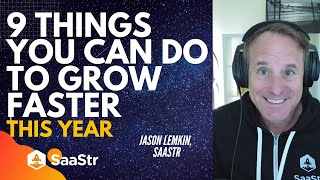
Jason Lemkin outlines nine growth layers SaaS founders can add in 2025: targeted outbound, a second product, customer conferences, an Enterprise edition, partnerships, in-person meetings, customer success for smaller accounts, customer advocacy, and going global. He uses examples like Slack's email struggles and HubSpot's CRM pivot to show how each layer works.
Chapters
Wednesday, we have our backup speaker today, Jason M. Lemkin, CEO and co-founder of SaaStr. We move things around. We've got a, we've got, I don't know what, Amelia, 10 different sessions for SaaStr AI Day next week.
Yeah, next Tuesday. Yep, next Tuesday starting at 8 AM Pacific. Yeah, we've got 10, probably 10 speakers, 6 different sessions. We just added another one. So yeah, full day of content.
Full day of content on AI and SaaS. We had the ex-head of marketing from Cohere, I think gonna do it today, moved to AI Day to be more—
AI Day.
So if you haven't signed up, it's free, it's digital. Jump into a session or two. Um, what's the URL, Amelia? sasterai-day2025.net.edu? What's the URL?
Just sasterai-day.com.
sasterai-day.com. Any caps or— nope, just sasterai-day.com. Okay, next week. So I— yeah, what I thought I would do today, and, and I'll go through this calmly but as expediently as possible is some— what seems like some pretty basic stuff. But this is where I find, especially in the beginning of the year, this is what separates the folks that are going to have a great year versus those that are going to have a mid-year. And it's if you're adding a layer, if you're adding a layer, if you're really not only doing everything you had to do last year, which was hard enough, not only do you have to hit the plan and make the hires and make your 100,000, 10,000 customers happy. Not only do you have to drive up NRR and drive down churn and solve those 82 feature gaps and build that integration, but you got to add a layer if you really want to do it. And the best teams, the most agile teams, the ones that are killing it, are doing this. And so all this stuff's going to be pretty basic. I'm going to go through, I think, 9 layers that you can add to your business that always work, always work, 9 things. And, but people talk about this, they read about it, they LinkedIn post about it, but they don't get it done. And so it's gonna be basic. And my hope is that we go through these 9 and that you just pick one. You pick one of these 9. I sure hope it's 9 cuz I'm saying 9. Let me flip through. Hold on. Uh, woo, it's 9. I sure hope you pick one of these 9 to do now. Pick it in January, get it going so that you can add a layer. You can add more if you're growing. If you're gonna go from 10 to 14 this year, add a layer to get, add 1 or 2 more. 10 to 16 versus 10 to 14 is not only a big deal this year, but think about next year when that layer goes from 2 to 6. Okay, it's your future of growth. So again, some basic stuff, but I'm going to go through it. And so just when you hear it and think about it, maybe you'll pick one of these and say, yeah, you know, I know we've been talking about that, but it's, it's time to do it. It's time to get off the can and do it. And there's a little tweet I did to tee this up related to it the other day. So a lot of founders, I have this conversation today. I'm like, why don't you, why don't you do this? Why don't you have, why don't you do outbound? Why don't you do events? Why don't you do webinars? Why don't you go meet your customers in person? Why don't you have a business development team? Why don't you have an enterprise edition? And a lot of times, sometimes they're, I say this to folks that are struggling, but more often than not, I say this to folks that are doing pretty well and they're like, well, we're doing great. You know, we went from 4 to 8 last year. That's pretty good. But what if it was 10? Draw that curve out, that compounding, because this stuff always works. And so I'm going to go through it. And again, some of this will seem basic, but I want to dig a little bit between the surface. And the number one is like a classic theme for SaaStr for years. But literally today, I know, I know we're overwhelmed with emails. I know almost none of us believe most outbound SDR AIs work. I know we get the dumbest outbound emails. Literally, I put one up on Twitter the other day that I got from Salesforce. The worst outbound email I ever got asking me if I wanted to use Slack in all caps. Well, hello, we've been a paying customer for half a decade. This was the worst email from a $300 billion— the largest SaaS company in the world couldn't even get their outbound right. Literally the worst thing I ever worked. It linked to a video called a Slack number one video. It was copyright 2004 and it asked me if I wanted to learn about Slack. I mean, literally, Even in our little team, we must have sent 500,000 slacks over the years and we pay every month. Like, it's pretty bad. So of course that doesn't work. Of course crummy outbound doesn't work. But I talk to so many founders that say it doesn't work. It doesn't work. But usually they're doing a bad job of it. Literally, you know, if your product is truly valuable, if it's a game changer and you email the world's best email to the buyer, assuming that this is a market that uses email, They're going to look at that email if it solves my problem. What's your— think about it. What's your number one problem that you solve for your customers? Write the world's best email telling them how you're going to solve that problem. And it's funny, I'll give you an example. I think the other day we had— I'm an investor in a company called Mango Mint, which is SaaS for spas and salons. And we had the VP of sales on and she's great. Go watch this one. It was one of the great ones. It was 10 things that are a little bit different in vertical SaaS. And one of the interesting things is when she started, she was the first sales professional in Mango Mint. Now they're coming up on $20 million. She was the first. She'd actually owned her own spa, so she knew the vertical when she came in. She said, I'll do sales, I'll work for you for free for 6 months. What a dream employee, right? And then she did it. And, you know, the first year no one had heard of the company, so it was all outbound. She was walking into spas and salons and said, let me— the software is so good, I joined the company, right? I love this, this, this thing so much. I left. I'm leaving my spa to be the unpaid head of sales. And literally you know, walked in up and down the streets selling the software. Today the brand's big enough that at $20 million, the model's 100% inbound, 100% inbound. They can grow 100%. Great. And then I was talking with the CEO, it was great last year, and I'm like, that's great. You have a very efficient engine. You're not burning a lot. It's all inbound. But based on all the other vertical SaaS companies I've worked with, I find it hard to believe that outbound won't work. And it doesn't have to be perfect. Like if you're already growing 100% from inbound, don't you wanna grow 110, 120%? It doesn't have to be perfect. And also if your core engine is working, the other, the other thing the CEO was concerned about, Daniel, who I love, was that it was gonna be more expensive, right? Because they are, they're fairly efficient. I'm like, it's okay if 100% of your, if you're inbound, you go profitable on the customer in 5 months and you're outbound, it takes 12 months. It's blended. It doesn't matter as long as you break even on a new layer. As long as you break even on a new initiative, it's worth it. As long as your core is efficient, not every marketing campaign has to have perfect ROI. Not every sales motion has to be profitable instantly. It just has to average out to something that's decent. So anyhow, we did it. We added an outbound team at Mango Minute within 60 days. It immediately worked. Uh, Marshall, you can watch her video. She only targeted the high-value prospects. She only targeted the right ones. They weren't— it wasn't random. It wasn't that awful email I just described about whether I'd like to Try Slack, which I've been using for a decade. No, it was very targeted, very specific, a subset of lists. It was not to make or break the company, was to add a layer. It worked magically. I have never seen this work. I have never seen creating a list of 10, 100, 500 top prospects slowing it down and writing the perfect email about how you're gonna solve the problem. Okay? I'll just give you a silly example. Like, I mean, I, we get so much, I mean, yesterday there's a vendor we've been using to manage ticket sales for our events for a decade. It completely broke yesterday. Completely broke. Okay. Imagine we got this email that said, listen, we see the problem. We notice you can't do ticket sales. We know you have to sell 4 to 5 million of tickets this year to keep the lights on. We can solve this problem, Amelia. We can solve it today. Here's how we solve it. Here's a demo. Um, we're 10 times better and 5 times simpler than your existing investor, and we'll do all the migration for you tonight. You don't have to do anything. You'll turn it on tomorrow and all your problems will be solved. Amelia, would you take that meeting? Amelia? Heartbeat. Now, if the email said in all caps, new ticket software company, uh, do you have this 1 hour next week to meet? Like I got from the Slack SDR. I mean, there's just no chance, right? That's just an extreme example. That was our problem of the week. We have a lot of them hit that one. And, um, you know, I remember. I'll give you just another example. I didn't know anything about outbound when I started. We had one SDR back in the day, Sam Blond, who you all know, then went on to be CEO of Brexenmore. He was our, he was our SDR. I was learning. I was good at doing big deal outbound, not small stuff. But then I did an event with a big public SaaS company called SuccessFactors. It's part of SAP, a $5 billion company. And I, I'm embarrassed to say I'd never met our, our user, our buyer. I'm like, how did SuccessFactors, this big $5 billion company, start using us? When we were at a couple million in revenue, when I was on a panel with him, he's like, well, it was the end of the quarter. I couldn't get the damn contract signed. I got an email from someone on your team and I signed up that day. It was the right time to solve his problem. So just do this. Start slow. Pick fewer names. Prove it out. Pick 10 names. As founders, rewrite the emails yourself. You know this works. You know this works. It's just crummy. Crummy outbound doesn't work today. We're just flooded. And it works even worse. Not only did we all get overwhelmed with cadences. But we— but AI is making it worse. We're getting 10 times more cadences everywhere. So the crummy outbound is going to work worse and worse. But the best outbound works. Add it. Add it. Worked for Mango Man. Worked for me. It's going to work for you. Okay. This one is my passion topic. You got to add a second core product. If you're at it, listen, if you're watching, if you're here in the room or you're listening or watching and you're at $500,000 of revenue, don't add a second core product. It's a little early at $500,000. But I think what I've learned across all the companies I've invested in, all the founders I work with. This is so hard, but everyone regrets not going multi-product earlier. Everyone regrets not going multi-product earlier. I was in Europe when we were at SaaStr Europe in London. I was backstage with the founder I knew wasn't speaking but happened to be there. There he was at $100 million and kind of despondent because growth had slowed to the teens. At $100 million, growth had slowed to the teens. And I'm like, what's, what's wrong? It's like, I just, I just wish I'd just done this earlier. It's almost too late. It's too late when growth had slowed to the teens at $100 million to start now, to start now, right? And, you know, you're at $100— you're even if you're at $30 million, you launch a second product in the first year, it does $300K. It's almost too late to get the momentum in the company, right? So this is my new challenge, is that before you get to $10 million in revenue, whether wherever that is, at least launch a second product unless it doesn't make sense. Look, Canva didn't need to do it. Stripe didn't need to do it. There are exceptions. If your TAM is so massive that you are just being pulled so quickly into the market, of course, don't get distracted because fewer things are more distracting than building a second core product. How you gonna sell it? How you gonna market it? How you gonna tell customers about it? How you gonna distribute? It is so hard. But I just find this is the number one regret, that founders waited too late and they see just growth stall later and it's like too late. It's almost too late. They can't change the team DNA. It's too complicated. They need too many people just to ship the product they have. So do it, whatever it is, brute force through the pain and do it earlier. And the one other thing I'll say is you're thinking about a second core product is that make sure it really is a second core product. I see too many founders pretend a feature is a core product. Okay. We've added single sign-on. We've added this integration with HubSpot. We've added whatever. Those are great. And if you can monetize it, great. If you can charge another $5 a month, $10 a month, $10,000 a year, it's great. But it's a feature. Be honest. A core product, a second core product has to unlock much, much, much more budget for a discrete reason than the first. You know what a second product is. Don't pretend. I see too many pretend second products. And they will, they can give you more money, but they're really just features. At the end of the day, you're not unlocking more TAM if it's just more features on top of the same product. And then the last point on this, and this is the craziest one, as you're thinking through this, should you, should your second product be to the same buyer or a totally different one? This is a complex question. I've asked so many folks from this. I asked, I asked Brian and Dharmesh from HubSpot. I asked the CEO of Samsara when we did our, our deep dive with him. Just recently. Should it be the same buyer or different? This is complicated. If your second product's to the exact same buyer, it's pretty easy because you can get them. If, as long as they actually like you and you actually still do customer success, you could just get them on the phone. You know, hey, hey, hey, Amelia, I know you buy our event production software. You wanna take a look at our registration software. If she likes the vendor, she will take the meeting 9 times outta 10. But Amelia's budget's still fixed. Amelia's budget is still fixed. If you go crazy and sell instead to me instead of Amelia, I have my own budget. And, you know, when Brian and Dharmesh talked about the— it was crazy that they launched CRM at HubSpot back in the day because their core buyer was a marketer, right? The easiest thing would be to sell more marketing products to a marketer, which they did. They added marketing automation, other things. But, you know, back in 2013, they made a big bet on CRM, which is now as bigger, bigger than marketing and growing faster. But it was crazy because they had to get CROs to buy HubSpot who, who had no interest. HubSpot was a marketer's tool. Interested back when they started CRM. No one was interested. So if you watch the interviews I've done with them, they're like, yeah, it is crazy. It is harder. It took us years to get CRM off the ground. Literally, it was a completely free product for years. I don't know the answer here. I just know if you can magically get to a different buyer, you're gonna unlock more budget. This is, this is something to think about. So even though everyone's gonna say go to the same buyer, your board, your VCs especially, realize if you could magically get your second product to a different buyer, just mathematically, you're gonna unlock a lot more budget. And look at HubSpot. They now sell more CRM than marketing. It would be a company, a fraction of its $40 billion size if it was just marketing, selling to marketers. Okay. So that's pretty darn strategic. Second product. If I really was your, was your coach, I, I might whisper this in your ear to an annoying level every week. How are we thinking about second product? How are we thinking about second product? Because I know it's hard. Okay. This one's easy. This one's easy. But people still don't do it. Okay. This is the easiest. If you have someone in marketing and they're not lazy, and I know I don't wanna get in trouble, but so many folks just don't wanna do things that require leaving the house today. But do a customer conference. This works so well. And this is the key magic. Invite your prospects, invite everyone in your funnel, and you're like, oh my God, I don't wanna do a Dreamforce or an inbound or a SaaS or annual or any of this stuff. Of, of course you don't. Don't do that. You wanna know how much it costs it to do SaaStr Annual? It costs $5 million unburdened. It costs close to $8 million fully burdened. Okay? That's a lot for most— anyone wants to spend $8 million on their customer conference, raise your hand in the Zoom. Of course you don't. But honestly, you don't have to do any of that. If, as long as you have any size, rent a ballroom for an afternoon, for an afternoon, for an afternoon. And It's gonna cost you almost nothing at a nice hotel near wherever you live, near your office if you have one, a ballroom. Okay? Do it for half a day. Use the AV they have, use whatever awful coffee and food and beverage they have at the event, and do it for half a day and invite all your top customers and all your top prospects. It's magical. First of all, your top customers will deeply enjoy meeting with you in person. That always works. This is the cheat code. To meeting as many of your customers in person as possible, not having to travel there. Have a little event and bring them, have them come. Two, if you haven't done this before, and I'm sure many of you have, but you haven't, my goodness. Um, you, when you put the customers and prospects, your potential customers, prospects in the room, they can't help. Your customers will just sell your prospects for you. Even if they're critical, like the only, like your, the customers that are gonna leave you aren't gonna show up to your customer event. Even if they're a little grouchy, it's only your most engaged customers that are gonna drive Uber or fly to your customer event. And when they see someone from a prospect and they introduce themselves, oh wow, you're a, you're a Canva. Uh, have you, are you, are you, how long have you been a customer? Oh, we're not a customer yet. We're just thinking about using your app. They're gonna immediately sell you. Look, it's not perfect. It took us 90 days to get going, but it's magical today. That's why I'm here. They're gonna sell them for you. This is, this is your, the magical extension of your sales team. So do it this year. This is my advice. It's the start of the year. Pick a date. Pick a ballroom. And honestly, if it seems overwhelming, do a half-day event with like 3 pieces of content, some coffee and some kind of meal. Okay. You can probably do this for $20,000 or $30,000. If you have to do it scrappy, you could probably do it for $5,000, but it might have to be at like the neighborhood bar. That's okay. It's not quite as— it's not— maybe it doesn't— it's not quite as slick. You could, but you could do this for $20,000 or $30,000. And if you walk out of this meet with this, customer conference with a couple, couple 5K or I mean 5-figure, 6-figure deals. It's magical. It's magical. Okay, so do it this year. You can do it. Just do it. 4, this one is, is maybe more obvious these days than it used to be. But I wanna talk about it anyway. The, what everyone's doing now is raising prices. I mean, it's awful, right? Literally, we have a vendor that we used to pay $300 a month for, then we paid $1,000 a month for, and then on January, they increased the price from $1,000 a month to $1,200. Didn't even We didn't even get an email. We didn't even get an email. They were raising prices. They just increased 20%. This is what everyone's doing. Raising prices and raising prices. Raising prices. Hooray. More power to you. But that's not at— that's not earning it. Raising prices is not earning it. You know what's earning it? Adding a new edition with more value. Add an Enterprise Edition. It will force you to go upmarket. It will force you to build features. But here's the thing. If you're not seeing this, and I'm sure many of you are seeing this, All the growth in cloud budget, in B2B budget is for AI. Some of it, sure, for, for, for AI native platforms, some of it's for other things. But all this AI budget is basically in the enterprise. Okay? That's where you see the growth. It's all enterprise. And if you talk to folks that are selling, that have an AI offering and they're selling, you know, in a B2B platform and they're selling to small customers, medium customers, and large customers, you're gonna hear the same thing from all of them. Our AI product's great, but only our top 20, 30% customers, largest ones, can really use it. They really have the team to train the model, to deploy the agents, to tune the system. Okay? The smallest customers can use cool things, can use automated website builders, automated marketing automation. But there's the budget, the real budgets in the enterprise. So you— it always works to add more enterprise edition, but today it is a way to capture this AI budget because that's where the money is. That's where the money is. And literally, I was having this conversation just last week with a startup I invested in that just crossed $30 million in revenue, and they're almost fighting with each other. The CRO wanted to go much more upmarket because he lost a couple of six-figure deals. The CTO wanted to fix the— how— wanted to get the AI working better for the SMBs. The head of product felt like he was being pulled in 11 different directions. I can't do all these things. It's complicated because the more— I mean, most of you know this, but the more enterprise you go, the more crap you have to build. And they were arguing over security and identity and analytics and dashboards and all the stuff you have to do in the enterprise you don't have to do with SMBs. And those are tough conversations, but almost always pays off. So add more— at least think about taking this seriously, adding more Enterprise Edition this year for no other reason than that's where the money is in AI. Okay. Point 5. This is a niche one, but this is a mistake I made and I really see like 80 to 90% of founders make, which is they don't staff partnerships right. They don't staff channels right. And I say add a real VP or maybe it's head or director of business development or whatever, but way too many founders hack some sort of partnership, right? They get to know, they, they get on the Shopify platform, they get on HubSpot, they get on Salesforce, they get something going with Stripe or OpenAI or whoever it is, and it's great and there's some synergy and so there's some lead sharing or there's something great or product access. And then the CEO thinks because she or he has gotten to know Bob or Brian at Stripe that that relationship exists, but it doesn't because there's 10 or 20 or 30 or 40 people at Stripe working on this product line and the CEO spends an hour a quarter on it, checking in with their contact. And the relationship is very narrow and very thin. And you know what happens? Your competitor, they're checking in with the 40 people at Stripe that work on this product, the 50 people at HubSpot that work on it, and they box you out. They box you out even though the— your stakeholder, even at the top, the CEO, the SVP likes you, knows you. The 40 people that work for her don't, don't. So I see this way too often. We hack it. As soon as you have one or two big partners, one or two big channels, one or two big whatevers, you need a full-time person managing that. And ultimately, as it scales, a full-time team. You cannot do partnerships and business development on the side. You can get it off the ground on the side. That is a superpower of founders. You get it off the ground, but you can't manage it over time. And the ones that do are gonna box you out. Okay? Some of these, the, the product stuff's pretty strategic. This, this is one of the ones that's pretty darn tactical. Just be honest at the start of the year. Are you visiting enough customers in person? 90% of you aren't. I know you're busy. I know you've got other obligations. I know it's tiring. I know it's this. You're not. Ask yourself as not as a head of sales, as a CEO, are you meeting 3 to 4 customers a month in person? This should be your budget. Be honest to start. It could be getting on the road. It could be flying there. It could be Ubering there. It could be over steak dinners. It might— you know, you can get— let your customer conference count as one that month. You can meet 40 at your customer conference. You know, where some folks are making fun of Davos, which is this big tech gathering in Switzerland because it's the same time as the inauguration. A lot of the— a lot of the meetings aren't full. But Marc Benioff has been going for 15 years. And, you know, I didn't understand why for a while. He's like, I sit at the top of this one. He said, Mark said, I sit at the top of this one staircase and I just meet 100 customers in person. It's the most efficient thing you can do to meet his like multimillion-dollar customers. He flies, he, he, he fuels up the jet in Hawaii and he flies to meet them too. But that's one-off. But he can go to Switzerland and meet 100 of them, okay? In person. He's still meeting them in person. It's critical to him. That's why he's in Switzerland. Okay? So first of all, be honest. Are you meeting enough a month? I know you're not. Force yourself to. And then second, they don't want to meet with me, Jason. They don't want to meet with me. I mean, we get so many vendors that reach out to us, even on our little team, and it drives a million nuts. We don't want to meet with them. Like, all they want to do is sell us crap. And they certainly never want to hear about the complaints we have about how the product went down yesterday. They just want to sell us crap. Okay, so you're right. If your meeting is just, I want to sell you crap, you may or may not get the meeting. But, and I know many of you know this, but many of you have never done this. You know what always works? A roadmap presentation. It always works. Tell your top customers, and this works for prospects too, hey, I, I'm coming to Dallas. I'd love to just show you what we're building over this year. I'd love to show you and get your feedback. I wanna show you what we're building and get your feedback. Why does this always work? Because your product is most likely pretty darn important to your customers. And in fact, for many of you, your product is actually more important to your customers than you realize. Like, you, you think this is just one deal. Your sales team closes one deal, they move on to the next one. You don't realize the amount of business process change that happens at your customer. We don't realize how important it, like, you know, if you have a more important product, as you scale, as you get bigger, there will be whole teams that only work on your product. We forget how important it is. Um, and I remember back in the day, I went to visit Dell, which was like a $100,000 customer for us, but I'm like, we're not that important to Dell. I mean, I, I mean, I, I don't know. And I went, And like, we're doing a— we've showed up to Round Rock in Texas for a road trip. There were 40 people in the room, 40 people. They got everyone together to meet the team, these— this EchoSign, Adobe Sign team. And then I just started doing them forever. They always worked, whether it's 2 or 40, whatever. But, um, that people don't always want to take the time out of their day, um, to, to meet, especially if they're a hybrid, especially if they're not in the office all the time, to be sold. But if they care, they wanna see the roadmap. They wanna be stakehold— they are stakeholders in your future. They wanna be heard. And it's great as founders because unlike a lot of folks in your sales team, you can actually answer the question. You know, when's the HubSpot integration coming? I don't, you know, some poor guy in sales doesn't know. You as a founder, you know. Thank you. It's coming in December. Thank you. I know we want it. It's high on the list. I can't make any promises, but I'm adding it to the notes. You send some notes after the meeting. You send a summary of what everybody wants at the meeting. You don't overpromise. Magical, magical. It's the best excuse to go visit your customers in person. Okay, just a couple more and then we'll open it up to questions on this or anything like this. Here's one, boy. I know for folks of you that follow Saastr, you'll know this is my passion topic is sort of the dismantling of customer success that so many folks are either getting rid of their CS departments or worse, rolling it into sales. I know it's a controversial topic, but I find anytime customer success is part of sales, customer success is just weaponized to do upsell. It's literally just weaponized to do upsell. I just wrote a post recently on SaaStr. We have $1,000, we're, we're, we're a customer, we're paying $1,000 a month. It actually turns out to be $13 a month for a product we've churned. They don't even know it yet because they've never met with us. Okay, this is happening all the time. So listen, I, there, there's a debate here about what customer success should do, and who it should report to. I'm making a more simple suggestion rather than cut customer success for your smallest customers. Add it, add it. We just lo— we just left a thousand. We're a thousand dollar a month customer for this company doing $500 million a year. Okay. But that's still $12,000, $15,000 a year that no one ever followed up with us. Okay, I'm pretty sure they cut their customer success team to the absolute bare minimum the last 2 years to get super profitable because they're at $500 million revenue. But listen, if they lost us at $15 and they lost another $20, that's $300,000. You can't afford to have someone talk to those customers. And we've been a customer of this one vendor for 8 years. 8 years. So do the math, right? Yes, you still probably have to have $1.5 million, even $2 million of revenue per CSM. But man, don't send the small customers all to your wiki and, and, and your mediocre, AI-only tool. It doesn't work. Even the best AI tools, and I've invested in several, the honest truth is if you really talk to the best AI vendors at scale, even the best AI support tools, and this isn't customer success, it's just support. The best ones, if they're honest, can resolve 30, maybe 40% of issues, right?
Maybe.
If there's no human You're gonna, it's, you're gonna have a very suboptimal experience. So this is my challenge. I haven't seen anybody say add it for your smallest customers, but do the math. What if the churn went down 5% for your smallest customers? It almost always pays for itself. Okay, last two. And then we'll open it up. This is a nuanced one. This could be a whole session. But, uh, as you're planning out your marketing spend, your marketing strategies, your marketing goals for the year, ask yourself, how much customer marketing are you doing? What percent of your money that you're spending in marketing and what percent of your time are going to marketing to your existing base? Now, if you talk to some of the best CMOs at scale, right? And I've asked them many times over the years, they'll typically tell you 15%, 10%. Usually not more than 20% because of the pressures to deliver for sales, but they're spending double digits of their budget on retention, on supporting upsell, on supporting cross-sell, on supporting NPS and NRR, on doing special— is all your content or all your webinars just for prospects? How often do you do a webinar where the only goal is to add more value for your customers? Okay. And a lot of this, you know, that this is where one reason, you know, customer events and all this that we talked about earlier come in. Sometimes comes out of this budget for customer marketing, right? When your event is as much about making your existing customers happy as bringing them and your prospects together. But what I find is that, for most folks, when I ask them this question, it's 0%. 0% of their marketing budget is going to their existing base. You know, that can't be right. You gotta arm your advocates. So think about how you can take 10% of the, at least 10% of the hard and soft costs you're putting into marketing this year to arm your advocates. Okay. Very last one. This is more just a, a challenge. Because I write this up almost all the time in our 5 Interesting Learning series. Just, it's really simple, but I find so many founders are slow here. Slow here. Go global if you can. Go global if you can. 50% of many cloud leaders' revenue is outside of the US. More than 50% of HubSpot's revenue is outside of the US. Almost 50% of Asana's revenue, about 50% of Monday's revenue is outside the US. And, um, I'm just shocked. It, this, this, this can mean a lot of things. At the very earliest, localize your application. Localize your application. If you talk to your CTO or talk to your developer, anyone that's been through this, you're gonna hear that like no one really wants to like fully localize the app. If it, if you didn't start off that way, cuz it's a lot of work. But the longer you wait, the harder it is. Okay? So it's always worth it. Right? And look, folks, sometimes folks can afford to wait here. I read that, you know, Klaviyo, we love Andrew. He was at SaaStr Annual this year. Watch his session. Klaviyo is a vertical marketing for e-commerce. They're at over a billion in revenue. They're, they, I think they only just recently got their application fully localized. More power to them. But I find you just win deals. You just win deals. And look, there are, if you're in a heavily regulated industry, if you're in parts of fintech, insurance, healthcare, and you can't cross borders for now, you can't, right? You know, I would, we, we talked with at SaaStr Annual this year, we talked with Rene Lecerte, CEO of Bill. They're at a billion-something ARR. They're doing complex billing and financials and, and payment processing. They're just getting going, you know, just getting going on their international journey. But I find, here's my point, I find most classic B2B apps, APIs, B2B apps, and others that can flow across borders really start to pretty early in this single-digit millions, single-digit millions. And here's a little picture of me. I invest, I was the first investor in a company called RevenueCat, um, that now about 40% of all mobile apps that have subscriptions use their API to manage subscriptions. Look, this is Japan, you know, here's, here's Here's me and the VP of marketing in the upper right having fun. But they're all over this, right? They're all over this and it just works. And when you go global and the competition doesn't, you can just start winning deals. And this doesn't always mean opening an office and having 100 sales folks in all these places. RevenueCat has, you know, one person in Japan, you know, coming up on $50 million in revenue. They have one person, but localizing it, going all in, supporting that audience is huge. So localize early, if nothing else, that works. Showing up helps, right? And maybe just two other tips and then we will break. You know, we did at SaaS2Europe 2 years ago, we had the CEO of Braze there, which is great. Braze is, I think, coming up on a billion in ARR. And we talked about going global because he was in London meeting with their, I think he had hundreds of folks in their UK office even 2 years ago at Braze. And I asked him, you know, how it went. And he said, look, when we were in the beginning of Braze, we were selling just to cool tech companies and we could do it over Zoom. We could do it over the internet. They didn't, they didn't care whether we showed up in person. They didn't wanna meet us in person in their days at Braze. He says, and then we started to sell to folks like LVMH and folks in fashion and industry and in traditional commerce. And when we didn't show up in person, we, we lost 100% of those deals. So another way to think about it is localize early, show up in person, and then just realize if you're having success in certain segments selling over Zoom but you're not showing up in person, what if you did show up in person? Because a lot of the world outside of tech wants you to show up in person. And then my last little tip beyond the meetups, like with Revenue Cat here, if you have even $1 million in a geo outside your home geo or North America and it's growing quickly, just hire a full-time person there you trust to get it to $2 million. To 4 to 8 to 16. People wait until 10, 20, 30 million in a geo to hire a leader there. No, just like centralized customer success, centralized sales, centralized one of the two in that person and have someone you trust on the ground. Never, never seem to be ROI negative. Okay, so these are my 9 ideas. I could probably come up with, with quite a few others, but to kind of add a layer this year and happy to answer, Amelia, if we have any questions from folks on this or anything even vaguely related.
Yep, we've got a few questions in the chat. So let's see, let's go to Michael. I think you had a few questions first. Let me bring you up. Can you?
It was about the Customer Advisory Board. You mentioned customer meeting, but the Set up a cab.
Yep. Always works. Yeah, always works. What's the question? Always. It's a good— it's a good tip. I don't— I think the customer— so I don't mean to interrupt. Let me maybe answer, then you could ask a quick follow-up. I think we— customer advisory board always works. But I will say in my experience, customer advisory boards are overrated and customer events are underrated. Okay. What do I mean is People put so much energy into trying to get Denise from Snowflake on their customer advisory board. And look, it looks great and all that, but the amount of energy it takes, uh, until you're at scale to assemble this is usually high, right? And the amount of benefits you get are real but modest. It's a lot of energy for a modest game, but do it, right? Get 10 of your cut top customers on your customer advisory board. It decreases the odds they churn. It creates more engagement. It's great. But I actually don't think it's a game changer in the same way as instead of spending 6 months assembling this cab for 5 people, get 500 to come to the Hilton Bayview down the street, right? It's just the cab is— it's great, but it's also an obvious lazy thing to do. And so I just don't want to over-index on it, but do it, right?
Yeah, I noticed that changing the names of of whatever you're trying to do to fit that ICP and persona.
Yeah.
You might want to call it Lunch and Learn for one and, uh, TEDx Talks for another. And then you might want to call it a mastermind or masterclass, but just realize the topics and the name of it needs to resonate with the target audience. And don't make it so general, make it specific to that group so they actually show up.
Yeah, for sure. For sure. So I do the customer advisory board. It's just one of these things like, like You know, just make sure that if it takes a lot of energy, it's, it's above the line because sometimes, sometimes that's something you could defer to later in the year. But I'd rather right now be getting 100 of my customers and prospects together and then working on my advisory board in Q3. But anyhow, thanks for the question.
Thanks for putting together the event, SaaSsters event. I'm looking forward to coming.
Awesome.
Cool.
Let me— sorry, go to the next one.
Okay.
You've got a couple of questions from Ryan.
Okay.
Here. I got a few Ryan's. Okay. A lot of people here. Ryan, do you want to ask your question?
Yeah, sorry. We're trying to figure out— I liked what you said about adding another product, and I definitely see more of a hub future in what we're trying to build. So I got that path, but we definitely offer the customer a lot of features. So I think I'm starting to learn the difference, but I'm trying to understand if we need another product, if our core product gets diversified into two different markets. And so we build subject matter, digital subject matter experts for large technical product companies that are losing their technical knowledge base inside the company. And we build those same things for their distributors and we build those same things for their customers, the Teslas and the Apples of the world.
Yep.
Each of those is a different version of that core product. And it's a— they have their own TAM, they have their own revenue base, like it's its own market to go after differently than the vendor, differently than the distributor, differently than the OEM. So do we need a second product was my question, or is that enough?
Look, I don't know. And maybe some of the things you're saying are beyond the scope of where my head is just at the moment, or I can give you a more lucid answer. Maybe not, right? I'm not saying you truly do. I just am struggling. I will come up with this number. I'll write a post on it, but I'm confident at least 90% of the B2B companies going public have been multi-product for years now, for years, for years. And I, and the more, and I think what we've learned is the more vertical SaaS you are, actually the more important it is to go earlier because it's often hard to add enough value to an industry, if you're not really— it's ERP. If you're not doing scheduling and payroll and payments and all the other stuff in horizontal, maybe you can wait longer because people will stitch together 6 or 8 applications and get value. So I think we've learned all of that. Um, I don't know, but I think what you have— and all I can tell, and this is not a perfect answer to you— as founders, I think we can smell decay before anyone else can see it. We can smell decay in growth. We can set— even though our number 2 person that can smell it is our, usually our head of sales, right? They can smell it, but they're, they're so sniffy that they oversmell it. Like, they lose a deal and all of a sudden, oh my God, like, things are falling apart. The passionate ones are, right? So, so their, their spider sense is not as good, but not as keen as ours. We can see it in the submetrics. We can see it when a little corner of our product isn't being used as much as possible. We can see it when the last time I met with 3 customers, it was that much harder. We can see it when, even though no one else can tell, the competition is slowly pulling ahead. Not like massively, but we can see that, wow, last year I felt like we were kind of equal and now they're like a smidge ahead. So we, our spider senses, and I just think as soon as your spider sense says we're maxing out our market, slow it down and figure out if you need a second product. And that's right the time when your team won't wanna build it because it's, everything's getting harder when it slows down, right? It, as odd as it is, in some ways the easiest time to build a second product is when things are blowing up and accelerating. There's more resources and there's more momentum. That's sort of Parker Conrad's point of this, of his, his, his thing to build 50 at the same time, right? With a lot of momentum. So I don't know. But what I do know is be like, don't— I see too many founders when they're reaching just a little bit of TAM exhaustion, start doing instead of, instead of addressing it, they start doing smaller stuff. Like, for example, if the market's all SMB and it's not very enterprise, they start going more enterprise. But maybe it's just a little bit of the market, right? If you're Toast or something, there aren't a lot of 10,000 restaurant chains. You're serving small, small pieces, right? By the same token, Salesforce agonizes every year or two about wanting to go SMB, but there's no money for Salesforce and SMBs. It's all enterprise, right? So when you get a little desperate, you start doing things that aren't, that aren't bigger than what we're doing. They're smaller. You put all this energy into little things. And the real point of the second product is ideally, ideally is to create— is that the second product will be even bigger than the first one. And if you— we did this old one, it's where it— but session with Peter Gassner, who's the CEO of Veeva, which is a pharma-specific CRM and more, much more today. And we did an OG SaaStr annual session with him back in 2017, and we were all learning about second products then. And I asked him what the number one learning was, and he's like, the second product has to be bigger than the first. And they, they owned kind of this, this pharma for CRM and actually back then were built on top of Salesforce's platform. And then they launched this thing called Vault just to manage and store your pharma data. Right. And I don't know, within 4 or 5 years we wrote it up, it was bigger than the core CRM. He's like, if you're not doing that, it's not worth your time. So he was already thinking about these issues back then. If you look at the, we've done a bunch of great sessions. We had a great one with the, also the chief product officer of Samsara where he talked about how he built 5 products in time. Right. I don't know, but, I, I will, we can go on to the next question. You gotta use your spider sense and not, if you're moving, here's, here's what I'm gonna say. If you're starting to think about doing things that are smaller, that's, you, you gotta build a second product. I see this way too often. We're gonna do, we're gonna do, you know, if you, for example, I've gotten to know a lot of folks in the Shopify ecosystem. Shopify is 95% of the core piece. Like there are other tools. And what I see a lot of folks in the Shopify ecosystem is talking about building on BigCommerce. If you look at BigCommerce, It's like 3% of the market, right? So as soon as I hear someone in the Shopify ecosystem saying to grow, they're gonna like, more power to it. BigCommerce is a good company, but it's not gonna move the needle, is it? If it's 3% of the market. So appreciate it. That's, that's my rambling. Spider sense and spider sense when you're doing small stuff. Your job as founders, as hard as it is, is to do bigger and bigger stuff, right? Or it just doesn't scale. So thanks for the question. Thank you.
Cool. Okay, we've got one more question and then we'll see what we have time for after that. Okay. Navneet, I'm gonna bring you up. Sorry if I said your name wrong.
Oh, you got it right.
Thanks.
Okay. Uh, huge fan. So, uh, I'm the co-founder of BakeStreet. We are vertical SaaS for bakeries, strong presence in East Coast. The question I have is, uh, how many employees? Uh, very lean team.
Okay.
Yeah.
Um, everything mostly founder-led. Got it. The question is, we tried and experimented couple of marketing channels.
Yeah.
And we identified walk-in is working great for us. Okay. We are, we have SMBs customers. Now you, you mentioned adding a layer. We have been thinking about outbound cold calling. Now we know that walk-in is working great for us. The conversion is pretty good. Would you still recommend exploring other channels for marketing at early stage?
Well, okay. So, um, right now walk-in's working for you, going into the office, engaging with the bakeries, right? If you look at the deep dive we did with the CRO of Slice, Lauren Padelford, it's great. Go watch that one if you haven't seen it. Slice is at $100 million. There's, there's still number one channel is walking into pizzerias.
Yes.
Okay. Now we just talked about Mango Mint. You can see their CRO too from a week or two ago. They don't do it anymore, right? It's all digital because that works for them. So I don't know, like vertical SaaS is very different. Like we had the CRO of Owner for restaurants, like restaurants don't even read email. Okay. So it's a mix. Like Kyle, if you look at the one we do with Kyle, the CRO of Owner, they do, they do digital, they do IRL, they do walk-ins, they do texting. But they don't do a lot of email because no one in the restaurant is sitting there in front of their iMac reading email. They're working, right? So it's the fact that Slice at north of $100 million, they're still doing walk-ins is probably telling, right? So I'm just saying what this is like. It's, it's not automatic. What I would say at your size is spend 80% of your— even if it's slow, spend 80% of your time on what's working. Do the experiments. But even if the walk-in is slow, at least it's working, right? At least it's working. So I don't want— the worst thing that can happen at your stage is taking your eye off the ball. Too much shiny penny, too much frustration. Gosh, you know, guys, we're only, we're only getting 4 new bakeries a month. We gotta do something new. But that 4 becomes 8 and then 16 and 32 and 64 and 128. And if anything in the early stages, I'll summarize, if anything in the earlier stages is working, always double down on it. And if it feels slow, You're, you're misunderstanding it. You'll just get better and better at it because most things don't work when you're tiny. Most things just don't. No one's heard of you. You don't have an epic brand. Yes. So if it works at all, do more of it. So thanks for the question.
Okay.
Thanks.
Yep.
Cool. Uh, okay. I think that's all questions we have for now.
Okay. Good enough. Hopefully it was helpful.
Yeah.
Cool. All right. Well, we can wrap for today then if we don't have any extra questions. If anyone else has a last one, put it in before we run outta time. Otherwise we will break. And next week, we'll be back for Digital AI Day. And then remember, May 13th to 15th, SAS Triangle 2025. You all have to come. It's required. Thanks, everybody, for the time.
Thanks, everyone. See you next week at AI Day.
More from Jason

Why Your Next Hire Should Report to an AI, Tragedy Apps, and Too Many AI SDRs? | The Agents #004

Our Agents Drove Our Salesforce Bill Up 80%, Marketo Hates Agents, and We Stealth-Churned Off Notion




Managing 20+ AI Agents: Lazy Agents, Our $500K AI Bill, Stealth Churn & the Death of 60% Solutions




