Marketing to Developers : Why Happy is Our Hack with DigitalOcean CMO Carly Brantz
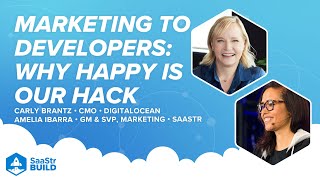
DigitalOcean CMO Carly Brantz explains how to market to developers by centering on their happiness. She built a library of 6,000 tutorials, runs community programs like Hacktoberfest, and acquired content sites like CSS-Tricks. The core idea: happy developers drive business growth.
Chapters
Super excited to be here to talk with all of you about my experiences marketing to developers. At DigitalOcean, we always say that we start with customers and we end with love, and so I'll be talking about how important it is to really delight your customers and why creating happy developers is, like you said, Amelia, our ultimate hack. So throughout the presentation, we'll be talking about these 4 building blocks when thinking about marketing to developers. So the first, and I think the most important, is to provide value to your community. I think there's this myth— I don't think, I know that there's a myth that developers don't like any marketing at all. And I found that they're fine with marketing. I always say a gentle, a more gentle marketing approach, but you really have to give something before you ask for anything in return. The second one is to really prioritize simplicity. So whether that's with your signup or your onboarding process or even within the product itself, simplicity is super important. And then next, you need to stay agile along the journey. Something you might have tested may change over time, or there could be new tools or technology to help you stay fresh, but having this growth mindset and being flexible is really important. And last but— oops— last but certainly not least is really that everything you need, everything you do needs to be with the customer at heart. So if your customers are successful, they'll grow, their growth will in turn help your company growth. And so really everything has to be focused on your customers and their success. So let's see if I can advance slides. Okay, I say it wasn't necessarily intentional, but from the very start of my career, I've been catering to this technical developer audience. I'd say about 10 years ago when I was at SendGrid, that focus really became centered not just on developers and developer marketing, but really how to grow revenue through this end-to-end ownership of the self-serve customer motion. So this is when a prospect navigates navigates through an entire product experience, signs up for your account without ever having to interact with a single person. And so I've really— that's been my primary focus at SendGrid, then at Twilio, and then now today at DigitalOcean. Okay, so industry-wide, it seems like there's some apprehension toward marketing to developers, or at least uncertainty about where to start. From my experience at SendGrid and at DigitalOcean, I'd say one trend is super clear. In order to cultivate your growth, you first have to cultivate happiness. Uh, developer customer happiness can take many forms, but I've outlined a few guiding principles to start with on the following slides.
Yeah, Carly, I love that because I think, um, resistance to just marketing in general is on the rise in today's markets and people shifting and roles. So you've really helped identify with DigitalOcean that happiness is your guys' differentiator. I know you're going to get into how you landed on that, but first, how do you cultivate happiness?
Yeah, I think it is all about providing value. Um, you know, we spend a lot of time at work, and so there needs to be something that delights your customers and makes them happy. We have a whole new brand campaign right now. It's all about happy dev teams. So when developers are happy, they're more creative. They are coming up with the next big ideas. So really figuring out how to be a tool in, rather than just sort of like a task that they have to deal with throughout their day. So at SendGrid, we, it was really in our values. We had what we called the 4 H's. So happy, hungry, humble, and honest. And at DigitalOcean, it's also woven into our values. So we have a value that the community is bigger than just us and that love is at our core. So it's all about showing that love. We are the platform, the cloud that loves you back. And so I think that does make our developers happy. Yeah.
And I know there's a lot of marine life involved. So I'll let you dive into it a little more.
Yeah. See, okay, so like I said, this first one is really, really important. I'm a big believer in the power of marketing to influence growth and revenue, but you have to ensure that it's balanced with providing value to and really investing in your— in our community. So the days of marketing just spending and spending and being a cost center are long gone. And I think now successful teams are experimenting, they're testing, they're iterating so that they can really serve their customers, provide value, and ultimately drive revenue. So when I joined DigitalOcean, I joined in January of 2020. I always say it's an interesting time, um, 2 years into the pandemic now. But, um, I was really blown away by all of the powerful community activities that were driving love and loyalty from developers across the globe. So we have, um, about 6,000 tutorials. They're considered the gold standard in the industry. The community prep provides answers to questions. We have a Q&A that's answered by the community. We have our global startup program Hatch, and we're founder of Hacktoberfest, which is the most popular hackathon in the world. And this kind of developer love and engagement has created an amazing following in the developer community. So our community site is a top learning site for developers. Just about every developer that I talk to, like, oh yeah, whenever I need to learn something or I'm starting on my side project, I always go to DigitalOcean. That's where I go to learn. And like I said, we have about 6,000 tutorials, and that's growing. That's driving over 5 million visitors to the website every month, which is crazy. And I hear all the time from our customers on social media, just how how valued all of this content is. And just this week we announced that DigitalOcean has acquired css-tricks.com. So that's another one of the largest developer education sites in the world. So now CSS-Tricks will be powered by DO, and the site's, um, around 8,000 tutorial articles, reference guides, videos, all of that will continue to be freely available for all developers. So I would say that, you know, part of providing value is meeting your community where they are. And so for developers, our marketing team is really strategic about what platforms and sites we're trying to engage them on. I also think this is really important to keep in mind as you're thinking about testing, is that there are always new places for developers to go. And so you need to find out where they're going. You need to stay on top of what the latest thing. So this means forum sites, YouTube, developer conferences, event platform— not event platforms, but other platforms like Twitch. Our developer relations team currently does these weekly cloud chats on Twitch to run through recent cloud news as well as play games, present demos and tutorials. So this is just an example of you know, really getting into the minds of developers and meeting them where they're at. Okay, so the next piece is all around driving or prioritizing simplicity. I think it's another key to driving that happiness. Let's see. So something I've discovered in marketing to developers specifically is how good they are with doing less. So developers typically come in with a super technical mindset and they want to be able to figure things out themselves. They don't want to call someone in sales or support to help them figure it out. So sometimes losing that human touchpoint might make marketers a little nervous, but I think it's actually a really worthwhile exercise to keep your communications and signup process simple. So the way I think of it is putting it in the developer's shoes. So from the time they have a question, they come to the website, they're trying to navigate through content to learn what they need to through tutorials. They want to be able to figure it out as they go. So instead of, you know, at the awareness phase of the customer journey, instead of just blasting developers with a bunch of digital ads and display ads saying, sign up, sign up. We're serving content saying, hey, this piece of content, this tutorial could be useful for you. Then when they come and they've engaged with our website for learning purposes and we've established that credibility, then we would provide more technical resources and help them through the onboarding and sign-up process. But the whole streamlined process results in a developer that's happier, more satisfied, because they figured out the process for themselves rather than needing to be sort of guided through the whole enrollment process. And then ultimately, in a perfect world, that simple process continues in the product itself. Let's see. Okay, so this is kind of an overwhelming slide, but again, this is just talking about how we think about the content and the value that we provide them throughout the process. So it starts with, you know, a display ad. Once they come to the website, then they're getting more information, but we're looking at each of these touch points so that we can provide value all along the way. Okay, so our third principle is all about staying agile, and marketers have heard a lot about staying agile within the past few years, mostly in, in relation to virtual events and trying to figure out, you know, how to stay on top of trends during the pandemic. But I'd say where agility matters most to developers and prospective customers is really how closely you can follow them on their unique journeys. So we're really concerned with addressing needs of individual developers and SMBs. These are users that the platform is really built for at DigitalOcean. However, these same customers often make it through their journey from a hobbyist or early learners to full-fledged developers to entrepreneurs and startup uh, owners even. So you got to think about providing value and developing tutorials and content for these developers and then meeting them at every step of their journey. And so here are a few examples of companies that we've had to individually cater to along their journey. So everything from companies that are still small teams of about 5 or so where everyone has a hand in managing infrastructure like Batch, to Series A and beyond startups like Kia, and open source projects, nonprofits that have really scaled rapidly due to heightened demand during the pandemic like Big Blue Button. So when you don't ensure that you're staying agile and receptive to how the needs of your customers are changing, you really run the risk of delivering content that is no longer relevant. Meaningful to your core audience. So our last principle is really around centering growth. And I'd say when marketers talk about growth, more often than not, they're looking at metrics like conversion rates, cost per acquisition. And these are definitely important growth metrics to measure, but we also reframe growth at DigitalOcean around our customers' growth. What I like to say is it's sort of like our customers' growth is a rising tide. So as they're developing the next big app and they're coming up with something really special and continuing to grow and use more of our infrastructure, not only do they grow and are successful, but it's just a rising tide for really our community at large. So in 2020, our— we have a user research team and they discovered that The most important desired outcome among all of our customers, developers, and SaaS customers was around building a more successful product or business. So particularly for a company like us, when our customers scale, when our customers scale, we do too. So, oh, that's why we've infused this growth messaging throughout all of our marketing efforts. I mentioned earlier that we have this whole big brand campaign right now. If you're in the San Francisco, New York, or London areas, you might have seen some of our out-of-home advertising. But it's really focused on— actually, perfect for this presentation because it's all around growth and it's all around happiness. You know, that happy developers make businesses grow and DigitalOcean makes developers happy. So this really resonates with our customers, and we've really honed in on this growth messaging to make it clear to our developers that they can come to DigitalOcean and truly grow their business. So, um, the top takeaways for this presentation— like I said, for cultivating happiness among prospective customers, you know, first and foremost, you've got to provide value to your community. Whatever value that is. And, you know, obviously you're not going to wake up tomorrow and build out 6,000 tutorials or a ton of new content. So I would say start small and think about what is the one thing that you can do to provide the most value to your customers. I think it's always, it's usually, not always, but pretty clear. So at SendGrid, my first few months there, I created this email deliverability guide. That was what SendGrid did. We delivered email, and so it was all about— excuse me— the complexity of getting your email delivered and how to do that and how to do it on your own. And that throughout my time, nearly 10 years at SendGrid, continued to be the most the most valued piece of content there? It's like, yes, because it was core to our business and it was really helpful for our customers. And so start by asking yourself, what is that one thing that your customers are really desiring that you can provide to them? And then you want to really prioritize simplicity. So make everything from your signup to the product itself as easy to use as possible for your customers. Developers, like I said, particularly wanting a really easy to adopt process. And then stay agile on the journey. Got to test, and even once you've tested something, you, after some time, you need to go back. You know, Twitch wasn't around a few years ago, and so just like that, you need to try new things with your audience. And then again, at everything you do, you You need to start with your customer in mind and with their growth, making them successful, then in turn that will make all of your marketing efforts successful as well. So that's all I've got. I'd love to take questions from anyone, but those are my tips, my hack to happiness for developers.
It's a good hack. So we've got a few questions that have come in. Um, so we'll start with the first one, which is happiness is obviously the differentiator for DigitalOcean. Um, for some of our revenue leaders and maybe marketing leaders who are in the audience, um, can you share a little bit more about the iteration process of how you guys landed on happiness, how they can find their own differentiator that they can, um, use in their marketing?
Yeah, I think, um, I am a big believer that happiness can be the differentiator for any good product, and that is because you want to be delighting your customers no matter what your product or service is doing. And so I would say, you know, what is it that your company is doing that does delight your customers? And start with that, and then you hone your messaging on how you can provide that. To your customers, whether that's through content or your services or just better engagement with your customers as well. But I would say it should be the key differentiator for all businesses.
Yeah. And when you rolled it out, right, at DigitalOcean, like, how did you make it stick with the other departments, right? You came into marketing, you're like, we obviously need a differentiator, um, happiness. You landed on happiness as like the hack and customer happiness and developer happiness when, you know, that's an audience that's usually a bit more resistant or a little more conservative as well. Like, how did you roll this out to other departments, you know, to get them on board and then make it stick?
Yeah, so I guess it's a couple of different parts. When I joined in 2020, we already had this, you know, tons of love and loyalty from the community. And I think that is because we were making developers happy. We just probably didn't have the right verbiage for it. And so really rolling it out through our brand awareness campaigns, we did what I call more of a brand refresh, because we definitely didn't want to love that— lose that loyalty that we've cultivated through our developer audience through, like I said, all the content, all the Q&A, all the events that we had already been doing. It was really just to focus on that growth and the words around delighting developers. And so I think it really resonated with employees. We rolled it out first with employees to get them on board and show how we already had that in practice, and then we've rolled it out externally just in the last couple of months.
Got it. Okay, so, uh, it's a maybe a longer timeline than some people might say.
Yes, yes, it was done. I wouldn't say that it was me building happiness and this happiness hack when I joined at DigitalOcean. It was done far longer ago before I joined.
Got it. And then you mentioned one in one of your early points that, you know, you built out content to really support all this. And so for those who— and you guys have 6,000 tutorials now— like, can you share how you scaled this out? Like, whether it was hiring or, you know, how tactically you decided What is gonna be part of our content calendar? Where do we build this out? 'Cause obviously, you know, the 6,000 has to start from somewhere.
Mm-hmm, yeah. And it is overwhelming. I, same way at SendGrid, you know, we had this huge library of different white papers and guides and people like, oh my gosh, how do I get started? I like to say to start very small. We've been fortunate to also have some content acquisitions, like our most recent one with CSS-Tricks. We've done a couple of others. Like that with Scotch.io and Alligator, where we went and purchased large amounts of content, and then we spent time editing and moving that content to our website. So that's definitely been one strategy. And then again, we're just all about data and getting into the metrics. So we're looking at the type of content that are driving visitors to the website, the topics that are really resonating with our developers, and how can we create more of that specific content to meet their needs. So we're looking at both content that's sending visitors to our website as well as the content that's converting at the highest rate. Oftentimes those are two different things, but they're both equally important. So focusing on doing more content like that with our in-house writers.
Yeah, makes sense. Two last things I want to try and touch on before we run out of time. One, I know we've been chatting about resistance to marketing because digital Ocean specifically markets to developers who are historically more resistant to marketing. I think across the board, you know, we've been— you and I chatted about it on our prep call for this session, how resistance to marketing is just growing all around. Like, maybe what's your one key hack for others who are not marketing to developers but facing a lot of resistance these days for their marketing, of what they can do to, you know, break through?
Yeah, I mean, that goes back to an earlier point that I made around being more gentle with your marketing. And I do think that when you're providing value— so one example I gave before too was, you know, instead of having a display ad that says sign up and, you know, like all these flashing lights, you know, providing content that's useful. And so a developer or anyone else, because to be totally clear, yeah, resistance to marketing— not very many people are like, oh, today I want to talk to 15 salespeople on the Um, but everybody really— but most people want to be able— everyone is pretty tech savvy, developers especially, but most people now want to be able to figure it out themselves. So from gathering information about your product, or it could just be something related, uh, gathering information, then being able to sign up and get started, it is very rewarding to be able to do that. And so I would just say to be very focused on the customer journey. One thing that I have done both at SendGrid and DigitalOcean is, you know, when creating this whole onboarding flow, I reached out to support to say, hey, in the first 30 days, what are the top 3 things that you're getting the most support calls or the most support tickets? And then rather than having those folks calling into support or submitting tickets as part of the onboarding process, I answered those questions before they even had it. So, you know, answering those questions saying, hey, have you been trying to figure out how to, um, to get signed up, or you're trying to load your email list, or you're trying to spin up a droplet, giving them the information, um, it just empowers them to be successful before they ever even run into an issue.
Yeah, no, that makes a lot of sense. Um, I mean, I want to dig into that question, but I want to ask you one last question before we go. I know recruiting is also a hot topic, especially when you combine marketing and recruiting. Yes, it's doubly hard these days. Um, for like a just a simple two-part question that we can end on, and I want to get your take on, is 2 questions. One, at your guys' stage in life, do you— in life with, you know, the scale at DigitalOcean of where you are now, do you hire folks that already had experience marketing to developers, or do you hire more like, you know, generalists, and then you train them on how to market to your core audience?
Yeah, it's interesting. I don't want to avoid the question, but I would say it depends a little bit on the specific role. Generally speaking, I think no matter if you're marketing to developers or totally different audience, if you have your customers at mind— in mind and you can be agile and flexible and willing to learn, then I would say more of a generalist, a general marketer, and it doesn't require that you have developer background. You know, in other cases like a specific product marketing role or developer relations role, then yes, we would hope that you have more experience in that specific area. But more generally, no, I don't think it's a necessity that you have experience with developers.
More than—
adapt.
Right, you can adapt, right? So is there any point where you would say for a startup or a scaling company that you would recommend that they absolutely hire somebody who already has that background of marketing to your key audience?
No? No, that's a question that I get a lot from early-stage startups. Is, you know, I'm going to make my first marketing hire, who should it be? And I always recommend that it is more of a full-stack marketer rather than one that has specific developer background experience.
Okay, well, I'm Carla. I could chat with you all day on marketing and hiring and recruiting.
Do it again. We'll do it again.
Messaging. Yes, we will do this again. Thank you so much for sharing your knowledge with our audience. If folks want to find you, what's the best way for them to follow Um, definitely reach out on LinkedIn.
I'm also on Twitter, uh, Carly Brantz for both, uh, so I should be easy to find, but love to connect with people and would love to hear from people if, um, if anyone has follow-up questions as well.
Perfect. Well, thanks again so much, Carly. And, um, for our team and our audience watching, we are continuing with our sessions now. So thanks for joining SAS Rebuild, and thanks so much again, Carly.
Thank you. I really enjoyed it.
Yeah, it's a
More from Jason

Why Your Next Hire Should Report to an AI, Tragedy Apps, and Too Many AI SDRs? | The Agents #004

Our Agents Drove Our Salesforce Bill Up 80%, Marketo Hates Agents, and We Stealth-Churned Off Notion




Managing 20+ AI Agents: Lazy Agents, Our $500K AI Bill, Stealth Churn & the Death of 60% Solutions




