Mastering Partner Marketing: What NOT to Do and How to Excel with Drata CMO Sydney Sloan
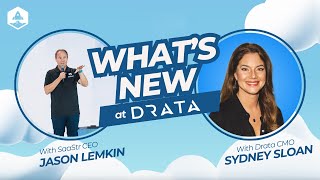
In this episode of the "What's New" series, SaaStr founder Jason Lemkin interviews Sydney Sloan, CMO of Drata (formerly Doradus), to unpack how a fast‑growing security SaaS builds a partner‑centric go‑to‑market engine. The conversation covers the timing and structure of Drata’s annual kickoff (AKO), the split of marketing resources across direct, partner and solution channels, and the creation of a dedicated partner‑marketing function focused on AWS and other ecosystem players. Sydney explains how the team aligns pricing, maturity frameworks, and a partner‑summit to drive a 40% pipeline contribution from partners. They discuss enablement tactics that turn sales reps into security experts, including real‑time compliance experts, Gong‑driven coaching, and tiered product‑launch rhythms. The interview dives into key performance indicators such as product adoption, net‑revenue retention (NRR), average selling price (ASP), and the balance of net‑new versus growth marketing spend. Sydney shares insights on marketplace strategy, AI‑related risk policies, macro‑level security market resilience, and the cultural importance of diversity, equity, and inclusion. The dialogue ends with a look ahead to Drata’s upcoming customer conference, RSA announcement, and the ambition to scale to $500‑$800 M ARR.
Chapters
Hey everybody, I wanted to welcome back one of our favorite cloud and SaaS executives and friends of SaaSer, Sydney Sloan, who is now CMO of Doradus.
Sydney, thank you for having me back.
And we're doing this as part of our What's New series where I dig in with cloud executives that we know, talk about informally trends in the industry, what they're seeing and what new is going on. And Doradus is interesting for a couple reasons. One, they're a rocket ship, which Sydney will get into in a minute. She just got back from their AKO, but also super interesting because Sydney was CMO at Salesloft. And so I want to learn some compare and contrast from her. And it's interesting for me, I was a smaller, but not tiny investor in Salesloft since pre-revenue and saw from the sidelines, things were happening and always the compare and contrast is always interesting, especially as times change. But Sydney, I want to get there second. Then I want to talk about the markets and then I want to talk about what's new at Drata, but this AKO, just for folks who are learning what, so it wasn't a sales kickoff, became revenue kickoffs with marketers. And now they're annual kickoffs.
We landed on AKO, uh, because it's the revenue team, but it's also the marketing team. And then we had people operations, and so we just decided to call it annual kickoff.
Yeah.
Just because it's the kickoff for the year.
Once we have it, two things on it. One is tactically, when should you start doing your SKO, RKO, AKO? When is it? When should you start doing it?
Such a good question. 3 months would be, in my opinion, kind of minimum. So we met. As a leadership, our CRO, our CCO, our enablement team, and our product marketing team met in person first week of December. So we did 2 months ahead of time, but already had a thought of what we wanted to do because this is an opportunity to make big shifts in the way that we sell or get sales reps really excited. So we were, we're moving to like, how do we think about helping our customers build their compliance, their GRC programs, their governance, risk, and compliance programs. And so we built a maturity framework for us to put them, put the customer where they're at. How do we talk to that customer? How do we get them from stage to stage? And then we also changed our pricing and packaging to align to those stages.
So it's a lot of education.
And so rolling out new pricing and packaging, getting the steps. And then we also included our partners. So we did our first annual partner summit. So we had 80 partners that joined us and introduced them. So collectively, how do we as an ecosystem align to the same strategy of how we work with our customers? And where they're at and how we want to get them to the next part. So as we add more and more products, we really need to understand where they are, what's the next step, how does our complete platform work with that along with our ecosystem. It's a heavy partner orientation because you need an auditor, you need a virtual CISO or CISO in place if you don't have one yet. So partner is a huge component of our strategy.
And how, if you're, if since you're getting so much of your revenue from partners, How do you break up the marketing team, the sales team? How do you think about resource allocation to that?
So we do have 3 routes to market. Marketing has a, a large contribution, especially on the lower end of the market. But we signed up for about 41% of pipeline contribution next year. Partners is going to be another 40%. So we're running a pretty fast flywheel on the low end. We've got 9-day sales cycles. Upper, on the upper end, you're talking about a month, maybe 2. So the velocity motion is how we run very fast. But with thinking about the different partners and their expertise in different framework areas and really selling them on the value of doing something different, because they are the ones that are guiding a lot of time the company through their first SOC 2 or extending them to SOC 2 to an ISO, and they're the trusted advisor that can sell the customer on the value of the continuous automation around doing this versus just having it be an annual painful audit event.
And so these is, and the partnership marketing, is that under your bailiwick too?
Yeah.
And do you have a different VP or director?
We added another person to lead the partner marketing function and we introduced our partner program. We do a lot of co-marketing. AWS is our most strategic partner, so we do a lot with AWS. It was somebody I worked from with before, so I pulled her over from Salesloft and knows, know that she knows partners and has a product marketing background. Which I really like, so she can be strategic, but she also understands the operational execution and how to run a program. And so it, it is within the product marketing team today, but in past lives, like at Salesloft, I had a line, I had the entire alliances team reporting to me, including the number and the channel relationships. We have an awesome leader here. I, it's not, I don't need it. It's totally fine. It's just more work, I joke, but, but partner is strategic, so it's, We've up-leveled the role and built out the team there.
Got it. And one, just from your learnings, a lot of folks miss the whole partner channel. They bang their heads against the wall doing everything direct and they miss how important it is. What it takes people a little while to figure out is all partners have favorites. What I mean is partners have, don't have 95 times out of 100, they don't have the bandwidth to support 5 partners, 5 sub-partners in their category. AWS can't support 20 vendors equally. And you can see this explicitly if you're on AppExchange or on Shopify, you can see the logarithmic distribution, but people don't get how important it is to be the top partner to your partners. It's just, it, it's so much more important to be number one, isn't it? And sometimes there isn't even a number two. Sometimes folks don't even have the bandwidth to even learn. It's so much work to learn one partner. Sometimes I don't even wanna learn the quirks of another.
The way that I think about it is, and I, run partnerships a lot in my career. You wanna understand the ecosystem 'cause that's the, it, that's where your customers live.
Yeah.
And so what are the most important categories that surround your category? Who are the key players and who do you wanna partner with? Ideally, you're partnering with the biggest person, but sometimes you wanna partner with the person that's gonna give you the most time of, give you the time of day. And it is a defensible strategy to create differentiation when you and that partner build out specific integrations. So I'll give two examples. When I was at Salesloft, Latany and I from SixSense shook hands. We're like, we're gonna, let's go do this and let's differentiate. And so we ideated on what are the integrations that we can do? And then we aligned our teams. We did co-marketing together. Our sales reps were friends with the sales rep. It really hits at the field level. Like you have to make sure those relationships are built, that they're sharing accounts. I love cross-feeding, but it's totally changed how sales teams can go together with partners and, and how you track it. And so that can create differentiation, plus it creates a, a multiple effect because you get to cross-sell to your customer bases. So there's lots of value in that. The other example is I mentioned that we are partnering with AWS. When you're partnering with the big folks, Accenture, AWS, who picked them, you have to bring business to them. Let's not be fooled.
Yeah, people don't get it. They think it should be the other way. They don't get it. You have to bring business to the bigger guy.
100%. And so we were highlighted during re:Invent between MongoDB and CrowdStrike. Only 3 companies that were mentioned on stage by their head of partnerships because we did the most transactions on Marketplace than any other company. And there's benefits for doing that. If you're a, if you're a startup and thinking about these marketplaces, guess what? That's the financial transaction. Aspect to the customer relationship. Everybody's gonna pay their AWS bill, right? So if you're worried about DSO or collections, like if you're going through these marketplaces, they have to pay those bills.
Yeah.
Just an advice to other, uh, startups out there that are considering going into marketplaces, there is that benefit. And then once you do have that transaction volume, you get noticed and you get mentioned, and then you get access to their reps, but you still have to follow through. You still have to be working with them day in and day out. You still have to be managing those relationships at a rep-to-rep level. You still need to be trading accounts. Again, that's what I've learned. If it's not working at the field level, if you're not tracking that, if they're not, if there's not a win-win, it's Barney.
I think domain expertise is overrated, but when you have something like that relationship, you gotta hire someone that has managed these complicated matrix-level nuanced relationships. You've gotta figure out who the 100 people at AWS are that matter in this relationship, map 'em out on a daily basis, figure out what all their incentives are from cookies to spiffs to bonus and how each of those people profits or benefits off the relationship. You gotta bet you can't do what founders do, which is drop in, schmooze for an hour, and then check in 6 months later. It don't work, right? No.
The walking the virtual halls now, before you would've just dropped your person into the Salesforce office and they would walk the halls. That's, that's, there were a lot of people that did that. And I also have a dedicated person on the marketing team just for that relationship.
Yeah. Like you, you have to, right?
Pick your strategics, invest like they're strategic, and then you start tiering and that's what programs are all about. So you see who actually is contributing and based on the work that they do, they get extra benefit, they get access, they get integrated into the campaigns, they get invited to things that other people wouldn't get invited to. And that's the structure and why you put programs in place.
Yeah. All, I wrote this old post on SaaStr that I think people don't get, but it says all partners have favorites, be one of them.
Yeah. Yeah. And it's, and I'll say, I'm like, and I pick favorites. I do.
You pick favorites. I'll tell you who they are. Absolutely. And some of it's personal, some of it is relationship driven, and that can be frustrating if you're an outsider. But you have to understand that whether it's Sidney Sloan at Drata or AWS stuff, they don't have the bandwidth to have 100 relationships, right? You gotta, one, you gotta deliver them revenue and you gotta do it in a low drama, efficient way. You need the combination of the two, right? And you wanna be in that 2x2 and you can't just sit and wait for it to happen. You have to make it happen, don't you?
Yeah. Yeah. And work and just make it easy on them. They're busy people.
Busy, right?
We're busy people. They're busy people in big companies that can have a lot of influence. So just make it as easy as possible on them.
We could spend the whole time on, on partner marketing, cuz it's, people get this all wrong. And I remember a couple years ago I interviewed Brian Halligan from, and they're 40% of their revenue from the channel too. And I asked him, I said, This is really a moat for you because all the HubSpot shops really only recommend HubSpot. They don't have time to get to know other apps. It doesn't matter if they're better or worse. They don't have, especially SMBs don't have time. I'm like, is it a moat? And you can watch the video. He literally almost lost the coffee. He just knows it's the best moat we have. He's like, they don't switch.
They did it the best.
Partnerships don't switch.
Globally.
Startups may switch. People may move from Salesforce or Marketo to, but the partners, when they lock in on HubSpot, they, but the one thing you said, and one thing that people get wrong is They're like, oh, why can't AWS or Salesforce or Shopify give me customers? You gotta go the other way. You have to prove yourself first. And there's two types of partners, right? The ones that bring you leads, the one that help you make your existing customers happier, right? And then there's like upsell and they each have very different ways to manage them because the AEs don't care about stuff down the road unless they get spiffed on it. Right. But the ones that bring in customers are like, that lights up the partner, doesn't it? If you bring them leads.
Absolutely. And interestingly, yet we work with companies who put their data in the cloud. That's what they're securing. So it's, they have to be in a cloud infrastructure. And we're doing things with Azure and GCP as well. But yes, AWS is our favorite by far. And so we are bringing net new customers to their marketplace infrastructure, um, where they're transacting on marketplace. So from the marketplace—
I see, you're bringing them to their marketplace.
High value for them because they're adding net new customers in, in the marketplace as they try to make that a strategic init— more of a strategic initiative. Inside of Amazon. And so that, that's the value add there.
It's not the first exposure to AWS. It's getting them on the marketplace is where the value add is.
Exactly. It has to be win-win.
Before we get there, one little thing you talked about, I'm just curious what you've learned from the AK. How do you train sales executives especially, but probably marketers and others? How do you train folks on becoming security experts, generic B2B sales executives who sometimes barely even understand other products. I think this is especially important in a competitive space because I want to talk to a subject matter expert as a prospect, don't I? I don't just want to know price. How do you do that when things get— maybe Jada, is it more complicated than Salesloft? But I'm going to suggest maybe it's a smidge more, right? For sales, right? So how do you do that? How do you get them smart?
You're not selling to yourself, right? Like Salesloft.
That's the thing.
You're selling.
I find most reps fail. When they move from selling to themselves to selling to a new buyer? It's too hard for maybe 60 to 70% of reps. They can't make the break.
Yeah. I think the first thing is we tell our own story. So we drank our own champagne. We were the first company to get a SOC 2 before we were selling SOC 2s. And like our competitors, they go through the onboarding program. They know what the policies are for onboarding and offboarding. Some things just make natural sense because they're going through the process as well. In addition, most of our customers start in one of two places. They start with a SOC 2. Or they start with ISO if they're a European customer. So you can get expertise in those two areas. But what is differentiating about us as well is we have experts on staff.
Yeah.
So if a sales rep is, gets into a sticky situation and doesn't really understand the new NIST AI RMF, they can pull in one of our compliance experts. We have a team. That team is also accessible to our customers because a lot of customers don't know that. So that live chat inside of our application.
That's great.
Allows them to ask questions to our experts. We can't give audit advice, obviously, that's what their auditor's for, but we can help explain concepts. We can help explain the different frameworks and policies and things like that. So we have that extra expertise, like, at the ready.
Is there anything just for internal training that Drodda does that's maybe different or better than in your prior roles? Do you do something every week? I'm just obsessed with being smart in today's world. I think buyers are smarter, right? And I think what hasn't always happened, the reps have not always gotten as much smarter as the buyers have gotten smarter. And I think they have to. If buyers are 5 times smarter than when we started in SaaS, shouldn't reps be 5 times smarter?
I've fired reps before because I'm like, this is a waste of my time.
I've bought, I've bought 500 apps in my lifetime. I don't need to hear the spiel. Talk to me like an expert, right?
Yeah, exactly. There's a couple of things that I think just given the speed at which Drata has grown. And trying to catch up with an enablement program. We have an awesome enablement leader now and he's built out a team. So we're putting more processes in place. I'll give two examples, but I think that the thing that sets Strada apart is the commitment of our OGs and sales leaders to be willing to help out. I, we use Gong like no company, I think, on the planet. Like our founders are obsessed with Gong calls. Our leaders are obsessed with Gong calls. We have all these alerts set up, so when we see a a question answer that maybe not, you're like, we'll coach, we will proactively coach the rep to make sure that they know the talk track because, you know, our competition says the same thing. Like, we'll know immediately if they've thrown a new thud at us. And it's just the same thing at, at Sailloft as well. But I think that one thing that's the differentiation is the commitment of the existing OG sellers who know the space really well to take the time to coach others. And if you're in our AE Slack channel, it, it's constant and it's always being monitored. So if you have a question, you get an answer immediately from the team, from within the team.
You gotta have that.
So it's outside of enablement. It's that real-time access to expertise. The, the other thing that I was thinking about is specialized enablement. So now what we did when I got here, we launched products like nobody's business and we've been doing this for 3 years. We've got, I don't even know how many products now, like 20+ frameworks and 10 products. We're launching a big product every quarter. And so what we did was we set up a rhythm that actually David Sachs coined a long time ago that I've followed, which is a quarterly launch rhythm and really focusing on the tier 1 products so they know those core products really well. So you wanna spend more time enabling them. And so we have a predictable model now. We have set times that we educate, we train our technical people first. And we do specialized training for CSMs and AMs and AEs. We don't treat everybody the same. So we've been able to get more sophisticated because we got off the flywheel of having to enable on every feature. And now we're saying, no, we'll go deep on the most important and we'll go less so on the tier 2s and then tier 3s are like, learn on your own time.
Is it one sales and one marketing team across all the products or are you specializing it?
One team across all products. The product teams are organized by themes. And so that's how we organize our marketing, matching by themes. So they work with the same product owners, but we're trying to balance that each product marketer has one tier 1 product as well as a couple tier 2s. We have someone, so it's a work in progress. I think also having dedicated product marketers to sales, that was a thing that I did coming in was create a solution marketing team. And so. They can demystify the product and create solutions and work, they work hand in hand with the, so I have one person that sell, works with the enterprise sellers. I have one person that works with the, the startup team and then one person that works with the CS team. So they have a dedicated product marketer and that's how we could get to the maturity model, right? That's how we could start thinking about solutions and personas and how to apply all the awesome products to those different use cases.
Using product marketing Per, per persona, per tier 1 category, per the tiers, right?
Yeah. And then per seg— per segment.
And have you figured out what KPIs they should have or is it just being supportive? This is always a nuanced question.
So for product marketing, so product marketing and product owners have specific KPIs on adoption, which we track in Sigma. So we set a goal at 90 days, what we want to see in terms of adoption. It comes to ELT dashboard and then at 6 months, where would we want those products to be? And right now we're going through like a white space analysis, the same way that I think about segmentation for net new markets. We're doing a white space analysis for, because we have so many products, it's like they can't all be at 80%, right? Again, you have to pick your favorite. So what is the most strategic products that we want to drive adoption for? And so we're running, so we run education programs and emphasize plays around the more strategic or revenue generating products. And so that's how we think about. Adoption goals for the product team. For the solution team, it's, uh, ASP. Are we, are we increasing our ASP, our win rates? The things that they can influence in the sales process.
It's interesting. So you—
The pricing person is in a solution team as well as value realization and BBA. So that all sits in one.
For that first team to report to you. Yeah. So you also own a KPI around adoption rates, right? Is equally as important as the amount of deals you close and the amount of deals you bring in. If they don't deploy, they churn.
That's product, product management and product marketing need to be sure that we are building products that customers want and use and that, that the customers are aware. So they're taking advantage of all the great innovation that we're delivering.
Does that constitute customer marketing or do you have a separate function for, what are you thinking about these days around customer marketing and retention marketing?
So we're building a customer marketing team, started awesome person that I used to mentor, like I've been dying to work with her. Has a product marketing background.
I see.
And so she's driving the campaigns. She's partnering on those KPIs and working with the account management and CSM teams. As we build out that team, I'll do more around advocacy, customer storytelling, running the, she runs the CABs community. We'll all be under customer marketing.
And they have a, they'll end up probably having a GRR or NRR type goal. Is that the, is that the KPI? Have you figured that out yet? Yep.
NRR. 100%.
And, and then one last, because it's just so interesting how you're divide, how you're dividing and conquering these departments. Customer marketing, as, because you're building this function out now, right? So you're getting mature enough to think through it. This is like an existential question with the founders and leadership, but how do you figure out how much of your marketing budget to put into customer marketing? Because on paper, you could actually argue the majority at some point because of the power of retaining cut. If you look at revenue retention plus expansion, one argument was, hey, 80% of my marketing budget should go into customer marketing. I find it's often 10% or less, even though it doesn't really match the flow of dollars, does it?
You hit a soapbox topic for me, 100%. And, and at certain stages, you need to start looking at what the balance of net new versus growth revenue looks like. And so if you're at $100 million, that starts to get at 50/50. So if you're off of that, if you're not investing in that way, and so what we have net new campaigns and we have customer campaigns. And so yes, you want to take customers after they become a customer and put them into a different drip campaign. One that's to onboarding and when they hit their onboarding goal, then they move into a different campaign. And so you work with the customer education team, it's under customer experience in building out those models using a mix of marketing tactics. So we'll do awareness branding through our 6Sense implementation. Why not send your existing customers educational content that drives them to learn more? Yeah. We will use Intercom in product. We use Chameleon like Pendo. So all figuring out all those different aspects of which format is the right one to drive certain behaviors throughout the customer journey that can be always on. And then we, that same quarterly rhythm is also about customer education. So we do a quarterly event that talks about the tier 1 products. And so customers can count on, oh, I need to pay attention now. This is like the big stuff coming from Drana this quarter. Yeah. That's combined with the in-app experiences. It's combined with emails and we don't yet have dedicated— I have worked with companies that have dedicated cross-sell, upsell SDRs, which are growth SDRs. I think that's a cool.
Model.
It really depends if you've got that wired versus the account managers doing that, that, that could be a way we go.
I just like them to be small.
I, I would say 80/20 is probably more likely. I 100% agree right now it's probably 90%. If I could get to 80/20, I'd be happy with that. I'm not there yet.
That's a good learning. That's a good way to think about it.
Yeah.
Right.
If you count like the customer event and things like that, maybe that might be close.
Yeah. There's few things more powerful than getting your customers and prospects together. Right. You realize that over the years, right? And then, but then in the early days you want it to be about revenue generation, right? And then you want it to be about pipeline influence. And then later you realize it's about retention, right?
It's all of it all at once.
It's all, but you gotta, but you can't make them all equal, like in your mind. And you'll fail at all three, won't you? At least you have to pick, you have to force rank them, I think.
Yeah. It's always gonna be net new. It's to start. You just, if marketing's gonna contribute, that's where you have to start.
One other quick one, and then I wanna talk about the markets and what's new at Drata. Um, what, Salesloft had a great run, $2.5 billion exit, good times. Drata's growing even faster than Salesloft was. Salesloft had some high growth phases too. What are you doing differently this time? What are you doing better? What are you leveling up?
It's hard 'cause there's pattern recognition, but then there's Drata speed and it's just like nothing I've ever seen. Or I can come in and it's just faster. I'll give a perfect example, like I, I talk a lot about segmentation strategy and as a marketing leader, that's where you have to start. You have to really look at your segments and work with leadership to align on which are the segments we're going after. And usually when I come in, there's 10 or 12. And, and so it's a great alignment exercise. That's what it is. All segments are probably decent to go after, just not at the same time. So we ran that process my second month in. Did a half-day session with ELT, identified the, our top 4. On Monday, we were already making changes.
Yeah.
On Monday, we were reorganizing teams and doing different, like completely shuffling the deck and aligning to that. Normally that would be like next quarter, we build OKRs, we think about it. It was Monday. And so just like being able to, oh, okay, whoa, we're going like that fast. Thank goodness. That I have experience so I can lean on and help guide the boat down a channel that I've swam before to know what some of the right things are to do and how to prioritize, but at the same time, be open-minded and okay, there is no playbook for this. I've been a CMO twice, but I feel like I've been in marketing for decades. And so I take all of that experience and some things I know really help, like where to slow down so you can speed up, where to invest in infrastructure to scale more efficiently versus just continuing to throw bodies at things. Like, those are the types of trade-off discussions I think are important at this stage because we have to grow not only fast but responsibly and efficiently. And that balance—
yeah, for what it's worth to folks, I just think in today's world there are exceptions. There are— the truth is there are vertical areas of vertical SaaS and others that that innovate slowly where there's a couple of vendors. But today, if I were to join a company, you've got to join someone iterating at Drata's rate. It's not worth it for your time or life. And even on year 1, a lot of truly great engineering-led products just innovate faster and it compounds, doesn't it? You've seen it. If you can do 2 or 3 times more releases a year, think about where you are 4 to 5 years out. And I just think you got to join these ones, right? And, and then we just, it doesn't matter in a quarter or two, but 5 years out, their companies become radically different if they compounded that, right? Like they're not, they don't even look the same.
Yep. Like we, we are catching up to our biggest competitor and it's a fight every day. Um, but the trajectory we're on, like we, we did an internal look at Slack, like we could be a Slack story. Yeah. And that's really motivating to the people, right? Like we could be in that top echelon in 4 years and hitting a really meaningful milestone and it's right there. And so then you give up your Saturday, right? Then you work a little bit harder. Like you, you just, it's 'cause to be in rare air. And if you wanna sign up, here's, welcome. And if you don't, that's okay. There's lots of companies out there, but you only get a couple chances. I would say very unique chance, once in a lifetime. And I've been fortunate to been at some fantastic companies. So.
Related to that, let me ask, I feel like we're in such a bifurcated world in cloud and SaaS, probably half the people we know think there's this downturn or this recession or the world is over, uh, or growth in some cases has gone to zero from high. But security overall, we could talk about Drata specifically, there's no downturn. Like we're talking today, like just the Cloudflare just blew out its last quarter. Everyone's blowing out. It's every, all the public leaders are on fire. Drata and others are on fire. Is there any downturn at all in security? And how do you think about this? When you talk to friends of yours, other CMOs and executives that are in parts of B2B that are struggling, how do you think about this?
It's a must-have versus nice-to-have story. And the threats aren't going away. More and more information is going into the cloud, which creates more exposure and risk. And it does go back, what are the top 3 things on every single CEO's mind? Growing revenue. Reducing risk, operating efficiently. That's it. Never changes. Right? And so as the risks continue to get more and more compounded, as like, going into third-party risk management has been a really interesting, personally for me, area to explore because you really think about the vulnerabilities of others that you're taking on. Because we're all leveraging each other's technology and things outside of your control could crush your company. And so how do companies like make sure that their partners, and it's not a security questionnaire, sorry to tell you, right? It's like, how do, how can you maintain? And so this idea that you can transparently see like, how are companies working against their policies? How are they addressing and remediating issues that are coming up? And this, I think this, what I liked about it, one of the reasons I joined Drodo is this is one of the places where digital transformation has not yet hit those poor souls in the governance, risk, and compliance area that are still running audits off of spreadsheets, right? So many places have been transformed and this is an area that hasn't. And it's so clear on the value, so clear. And so that's why this product market fit is so intense. And, and it is not only reducing risk, but it is a, it is the key to unlocking growth for many companies. Because if they, companies won't buy unless they have their SOC 2, or companies won't buy unless they have ISO. Because that risk is getting more and more prevalent. So it's a must-have.
Are there any macro impacts in the category? I know you're growing like a weed, but it doesn't mean that sometimes behind the scenes it's harder, like buying cycles are harder or more CFOs are involved. Are you seeing any of this or is security immune from this downturn?
The biggest trend that's hitting our industry and many is the impact of AI and how to think about AI as it relates to risk. And so how is AI, like AI policies inside companies, like how to people and companies decide what to use and how to use AI. How do you track that? How do you monitor it as well? How do you use AI? And then we're having a big announcement that's coming out and like our approach to AI, how we make sure we keep ours secure. So not using third open AI frameworks. And so that's the most common topic that people are, CISOs, companies are trying to struggle with because it's going to continue to change. And imagine the bad guys, right? They're using AI too. Heavy vulnerabilities to, like, they're probably more advanced than most. And it's just going to get tougher.
Yeah. But is that at a business side, is that good for Drata? Yes. Security is evergreen, right? It just gets, the bar goes up, the threats go up for the entire history of software, right?
It's priceless, but I think it's the having the transparency. So if your systems aren't connected, if you aren't continuously monitoring all of your systems in a way that it can notify you. That something's awry so you can remediate it immediately, then you're flying in the dark, right? You're just setting yourself up to be attacked. And I don't like the scare tactic. That's just not how I function as a marketer. So I'm not a FUD marketer. I don't like that, but it is the truth. Yeah.
And some are good at it. Just not us.
So that's reality.
Yeah.
I just, it's not my way.
Some are good at it.
So I have a hard time doing it. I know.
You just gotta be good at, you either gotta be good at FUD or counter FUD. You just gotta pick your personality. You gotta, you can't be bad at both though. Let's talk about today. Drade, Drade is growing at triple-digit rates, unprecedented growth, but it's a crowded category, not only directly, but indirectly, right? There's just lots of, so where do you win today and what's, and how do you win today? What's the core deals where you're winning them left and right? What's the top win rate?
I, the great fits are for the first-time customers. So people that haven't done this before and need to get their first framework in place and have a timeline that they're needing. So then it's like a clear one versus the other in, because the technologies are pretty similar. So who's the partner? How do you get them with secured? How do you make them feel secure and supported in their journey? And luckily we have a lot of great G2 reviews that talk about our customer support as differentiated and access to expertise. We lean in heavily on that. And then the move up market. So really understanding what that mix is, the multi frameworks, multi product. And also, and it's a conversation we have because customers wanna come to us, right? There's big companies that see this and be like, I wanna make my life easier. And being okay to walk away and say, no, we're not ready for you yet.
Yeah.
And so being very mindful about, we have insane product market fit for startups. Like, how do we get insane product market fits for the next segment, um, that we want to serve and understand how to do that quickly so we can attack that segment before going to the next one. I think all too often big company comes in, people get enamored, million-dollar deal, and it's just—
jump on the bomb, right? Jump on the bomb.
Yeah. Yeah. It's just like being okay to walk away. That's a lesson.
It's complicated though. This is the kind of advice where you gotta just always just listen to 10 people, right? Because some folks will tell you to walk away, but sometimes those will be folks that don't like sales or don't like the challenges. There'll be other folks whose DNA is we love, like we've lived this. I remember the day it's the story. I remember the day it sells off. We got our first 6-figure, 7-figure deal and Bob and Linda and didn't want to do it, but Sydney and Kyle did. And we did it and it changed the course of the company. So the advice is so hard to process is when to do it and whatnot. But I think Drata's got all the, you're drinking from a fire hose, right? So that's when you got to be the most careful is that you graduate naturally upmarket, right? At the right cadence, I think.
And just like in, in general with companies also don't get too complacent. On our— Adam Aaron calls it eating Skittles that are falling from the sky, right? Feeding yourself off the router. Don't get complacent. Like we have to be challenging ourselves on the next one and the next one. And what are the right moves for us to make? And if this happens, and that's the fun part of what I get to do, right? Is the strategic side. I love marketing. That's fine. But like really helping the company figure out what are the right strategic things to do and how to approach it. Hard stuff.
So what's coming down the pike this year, down the future that you are most excited about? What are you most excited about that's coming to Drodda?
Oh boy. We're continuing to set the bar at Drodda speed. I'm excited for our second customer conference. It's gonna be June 12th in San Francisco at Pier 27, which is such a lovely location where we can welcome more customers.
A little bit of work, but a good venue.
Yeah. An empty space, lots of potential. And, and, but I just can see Drodda along those windows with the bay in the background. I'm like, we got it. We just have to do that. More innovation and deeper on partners. I think that really understanding how to work with partners, getting the sales teams to align to that ability and what Kevin Kreebel, our head of, our VP of partnerships talks about is like removing all the barriers, make it, make them whole if they're selling with a partner, don't make it hard. Don't sell against a partner, like really figuring out the right strategies to make it effortless. And frictionless and we'll all win in the long run. So be willing to always lean on whatever is right for the partner and right for the customer. And we'll figure out the rest. So those are some of the big themes. Product innovation is going to be awesome. Excited for RSA. We've got a big announcement coming out then. So yeah, it just keeps coming.
This was great. I learned a lot. Is there anything we didn't hit that you wanted to hit or touch on?
We talked a little bit about, and I remember when I was at FastFair last year and you came up to me and you're like, I can't believe you signed up to do it again. What is it about another fast startup and how do you find the energy to do that? And so we were talking about that and I think some people are just gluttons for punishment or love the challenge and the reward. And when I was going through my process, there weren't a lot of companies that were growing this fast that were willing to lean in. And I'd rather be in that kind of a company than a cutting back and making tough decisions that aren't fun. And so I think that's why I dove in and just also being able to continue to change. The way people work. That's the wiring that I have. That's why I always like working application side is like we get to, to change the way people work for the better. Yes. We're gonna make them more strategic, more effective. We can draw a correlation between our implementation and a top-line impact. That's cool technology to work with.
I do remember asking you that. There's so many folks that we've all, that you and I have been working with over the years that are great folks that can't do it again for a variety of reasons. Like I, and I, you, we talked about this before we started. It used to frustrate me a little bit. Now I'm zen about it. We're all humans. Right? This stuff is both fascinating, as you can hear Sydney and I talk about, but it's also hard, right? And if you don't thrive on the hardness, it can break you over time. And I think, yeah, for what it's worth, for folks listening, when you go to hire that proven CMO like Sydney, make sure she or he has the passion that we just heard. This is the thing you gotta do. You gotta listen in hires today because there's so many veterans out there. Think about how many proven VPs and directors there are today versus even just 5 years ago. It's just the growth of SaaS and cloud, right? This is a trillion— software is a business, software is a trillion-dollar industry. SaaS is over $200 billion. So there's, there's a lot of folks out there that have great resumes, right? But if they don't have the passion anymore, you gotta pass, don't you?
100% on both sides.
You gotta pass.
100% on both sides. I had to pass too. Yeah, on both sides. And when I talked to Adam the first time, I was like, I don't know, security, it's not my thing. And I said, and passion is my, kind of secret weapon.
Yeah.
Which by the way, I burned out after Salesloft. Like I gave 150% and more and I had to take a year and a half off. So to reset and do a lot of energy work. But he said, can you be passionate about trust? Because that's what we're doing. Mm-hmm. We're creating trust between companies. And I was like, yeah, he got me on that one. And then it's the foundation for everything is trust, every relationship, every business transaction. So that's how he got me.
Yeah. And then just one last one. We'll close on it. I think you had a LinkedIn post on this when you joined, but didn't you say you did 50 serious interviews? Like not, not quick check-ins, not email, but like hardcore real.
You did a lot of people reach out to me about that post. The title was Know Your Worth. And the beginning was I talked to 35 companies. That doesn't include recruiters. So the recruiters came and I would vet out from the ones that I would want to talk to. I did over 100 interviews. I think it was 110 interviews. Over 8 months.
Wow.
And there were a couple that I got to the wire and I was disappointed that I didn't get those roles. I believe in fate, so everything happens for a reason. I did, I know I haven't been a CMO of a $500 million company before. And so the person that you get, you understand why CEOs weren't willing to take the risks that they were and wanting proven in their similar situation, which I swallowed the pill and I moved on. And, and so yeah, it was tough. It was tough. And also there are some great companies. Oh my God. Like, I love their products, but I didn't wanna work for someone who didn't understand my value. Like a lot of marketing roles were being downgraded and put under presidents and I'm like, I gotta report to the CEO. That's, that's great. Strategy is what I love doing. I just happen to own the function of marketing, but if I can't be strategic, if I can't like help there, then I, then it's not good for me and it's not good for them. Like, not getting their money's worth.
Yeah, that's interesting. Sorry. I actually find that I hadn't thought about this talking with CEOs. I find it's a micro trend where a lot of founders, when they get to a certain stage, they want to put more people not under them. I don't want the CMO to report to me. Sometimes if it's like more SMB, they don't even want the sales to report to them anymore because it's transactional. I don't want the, my chief customer officer to report to me. That drives me nuts. And, but the best want to. That's what I always tell them. I'm like, I hear your point on your org chart. You already have 8 reports. Right. But this is a reason to take the job at Dorada, isn't it? It's a re— and you're reinforced, it's a reason the best will do it is to report to you. And you got, sometimes you just gotta swallow it to make it happen for them, right? Yeah.
Yeah.
And that's not that much work to manage.
We're gonna move it.
How hard are you to manage? How much one-on-one time do you need?
I, I'll use my one-on-one time. It's once a week, 30 minutes. Okay. But we don't talk about marketing a lot. We talk about strategy. We talk about other things than marketing.
Yeah.
He wants to talk about marketing. We can, right? But that's generally not, unless I need, I want his opinion on something because it's important around a brand or like big ideas. We're hitting our number. We hit 112% of our goal for pipeline creation and revenue.
Like pretty good.
We're good. We're doing good.
Good year one.
Efficiently. Yeah. The, my, the best thing that I say to my CEO is I wish I had more people, but I have enough money and that's my problem to figure out. He laughs when I say that. Not asking for more. I gotta just go figure that out.
One last topic that maybe is less fun than what we talked about, but I know, but it's a passion topic for both of us cuz you brought it up. Can we talk about diversity, equality, inclusion for a minute? Listen, I'm a white male of privilege, but as I've tried to put as much energy into SaaStr, make it an inclusive community. I feel like across the board since we came out of this little flu that went around, it's been dropped as a priority. I don't see any VCs talk about it anymore. Going into 2020, there was so much focus and some of it was not all perfect, but there was so much focus on making sure companies were more inclusive, management teams, boards, everything. And I feel like it got dropped.
I agree with you.
100%.
Dropped.
Dropped by everybody.
Not a priority.
Not a priority. Not a priority. It's just gone from the conversation, isn't it?
And I don't know. Uh, not 100% from everywhere, but it is definitely gone from the top of the list to the bottom. And it's sad. And, and I was talking to Godard Abel at G2, so I'm a friend of yours. He's got a 50/50 diverse team. I was in Boulder, my daughter wanted to go to school there, so we had this lovely afternoon talking about the benefit of that, the diversity of ideas and how the teams think differently. And I'll be honest, I'm the only. Female on a 12-person leadership team.
Yeah.
That's why we're having conversations about it. Like, I don't want to be the only person. And how do we make that a priority? And what can be just grassroots if like it can't be a company priority to— and I created the Sales Off Cares program. We're sponsored. The Sales Off Cares program, which to this day when I go read Glassdoor reviews and people are talking about it, like, God, that is what fills my soul. But I don't— I'd love to understand the why so we could figure out how to bring it back to being a topic. And I do think that it was a nice to have. We didn't quantify the value enough to the business to make it a must-have priority. And, and so that's, you know, how, how do you get more out of your people? What's retention look like? Like, I just, there's so much cutting going on that, that, that didn't stick. And it's unfortunate. It's unfortunate.
It is unfortunate.
Because I think it loses loses the connection to people.
It does.
Makes me sad.
It just makes me sad too. I wonder what I feel like. I don't, I'm not an expert at all. I'm a student. I do feel like when March 2020 came and we all started working from home and didn't intend to, I think it accentuated things, right? Because there is a little bit of out of sight, out of mindness. It doesn't make it right or wrong, but it, it's a reality that when we all work together in the same office, walking in and seeing a bunch of bros talking about football and throwing footballs and you just, I would never want to work in those environments. Like, I just, I would walk into those rooms and I'd be like, you can't, you got to change your company tomorrow, Bill or Bob or Jim. But I know it's just a small part of it. It's just, but I feel like, what if you have one last bit of advice? I feel like we lost something here and we're gonna, I feel like we're going to regret it. And if we don't do something about making these companies more inclusive, I feel like it's going to blow up on us in 4 or 5 years.
Yep. The two pieces of advice that I've, cuz I, this is a topic that I'm struggling with and I think grassroots, it doesn't have to stop just because it's not top down. It helps when it is, but it doesn't mean it can't stop. So if people are passionate about it, then do something about it. That's where it starts. And the second is not accepting. I'm not gonna stop talking about it just cuz I didn't get the answer I wanted the first time.
Yeah.
I'm gonna keep bringing it up, right? I keep bringing it up. Look at the room, look at the Zoom. This is not okay. And we're making small incremental changes. And diversity is one of our cultural values, but like at Salesloft, we had to do a lot of education on what that meant. Everybody's interpretation of it is different.
Yes.
And so you have to create the space to talk about it and to allow people to ask questions without repercussion and small groups. And so I just kind of start. And so if you feel passionate about it, do something about it. I'm trying. Yep.
Okay. All right. We'll keep chatting about this. Sydney, this was so great. Thank you for all the time.
Thank you for catching up.
And we will, we will check in when Drodda is maybe at $500 million ARR, $800 million.
Let's do it.
So we'll check, we'll check in again. Yeah. Thank you.
Yep. All righty. See ya.
More from Jason

Why Your Next Hire Should Report to an AI, Tragedy Apps, and Too Many AI SDRs? | The Agents #004

Our Agents Drove Our Salesforce Bill Up 80%, Marketo Hates Agents, and We Stealth-Churned Off Notion




Managing 20+ AI Agents: Lazy Agents, Our $500K AI Bill, Stealth Churn & the Death of 60% Solutions




