Moving Beyond Traditional Sales, Clay CEO & Co-Founder Kareem Amin on the Future of AI-Driven Growth
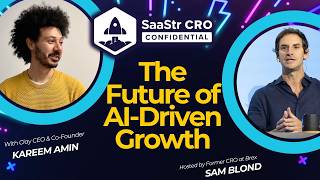
Kareem Amin, CEO of Clay, explains how AI handles research and messaging while humans stay on the deals. Clay aggregates data and uses LLMs for scoring and CRM enrichment, but AI still can't fully replace SDRs due to hallucination problems. With 55 employees, Clay merges sales, marketing, and success into unified GTM teams.
Chapters
the dream is probably that you don't want to be doing any manual data writing into your CRM, right? And I think where AI is good is doing research. So account research is really good. I think scoring is going to be really good in a, with AI. LLMs are both good at generation, generating things. LLMs are also good at search. And it's a different type of search, right? It's almost like a contextual search, so you can use it for scoring. So it's a new way of saying, okay, are these things similar? But it, I don't think it's fully autonomous. And that's where the promise of AI SDRs is. You just say, here are a list of my customers, or here's my CRM, connect to my CRM, see who my customers are and go find me more like them. And the number of tasks that you, or the decisions that you need to make to do that are quite, the space of possibilities is quite large, and an LLM can create a plan for that and execute it.
Saastr fans, welcome back to a new episode of CRO Confidential. I'm your host, Sam Blonde. We are back with a new episode and we are coming back with a bang. Both the guests that we have today and the topic that we have today, I am just thrilled to present and have been excited for this episode for some time now. So with that, let's start with the guest. We have Karim Amin from Clay. He is the CEO. Uh, Karim, prior to becoming the CEO and founding Clay, he's a second-time founder. Founded Frame that was acquired by Sailthru back in 2012. Since then, Karim's been VP of product at Wall Street Journal. and now he is CEO and co-founder at Clay. I was introduced to Karim, I think it's probably been a couple years now, through Mike Vernal, who is a partner at Sequoia. And Mike said something like, you've gotta meet this founder. He's really onto something in the revenue systems category. And this was probably back at the time where Clay was just in its very early beginnings. And so kudos to Mike for being onto something there. Congratulations on all the success that you've realized since, and welcome to the pod, Karim.
Thanks, Sam. Great to be here.
Awesome. With that, as we do with most guests, for anyone who doesn't know, let's start with what is Clay?
So Clay is The way we think about it, the mission for us is really how do we turn any idea for growth into reality really quickly? And we tend to think of that as a creative approach to go-to-market. So the same way that you might think of Photoshop or Figma as the designers, we are to growth marketing and rev ops teams. And practically speaking, what we do is initially start out by pulling data from every data provider in the world. So we aggregate all of these so you can have the best data about companies and people, and then use that to narrow down a hypothesis about who your target customer is and what you should say to them. And we run that for you.
It's awesome. You've realized a ton of success, and we're gonna talk about that and, and how you've realized that a little bit later in the show. One, one thing that I'm curious on before we jump into the topics that we've outlined, how did you identify this problem that you are going after and then design the solution that you have come up with around it? I look at your background, you co-founded a company that I don't believe was in this space. So you're a second-time founder, and that of course is, is great and applicable experience, but it's not domain specific. and then product leader at Wall Street Journal, like kind of the same idea there. It's not necessarily in this category. So I'd love to learn what was the approach that you went through? How'd you like figure out this opportunity exists and then solve it in such a successful way?
The ambition that my co-founder and I, uh, had when we started the company was how do we give the power of programming to an order of magnitude more people? Mainly how do we give you access to telling machines what to do so that you can get some of the value that machines are providing in the 21st century. That was like this very abstract intention. And then from there, we did this analysis where we started looking at like the different forms that you can bring programming to people. I think my co-founder in particular actually started prospecting to find customers and realized very quickly that it's a very ad hoc and difficult process because the data isn't always accurate, right? If the data was accurate, then you could just look at one database, use that, and target people. But actually the data wasn't always accurate, was very varied, uh, depending on who you're looking to target, and also changed all the time. And we realized that we could use our own product to do that pretty early on. And then we, it took us some time to consolidate around that vision and to narrow down giving the power of programming to go-to-market people. That intention became clearer and then committing to that intention and reframing the mission to being, how do we help businesses grow by applying different kind of growth campaigns? That was the rest of the journey.
And I think for those listening who aren't familiar with the Clay story, it's like fast forwarding from those early beginnings. I think Kareem and Clay announced raising $50+ million at a $500 million valuation from many of the best investors in the world, like Sequoia and Meritech. And congrats on realizing that success. And I know you probably think of it, think about it as we're still in the early innings of this business. Okay. Two topics that I and we want to jump into today. The first one is one that we've never touched on this show, and I think it's time to. So that one is Revenue Systems, and I can't think of anyone better to have on the show to speak to us about the evolution of revenue systems, um, things that exist today with the incorporation of AI and so much focus on increased productivity, like where we are today, how folks should be leveraging these different systems and where you see the future going. So I think that'll be a really interesting conversation. And then if there is time, Would love to learn how Clay has approached go-to-market and realized the type of success that you have in such a short amount of time. Um, with that, let's kick off with the first topic and maybe I will set the stage for something that I'm intimately familiar with. And then I would love to learn along with the audience, like where things are today, because you're going to have a much better pulse on that than I will. And then I mentioned forward-looking. My experience with systems is something like in 2007 or '08, when I first joined a company as an SDR, I used Salesforce. And over time we like bolted on different systems depending on the needs of the business and what existed in the marketplace. And so one of the first ones was something like ZoomInfo where Now we were able to get people's contact information. I think it was called DiscoverOrg back in the day. And so then now I could import some email addresses into Salesforce from DiscoverOrg. And then the next evolution was like maybe Outreach came out and I was able to like email a bunch of these people instead of one at a time. And then maybe Gong came out and I was able to start, instead of joining one-off calls with all of the sales reps on my team, I was able to record the calls and maybe listen to them at 10 o'clock at night when I didn't have to join the call live. And we just continued down this path of bolting on more and more point solutions into the hub of Salesforce. And then the last thing that I would say is my experience with these systems is I would describe them as like reactive data repositories where when you buy Salesforce or when you buy Gong or when you buy Outreach, it, it really requires the user to input data and instruct the system what to do. And much of the like strategy and opinions that are then ingrained in one set of systems are driven by the humans that are using those systems. I think we're starting to see that change. And I, I would love to learn from you a couple things. One is like, where are we today in the existing set of systems? How have those changed over the last couple of years? And where the topic of the day is, is AI and probably will be for some time. Like, where is AI good and effective and where is it still maybe a bit of a pipe dream? Are not quite there yet.
Yeah, totally. I think, I think that's a great summary and makes a lot of sense to me. I think maybe the lay of the land is really, you can either empower SDRs with the tools that you were talking about and give more and more tools to become more and more productive. You could either try to automate all of that away. Or you could take a bunch of these tasks to be done and move them on to someone else, centralize them and allow someone to be able to automate the pieces that are automatable, right? Hopefully that kind of makes sense. And that'll map out actually to the different companies in the market. There's companies who are either building. AI copilots or trying to build tools to make SDRs more productive. And I think that, that there's a market for that. And then there's tools that are coming out saying, let's just be an AI SDR. And then there are tools like Clay that are saying, we're going to use both data enrichment and AI to centralize the power to someone else, maybe like a RevOps person or a go-to-market ops person who will be able to automate these tasks. SDRs will still be there, but they'll do a they'll be doing more follow-ups, more calls, things that are not automatable yet. And I think that also maps to what you were talking about as what is AI doing really well right now and where is there still maybe promise but not practical reality, the application practical reality. I think really the dream is probably that you don't want to be doing any manual data writing into your CRM, right? And I, I think where AI is good is doing research. So account research is really good. I think scoring is going to be really good in a, with AI. LLMs are both good at generation, generating things. So like generating summaries of you want to know, go to this website. Figure out what this company does and what market is it in, right? Or tell me a couple of the customers that this company has through ingesting that data and figuring it out. It's also, LLMs are also good at search and it's a different type of search, right? It's a con— it's almost like a contextual search, so you can use it for scoring. So it's a new way of saying, okay, are these things similar? Which is why I think it'll, will be used in scoring. So those are things that it's good at. It's also good at generating snippets, short snippets of data that are relevant for communicating, whether it's by email or elsewhere. And I think those 3 things it's really good at. I think the things where it's still aspirational is the dream around like an auto GPT, auto GPT. So a mission, you give it a mission and, uh, LLMs are really good at generating a plan and then trying to execute that plan. Uh, but it, I don't think it's fully autonomous and that's where the promise of AI SDRs is. Um, you just say, here are a list of my customers. Or here's my CRM, connect to my CRM, see who my customers are and go find me more like them. And the number of tasks that you, or the, the, the decisions that you need to make to do that are quite— the, the, the space of possibilities is quite large and an LLM can create a plan for that and execute it. I think the problem is when that plan gets commoditized. Pretty quickly. When that plan doesn't go as planned, how do you get the feedback back in? And how do you make it improve over time in a way that doesn't lead to something that will be dismissed by a human? So even if it does it really well, it still has to pattern break in some way to get your attention. I do think our brains are really good at realizing that this is being able to sort things that are crap from not. And unless AI SDRs are able to do that, I think it might be a temporary dead end for now until we get an order or two of magnitude of improvements in LLMs, which could happen very quickly.
I love this. Let's, let me try and recap and then go from there. I believe what I heard from you to just like boil it down to a few very specific things that, and maybe the right framing for this is something like you started Clay, let's call it 2 years ago. Does that sound right?
Oh, it was, it was a while longer than that. Okay. Yeah.
So let's say a few years ago, like the way that systems would be leveraged in technology companies and what is different today from the way that systems in like a perfect world of fully optimizing for the best technology that's available. What is different today from what people were doing, let's call it 3 years ago before effectively the introduction of AI. What I heard from you is a few different things. One is account scoring and determining who to target. LLMs would be, are really effective at that. Another thing that I heard from you is firmographic information. So like capturing information about the companies and people that you are targeting. LLMs and AI are very good at that. And you should be doing that today. The third thing that I heard from you is you shouldn't be manually inputting data into Salesforce. And so LLMs are good at probably taking my interpretation of what you said is something like transcribing calls that have been recorded and any email communication that you've had with potential customers and taking that information and updating CRM, the LLMs are going to be better than like the average human at that specific activity. So I'll pause there. Does that sound right? Is like just repeating what I heard and where technology today should be leveraged.
Yeah, exactly. So it's in summarizing the data from calls and emails. It's the kind of getting new information through the website scraping and, and then it's also using AI to score based on similarity. The only thing I think is missing is also generating like value props that you can then based on that account research and the summarized kind of email and phone conversation so that you can send that message.
Makes sense. And then Kareem, I heard one thing from you on what LLMs or just systems more broadly aren't as good at today. And I'll try and repeat that. And then I'll try and come up with one of my own as well. And then the thing that I heard from you is, I will summarize it by just saying like replacing SDRs entirely, which is deploy an a, um, SDR bot go figure out who to reach out to, what message to send to them, respond to their objections, schedule a meeting at the time that they want to schedule it. And we're not yet there where humans can be entirely replaced from that process. And so before I move on to the one that I want to pressure test is a different one. Does that sound right?
Yeah, that sounds right. And I don't think that we're super far away from that, but I think there are some hurdles that make it so that if you fully rely on that, you might not be getting the results that you want because any kind of breakdown in any of those steps is a disaster, right?
Yes. And I think we've all received emails that I would describe, or I certainly have, that I would describe as AI hallucinations that, yeah, I, I get an email, it's so obvious that a human didn't write this email and it doesn't make any sense. And, and so then, uh, that would be an example of a breakage in that process.
Yep.
And then the one that I would add that I haven't yet seen a solution for it or, or an effective one is like, I don't think that AI can yet replace like the creativity that I see in one-off campaigns. And I think about some of the most effective campaigns that I have produced myself or observed different companies making. These are like humans coming up with something that's very on brand for their product and company. That has either never been done before or like never been done to the way that they are executing it. And I've talked about a lot of these examples on this show in the past, but I think it's hard to replace the sort of creativity of one-off campaigns to really stand out through these systems today.
Totally agree.
Perfect. So we've talked about like the environment that exists today. And hopefully folks are coming away with ideas if maybe you aren't leveraging this technology for some of the specific things that Kareem highlighted, maybe should look into doing. Where are we going? We talked about this, even if it was just 2 years ago, I think the list of 4 that we came up with really weren't possible even just 2 years ago. If we think 12 and 24 months into the future, what's next?
I think the, I think in the immediate future, there are lots of, so the things that I mentioned are still not being fully applied across, they're, they're being applied in like bits and pieces, essentially, and not coordinated with each other. So maybe there is an AI scoring tool and account research, but how's that connected to the messaging? So I think there's going to be a way to put all of this together to really do a full end-to-end go-to-market campaign that basically starts off from, let's ingest all of your CRM data and maybe all of your marketing material and your website. Let's look at all of that information, identify using scoring your best customers today. What about them makes them a great customer? What predicts it? Let's go out and find more customers like that. Let's prepare a bunch of different campaigns based on your value props and then let you adjust that and get creative with that, like preparation in hand and see, hey, did your campaign work or not? So we're going to be more data-driven about the results of these go-to-market campaigns and also. Use AI to generate them and then tweak them with our creative ideas. So I think the end-to-end aspect is what we're gonna see of more in the next 12 months. In the next 24 months, I'm staying open-minded. Awesome.
And then how do you see AI or the systems that AI is incorporated in influencing the org design? Or like team construction that exists specifically within tech companies. And I think maybe a couple different directions to take this is something like, do functions continue to exist? Can we automate away entirely certain functions? Does it influence where certain functions report? Does it influence the size of these different teams? Just curious if you have a, a perspective on that.
Yeah, I, I think that The things that we're seeing and that we feel, and that this is for sure kind of to be taken with a grain of salt because it's also very aligned with what we believe about the market, but I think it's that sales, marketing, customer success are becoming go-to-market. And you're thinking more holistically about the different sales, marketing, and success basically align with the different stages that a prospective customer can be in, right? It's almost like, uh, prospect, lead, user, and then customer. And I think we're seeing the, that becoming, there's go-to-market teams that need to do like the creative thinking, the planning, the human elements. And then there's a GTM ops team that uses tools and AI to facilitate kind of the work of the GTM team. And that people are thinking about, and why would this not have been happening before? It was, but the difference is that now with the ability to work with more information at a time, at one time, right through AI, where you're like, okay, let's take our value prop and then create materials for sales and for marketing and for customer success. And it has a cohesive message, I think we're seeing the ability to consolidate those teams so that they are actually thinking about the customer journey together and they're not like these siloed teams. And then there's an overarching team that enables them.
That makes sense. I will, and, and I'm like you, I keep an open mind on all of this stuff because the reality is I, I don't totally know. And, here, here's maybe the trend that I'm seeing, and then I'll contradict that with some pattern matching to history. The trend that I expect to see is just compression of team sizes. And I think we're already seeing this on the engineering side where engineering teams are compressing or at least can accomplish so much more. Than they historically have been able to just in terms of producing products at a faster rate. And so then if we apply the same mindset to go-to-market, I think we will not need this sort of army of SDRs, let's say, to accomplish the same amount of activity, pipeline generation, however we want to frame it, than we have needed historically speaking. Now I think the counter to that is I would have said the same thing we talked about previously or earlier on the show, like outreach. And I was an SDR and it took me so long to like manually click on somebody's email address and like copy and paste, make sure like the formatting is correct and whatever else I would need to do. Sometimes I would tap marketing's shoulder and say, can we do a blast through Marketo or whatever? But like, you would think that Outreach or, or, uh, email sequencing tool like that would have made an individual SDR 5 to 10x more effective, especially if they're heavily reliant on outbound email. And I think we actually saw the opposite. The size of SDR teams in 2020, many years after, uh, these products were introduced, was significantly greater. Than the sort of like size or investment made in SDR in 2012 when they first came to market, something like that.
Totally. Companies are not trying to be efficient. Companies are trying to grow. And so if I give you a way to grow faster, then you're just going to say, well, if we had more people and this thing is more efficient, then we'd grow even faster. And so I'm going to try to add more people if possible. I think that makes sense with outreach, right? If one person could send to 10 and now you can say one person can send to 100, now I'm going to just hire 10 people to send to.
Okay. I think really good segue, especially as we've talked about, like how systems will evolve people within businesses and so many of these tactics. Let's talk about Clay specifically. You have taken the market by storm where I think when you and I were first connected, Most people hadn't heard of Clay. Like I hadn't heard of Clay when Mike introduced us. And today many go-to-market organizations, I'm sure there's still some opportunity, but so many are currently using Clay. And I think you have found a spot on the like revenue stack list of cutting-edge companies. So I want to talk about how you have achieved that. Maybe as a starting point, Where are you today? What does go-to-market at Clay look like?
We're, we're still pretty small. So we probably have 8 people on the GTM engineer team, maybe 2 people on the ops. Uh, the company is really 55 people.
And the reason that I started there is something like, I imagine you are leveraging these systems and this technology. As effectively as any company could be, just given what you do as a business. And so curious how that sort of manifests in effectiveness, productivity, efficiency on a per rep basis. I would imagine that if we map where you are in terms of growth and ARR, that most companies that are at a similar stage have more people. And so then I'm curious, do you attribute, assuming you agree, do you attribute that to better leveraging systems than counterparts?
I do agree. And I think we're quite a bit smaller than other companies that are at the same kind of revenue metrics. And I do think it is, I think it's to be completely honest, I think it's both due to the systems that we've set up. And due to the profile of people that we're hiring. So we've been hiring people into some of these roles that sometimes have CS degrees, but want to be on the sales side of things, or are technical in some way, or are open to learning how to do this quickly. So just to give you an example, our interview for this role is do something in Clam, surprise us. And then just explain what you did. So the goal here is, can you figure out how to use a tool that has an infinite ceiling? Can you do something creative that would get us to be excited? And then can you present it in a way that makes sense? So it's a very simple prompt, but actually tests a bunch of things. And so we're hiring for a different skill set than I think many organizations in this role. And then we're supplementing it with systems, but the people also understand the value of the systems. We're not like layering it onto them.
It makes a lot of sense. Let's talk about some of the tactics and maybe we start with early days. How did you acquire your initial customer?
So I think the initial, it's a super tricky question. We realized pretty quickly. That there's a lot of agencies trying to help people do prospecting and agencies have an acute pain because they're working across many different customers at the same time. They're basically at the edge of this market in terms of sophistication and in terms of creativity because their job is also prospecting and finding customers. So it's meta. They understand the problem because they're literally doing it as well. They're trying to grow their own business and that they became very active users and we focused on them in order to actually improve the product as quickly as possible because they were giving tons of feedback using the product and through that we learned what's working and what isn't and a lot of the people from agencies then get hired into to run their ops, like their go-to-market ops or rev ops teams, and they bring us with them. So that was one way of seeding it into the market, as well as they become kind of solutions experts for us. And they also create content to help their own business.
Really interesting. One thing that you mentioned that's really interesting that I have talked less about, or maybe not at all, is I think you found a pocket of customers. This can be a segment, but I think it's going to be, at least in this example, even more exclusive or smaller than like a segment of customers. You found like a customer type that was receiving, I don't know if it's exponentially more value, but like more value than the average customer or user. And You went really deep in this, like, agency profiles. Um, and so that, that addressable market in absolute terms is probably limited. Like, how many DemandGen agencies are there? But you had zero of them when you started. And so even if the number is, let's just call it several hundred or something that you can go after, you can very quickly grow. By reaching out to this specific type of customer that realizes an outsized benefit from your product, then I really like that. Uh, now it's not universally applicable, but it sounds like it, it, uh, was really effective in your case.
Right. I think that what's universally applicable is find a customer segment that allows you to get momentum. And by momentum, I don't mean just revenue, the type of usage that you're looking for that allows you to improve your product faster and faster. And that has a, is a subset of a larger type of users that is similar, but maybe you can reach out to either when the product improves or because they hear about you because of this initial smaller segment.
So you identified this corner of the market that is demand gen agencies. Um, you want to attack it. Where did you invest? And I think like both with the acquisition of agencies and then, um, expanding outside of agencies, are you targeting customers through outbound? Are you trying to leverage exist— those existing agencies and asking them for referrals? What was most effective for you?
I think it's all of the above, but what we tried to do is to give room for these agencies to create content about how they did what they're doing. And that both helps them get more customers because it shows how creative and smart they are. And at the same time showcases our product and gives us broader reach. Once we have broader reach, we get more inbound. Once we get more inbound, we can then help those people use the product, use their feedback to improve it. And if, and also out of the best kind of users, we enable them to become experts in our experts list. And then if somebody needs them for some kind of creative campaign, they can hire them through Clay.
And just reinforcing maybe more explicitly. One thing that is related to what you're saying, and then evolving that into a question. When I think of Clay, one of the, one of the first sort of brand association things that comes to mind for me is happy customers. And are you deliberate in any way about taking advantage of that and have, in generating new customers from your happy customers? Are there incentives in place?
Yeah, totally. I, I think we're very deliberate about it. We have the usual things that you would expect. We have referral programs, we have affiliate programs. And I think that's one way to think about it very tactically is, but I really think the harder part is how do you get the happy customers, right? Because once you get the happy customers, there are kind of these flywheels of incentivizing them to bring on more people, but actually people just do that on their own anyway, whether or not you incentivize them, you, that's just, you can accelerate it or not. And we've done a lot of things. So we invest heavily in our brand. We have for all of our creators, we call them creators and experts. Creators are people who, you know, they, when they generate content, They have affiliate links and it's people who are doing something like really great with the product. We send them a little clay figurine of themselves. Uh, that's cool. We custom make from a clay artist. And I give that as an example of we are, it's both to show that this is a creative tool and that we care in this way. It's also just fun and the product is a fun product. Like our intention is as you're using Clay that you're actually enjoying the process and discovering new features and becoming more— it, it's the end of the day when you, if you start using Figma or Photoshop and you don't know how to design, you're not gonna create anything good. But you, as you use these tools, you accumulate like a skill, which is design. And in Clay, you get the skill of how to grow something. And that's actually our goal. Our goal is to help you grow as a person and help your business grow, not for you to just use Clay.
I love the example and I can, I can just imagine getting that myself and thinking it was cool. And that's one of the tests that I use for, should we do this or not? Would it, um, uh, uh, on the receiving end of this Clay figurine that it was as like a character of me. I'd be like, oh, that's like unique. That's like cool. And I think, and we will wrap in the interest of time, but I think a really positive note to end on, one thing that we did at Brex that maybe folks that are listening can come away with some ideas on this. I think the one that you're doing is probably even more creative and effective. Whenever one of our customers would fundraise and announce a new fundraising, Brex had a really high market share of tech-backed startups. We would, in our all-hands meeting, we would pass around a note that every person in the company would sign. And, you know, we were like 100 employees. And so we would send congratulations notes to our customers for each of their fundraise events that everyone in the company had signed. And that just like stood out. It was like a, a, a cool thing to do that probably they weren't getting from any of their other partners. And, and it's personal. Handwritten signatures and different pens and fonts. And so I think it's thoughtful. And so then for folks that are listening, like maybe do something on brand that is analogous to the examples that Kareem and I provided. Can't think of a higher note to end on. And Kareem, just thank you so much for your time. I learned so much and it's just very interesting. So congrats on all the success. Thank you for being here.
Thank you. I appreciate it.
More from Jason

Why Your Next Hire Should Report to an AI, Tragedy Apps, and Too Many AI SDRs? | The Agents #004

Our Agents Drove Our Salesforce Bill Up 80%, Marketo Hates Agents, and We Stealth-Churned Off Notion




Managing 20+ AI Agents: Lazy Agents, Our $500K AI Bill, Stealth Churn & the Death of 60% Solutions




