SaaStr Annual The Diversity, Inclusion & Equality Brunch: Lever, Stage 2 Capital, Zendesk
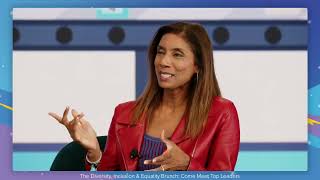
The panel, moderated by Pralini Udayan‑Piyeki (SVP Global Marketing, Zendesk), featured Kishola Vallo‑Shannon (SVP Marketing, Lever) and Sydney Sloan (former CMO Salesloft, advisor at Stage 2 Capital and Scale Ventures). The discussion explored why DEI matters personally to each speaker, how to move DEI from a checkbox to an ongoing conversation, and practical tactics for building inclusive cultures. Key themes included: making DEI conversational, increasing visibility of DEI work internally and externally, structuring and funding employee resource groups (ERGs), mentorship and "pay‑it‑forward" programs, hiring diverse pipelines, measuring and publicly reporting DEI metrics, fostering psychological safety, supporting mothers returning to work, the role of external consultants versus internal councils, and aligning DEI with brand and business outcomes. The panel also fielded audience questions on re‑entry programs for mothers, equity in promotions and pay, and how VC and board-level pressure can accelerate change. Throughout, the speakers emphasized that DEI must be woven into everyday business practices, owned by all employees, and continuously iterated.
Chapters
Thank you very much.
Hello! But you're over here.
I'm over here.
I know, that's right. Okay, fabulous. Oh, hi everyone, how are you all doing today? This is such an exciting panel that we have, and we're going to be talking about diversity, inclusion, and equity— equality. But obviously, this is such a broad topic, and so much is has changed in the last decade, changes that have taken place in society, changes that have taken place in the workplace, and changes that have taken place in our teams as well. So, my name is Pralini Udayan-Piyeki, very confusing name for anyone to pronounce, and I'm the SVP of Global Marketing at Zendesk. I was actually born in South Africa during the height of apartheid, and my parents moved to Australia. And so during that time, it was to give us really much more freedom to be able to have more equality growing up. So today I'm going to bring my learnings from growing up and some of the learnings of what I'm doing at Zendesk and share that with you. I'm so excited to be joined by two amazing peers. So I'm going to let my wonderful peers, Kesh first introduce herself and also share with us why DEI is important to you.
So my name is Kishola, but I like to go by Kish. It's like the food, but spelled slightly differently. And my last name is actually Vallo-Shannon. So I took on my husband's last name Shannon. And why DEI is important, in case you haven't noticed, I'm African American and I'm a woman in tech. And so with that, there's always lots of struggles and challenges and hurdles to overcome with just being African American alone. and then secondly by female. So DEI is a very near and dear topic to me, and I'm very happy to share the stage with these two other ladies.
Fantastic.
And Sydney. Um, so my name is Sydney Sloan. Um, I currently am on sabbatical, um, and was previously the CMO at Salesloft. Uh, but I am doing a lot of advisory work under Stage 2 Capital, and I actually also with Scale Ventures. And the reason that DEI is important to me, you know, it's, it's interesting because I think back on the journey and I've been in tech for 30+ years and so many times early days, and I've known this lady for 20 years and this lady for 10 years, you know, that we were the only in the room. And in my younger years, I was really proud of that. I'd sit in Adobe meeting with all these men and go, wow, look at me, here I am. And, and then all of a sudden it became heavy. And when it was 2020 in June, where Black Lives Matter was happening and the pandemic, and I was at Salesloft and I was one of two women on our executive team and the head of HR decided to leave. And all of a sudden I was back to the only. I couldn't believe it. 20 years later, there I was. And I really felt the heaviness of representing— trying to represent everybody when the other 8 men, white men, were around the table. And so I decided to do something about it, and we're going to talk about that today. And that's when it really became near and dear to my heart.
That's fantastic. So for me, it's really interesting because when I, you know, obviously coming from an Indian background, growing up, being born in South Africa, growing up in Australia, moving to the UK, and I'm married to an Italian, so it's a very diverse background. But I didn't want to be one of those people that was just the tick box and the token. And I remember about 4 years ago, I'd been at Zendesk for about 5 and a half years, and I was invited to participate in a lot of areas, and I was like, I don't want to be the token. I want to make a meaningful difference. About 3 years ago, I became the executive sponsor for our employee resource group, Mosaic, and my opinion has just changed dramatically in the last 3 years. 3 years because when I'm on these Mosaic calls and I'm seeing the faces around and the team members and the employees, it's no longer a token. It's about how do we drive true change? How do people actually have someone looking up to? And there's more of those people in the background. So for me, that's really what's changed in the last 3 years of why I think this is so important and needs to be pushed forward from a societal perspective. And it's more beyond just one area. So at Zendesk, as an example, we have 6 different employee resource groups, covers many areas which I touched on, which Sydney did as well. So you've got the mosaic community, we've got LGBTQ, we've got veterans, we've got women, which is something that Sydney touched on as well. So many different areas of how do you bring your whole self to work. So we're gonna be touching on the diversity. There's a lot, there's not many areas, we're not gonna be able to cover everything 'cause it's so broad. But I think let's start off with the first question. And Keisha, I'm gonna start off with you. How do you really make DEI more conversational in the workplace?
So one of the things that I find is a little bit of a pet peeve is when, um, organizations say, okay, DEI is going to matter, and they create this sort of idea of a checklist, some, something that you check off, you know, we're gonna write a letter, we'll maybe start some groups, and they treat DEI as though it's something that you sort of cross off a to-do list. And one and done. And then sometimes it doesn't get revisited back again in that same year or even several years. So I implore upon you as leaders in your organizations is not to treat DEI that way, and to make it more conversational. So if you're going to bring someone in the organization or have a panel conversation like this, to really engage with the audience, because everyone's journey under what's diversity and equity inclusion, and even when you think about how people think from a neurodivergent standpoint, is different. You can't treat it the same. It has to be a two-way conversation. And the other thing I'll say that's really important about that is if you're really trying to build allies amongst other, amongst other groups of people, the only way you can do that is to meet in the middle and have that conversation. It can't be one side preaching and other side listening.
That's great. Thank you. And Sydney, from your perspective, we were chatting about this earlier, like, obviously, it's so broad. And in organizations, like, how do you bring that to a surface in an organization? Because you've got— is it coming from the management side? Is it coming from the employees? How have you actually fostered and adopted that?
I mean, I think it has to come from both. I, I think the most successful companies is where it's woven into the culture, sponsored and, you know, exemplified from leadership, but where employees are driving it, they're holding each other accountable to maintaining that culture and, and, and really, you know, including people. I mean, the, the inclusion, you can say there's diversity, you can do the math, but inclusion I think is the big, the biggest difference in the way that you wanna run the company. And I remember a time where, you know, we had weekly all hands where you people could ask anything and it was probably 2018 and, and someone stood up and there was some self-formed groups, but they weren't formal ERGs yet. And, and there was a question about, there was a concern that we were losing some of the, our, our Black, um, lofters and, you know, what were we going to do differently to drive inclusion? And frankly, the leadership team had to really study what that meant, like, and how do we sponsor that? And that was prior to Salesloft Cares, which I'll, I'll touch on in a second.
Fantastic. What about making it more visible? Kish, how do we go about and how do we start the process to make it more visible in an organization?
More visible, that's a hard one because it always takes someone or several people to sort of step forward. And I think Sydney, you're absolutely right, it is within the culture. As being someone who has pretty much always been either the other, only female in the room or the only person of color in a room, I have found it upon myself that I have to speak up because there are a lot of people who are looking towards me, especially who are trying to climb towards a leadership or a management role. They're looking at me as an example and I don't have the luxury of being quiet. So it will take individuals in the company who feel, you know, maybe empowered or emboldened to sort of speak their truth. And it does take a little bit of maturity to do that. And I won't say that early in my career I had this down pat. This is definitely something that I've practiced. And at this point in time, I don't take shit from anybody at this— sorry for my language, but I don't take it from anyone. I know my worth and I always try to encourage everyone. I don't care who you are and where you're coming from. Know your worth, know your importance, and know that only you can be you. Not to sound like a meme.
Sydney, your perspective?
Mine's gonna be a little more tactical, putting my marketing hat on, because I think there's ways to help promote the efforts of the different ERGs or how you're coming about it. So, tactically when you're thinking about, well, how do— because for me, it's also like education-based, right? So a lot of the work that the resource groups or the effort can be behind is really about educating and awareness. And frankly, it changes every day. Like, I'm always afraid I'm going to step on the wrong word, you know, because last week it was one way you called it, and then next week was another. Like, we didn't introduce ourselves with our pronouns. I'm she/her. You know, but always trying to do the right thing. And so that's constant education cuz I think, you know, people want to be open and willing and learn. And, and so a lot of that is reliant on the leaders of the DEI groups, the people to explain what it is that they need. And so what we did was we had ongoing learning, like we had a set program where, um, we would have an education track. So each of the ERGs would take a couple slots. If it was Black History Month, we'd teach on Black history. If it was, you know, the, the religions of the world celebrating, you know, in Christmas. So we, we'd do a whole series on that. We did book clubs where they'd read by authors of different diverse backgrounds, and then we'd write about it in our weekly newsletter. So the, the CARES team, like we planned it out like an editorial calendar and, you know, what are we gonna write about? And, A lot of times they were in partnership with each other. And so it was just a heavy focus on the educational aspects and it's ongoing. So I think just making sure it's part of all hands, part of the newsletter, you know, promoted in the employee calendars, just like it's, it's, it's a marketing plan.
Can I add to that? You're absolutely right. I will also encourage you to include it within your marketing efforts externally.
Yeah.
A lot of your customers like for for the organizations that they're doing business with to exemplify the community. So it's not, it's not selling out to put it on your website how you are giving back in a philanthropic way. It's not selling out to talk about how you celebrate the people within your company. They're, you know, they're important too. They are your company. So take account of what you can do to infuse this into how you talk about yourself, how you brand yourself both as a person, as a team, as an organization and make sure that it's woven throughout the culture of what you say internally and also what you do externally.
And you've got—
And not, and sorry, and not make it the checkbox of putting every diverse person in your company on the website so your company looks diverse.
And it does, it's really very interesting points you're touching on here. A couple of areas is, you know, obviously when you are looking to join a company from a cultural perspective, you are looking for that diversity in the organization. Does someone look like me? Is that representative of what I want in terms of my background? Even putting your employee resource groups there is super critical. But the employee resource groups can be super powerful. It's not just a case for the employees to come together, but it's an opportunity to drive real change in any organization. For example, I've heard some employee resource groups, there wasn't a mother's room in many organizations, and they have now come about as a result of the employee groups talking about how important it was. Or transgender bathrooms in the workplace. So there's many areas to drive policy change in the organization. It doesn't have to be limited just to the education of bringing the employees together, but how do you drive real true change across the company as well? Something else, Keisha, you spoke about, and also Sydney, you know, making it visible on the website. So it extends beyond just the employees, but it's for your customers as well. Like in markets, I'm in a global role, and many of you are as well, If we're in Japan market or if we're in the Indian market, like what is the representation of the photography you use, the people that you see on there? Is that really responsive of what you are trying to project as an organization as well? Anything that you've been doing in your companies to help around this area?
Well, I think being very mindful of having that representation within your customer base as well. So when you're putting, you know, events together, we had a goal for 15 years 50%, and I think we always overachieved that 56, 60%. So we were, but you have to cultivate that just like you have to do internally, right? You have to, you know, make sure that you're working with your customers and your employees to give them those opportunities to learn how to speak in public. Like that was one of the, the things that our, um, our Ujima group did, which is our Black Lofters, you know, they, they did public speaking training. Um, so they were more, able to represent at our own events as well as external events that they were speaking at. So I think, you know, just identifying that and then making sure that they have the skills to be able to do what you're asking them to do.
And it's also tied, Kesh, into brand values, 'cause we see a lot of customers today wanting to do business with companies that are representative of them. Can you talk a little bit about how you can see companies doing more to help in this space?
I would say that the, I'll use my own, um, example for the company. I'm sorry, I didn't actually share where I work. I am an SVP of marketing at Lever and we are an HR solution. So one of the things that, um, I make sure to do as part of just, you know, being present in all the marketing aspects of what we wanna do at a company and how we wanna talk about ourself is that I create ways and conversations not only for our customers to participate in. And yes, demand gen makes a difference. Yes, you need to fill the pipeline. That all needs to happen. But there's so many ways in which you can do that and educate and be a part of the community. So for starters, we create content that we give to our customers and we give to prospects and we ungate it. I know ungating, what a concept. Basically, we want to make sure that we're not in this conversation by ourselves and that we are bringing along some of our customers who have expertise expertise, but just because they're not in our, you know, in our within Lever's employee base, but they're part of our community and our family. So from a philanthropic standpoint, we donate money to different causes and everyone, you know, participates for that as well. We do DEI series to make sure that people are educated and we, we get people from different aspects of our community as well as our customer base. I would say that those are the least of things we do, but the one thing that I'm most proud of is that I always have a DEI campaign. And I— what I don't mean is a lead generation campaign. I mean a theme campaign that's running through all of our content, our website, in our conversations, in our booths, everything. I've interjected it and made sure that everything within our culture inside is externally created and shared externally. So it is really, for me, I can't emphasize enough, it cannot be a checkbox. It has to be part of your DNA of who you are and how you show up in your company. And if you're having challenges, and this is something that we make sure to talk to our audience about, if you're having challenges getting your leadership to buy into this, then you have to sort of challenge your leadership and say, who are you selling to and why? And why don't individual people matter? And why can't you see them? Because at the very least from being, oops, forgot I have a microphone there. I'm very, gesticulating around here. I, as a Black woman, I like to be seen and I like to be heard. And if you can meet me as an organization selling to me at that place in time, then I will listen to what you have to say. And I will think about your business in that way. Because I'll look at you as an ally and a partner to me. But if you're being cookie cutter about it, then I just keep going. I spend less time on your website, I spend less time in conversation with you, and I spend less time thinking and caring about what you have to say.
It's a really good point, and it's interesting because you've touched on some really relevant points there. As a society, we, we're not even close to being there yet. Like, there's many areas you say, how do we make it beyond a checkbox? Sydney and I were having this conversation about what are you measuring today in your company, even as in terms of your DEI efforts? And one of the things that I spoke about with my team being international But as an organization, we're looking at Blacks, Hispanics in that diversity, but we're not looking at it more broader. And I was on a call a couple of weeks ago and someone was from the Middle East and they said to me, "Hey, Preline, there's not a box that I can tick, like where do I fall into the others?" So I think there's a lot of work we need to continue to do to go beyond those basic areas. Any practical tips you would suggest on some of the areas that as people are starting out today of what they should look at.
So I want to piggyback on her question from before, and then I'll answer that one if that's okay, because I had two more things that I think are really useful. And as people are starting out in their businesses, like many of you founders are, they— it has become a request in RFPs now to have a position on your DEI efforts. And so make sure you have one. And so we were able, you know, we had Dex, we had and we had explanations of what we were doing. The second thing that we did was I think that if you're looking to learn about DEI, I think Salesforce has an amazing program and HubSpot, and they're very public about what they measure. And, and so we modeled after them and created our own diversity report and now publish that publicly, which is hard sometimes cuz it shows us, you know, it's very transparent. Like where are your gaps in leadership? Where are your gaps in terms of your diversity. So I think that also then starts to hold the leadership team accountable to continuing to make the changes that they're promising towards. So that, that's a, those are two things that I would add to, to what Keish said. In terms of getting started, oh, I was hoping you were gonna ask this question. So, you know, I, I only have the experiences of myself and people I talk to, but that's kind of how we started. So back in the June of 2020 when it was like, we have to have to do something, and we have to have a position here. So what we did was, I was the executive sponsor of what we called Salesloft Cares, and the first thing was to get the representation of the company together into a leadership group to determine what is it that we should do. And so I asked for volunteers, and then I had to work a mosaic because it was like I needed to make sure that we had representation from every group, which is a lot. There's a lot of them, right? So do I have LGBTQ? Do I have all colors? Do we have, you know, women and, and, and white guys, like all of it. And then also representation across departments. So I needed engineers, I needed product, I needed sales, and then geographies. And so when you try to do that and come to a group of 10 people, because I think that's anything bigger than that becomes not as effective. So that was the first thing that we did. And then we went out and we interviewed people who ran DEI initiatives and really learned what had worked for them. They were all in tech, so it was relevant. Actually, we interviewed Mercedes. They weren't all in tech. And came back and informed each other of what we learned. And from that, we developed our charter. And so we had, this is our mission, this is what we're trying to accomplish. We decided we wanted to be very much in into educating and giving back. And we all decided to make sure that the give back, uh, was, um, to volunteer to lift other people up. Because I think a lot of times with ERGs or when you're trying to do diversity, then everybody goes, oh, will you fund this? Will you fund that? We're gonna talk about funding in a second. And so I had lived through that before. So it was easier if we just picked one initiative, um, that we, all the ERGs were going towards in those first years. So it made it Easier to say what we would do and what we wouldn't do. And then the first ask for us was we wanted a leader. We wanted someone that had done this before. And so we went to our, our executive team and said, we'd like, we'd like a DEI leader and we'd like that person to be on executive staff reporting to the CEO. And so we delayed a very senior hire to make this hire. And we got a wonderful lady that had been at Delta and Home Depot and, and had representation on the leadership team. And then she was a facilitator. Then we, from there, we identified ERGs. We started out with 3. We had WIN, which was the Women's Integrated Network. We had Pride Loft, and I'm trying to think, I think Ajima, which was our Black Lofters group, and then Lotus, which was our Pan-Asian group. And I believe there's a couple more since then that have formed. And it's hard because that you have people that are volunteering in the organization to be those and they have a day job. Yeah. And so about a year into it, as we were reflecting on what worked well and what didn't, well, the programming worked. Um, we had a representative from each ERG on our CARES leadership board. So we were kind of making sure that we were planning together. Um, and then we started talking about equity grants for, uh, those leaders. Um, and so that wasn't their day job. They were doing it and they were doing it for their better than the company. And so we debated, would you want a bonus or would you want equity? And I was like, take equity, take equity. And so LinkedIn had done that. And so we were following what LinkedIn had done and got equity grants for the folks. So I mean, I know there was a lot in there and it evolves over time, but I think you just have to stick to it. And it's the proudest accomplishment of my time at Salesloft was Salesloft Cares.
That's a lot of change in German. I also think in terms of practical tips, regardless of where you sit in the organisation today, you can drive real change from your roles. Think about hiring. When you're hiring into your teams, do you have diverse candidates that are coming in? Are we limiting what we're looking at? Because that's where that diversity starts from, is making sure we've got broad enough candidates that we're looking at. The second is think about your own charter within your team. So it's not necessarily if you can't influence the whole company at one point, but what can you do within your organisation and your teams itself? Are you providing the opportunities for mentorship for those that are underrepresented? Are you actually providing them the opportunities to get to talk, to be able to showcase and share what's taking on and taking place in their life? Are you giving them lead roles like Sydney spoke about, where they have the opportunity to really represent what it is that they bring to the table? Are you setting yourself KPIs, like in your KPIs what are you trying to achieve? So the things that you can take and not necessarily wait for the company to drive some of those changes.
Keisha?
I mean, both of what you said was spot on. Um, I guess I'll comment more from where we don't have it as organized as what Sydney described. We do have ERGs at Lever, and they do have a leader who is, you know, um, being the facilitator and bringing the groups together. Um, I, I would say as companies create space so that if it is not as organized as you have someone on the executive team that is owning the ERGs, just create space and time so that the groups can meet and share ideas. 'Cause a lot of it is just sharing amongst each other, feeling like they're not the only ones in the room. A lot of them will facilitate some sort of effort that they can bring the company together as well as share, you know, sort of what's on their mind, what's topical, and then just bringing education throughout the company. One idea that was, that's actually coming Fruition for Lever is that they've created sponsorship programs. So basically high school and college graduates can be sponsored or receive a scholarship, sort of giving back to the community. So there's different ways that your ERG— and it doesn't have to be that it costs lots of money, and it doesn't have to be that, you know, you're seeing this as sort of like, oh my gosh, there's so much to do and you feel overwhelmed. Just start. And as Sydney says, just keep trying. That's, that's the conversation. That's the meeting in the middle. That's where you'll see a lot of the, the goodness come out of having a diversity of mind. The one thing that you touched upon, if you don't mind me going back, it's the seen and the unseen aspect of diversity. There's a lot of elements of where just because you don't see it, it doesn't mean that that person is different. One of the things that I've learned from one of our customers, and they're called Ultranauts, is they specialize and focus on neurodiversant. Divergent, sorry, my apologies. And one of the things that they focus on is that people think differently. And I, I resonate with that greatly. I remember being in school and learning, um, along with my peers and going, that's not the conclusion I got to. Maybe it's my dramatic mind and that's why I'm in marketing. But, um, I saw things very differently and it just meant that there wasn't a wrong way. It was just, we all have different approaches of how we're getting to somewhere. And so to appreciate that, is something that it's the only way to accomplish that is through conversation. And so it speaks to you're not always going to see what makes someone different. But the point is to, you know, embrace that, that inclusive aspect, and to really give space and time for it to come about. It's not— don't be in a hurry. It's not a race. This is something that will continue to unfold.
And I think you've touched on something really critical. It's not a race, it's going to take time, like, think about where we are from a society aspect. I mean, now we've got International Women's Day, we've got so much more that we're recognizing, but it took us a really long time to get here, and still we've got a long way still to go. So talking about employee resource groups, and how do you fund that?
Yeah, so I also had worked at Adobe, we worked at Adobe for a very long time, and I think that Adobe did a very, very good job in the global programs. And so I think you do have to put money aside. I mean, this is an investment in your people, in your company. It helps attract great talent. It brings diversity of ideas and backgrounds that match what your customers are thinking. It allows you to challenge divergent thoughts. And so, you know, it doesn't have to be a lot, but you do want to give them something to work with. And that's if You know, it could be as simple as paying for the, you know, the meal for the luncheon that they host, or now, you know, Grubhub cards or whatever it is that you use, to paying for the books that— for the book clubs. So just reducing and removing any of those barriers. And then another thing that was big for us was allowing each ERG to have funds that they could invest in the, in the communities they cared about, because part of it was giving back to the community, creating your own community to give back to that community. And it's just a goodness effect. And, and so while we had, uh, matching programs for employees, um, that could, you could, I think it was like $300 per year that the company would match. I know Adobe was much higher than that. Um, we also gave money to the ERGs and then they could pool it, you know, so you was like, hey, if this is something that the whole ERG feels about, then Take your matching plus what we funded the ERGs and you can make an even bigger investment in, in something that the, the group cared about.
If you don't mind if I piggyback on that, what, what I love about that is that, um, each of the communities or each of the ERGs are actually able to give back to a, their, a community that means something very dear to them. What I've seen a lot of organizations do is that someone in the executive team will pick a cause and then the whole company has to rally behind that cause and it doesn't mean anything anything to you, if I could just implore you not to do that. That one, I mean, yes, I love that you love trees. I love trees too, but there are other things that are near and dear to your community, meaning your employees. So actually tap into that and make sure that you're really, if you're gonna give back, give back on behalf of the company, not just your own self-interest. I have no other way to say it other than that.
But it is hard.
I mean, I want to—
It is hard.
I wanna, you know, state that too. Like, you know, it's, it, you don't wanna do the wrong thing, but just start, I think would be the, a very good motto. And for people that don't have the diversity in their background to take the risk to expose themself to saying, I don't know, and I do wanna be educated, or it is important. And where do you draw the line? So, you know, my former CEO and I had famous debates, and I think, you know, it was just to test it out, like, well, what happens if an ERG wants to form that's a gun club, was his comment. And, you know, sure, he's from Florida and we shot guns at off-sites. And, and, you know, it's, it, you know, it's, that's a good question because where do you draw the line, or how do you respond if somebody on social media comes back at you with a challenging question. That's a very viable, valid concern of why, why not to do something. But the way that we worked it out was, you know, that's what the Salesloft Cares leadership group is for. It doesn't have to be your choice. And so if somebody, if there is a group there, because there was a Bible group as well, like, what do we do with that? It's like, if there is an interest in the employees to be with like-minded people or to learn about other things and, you know, and then there's enough energy for it, like we'll let the, the leadership, the Salesforce Cares leadership team decide.
Now there wasn't, nobody came forward for the gun club unfortunately, but, but you're definitely touching on a really strong point because the whole point of it's 3 areas and it's inclusion and equality, which is a big part as well. And everyone needs to have that say and everyone wants to be represented. Represented in different ways. So we need to make sure we don't almost have that reverse discrimination that does take place. As I mentioned, being born in South Africa and I grew up, I was born during the height of apartheid. My parents, when they left and moved to Australia, was to be able to take us to a world and a country where we had that equality. But about 20 years later, there was a lot of reverse discrimination that took place in South Africa and there was a lot of changes that they had to go through. So as we're thinking about this, we really want to be able to move society forward, that it is very inclusive in everything that we're doing. And as Sydney touched and Kish, you can start small. So whether it's lunches that you start with, it can even start with social media campaigns that your employees do. There's being able to— we did something called peer circles. During different times, we actually had our executives sign up for key topics, whether it was how to get a better work-life balance How can we help with finances? How can we talk about how you can build your brand? Like many areas that the executives were passionate about, we got our employees to sign up through the different employee resource groups. And so that was the way for the executives to be able to give back. So there's different ways you can do it and create that culture in the organization. It doesn't necessarily mean money. And if there's no equity grants or formal salaries, there's spot bonuses that you can give at the end of the year just to recognize recognize the efforts of the employees that are dedicating a lot of their time outside of work to be able to deliver around this area.
But they get fulfillment out of it as well.
They do.
Right? I think that I did. Like, you didn't have to pay me anymore. Like, I was so joyful to be able to create something that made an impact on people's lives. And giving the opportunity for leaders to emerge from within the organization Right? That we had a lack of leadership, but here they came through these ERGs and, and they put their hand up and most of them have gotten promoted.
Yes.
Um, they put it on their LinkedIn profiles as something that they're a part of and proud of. And so you're just giving more opportunities for leaders to emerge and, and to develop those leaders that might have been not available to them in their, in, in, in their, their current job.
So true. And you touched on this, Keisha, as well. It's, broader, you're passionate about it, you do it, but you've touched on this, is you're making change, you're helping the next generation really by standing up for what you believe in, creating that change as well. Can you give and share an example of something that you might have done to drive that change?
I mean, I'm a big fan of pay it forward, and I haven't always gotten help in my career in marketing, and I'm thankful for people who identified, you know, or had a conversation conversation with me, but I often get approached all the time, especially within, you know, companies that I work in and, you know, and friends of companies because I'm African American and there's not a lot of me's in tech. I don't know where we all are, but we're definitely not in tech. And I uncover this especially when I'm hiring myself and I look at the resumes that come through and I like to have a pipeline of candidates that's representative the area. And I don't mean just the area of the Bay Area, but I mean just the area of like women, females, tech, no offense to my male counterparts, love you all too. But I, I like a diversity of offering. And when I look at the pipeline of people and I'm going, where is everybody? Where are the people of color? Where are the women? And then I start to think, especially in certain roles, I'm like, where are the men too? And so, I mean, marketing traditionally, tech, tends to be more female. So I try to like, I try to have my team representative, just, you know, a melting pot of voices. And I don't want everyone thinking like me. Please don't think like me. I like to have opposite. I like to be challenged. And so what I do to pay it forward is if someone reaches out to me with a sincere reach out on LinkedIn, who wants to just spend some time and some advice, I pay it forward. It takes a a lot of time, but if we don't do it for each other now, who will do it? I mean, we can't— you're not gonna just get here by working hard. I mean, there's lots of articles out there about, you know, well, if you work hard, you're gonna stay exactly where you are. It's about conversation. It's about sharing. It's about having each other's back, and I do mean each other's back. So for me, that's— I do that within the company. I've started a mentorship program, um, a couple different companies And then basically I just make sure to constantly pay it forward.
Fantastic.
And I think that, um, 100%, and I was at a, a, a, a Empowered Women's CMO event last week, which was awesome. Um, and we talked about like, what was that point in trajectory in your career that changed things? And guess what? It was all a man giving us a shot.
Mm-hmm.
And, and so it don't— there, there is a role for everybody here, right? Like, working, I've worked for some fantastic leaders who encouraged, uh, that diversity, who encouraged me. And, and so I, I agree, like we can, we can do that for everybody.
Yeah.
Um, and, and giving those folks the chances, but on going back to your hiring profile, I think one of the things that we learned as well is when you're working with your talent team, um, or if it's just you, uh, that, you know, You don't just wanna have one diverse candidate because you don't wanna choose between the diverse candidate and the non-diverse candidate. You should have at least two. So when you're putting your final list together, really work hard. And that's the hiring manager's responsibility to make sure that you are going out and trying to find all those diverse folks and then not making it just like, oh, here's my checkbox and then here's everybody else. So that's a mental picture as well.
Agreeing with both of you. And Keish, something you spoke about, having each other's back. One of the things that I highly encourage and recommend to everyone in regular sessions we have is how do you not manage up in an organization? And I always encourage managing across and managing down. Like you have to be uplifting the teams. You need to be helping everyone around you, giving the opportunities and smiling at people. Members of my team as well, giving them the opportunities where they can shine at different points. So really think about that. It's across the board. It's not just— it's how your leadership and your style helps our employees and they emulate that. And that's the next generation of what we're creating in terms of leaders as well. So we're going to take some questions from the audience. I don't know if there's any mics.
Where's our writer?
And if it's possible, can you put our names on the back The slide, I think, is missing.
You can't see it. Oh, you can see it.
Okay, perfect. That's awesome. Okay, so there's a question just here. Runner's just coming with a microphone now.
Thank you.
Great discussion. One thing I didn't hear during this panel is how to get moms who have been on career breaks back to work. I represent Mom Relaunch. We are an organization, we have been working for a long time to help women who have been on career breaks or transitioning or women from, you know, other ethnicities or more increasing that diversity. And like you said, Kishore, it's a lot of it is just lip service. That's what we have seen. So my question is, one second, I just wrote it down. So, you know, we nurture women who have been coming back from career breaks because sometimes they don't have that direction to find the career that they want. And we work with women mostly in IT to get them back into work. So what advice do you have for companies who are not looking at this talent pool? Because just because they took a career break doesn't mean they don't have talent. They have a lot of talent, they have a lot of things to give back, but they are not even considered for many of these— most of these jobs, actually. And that's what we have been struggling with. We are a small nonprofit here in Bay Area. We would love to connect with each one of you and have this discussion going.
Yeah. I'll take that one to start. As a mother of an 18-year-old and 15-year-old daughter, you know, it— and taking career break, actually, I lived in Canada when I had my kids, so you get a year off in Canada. And then come back to work. And I'm actually taking a year off now and I have a puppy, so I don't know if there's something to do with that. But, you know, I think it's twofold. And I do have women that ask me this question that have been on a more extended career break. And it's also like, what are you willing to do to get back into the workplace? Like, what role will you take? Where did you end your career before you went on the break? What have you done in that interim? Managing your family, managing your kids. Were you in the PTA? Like, did you stay active? And how do you present those roles? You're shaking your head no for some reason. Am I saying the wrong things? Not, not enough for the hiring manager. Um, but it's the reality of the situation. If they went off for 6 to 7 years, like, so how do you present yourself? And then what role are you willing to take and how do you leverage the network that they have to get into those roles? Again, I'm only talking from my, of my experience. So it's like, well, how can I help you? You know, I know of, uh, you know, SDR training organizations or certifications you can take. And, and so to show that you're investing in your learning to kind of come back into it and at what level they, um, they would come back into it because it, on the flip side, and I'll, I'll take the companies maybe, and this is controversial, like they only have one person and one role to fill. And so you have to make sure that that person is qualified qualified to do the jobs. I think it's like, what package does— can you put together for that person that shows their experience, shows their skills, and then giving them the opportunity to get into the interviews through the network?
I'll add, I, I do agree, it's about how you position yourself. And I, I, I'm not gonna generalize and say that all women do this, but we don't always put our best brand forward. We sometimes look at a job description and we feel that we have to check off every single box to apply, and minorities as a whole also do this. So you do have to continue your growing even if you are taking a break, whatever the break may be, and it could be the continued education of reading, joining into groups. So there has to be some ownership of the person, the applicant, and making sure that they're positioning themselves and say, yes, I wasn't in the workforce for the last year or plus, and here's why. Or maybe you don't actually need to say the here's why, but here's what I've done. And then from a company standpoint, partner with the recruiter teams. Let them know that you have a source of candidates because a lot of organizations, recruiting team, talent acquisition teams, they're looking for something other than LinkedIn to actually look for talent. And sometimes it's just a matter of being known. Like I now know you here, you're here, right? So, yeah. So can I add, I mean, that's truly your opinion. Absolutely. But at the same time, I now know you're here. So if I'm looking for a role, I can say, I didn't catch your name, but I can say, here, this is someone I'm look, I'm looking for this candidate. Do you know of someone? So it is a partnership and it is a building on that, on that front.
Maybe they go back to junior college. Sorry, junior college. I, I've worked with a group called Green Fig, um, and it was for, um, marketing operations. Type roles, and the majority of the folks in that program were, were, were military wives and women. And, you know, so again, like, if, if they're, if you're showing that you're trying, if you're working on your skills, making sure that your skills are relevant to the current workplace, um, that, that investment needs to be made.
So we actually had a formal program about 10 years ago, and that was to encourage women coming back into the workforce. And we've actually got people on our team that joined as part of that program. So I agree, I think companies can go a lot further. As we have internship programs, as we have diversity programs, et cetera, we could have programs for actually bringing mothers back into the workplace. But it's up to each and every one of you as you start your companies to think about that. The other thing that we highly, like living in Europe, we have a lot of people that take maternity leave for 12 to 18 months because it's statutory law that they do that. And I completely recognize that when women come back after 12 to 18 months, they're not exactly the same person as they were when they left. And taking them back and putting them in the same role, they don't want to do that because the reality is they've grown, they've matured, they've had these experiences. So having a career conversation with them when they come back to find out what it is that they want, to find that right path. We've promoted people whilst they've been on maternity leave as well, so they've had that opportunity. You don't limit that. So it's up to companies to be able to do that. And companies are not doing that. Then these employee groups should be standing up. That's what they should be forced to drive those changes in the company.
Yeah. Well said. And I, I do think that the difference is in the amount of time, right? Like if you've been off for 10 years versus a year and a half, I think there's, that's, that's a big difference.
Yeah. So we get a question just at the back. We'll go there and then we'll go over there instead afterwards.
Which one? This one here.
Okay.
Hi.
Hello. Um, I'm gonna give a little bit of a different perspective and then I do have a question. So I'm a founder of a company and the majority of my leadership team are women. And of course I'm African. Yep, thank you. Because I'm African and I'm a Muslim, 80% of my— is diverse. So it just happened organically. We didn't set any goals. But what I will tell you is we're working now on hiring more men because I realized that without intending to, like Keisha said, I don't have enough men. And the other problem that we have is on the inclusion is psychological safety. I would love to hear— it's not just about having diversity— how do you make sure that everybody's voice is heard? A lot of people will say, we need psychological diversity and we need psychological safety, but they're really not speaking up. They're afraid. My title, this group's title, intimidates them. What advice do you have there?
One of the things our company did was they actually took every people manager across the entire company, all all the way up to executives and made us do a psychological safety course to be able to talk and encourage you to learn about why this is so important. So that's one thing I'd highly recommend, how you can create those courses across the organization. The second is we've created empathy circles, and the empathy circles is a safe place and a haven for people to be able to come and talk together. We have management listening at times, they're not contributing, but they are gently listening to understand what, the employees' pains are so they can actually address it. So that's two practical things we've done in our company.
At scale, that's amazing.
Yeah.
I think we're gonna go to here and then we'll go to the back afterwards.
Back to you. And by the way, if you had a different suggestion, the audience can also answer. It's like we're not the, you know, just 'cause we're sitting on stage doesn't mean we have all the answers.
So first I had a comment. One is, there's a group in Chicago called the MOM Project that some of you may have spoken about before I came in, but we've had some good success with that, so I encourage attendees to check that out. You can infer what it is and what it's about. My question for the panel is, what do you think about— they seem to come from mostly law firms, but you can hire DEI consultants to come into your firm. My experience has been is there's just a lot of checking boxes a report is made, it sits on someone's desk. Is that really a practical, meaningful way to have the rubber meet the road?
I have definitely worked with a lot of DEI consultants, and there's some pros and cons for that. There are some that take the approach of, you know, like, let's do a workshop, and then they'll bring in a panel of people who are having a conversation, and they're telling you, like, here's my experience. And, and I think there's room for for that. But it goes back to my earlier point, like, it's not conversational. And so I'll even admit that at my company, um, they did that. They had a panel conversation with 4 individuals who shared their experience, but unfortunately the panel itself wasn't diverse and the conversation was one way. So when I ended that particular workshop, I was actually pissed off because I didn't actually feel seen and I didn't feel heard there. And it kind of goes to your lady's It's like you're always wondering and like, oh, I'm gonna make a mistake, misstep or mistake. I do think there's value in having some consultants come in and give you sort of like the truth. You're, you know, here's where you could go, here's where you could be lacking, here's some opportunities. But it really does need to come from internal. It really does need to come from inside the company. So having an external opinion I think is valid, but don't have it be that that's, that's your DEI program. That that's how DEI is being run at your company.
And also we speak about we don't want it to be a checkbox. So generally when we bring consultants in, it's to say we're ticking that box. You have so many peers across this room, like the best thing, like we have our customers talk to other customers, talk to others that have got the programs, find out what's working, what's not, what would they have done differently? 'Cause everyone's more than willing to share what's working and what those learnings are. So I'd highly, highly encourage, LinkedIn is amazing. You put the questions out there, people come back and they wanna be able to provide that feedback. The other thing I would highly recommend creating is a diversity council within the organization so that diversity council can be there as representatives of what it is that you're trying to achieve. But in order to do it, and I can't remember, the lovely lady at the back had said this, she's leading as an example, like her team is, it comes from within. You have to have that diverse panel across the team in the first place in order to to look at it differently. Fantastic. We're gonna go to the back of the room and then we'll come to the front. So this gentleman and then we'll come down to the front.
Yep, yep. You.
Me. Hey Sydney, Mario with Bingreso, good to see you. This has been our podcast. Great job today, guys. You know, something I was thinking about when you guys were talking was it's great to start from the groundswell and have the bottoms up, if you would. One of the challenges that, of course, we see is out of all the CEOs in the Fortune 500, only 44 represent women. That's 8.8%. 16 represent Latinos. That's 3%. And 6 represent African American men or women, and that's 1%. And so oftentimes what we see is, is not the top down, meaning the investors, VCs, boards, those types of situations. And so I have a challenge for you three, since you are sitting up on the panel for the DEI program. What would have been awesome, uh, even more awesome than what, um, Saastr has already done for this particular group is actually to reach back out to the VCs and say, you have a quota. Your quota is to meet with X number of the DE&I founders here at the show. And make sure that you don't exclude them and only focus in on just this or just that.
And I think—
and I think if we can make impact from the top down, that would also be just as good from the bottom up, because there's only so much that employees can do from the bottom up, and there's only so much that some CEOs C-suite and/or VPs that are the token— and I was in the Fortune 500 for 18 of my 26 years, and there's only so much that we can do as the token Latino VP on, on inside the management room. So that's one thing I would say is just a challenge back to you guys is, is fantastic job, fantastic job of bringing awareness, but let's take it to the next level. Venture capitalists, How many founders are you meeting with to fund that meet the DE&I requirement? You've got a quota and make that happen for next year.
It's really good. It's excellent feedback. It's interesting because in the last 2 weeks, and I hadn't seen this before, and it was actually from founders and VCs, they were putting together women on boards and diversity on boards. And that's something I haven't seen before where they're actually encouraging more diversity to come together. So We will take that on board with Suster, but I think this is something that VCs that are here as well can think about. How do you actually create that community more to bring that diversity into the discussion?
There, there are a couple of areas that I'm aware of. So there is a group called Operators Collective that's here in the Valley that's operators LP of diverse people. So it is a fund made of diverse operators. I'm part of Stage 2 Capital. We also look at our diversity numbers quite— and looking at who we invest in, because I think that's the point you're making. Athena Alliance is also an organization that Coco Brown leads to get women on boards, and I'm part of that. So I think the more of those groups that come together to help with representation of all these different organizations trying to help that— I mean, the laws in California certainly helped women, and I hope a few more states follow suit. Great question though, or great statement.
There's two questions at the front here, so we'll go first row and then we'll go third row.
She had the question first, okay, but we have two here and then we're almost out of time.
Okay.
Yeah, so it's not so much a question but a comment. So my name is Lee, I also do DEI work outside of the work work that I do. Two things I want to touch on. One is I want to make sure that everyone who's here, who's hearing this conversation, is holding space for nuance. Because I hear a lot of X or Y, black or white, and it's never that simple. When we think about even what you mentioned about starting from the bottom up versus the top down, when we think about that, even from someone who's at the bottom, if I don't have the level of power that you have as a VP, it's very difficult for for me to speak up in a room. So I want us to just make sure that we're holding space for that nuance, 'cause it's never that simple. It's always more complex. And as we look at the state of society, I also want to hold space for the fact that it's not a good idea to sit in this space of fear. I don't want to miss— make a mistake. What if I say the wrong thing? You're human. You're going to say the wrong thing. You are going to make a mistake. The key factor is Will you own up and take responsibility for the mistakes that you have made? Because intent is always different from impact. So how will you work as an organization to publicly speak about the impact that you've had? And if it has had a negative impact on a community, what will you do to change that?
That's it.
It's a great point, Lee, and just to— excellent point. I think part of what we also need to recognize, you're right, bottom level people might not necessarily necessarily have that power, but it's allyship. So all of us want to see change, and it's up to all of us at every level to be able to create that allyship to drive change as well. We're going to come to the front of the room here.
I think we've got two, yeah, we've got two questions, and that's probably— okay, sorry.
Hi, thank you.
It's been a great, uh, a great panel, and I really appreciate, um, hearing from all of you. I personally am a strong gender equity advocate. I feel like that is at the root of a lot of inequity throughout society and through organizations. A lot of the programs that you've described today are fantastic, but they are— you are all represented or all speaking about large organizations. And I will say this, that discrimination of all kinds is alive and well at small small startups. I've worked at many. What I've seen is horrifying, and people that speak up are, are not embraced. They're certainly not promoted, and they're probably exited. So there's a huge disconnect, right? And the stats that my friend in the back mentioned, that's a real thing. Like, to— like, for the first time last year, two Black women women were in CEO roles on the Fortune 500. Two. For the first time. Two. So when I see this disparity, it's— to me, it speaks about power and money. Women don't always have a choice to stay in their jobs or to take care of their family, right? There's the motherhood penalty. The minute a woman has a baby, their earning potential goes down. The minute a man has a child, his earning potential goes up, and on and on. So I'd like to, you know, my impassioned plea to everyone is to see how we can change that power balance, how we can get more women in the C-suite and out of CMO roles and out of HR roles into real positions of power and to change and to close the gender pay gap, which by the way hasn't changed in 18 years, the gender pay gap. Anyway, that's my rant. I guess there was no question, but thank you for letting me rant.
Thank you. Just behind you.
The CMO role is actually a powerful role.
Hi, my name is Shereen.
Wow, this is loud.
I work for a startup called Upful, and I would love to speak to you afterwards because I was considered considered a top performer at my last job. I spoke up about gender discrimination and I was retaliated. I was put on a dead-end project and I was selected for layoff again despite being a top performer. So I've started a company that now addresses bias in performance reviews. That's the starting point so that we can make career growth more equitable and inclusive. So we're kind of like Grammarly, but for for writing evaluations. So it's proactive, scalable training. But my question for you is, what is happening in the organizations today to ensure that career growth, not just hiring, is more inclusive?
I think I could just speak from personal experience. So what you measure is, is then starts to be what you do. And, and so by first getting that baseline of, you know, where are we, where are we in our total employee, uh, uh, diversity, where are we at levels? How do we create more opportunities for diversity at different levels? How do we encourage hiring in of diversity at different levels? Um, we also did, and I don't know if this goes to what your, your passion is, which is awesome, and congratulations on, you know, something happens and taking, you know, taking a stand. But looking at like your GLINT surveys where you can start to look at the feedback and, and data across those different diversity elements that you've identified. So I think it's just, you know, you have to put, you have to just start. That's the other thing too that I mean, if I have a takeaway, my last comment here is like, I know there's a lot of fear. I was fearful to be up here to sit that I would say something wrong, you know. And so you just, you just have to start and be open to learning and open to feedback and open to listening and, and then just moving forward from there.
And I think there's a lot of companies like— even to address the other question as well, there's a lot of companies, and I know for mine, they, they look at like literally when we look at salaries, it's across the board and making sure that there's even parity across the board when we look at promotions, every promotion cycle we do call out the female promotions along with the male promotions. When we look at talent on the talent collaboration, we go through and we say, who's the top talent? What percentage of that are women? What percentage of those are Black and Hispanic across the board? So that has to be brought to the forefront in organizations. If you're not looking at that, and it's got to start somewhere, then you're never going to drive those real changes. So we've got 2 minutes.
One final— we have one person who's like, I heard she's raising her hand so high. Please.
Thank you for taking this question and thank you for your perspective that you've shared thus far. My name is Stella Shawlu. I'm the CEO of a company called We Solve. We work to connect enterprise organizations with more diverse candidates and then we use performance data from real projects to help them reduce bias in their hiring process.
Awesome.
In working with a lot of the different companies that we currently work with, we've seen that, you know, only those that are willing to start from the drawing board and do something completely different are the kinds of companies that, you know, embrace a different solution like WeSelf. Yet despite every year we see, you know, companies say an increase of 0.5% or a decrease of 0.5% over and over, what have you seen be most effective whether it's large organizations or small organizations, to get the leadership to really rethink how they're approaching talent acquisition and diversity and making that something that is ingrained in the fabric of the organization as opposed to an initiative that they are layering on top of already existing practices.
You got 20 seconds each for a response.
That's a hard question. One thing that comes to mind, and I'm just gonna quote my CEO, his name's Nate Smith, he put a mandate out there for all employees, you're all recruiters. He's like, it's your job. Every one of you is a recruiter. It's not just the TA team, it's not the HR team. Every single one of you is responsible for bringing in and adding to the culture. So I think that his empowering that the fact that it's not sitting squarely with one individual or one, depending on the size of your company, company or one group, is that everybody in the company is responsible for raising us all together with hiring. That was— that spoke a lot to my team, because I know that when he made that mandate and I spoke with my team about it and said, "Do you have questions? Do you understand it?" They were like, "Well, how am I supposed to be a recruiter?" I'm like, "You want to work with someone you'll— basically, you're doing it anyway. When you do a referral or when you talk kindly about your company or you're sharing all the good things, you're already, and they're like, oh, I didn't even make that connection. So I think mandating that everyone's responsible for hiring and that everyone's responsible for finding people that think differently, embrace differently, look differently, seen unseen diversity, it becomes less of just one person. And I guess that's my best answer in 20 seconds.
I'll do one more, because I do think that, you know, you have those champions within and Going back to, you know, when in June when I was the only, within a year there it was 50%. We had hired the DEI leader. They saw that on the, the, you know, the leadership team and we hired more women. And so a year later I sat at that same table and was like, wow, like it's 50/50. But I, I think as people inside the organization holding the leadership accountable and leadership holding ourselves accountable is, where those two things meet. And I think everybody, you always have the choice of the company that you want to create, the culture that you want to set for that company, and employees have the choice of the companies that they want to work at. So just be one of those companies.
And I would say the last point is to make it part of the agenda and give the person or that topic a seat at the table. So ultimately, if you've got a leader, but making it part of the conversation is going to be super critical.
We did it.
We are literally at top of the agenda. Time. I'm so sorry. We are here for any questions afterwards. Thank you so much for joining.
Thank you. Thank you. Awesome. Oh, you're there.
More from Jason

Why Your Next Hire Should Report to an AI, Tragedy Apps, and Too Many AI SDRs? | The Agents #004

Our Agents Drove Our Salesforce Bill Up 80%, Marketo Hates Agents, and We Stealth-Churned Off Notion




Managing 20+ AI Agents: Lazy Agents, Our $500K AI Bill, Stealth Churn & the Death of 60% Solutions




