SaaStr Insider Webinar: SaaStr 2024 Media Insights!
In this SaaStr Insider webinar, Amelia and Brian walk marketers and SaaS vendors through SaaStr's media ecosystem and sponsorship options for 2024. They begin by outlining SaaStr's audience composition—over half are VP‑level or above, with CEOs, founders, marketers, sales, CS, product, ops, and investors represented across SMB, mid‑market, and enterprise segments. They describe the three primary newsletter assets (Weekly, sent on Sundays; Daily, three times a week; and the LinkedIn‑based Insider) and the SaaStr podcast, highlighting each channel’s reach, open‑rate metrics, and typical reader behavior. The presenters stress the importance of message repetition, consistent creative, and aligning ad format with the audience (founder‑focused Weekly vs operator‑focused Daily). They detail ad formats (banner ads, larger ad space in Daily, billboard‑style in Insider) and pricing, including the Daily takeover ($50k/month) and a bundle with a month of podcast ads ($65k). They discuss timing considerations—peaks around SaaStr Europe and SaaStr Annual, but no “bad” month, with January surprisingly high‑performing despite lower demand. A recurring theme is the high quality of SaaStr’s self‑volunteered data, especially the prevalence of personal Gmail addresses, which drives strong open rates and low unsubscribe rates. Finally, they emphasize SaaStr’s vendor‑agnostic stance, the value of multi‑channel media layering, and invite prospects to start conversations about tailored sponsorship plans.
Chapters
But we're back this week. Hopefully you got to do our workshop this week as well with Kainsight. That was a really good one. But yeah, we're going to be talking about not customer success, or maybe a little bit. We're mainly going to be focused on our media opportunities for this coming year. We made some updates based on some stats in 2023 and what we saw worked best. We're doing some new things and so we thought it'd be fun just to go through that today. Yeah, media. Okay. So for those who maybe don't know that are watching on the livestream or watching this back later, since I know a lot of folks do watch on the livestream now, so hello future selves. Zaster actually started in media, if you will, on zaster.com. And I think now we're, you know, we are mostly known for our in-person events, but a lot of people do, many more people consume Zaster sastr.com and SaaStr's like media and articles and news, then get to come to the in-person events. I know it's sometimes a bit of travel to come to SaaStr, but they are great if you can come. Yeah, we're approaching, I think, the 13th year now of SaaStr, if my math is right there, or maybe it is 12. No, it is 12. All right, I already updated the slide. See, I couldn't remember. I was like, is it 12 or 13? It's 12. Started in 2012, it's 2024 now. So yeah, 12 years of SaaStr. Dot com. Yeah, lots of great tactical advice. Hopefully you've consumed some of the content there. We've added a lot of things throughout the years, notably, you know, the SaaS podcast, which is started, I think, back in 2015. Yeah, the events started back in 2015 as well, kind of around the same time. And then, yeah, some of our newsletters have really taken off in the last couple years, notably even last year, a lot of growth. So That's what we'll kind of talk about today. So for those who are new here, just a quick reminder of Saastr's audience breakdown. This is across our in-person events as well as our digital community across saastr.com and its media assets. A lot of our audience are obviously, maybe hopefully obviously in SaaS and tech and cloud. Huge focus on that. In the audience breakdown, more than half of our readers and event attendees are typically VP level and above, which I think is great to see. It speaks to, you know, the, the level of content and the nature of the content that we do put out speaks to that as well. You know, company stages listed here, we classify SMB as I think 1 to 10, mid-market 10 to 40, and then enterprise 40 million plus in ARR. And then in our audience breakdown, you know, a lot of our audience are CEOs and founders. Marketing, sales, and CS is, you know, coming in hot as the next top consumers of both content and our in-person events. I think that makes a lot of sense, given, you know, in the last year, most specifically on media, we've done a lot in things like CRO Confidential, or some of our top sessions have been either CEO or marketing or sales or CS focused. Like I mentioned, you know, if you're at the workshop this week on customer success with Gainsight, that was a really good one. I think we like maxed out the Zoom. Which was fun. But again, you know, speaks to some of our, some of the, some of the topics that work well with our audience. We have seen the rise of CXOs across our readership and our attendance in the last year. I think that just speaks to, you know, this, this, this overall buying pattern in the space of folks involving their CXOs and CFOs and CTOs a bit more in, you know, in everything that they have to do. Yeah. And then, you know, rounding out is product and ops, and then obviously a lot of investors. So yeah, a lot of VCs who both speak and consume the content of SaaS.com. And also we do a year-round Meet a VC program. If you haven't seen it, it's meetavc.com. That's ours. And that has a quick explainer of it. But yeah, we kind of do that at our big in-person events as well. So yeah, that's— if you're new here, that's a little recap of who we reach. And then yeah, SaaS for media. Brian, I mean, what I've been chatting for the last few slides, like, you're good, you're fired up.
I'm with it.
Yeah, I know. What's your quick take on the media though before I keep going?
Yeah, no, I look, it's, I've talked over the past several years to, I don't know, it feels like thousands of different, you know, marketers and founders and it's no joke. People reach out to SaaStr, many of them for the first time every day, simply because of our media offering. And so it's the power of what our reach is, is right here. You know, I think that our podcast, when I first got started, I think we used to say it had over 200,000 impressions. And we're like, last year we finished, what was it, 1.3, 1.4 million. Yeah, it was a lot. It's a massive number. So the reach is huge with these assets. Saastr.com has been just growing in terms of our overall impression basis, our page views. So I, I mean, and just on the, the large scale of our media, if reach is really something that you're interested in, I mean, I know so many of you all, the marketers listening to this, you're deploying newsletters, you're deploying different assets throughout the year. This is, this is an insanely viable product that if you're not taking advantage of, you can. I will say also just one other thing. We have a variety of the cloud that takes advantage of this. And so it's not just like, you know, companies that are doing sales and marketing. We have SOC 2 that comes in and that does different aspects here. We have different CX tools that come in. It's a range, it's a range of product that takes part in this. And so just in thinking about, is this newsletter for me? Our audience, whether it's on-site or it's media, runs fairly consistent. So if you had a good show at SaaStr Annual, or if the, the slide before this looked really interesting to you, then know that this has some opportunity for you that you could take advantage of for sure.
Yeah. And, and one thing we always, I, I always try and repeat this to folks, right? As, as much as we can. Is, yeah, I mean, listen, our in-person events are like nothing else, right? They're magical. Being in person is just different, right? We're all on Zooms too much. It's You know, it's, it's so ma— it's magic just to get in front of folks, right? And have 3 days and, and be around the community that is really centered and tailored around folks that are doing things very similar or a stage ahead of what you're doing. So that's the magic of the in-person. But, you know, I always do remind folks, you know, the meetup still reaches a lot more people. You know, we have a big audience here that is, and we, I've, I've had folks ask this. Too, of like how the spread is kind of differentiated in our media assets versus maybe the in-person demographics, right? So if you know our in-person events, we do the SaaS Europe event in London. This will be the second year in London in June. Historically for SaaS Europe, it is a, you know, heavy and European-centric audience. Typically the host country is like the number one country of delegates that come to the show. That makes a lot of sense, right? They're closer. We do get folks from the States as well. So that's something to bear in mind, right? Like US has always been either top 2 or top 3 coming in, like, right, literally, like, right after the host country for Europa. There's a lot of SaaS companies that have offices, you know, in London and in Europe that come to Europa, and you can see that there. So that's kind of how that audience is a little bit more focused on that center and region. And then, yeah, Saastr Annual is, You know, US has always been the number one country of delegates and attendees that come to the annual. But we do get international delegates, right? Again, same thing. We get folks from Europe who are coming to the annual because it's the bigger show. Like, they have offices in the States. It's— they want to break out into the States. They're, you know, breaking out into the States. They're doing more here. Like, it is a huge spread. And, you know, the way to reach these folks consistently beyond the two events a year is through the media. I think one really good takeaway here on media too that something Brian said reminded me of is if you guys have listened to this podcast we just put out yesterday morning on like the top mistakes CMOs make, you know, great CMOs from like Databricks, Zoom, Okta, Atlassian, all sharing their learnings. One thing we all agree on, and I think this is so key for media specifically more so than events as well, is like the, a mistake I think marketers often make And marketers are our top buyers of media, by the way, is they change messaging a little bit too often. And I do get this asked, this question a lot, and I want to get your thoughts on this too, Brian, is like I get this question a lot of like, oh, but can I swap ads? Like, don't get people— don't people get tired of seeing the same ad, especially in the daily, because it's like the frequency is so high in the daily. Repetition is key, people. Like you can watch. Yeah, you can watch, watch either watch it on YouTube. It just, it's, it's liveontask.com or listen to the podcast. But they all said they've made this mistake, right? Like they change streams too quickly. Like they're getting tired of their marketing messaging. CEO gets tired of it. We should do it and they change it, right? They're like, ah, you know, I don't, I don't, you know, ClickUp could be like, oh, I don't want to be one app to rule them all anymore. But they are still doing that, right? There is a, or, you know, Twilio, ask your developer. They've been doing that forever. But it's because now, now it has stuck, right? And it is everything they do is developer-centric. So I think, you know, it's one of the big mistakes I think we always make. And it's something to keep in mind with the media, like if you are launching something, it is a great way to do it on media, right? It lasts a little bit longer. But also if you just want to reinforce your evergreen messaging, you don't necessarily have to always have something new.
Agreed. I, so I would just put out there that you don't always have just another way to say it is you don't have to reinvent the wheel. Yeah, works. The other thing is like, yeah, we have great reach with these, with this newsletter, it's also not like every single subscriber opens every—
Yeah, that's true too.
Letter and reads every single article. That's, that would be amazing. But that's, that's not exactly truth, right? So, so having some consistency also helps.
Yeah.
Jason M. Lemkin. Yeah. Yeah.
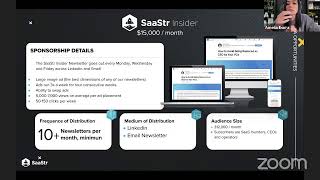
I made that recommendation to lots of folks, right? I was just making that recommendation to a sponsor who signed for media the other day. It was like, Yeah, you know, you're going to want to do— they, you know, they were like, okay, we want to do like this flight, but how should we think about it? I'm like, actually, repetition is better. It's in here in the stats later. But, you know, I think we have a— I think the weekly has about a, you know, 30 to 40 open rate. The daily is like 30 to 35% open, like high open rates. Right. But again, you're not— everyone's reading every single edition. So repetition is key. I always— I err on the side of, you know, sticking to your message. And I think too, like, there's, there's a thing about, you know, changing maybe ad copy or ad creative, but still having the same message, right? There is, there's definitely an argument for that. And that's what we recommend, especially if you're doing multi-month. But I would say even a month is not that long, right, to get in front of folks with a message and have it really stick. We were just interestingly looking at the stats the other day of like specifically for the daily and the, and the weekly newsletters, like Do clicks drop off at the end of the month? Right? People were like, oh, I don't know, like, does it drop off at the end of the month? Because they've seen my ad so many times. I'm like, it actually, we've seen it go up. So again, that repetition is so key just to like, you know, you're start, what, just when you're starting to get bored of it, other folks are starting to have it sink in. It's just because you've seen it so much. So, yeah, repetition is key. So coming into our media and how we define it. So there's a few newsletters and then the podcast and kind of SaaS.com is weaving into all this, which we'll talk about. So Differentiators on our newsletters here, kind of two that are similar yet different, and then one differentiator on the Insider with it being on LinkedIn. So the Weekly goes out every Sunday. This is our top news of the week. I can't stress enough, again, the open rates are always a little bit higher on the Weekly. The clicks are a little bit higher on the Weekly, even though it's once a week. The Daily's three times a week, right? You're getting like, it's every Sunday. So think about our audience, like that works for them. There's a reason we've kept it on Sunday for, you know, whatever, 10+ years. Staff, this Faster Weekly, like that is when folks are consuming content, catching up on things they missed for the week. They also know that, you know, the weekly, because it is an aggregate of our top content of the week as voted by the people, by the way. Like, I don't, I don't know if people know this, like I don't just like pick articles for the weekly. I literally go into Google Analytics every week and I'm like, what do people read this week that they might want to catch up on? And so yeah, that's, that's That's the reach of the Weekly, you know, it's magic. People have read 52 editions of this for 10 years now. So that's the Weekly. It's our like longest standing newsletters. It's really great content. Sometimes it's hard because I'm like, ugh, I can only put like 4 or 5 top articles in there. So many in a week that are really, really good. And that's why the Daily exists. So the Daily is every other day. It's Tuesdays, Thursdays, Saturdays. It's all the new content on saster.com. So saster.com is really fueling these newsletters. Latest on breaking news. The art of the ads are a little bit bigger in the daily, which is nice. Little bit more real estate. We've seen folks do like ebooks in here. Things that you want to launch in the daily are really, really play well here. Again, just due to its frequency, right? You kind of build up that drumbeat. The Insider is a little bit different than the weekly and the daily in that it is distributed across LinkedIn. For those who don't know, our SaaS CEO and founder Jason M. Lemkin is a top voice on LinkedIn. And so he's had newsletter access for, I think, the last couple of years now. And so yeah, we use it as a SaaStr Insider. We post some of the top content from SaaStr. Some of it's like evergreen, some of it's new. And the ads here are really big billboard style. And I'll, it, I will say too, it answers the question that people ask us a lot of like, how do we tap into Jason's network? I'm always like, well, if you wanna do that in a structured way, the way is to sponsor the Insider. Not only does it go out on his LinkedIn, so then, you know, you, you get that brand association. It also goes out on email, so folks folks get. And sometimes if you have it on, you'll also get a push notification. Like I get, I get a push notification when it gets out and published, if you've got that setting on. So folks get it a number of ways, but most notably via LinkedIn and also via email there. So, all right.
Getting into the nitty gritty.
Yeah. Yeah. Okay. Yeah. You've seen our podcast grow.
Yeah.
I love it for a number of reasons, but why, but How do you, how do you help folks think about layering on the podcast or doing it standalone? That's probably the most helpful thing for folks to know.
Yeah, I think it's two, it's two types of individual that reach out and listen to our audience, right? I think there's, there's, if you, if you know SaaStr and you're a longtime follower, then you probably know our YouTube channel. You've probably seen our videos. You probably have gone to even, maybe you've even gone to an event and you see that content. And our podcast does a great job of not only repurposing some of our famous content that has— it's still relevant today, but also brings out some new pieces as well. We have the CRO Confidential that comes out. We have a whole bunch of new one-on-ones with Jason that comes out. And so this new content that constantly gets released through the podcast, it's an— it's just a different— it hits different, right? And so I actually had, you know, I, Speaking to the community not too long ago, one of the, someone at one of the execs I was talking to happened to just say, you know, when he runs, this is what he runs to, right? And so like everyone's got a jam. This is his jam. And so good for him, right? But, but it's, it's, um, it's just gonna, you're gonna be able to fit a podcast in differently than you are going to fit in a blog. And so that's where it's like, why this over that or both? I try to couple in podcasts when I can to those that are trying to do newsletter. Because it just gives you a further reach across her audience and it helps you address different, different personality types.
Yeah, that's super helpful for folks to know. And I think, you know, podcasts live in perpetuity. That is something I always try to remind folks of, like whatever you want to advertise on the podcast, like people are going to go back and listen to episodes from literally last year, like last January. Now people are going to listen to episodes from a couple of years ago and like The ads that are in there are in there. We don't go back and like retroactively swap them out. Like the ads that are in there are in there. So again, really great if you have something that's new and you want to launch it, but like do your ad in a way that makes it sound like it's, you know, it can still be evergreen. Or if you've got something evergreen you want to hone in on, right? Or an evergreen like startups program or offer or whatever it is. That's what we've seen work. Like a lot better on the podcast. 'Cause again, these live on forever. Like some of our top episodes come out in the beginning of the year, people listen to the end of the year. So it does have a long shelf life, if you will. So that is something to bear in mind on the podcast. It's also the most turnkey option, I would say. I hear like most folks do create a landing page to drive the audience to, right? It'll be like, oh, you know, visit saster.com/podcast. You know, the audio version of the ad, but driving to some sort of like dedicated landing page. So really you just need a landing page, but you send us a script and that's it. Like you don't have to voice it over, you don't have to worry about it too much. Like fairly turnkey.
I'd also say just for those that have a PLG strategy or even a freemium product, this is a no-brainer. Yeah, it's a true no-brainer, right? Like you can easily quickly say, give us a shot.
That goes on forever. Yeah.
Give us a shot. Go to mycompany.com/saasr. Done. Right?
Yeah. So yeah.
Yeah.
No, that's a good point. And also I would say this too, the podcasts when we publish them typically are also a companion to a full write-up on saasr.com, which also goes into the newsletter. So like if you are, you know, the podcast sponsor, there is that exposure of like we are promoting the podcast in a lot of different places in addition to it. Being a podcast. So that is kind of a nice added bonus if you do the pod, like you do kind of get the newsletter in SaaSder.com too.
Yeah.
You know, the pod people. This is a sample. I won't play it now, but if you've listened to our podcast or any other podcasts, you kind of know what the format feels like there. The weekly. So yeah, as I mentioned, the weekly goes out every Sunday. This is our top content of the week. A lot of our subscribers are SaaS CEOs, founders, and, you know, revenue leaders. Again, we try and strive for consistency here. You only get 4 sends typically in a month for a Sunday, sometimes 5, usually 4. And yeah, we tend to recommend keeping your ad the same for the entirety of the month. And it's kind of like a banner ad size here. So yeah, conversions depend, right? But things we've seen— well, sorry. Work there. Again, kind of similar-ish to the podcast. Anything that's like a new launch or something evergreen has worked well here. We've seen other people ask us this too, I think. Can we promote like our own upcoming like webinars, events, whatever? You can. You know, it's— I don't think anything really directly conflicts with our SaaS or in-person, except maybe if it's the same day, we might want to talk about that. But I think, yeah, We've had people definitely promote upcoming digital events. We've had people promote upcoming webinars in it. We've had people promote ebooks. I've had people promote startup programs or to Ryan's point, either free trials, free credits or like additional credits, trials, etc. We have had people do demos, which is like a pure, you know, more bottom of funnel play. I think that works well if you combine it with a different media asset as well. That is more top of funnel. Again, just to build consistency with our audience as with anyone else, right? Than just going straight for the, bottom of funnel conversions. And yeah, that's anything to add on the weekly.
Yeah, the biggest question I get with media, especially the newsletters, is like, talk to me about the audience profile difference between the weekly and the daily. It's probably one question I get. We get more operators on the daily. Yeah, we more founders, CEOs on the weekly. And I try to piece it out as like, think about think about the daily job of a CEO. Their inbox is full, right? On a Sunday, they get a newsletter in the morning, right around the time they're drinking their coffee.
There's a chance that's it.
And so that's where, that's where the weekly, if you want to try to figure out, hey, my product's really meant for the founder, the technical founder, the revenue founder, it's meant for a founder. I would suggest the weekly. That's, that's where you're going to get your return because it's probably more built for that. Whereas an operator will be out through the week.
Yeah. Yeah. And I would say too, we're— I think the daily is the next one. Those are just samples of the, you know, the format looks like. Yeah, the daily is the next one. Yeah, I think that's a good call out there. Yeah, many more operators are on the daily. So you have, you know, that sales marketing bucket we kind of mentioned earlier, more prevalent in the daily than it is the weekly. I would say too, on the question, we get a lot of like, well, you know, you guys kind of know roughly your open rates, but you know, how many editions do people read? You kind of like Like the rough math is people read about like 1.5 of these a week. It's like 1.3 or something ridiculous, right? When you run the numbers, it's like not a full newsletter. But, and I think too, that speaks to not only the subject matter of the daily because it is the latest news from saster.com, it also speaks a lot, I think, to the subject line is what we found. So if you have read saster.com or if you want us to send you a few editions of the newsletter, we can do that. So you can, you can see what we mean here, but A lot of our top content does revolve around either founders, sales, marketing, or, you know, interesting learnings from the cloud to kind of hit everyone. But it is punchy, right? So sometimes, for instance, like, you know, we published a couple weeks ago, we published a part of Jason's AMA where he talks about, you know, the changes that are coming to literally sales, marketing, and CS. You know, those people are going to open that daily. That is literally the top of the daily. That's kind of what the edition's about. We have other ones. That are about maybe a little bit more like hiring-centric, that's more founder-centric or just leadership team-centric, right? We have ones that are the one at the top of the newsletter today was like the top, you know, mistakes CMOs make. Probably going to open that if you're more likely to open that if you're a marketer, right? So we do try and also vary our subject lines throughout the week. And what is the top article to make sure we're hitting one of those operator buckets? You know, not just like I'm only going to do marketing for the whole week. Like we do try and change it up so that we ensure that people are more inclined to read these editions throughout the week because a lot of people too, I would say, are signed up for the daily and the weekly. But again, it goes to our point of consistency, right? Like if they're opening the daily, I do know that from what folks have told us and what we can see in the data, how they consume it, right, is like you're going to scroll through, you're going to read the articles that pertain to you. The weekly, you're going to stop a little bit more because it is Sunday, right? You've got time to maybe consume a top article you didn't read during the week. I've had folks tell me that all the time. They're like, yeah, I saw that in the Daily. I kind of read the blurb, like literally in the newsletter, didn't have time to read the whole article. But then when I saw it again in the Weekly, I clicked the whole thing finally. Right. So again, consistency is key. Yeah, these are some, some of, some of our most popular ads that have run in the Daily are things like ebooks, are things that are a little bit more timely. Again, if you have a specific operator audience, that is something we can help you align on because there are so many newsletters per month on the Daily. We, if you're like, I just, you know, if you had a more marketing-centric daily, those are the ones we want to be in. That's fine. No problem. Right. So that's something we've done for folks as well there. And then, Bryant, talk to folks about the takeover of the daily.
I'm glad you, I was going to ask you. So that's awesome. So, all right, you see at the bottom left, it says 5+ newsletters per month minimum. I'm just going to call out a couple of things. First off, when we do the regular This is the regular SaaS Daily ad buy.
Normal.
One of the 2 ads that go out in that month and that— and you'll be included in 5. It says plus because some months are a little bit longer, but you'll be included in at least 5 newsletters that month. All right. Thanks to our friends, we've been given some, some feedback that like, hey, there's another way you all should be doing this. And it was tested and proven quickly that yes, they were 100% right. So our friends know who they are and we thank them. But there is, there is another way to do this now, which is called the takeover. Our Saastr daily takeover allows you to purchase both ad spaces plus provide an advertorial if you'd like. But you get all newsletters, not 5+. So you'll be in every one of them for the month. And why that's exciting? Well, friends, that is, that's a lot of placement. It's a lot of impressions. It's a lot of consistency. And if you're really trying to do big brand buzz, this is the way you do it. We recommend this in two ways. First off, the price for the takeover is $50,000 for the month. So that's, you know, that's large-scale exposure. But we recommend buying it in conjunction with the podcast for the reason we said earlier about just making you're reaching across all avenues. And so the bundle rate on that is $65,000. So you get Takeover plus a month of the podcast for $65,000. And, and that is, yeah, it's, it's in terms of power, it's, it's a, it's a flex play.
Yeah. Yeah. I like to take over for a lot of reasons. We've got a few of these upcoming in '24 since a few folks asked for it at the end of '23. It speaks to, to like, you know, Zapster for, you know, the most part of things is vendor agnostic. And so folks will ask us for exclusivity and I'm like, we can't super grant that outside of things like this takeover, right? Because we are meant to be, you know, non-SaaS vendor. Like we don't have our own product, right? We're not competing with any of our sponsors and partners. Like we're much like a G2, right? Meant to be vendor neutral. There are certain tools we just happen to use. There are certain things we, you know, do a bit differently. But yeah, other than that, you know, again, like I said, 95% vendor agnostic. We don't try and sway folks one way or the other. So we really leave it to, you know, placements that we, that we have and opportunities here. So that's a good call out there. I will say the other thing on things like the Takeover, the Daily, the Weekly, the Insider, all these newsletters, right? If you think about the rest of the calendar year, some of these months are already occupied. So if you have something upcoming, do let one of us know so that we can check which, which maybe newsletter or podcast asset has availability. If we think about our in-person events, the months around and during our in-person events not only go first for, for folks who want to layer that on, We don't do takeovers during those months, right? Because again, we're trying to be agnostic. We do talk about the events a lot in that month, whatever month it is. And so by nature, right, we can't really make it exclusive because we're talking about a lot of our sponsors around the time of our events. But it's also when Saastr has a peak of, you know, the most eyeballs. So it's a really good time to be, to be on our media. Folks have, have asked me too lately, like, you know, oh, like if I wanna maximize my views, like what's the best time? I'm like, Really, the whole year is a good time. It's like I say, there's no bad booth at SaaStr. Really, on our media, there's no bad time to be a media sponsor of SaaStr because for another reasons. Yes, there are higher peaks around our events, but, um, we do our event content throughout the year. We do new content throughout the year, right? So it is a constant flow of folks and eyeballs and reach. I would say I wouldn't worry about that as much. I would just align it to what makes sense for your timing, for your product, for your team, right? That works for you and see if we have availability from there, right? If you could do it twice in the year, I would say do it once around one of the events and once around whenever you're launching it, right? Kind of works a little bit better. And yeah, so, and, but really the spread of our media, it does peak, you know, the month before, during, and then after an event. And we have two events. 6 months out of 12. That's all the new content we do. Plus, I don't know if you guys have seen our YouTube, like it actually spikes like the last half of the year. But going into Jan, I'm like, dude, our YouTube is like crazy right now. Like it is insane. The podcast last week was like, you know, charting like crazy. It's January. I, again, there's no bad time to be a media sponsor at SaaS. Faster.
That's right. Yeah, I actually think like, you know, Amelia kind of lifts the rug a little bit. January in terms of sponsorship for us, it's actually in the grand scheme of things, it's one of the lower requested months that we have. And yet it's probably one of the highest performing months we've ever had. So like, you know, there's, there's a lot of missed opportunity in something like that where, you know, we're not sold out on the daily right and you could be completely catapulting that. In fact, if you're listening to this, I'll still sell the last 2 weeks if you want to.
But that's— that said, like, put a quick ad together. Yeah.
But that said, like, you know, it's— you got to take advantage and strike while the iron's hot on some of this stuff. So.
Yeah. Yeah. And I would say that's just— it's only purely from a perception thing, right? Like, I think people think, oh, it's the new year. People aren't really going to be responding to my emails or opening things or they're overwhelmed. I'm like, for sure, if your newsletter is, you know, nice to have content, for sure. If it's product updates, for sure. I've seen a lot of folks like inviting people to, you know, beginning of the year webinars. They're getting a lot of those. Again, the magic of the SaaStr media by nature is like, it is all new content, right? It's all new content on saaStr.com. It's all value-add content from the events. It's some of our most popular speakers coming back to do things like Workshop Wednesday or CRO Confidential or different things, or interviews with Jason M. Lemkin. What's new, right? My App Stack, Doubling Down. Like, we have all these different series that we do throughout the year that people consume, and they have a reason to consume throughout the year. So I think that's a big differentiator too. I know some folks on LinkedIn, which we'll just talk about briefly now on the Insider, but I know some folks are maybe a little bit doom and gloom on the LinkedIn about, you know, email open rates and all the changes with, you know, Google and Yahoo affecting things like Outreach and Mixmax and Salesloft and all those tools, right? Again, these don't go out via those tools.
Right.
It is. And I will say this other point too. I was watching something this morning. I don't know what jogged this in my mind. I know data is top of mind for a lot of us. This is just amalgamation of things I I think I've read and seen recently of like, oh, you know, data quality is getting so bad out there. I'll also say this, and I know you brought this up yesterday, Brian, we were chatting about this. A lot of people, some people think this is bad, right? But I'm gonna tell you why this is the best gift to all mankind. If you sponsor Xastros Media, a lot of people sign up with their Gmails. Some folks used to be averse to this. I think people now are catching on to the magic of this. Like, I think when I ran the numbers, it's like 40% of our database is Gmails. I fucking love it. Sorry. Like, I love it because think about how in SaaS people change jobs a lot. People change titles, they change roles, they change phone numbers because too many people have their phone numbers.
Like, they don't change their Gmail.
They don't change their Gmail. I gotta say, I've had my Gmail since I was a kid. I have never changed ever. Like, why would you change? Your Gmail. Like if you got your Gmail name, even if you have a lot of numbers in it, you're not going to change your Gmail. Like that's too much work, man.
Yeah. Yeah.
So yeah, I'll just say I'll maybe I'll— I mean, I don't know how I got all this from LinkedIn, but yeah, you know, the data that people give us, not only are they giving us their Gmails, which I think is great, right? They— how people consume our content, especially on media, is like they want this to go to their other inbox, right? Like they want this content. They wanna read it, they wanna consume it. They don't wanna lose it when they change jobs. I've literally had people, this is not made up, we've had people who register like with their work email, either for the newsletter or for the event later down the road, be like, can I, like, can you help me change this to my Gmail? Can you help me change this to my personal email? I need this in my personal email, right? So yeah, that's one. I think a big differentiator is people are actually consuming these because it is hitting a lot of personal inboxes. So that's a great way, you know, to help with all the crazy 2024 drama of Google and Yahoo changing their rules, right, for how people receive emails. This is going to a lot of folks' personal emails, you know. Yeah, to the point of nobody ever changes their Gmail, right? I think people are like less inclined to unsub when it is their personal email, right? You're like, okay, like I'm not, maybe I'm getting some things from consumer products that I, that I, that I, that I know and love and use and consume, right? Like Uber is emailing me, fine. Like I, you know, everyone's got the app. But you know, you're not getting a lot of SaaS in your personal inbox. I would say, you know, maybe if you work for the company or if you're like super drilled into a category, you're signing up for your Gmail there, you're probably signing up for that with your work email. Like people do. It is magic to have people sign up with their personal emails on SaaS or they don't change it. It speaks to how they consume it. It's why we have great, the great open rates and consumption rates we do. The magic, man. I'm like, it's actually a gift.
Here's, here's one other way to look at it. SaaS is really meant for individual growth. Growth, right? Like, we're helping.
Yeah, that's true.
We're helping companies, we're helping them with, with strategies, but like, tell me all that doesn't reach back to the individual and helping them grow, right? So yeah, we, we have a focus on that. It's a, it's a great reason why.
So it's a, there's a great example, right? So monday.com, um, Roy and Aron literally were super fans of Saastr. They came in reading the content. Obviously now Saastr's partnered with, you know, monday.com throughout the years, on a number of things and like it, it has helped both, right? It has helped them personally shape monday.com in the, in the, in the way it is. There's a super cute story if you haven't seen the YouTube of that one from the annual this year of him, you know, Aran talking about like the SaaS annual he came to and we have these buttons of like your ARR and he was like in between two and he didn't know what to take. Like this guy came to absorb, you know, individual learnings. Pretty sure his Gmail has a database. But yeah, I'm like, dude, the quality of people in our database also is like, I call them lurkers. Listen, they're not going to open every email, but they do lurk. It's crazy to me sometimes when I, when I, when I'm quote unquote bored and I go through just like, you know, who, who owns our newsletters. I'm like, yeah, there's some, there's some good lurkers in there. So yeah. Anyways, if you're, if you're thinking about all that in 2024 and you want a way to reach folks, that maybe is a little bit of an easier lift just to tap into our audience, then yeah, that's one way to do it because it's getting to folks, you know, phones and but also, you know, I think as folks find a little bit more balance in '24, you might delete, you might delete your work email off your phone. You're not going to delete your Gmail off your phone. So. Right. Or your LinkedIn. So. Okay, well, let's wrap on the Insider. It goes out on LinkedIn. I feel like I should, like, secede my time on the floor to you because you have more followers on LinkedIn than I do.
No, I, I, um, I think, uh, real quick, so here's what I love about The Insider. First off, I, I, I consider this very go-to-market focused, and there's founders and CEOs for sure, but it's very go-to-market leadership. That's kind of LinkedIn in a nutshell, right? Like you have a lot of CMOs, so it's very go-to-market focused in a way, not the, the content, but who's subscribed. Our subscriber base though has grown like just awesomely on this. Well, we just crossed 50,000 subscribers. I think that was—
Yeah, but it was fast. It was like a little slow, a little slow, and then Jason got the LinkedIn top badge and then it was like, yeah, bam.
So, so that's, that's really awesome. So we're, we're, we have a large, we have a large base here. Here's the beauty of it. We just went down this tirade of why Gmail is super fun to have. Okay.
Yeah.
Here's the beauty of this. The Insider is kind of a twofer.
Yeah, that's true.
The LinkedIn newsletter. So you'll get them, you'll get the post in LinkedIn when it comes up. But additionally, it will then send as an email. So you're going to get both. You're going to get it as a newsletter and then LinkedIn is going to send it to you as an email.
And but also it goes to the email that they sign up for LinkedIn with, which again, personal email. I don't know anyone who signed up for LinkedIn with their work email.
Yeah. And I don't know what, what does that mean? It means that you should have higher engagement on this than, than even many of the others. So this is a very great option. It's a different option. Everyone consumes content differently. Amelia calls out my LinkedIn. I am active on LinkedIn, so I'm constantly in there. I actually have it open on my phone in front of me. Not that I'm LinkedIning, I'm not. It's just, it's just open. So it's just, yeah, if you're a LinkedIn person, this is going to be built for you.
So to wrap, yeah, I think if you're feeling the pressure a bit because maybe your own emails and campaigns are not performing yet because it's Jan and you want to get some traction, Sashas Artwork is a good one to tap into. It's not dead in January by any means or in Feb, right? Like it is, there's no bad time to sponsor the media. It's a really great way to get around some of the Gmail and Yahoo changes that are coming because it goes to folks' personal emails, right? Same thing on the Insider going to folks', you know, whatever they're signed up with for LinkedIn, which is mostly their personal emails. Really love the podcast for this reason as well, right? If you're subscribed to the podcast, most people are just subscribed to a handful of podcasts that is reaching them, you know, again, in their personal space on their time, right? Good way to consume. Any of your, you know, evergreen things or new product launches. But I will say too, the data that we, that we have in our databases is gold. It's like, you know, it's— I'm sure people would kill to have our list of, you know, Gmails of, hey, you've got emails of all these people. I want that because I can only ever find, you know, their Ryan at SaaS for Inc emails. Yeah, I think it's It's, it's a, it's, it's just again to wrap there on that point. It, it, that is why it is so powerful to do the media in addition or even staying alone from the in-person events, right? You're reaching people where they are. The, the, the data we have is self-volunteered as well. I would, I'll end on that note. And what I mean by that is, right, like when you're coming to sign up for saster.com, if you're signing up for the newsletters, you're signing up for the insider with your LinkedIn, like This is your data. You are volunteering. You're volunteering your LinkedIn, like, info, right, to LinkedIn to become an Insider subscriber. You're volunteering your data to us to become a newsletter subscriber and opt in with your, you know, again, most of the time, personal email, sometimes still work emails. That's fine too. You're volunteering that information. You're volunteering that, or folks are, you know, people are volunteering this information when they sign up for our events. It is high-quality data. So I think no matter what you do with Saster, that is one thing to note. I think as data becomes more prevalent in 2024, you know, this is self-volunteered information. We don't, we never enrich our data with anything other than our own database. I say this to folks all the time. I'm like, we literally enrich it with our existing information of when folks have volunteered, right? Like their phone numbers, their personal emails. People can do a secondary so they can do their work and their personal email. It is all self-volunteered. We're not going out and enriching any of this data. We think that our data is pretty good because people self-volunteer, right? So why would you lie? So yeah, that's just something to bear in mind across everything, especially for media, right? It's why the open rates are so high. I think people have asked us that a bit lately. And it's why, you know, the sponsorship of events is important to either tailor on as well, just because again, a lot of that information is self-volunteered. They're registering for the event, right? They are putting that information in. That's not scraped from We're not enriching it from anywhere. We only ever enrich, you know, your stuff with our own database and we're like, here you go. And they're like, oh, okay. So yeah, that is, that is the last thing I'll say. Brian, anything else you want to add to wrap?
It's not an all or nothing strategy. It's not a one thing with SaaStr. We have so many different avenues to try to bring you in front of our community, but we are the largest community in the world for executives, entrepreneurs, and founders. That's what we do. It's what we've been touting. That's what we've been doing for 12 years and frankly, so, you know, if you're not exploring some avenue by which to go about accessing this as part of the strategy even for this coming year, then I think you're missing out. So it's, it doesn't have to be an all or nothing, but we should at least have a conversation as to how we're engaging. That's it.
Cool. All right. We've talked a lot about media, so we'll wrap here for this week. Thanks everyone who joined on the livestream. If you have any questions, you can reach out to us. I am ai@sastrink.com.
I'm brian@sastrico.com.
Yeah, he has a different domain. So, you know, I don't—
you can do Saastrink. I'll get it anyway. So it's fine. Yeah, you'll get it anyway.
All right, guys. Thanks for watching. Hopefully this is helpful. If you have any follow-up questions, definitely just let us know if you wanna pick our brains and we will see you all again next week.
Bye, everyone.
More from Jason

Why Your Next Hire Should Report to an AI, Tragedy Apps, and Too Many AI SDRs? | The Agents #004

Our Agents Drove Our Salesforce Bill Up 80%, Marketo Hates Agents, and We Stealth-Churned Off Notion




Managing 20+ AI Agents: Lazy Agents, Our $500K AI Bill, Stealth Churn & the Death of 60% Solutions




