SaaStr Sponsor Insider: The 2023 Current State of Events with Boldpush
Julius Solaris, founder of Boldpost, breaks down the 2023 events boom: flagship conferences hit record attendance while niche events struggle. Virtual events are largely dead, costs are soaring, and buyers now attend top-tier events for meetings and networking. Sponsors need pre-event outreach and content creation to justify ROI.
Chapters
my screen here. Um, cool. For those in the room, um, thanks for joining. We have a special guest today which we're very, very excited about. And also, as a reminder, we are live streaming, we're recording, so this is going to go out to a ton of people on in the Sastre community across the Sastre universe. So, um, there's a lot we want to cover today on the current state of events in 2023. Man, a lot has changed. So I'm so glad to be joined by my dear friend Julius, who is an event influencer and now founder of Boldpost. Julius, welcome to the show.
Thanks for having me. Oh my God, dream come true.
Well, thanks for doing this. I know we've been chatting. We just met up at Choptalk at Vegas, and we were chatting about events, and I was like, oh, we should do this on a webinar and get it out there more in the world. So I'm super excited. For those who don't know you, tell the folks a little bit about yourself and how you— I mean, you've come into our ecosystem throughout the years, but like, for those who don't know you, what should they know about you?
Well, I've been running disaster of events. I would call it that way. A website called EventMB for 15 years, a company I sold in 2019 to Skift, a larger media company. And as part of that, I've discussed sort of trends and the use of technology in events for a while, and I've done a ton of research. And more recently, I've worked with Swapcard and Hopin. I was VP of marketing for them. I'm sure a lot of people in the SaaS community remember that. So yeah, and more recently, like a year from now, I've been consulting and researching even more for tech companies and large events Yeah, help them out with figuring out the hell that is going on.
Yeah. A lot of things. We'll start to dive in here because let's help folks set the stage on events. I know Saastr is deep into event production. We've got our Europa event coming up in about 2 months. You help consult on a lot of events. You attend a lot of events. So you have this— I pulled a lot of your data and some of your tweets. So This week happened just a few weeks ago, right? Where it was this crazy $6 billion week in the events, like, tech industry. Give us, give us a little bit of a snapshot of, like, just what you're seeing overall in events, right? Because pre, you know, pre-2020, I feel like events were so hot. There was like, you know, 5 events a day. And then obviously, you know, pandemic happened and we were slowed and we all went virtual. But now it feels like in-person is back, but just wanna get your take on that cuz you, you know, you do all the research, you have all the data, like what are you seeing out there of like events being back?
Totally. And you know, it's been crazy, right? You know, the roller coaster, um, that we've seen since the pandemic, a lot of event technology companies raising, uh, billions essentially, um, for, for virtual events. And then all of a sudden by the end of 2021, things started to slow down. And then they started to tank dramatically. Several companies went through 1, 2, 3 rounds of layoffs and sort of with this high valuations that they had to justify. At the same stage, we saw a lot of that driven by the rise of in-person events. That was clear. Like everybody wanted to go back and meet in person. And I feel we're still experiencing that pendulum sort of swinging back towards in-person. That's what's happening, but it's happening at a, at a rate and with a strength that nobody expected within the events industry. Everybody was like hoping for that to happen, but with this strength, we haven't seen it. And like most of in-person events companies, so companies that plan hundreds of events a year, companies that have millions of attendees, they've had the best year ever in their history, sometimes in 70 years. So this is like crazy. This week, you're, showing here to the audience. It's just a week where there were— there was like a major acquisition, Blackstone buying Cvent after negotiation, turning down an offer. And then like 3 companies in in-person, PRA, Tarsus, and Hive Group were acquired, $6.2 billion worth, in a moment where, you know, in a— in an area where essentially there was no no deal making at all, especially in technology. You know how tough and rough it is out there. So yeah, it's kind of a counter signal. I do calls every day with investment firms looking at in-person event tech, in-person specifically. So this is the, to set the scene, in-person is booming.
Yeah, I, I think that's such a, it's such a crazy stat to think about. I mean, We've seen it in other events, you know, it's just across the board that we've gone to, right? Like Shop Talk had, I think, 10,000 people there. You know, I was in Vegas, there was, I don't know, probably that many more people at the Taylor Swift concert that weekend. Like, it is an event, right? I'm like, I think you tweeted this too. You're like, it is an event. You know, Coachella is the next two weekends after this weekend. You know, I think they're expecting back more than what they had last year now that it's back. Like, I think just overall, right, it's a, it's a good overall sign in the industry that like events are just overall kind of generally back, even if maybe on the SaaS side, the pendulum, I think exactly to your point, the pendulum has been a little bit slower, but it's definitely like swinging in the right direction specifically in SaaS.
Well, obviously tech has like more complications, right? With all the layoffs. The, the vertical of tech is struggling a little bit more, but demand is there. I mean, if you see what happened in San Francisco last week with Woodstock AI, like I'm, you know, just a founder sending a message saying, I'm coming over, should we meet up? And then 5,000 people show up. That tells you a story about the demand for in-person.
Yeah, it's, we'll talk about it a bit more, but I think it's helpful for folks here hopefully to help set the stage. You know, a lot of our sponsors are tuning into this who either are, sponsors of SAS or thinking about sponsoring SAS or do their own events as well, right, at various sizes. So I think this is all helpful for them to know. We, we talked about it a little bit, but I want to get your take on this too, of event attendance, right? Because I feel like so much has changed around attending an event now, whereas I feel like back in the day it was very much like, okay, everyone else is going, I got to be there because everyone else is going, even if I just go for like an hour. I'm gonna go show my face and do the whole thing because it's the thing to do. I feel like now so much around attending events has changed, and we'll try and break it down a little bit. But one thing we've seen, and you've just touched on as well, is like events are seeing a strong surge in attendance now because that's where people want to connect, right? We're still mostly, you know, distributed teams. I know there's some people starting to go back to the office, but it's not every day. A lot of us still conduct most of our business on Zoom or virtually. And for, for SAS, we've seen this interesting surge in attendance and especially around Teams. So I wanted to ask you about that bit of your take because you see this at a much broader scale, right, with all the events that you work on and just in the industry. We've seen this crazy pattern of— I think you and I were chatting about this before the webinar— SAPSTER has seen more buyers coming to its shows than literally ever before. I was like, this is the year of like the CTO and the CFO attending SAPSTER with the rest of their team. But are you seeing that across the board? Like, is that— should we get used to that? Like, is that the new just pattern for attending? It's like you need to bring your buyer now versus they used to just be able to like, you know, give them a report back in the office.
Yeah, that's a great question. Um, you know, I wish things were simpler in terms of saying you know, this is like a trend that is happening across the board. Every single in-person event is growing. That's not the case. Actually, it's very patchy. So you see some events that are growing super fast with a lot of demand, and like some other events that are reporting attendance as a problem, and they're not able to plan attendees, right? That has a lot to do with the type of event, in my opinion. This is like, you know, my, my thesis. I mean, there's no proof of that in the data, at least yet, because this is like a 6-month trend that we're looking at.
Sure.
So, you know, this is what happened. So the more business-focused, the more networking-focused events like SaaStr, where, you know, the right people to make business are gonna be there. And actually on the other end, the people that wanna do business, the investors, the, uh, the C-level suite, they, they can deal with all the information that is happening. Obviously deal-making to a certain extent, on Zoom probably is evolving as well. And so all of a sudden they're saying, okay, I have no time, I'll just go to SaaStr and make it happen there. So that, that means also that they cannot do it for all the events in SaaS. So the smaller SaaStr type of events are gonna suffer, right? So that's what is happening because like people are also evaluating, okay, I'll go to the big event, to the main event of my category, but I'm I want to attend every event that is out there.
Yeah, no, that's a fair point. I mean, we're lucky in that SaaS has scale, and so we've gotten really good attendance rates for, you know, Europe is running at a crazy attendance rate right now, annuals ahead of where it was last year. But yeah, to your point, I totally get that of like, we've been really lucky in that standpoint of like, because we do so much else of like newsletters, media, sasfor.com, Twitter, like, our community's quite large. And so I think you're right. What you're seeing kind of ties to what we've seen in more buyers and teams coming to SaaStr, 'cause people are, you know, when they're tightening up budgets, you're like, all right, instead of going to 3 events, I'm gonna pick 1. So we've gotten lucky that we happen to be one of those events, but I think it's helpful for our sponsors just to know in general, because I think customer events have gotten a lot harder because of, you know, I've got some slides in here later, but, because of all the things around inflation, of like just being, you know, it's not even a theory anymore. It's like everything is more expensive. Like production costs are more expensive, venue costs are more expensive, you know, doing an international event like we're doing in London is more expensive because the dollar is weaker than the pound. Like everything has gotten crazy more expensive on the organizers and hosts, and even for, you know, our sponsors out there who have if you're thinking of doing your own customer event this year, like it's just gotten a lot harder to do those kinds of things in person at scale. So I do think it's crazy kind of what we're seeing now in like the surge in like the bigger events and it's gotten maybe a bit tougher for some of the smaller ones.
Absolutely, no, you're totally right.
This is one of your data points. I think this is interesting just for our folks to know. We still do a lot virtual, right? Like we're literally on this webinar. We do Workshop Wednesday. In-person is obviously beating virtual, but to your point, right, like not everyone can, I think, host these big at-scale events. And so they're still doing some virtual, like, just talk me through the latest, like what are you seeing now on this whole, like, in-person is clearly beating virtual for like a lot of things, but like, have you seen, you know, things where virtual still can work or like, Have people just abandoned it now and we're all just trying to do in-person events even though they're expensive? Like, what have you seen?
Yeah, this is a tough question. So this is a data point from actually NorthStar Meetings Pulse survey, which is like a great resource. It's a free-to-download report. If you want to dig deeper, definitely search it up. It's always like updated every quarter and it gives great perspective on what's happening in the industry. Well, so this is like from a couple of quarters ago, and it's essentially saying that, oh, 50, almost like 50%, um, of event planners are not planning virtual events anymore. So this is what is happening, okay? This is a fairly complex subject, but I'll try to make it super simple for everybody. So core event planners, people that plan events, you know, this is what they do, that's their product. So we're not talking about corporate events, corporate, you know, CMOs doing their marketing programs or, um, so independent event planners and all of that, they've moved away from virtual events. They have gone back to in-person. They used virtual events during the pandemic because they couldn't do anything else. They said no, they moved on essentially. That's it, it's done. So all of that part of the market is essentially gone. There's not a lot of, of that happening anymore. Now on the CMO front, But we realize that there's a better version of a webinar that you can do with virtual event platforms if you're intentional about it, right? So there's more that you can do, especially with a marketing purpose in mind, um, you know, promoting your in-person event, having programs that sort of lead up to the, as we are doing today, uh, in a sense, right? So that, that makes sense.
Yes.
Uh, and a lot of people realize that, but obviously there's sort of— there's probably 1/10 of the demand that we had during the pandemic. I think we're back to what the demand was for webinars, probably 20% more of that, right? But not 1,000% more of that. And there's 10 times more the competitors. So that's the perfect recipe for disaster for these, these virtual events companies that have been overvalued Now as to have to justify valuations and that's why the layoff. So more layoffs on the way, I would say more sort of mergers and acquisitions. But what is happening on virtual? Nothing much is happening on virtual. And that's the problem I feel as well. Like, have you seen any platform with like incredible sort of features or new developments? No, they're essentially stayed like they are. I just did a round of 6 demos for a client that I'm working on for 100,000 people. On a virtual event. And like, yeah, I was surprised to see it's exactly like 2020, 2021. So how do you expect it to be better? That's my question. How is it going to get better? And that's a problem they need to fix. Probably AI can be a solution to that.
Yeah, no, I— yeah, there's so much you just touched on there. Yeah, I'll try and simplify as well. I think— from what we've seen from both SaaStr and some of our sponsors' perspective, like it worked. I mean, listen, our Workshop Wednesday is a perfect example of this. It's funny 'cause internally we're like, we don't call it a webinar, but it's also like, it kind of is actually its own mini virtual event, which is really funny because this is at the start of the year where our CEO Jason M. Lemkin was like, we should do like a Workshop Wednesday of like, we have all these great speakers in the SaaStr ecosystem. And like to your point at in-person events, I know you've tweeted about this as well. There's so much content, right? And for SaaStr, we have so much content, so much great content at our events, so many great speakers that we can't select everyone. There's only so many spots. There's only so many days. Like, we were like, how do we get more of this out there? But maybe not the same thing we were doing with our virtual mega events of like, you know, let's just get them all into one, one day. We're gonna do a bunch of tracks virtually, line them all up, whatever. We're like, how can we just do it maybe a little bit better? So there's not as much of a drop-off, right? Because we definitely saw a drop-off too. And so we came up with this, okay, let's just hack, basically hack a Zoom meeting, right? A large meeting instead of a webinar so that everyone can see each other. It's a bit more of the community element. And we're like, we'll just bring some of the best speakers of like, if there was somebody who wasn't on the main stage that you might have missed, if there's somebody who had a super niche topic that we think is super topical to the audience. Like, we literally had Tomas Dongas yesterday talking about AI. Like, I mean, he is a SASR super fan. It's funny because now it's turned into this thing where like some of our top speakers are like, I want to do Workshop Wednesday. And we were like, oh, we actually started it for like folks who either weren't on the main stage or like were new voices. And it's funny that now some of our main stage, uh, and like SASR fan fave speakers are doing this. Um, and it's become a whole thing. Like, we just crossed, I think, 2,000 signups Workshop Wednesday. We literally do them every Wednesday. And it's funny because like, I'll be on the webinar and we'll be like pointing out like, oh, this person comes like, oh, Ajay comes every week, Leah comes every week, Massimo comes every week. We're like, these people literally come every week to Workshop Wednesday. We see their faces. So it was hilariously yesterday, Tomas like knew a bunch of people in the audience. So like, he was like interacting with folks. Like, it was super fun. And it's funny because we wouldn't have thought about it, you know, in last year, but it was kind of a forced element of like, okay, Virtual is not totally dead. I agree with you. I think, you know, you kind of have to hack a platform the best you can because nothing's been innovated. And just because Workshop Wednesday has worked for Zaster doesn't mean like the same format would work for someone else, right? Like we've got a great engine of folks where we're like booked out through, I think, July of like speakers. Like it was really easy for us to do that and slot that. Cause again, we have so many people that we want to slot in the on the in-person events that we can't always slot. And so we started slotting them virtually. I'm like, Workshop Wednesday is literally a virtual event every Wednesday. Like, and it's crazy because I, I was skeptical. The speaker team was skeptical and Jason was like, nah, it's gonna work. And actually it has worked. Right. So it's like, if you, if you, I think nail the goals of it for doing something virtual, it can still work. Right. Like, it's just funny that it's, I think most people write it off.
I wanna add something to that.
Yeah.
Because you make me, you make me think about probably the leading topic here as well for everybody in terms of what's the role of events going forward in the marketing mix.
Yeah.
You know, whether you plan them, whether you attend them or you sponsor them, right? What is happening around us with, you know, ChatGPT and sort of the constant run to repurpose and be efficient in your marketing communication. The result of that is gonna be a lot of standardization of content where essentially all the white papers, all the, you know, blog posts are gonna look the same or they're gonna have the kind of same approach. Events, virtual or in person, remain the, the most personal touchpoint that you're gonna have where you can actually talk to people. And this is being done live and there's, there's no ChatGPT that we can add to this. You know what I mean? Like we can prepare with it. Yeah, maybe. But we're still gonna add the human element to that. And a lot of people want that connection. So whether you do it virtual or in person, obviously in person being the best format of it, you know, that's valuable.
Yeah, I think you nailed it. I was like trying to summarize why it was working and I think you nailed it, right? It's like the reason why the Workshop Wednesday works or like Europa works, I'm like, people like to, well, one, they like to see each other's teams. I feel like that's, you know, a post-pandemic staple now of like, I, you know, I sometimes don't see all of our team either as often unless I'm at our own events. But yeah, I think that's part of it. But yet that in-person connection, it's— you've exactly nailed it on the head, right? It's like even on Workshop Wednesday, some of the people have gotten to know each other on Workshop Wednesday because they're like, oh, I saw you here the last couple of weeks. Yeah. Whether it's virtual or in person, like it's that connection. And like the chat was like crazy good yesterday. I was like, it's just, it's nice that, you know, that people still want that, and I think you've nailed it. Like, that part of it is not going away. So like, no matter for those who want it, you know, again, for our sponsors to do their own events, or if you're thinking about how to, you know, make the most out of Saastra, that is why people come to these just events in general, right? It's connections, it's meeting people, it's also, um, it's also for buying. So this is a perfect layup to my next slide. We talked about this a little bit pre-webinar. I know our team and our exhibitors, our sponsors have definitely seen this of like a lot of the change around some of the event attendance, especially in-person, has been that the in-person deal has made a comeback. And so I love that you tweeted this because we're on a Zoom right now. Like, you know, we all love using Zoom, but that in-person human element is so so different when you meet someone face to face. And I, like, our sales team has become a big proponent of this, right? Of like, they'll get on airplanes now, they'll go meet you, like whatever it takes to get the deal done in person. We go to other events, we have people come to SaaStr. Like, it's so crazy true that the in-person deal is making a comeback. Like, I think that's such a big reason now of like why people go to shows. So like, what do you wanna, I know we've already kind of talked about this, but anything you wanna add on this? 'Cause I do think it's so true. And like, we've seen this a lot.
I mean, you think it's so true because my source on this is probably riffing off of Jason's sort of thoughts on this, right? So I can't clear, you know, he's been saying, I was thinking about something that he was saying during the pandemic in terms of like, you know, VCs are doing deals over Zoom and this is the new reality, right? So this stuck with me quite a lot. Then I was reconciling that, that thought with the fact that like large trade shows um, trade show groups are either experiencing the best years ever or are like being acquired like crazy. And that, you know, if you think about trade shows, there's no— I mean, yes, there's content, but like content is like, you know, an activation. It's not the core why you go there. So, you know, that made me think like, okay, business-driven events are, you know, this is deal-making at trade shows is what it's all about. And in this confusion that we're all living in, sort of like narrowing it down, filtering it down to in-person is where it's at. And people see the value of it. And obviously then we had a conversation where you were saying, listen, like, you know, people come to SaaStr because we select the best founders, the best startups to invest in. And they know, and they just, this is what they want. And so they know that they're going to go there and find a curated experience for them. Same with trade shows. If you can't afford to be at a trade show, you can't afford to do business today. That shows in the market. So I feel that that's what a lot of tech companies have to ask themselves. If you don't show up at SaaS Trade this year, what's your perception going to be? What are you going to miss out on? What marketing are you cutting? Are you cutting the most important part of your marketing? Cause like Google Ads, I mean, is that what you're doing? You know, that, that stuff, right?
Yeah, no, I get it. It's the, no, it's tough, especially now with all, you know, all the, we could do a whole other webinar on all the cookie stuff and marketing, you know, it's all going away now. So it's like, all right, well your ads are not gonna be the magic they used to be. But also, yeah, I mean, ads are 100% virtual, right? Like it's outside of billboards or like of the branding that people do at, you know, these events like SaaStr, like, it's all digital. It's, it's, it's, it's there and then it's gone. So it's hard to be sticky, um, in that sort of sense. And, um, no, I think it's, it's, it's just crazy what we've seen on, on the in-person deals. I think, you know, from our sales team side and also a lot of the investors that we've been chatting with, it's funny, like almost every VC fund I've, I've chatted with that's coming to Europa and there's hundreds, literally there's hundreds of VCs coming to Europe. But we were like, there's almost too many. I think I said this to you, I was like, there's almost too many.
What event has too many VCs? Come on. Like, yeah, I know, this is like what people are like, you can't— like, I don't— I have nothing to sell, I haven't started a startup yet, and I want to go, you know what I mean? Like, just to be in that room, that's what, what events are, are all about, right? And FOMO is back with a vengeance, right? It's like there was no FOMO during the virtual pandemic. Like every event was free, attend everything, like be there. Fantastic, very inclusive, but FOMO was gone. And now it's like coming back with a vengeance where like you want to be there. I mean, literally speaking at an event on April 26th and there's an AI meetup I want to be at in San Francisco. I'm having this major FOMO I cannot be there. You know, it's excruciating. So Yeah, if you care about your community, you just want to show up now.
Yeah, no, I think that's— yeah, no, I'm again, I'm so glad you've done this with us because I think there's just so much where we're seeing— I'm gonna go forward one slide. Hold on. So this one, I think this touches a bit upon what we're talking about too, is like, you've tweeted about this, we've internalized this, and we're actually making changes to our Europa event to see how it goes to then implement it at annual because Europa is at scale, but still a hint smaller than the annual. Networking. We talked about deal flow, right? We talked about making deals. The in-person deal is back. Dude, the networking is— I can't tell you how many sponsors and attendees are like, what are you guys doing more for networking this year? Because like, that's literally part, like, that's my main, that's either my main reason or that's like one of my, like, I wanna go see Bill from Braze, but then I wanna go do networking. Like, Networking is like the— it's back as the buzzword, I would say.
Oh my God. Yeah, absolutely. And also, you know, there's, there's those events that are doing better. They're very being very intentional about the networking. It's like having 100 VCs in a room. It's not enough anymore, right? You have to structure all of that goodness. You know, you cannot leave it to alcohol to sort of, you know, negotiate what's going to happen to the room, right? You know, it's, it's a, it's event plug. Good events are very intentional about their networking proposition because that means having structured one-to-one meetings, you know, curated concierge type matching, you know, even AI matching to larger events, obviously where you cannot do it manually. Uh, you know, the Brain Dates that you use so successfully, uh, you know, great app to, to do that. But like, you know, being intentional about networking because that's becoming part of justifying the attendance, right? So if you, if you have like a justify your attendance sort of, uh, these are the top reason type of template that you have to share with your boss, uh, you know, to go back, you're one of those templates that you can download on your own on the website. You know, it used to be all about content. So it used to be all like great education and learning and great speakers. And I earned, I earned credits for whatever continuing education and all. Now it's moving towards networking. So I have to justify to my boss that I'll be able to attend 10 meetings like Shop Talk or FinTech Meetup we were talking about, right? 10 meetings, I can buy them actually as part of my ticket and it's guaranteed that I'm gonna be doing business while I'm there. I'm not just gonna enjoy Vegas or London or whatever.
Sure.
And the beauties that come with it.
Yeah, no, I think it's, we, I think it's, you know, for us on the organization side, we've had to be so intentful about this of like, We are, we literally had, you know, we do, we do these brain dates now fairly, I would say fairly well at Zaster of like, we do these super brain dates, which I think we only do at Zaster, which is like kind of like larger brain dates. We do kind of a different style of how they do one-on-ones and like the small groups. And then for London, we were like, okay, we gotta even take it to a bigger, like next level. 'Cause I was like, we've gotta, to your point, I was like, we've gotta innovate a little bit more on the networking. Because I think a lot of folks who've been to SaaStr previously, like, they always really love it and they like to participate in it. But I was like, I want to keep it fresh for them too, right? If you've been to Annual, if you've been to Europa, I want to make sure you have a new experience in networking, that you meet someone new. It's always our goal that, you know, you have at least one great meeting at SaaStr, go to a great session, meet some great folks. And so we literally circled up with our speaker team and we're implementing this. You'll see it in the next couple of weeks on the Europa agenda, but We're doing literally a networking power hour where we're gonna try and— yeah, we're gonna do this networking power hour where we try and slot everybody into at least, you know, again, a meeting or two across the two days and get everyone to just like do a meeting. And so it's interesting because again, and we do our Meet a BC program on like the second day more formally. And so there's a lot of matchmaking I think we're doing now on our side of like, okay, if you're If you're a founder coming, if you're a VC coming, like we're gonna make sure you get as many meetings as you can via that. We've always done the Meet a VC program, but I think we'll probably have more applications than we did ever before. I'm like, it's about to open and I'm like so curious to see how many people apply now. Yeah, we do that. But yeah, we were also like, yeah, for the general audience, we're like, okay, we're gonna do this networking power hour and trying to like get everyone to do a brain date, you know, do a one-on-one brain date, do a meeting and, Cause again, it's to your point, like if you can go back to your team and say that you did that, it's going to make you feel really good about the ROI. Cause I know ROI is, we could do a whole nother webinar on it, but like ROI is always really tricky on events. So I think to your point, anecdotally, right? If you can go to something like a ShopTalk or a Saastr and say, okay, I had these like whatever, 3 to 5 meetings, like I'm feeling good about it. Like even that helps.
Oh my God. Yeah. And you gotta be intentional while you show up as a sponsor as well. We never touch on that.
Agreed.
But like, you know, you'd be amazed that many sponsors. They show up, they collect leads, they don't even follow up. They send like, you know, poor emails. So that's a lot of, uh, opportunity that you lose instantly, essentially. So even being creative, I think there's like threads on Twitter of people that showed up at SaaS like with their old strategy and like how they did it and like turned over like millions in funnel, you know. Like you, you have to show up with creativity as well. It's not about just sitting there. This is very common in SaaS, is a criticism that the wider event industry does to the SaaS, to the tech specifically, which there's a lot of reps that are just sitting around, just being there, just not being active and actively engaging, expecting an online inbound type of situation. No, it doesn't happen like that. You gotta be active, you gotta be out there, and you gotta be proactive with follow-up as well.
Yeah, no, I agree. I'm always amazed when I go to other people's events to see how many people come up to me. I'm like, let's just see. I'm like, I'll count. I think it was less than 5 at Chopped Dog, right? So it's really funny. It's, I mean, not haha funny, but like it is interesting that, you know, at events that are at scale, it's a good point you make. Like the effort has to be from your team, right? Like as much as we as the organizers try and manufacture a lot of this to be traffic, like we put our sponsor hall in the most highly trafficked areas of the show. Like you still gotta entice those people to come into your booth, right? It's like get them in. And then also what are you gonna do with them, right? Yeah. What are you gonna do with those leads?
Connect before, like send them messages. Like, are you hosting a party? Invite them to the party. Nobody wants to come to your booth, but they want to go to a party. You know what I mean? Like, you know, be strategic about that. And you know, the satellites of events that are happening around. Faster, that's becoming part of the community and experience. So if you can leverage that, you gotta have a lot of advantage.
Yeah. 100%. You've touched on this already. I'll link it for those in like the follow-up here, but I know there's— Jason's written a whole article about this. It's like events are worth the big expense. But I think just to summarize on event attendance, right? We said this kind of earlier, but you're at— you've absolutely nailed it of like, you know, people are going to the top events of their industry and they're doing more of their like smaller dinners, right? They're doing more smaller meetups, smaller dinners, smaller one-on-one meetings face-to-face because that, again, those relationships, that networking, that face-to-face is harder to do on the Zoom. Not that you can't do it, as we've said, but it's much harder to do.
Yeah.
I want to talk about this real quick before we wrap. 'cause I think it's helpful for our audience to know. We've seen this a lot. You've chatted about this a lot. Event costs are really crazy right now. Like I think no matter if you're, even if you're just attending, right? And like the, like the food around the area is more expensive. Hotels are more expensive. Flights are more expensive. Like that's just to attend. Then if you sponsor, right? It's more expensive from a sponsorship perspective because of all those reasons of like, you have maybe 10 people from your team you're sending, and so that's way more in-flight costs, right? That's way more in rooming costs, that's way more in per diems and swag. Swag is more expensive, swag's actually harder to get these days. Like, there's a lot of supply chain issues globally. Event costs have just gone up, I think, everywhere. And then especially for the producers, you know, and hosts of these events are— I can't even tell you how, you know, our costs. Yeah, 16% is maybe a rough rule. I've I've seen some categories be more than that. I've seen other categories be less than that. That's probably a good average, but basically everything's gotten more expensive. And so we've had to be super creative on like how we tackle inflation, but like just help, you know, help the folks here on the call if they're trying to do their own events as well outside of Saastr, like what they should know about this and how to be mindful of it because I do think it's affecting everyone right now.
So I'll be honest with you. Last year when there was like talk about like, inflation going super up and the recession coming, I was like, oh my God, I came off of like 2008 and whatever happened during the last crisis. Events are the first to go. Events are like the first to go, you know, they get axed by— from budgets and all that. Yet what we're witnessing right now, it's like shocking to me having commented on this for like 15 years. Uh, you know, it's, it's still hospitality is like doesn't care. People still want to travel, still want to go out despite whatever is happening all around. They want to attend events, they want to travel and go places. So keep that in mind because you have to take advantage of that sort of trend that is happening within sort of the doom of a macroeconomic environment that we're living in. So I feel it's very important to be intentional about how you maximize that need, uh, to attend in person, right? That means stepping up your are offering to incorporate like VIP experiences, like higher ticket prices, because like at the end of the day you gotta have that 15 to 45 to 70% increase in cost, you know, for staffing and stuff like that. It's just out of control if you're able to find a venue, that is, because some venues are booked out up until 2025 or whatever.
That's true, actually.
Yeah, you know, right? It's shocking, right? It's so counterintuitive, but it's happening. So, you know, you have to maximize the revenue opportunity there that you have, that you may be losing with some sponsors that are sort of dropping off. You know, you have to transfer that balance over to the wanting to attend that the attendees have. So higher prices, of course, tickets, you know, different layers with higher prices, obviously try to be inclusive, but like also bear in mind you know, you have to cater for those that can spend more. So VIP experiences sometimes is just about, you know, putting a rope next to a line and then all of a sudden you have 10% more revenue out of it. You know what I mean? So being strategic and thinking, um, you know, how can I maximize that opportunity is very important. I actually have a LinkedIn thread that I'm gonna share just about that, about like maximizing that and Twitter thread as well. That I created out of our conversation because I feel, you know, that's the only thing you can do because if sponsors is kind of like on the fence, you know, attendees is where you need to push it. If you have a lot of demand, it's a rule of elasticity, you have to push it up and make it—
Totally. Yeah, no, it's been an interesting year and I'm so glad we did this at like just the beginning of Q2. We'll have to do one again at the end of the year or maybe even in the mid, But yeah, it's just such an interesting time because to your point, right? Like there's not a lot of data yet about 2023 events 'cause most of it is 6 months back. So it's from the end of 2022 where like, yeah, events were still doing pretty well. Inflation was just starting to creep in, like it wasn't as dramatic. So it'll be interesting to see how all the data shifts and how it all nets out because yeah, I mean to your point, it is crazy to find a venue. We're lucky in the fact that like, I think we booked Tobacco Dock crazy early. And so we were lucky there. And like once you, you know, San Mateo, when we, where we do the big annual, like I think I've held dates for like 20 years with them. So like, you know, I got it early. But yeah, it's, it's crazy if you try, like even for some of the smaller stuff we try to do like smaller VIP events around, you know, our, our larger events or even just dinners, like it's, You know, our boy on our sales team was trying to do a dinner a couple weeks ago and he's like, he's like, I think I found like one restaurant that would do it. Like everyone else booked full, like crazy. Yeah. Crazy capacity constraints, even though everything is more expensive, right? There's more events in general. Like even with booking, especially I think for smaller venues, as much as the big ones, I almost think it's worse on the smaller venues because there's just more people back to reality, right? Like When we were in Singapore, I think the hotel we stayed at had a wedding or two every single day. Right. And you've got to think all these people probably postponed their weddings from the last couple of years and now there's like a ton of weddings happening. So it's like not only are you competing with each other for like event space, like you're competing with normal people too, right? Like they're going to try and get that hotel. They're going to try and get that cool venue.
Like, I mean, the week you were in Vegas, ShopTalk, there was ShopTalk, TransformHR. It was Sting, there was Taylor Swift, like in a week.
WWE.
Yeah, Vegas had the, the most, the busiest February ever, like not, not post-pandemic, pre-pandemic, ever. So, you know, this is like a trend you have to, you have to sort of take advantage of. One tip if you plan larger events, but even like any type of event that it's like bigger than 200 people, maybe use your CVB, right? So the convention bureau of your local convention bureau or destination. So the Visit whatever, Visit San Mateo, you know, Visit California and all of those, they can give you the relationships. So if you don't have relationships that you've developed through the years with Tobacco Dock and San Mateo and the likes, you can rely on these people and say, listen, I'm bringing a group. Like, it's a great group. What can you offer me? Can you help me get a better deal? Can you help me with the local suppliers to get discounts? So working with these— this is all free, by the way, so you should definitely leverage all of this.
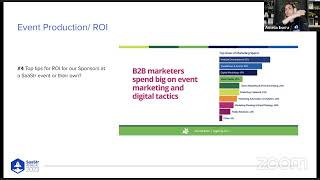
Yeah, no, that's a, that's a great tip for folks who are planning their own events. Maybe we'll wrap on this because I think we've touched on it a little bit. Again, we'll see how the data nets out in the next few months, but I know, you know, historically B2B SaaS tech marketers spend big on events. We just wrote an article, you know, we just threw up an article I think yesterday about like, should you really cut your long tail things like events? And you know, to your point, if you were saying earlier, maybe cut ads instead because the ROI could be so much higher on events when you do them right. But just like, yeah, any parting words of wisdom on, you know, events, ROI, like what do you wanna leave our SaaS community with?
So yeah, there's no question a lot of people are resorting to events today as the marketing channel where they find, they filter the noise, they find relevant people, whatever the mess that is happening on social networks, the changes that we're experiencing right now, The costs of ads that are going up, either you own an audience and you're able to connect with them, and virtual is still a good channel to do that. Don't discard virtual, you know, especially if you don't have the budget to show up for your own events and do your annual meeting, do it virtually, but be intentional about it. You know, consider that we are all sort of Zoom fatigued for life for the next 10 years. So you gotta make it like incredibly exciting. Otherwise, you know, we're just gonna, fall asleep and go somewhere else, right? So, um, but, but also like, don't assume that you're gonna show up at SaaS and money is gonna walk to you and you're gonna go back rich. That's not gonna happen, right? You gotta, you gotta be super intentional on how you show up. There's gonna be people that are very hungry to be there, um, you know, and found the budget. So whenever you, you show up at events, you gotta be at the top of your game. Pick the people that are natural with this. Like they don't need instructions on how to deal with other people. It's the human element more than sales capability. So important in this environment. So show up with the right people and with a plan. Show up with a message.
Yeah.
What's your message? Like people show up at a booth and like there's coffee making and, and the cocktail shaker.
Yeah.
But what's your message? Like what do you do other than that? You know, uh, which is nice and we all enjoy that. But yeah, I mean, having a message and intention of how you show up, uh, one key message, um, with your booth and like align all your, all your team around it and you'll see that magic is gonna happen.
Yeah, I'm a big fan of when, you know, again, we go to other events, even at our events when I see booths with like one clear tagline, like again, it is your billboard during, you know, SaaStr during whatever it is that you're, that you're at. Like, What, to Julius's point, I think doing activations helps draw people in, but then what do you want to say to them, right? Like, what, what is your one clear message? And I think anything you can do to say how you're going to help, you know, other founders, other SaaS marketers, other CEOs, like, that is what people want to hear. That's what they want to see. That is when they will have a conversation with you. Oh, you help manage spend? How can I do that? I really Everyone needs spend management right now, right? Like, who doesn't? Like, if you could save an hour on everyone's spend management and that's your tagline, people are gonna gravitate to you and have a conversation, right? And I think Julius's point, it's like sending the right people at the booth, right? It doesn't necessarily mean it's your rep. It might even be, you know, your VPM or your CMO or your CEO, like just talking to folks about how you've had this problem and how you solved for it. Like we all have the same issues. So I think that's a really good—
Yeah, show up, show up with content as well. I would say show up with content. Like if you're able to find slots and opportunity with content at SaaS or other events, do it, do it at your booth if you can. If you have like a large one, do content there because people want your content in that format. Like you got to have undivided attention. We did it together. Right. When we did interviews at our booth when we were at Hopin.
So, you know, so fun, right?
And we use that content. We, well, we should have used it better, but we repurposed the hell out of it, right? It becomes like events are an incredible opportunity to generate content for the future as well.
Yeah, no, agreed. I think, you know, to your point, there's a lot of our sponsors who have done this really well, like doing a full write-up, doing live blogs, doing their takeaways from sessions they've seen. There's a ton of networking, there's a ton of content, but I think this has been really great parting advice. So I know we're at the 45-minute mark already, and you've been so gracious with your time to give us all your insights on events and staff and technology. So if folks want to get in touch with you, what's the best way they can do that?
For sure, @2julius on Twitter. I'm usually there with Jason M. Lemkin chatting back and forth. So you'll see me in the comments there if you don't wanna be bothered with searching up for me, or, you know, LinkedIn is my main social network, so I post there daily. So you'll find my ramblings about events and event tech and the trends of where this thing is going.
Well, Julius, thank you so much for doing this. I'm sure we'll have you back. This has been so nice to get your insight to help, you know, us think about things, to help all of our community think about events just as a whole. And, you know, hopefully, you know, hopefully you'll come to London. I was like, you should come to London. So if you've got the time, if not, I'll see you at Annual. But I'm sure we'll do this again. So yeah, thanks for having me. Thanks again so much. We appreciate it.
More from Jason

Why Your Next Hire Should Report to an AI, Tragedy Apps, and Too Many AI SDRs? | The Agents #004

Our Agents Drove Our Salesforce Bill Up 80%, Marketo Hates Agents, and We Stealth-Churned Off Notion




Managing 20+ AI Agents: Lazy Agents, Our $500K AI Bill, Stealth Churn & the Death of 60% Solutions




