Sales AMA: Your Burning Questions Answered
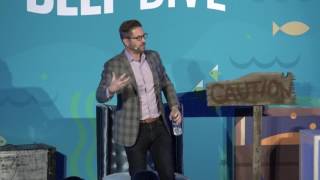
Marc Roberge, Harvard Business School lecturer and author of The Sales Acceleration Formula, answers questions from founders and sales leaders. He defines healthy salesperson churn as 10-20% annually, explains how to diagnose whether revenue problems come from product or sales execution, and warns that hiring 100 reps won't automatically generate 100x revenue without fixing unit economics and manager-to-rep ratios first.
Chapters
Time to answer all of your burning sales questions. Please welcome senior lecturer at Harvard Business School and the author of the best-selling book, The Sales Acceleration Formula, Marc Roberge. Thanks for coming out. I'm glad we're able to spend a little more time than downstairs, a little more intimate session. So it's all you, Q&A. I think we got 35 minutes to fire away. So I think there's running around, just shoot up your hand and we'll get you a mic. What do you got? I'm just curious, Mark, uh, what is your perspective on the ideal salesperson churn rate, uh, for your salespeople within the organization? What's too high? What's too low? Yeah, um, the industry average is 30%. It's too high in my opinion. Really hard when you do the Excel model on that for you to get a business to work. I like 10 to 20 I feel good about. 10%, lower than 10%, I'm probably being too soft. I'm just not that good at hiring. Just not that good at hiring. And I can push my folks more. 20 to 25, I'm like, my business still works. North of 25, I'm like, my culture's gonna suck and my spreadsheets start to look really bad too. So I like that 10 to 20.
[FOREIGN LANGUAGE] Hey, in your previous talk you mentioned that there was this trouble with the sales, that in fact sometimes there's like a period when the product gets blamed for not selling, making sales, and product blames sales.
When is that not happening?
Okay, of course. I guess on that note, what's the inflection point when like you go, okay, well, it's not the product, it's the sales guys, or vice versa?
So how do you tell? Yeah, it's Yeah, I just was going through a discussion with a company yesterday, and they were kind of blaming marketing actually at the time. It's, right, it's really hard to diagnose those, and yet the diagnoses are critical. I think the one, is it product or is it sales? It's really circumstantial. I can speak to the one yesterday where they were blaming marketing, and there's probably like 20 reps at the company and they probably hired 40% of them last 6 months. And so yeah, fine, it could be the lead gen, it could be the product bugginess, it could be— but it also could be like sales isn't producing, it could be that we weren't hiring the right people. So that was a creative one. What I looked at was, let's look at the sales reps that— don't stand over there, by the way— let's look at the sales reps that had been at the business for 2 years, that had put up consistent numbers every month through the back half of 2015 and the first half of 2016. And then let's look if they actually continued to perform or not. That tells me a lot. Because if they continued to perform but the business was falling apart, that's gonna rule out, you know, shifts in the market, probably shifts in the product, shifts in the competitive landscape. And it's gonna tell me, and probably even lead quality, and it probably is more of an issue with my hiring and my onboarding, okay? So if I try to translate that into product versus sales, I think the key measures for product is just usage. And you've probably followed some of my stuff where I was really data-oriented in how I measured the sales team. We were just as data-oriented with how we measured the product team. And so in the same way that we had the analysis of how our sales reps were performing and their leads and their opportunity creation and their closes, we had the 17 features in the HubSpot product and we had a cohort analysis on how usage on those features was trending. And like, you know, 62% of our user base was using the social media app this month and that was up from 58%. Right, so that's how we held the company, the product team accountable. So there's numbers. And then on the sales side, we just needed to go out and sell.
You also mentioned we sold a bunch of product, let's go hire 100 guys, and it's going to scale accordingly, right? It's that simple. It's a simple formula. What do you see is typically missing then? If it's not that simple formula of we hire 100 guys and we're going to— 100x our sales, what are the components that you're seeing are typically missing?
Oh yeah, lots. Just so I know not to repeat myself, how many people were in the downstairs session? Okay, so it was like 50-60%. So just to repeat something I said down there, I kind of focus on customer success, then unit economics, then growth when I think about either a new company or a new product line. And That's one thing that a lot of folks miss from a macro perspective is, you know, they get their 5 beta customers successful and then they hire the, the 27 reps without having proven that like, I can now put like a couple dozen people on this and they love it. I wanna work that out first, customer success. Then once I can do that, like during that stage, I don't care if it costs you $5,000 to acquire a customer that's worth $1,000. I don't care. I just want you to prove that this thing is valuable to them. The next phase on unit economics is where I actually will care about that and try to work that out. And then once I've got that worked out, then I will do growth. Another thing that I'll look at is, and I did write a case on this on a company called Insight Squared where they had hit, they were at $3 million in revenue and they were, and these were the numbers from the case. I don't remember what the actual, it was roughly that amount. $3 million in revenue, and the two co-founders were debating. The, the CEO wanted to go from $3 million to $7 million in the upcoming year, and he wanted to do it very much through a cold calling opportunity to hire a lot of salespeople. The chief product officer and co-founder wanted to go from $3 million to $5.5 million and do it through inbound marketing and not as much through salespeople. And so that's really the debate of the case is what happens. And when you look underneath the covers, there were 6 elements that were not in the operating plan because they weren't obvious in that $0 to $3 million journey, but they become an issue in the $3 to $10 million journey. Let me see if I can remember them. One is proper demand gen. Okay, so when you go from $0 to $3 million, you know, sometimes you're benefiting from some marketing channels that may have a lower ceiling than you expect. It's just not gonna double with the business and we just don't know that. Sometimes we're benefiting from non-scalable things like our CEO keeps meeting people and they get referred and they close at like a 70% rate. Guess what? When you double your sales team, those leads don't double, right? So you have to get really precise around your demand generation formula and not just look at it from sales headcount ramp for 4 months. They produce this and it works. There's another side of that formula around demand generation. Another one was ramp time. Lots of times when people don't put out an operating model, it takes you 4 or 5, 6 months to ramp a salesperson. It doesn't matter so much when you've got 5 reps, but when you're gonna start scaling, actually the math starts to matter. Another one's attrition. So many plans I see at that stage, they don't have attrition in there. That's an amazing way as a CEO, I don't want to say sandbag, but like create some wins for yourself and the plan to the board, or the VP of sales and your plan to the board, is in the attrition rate. Like if you put in, even though I said 10 to 20% attrition, put in your operating plan 25%. And if it spits out a decent business, like your LTV to CAC is greater than 3, your payback period is less than 12 or 15, awesome. Keep it at 25% just to be conservative and go out and have a 15% churn rate on your salespeople. Every time you go through a month that you counted on someone, you losing someone in your plan and you don't, and you don't have to spend 60 days backfilling and 4 months, you know, onboarding them, that's just money in your plan, right? So it's a great way to be conservative And if you miss it, if you forget about it or you put in 10% and you're actually at 20, you're not hitting your number. Even if you are probably 10% above your goals in terms of your quota. And so that's a big one is attrition ramp. The other one is the sales manager to rep ratio. I see a lot of companies who are like, it's so hard as a, when you're a CEO coming from product and you're seeing those two reps who've been in the funnel for two years crushing it, and the VP's like, I need to make them a manager. And the CEO's like, okay, fine, but can we have them do both? Can we have them still carry a quota and coach the people? Disaster, right? Because then they're constantly torn between developing the people or hitting their number, and they can't do it, and one of them suffers. And guess what it is? It's developing the people. Because they figure as long as I'm hitting my number, I won't get fired. And so it's a huge scale issue. So we just, as non-salespeople CEOs, we just have to realize that this is part of growth is, you know, your best salespeople don't always make your best managers, but sometimes, you know, your worst salespeople don't make good managers either. And so sometimes you're going to be looking at a consistent performer and be like, you know what, we've got to transition to management as part of our scale. So those are some of the big things that don't surface in that $0 to $2, $3 million range, but they become silent killers if you don't account for them. Okay.
I'd love your thoughts on inbound SDRs versus outbound SDRs. What's the right mix? What should be more effective? Does outbound still work today? That whole category.
Okay.
Yeah. So first off, you jumped past an important part, which is to specialize. Okay, so a lot of folks have an SDR team. They get— each SDR gets, you know, 30 or 40 leads maybe, and then they're expected to get to the rest of their quota by cold calling. That, especially in the early phase of the business, that doesn't work. Like salespeople will— yeah, specialize them, right? So salespeople will always find the path of least resistance to get to their number. And when you give someone a taste of inbound leads, and then you force them to cold call too, they're really gonna struggle to pick up the phone. I even, you know, I had a lot of success in translating that to the account executives too. You know, 'cause it's really different to work an appointment that was set for you that came from an inbound lead, someone that was hanging on the website for a month and downloaded some ebooks and, you know, that first appointment's different than someone who has never heard of your company, other than a 22-year-old that convinced them to take a 30-minute meeting with you. Like, that's a very different appointment, and it's hard for even account executives to really specialize and rotate between those roles. So the first thing is I recommend separating. And then the balance, you know, once you do that, I like to look at both, like, I like to use those two lenses as lenses to look at my business, right? So I look at my business on a macro level, and I'm growing at 100%, and my LTV to CAC is 3, and my payback is 13, and my churn is 1.5. And I like to look at my inbound business and my outbound business separately with those numbers. And there's a little bit of like, hard attribution, like where should that cost go? But like, just set some rules and look at it. And the reason why that's important is, Lots of times you see businesses come out and they got a little bit inbound traction, you know, they're getting most of their customers through inbound if you've got a special business and they raise money and they start hiring salespeople faster than they can grow the inbound funnel. So they've got to have this outbound complement to it and oftentimes the inbound economics are more favorable than the outbound economics. Oftentimes the sales cycle is shorter, the CAC is lower, the conversion rates are higher. So the unit economics are very favorable here and okay, if not bad, in outbound. If suddenly you go through a growth spurt and you shift 90%, you used to get 90% of your revenue from inbound and 10% for outbound and all of a sudden it's like 50/50, you don't realize that now your payback went to 20 months and your LTV to CAC went to 2. And you're like, what happened? But it was all there in the numbers. So we've got to measure them and look at them separately. The last point I'll make on that is in outbound, I think ABM, account-based marketing, account-based sales, has shown some potential there. And not just limited to the enterprise, okay? So I think account-based marketing, account-based sales is one of those memes that's in the earlier phases of its meme lifespan. And it's interpreted in a couple different ways. At the enterprise level, it's great to instead of, you know, have an enterprise target and pick 2 or 3 people that are involved in the decision and pummel them with calls to go much broader and recognize that these decision committees are much larger today. So in an enterprise, I'm, I've seen enterprise sales companies pick 50 contacts and have the, the SDRs and the BDRs going after a much broader viewpoint of those folks and having, you know, obviously a different approach for the CIO versus the CEO versus the head of sales versus the end user. That's, I think, one version of it. The other version that's overlooked of account-based marketing that's applicable to the SMB and applicable to your outbound SalesMotion is if we think about a company that's targeting a large SMB sector, let's say your addressable market in the US is 700,000 companies. Okay. I think in a, in a typical environment, we've had a couple different demand gen techniques that we use to go after those 700,000 companies. Marketing would build content and buy an email list. And blast out emails. Maybe they'd even be experimenting with direct mail. They might be running some targeted Facebook or LinkedIn paid ads, et cetera. Then you'd have your SDRs who are going into LinkedIn and just looking for cool companies that haven't been sold yet, and they're calling on them. And so one of the philosophies I think of ABM is to try to combine those. And instead of having, looking at the whole 700,000 this quarter, let's just look at these 10,000. And let's have the email list and the Facebook, LinkedIn ads and the direct mail and all the cold calls from our SDR team go to that limited slice of our addressable market with the hopes that the synergistic frequent, uh, frequency of that effort would yield more than if they were just kind of not working together. Right? So that's the one pretty cool innovation I've seen in the outbound side. I can't say that I've looked at 15 companies and they saw an uptick, but I've seen success there, and I'm kind of bullish on it. OK. Yeah.
Sorry, downstairs you made a comment about organizing sales, marketing, and customer success together and pushing down to middle management how a SaaS business works. How do you make that shift? How do you get them to see what we're all here to learn about?
So that's what I lived through. I took over services at that time because our churn wasn't as good as we wanted it to be. And I mean, I just explained to the group what was going on, just like I explained downstairs. And, you know, did the whole like, hey, we're not all here to solve for our personal paychecks and the ease of our job. We're here to create a legacy company, and this is what it's going to take. So just getting people on board and setting the vision on what we're trying to do. Actually, it wasn't one of the more difficult conversations I had to have as a leader. We just happened to have a culture that they were curious about the business. They wanted more autonomy. If you think about it, this was a frontline and middle management autonomy play. The alternative to it was for me and Volpe to sit there and create all these rules of like, "Hey, listen, if you're in lead gen and small business, this is what it counts to be a lead." If you're in sales, this is the stuff you've gotta check off before you close 'em. And if you're in customer success, you gotta suck it up and make that customer successful even though it's not handed to you on a platter, right? Like, and number one, I don't think we could have done that at scale cuz we'd, we'd be trying to learn all these different businesses. We're just like, you know, let's just set up the system with smart people and, and hold them accountable with a, a, a, a broader, um, you know, set of metrics and let them figure it out. So it wasn't that difficult of a shift because it involved the masses more in the business. It got them to learn about it in the way they wanted to and it created new leadership opportunities for them. I think the reiteration part was critical and I might have skipped over this downstairs. On a monthly basis, we had a full day meeting where each one of those leadership teams came in for an hour and presented to the mini board and the mini board was our CEO, our CFO, our head of sales, our CMO, you know, and we were the ones asking them, hey, why is your churn down? And why is your revenue slower than it should be? And they were there for an hour presenting like it was a board meeting. Now, they didn't like that meeting. Halligan was like, I don't think it's working. They don't like the meeting. I'm like, dude, do you like our board meetings? He's like, all right, good point, right? So, so that was, that was a huge part of reinforcement, is to have that, that, that meeting for themselves. We had a follow-on. Yep. Quick follow-on, sorry. Are you in sales? You should be in sales. Why did you actually organize this one? You or Chuck? Like, did you configure it all to organize DevPros? Yeah. Yeah, yeah. So how did you organize it from a structural standpoint? So first off, we had to do a little bit of like, it's almost like a modern territory plan, right? Instead of looking at like what's the business size in like New England or Southwest US, it was more around what's the market size right now of SMB versus mid-market enterprise. So that allowed us to take, okay, 50 reps, let's put 6 in SMB and 30 in mid-market and 15 in enterprise, right? So there's a little of that. And that was mapped up with demand gen, right? So we had inbound leads coming in each of those segments and that told us how much they'd be able to get to their number through inbound and what we'd have to supplement with the outbound SDRs. Okay. And then that gave us a customer flow. So that gave us where we're putting our, how many customer success people we're putting in there. And then for the marketing team, that's tricky because You only have one website, you only have one blog, you can't split that into three sections. So we had, say, like a 20-person marketing team. We took one representative, we took one person and said, you're the SMB marketer, and you're the mid-market marketer, and you're the enterprise marketer. You're gonna sit with those teams, but then you're gonna go back to marketing and making sure that those personas are being represented in the marketing discussion in the way that we want it to happen. Okay, so, and then we had sort of a direct, we didn't have a GM for the whole thing, we had like a person that ran sales in each one and that marketer represented and the person who runs services there. That's the one I'm hung up a little bit on right now because then those groups scale and you have the same issue 3 years later in those groups. So what I've seen companies experimenting with that I like is to almost redefine the sales manager role where a traditional inside sales manager might have like 8 or 10 reps under them and instead have a sales manager that has 6 reps under them plus 4 BDRs plus 1 or 2 customer success people that reports to that sales manager. So that sales manager is on the hook for the full end-to-end from appointment to customer close to churn. And, and now that manager doesn't have to be good at managing BDRs or good at managing customer success people. There can be a dotted line relationship to like a director of, you know, a center of excellence type person, but it pushes that accountability. Again, I've seen some companies experiment that I like it. I haven't seen it evolve as the blueprint. Yeah, I think we, we bounce it. God.
So, so Mark, you've, uh, you, you've grown a whole bunch of salespeople in a repeatable and sustainable way. What do you believe are the most important factors for the overall environment that they are in? That have allowed them to thrive and grow, um, and the overall coaching system?
Yeah, sure. I'll give you the simple framework that's super logical, and then I'll fill in the details. If you hire super coachable people and you have an amazing coaching machine, that's going to breed success, right? So that's really what it takes. Is those of you who follow some of my work, coachability was the number one thing I looked for I didn't care if you had industry experience. I didn't care if you had sales experience. If you could learn what I need to teach you, I like that. And if I create a system and a culture that is exceptionally good at coaching, that's gonna be great. So, so let's look at both sides of that simple logical statement. On the coachability, I did, you know, I would do role plays and, you know, sorry, you're the guy from London that moved to Arizona and what's your name again? Sorry. Howard, okay, cool. So, you know, Howard, let's do a role play. You're a salesperson for HubSpot. I'm gonna be a marketer for a security software company, and I filled out a lead form for an ebook for inbound marketing, and you're calling me. Go. Right, so Howard would do the role play for 5 or 10 minutes, and I'd watch some stuff. Then I'd stop it, and I'd ask him to self-assess. And if he was like, "I was awesome," like, I'm not psyched about that, right? But if he's like, "You know, I thought I did really well here, but I wish I had this moment back, and I wish I could have done that better," great, some self-awareness. And then I'd coach him for a couple minutes. You know, Howard, on every interview I tell one positive area and one need for improvement, so he doesn't freak out and think he's doing bad. And then I coach him for a couple minutes, get on the whiteboard, and if he's glassy-eyed and like not, I'm taking notes, I'm not psyched about what's going on. But if he's really asking follow-on questions, then cool. And then I'll have him redo the role play. And they all mess that up. I mean, it's a stressful situation. But at least you're giving yourself a chance to read into what this person's gonna be like. I also, when I look at hiring, I talk to some companies and they're like, our churn's a problem. I'm like, well, when did you know that person wasn't gonna work out? They're like, oh geez, we literally knew on the second day. I'm like, well, what did you do during the hiring process? You know, and I think it represents an opportunity to change our perspective on hiring is like, how are you going to train your people in the first week, month, 2 months? And can you apply any of that to the hiring process? Like, why not just send your candidates the sales playbook, tell them to read it over the weekend. And send them a LinkedIn link to a lead that they're going to prospect to? Why not? Why not have them leave voicemails? You know, it's like, can't we just replicate the training process, as much of it in the interview as possible? It starts to change your mindset about what the interview could be. So that's how to find coachable people. Now, how do you set up a coaching system? So I'll tell my story. I got this great mentor, John McMahon. He was, he's been head of sales for like 5 public companies, and I had the good fortune of spending 4 hours a month with him. And he, he told me that good, good coaching is a lot like, like the game of golf, if we draw analogy there. And so one golf pro might be like, okay, take a swing. And then he'll be like, all right, what I want you to do, Marek, is Put more weight in your right foot. Try this grip. Lean back in your stance. Think 1 o'clock, not 2 o'clock on your backswing. And give me more wrist on contact. And you're like, what the heck, right? Now another golf pro, like, all right, Mark, take a swing. And they'd be like, all right, try this grip. All right, so take 100 swings with that grip. So 20 minutes later, be like, how's that feel? Like, oh, it feels great. Like, all right, cool. Now lean back in your stance a little bit more. Take another 100 swings, right? So like, it's a simple example, but I've seen— I've promoted 19 reps to managers and watched every single one of them coach like the first golf pro. Like, literally get a rep out of training, see the 20 things that are broken with them, and throw up on them for 90 minutes on feedback. And you can just see the rep's head spinning. It goes nowhere. So the great— I mean, simple example, but the great coaches and sales managers can see the 20 things, but isolate it down to the 1 or 2 that will make the biggest difference in that salesperson's development and, and actually start to make some traction, right? And they'll customize the coaching plan to that diagnosis. They'll use the metrics to conduct that diagnosis. So the system that I would run is let's say I'm a VP sitting on top of 10 managers. What I would do is have each manager would meet with each of their reps for an hour in the beginning of the month, and they'd say, okay, Howard, how'd you do last month? You know, qualitatively, you're 120%, but how'd you do? Well, I did well here, I could have done better here. All right, and let's go through your numbers. Here's the appointments that were set and where you are on the rank. Here's the connect rate. Here's the opportunity flow, here's your conversion, here's your sales cycle compared to everybody else. And after each slide, like, what do you think about that? Why are you number 1? Why are you number 20? Just how, like, walking them through that diagnosis. Now based on all that, the qualitative and quantitative, what's the one area you want my help on this month? And how can I help you? Right, so Howard might say, well, I really want to work on developing sense of urgency with my opportunities. Great, how can I help you? Well, Why don't I record 2 discovery calls and we'll listen to them? So we'll say, okay, great, let's do that. So we both look free on Thursday at 4 and the following Wednesday at 9 AM. Let's put those in our calendar right now. You show up with a recording of your discovery call. We'll listen to them from the perspective of developing urgency. Okay, so a lot of things happen in that conversation is number 1, I'm teaching Howard how to self-diagnose so he doesn't always need me. I'm holding Howard accountable. He knows that he's showing up on the first day of the month and gonna go through every number with me. So he's not gonna be lazy about his activity. And number 3, I am booking my coaching calls in the month proactively. And I have a lot of confidence that I put a decent amount of IQ into setting up the right coaching model. Now, if we booked that meeting for 4 o'clock and Howard had a hot appointment, that came up, we'll move the appointment, but we'll move it and we won't let coaching fall to the wayside. And so when I'm managing my managers on the second day, I'll just say, great, I want to go through every one of your reps and I want to talk about 3 things. Number 1, what are you coaching them on? Number 2, why did you decide that? Number 3, how are you going to coach them on it? And so as a director, after doing that for 3 or 4 months, I am never going to see a skill deficiency I haven't seen before. Where I'm gonna be like, "Oh yeah, Howard's having problems with sense of urgency. Sue just had the same issue 3 months ago and her boss Mary helped her through it and here's how. In fact, why doesn't Howard just grab coffee with Sue and talk about it?" So you start to develop this like routine of coaching models that are unique to your business. Alright, thank you. I'll be around. Thank you very much.
More from Jason

Why Your Next Hire Should Report to an AI, Tragedy Apps, and Too Many AI SDRs? | The Agents #004

Our Agents Drove Our Salesforce Bill Up 80%, Marketo Hates Agents, and We Stealth-Churned Off Notion




Managing 20+ AI Agents: Lazy Agents, Our $500K AI Bill, Stealth Churn & the Death of 60% Solutions




