Starting Up in a Downturn: Lessons Learned with Michelle Zatlyn, COO Cloudflare
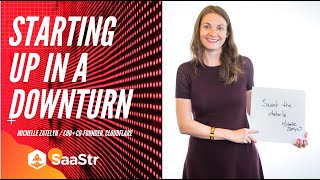
Cloudflare co-founder Michelle Zatlyn built a $7 billion company starting in 2008 with $2 million raised and a frugal mindset. She targeted startups and developers first, then scaled to enterprises, and emphasizes hiring carefully to preserve culture and treating fundraising as a learnable skill.
Chapters
during the economic downturn right after the financial crisis in 2008. And so we started to work on this in 2009. And while it's different, it's definitely a different thing going on in the world today, I do wanna say that there are a lot of companies that actually started kind of with us, that class of companies, and many of them have turned into big, great companies today. So if you're one of those entrepreneurs who are working on your ideas and thinking, man, is now the time to start? It's definitely possible. So we, so we started Cloudflare in 2009, uh, and today we have about 1,400 people around the world. Um, our customers are internet properties, so websites, apps, APIs, and those customers come to Cloudflare to be fast, safe, and reliable online. So we build a service that does cybersecurity, uh, global performance and reliability for any internet property. And in these last 10 years, We have 26 million internet properties that use our service on any given day. So huge scale. We stop about 50 billion cyberattacks daily on behalf of those 26 million internet properties. And we make the internet faster, safer, more reliable for a lot of people. So we're really proud of that. And our whole team is really proud of that. And so that's one of the things we've done in the last 10 years. And one thing that's been really cool starting the company 10 years ago in an economic downturn to today, about 6 months ago, Matthew and I and our team took the company public on the New York Stock Exchange. So we went from an idea that started during an economic downturn to a company that went public about 6 months ago. And today we're about a $6, $7 billion market cap company.
So Michelle, as you think about starting Cloudflare in the midst of an economic downturn, And you sort of fast forward to today, do you have sort of a sense or major tips for entrepreneurs as they're thinking about either starting a new business or extending their current business?
Yeah, sometimes I think it's easier if you're starting than extending. So I'm going to answer your question with that frame of mind. Because I think back to 2009, and it was really hard to get a job. I was doing my MBA at grad school. And so many of my classmates couldn't get jobs. I had done my summer internship at Google. And I remember getting the call from Google, my manager at Google saying, hey, we've decided not to extend any of our summer internships a full-time offer. Because again, it was 2008. Like there was this huge financial crisis and people just were not hiring. And in many ways, when it's hard to find a job, it's actually out of necessity, it's actually a really good time to start a company, the right company anyhow. Because I wasn't competing with a lot of other offers. It wasn't like you had a choice of 100 things to go and do and you had to say no to 100 things to go pursue this one sort of thing. So if I think back to our year at business school, a lot of amazing companies came out of that. And I think part of it is because it was the job prospects were kind of gloomy. And so for entrepreneurs who are starting to think about starting, Again, I think for the right idea that you're really passionate about, if you really think you're solving a big meaningful problem of a big market with tailwinds to your back, it can be a really good time. That doesn't mean it's easy. It's still really hard. And there's lots of things that was hard about it. You got to be really frugal. You got to innovate your way out of problems. But I do think the mindset of— it's almost like your option B or your other options, it's almost easier to walk away from it because it's like, there aren't that many other good things going on. So let me go create this thing that I just can't stop thinking about. And so that's for the people who are currently. And then the second thing I will say that I remember we raised our first round of money from Ben was one of the partners who helped us raise our Series A and then Venrock. And we raised $2 million, which, you know, today people laugh. That's like nothing for a Series A. But back then, you know, that was kind of the size of round. And I just remember Matthew and Leah and I and our team of the original 8 people who really worked on this idea, I mean, we spent every dollar so wisely because we just, it was a scarce resource. And when you only have a little bit of money, you really innovate your way out of problems or engineer your way out of problems. And we had this great engineering team and we really innovated our way out a lot of problems and tried to figure out ways to do things cheaper, better than we would instead of throwing money at the problem. We used to have a saying, don't throw money at the problem, let's innovate our way out of the problem. And again, in a downturn like today where money is still going to be hard to come by, that's actually, I think, a really good— it can take you very far when you're building your company.
No, I recall in the beginning that your rule used to be that the answer when someone wanted to spend additional dollars to solve a problem was the first answer was always no. And that in the future, to the extent that you couldn't solve it through creative programming or what have you, that potentially you'd loosen the purse strings. But the reality is that smart engineering was an important part of how you approach building the business. That's exactly right. In terms of when you were ideating on Cloudflare, how did you get to a conviction on the scale of what you were solving and the size of the market? Because largely at that point, particularly on both the content delivery but also the web security side, this was not a problem that people were really focused on?
Yeah. You know, so I'm going to answer this question, but I want to make one caveat to my answer. You know, a lot— when Matthew and Lee and I started Cloudflare, we really wanted to build a big company. That was our desire. And so a lot of my perspective is always behind building big companies. You know, again, a multibillion-dollar public company. That's what we wanted to do. I'm gonna answer your question 'cause that was the frame of mind of what I was looking for. I was looking for a big, meaningful, hairy problem to solve that was gonna turn into something, a big company. But there's lots of different ways to build businesses and there's lots of amazing companies that don't, that never become a multi-billion dollar company that are equally great and profitable. They're just different. So the advice that I'm gonna share is really related to kind of this swing for the fence model. And that works for some people and less for others. And so when you think back to what was happening when we start back in 2010, when we were working on this idea in 2009, we just saw there's this huge shift going on where we were going from a world from hardware and software that you owned to services in the cloud that you rented. And I remember AWS was growing really quickly. And at the time, there was a big debate of, will big companies ever really use AWS? Well, fast forward 10 years later, that seems like such a naive thing to say today. Them, and Azure. Like, they've just had tremendous success. But 10 years ago, that wasn't a given. Uh, and so this is very— this huge shift was going on. There was all these software companies, and, and then all these— the, the advent of all these SaaS application companies like Salesforce and Workday that were breakout successes. And, and we saw the same thing kind of happening at the network layer, where, yeah, businesses have always wanted to be fast, safe, and reliable, and they used to buy a lot of hardware boxes. And we said, can we turn that into a a global service in the cloud that customers rent from us. And we knew that was a big idea. And there was just this huge shift going on. So again, kind of this idea there was a big market and there was a tailwind, there was this macroeconomic shift, which creates opportunities for new entrants. And then, so that was the first kind of aha. And the second thing that I was really proud of, and I think that if you're a founder that can find both, it's like, wow, there's a big business here. Because the first you have to ask yourself, is there a business here? Because businesses are what sustain. The second aha that we had was our go-to-market, where we wanted to start with all of the startups and small businesses and nonprofits and developers out there who today were using nothing, because they didn't have the budget or technical resources to buy kind of these enterprise-grade services that existed for big companies. And so we had this big aha of like, wow, we're going to start with small businesses and small websites and developers and startups and and nonprofits who need to be fast, safe, and reliable around the world. And today they're using nothing. So when we launched, our competitor was nothing. We were trying to get people to go from using nothing to something. And so we had to make it ridiculously easy to sign up and attractive. And if we did, it would kind of became a flywheel, knowing that our end goal was not only do we want to help, you know, startups and entrepreneurs and small businesses and developers and nonprofits, But over time, we also wanted to go help medium-sized businesses and large organizations and big enterprises and government organizations. And again, fast forward today, we do all of that. But early on, we really started with a different go-to-market. And that allowed us to build our product and our technology and get momentum so that we can then go compete more heavily with current competitors among large enterprises. And so, So it was really, it was those two things. It was like, wow, there's a big macroeconomic shift. If we can help make the internet better for all these people around the world who currently have nothing, like, I'd be really proud to work on that. And so it's this idea of, I thought there was a big business opportunity and something that I think Matthew and Lee and I were really proud to show up every day and work really hard on.
Yeah, I mean, one thing that, you know, I think it's worth spending a brief moment on is just the distinction between good technology and a good business. And I think one thing that you and Matthew have always been focused on is building both really solid technology and a good business. But I think for people that are thinking about building a business in this environment, it's not just solving a hard technological problem, but it's also creating a real business out of it. And I think it's worth you talking about that for a few minutes.
Yeah. So, you know, again, when you start a company and then now we've scaled it to, you know, in 2019, we did about $287 million in revenue last year. So just to give you a sense. So going from $0 to $287 million in revenue last year. And sometime along the way, you realize as a founder, it's all about mission and your vision. And do I have a problem here? And how can I get people to come work for me? And how do I make sure that people love where they're working? But at some point, I remember having this big realization of, wow, we're founders and a business owner. And it's really hard for company— you cannot— tech is amazing. I mean, we're an engineering-driven company. That's where we love and we celebrate it. But it is so hard to compare technology between one company and another. It's way easier to compare business metrics. And so at some point, We had to keep all the great thing about our technology. It is about the tech. We love that. It's differentiation. We live that on a daily basis. But at the end of the day, we also had to put our business owner hats on. And the questions we ask ourselves as business owners are different. They're like, how fast can we acquire a customer? Do they renew our service? Do they spend— do they want to adopt more of our services? How happy are they? How much does it cost us to deliver this service to them? And it turns out you really need to do both. And I think some founders forget about caring about the business metrics. And actually, that's a real mistake because at the end of the day, if you have a really great business around awesome technology, that's when magic happens. And so I did not realize this on day one. So, and I wish someone had kind of come up to me in the face and told me really directly, Michelle, at some point you gotta think about the business metrics. For us, it was around $50, $60, $70, $80 million in revenue that I really had an aha of like, oh wow, we are going to get compared on these KPIs and these metrics. A, I got to know what they mean. And B, which ones are we good at today? Which ones are we bad at? And the ones that we are bad at, okay, how are we going to get better at them? And then over time, we've sort of slowly moved them in a direction that we're proud of. And even today, there's some that are better than others and we continue to work at it. But I think the faster that founders can realize that they're also running a business, I hope that that means you'll get to 80, 100 million in revenue faster than we did.
So as you think about that evolution as a company, how did you instill a culture that was about leveling up and continuing to evolve and surrounding yourself with the people that you needed to build that business?
Yeah, well, there's kind of two points to that. There's both like the people you bring in to hire to be part, you know, again, it doesn't matter how great the founders are, you need a team to go really far. And, you know, I think trying to get that first team to come join you and then scaling the team and who you need to be your first 20 teammates, who you need to be 20 to 100, who you need to go from 300 to 2,000. Actually, people look different in those stages. And Some things are the same. People matter. They make a huge difference. And there's a huge difference between a great hire and a good hire at all those stages. But the types of person that we used to hire when we had 50 people in the company look different than what we look for today. You know, today it's all about people who understand, like, process and repetitive motion and automating things so we can do those things really efficiently so we can free up time and resources to do other things that that help give us leverage in our business. Versus when you're employee number 20 or 30 or 40, you just need a lot of doers to like show, like roll up and do the actual work because you're in build mode, build, build, build. And I think that, you know, the types of people you look for along the way are different. Once you have great people on your team, you want to make sure that they stay. And I was talking to one founder a couple weeks ago and They were really proud that they had 30% attrition of their team last year. And I kind of said, 30%, that's really high. And they said, no, no, no, in a startup, it's normal for people to leave that often. I was like, well, it's true. People leave more frequently than a larger company, but 30% annual attrition, there's something wrong. Either you're not hiring the right people in or you're not a very good place to work. I mean, I think Most high-growth tech companies kind of have annual attrition of 10 to 20%, and maybe 15 to 20% is considered kind of average. So if you're— you want to be less than 25, you want to be less than 20, and maybe in a nano point of time it spikes because you're going through some really important transition. But again, most of your peers are at 15 to 20% annually, and you're up at 25, 30, like something is wrong. Either you're not spending enough time on the hiring side or once they're at your company, they feel like they can't contribute or it's not a good place to work or the culture is bad or something is broken. So, and I really encourage that founder to go back and kind of rethink what they thought was good there. And at the end of the day, that's a leadership decision from founders of saying, what kind of place do we want this to be for people to work? And I think there's lots of great, great stories. And then recently in the news, the last few years, there's been some terrible stories. And actually, I think it's upon all of us as leaders in the tech industry to show there's lots of ways to create a work environment. And some can be really healthy and be a place where people choose to work and want to be and have huge success stories. So, so that's for like the team and getting people in. I would say that one thing that, that we've done that worked really well for us, that is, that isn't always well appreciated or agreed upon, it just worked for us, is that hiring managers, like we have a belief that people come work for their manager and they stay if they like their manager. And so our hiring managers are heavily involved with hiring. And early on, we didn't have any managers. So that meant the founders did most of the hiring. And then we hired managers and they did it. And, you know, we were less than 100 people. I mean, 50% of my time was hiring. So you just feel like you're trying to always looking for people to join. And that wasn't— I also had all my other things I had to do. So that just meant I was working all the time. And today, of course, we have a recruiting team. We have a great recruiting team, and they partner with the hiring managers. But even to this day, hiring managers are responsible for building their teams. And again, we have a much bigger organization today, and the recruiters partner with them to build great people in. And even to this day, hiring managers spend about 20% of their time hiring every week. And that's— I mean, that might not sound like a lot. That's like 1 day a week or 2 hours every single day. And we just, I just don't believe you can outsource it. Good people, we think there's a big difference between a great hire and a good hire. And great people wanna work for great people and they need to know their manager. So that's a little bit about getting great people to come into your company. I think if you're thinking about a founder scaling and how do you scale yourself through all these different phases, it's slightly different. 'Cause I think some, you know, it's, It's rare to start a company and then still be running the company as a public company. And I'm really proud of that. And I know Matthew's really proud of that. And I hope that we have role models above us, whether it's like Marc Benioff and Parker Harris, or whether it's Shopify founders or Atlassian or Jeff Lawson at Twilio. There are definitely people that we look up to, that we can look up to. And I hope there's a whole other class of companies coming up behind saying, Wow, they did it. We want to do it too. Because I think, definitely think it's possible. And I guess there's a couple of things I'd say about scaling yourself as a founder is I remember someone said this to me once and they were totally right. They're like, either you're running your business or your business is running you. And you got to decide which one it is. And I mean, I'm a competitive person. Obviously, I want to run the business. I don't want the business to run me. And this is kind of, again, going from a founder hat to a business owner hat. And so You gotta do things to scale with the business. 'Cause what matters at $20 million in revenue is different than $100 million. It's different than $300 million. And I think that if you can be a sponge, that is like, if I can only give you one piece of information, like advice, it'd be like, be a sponge. Like just this growth mindset, constantly learning, read. I mean, SaaS— Jason M. Lemkin and his team do an amazing job getting people here. To help you. And if you just show up and listen for free, you will avoid making so many mistakes and grow as a leader. Like, that's what I did. I went to a lot of things like this and I learned from people ahead of me, and, and we got to where we were faster. So there's so many resources today that help you learn as a founder, like way more than 10 years ago. It's, it's pretty phenomenal. Um, you read books and whatnot. I think as you hire your leadership team, sometimes people don't want to hire people as good as them because they're worried that they're going to look bad. I mean, that's like rookie mistake 101. You You need to hire a leadership team that's better at you than everything you do. Because as long as you're confident that you still, you know, you're the vision, you're the founder, you're going to care about this more than anyone ever does. And if you can partner with these amazing leaders who are so good, the best head of product, the best head of engineering, the best CMO, the best chief revenue officer, and you all get everyone rolling in the same direction, that's how you build an amazing business, right? As a team together. And so you got to really hire a leadership team better than you.
Well, look, I think that you and Matthew in particular, particularly with your own example of educating yourself along the way and making sure that you are getting better at your business over time, sets an example which I think keeps a lot of employees motivated. If your employees see see you struggling to become a better version of yourself over time, inevitably that bleeds down into the ranks within your company and is highly motivating for people. Definitely. And I think that's been one of the things that from the cheap seats that I've been in that I've observed you and Matthew really pushing forward with, you know, because that good hire, great hire situation, it's not just hiring those people, it's retaining those people. And so a lot of your time has to be spent not just on getting those people in the door, but making sure they stay there.
Definitely. Yeah. And, you know, I will say growth solves a lot of these problems. If you're growing and great people like just being part of a growth company, it's all of a sudden their job is changing every every year, because again, growth companies, they're growing revenue at 50% year over year. So naturally the business is changing a lot. And if people are doing a great job who are in the company, and again, and the company's a reasonable place to live, they're, they're, they're, everyone's, every, all tides are rising. And I think that's Janet, who runs our people and places team. She has a saying that, and she says it all the time. And I think she spent her whole career in high-growth scale companies. And she's like, there's no training, like on-the-job training. And I think that's very true in a high-growth company. I think if you stop growing, then the rules are totally different. But it's true. If you're growing, you know, 40%, 50%, 60%, 80%, like Zoom annually, it's just, that means more career opportunities. You're growing in. One thing, you know, if you're a SaaS business, for every $100 million in revenue, you need about 300 to 350 people. If you just look at all the SaaS companies and do it, I mean, it kind of, there's some range, but it's, you can go take the Atlassians of the world who are super self-served to an enterprise business. And it's basically for every $100 million in SaaS revenue, you need about 300 to 350 people to make that happen, regardless of how they're allocated between sales or R&D. People allocate them different, but that's kind of what the formula looks like. And so those people need managers. And so you've got either hire managers from, externally, you can promote from within. And so again, I think growth in many ways is the best motivator getting people to stay at your company, as long as it's, you know, you're taking care of it as a culture place as the founders.
When you talk about the distinction between a great hire and a good hire, like how do you make that distinguishing characteristic as you're looking at people and talking to people?
I mean, I don't— I do— we don't— I literally said it last week because I still do a lot of hiring for different parts of our teams, and I'm just like, hiring is so hard. It's— I mean, interviewing is so hard. It's— some people are great at the interviews and they end up being bad at the job, and other people are terrible interviewers but end up being amazing in the role. And at the end of the day, kind of have a saying, it's like, I actually don't really care how the interview goes. It's like, how are they going to do 6 months in? And We want people to stay for a long time. Back to this attrition, like, we want people to stay at Cloudflare for a long time. We want them to have the career of their lives at Cloudflare. And so part of that, we take this really seriously. We don't want people coming for 18-month stints. We want them to come for longer periods of time. And so a couple of things that we do that I think help, but again, with the caveat of it is, you know, it's part art, part science. You know, the hiring manager is heavily involved, which I mentioned, and I think that makes a huge difference. Like, they are helping drive the process, meeting candidates. Again, they have a recruiting partner to help them, but the hiring managers are involved. And what happens is, A, the person gets to know the person, their manager, better, but then there are no surprises. Like, expectations are aligned. And we really try and throughout our interview process not make up theoretical problems. We try and really give real-life things that we're going through right now on that team and talk to candidates about like, if you join, here's what you'll be asked about. Like right now on the marketing team, it's, hey, we used to depend on a lot of in-person events. That's not working anymore. If you were on the team, we'd be thinking about what, what other things can we be trying to help connect with potential customers around the world? And that's like a very real-life thing. It's not a staged question. Whereas, you know, 6 weeks ago, the answer might be different. It might be, Hey, we do a lot of events. How do we drive better behavior in this way? And so we try and make it very real life. And when you make it very real life, you kind of, I think, start to see a little bit more of people's colors because they got to brainstorm with you and figure it out. And you can kind of say, are they engaged or not? Do you have a good rapport working through the problem? Do they ask good questions? I mean, it's not about having the best ideas. It's like, do they ask good questions? They're like, might say, well, what other things have you tried? And you kind of learn a lot about the candidates. Much to our team's chagrin, like we do not have a fast hiring process. It is a very deliberate, purposeful, and this is something that, you know, in high-growth times where all these other companies will do a start-to-finish interview process in 2 or 3 weeks, there's just like no way we've ever done that. And, and I, you know, our recruiting team, our hiring manager, like we aren't as competitive and it's like, no, no, we should be deliberate and purposeful and we shouldn't be long, but I don't— 2 weeks, how can the candidate get to know us and how can we get to know them in 2 weeks? It's just It's just like a really short amount of time, so we try and be really deliberate.
I think that process has always been, you know, obviously something that's been effective for you all. I think one of the other things that, you know, sort of you've talked about a little bit in the past, but I think it's worth talking a little bit about is the, you know, your philosophy around scaling the team and how quickly you can scale a team. And what that means for your culture. Because it's not just growth that drives retention, but it's also the maintenance in the context of that growth, the maintenance of some baseline of culture and values.
Yes. Yeah. Well, this is— we have a saying that the only truly thing that's democratic in a company is the culture. Because that's truly what the majority decides. And otherwise, we don't like that. Companies aren't democracies, except for the culture, which is decided by the majority. Yeah. So one thing that we have ascribed to, and lots of other companies take different paths, and that's fine, is you're right, the rate at which we— how fast we hire. And so, you know, since inception, we've always kind of hired 70%, 60%, 50% annually, you know, 70% at its peak, but it was always kind of 50% to 60% year over year. Even when the business metrics told us to hire faster. So I'm, you know, there's been, we had many board discussions where it's like, wow, all your metrics are great. Why don't you hire faster? Get more salespeople in, get more engineers in. And we always kind of said, we just don't think you can grow a team faster than that and keep the culture, like all the great things about Cloudflare. And again, we've always thought about building a very long-term business. We wanna build a big long-term business. So we were really thoughtful about this. And it wasn't an explosive period of time. It was like, no, we wanna be a very sustaining business. And so that was something that really governed our philosophy on that. And so that's been helpful because people come in and we have lots of people join. That's a lot of team growth, but they feel like they can get involved and be productive, ship. We love to ship. We're all about shipping things. Finish, start, middle, end. And then bring on new people, and it kind of is this self-fulfilling virtue. And so, yeah, that's been a deliberate decision.
You know, I'm sure that there are a bunch of people who are watching this who are either in the midst of a fundraise, maybe were in the midst of the fundraise before the pandemic hit, you know, or are anticipating a fundraise, and then in the months. I mean, do you have any thoughts about how to best prepare yourself for a fundraise in the midst of economic headwinds? You know, and maybe this is a little different than the headwinds that you faced at the time, but maybe, you know, if you have some perspective on this particular bump in the road that we found ourselves in.
I know, well, it's a better question for you, Ben, since that's what you do for a living. I mean, I There's a couple, and there's things, again, our Series A, which was the first time we raised money, was $2 million, and it was a priced round. Like today, or 2 months ago, people thought we sounded crazy, but it was just a different time when we used to fundraise. And so we'll see how things go back. So I have less of advice about right now. Again, I think if you're solving a big meaningful problem, I do think that there's money. If there's a big meaningful problem, there's people, investors are looking for those ideas. And so if you think you have something big and meaningful, I think that there are investors who are willing to give you some money to go see if you can make that happen. And I remember back in 2009, we were the only tech investment that Venrock did that year. And so it was just one of those things where It just takes one. You just need one person to say yes. And so I guess that's that. The two things about fundraising that I don't think— less about now, but just in general, I used to really dislike fundraising. I really did not enjoy it. And then I just realized at some point, it just never ends. At this point, I've raised $1 billion between venture capital, and then now we're a public company, so we raised a bunch of money from the public market investors. I'm still going to meet investors all the time to try and get them to be shareholders in the Cloudflare stock. And they're public market investors, but it's just like mutual fund investors and the pension fund investors. And so it's a skill that you can't outsource. You shouldn't outsource, because if you're going to be a founder that also becomes this business owner driving your big business, you're going to do a lot of it. So you might as well just get better at it. And that wasn't obvious to me when we were doing our Series A, B, and C, that I was—
I thought it was kind of like, okay, we're going to get through this and be done.
It's kind of like almost the more successful you are, you're almost never done unless you're going to stay a private company for a long time. So that's kind of been. And then the second thing I will say is just optimize for the person, not the firm. The person who does the deal, we've been, you know, whether it's you, Ben, and Carl, who is your partner, and, you know, Venrock, NEA, Scott Sindel, NEA, I mean, these people have been just amazing champions of the business, amazing board members, amazing just partners in us as we've built Cloudflare. You hear so many stories where the investors and the founders break up, and the founders almost always lose. So I think that picking the right person and finding people who are aligned and doing it, it's possible, but it's up to you as a founder to help make that happen.
Look, I think one of the things that you and Matthew in particular have done, both of you have done very well, is using those fundraising processes as a way to learn from potential investors. You talked a little bit about that, understanding business metrics as you moved along in the evolution of the business. I think that interactions with investors It's something you and I talked about very briefly yesterday, but those interactions with investors can be educational and can provide some sense as to what the business metrics you should be paying attention to look like.
They are. They're very smart. And again, they're comparing, trying to compare companies. So sometimes you don't like to hear what they have to say, but if you open your ears and listen, you can learn a lot and probably make better decisions because of it.
Uh, what do you wish you could tell you, the 2009 version of you?
Uh, my number— and I've gotten a lot better this last 2 years, but 8 years of my life, maybe I did, did it less well— is, um, enjoy the journey. It's not a destination. There— I mean, I, you know, again, I just— the early days of Building a company, there are so many highs and lows, like hour by hour. It's just, it's so hard. I mean, it's amazing and hard and messy and rewarding, and it's all those things altogether. And, you know, I think that the more you can enjoy the good and the bad and see it as an opportunity and whatnot, I think that would have been great. So I've gotten a lot better at that the last 2 years. I told myself that 2 years and I've gotten a lot better, but In '09, I wish I'd had that conversation with myself.
Before we get to questions from some of the viewers, do you have any thoughts about how best leaders should communicate in a crisis like this, or in a crisis generally, or how to approach this, or things that you've learned on that front?
I mean, I, you know, I— everyone has different styles, so I don't want to project our style onto you because I think there's lots of ways to be successful. You ask 10 smart leaders that, you're going to get different answers. You know, one style that we like is— and we is, I'd say, Matthew and I and our team— clear. I think clear is better. Transparent. We try and share a lot. We try to explain the why we're making a decision. You know, the clear and the transparent go a long way, being authentic, like caring about your team. And again, I think I've read a lot of things that people believe this. It's like, at the end of the day, you want people to take care of themselves right now. There's a huge pandemic, people are sick, people are dying. And the first order is, are you okay? Take care of yourself, take care of your family. It's hard to do a good job at work if your family is— it's like, those are the things. And then For us, it's like, okay, with anything left over, now we got to focus it on the work and we got to help our customers because our customers, I mean, internet traffic is way up right now. People are moving to these digital-first presences, like, and they need our service more than ever. And so, so it's, yes, focus on yourself, focus on your family, and then whatever's left over, you got to channel towards doing the best work for our customers because they really need us right now. They're going through hard times. And I think that that's been well received in different ways. But I think being clear and, and, and, and again, putting the, the, that your, your teammate first is really important because it's hard to do a great job at work if they can't take care of themselves first order.
Well, should we move on to a couple of questions from the, from those that are watching this?
Sure, that sounds great. Are you going to read them out, Ben?
Yeah, I'm just— multitasking is probably easier for founders than it is for investors.
There we go. Probably. Probably.
This is where I need it. So this one is, at what point as a founder do you let go and trust those around you?
Yeah, that's good. That's kind of back to the scaling yourself question, because you do need to do that. And at first, when we did a lot, and that was hard to transition from letting go of things to giving kind of— we talked about in the language of giving away your Legos. It's not just founders, it's other people on the team. And we actually tried to make it something— it's less right now, but when you're going from that 200 to 1,000 person size, it was really, we tried to celebrate giving away your Legos. And I think we tried to model behavior where we said that was the case. And so, you know, I think being in the details, the first 20, 30, 40 people, like really important, 'cause you're just trying to figure out, do you even have a, is what you're doing working? 'Cause you just have no idea at that stage. But at some point you start to realize it's working and that's when you transition from, okay, yeah, this is working. And don't get me wrong, it's still gonna be messy and chaotic. Even today it feels chaotic and messy inside Cloudflare to, wow, we have a real business here. And I think that's when you really wanna start to hire people around that you can start to give things out, give away to. Like, you don't wanna be your best marketer because you gotta run the business. You gotta hire great people on your marketing team to give those activities to. Even if you can be the best, I don't know, I'm sure you're the best at representing your company in a trade show, but you gotta hire someone else who can go do that so that you can free yourself up to do other things. And so, so I think it's, you know, it's not the first 10 or 20 people, but if you're, you know, at 100 people and you're still doing everything and you feel you can't get anything off your plate, that's too late too. So it's somewhere in between the two and it's a transition. It's not an overnight. My life as a founder got so much better when we built out a leadership team because then all of a sudden we had these people who like were really smart, who could like deal with a bunch of gray area. 'Cause I found like as a founder, what happened was all the gray stuff came up to me. We had great people on the team. They were making decisions all the time, but anything that was kind of not clear, they brought to a founder to ask. And so you're just constantly making all these gray, area decisions. And it's like when we really got a leadership team, they were able to absorb so much of that off of our plates. And that's when my quality of life went way up. How—
another question from, from one of the viewers is how do you think about retention in sort of a post, post lockdown kind of world? Is it going to become more important, less important? Are you thinking about it any differently?
For retention of people?
Yeah, retention of people and employees.
Yeah, I mean, I mean, for us, again, and I think there's gonna be really different company to company, we want people at Cloudflare to have the career of their lives. We want people to stay for a long time. We, we, we, we, we watch this, we care a lot about it. And And so in many ways, no, it's the same. We want great people to stay at Cloudflare and feel like they can do their best work at our company and help our customers. And we feel like— well, it's so funny, before this call, one of the SaaStr organizers said, "Oh, Cloudflare, you guys are so big. Everyone knows you." And I said, "Oh God, I think we're so small. I feel like we're just getting started." I look to a company like Salesforce, which is a $160 billion market cap company, and that's what I want to be. And we're about a $7 billion market cap company.
It's like, I want that.
So it's, but again, back to when there was 3 of us in a garage, like obviously we're a lot bigger than that. And so it's, you know, people for us still really matter. And we want people to be focused on the right things. We want to be investing in the right areas. I think what's changed is some of our priorities that seemed important 2 months ago, like this new environment, now it's more, it's not nice to haves, it's only must-haves. And so we've kind of reprioritized some projects. And there have been projects that were important 2 months ago that we've said, those, we're not investing in those right now. And people actually, there's been like whole teams who've been asked to say, I know that you thought you were going to do that, but can you please come and work on this? Because this is what our customers need right now. And again, back to a testament to our team. And again, the best part of my job are the people I get to work with. All those people said, okay. And that's hard, hard to think that you're working on one project and all of a sudden overnight you've been asked to, will you go do this instead? And so I think it's less about the people, but more about what we're spending our time on. That has changed. And it's definitely been a focus on the most important things, the must-haves, and then invest in areas where we think we have a differentiated advantage. And anything else doesn't make the cut.
How are you thinking about your marketing? How do you think— how did you think about the marketing and marketing spend in the last downturn versus this one? And how are it?
You know, I'm not a good— but so we, so we, we started in the last downturn, so we didn't really do any— we, we did some earned media marketing. We launched at a conference, and we, we loved kind of content marketing and, and, and media covering our business, uh, and, and social. We really wanted people, the initial users of Cloudflare, to be talking about us online again. And our customers are people who run applications or websites or businesses, and so they often share, "Oh, wow, Cloudflare's new service I tried, it makes it faster, safer, more reliable." So word of mouth was really powerful for us 10 years ago, and, and, and, and that's great. Um, we continue to do that a lot today. Like, if you look at our blog, we have a corporate blog. We've been blogging a ton the last 6 weeks, and it's not, it's not, it's not like our marketing team blogging. It's actually our engineers writing about here's something, a technical problem I had, here's how I solved it. And we kind of actually have gone back to some of the things we did 10 years ago when we were first just getting started, because it was just authentic. And right now I think authenticity is important, can be an asset, especially in a marketing context. And so we've done a lot on that front and we continue to. And then we're, and We did a lot of events for a long time and now we have to repurpose and we can't show up and do events. So how do we get those authentic stories and how do we bring a customer's pain point and help create a webinar or talk like this so that other people who have that same pain point can learn how they solved it. And so we're trying to facilitate those conversations and that feels very authentic to who we are. So that's some of the things that have been the same and whatnot. But again, today we have a much bigger marketing budget. 10 years ago, we literally, we spent $0 on marketing. So it's slightly different.
Well, right. Today you have the budget to go create events, but it's hard to get people together, right?
Yeah.
In a way that it was when you launched before, and before you had a lot easier time creating physical presence and not the budget to create it.
Yes. Yeah, no, well, now, yes, exactly. So we're trying to find other clever ways to do that. If you have any ideas, I'd love to hear them. Please tell me. Tell us. We're trying lots. We have lots of ideas. We're running a lot of experiments. And it'll be a great talk one day to figure out, hey, here are all the things we learned from all the experiments we're running. But I do think this idea of now is a time to decentralize the ability for people on your team to try things. 'Cause I think trying a bunch of things to see what hits, 'cause no one really knows. We're in an unprecedented time. And so we're kind of saying, how do we run a bunch of experiments to help introduce Cloudflare to potential customers and to build our business versus a very tightly controlled budget? And so we're trying to decentralize the ideas, the ideation, and not just to the marketing team. It's if somebody on our sales team has an idea, to our engineer, we're like, great, let's let's run with it and try it. And, you know, again, we have 1,400 people on our team who care. And I think if you can try and decentralize those ideas, lots of flowers will blossom.
So one other question: What would you be doing today if you weren't running Cloudflare?
Hmm. You know, Um, I need a better answer to this. I haven't been asked this for a long time. Uh, I'm so consumed by Cloudflare that it's so hard for me to answer that question because it just feels like we're just getting started and I'm just so consumed by it. Um, my answer before, which is not what I would say today, was I used to want to design The Amazing Race courses because I thought that sounded really fun. I, I don't think that that was like my answer like 8 years ago when I was really into The Amazing Race. That seems like a really long time ago. That's not what I think today. I don't know. And I guess that's part of the problem. Like, and again, I hope you— I wish all of you this, the same problem that I have is I just feel like we solve a real meaningful problem at Cloudflare. Like, I'm really proud of the work we do to help make the internet better. Like, I and our customers faster, safer, more reliable. Like, I'm really proud of this. And I feel like we got a lot of things left to do in that. And we have a good business and I get to work with great people doing it. It just feels I feel very lucky and I realize that it's hard to replicate that. It's hard to replicate that in a new opportunity. So, I'm just enjoying this chapter of my life right now.
So, that's not a very good answer. The reason that's an appealing question to me is because I can't imagine you doing anything other than running Cloudflare. You and the team have a lot to be proud of and you've really You've built an amazing company with a great team. And I, for one, count myself very lucky to have been a small part of that journey.
Well, I feel lucky to have gotten to work with you, Ben. He's been an amazing investor and advisor for a long time. So thank you, Ben.
Thanks. One more question. Let's see. What do you see for the cloud in 2030, and how are you planning for that?
Yeah, what's the next paradigm shift? Yeah, it's interesting. People should be thinking about these next big shifts. And obviously we're going through one right now. I mean, you just— the world is not going to go back to how it was. It's going to return to something hopefully better. And that means opportunity for all the entrepreneurs on this call to go build great companies that solve some of these— take advantage of some of these new opportunities that are going to emerge. You know, if you ask me, in 2030, one of the paradigm shifts that I think is, with the full disclosure that I think this is very self-serving to my company as well, is, you know, this idea of serverless computing, I think, is going to be much more mainstream in 2030. And that's going to enable a ton of innovation that previously— that currently isn't possible. And so this idea of being able to compute in more CPU-intensive sort of operations closer to where the people are. And, you know, we run a network around the world. We're in 200 cities. And you can imagine, instead of running code in one server in, I don't know, Amazon East, what if you could run code in all 200 cities around the world? And, you know, serverless is very new, but I think by 2030, it's going to be a big deal. And I think you're going to see a lot of opportunity and applications built because that unlocks it. Like, could you imagine a mobile phone with a battery that lasts for like a week, because there's no battery on the phone, but instead it goes, basically does all that, or it does where the phone itself is basically a battery, but it does all the computing close to the edge, because it's the edge, the power is just everywhere. Like, I think that's, these are the sorts of things that it's going to enable. And so maybe 2030 will be like the next mobile giant is actually out of Africa, because that's how you innovate out of that problem. And so I think That's something that will look like in 2030 is just a lot of serverless computing that's going to enable a lot of innovation, which creates opportunities for all of you.
Well, Michelle, thank you for answering my questions.
Yeah, Ben, thank you so much.
It was great, great to spend an hour with you.
Yeah, likewise. And thanks to everyone who listened in, and hopefully it was helpful, and I can't wait to see everything you build, and I hope you all build big companies quicker because you learned something today. Thank you again to Michelle and Ben. Um, we'll be sharing the recording and everything right after, so thanks for joining us.
More from Jason

Why Your Next Hire Should Report to an AI, Tragedy Apps, and Too Many AI SDRs? | The Agents #004

Our Agents Drove Our Salesforce Bill Up 80%, Marketo Hates Agents, and We Stealth-Churned Off Notion




Managing 20+ AI Agents: Lazy Agents, Our $500K AI Bill, Stealth Churn & the Death of 60% Solutions




